Di Yi Cai Jing Zi Xun

Search documents
4000点的A股让人跃跃欲试?揭秘理财固收+掘金权益市场
Di Yi Cai Jing Zi Xun· 2025-10-29 13:31
Core Viewpoint - The A-share market is experiencing renewed interest as the Shanghai Composite Index returns to the 4000-point mark after 10 years, prompting investors to seek better yield alternatives amid declining deposit rates and improving equity market performance [1] Group 1: Market Trends - The issuance scale of mixed financial products has shown a significant expansion trend this year, with some products offering annualized returns of over 5% to 7% [1] - The "fixed income +" products are increasingly focusing on equity assets, with a notable rise in the performance of mixed products compared to the previous year [2][3] - The average annualized return of "fixed income +" products from Everbright Wealth is above 3%, with some products achieving returns over 5% [3] Group 2: Asset Allocation - The typical allocation model for "fixed income +" products consists of 70%-90% fixed income assets (such as government bonds and high-grade credit bonds) and 10%-30% equity/alternative assets (like stocks and REITs) [4] - The "plus" portion of "fixed income +" products has been expanded to include REITs, quantitative strategies, and derivatives, which have shown positive results [3][4] Group 3: Investment Strategies - Financial institutions are increasingly collaborating with external managers to gain alpha returns from equity assets and diversify their portfolios [6] - The regulatory environment is encouraging financial companies to participate in equity markets, with recent policies allowing them to engage in IPOs and private placements [6][7] - The focus on equity investments is seen as a market trend, with firms needing to enhance their research capabilities to manage risks effectively [8] Group 4: Future Outlook - There is potential for further expansion in the "plus" segment of "fixed income +" products, particularly in cross-border assets and derivatives [10] - The industry is cautiously optimistic about the upward potential of "fixed income +" yields, with current yields being 30-50 basis points higher than pure fixed income products [11] - The overall yield environment for various financial products has been declining, with recent reports indicating a drop in annualized yields for open and closed fixed income products [11]
时隔十年,第四套生命表来了,对你的保费有什么影响?
Di Yi Cai Jing Zi Xun· 2025-10-29 13:31
Core Viewpoint - The release of the fourth mortality table for the life insurance industry in China reflects a significant update in mortality rates and life expectancy, impacting premium pricing and risk management practices in the sector [1][3][8]. Summary by Sections Release of the Fourth Mortality Table - The China Actuarial Society has officially published the "China Life Insurance Experience Mortality Table (2025)", marking the fourth edition since the last update in 2016 [1][2]. - The new table will be implemented starting January 1, 2026, as per the notification from the National Financial Regulatory Administration [1][2]. Changes in Mortality Rates and Life Expectancy - Compared to the previous table, the fourth mortality table shows a decrease in mortality rates and an overall increase in life expectancy, reflecting recent demographic changes in China [1][3]. - The average mortality rate is reported to have decreased by approximately 20% to 30%, while life expectancy has increased by about 2 years [4][6]. Impact on Insurance Premiums - The new mortality table is expected to influence premium pricing for various insurance products. For term life insurance, premiums may decrease due to lower mortality rates, while premiums for annuity products may rise due to increased life expectancy [4][5][6]. - However, the overall impact on premiums is anticipated to be modest, as companies will consider multiple factors beyond the mortality table in their pricing strategies [6][7]. Regulatory Requirements and Industry Practices - The notification outlines specific requirements for the use of the new mortality table, emphasizing the need for insurance companies to align their product pricing with the updated data while considering their own experience data [7][8]. - Companies are required to establish a review mechanism to ensure the accuracy of their actuarial models and to report any significant deviations in mortality rates [7][8].
第三季度增长停滞,“能源尖兵”陈华能否完成茅台年度增长目标
Di Yi Cai Jing Zi Xun· 2025-10-29 13:05
Core Insights - Guizhou Moutai's Q3 performance shows stagnation with a slight increase in revenue and net profit, indicating a slowdown in growth [1][2] - The company has adjusted its revenue growth target for 2025 down to 9%, reflecting challenges in the market [5] Financial Performance - Q3 revenue reached 39.064 billion yuan, a year-on-year increase of 0.56%, while net profit was 19.224 billion yuan, up 0.48% [1] - For the first three quarters, total revenue was 130.904 billion yuan, growing by 6.32%, and net profit was 64.626 billion yuan, increasing by 6.25% [2] - Moutai liquor revenue for the first nine months was 110.514 billion yuan, up from 101.126 billion yuan in the same period last year, while series liquor revenue fell to 17.884 billion yuan from 19.393 billion yuan [2] Market Challenges - The series liquor segment is facing significant challenges, with a 34% year-on-year decline in Q3 revenue [2] - The price of Moutai 1935 has dropped to around 640 yuan per bottle, significantly lower than its peak price of over 1,000 yuan [2] - The wholesale price of the core product, 53-degree Flying Moutai, has decreased from approximately 2,200 yuan to below 1,700 yuan per bottle [3] Management Changes - A new chairman, Chen Hua, has been appointed, marking the fourth leadership change in five years, which may impact the company's strategic direction [4] - The government emphasizes the importance of maintaining a resilient channel ecosystem and creating value for stakeholders [4][5] Strategic Focus - The new chairman faces the challenge of stabilizing core product prices and balancing traditional distributors with emerging e-commerce channels [5][6] - Maintaining confidence in the distribution network and preventing price erosion are critical tasks for the new leadership [5]

公募单季盈利首破2万亿,4000点关口有何调仓伏笔?
Di Yi Cai Jing Zi Xun· 2025-10-29 12:40
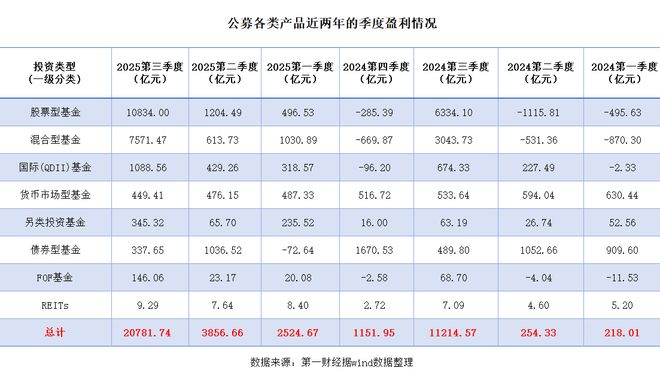
Core Insights - The public fund industry has achieved a record profit of over 2 trillion yuan in Q3, marking a historical peak for a single quarter [2][3] - Active equity products have shown a strong comeback, with the profit gap between active and passive index products narrowing significantly, indicating a more balanced market driving pattern [1][3] Group 1: Fund Performance - In Q3, the total profit of public funds reached 2.08 trillion yuan, a more than fourfold increase from the previous quarter's 385.67 billion yuan and over 80% growth compared to the same period last year [2][3] - The industry has now recorded profits for seven consecutive quarters, with cumulative profits for the year reaching 2.72 trillion yuan, surpassing the previous record of nearly 2 trillion yuan in 2020 [3][4] Group 2: Product Performance - Equity products, which are most correlated with the stock market, contributed significantly to profits, with Q3 profits amounting to 1.84 trillion yuan, accounting for nearly 90% of the industry's total profit [3][4] - Active equity products reported cumulative profits of 1.07 trillion yuan in the first three quarters, a fivefold increase year-on-year, while passive index products made 1.09 trillion yuan, a 140% increase [4] Group 3: Stock Holdings - By the end of Q3, public funds held a total of 3,108 stocks, a decrease of 49 from the previous quarter, indicating a slight increase in holding concentration [6] - Notable changes in major holdings included an increase in the number of funds holding Ningde Times, while Guizhou Moutai saw a decrease in holdings [7][8] Group 4: Market Outlook - The A-share market is experiencing a slow bull trend, with key sectors including the AI industry chain and sectors benefiting from domestic policies expected to drive future market performance [10][11] - Fund managers are optimistic about the market's recovery, with a focus on undervalued stocks and sectors that may benefit from economic improvements [11][12]






宗馥莉公开露面!
Di Yi Cai Jing Zi Xun· 2025-10-29 12:13
Core Insights - Zong Fuli has resigned from her position as Chairman of Wahaha Group and is now the President of Hongsheng Group [1][3] - Hongsheng Group held a regional work meeting on October 29, where Zong Fuli outlined the company's operational plans and progress towards high-quality development by 2025 [1][3] Group Developments - The meeting emphasized that 2025 is a critical year for the group to advance high-quality development amidst a complex market environment [3] - The group has achieved milestones in product iteration, capacity enhancement, and quality control [3] - In 2026, Hongsheng Group plans to focus on core sectors, seize technological transformation opportunities, and deepen lean operations while maintaining safety standards [3] Leadership Changes - Recent turbulence at Hongsheng Group includes the departure of Zhu Lidan, the legal representative of Hongsheng Beverage Group, with no official response from Wahaha regarding this change [3] - Zhu Lidan was a key executive at Wahaha, holding leadership roles in 158 companies within the "Wahaha" and "Hongsheng" systems [3] - Zong Fuli officially resigned from her roles at Wahaha Group on September 12, including her position as legal representative and chairman [3]

贵州茅台第三季度净利润微增0.48%,新帅接班面临业绩增长挑战
Di Yi Cai Jing Zi Xun· 2025-10-29 11:08
Core Viewpoint - Guizhou Moutai faces challenges in a deep adjustment period within the liquor industry, reporting stagnant sales despite slight revenue and profit growth in Q3 2023 [1] Financial Performance - In Q3 2023, Guizhou Moutai achieved revenue of 39.064 billion yuan, a year-on-year increase of 0.56% [1] - The net profit attributable to shareholders for Q3 2023 was 19.224 billion yuan, reflecting a year-on-year growth of 0.48% [1] - For the first three quarters of 2023, total revenue reached 130.904 billion yuan, up 6.32% year-on-year, while net profit attributable to shareholders was 64.626 billion yuan, increasing by 6.25% year-on-year [1] Product Revenue Breakdown - From January to September 2023, revenue from Moutai liquor was 110.514 billion yuan, an increase from 101.126 billion yuan in the same period of 2022 [1] - Revenue from series liquor was 17.884 billion yuan, down from 19.393 billion yuan in the same period of 2022 [1] Strategic Challenges - The newly appointed chairman of Guizhou Moutai, Chen Hua, faces the challenge of stabilizing performance and achieving annual growth targets amid the industry's downturn [1]
“反内卷”曙光初现,TCL中环三季度亏损收窄至15亿元
Di Yi Cai Jing Zi Xun· 2025-10-29 09:40
Core Viewpoint - TCL Zhonghuan has reported a significant reduction in quarterly losses, indicating early signs of recovery in the photovoltaic sector due to the "anti-involution" policy and improved cost management [1][2] Financial Performance - For the first three quarters, TCL Zhonghuan achieved a revenue of 21.572 billion yuan, a year-on-year decrease of 4.48%, while net profit was -5.777 billion yuan, reducing losses by nearly 300 million yuan compared to the previous year [1] - In Q3, the company reported a revenue of 8.174 billion yuan, a year-on-year increase of 28.34% and a quarter-on-quarter growth of approximately 12% [1] - The net profit for Q3 was -1.534 billion yuan, showing a year-on-year improvement of 48.82% and a quarter-on-quarter improvement of 34.32%, marking the lowest quarterly loss since Q2 2024 [1][2] Industry Dynamics - The photovoltaic sector is experiencing a stabilization in silicon wafer prices, with prices reported between 1.32 yuan/piece and 1.68 yuan/piece at the end of Q3, reflecting a price increase of at least 40% compared to the beginning of the quarter [2] - The company's cost reduction initiatives, including supply chain optimization and material efficiency improvements, have led to a reduction of over 40% in non-silicon costs since the beginning of the year [2] Operational Challenges - Despite improvements, TCL Zhonghuan faces challenges in global operations, particularly with its subsidiary Maxeon, which has experienced setbacks in the U.S. market, leading to product backlog and decreased market share [3] - As of the end of September, the company's debt-to-asset ratio reached 67.49%, an increase of 4.49 percentage points since the beginning of the year, with non-current liabilities due within one year rising to 9.709 billion yuan, a 32.19% increase [3] Market Outlook - The silicon wafer market is expected to remain under pressure in Q4, with weak downstream demand and procurement intentions from component and battery manufacturers [4] - However, the stabilization of polysilicon prices may provide some cost support for the silicon wafer market, and there are expectations for a gradual recovery in supply-demand dynamics in the medium to long term [4]

因地制宜发展新质生产力,9城15.9万亿GDP如何“破圈”创新
Di Yi Cai Jing Zi Xun· 2025-10-29 08:42
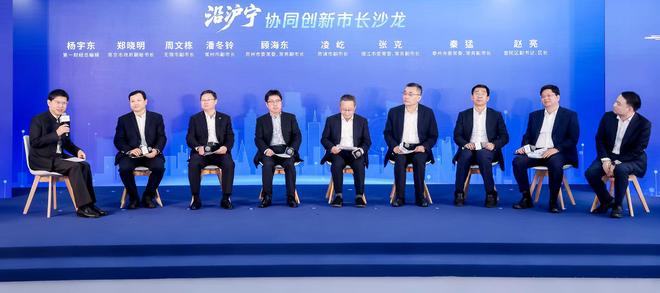
Core Insights - The article discusses the transformation of the Yangtze River Delta's industrial innovation corridor, emphasizing collaboration among nine cities along the Shanghai-Nanjing industrial innovation belt to enhance regional economic integration and innovation [1][11]. Economic Overview - The nine cities along the Shanghai-Nanjing corridor include Shanghai, Nanjing, Wuxi, Changzhou, Suzhou, Nantong, Yangzhou, Zhenjiang, and Taizhou, contributing a GDP of 15.9 trillion yuan in 2024, accounting for 11.8% of the national economy and 48% of the Yangtze River Delta's economy [3][4]. City-Specific Developments - Nanjing is developing a "4+6" industrial system focusing on AI, robotics, biomedicine, and new-generation information communication, with significant growth in software and information services expected [3][4]. - Wuxi has established itself as a leader in integrated circuits and the Internet of Things, with a strong emphasis on collaboration with Shanghai [5][6]. - Changzhou's manufacturing sector is robust, with an industrial revenue of 2.2 trillion yuan, focusing on advanced manufacturing clusters and future industries like AI and new energy [6][7]. - Suzhou boasts a comprehensive manufacturing industry, with a focus on modern service industry transformation and significant advancements in low-altitude economy and robotics [7][8]. - Nantong's industrial clusters include shipbuilding, electronics, and high-end textiles, with a goal to develop these sectors into 300 billion yuan industries [8][9]. - Zhenjiang is focusing on high-end equipment manufacturing and digital economy, integrating into the regional industrial collaboration [9][10]. - Taizhou is developing a health industry and advanced manufacturing sectors, with a modern industrial system aimed at 400 billion yuan [10][11]. Collaborative Strategies - The cities aim to break down administrative barriers and enhance cross-regional collaboration to create a synergistic innovation ecosystem [1][11]. - Suggestions for collaboration include focusing on shared strengths in AI, biomedicine, and smart manufacturing, emphasizing the importance of integrating resources and capabilities [11][12]. - The need for systematic planning and operational synergy among cities is highlighted to maximize the benefits of the innovation corridor [12][13]. Future Directions - The article emphasizes the importance of leveraging local resources and aligning them with regional industrial needs to foster innovation and economic growth [14][15]. - The establishment of a three-year action initiative for collaborative innovation among the cities aims to extend the pathways for cooperation and industrial synergy [15].
"十五五"规划信号清晰,人民币国际化表述强化
Di Yi Cai Jing Zi Xun· 2025-10-29 08:23
Group 1 - The "14th Five-Year Plan" emphasizes the importance of expanding high-level opening-up, particularly in financial openness and the internationalization of the Renminbi [1][2] - The plan aims to enhance the capital account opening level and establish a self-controlled cross-border payment system for the Renminbi [1][2] - The report from China International Capital Corporation (CICC) highlights that financial openness will play a crucial role in addressing the imbalance between China's financial strength and real economy [1][3] Group 2 - The State Administration of Foreign Exchange (SAFE) has outlined a roadmap for steadily expanding high-level institutional opening in the foreign exchange sector, promoting the internationalization of the Renminbi and high-quality capital account opening [2] - The People's Bank of China (PBOC) aims to enhance the international functions of the Renminbi in pricing, payment, investment, financing, and reserve [2] - The cross-border payment system for the Renminbi (CIPS) has shown significant growth, processing 8.22 million transactions worth 175 trillion yuan in 2024, marking a year-on-year increase of 24% and 43% respectively [2] Group 3 - The Renminbi has become the largest currency for cross-border payments in China and ranks among the top three currencies for trade financing and payments globally [3] - The "15th Five-Year Plan" suggests that the current international landscape presents a favorable opportunity for promoting the internationalization of the Renminbi [3] - CICC's report identifies three main directions for financial openness: facilitating safe and efficient outbound capital, bringing in advanced overseas financial expertise, and leveraging the Hong Kong market to support these initiatives [3]
26万楚商投资湖北超2.1万亿
Di Yi Cai Jing Zi Xun· 2025-10-29 07:57
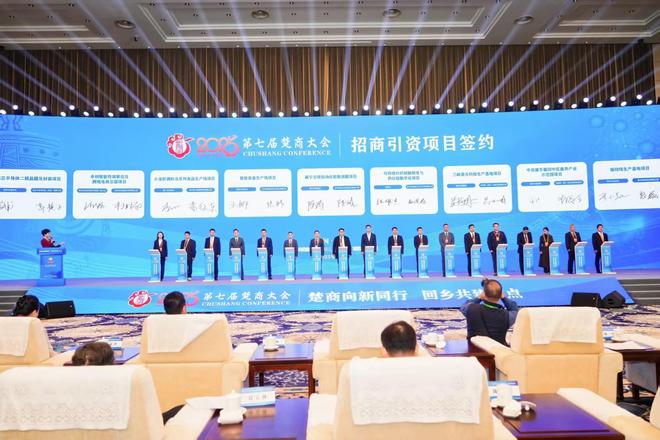
Core Insights - The seventh Chushang Conference opened in Wuhan, resulting in 57 cooperation projects with a total investment of 67.6 billion yuan, including 18 projects signed during the opening ceremony worth 33.13 billion yuan [1] Group 1: Economic Development and Investment - Hubei's transportation advantages include a comprehensive logistics system supported by water, rail, road, air, and pipeline networks, making it a cost-effective and efficient logistics hub [3] - Hubei has a solid industrial foundation with 41 major industry categories, and its market can directly serve 300 million people in Central China and the Yangtze River region [3] - Over the past 12 years, Chushang entrepreneurs have invested more than 2.1 trillion yuan in Hubei, with 2,535 projects over 100 million yuan initiated this year, totaling planned investments exceeding 900 billion yuan [3] Group 2: Private Sector Growth - In 2022, Hubei's private economy added value surpassed 3.94 trillion yuan, accounting for 65.7% of GDP, which is 5.7 percentage points higher than the national average, ranking sixth in the country [4] - The private sector's export value constitutes 70% of Hubei's total foreign trade, exceeding the national average by over 10 percentage points [4] - Hubei aims for an annual growth rate of around 6% in its private economy, targeting a value of 4.5 trillion yuan by 2027, with private investment accounting for approximately 60% [4] Group 3: Technological Innovation - The rise of artificial intelligence presents new opportunities for Hubei's private economy, leveraging the region's strong manufacturing base and digital innovation capabilities [5] - Hubei's million university students are seen as key drivers of reverse innovation, with potential to transform creative ideas into production capabilities [5]