
Hu Xiu

Search documents
79岁曹德旺,提前辞去董事长职务
Hu Xiu· 2025-10-16 11:00
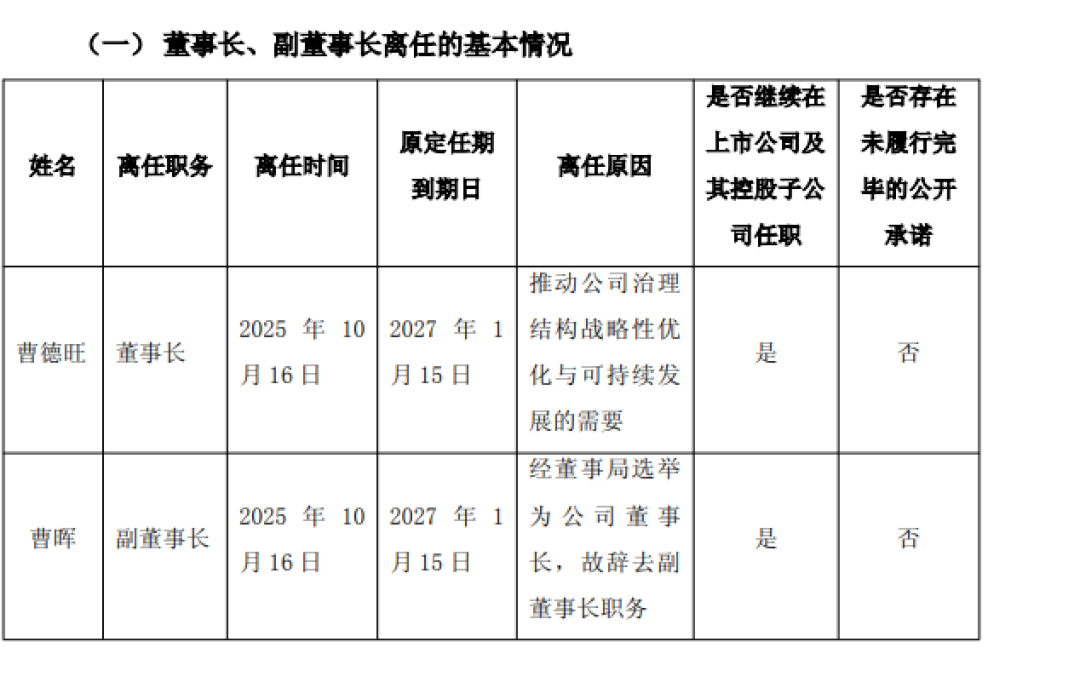
本文来自微信公众号:每日经济新闻,编辑:何小桃、杜恒峰,原文标题:《79岁曹德旺,提前辞去董事长职务!儿子曹晖接任》,题图来自:视觉中国 10月16日,福耀玻璃发布公告称,董事长曹德旺向公司提交了辞去董事长职务的报告,但曹德旺在辞任公司董事长职务后仍作为公司董事继续履职,曹德 旺仍担任部分子公司的董事、董事长及法定代表人职务。值得注意的是,曹德旺本届董事长任期原本要到2027年1月才到期。 | | | | | | 是否继续在 | 是否存在 | | --- | --- | --- | --- | --- | --- | --- | | 姓名 | 离任职务 | 离任时间 | 原定任期 | 离任原因 | 上市公司及 | 未履行完 | | | | | 到期日 | | 其控股子公 | 毕的公开 | | | | | | | 司任职 | 承诺 | | 曹德旺 | 重事长 | 2025 年 10 | 2027 年 1 | 推动公司治理 结构战略性优 | 분 | 否 | | | | 月 16日 | 月 15日 | 化与可持续发 | | | | | | | | 展的需要 | | | | 曹晖 | 副董事长 | 2025 年 10 ...


资金面更加保守,科技十月难翻身
Hu Xiu· 2025-10-16 10:34
Group 1 - The market remains unfavorable for technology stocks, with recent developments indicating a conservative funding environment [1] - In September, the new social financing amount was 3.53 trillion yuan, which was in line with expectations but did not show significant growth, indicating weak borrowing willingness from both enterprises and individuals [1] - A notable decline in non-bank deposits occurred in September, decreasing by 1.06 trillion yuan, raising concerns among investors about potential capital withdrawal after market gains [2] Group 2 - The decline in non-bank deposits, previously seen as a "bull market signal" when it surged by 4.7 trillion yuan in July, suggests a shift in market sentiment towards caution [2] - The decrease in non-bank deposits may not solely be attributed to securities accounts but could also stem from redemptions in bank wealth management, money market funds, or bond funds [2] - The contraction of this indicator, once viewed as a driving force for the bull market, is likely to exert pressure on the technology sector [2]
欧盟的困境,就在这一个连着瓶子掉不下来的瓶盖里?
Hu Xiu· 2025-10-16 10:01
美国研发出了ChatGPT,在全球AI竞争中抢得了先机;中国研究出了DeepSeek,用一手开源打破了全球 AI竞争格局;而欧洲最近研发出了一种拧开之后,可以连着瓶子不掉下来的瓶盖。 ...
对美国而言,这远不止经济上的不便,更是地缘战略上的耻辱
Hu Xiu· 2025-10-16 09:55
Core Viewpoint - The article discusses the escalating tensions between the U.S. and China regarding technology and material supply chains, highlighting how U.S. measures to isolate China have inadvertently revealed America's own vulnerabilities in critical materials and technologies [1][2][4]. Group 1: U.S. Measures and China's Response - The U.S. has implemented tariffs, export bans, and sanctions aimed at isolating China and maintaining its technological dominance [1]. - In response, China has enacted stringent export controls on key materials such as lithium batteries, graphite anodes, and rare earth technologies, marking a significant escalation in the global materials sovereignty struggle [3][5]. - These measures are framed as necessary for national security and are intended to prevent the proliferation of weapons [3]. Group 2: Impact on U.S. Industries - The export restrictions target critical sectors including clean energy, military, and semiconductors, which are vital to U.S. economic and technological ambitions [6]. - Over 78% of materials used in U.S. military equipment are sourced from China, indicating a deep reliance on Chinese supply chains [8]. - The inability of the U.S. to quickly replace these materials could lead to significant delays in military production and maintenance [8]. Group 3: Economic Implications - The new export controls could severely impact the U.S. economy, with projections suggesting that GDP growth could be limited to 0.1% in the first half of 2025 without the influence of AI-related capital expenditures [9]. - Supply chain issues in the AI sector could hinder its expansion and lead to increased costs, affecting various industries from electric vehicles to consumer electronics [10][12]. - The U.S. electric vehicle revolution is heavily dependent on a battery supply chain dominated by China, which poses risks to production costs and decarbonization efforts [11][13]. Group 4: Geopolitical Dynamics - The article suggests that the U.S. is facing a strategic embarrassment as it becomes increasingly reliant on a country it seeks to undermine [21]. - European nations may find opportunities to enhance their own industrial capabilities in response to the U.S.-China tensions, potentially leading to a re-industrialization effort [23][24]. - Global South countries are also positioned to leverage their resource wealth, potentially collaborating with China or Europe while avoiding U.S. conditions [25][26]. Group 5: Structural Challenges for the U.S. - The U.S. faces significant challenges in rebuilding its industrial ecosystem, including time, material resources, and technical knowledge [14][16][17]. - Developing new mining and refining capabilities could take a decade, and the U.S. lacks the necessary infrastructure to process its own mineral resources effectively [15][16]. - The article emphasizes the asymmetry in global economic structures, where China leads in actual product production while the U.S. dominates narrative control [27].
“凑热闹的人”正在杀死文旅消费?
Hu Xiu· 2025-10-16 09:48
Core Viewpoint - The article discusses the phenomenon of "bystander tourists" in the domestic tourism industry, highlighting the disparity between the influx of visitors and their actual spending, which is negatively impacting local economies [16][18][21]. Group 1: Tourism Trends - Recent cancellations of marathons and discussions around museum ticketing reflect a growing sentiment that "bystander tourists" are crowding out genuine enthusiasts [1][2][3]. - The tourism industry has increasingly complained about the overwhelming presence of "bystander tourists," particularly during peak travel periods like the National Day holiday [4][5][6]. Group 2: Economic Impact - Despite an increase in visitor numbers, per capita tourism spending has declined, leading to crowded attractions but low revenue for local businesses [6][20]. - Local tourism operators express frustration as the influx of visitors does not translate into expected economic benefits, with many tourists opting for low-cost or free options [18][21][22]. Group 3: Visitor Behavior - The article identifies that many visitors are not spending money locally, often choosing to camp or eat inexpensive meals instead of utilizing local accommodations and restaurants [20][36]. - The lack of diverse and appealing tourism products in many areas contributes to the low spending behavior of visitors, who may have the budget but find limited options to spend on [32][33]. Group 4: Solutions and Strategies - The article suggests that local tourism economies need to shift focus from merely attracting visitors to effectively converting them into spending customers [39]. - Successful examples from cities like Nanning demonstrate the potential for integrating events like concerts with local tourism offerings to enhance visitor engagement and spending [44][46].
缩表即将结束,美联储降息,背后透露出哪些信息?
Hu Xiu· 2025-10-16 09:35
Core Points - Federal Reserve Chairman Jerome Powell delivered a highly anticipated speech, with market participants hoping for positive liquidity signals to boost market sentiment [1] Group 1 - The speech was closely monitored by the market, indicating a strong interest in Powell's insights on monetary policy [1] - Investors are looking for indications of potential changes in interest rates or other measures that could enhance liquidity [1]
硅谷AI泡沫论正急剧升温
Hu Xiu· 2025-10-16 09:03
在AI资本狂欢之下,被誉为"全球科技之都"的硅谷,围绕"AI企业估值是否严重高估"的争论正迅速升 温。海外媒体分析称,当前人工智能热潮正推动股市逼近2000年互联网泡沫高峰的水平。如此集中押注 少数几家公司,一旦信心动摇,股价暴跌或将引发更大范围的经济震荡。 越来越多投资者担心,一场迫在眉睫的AI泡沫,可能成为下一个全球金融风险引爆点。 一、"全都是泡沫" 近月来,从OpenAI首席执行官萨姆·奥尔特曼(Sam Altman)到亚马逊创始人杰夫·贝索斯(Jeff Bezos) 等多位知名人物都表示,投资者对人工智能的热情已经过度。此外,英格兰银行、国际货币基金组织等 亦警示:我们或已处于可能导致数万亿美元市值蒸发的崩盘进程之中。 市场数据进一步加剧了这种焦虑: 这导致一些市场参与者质疑估值是否已经超过了这些公司的盈利预期,尤其是在企业投入数十亿美元发 展这项技术、却尚未看到实质性回报的情况下。 今年早些时候,麻省理工学院的一项研究发现,高达95%的公司生成式人工智能试点项目都失败了,未 能推动收入的快速增长。对许多企业而言,AI仍是"成本中心"而非"利润引擎"。 当前,美国科技巨头正在不断筹集资金来扩张数据中 ...


上千亿的电池回收市场,正规军惨败出局,小作坊大妈赢麻了?
Hu Xiu· 2025-10-16 09:03
Core Insights - The battery recycling market, valued at over a trillion, is witnessing a significant shift where licensed companies are exiting the market while unlicensed small workshops are profiting substantially from the situation [1] Group 1 - The battery recycling market is estimated to be worth over a trillion [1] - Licensed companies are collectively withdrawing from the battery recycling sector [1] - Unlicensed small workshops are reportedly making significant profits in the battery recycling space [1]
不止卖车?京东汽车百万年薪“抢人”背后,在下一盘什么棋
Hu Xiu· 2025-10-16 08:50
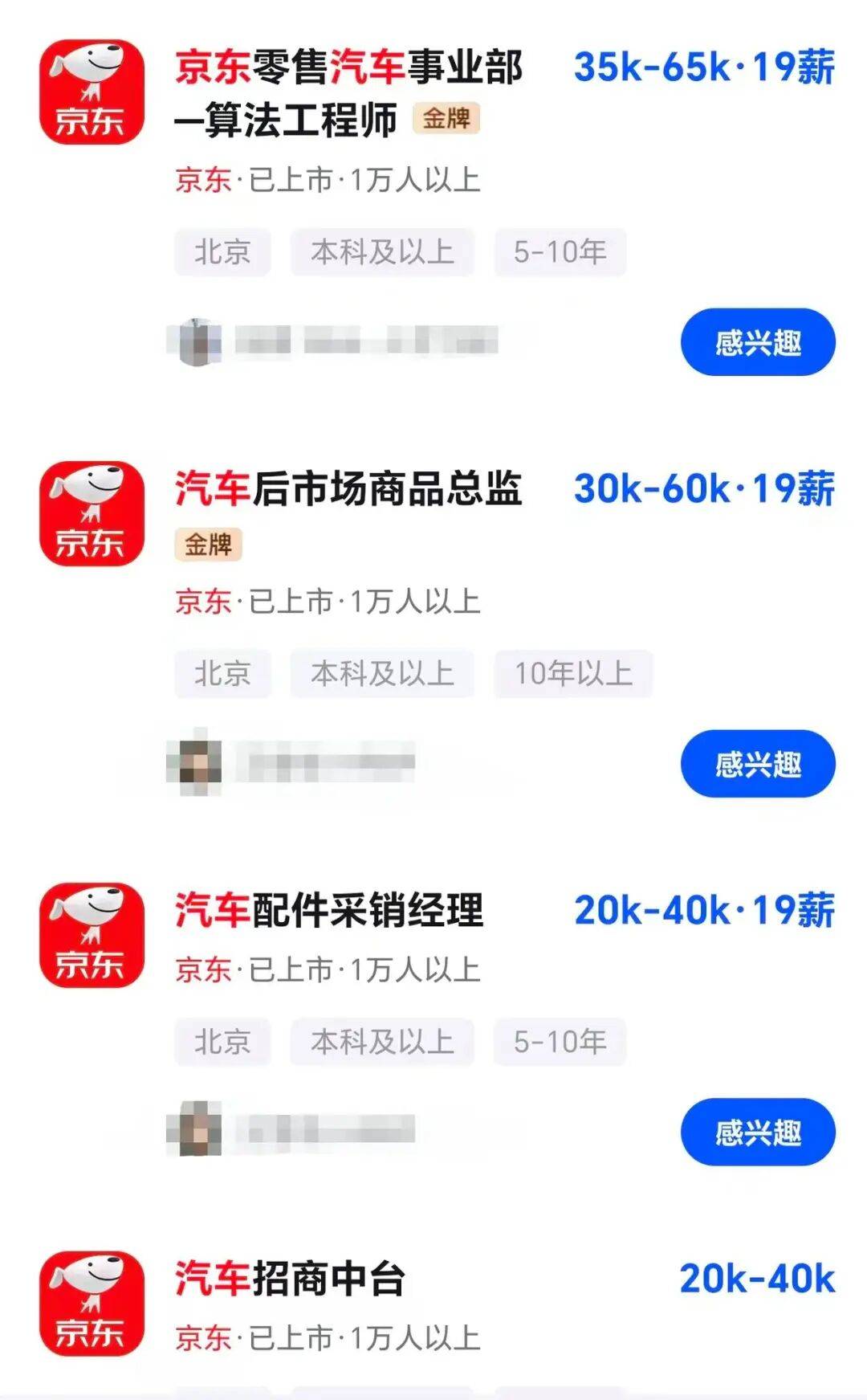
Core Insights - JD Group has announced strategic partnerships with CATL and Changan Automobile to enhance its automotive business, focusing on electric vehicles and comprehensive service networks [2][5][8] Group 1: Partnerships and Collaborations - JD Group will collaborate with CATL to expand the new energy vehicle charging ecosystem and develop battery aftermarket service channels, leveraging JD's nationwide service network [3][11] - The partnership with Changan will focus on promoting Changan's passenger cars, motorcycles, and vehicle ecosystem products through a comprehensive marketing strategy [5][14] - JD will establish an official direct sales channel for CATL's "Chocolate Battery Swap" model, promoting a vehicle-battery separation usage model [4][11] Group 2: Market Developments - JD's automotive business has been evolving since 2018, with plans to enhance its vehicle selection business, including online and offline sales, and focus on the aftermarket for new energy vehicles [7][21] - The new vehicle developed in collaboration with CATL and GAC is expected to be priced between 100,000 to 120,000 yuan, featuring a battery swap model [10][9] - JD's automotive division is actively recruiting for various positions, indicating a significant investment in talent acquisition to support its automotive strategy [6][27] Group 3: Industry Trends - The automotive industry is shifting towards a platform-based model, integrating mobility products and services, as traditional manufacturers seek to enhance their service offerings [18] - JD's strategy reflects a broader trend in the automotive sector, where companies are increasingly focusing on ecosystem development rather than just manufacturing vehicles [25][26]


没有手抖,也可能是帕金森?
Hu Xiu· 2025-10-16 08:12
Core Viewpoint - The prevalence of Parkinson's disease is increasing, closely linked to population aging and the rise of neurodegenerative diseases like Alzheimer's and Parkinson's [1][3]. Group 1: Understanding Parkinson's Disease - The understanding of Parkinson's disease has evolved significantly over the past 31 years, particularly with the introduction of PET imaging agents that allow for the visualization of dopamine transporters in the brain [3][4]. - The core issue in Parkinson's disease is the loss of dopamine neurons, which leads to symptoms such as tremors, slowness, and stiffness [3][15]. - Tremors are commonly associated with Parkinson's disease, but not all patients exhibit this symptom; slowness is considered the most critical feature for diagnosis [6][8]. Group 2: Diagnosis and Symptoms - Objective tests, particularly PET imaging, are emphasized for accurate diagnosis, as Parkinson's disease symptoms can be subtle and difficult to assess [4][5]. - Key symptoms include slowness, stiffness, and tremors, with slowness being a necessary condition for diagnosis [7][8]. - Distinguishing between age-related slowness and slowness due to Parkinson's is crucial, as they present differently [10][13]. Group 3: Treatment Options - Standard treatment primarily involves medication, particularly dopamine precursors like levodopa, which can improve symptoms significantly [18][19]. - Long-term use of medication may lead to diminished effectiveness, but it is essential for maintaining quality of life [20][22]. - Surgical options, such as Deep Brain Stimulation (DBS), are available for patients who do not respond adequately to medication [23][24]. Group 4: Research and Future Directions - Research is ongoing into the role of alpha-synuclein protein aggregation in Parkinson's disease, with new imaging agents being developed to monitor this process [15][17]. - There is potential for stem cell therapy, but it remains in the clinical trial phase and requires careful evaluation [27][28]. - Preventive measures include lifestyle changes such as exercise and dietary adjustments, which may help reduce the risk of developing Parkinson's disease [32].