Tai Mei Ti A P P

Search documents
【钛晨报】王兴兴2025WRC观点12条速览:人形机器人的ChatGPT时刻最慢3-5年到来,有望年出货百万台;特斯拉获批得州网约车牌照;国家统计局:7...
Tai Mei Ti A P P· 2025-08-10 23:52
Group 1: Industry Insights - The current focus in the robotics industry is overly centered on data, while the model architecture is lacking and not unified, which hampers effective utilization of available data [2] - In the next 2-5 years, the key focus for intelligent robotics technology will be on unified, end-to-end large models, lower-cost and longer-lasting hardware, mass manufacturing, and affordable large-scale computing power [2] - The annual shipment of humanoid robots is expected to double in the coming years, with potential for significant breakthroughs that could lead to shipments of hundreds of thousands to millions of units within 2-3 years [2] - Current humanoid robot hardware is sufficient, but AI intelligence is severely lacking, with the robot models not yet reaching a critical point for autonomous task execution in unfamiliar environments, expected to be achieved within 1-3 years [2] - While companies like Yushu have established partnerships in industrial settings, the expectation for robots to generate significant value in work scenarios is currently unrealistic; entertainment and performance applications are seen as more viable [2] Group 2: Company Developments - Yushu Technology aims to develop versatile humanoid robots that can operate in various environments, including factories, performances, and homes, rather than being limited to a single application [3] - Yushu began its IPO counseling in July 2023, viewing the listing as a process of continued learning and growth, reflecting on its nine years of development [3] - Approximately 50% of Yushu's annual revenue comes from international markets, with a strong emphasis on global expansion since 2018 [4] - The robotics industry has seen significant growth in 2023, with many companies experiencing 50% to 100% growth, driven by demand [4]


陈天桥联手清华教授代季峰首发最强开源AI模型项目,全力打造下一个DeepSeek
Tai Mei Ti A P P· 2025-08-10 23:52
Core Insights - The article discusses the establishment of a new company focused on General Artificial Intelligence (AGI) led by Dai Jifeng, a professor at Tsinghua University, and Chen Tianqiao, an entrepreneur and philanthropist [2][12] - The MiroMind AI team has launched the MiroMind Open Deep Research (Miro ODR) project, which is a high-performance, fully open-source deep research initiative, achieving a GAIA score of 82.4, surpassing other models like OpenAI's Deep Research and Manus [3][4] Company Overview - MiroMind aims to create a collaborative environment for building AI rather than providing AI directly, emphasizing community involvement in the development process [5][12] - The company has released four sub-projects on platforms like GitHub and Hugging Face, with plans for monthly updates to enhance the deep research model [5][10] Technical Achievements - MiroMind ODR's GAIA score of 82.4 positions it as the strongest open-source deep research model available, outperforming competitors [4][9] - The project includes various components such as MiroFlow, MiroThinker, MiroVerse, and MiroTrain, each contributing to different aspects of deep research and model training [10][12] Research and Development Focus - The MiroMind team is concentrating on three key areas: AI-driven business decision-making, innovative content distribution algorithms, and AI services tailored for aging and youth demographics [12] - The MiroMind-M1 model, based on 7 billion parameters, has shown superior performance in mathematical reasoning tasks compared to other models [9][11] Leadership and Background - Dai Jifeng has a strong academic and professional background in AI and computer vision, having published over 80 papers and received more than 60,000 citations [7][8] - Chen Tianqiao has a history of investing in brain-computer interface technologies and aims to support long-term, stable investments in hard tech innovations [15][17]


优必选展出五大人形机器人,首发自主换电补能方案 | WRC 2025
Tai Mei Ti A P P· 2025-08-10 10:18
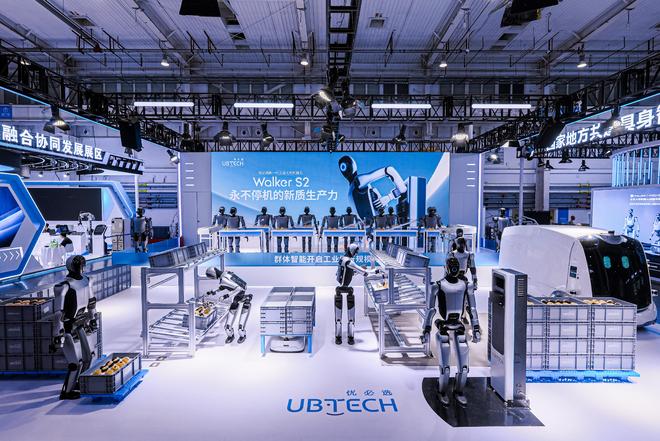
Core Insights - The 2025 World Robot Conference (WRC 2025) was held in Beijing, showcasing five humanoid robots from UBTECH, including the Walker S2, Cruzr S2, and others, highlighting advancements in various application scenarios such as industrial manufacturing and service [2][3] Group 1: Product Features - The Walker S2 is a humanoid robot with a height of 1.76 meters, featuring 52 degrees of freedom and an industrial-grade dexterous hand, capable of carrying a load of 15 kilograms within a range of 0-1.8 meters [2] - The Walker S2 incorporates dual battery technology for hot-swappable power, allowing for continuous operation with a battery swap time of approximately 3 minutes, enabling 24/7 operational capability [3] - The Cruzr S2 utilizes UBTECH's self-developed Co-Agent technology and visual-laser navigation for efficient operation in complex environments, suitable for tasks like sorting, assembly, and guiding [3] Group 2: Business Collaborations and Financial Performance - UBTECH has established partnerships with several automotive companies, including Dongfeng Liuzhou Motor, Geely, and BYD, making it the only humanoid robot company collaborating with multiple car manufacturers [4] - In 2024, UBTECH reported revenue of 140 million yuan from industry-customized robots, a year-on-year increase of 126.1%, while consumer robots generated 477 million yuan, up 88.1% [4] - The company has secured a humanoid robot procurement project valued at 90.51 million yuan with Miyi Automotive Technology, considered the largest humanoid robot commercial contract globally to date [4]
速腾聚创推出Active Camera平台,要为机器人造“眼睛” | WRC2025
Tai Mei Ti A P P· 2025-08-10 10:17
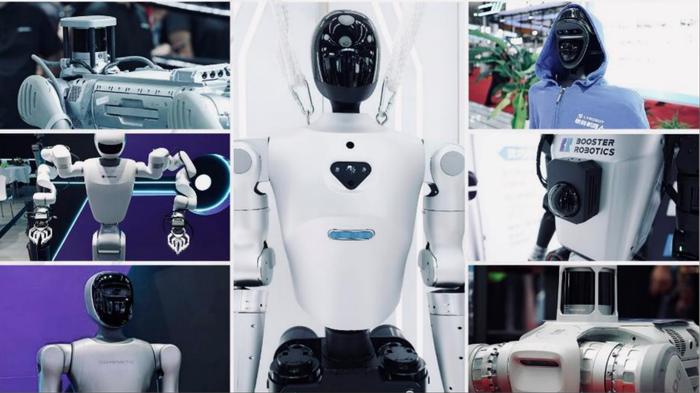
Group 1 - The 2025 World Robot Conference (WRC 2025) was held in Beijing from August 8 to 12, showcasing RoboSense's new Active Camera platform for robotic vision [2] - RoboSense is the global leader in LiDAR market share, supplying over 310 automotive manufacturers and tier-one suppliers with core components and solutions [2] - The rapid development of electric vehicles in China has led to a high concentration of industries in electric motors, electronic controls, and batteries, allowing for a high degree of component reuse in humanoid robots [2] Group 2 - The Active Camera platform integrates multiple sensors to provide color, depth, and motion state information, overcoming traditional 3D vision limitations [3] - In Q1 2025, RoboSense's sales of LiDAR products for robotics reached approximately 11,900 units, a year-on-year increase of 183.3%, generating revenue of 73.4 million, up 87% [3] - The AI-Ready ecosystem supports developers in creating prototypes and commercial applications for the Active Camera, offering open-source tools, AI algorithms, reference cases, and datasets [3][4] Group 3 - The Active Camera technology platform allows scene developers to utilize integrated algorithm capabilities for innovative functions and mass production [4] - RoboSense has established partnerships with various robotics manufacturers, including innovation centers and technology companies, to enhance humanoid robot capabilities [5] - The CEO of RoboSense stated that the market potential for humanoid robots could be ten times that of the automotive industry, emphasizing the need for specific application scenarios [5]
盒马CEO用10分钟复盘十年,新零售不死仍旧在路上
Tai Mei Ti A P P· 2025-08-10 02:57
Core Insights - Hema celebrated its 10th anniversary in Shanghai, with CEO Yan Xiaolei highlighting key operational metrics and the company's evolution in the retail landscape [1][3] - The company has shifted its strategic focus towards product strength and consumer trends, moving away from traditional supermarket classifications [1][3] Financial Performance - Hema's GMV for the fiscal year 2025 is projected to exceed 75 billion yuan, marking its first year of adjusted EBITA profitability [3] - The store closure rate is reported to be below 2%, which is considered ideal in the retail industry [3] - Hema ranked among the top three in the 2024 Chain Store Top 100 list, achieving double-digit growth in sales and store count [3] Business Strategy - Hema has streamlined its operations, focusing on Hema Fresh and Hema NB, following the closure of Hema X membership stores [2] - The company emphasizes a consumer-centric approach, prioritizing product development and iteration based on consumer feedback [5][7] Product Development - Hema has increased its product launch frequency, averaging over 20 new items monthly, while reducing the total SKU count in its bakery segment from around 300 to 150 [7][8] - The bakery category has become a strategic focus for Hema, with new store openings leveraging popular products to attract customers [8] Market Trends - Hema has identified consumer trends such as the demand for smaller packaging, catering to the needs of smaller households [8] - The company has seen significant growth in its HPP juice sales, doubling year-on-year for the past three years, with 90% of HPP juice products being private label [9] Expansion Plans - Hema plans to open nearly 100 new stores within the fiscal year, aiming to exceed a total of 500 locations [9] - The integration of Hema's membership system with Taobao's has resulted in a rapid increase in membership numbers, enhancing customer engagement [10]
如何与外卖大战共存,餐饮商家也给不出标准答案
Tai Mei Ti A P P· 2025-08-10 01:14
Core Insights - The competition in the food delivery market continues to evolve, with major platforms like Meituan and JD actively expanding their operations and partnerships to enhance their market presence [1][11][14] - The impact of the delivery subsidy war on restaurants is significant, leading to increased order volume but decreased average order value and profit margins [2][3][8] Group 1: Market Dynamics - Major platforms are planning significant expansions, such as Meituan's goal to open 10,000 satellite stores and JD's plan for 10,000 Seven Fresh kitchens, indicating ongoing competition in the delivery space [1][11] - The rise in delivery order volume is accompanied by a decline in average order value and profit margins, as seen in various case studies of restaurants experiencing losses in profitability [3][4][8] Group 2: Business Strategies - Restaurants are adapting to the changing landscape by controlling their delivery proportions and focusing on optimizing costs, such as reducing packaging expenses and adjusting menu offerings [17][21] - Larger chains with brand advantages, like Luckin Coffee, are leveraging the subsidy environment to enhance their growth strategies, achieving significant increases in user engagement and store openings [8][9] Group 3: Future Trends - The delivery market is expected to continue evolving, with ongoing subsidies and innovative supply models being tested by platforms to meet consumer demands for quality and affordability [11][14][15] - The restaurant industry is undergoing a transformation towards more cost-effective and single-serving dining options, with delivery services playing a crucial role in this shift [22]


包凡归去来 | 巴伦特稿
Tai Mei Ti A P P· 2025-08-10 01:05
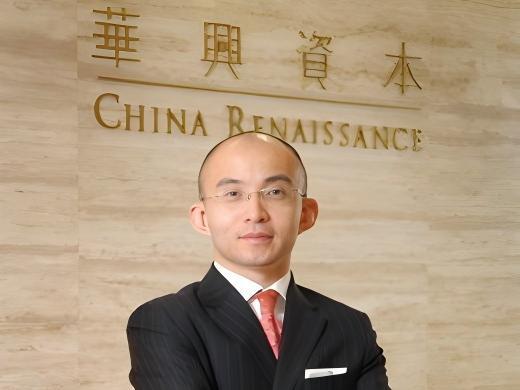
Core Insights - Bao Fan, the founder of Huaxing Capital, has completed a 2.5-year investigation and has been released, but he will no longer participate in the daily management of the company [2][22] - Huaxing Capital's operations are currently normal, managed by an executive committee, and Bao Fan's return is expected to positively impact the company's reputation, morale, and stock price [2][3] - During Bao Fan's absence, his wife, Xu Yanqing, took over leadership roles and helped stabilize the company [2][5] Group 1: Company Performance and Changes - Huaxing Capital faced significant challenges during Bao Fan's absence, with employee numbers dropping from 754 to 521 and a substantial reduction in investment banking and private equity departments [3][4] - The company experienced a severe decline in market confidence, with its stock price plummeting 66% upon resuming trading, resulting in a market capitalization drop from approximately HKD 45 billion to HKD 15.69 billion [4][22] - Xu Yanqing and CEO Wang Lihang implemented a "Huaxing 2.0" strategy, shifting focus from traditional internet businesses to hard technology, Web3, and digital finance, which has begun to show positive results [5][6] Group 2: Strategic Developments - The company has optimized its business structure, creating a dual-driven model of wealth management and investment banking, with a focus on high-net-worth individuals and new economy founders [5][6] - Huaxing Capital has resumed its underwriting business for Hong Kong and U.S. stocks, and has completed several significant merger and acquisition transactions [5][6] - By mid-2025, Huaxing Capital's stock price had recovered to 40% of its pre-suspension level, and it regained the top position in major financial advisory rankings [6] Group 3: Bao Fan's Influence and Future - Bao Fan is recognized as a significant figure in the Chinese internet sector, having facilitated major mergers and acquisitions, including those involving Didi, Meituan, and 58.com, which accounted for over 30% of China's internet M&A transaction volume [7][8] - His return raises questions about his future role and influence in the industry, as he faces challenges related to his diminished personal wealth and industry standing [8]
光伏专利大战:TOP10企业专利护城河深度解析
Tai Mei Ti A P P· 2025-08-09 10:02
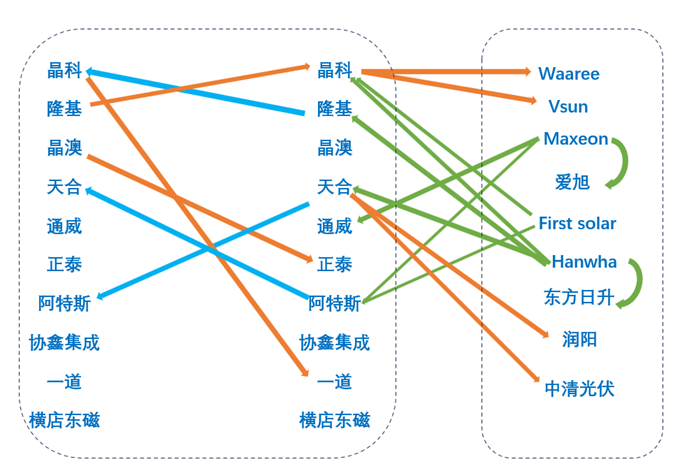
Core Viewpoint - The article discusses the ongoing patent wars in the photovoltaic (PV) industry, emphasizing the shift from an incremental growth phase to a competitive landscape where companies are focusing on retaining advanced production capacity and eliminating outdated capacity. Patents are seen as a crucial tool in this "anti-involution" strategy [1]. Group 1: Patent Litigation Overview - The patent litigation between JinkoSolar and LONGi Green Energy is highlighted as a significant ongoing conflict in the PV sector, with a need to assess the patent situations of the top 10 companies in terms of module shipments [3]. - Since 2019, the patent wars in the PV industry have been continuous, with only two companies, GCL-Poly and Hengdian East Magnetic, not involved in any patent litigation [3]. - Tongwei Co., while rapidly rising in the top 10, has had minimal patent litigation exposure, primarily due to its dual leadership in silicon materials and cells [3]. Group 2: Patent Application Statistics - Trina Solar leads in patent applications with 7,219 patents, followed by JinkoSolar and LONGi Green Energy in second and third places, respectively [7]. - Canadian Solar, despite facing multiple patent infringement lawsuits, has a substantial patent application count of 4,669, placing it among the top tier of PV companies [7]. - GCL-Poly has a relatively low patent application count, while Hengdian East Magnetic has over 3,700 patents, but only 681 are related to PV technology, making it the lowest among the top 10 [7]. Group 3: Patent Validity and Status - LONGi Green Energy holds the highest number of valid patents at 3,900, while Trina Solar has 3,448 valid patents, and JinkoSolar has 2,449 [10]. - The analysis shows that Yida New Energy has the lowest percentage of expired patents at 3%, while GCL-Poly and Canadian Solar have high expiration rates of 40% and 32%, respectively [10]. - The proportion of pending patents indicates that Trina Solar has over 33% pending, while Hengdian East Magnetic and JinkoSolar have around 30% [10]. Group 4: Patent Types and Quality - JinkoSolar and Trina Solar have the highest number of invention patents, with JinkoSolar's invention patents making up 70% of its total applications [12]. - GCL-Poly's patent applications are primarily domestic, with minimal international presence, indicating a focus on the domestic market [17]. - GCL-Poly has a total of 1,138 patent applications, with 519 being valid, but a significant number of low-value patents have been abandoned or rejected [19]. Group 5: Legal Events and Patent Management - GCL-Poly has engaged in various legal events related to its patents, including transfers and acquisitions, indicating active management of its patent portfolio [25]. - Hengdian East Magnetic has also seen significant patent pledges, with over 75 patents pledged for financing, reflecting a strategic approach to leveraging its patent assets [38]. - The company has a relatively high number of invention patents, with 445 out of 681 total patents, indicating a focus on high-quality innovations [35]. Group 6: Strategic Insights and Recommendations - Both GCL-Poly and Hengdian East Magnetic have lower overall patent strengths compared to leading companies like JinkoSolar and LONGi Green Energy, which may impact their competitive positioning [42]. - GCL-Poly's strategy of acquiring external patents could enhance its litigation capabilities, while Hengdian East Magnetic's effective maintenance of patent validity is crucial for future legal defenses [42]. - The article suggests that PV companies should enhance innovation and proactively manage patent risks to minimize litigation exposure [45].





对话宇树科技王兴兴:全球人形机器人出货量,未来将保持每年翻一番
Tai Mei Ti A P P· 2025-08-09 08:54
Core Viewpoint - The humanoid robotics industry is experiencing high attention, which brings both opportunities and challenges for companies like Yushu Technology. The focus should remain on improving product quality, reducing costs, and enhancing user experience [2][4]. Group 1: Company Overview - Yushu Technology, founded in 2016, initially gained prominence with its quadruped robotic dogs and has become a leading manufacturer in that segment. The company has recently initiated the development of humanoid robots and secured multiple rounds of financing from investors like Meituan and Shou Cheng Holdings [2]. - The company aims to make its robots more affordable, with prices dropping from 99,000 yuan last year to 33,000 yuan this year, to increase accessibility and market penetration [5]. Group 2: Industry Insights - The global humanoid robot market is expected to see annual shipment volumes double, with potential spikes to hundreds of thousands or even millions of units within the next few years if significant AI breakthroughs occur [3][14]. - The current hardware capabilities of robots are sufficient, but the industry has yet to achieve a breakthrough in embodied intelligence models, which is crucial for advancing the technology [3][7]. Group 3: Future Outlook - The company is focused on enhancing the functionality and affordability of its products to compete effectively in both domestic and international markets. The long-term vision includes a future where robots can perform a variety of tasks autonomously, potentially leading to a model where robots could be provided at no cost, funded through taxation on the value they generate [5][12]. - Yushu Technology has been actively expanding its overseas market presence, with approximately 50% of its annual revenue coming from international sales since 2018 [11]. Group 4: Technological Challenges - The main technological hurdle in the robotics field is the need for a significant advancement in AI capabilities, particularly in embodied intelligence, which has not yet reached a critical breakthrough akin to that seen in large language models like ChatGPT [6][8]. - The company recognizes that while current robots can perform simple tasks and demonstrations, achieving practical applications in real-world settings remains a challenge [9][13]. Group 5: Business Strategy - Yushu Technology is in the process of preparing for an IPO, viewing it as a significant step in the company's growth and maturity, akin to a graduation process for a student [15].

GPT-5引领AI大模型颠覆地产咨询与策划,从业者该如何应对?
Tai Mei Ti A P P· 2025-08-09 06:40
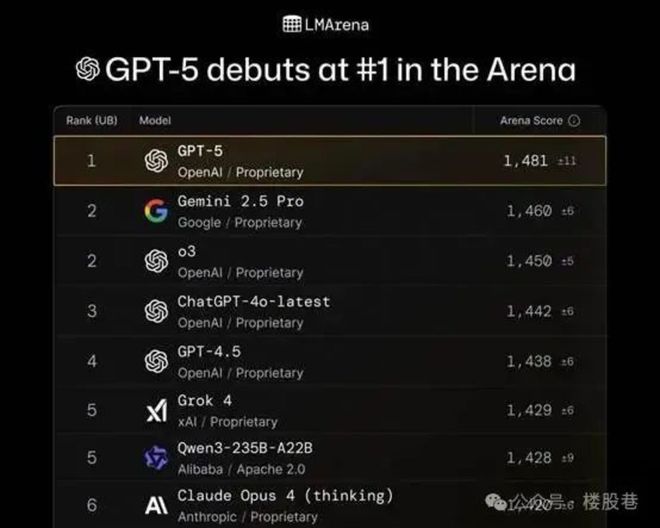
Core Insights - The launch of GPT-5 marks a significant advancement in AI technology, being recognized as "PhD-level intelligence" and capable of outperforming human experts in various fields such as text generation, coding, mathematical reasoning, and multimodal processing [1][2] - The real estate industry is experiencing accelerated digital transformation, with AI tools enhancing efficiency and effectiveness in areas traditionally reliant on human expertise, such as consulting and planning [2][4] Group 1: Impact of AI on Real Estate Consulting and Planning - AI models like GPT-5 are revolutionizing the real estate consulting sector by automating market analysis and data mining, which traditionally required extensive manual effort [10][11] - The efficiency of report generation has drastically improved, with tools like CRIC Deep Intelligence 2.0 reducing report preparation time from weeks to just 10 minutes, thereby lowering labor costs and increasing responsiveness [4][10] - AI's writing capabilities are transforming marketing strategies, allowing for rapid generation of tailored marketing content across various platforms, thus enhancing engagement and conversion rates [5][11] Group 2: Changes in Industry Dynamics - The competitive landscape of real estate consulting is shifting, as AI enables smaller firms to provide high-quality services at lower costs, challenging the dominance of larger firms [12][17] - The standardization of AI outputs allows successful strategies to be easily replicated across different markets, potentially diminishing the competitive edge of traditional consulting firms [12][17] - The skill requirements for professionals in the industry are evolving, with a greater emphasis on strategic thinking and client relationship management, as basic tasks become automated [13][16] Group 3: Strategies for Professionals - Real estate professionals are encouraged to adopt a collaborative approach with AI, focusing on strategic decision-making while leveraging AI for data analysis and content generation [14][15] - There is a need for professionals to redefine their core competencies, transitioning from content creators to creative architects who can discern and refine AI-generated outputs [16][18] - Building proprietary data resources and unique market insights will create competitive advantages in an increasingly AI-driven landscape [16][17]