半导体芯闻

Search documents
特斯拉将建2nm晶圆厂
半导体芯闻· 2026-01-08 10:36
Tesla 将会有一个2 纳米晶圆厂,而且我可以在晶圆厂里吃起司汉堡和抽雪茄。 当Elon Musk 说出这句话时,访谈者的反应是:「哦,拜托。」但Musk 是认真的。他不只打赌 Tesla 会建造颠覆传统的晶圆厂,更重要的是,他判断全球将遭遇「芯片墙」,即使台积电2025 年砸下400 亿美元、计划兴建10 座新晶圆厂,他仍认为这不够激进。 核心矛盾在于:AI 算力需求呈指数增长,但芯片产能和电力基础设施的扩张都是线性的。这不是 技术问题,而是产业逻辑的根本性转变。 第一阶段: 从制程竞赛到产能竞赛 过去二十年,半导体产业遵循一个清晰的逻辑:制程领先就能赢得市场。谁能率先量产7nm、 5nm、3nm,谁就能垄断高端市场。这套逻辑塑造了整个产业的投资决策,大量资金投入研发,追 求每一代制程的极致微缩。 但在这场访谈中指出了一个被忽视的事实:这套逻辑在AI 时代已经不适用了。 Musk 说:「制程微缩已经到了收益递减阶段」。 从3 纳米到2 纳米,性能改进只有10% ,不是3:2 的比例改进,只有10%。 Jensen Huang 说过, 摩尔定律已死。你不能只靠把东西做得更小就能做得更好,原子数量是离散的,你 ...


黄仁勋:SRAM无法取代HBM
半导体芯闻· 2026-01-08 10:36
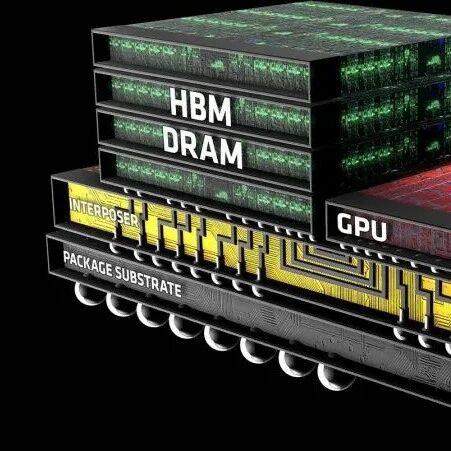
Core Viewpoint - NVIDIA's CEO Jensen Huang emphasized the ongoing necessity of HBM (High Bandwidth Memory) despite the advantages of SRAM (Static Random Access Memory) and other cost-saving solutions for AI workloads, indicating that each memory type has its own strengths and limitations [1][2]. Group 1: Memory Technology Insights - Huang noted that while SRAM can significantly enhance efficiency for certain workloads, its capacity limitations may hinder its effectiveness in large-scale AI production environments compared to HBM, which offers better bandwidth and density [1][2]. - The transition of workload pressures among different memory types and interconnects is dynamic, with varying demands based on the architecture of AI models, such as mixed expert models and multi-modal models [2]. Group 2: Market Dynamics and Cost Considerations - Despite customer complaints regarding the costs of HBM and GPUs, Huang believes there is no inherent conflict between these costs and the demand for advanced memory solutions, suggesting that the market for NVIDIA's products remains robust [3].

台积电3nm,暂停接单?
半导体芯闻· 2026-01-08 10:36
Core Viewpoint - TSMC's advanced 3nm process is experiencing high demand, leading to a temporary halt in new project kick-offs for this technology, as existing capacity is fully utilized and cannot meet the influx of orders [2] Group 1: TSMC's 3nm Process - TSMC has raised prices for its 3nm process and has stopped new project kick-offs due to full order books and limited capacity [2] - The company is strategically encouraging clients to shift their product planning towards the 2nm process, which offers better cost structures and efficiency [2] - The 3nm family of products is currently filled with orders from AI GPUs, cloud data center ASICs, and high-end mobile processors [2] Group 2: Transition to 2nm Process - The 2nm process is seen as a critical turning point for TSMC, introducing nanosheet transistor architecture that significantly improves performance, power consumption, and density [3] - The introduction of atomic layer deposition (ALD) in the 2nm process does not significantly increase the number of EUV exposure layers, making the overall manufacturing cost more competitive compared to the 3nm process [3] - The GAAFET process represents a significant upgrade in wafer manufacturing, requiring advanced techniques to overcome challenges in material layering and etching [3]
想买H200?付全款!
半导体芯闻· 2026-01-08 10:36
Core Viewpoint - Nvidia has implemented stringent conditions for Chinese customers, requiring full payment upfront for orders of the H200 chips, with no cancellations or modifications allowed [1] Group 1: Payment Terms and Conditions - Nvidia's new terms for Chinese clients include a full prepayment requirement, which is stricter than previous practices that allowed for deposits [1] - In exceptional cases, customers may provide "commercial insurance" or collateral as alternatives to cash payment [1] Group 2: Demand and Supply - Chinese tech companies have reportedly ordered over 2 million H200 chips, each priced at approximately $27,000, exceeding the current inventory of 700,000 units by more than 70% [1] - Nvidia's CEO Jensen Huang stated that demand for the H200 is "very high," and the company has requested its supply chain to increase production capacity [1] - Nvidia's CFO Colette Kress mentioned that the company has applied for export licenses for the H200 and is awaiting approval from the U.S. and other governments [2]
泰国也要制造芯片
半导体芯闻· 2026-01-08 10:36
Core Viewpoint - Thailand aims to become a regional semiconductor industry hub by 2050, with a strategic blueprint targeting over 2.5 trillion THB in investments and the training of 230,000 skilled professionals [2][3]. Group 1: Strategic Development - The National Semiconductor Industry Development Strategy Blueprint emphasizes five driving mechanisms: policy incentives, talent support, technological breakthroughs, infrastructure guarantees, and environmental optimization [3][4]. - The strategy focuses on chip categories where Thailand has advantages, such as power chips, sensors, photonic chips, analog chips, and discrete devices, which are aligned with existing industries like automotive and electronics [3][4]. Group 2: Investment and Growth - From 2018 to November 2025, Thailand's electrical and electronics sector received 1,748 investment applications totaling 1.17 trillion THB, accounting for 19% of all investment applications [4]. - Major global semiconductor companies, including Infineon, Analog Devices, Microchip Technology, and NXP, have chosen to invest in Thailand [5]. Group 3: Competitive Positioning - Thailand's semiconductor industry, despite its late start compared to countries like Singapore and Malaysia, shows significant potential in infrastructure, talent, business environment, and policy support [3][4]. - The strategic blueprint aims to enhance global competitiveness by focusing on existing industry demands in automotive, electronics, and home appliances [4].
三星DRAM,重返第一
半导体芯闻· 2026-01-08 10:36
如果您希望可以时常见面,欢迎标星收藏哦~ 三星电子时隔一年重夺全球DRAM市场份额第一的位置,同时在去年第四季度录得有史以来最高 的季度营业利润。 据市场研究公司Counterpoint Research 1月8日发布的数据显示,三星电子去年第四季度存储半导 体业务营收达259亿美元,环比增长34%。存储半导体业务预计将占三星电子总营收(93万亿韩 元)的约40%。其中,DRAM营收为192亿美元,NAND营收为67亿美元。同期,SK海力士的存 储业务总营收为224亿美元,其中DRAM营收为171亿美元,NAND营收为53亿美元。 三星电子时隔一年重新夺回了被SK海力士夺走的DRAM市场份额第一的位置。此前,三星电子在 DRAM市场保持领先地位长达约30年,直至2024年第四季度,但在去年第一季度首次将这一地位 拱手让给了SK海力士。 Counterpoint Research 的首席研究分析师 Choi Jung-gu 表示:"三星电子对通用 DRAM(尤其 是服务器)的客户需求趋势做出了很好的响应。"他补充道:"第六代 HBM (HBM4) 中引入的先进 1c 工 艺 节 点 和 4 纳 米 逻 辑 工 ...
江波龙亮相CES 2026,旗下雷克沙携手阿根廷国家队,构筑AI存储系统能力
半导体芯闻· 2026-01-08 10:36
如果您希望可以时常见面,欢迎标星收藏哦~ 当人工智能从"云端算力"快速下沉到"端侧智能",一个长期被低估的基础能力正被重新审视—— 存储。无论是AI PC、智能机器人,还是AI眼镜、运动穿戴设备,算法模型的本地化部署、实时 数据处理与多模态交互体验,都在持续推高对存储性能、能效与形态的要求。可以说,AI的每一 次落地,都在推动存储技术完成一次跃迁。 在这一背景下,CES 2026也不再只是"消费电子新品秀场",而逐渐演变为全球AI终端技术路线 的风向标。江波龙在本届CES上围绕"AI存储"所展开的一系列产品发布与战略动作,正是这一趋 势的集中体现。 与传统SSD形态不同,mSSD在集成度、散热设计和可靠性方面更适合AI终端的复杂应用环境。 通 过 在 介 质 层 引 入 更 灵 活 的 封 装 方 式 , 并 在 固 件 层 针 对 AI 负 载 进 行 定 向 优 化 , 让 AI Storage Core不再只是"更快的存储",而是成为AI系统中的关键数据枢纽。 据介绍,Lexar雷克沙品牌此次推出的基于集成封装mSSD技术的Lexar PLAY X PCIe Gen4×4 NVMe SSD采用创新集成封 ...
长鑫正式登场:今年A股最硬核IPO全拆解
半导体芯闻· 2026-01-07 07:46
Core Viewpoint - The article highlights the significance of Changxin Technology's upcoming IPO as a pivotal moment in the A-share market, marking a shift towards high-end semiconductor capabilities in China, particularly in the AI computing sector [1][2][12]. Group 1: Changxin Technology's Position - Changxin Technology is the only large-scale DRAM manufacturer in China and is theoretically the only player capable of entering the HBM market, which is crucial for AI computing [6]. - The company has become the largest DRAM producer in China and the fourth globally, with its core products and technologies reaching international advanced levels [6]. Group 2: Importance of DRAM in AI - The article emphasizes that DRAM is essential for AI computing, as it provides real-time data transfer necessary for GPU calculations, making it a strategic component in AI systems [5]. - The current bottleneck in AI computing is referred to as the "memory wall," where improvements in GPU speed are hindered by slower memory access speeds [5]. Group 3: IDM Model Advantages - Changxin employs an IDM (Integrated Device Manufacturer) model, which enhances supply chain security and allows for deeper optimization of products compared to the Fabless model used by many domestic GPU companies [8]. - The IDM model has been validated by major global memory manufacturers like Samsung and SK Hynix, providing a competitive edge in the market [8]. Group 4: Financial Performance and Growth - Changxin's prospectus reveals a cumulative revenue of 73.636 billion yuan from 2022 to September 2025, with a compound annual growth rate of 72.04% in main business revenue from 2022 to 2024 [10]. - The company has demonstrated a strong commercial presence with established relationships with major clients such as Alibaba Cloud and Tencent, indicating high market recognition and product stability [10]. Group 5: Market Implications - Changxin's IPO is seen as a critical step for China's semiconductor industry, transitioning from a phase of catching up to one of conquering high-end markets [12]. - The unique position of Changxin as the only domestic DRAM IDM in the A-share market suggests significant premium potential under the logic of self-sufficient AI computing capabilities [12].

商务部:对原产于日本的进口二氯二氢硅发起反倾销立案调查
半导体芯闻· 2026-01-07 07:46
如果您希望可以时常见面,欢迎标星收藏哦~ 一、立案调查及调查期 自本公告发布之日起,商务部对原产于日本的进口二氯二氢硅进行反倾销立案调查,本次调查确定 的倾销调查期为2024年7月1日至2025年6月30日,产业损害调查期为2022年1月1日至2025年6月 30日。 二、被调查产品及调查范围 商务部公告 2026年第2号 公布对原产于日本的进口二氯二氢硅发起反倾销立案调查 中华人民共和国商务部(以下简称商务部)于2025年12月8日收到唐山三孚电子材料有限公司(以 下称申请人)代表中国二氯二氢硅产业正式提交的反倾销调查申请,申请人请求对原产于日本的进 口二氯二氢硅进行反倾销调查。商务部依据《中华人民共和国反倾销条例》有关规定,对申请人的 资格、申请调查产品有关情况、中国同类产品有关情况、申请调查产品对中国产业的影响、申请调 查国家有关情况等进行了审查。 根据申请人提供的证据和商务部的初步审查,申请人二氯二氢硅产量符合《中华人民共和国反倾销 条例》第十一条和第十三条有关国内产业提起反倾销调查申请的规定。同时,申请书中包含了《中 华人民共和国反倾销条例》第十四条、第十五条规定的反倾销调查立案所要求的内容及有关证 ...

3D视觉赋能全链协同:光鉴科技携多维视觉感知技术方案及产品亮相2026半导体协同创新论坛
半导体芯闻· 2026-01-07 07:46
2026年3月18日,上海新国际博览中心将迎来半导体与通信产业的跨领域盛会—— 《从器件 到网络的协同创新论坛》 。作为慕尼黑上海光博会的核心配套活动,本次论坛由半导体行业 观察与慕尼黑上海光博会联合主办,以 "半导体全产业链协同攻坚"为核心使命,遵循"趋势 →半导体基础(材料/EDA)→核心芯片→光器件→组件→应用→协同" 的全链路逻辑,精准 链接化合物半导体、EDA、泛半导体芯片设计等关键领域,为国产化替代进程中的技术突破 与生态共建搭建高端交流平台。 深 圳 市 光 鉴 科 技 有 限 公 司 ( DEPTRUM ) 作 为 多维视觉感知 领 域 的 领 军 企 业 , 将 于 当 日 14:25-14:50重磅登台,以其深耕多年的多维视觉感知技术方案及产品,为论坛注入智能视觉 领域的创新动能。 慕尼黑上海光博会: 全球科技产业的资源聚合与协同枢纽 慕尼黑上海光博会作为全球光电子、激光、半导体及通信技术领域的顶级展会IP,始终坚守 "技术 引领、生态共建" 的核心定位,历经多年发展,已成为整合全球前沿技术、头部企业资源与产业核 心需求的关键枢纽。 展会全面覆盖光器件、芯片、制造设备、核心材料等全产业链环 ...