半导体行业观察

Search documents
GPU仍是王者,ASIC来势汹汹
半导体行业观察· 2025-10-01 00:32
Core Insights - President Trump announced a plan to make the U.S. a leader in AI and machine learning by removing restrictions on companies developing future technologies [2] - Major chip manufacturers like Nvidia, Intel, and AMD are actively developing new processors to meet increasing AI performance demands, indicating a promising market for AI chips [2] - The AI chip market is expected to grow significantly, but market maturity and consolidation may limit opportunities for new entrants [2] AI Processor Market Growth - Omdia predicts that the AI data center chip market will continue to grow rapidly, with an annual growth rate of over 250% from 2022 to 2024, but slowing to about 67% from 2024 to 2025 [4] - AI infrastructure spending is expected to peak in 2026, driven primarily by AI, before gradually decreasing by 2030 [4] - Precedence Research forecasts the AI chip market will grow from $94.31 billion in 2025 to $931.26 billion by 2034, with a compound annual growth rate of 28% [5] GPU and ASIC Dominance - GPUs remain dominant in the AI chip market due to their parallel processing capabilities, essential for training and inference tasks in data centers [5] - ASICs are expected to drive future growth in the AI chip market due to their efficiency in specific AI functions, particularly in inference-heavy environments [6] Major Developments by Chip Manufacturers - AMD launched the Instinct MI350 series GPUs, offering significant performance improvements and cost-effectiveness for AI solutions [9] - Intel introduced new Xeon 6 series CPUs designed to enhance the performance of GPU-driven AI systems [10] - Nvidia released the Rubin CPX GPU, designed for high-speed processing of large amounts of data, and integrated it into the new Vera Rubin NVL144 CPX platform [11] Cloud and Edge Computing Trends - By 2024, cloud AI processing is expected to dominate the market with a 52% share, driven by investments from major cloud providers [13] - Edge AI processing is rapidly growing due to the demand for low-latency, device-side intelligence in applications like autonomous vehicles and smart city infrastructure [12] Industry Consolidation and Collaboration - Jon Peddle Research predicts that by 2030, the AI processor market will consolidate to about 25 key players, with IoT and edge computing suppliers likely to survive due to their larger market potential [14] - OpenAI and Nvidia have formed a strategic partnership to deploy NVIDIA systems for training next-generation AI models, with Nvidia planning to invest up to $100 billion [14][15] Technical Challenges in AI Processing - The performance demands of AI processors are creating challenges for existing memory configurations, leading to the adoption of new memory designs to meet data and speed requirements [16] - Liquid cooling solutions are being explored to manage the heat generated by high-performance processors, although they add complexity and cost [17]


刚刚,苹果买了家芯片公司
半导体行业观察· 2025-10-01 00:32
Core Viewpoint - Apple's acquisition of chip companies has significantly strengthened its position in the semiconductor industry, with a history of strategic purchases that enhance its technological capabilities and product offerings [2][4][14]. Group 1: Recent Acquisition - Apple has secretly acquired IC Mask Design Limited, a company specializing in IC layout design services and training, which has collaborated with over 250 tech companies globally [4][5]. - The acquisition is expected to provide Apple with expertise in VDSM technology nodes, potentially aiding in the optimization of its chips and enhancing energy efficiency [5][6]. Group 2: Historical Acquisitions - The acquisition of PA Semi in 2008 marked a turning point for Apple, laying the foundation for its future chip development across various devices [2]. - Subsequent acquisitions include Intrinsity in 2010, which improved microprocessor core development, and Anobit Technologies in 2012, enhancing NAND flash memory performance for Apple devices [8][9]. - Apple also acquired AuthenTec in 2012, which specialized in fingerprint scanning technology, and Passif in 2013, focusing on low-power communication chips [10][12]. - In 2018, Apple purchased Dialog Semiconductor's power management IC business, gaining control over PMIC development [11]. - The acquisition of Intel's smartphone modem business in 2019 added significant wireless technology patents to Apple's portfolio [12]. Group 3: Current Chip Development - Apple has developed multiple chip series, including A, C, H, M, N, S, and U series, showcasing its extensive capabilities in the semiconductor field [14]. - The company's aggressive patent filing strategy, averaging around 1,000 CPC G06F patents annually, reflects its commitment to innovation in chip technology [14]. - The competitive landscape in the semiconductor industry is intensifying, with other tech giants also increasing their capabilities through acquisitions, indicating a trend that Apple is likely to continue [14].


Meta想收购RISC-V芯片公司
半导体行业观察· 2025-10-01 00:32
Core Viewpoint - Meta is set to acquire RISC-V chip startup Rivos to enhance its chip development team and reduce reliance on Nvidia GPU hardware [2][6][12] Group 1: Acquisition Details - The acquisition of Rivos is aimed at accelerating Meta's internal AI chip development, highlighting the company's increasing investment in custom chip design [6][7] - Rivos was recently valued at $2 billion, and the acquisition price is expected to be in the nine to ten-figure range [3] - The deal is not finalized, and the current status of negotiations is unclear [3] Group 2: Strategic Importance - The acquisition signifies a trend among major tech companies towards vertical integration and custom chip development, emphasizing the critical role of dedicated hardware in unleashing advanced AI potential [8][9] - Meta's CEO Mark Zuckerberg has expressed the need to accelerate internal chip development, recognizing the strategic importance of custom chips for AI advancements [7][8] Group 3: Market Impact - The acquisition could trigger a chain reaction in the semiconductor market, potentially challenging the dominance of established players like Nvidia [6][9] - Competitors in social media and AI may accelerate their own custom hardware development in response to Meta's move [9] Group 4: Future Outlook - Post-acquisition, Meta will focus on integrating Rivos' talent and technology into its existing hardware and AI departments, aiming for faster development and deployment of custom AI chips [10][12] - The long-term goal is to significantly reduce capital expenditures related to third-party AI hardware procurement, allowing for more resources to be allocated to AI research and development [10][12]


巨头入局玻璃基板
半导体行业观察· 2025-10-01 00:32
Core Insights - Tesla and Apple are exploring the introduction of semiconductor glass substrates driven by the increasing demand for artificial intelligence (AI), which is expected to enhance semiconductor and data center performance [2][3] - Both companies have met with a manufacturer preparing glass substrates to discuss potential collaboration, although no specific contracts or technical agreements have been reached yet [2] - The glass substrate technology is gaining attention due to its lower warpage compared to traditional plastics and its ease of microcircuit implementation, making it a candidate for next-generation semiconductor substrates [2] Group 1 - Tesla is advancing its electric vehicle autonomous driving and humanoid robot commercialization, viewing high-performance semiconductors as crucial for autonomous decision-making and mobility [3] - There is speculation that glass substrates may be incorporated into Tesla's Full Self-Driving (FSD) chip [3] - Apple is also exploring glass substrates for AI technology, aiming to enhance its AI services centered around the iPhone [3] Group 2 - Apple is collaborating with Broadcom to develop Application-Specific Integrated Circuits (ASICs), with Broadcom actively promoting the application of semiconductor glass substrates [3] - Broadcom has tested prototypes of glass substrates, and the potential use of this technology in Apple's ASICs remains to be seen [3] - The glass substrate market is expected to expand as Broadcom develops ASIC semiconductor chips for several large tech companies [3]


英伟达继续大涨,市值创历史新高
半导体行业观察· 2025-10-01 00:32
Core Viewpoint - Nvidia's stock price reached a new high, increasing nearly 3%, with a market capitalization exceeding $4.5 trillion, driven by its strong position in the AI infrastructure market and investments in OpenAI [3][4]. Group 1: Stock Performance and Market Position - Nvidia's stock has risen approximately 39% year-to-date, attracting investors as the company accelerates its trading pace and solidifies its role in the AI boom [3]. - Citigroup raised Nvidia's target price from $200 to $210, citing the company's expansion in the AI infrastructure market and its recent investment in OpenAI [3]. - KeyBanc increased Nvidia's target price from $230 to $250 while maintaining a buy rating, reflecting positive sentiment following OpenAI's announcement [3][4]. Group 2: Investments and Partnerships - OpenAI announced that Nvidia would invest up to $100 billion in the AI startup and build data centers worth hundreds of billions, equipped with Nvidia's GPUs [3]. - Nvidia's CEO Jensen Huang stated that Nvidia's products account for about 70% of new AI data center spending [3]. - OpenAI and Oracle are collaborating to build five large data centers, expected to house hundreds of thousands of GPUs, as part of the "Stargate" project, which will cost $500 billion [3]. Group 3: Future Projections and Analyst Insights - Analysts from Evercore ISI raised Nvidia's sales forecast for the second half of 2026 by $5.5 billion, increasing the target price from $214 to $225 [4]. - Concerns were raised by Bernstein's Stacy Rasgon regarding a "circular investment" where Nvidia invests in startups that subsequently purchase its GPUs, although demand remains strong [4]. - Huang refuted bearish long-term forecasts from Wall Street analysts, asserting that they underestimate the scale of AI demand [5]. Group 4: CEO's Perspective on AI Demand - Huang expressed confidence in Nvidia's ability to exceed performance targets regularly and highlighted a significant divergence between Wall Street's predictions and the actual growth in AI applications [5]. - He emphasized that the rapid increase in the number of AI tool users and the exponential growth in computing needs per user indicate a low likelihood of oversupply in the market [5]. - Huang defended Nvidia's $100 billion investment in OpenAI as one of the smartest investments imaginable, predicting that OpenAI could become a multi-trillion-dollar company [6].

IWAPS 2025 | 第九届国际先进光刻技术研讨会日程公布
半导体行业观察· 2025-10-01 00:32
Core Insights - The Ninth International Workshop on Advanced Patterning Solutions (IWAPS) will be held on October 14-15, 2025, in Shenzhen, focusing on advanced lithography technologies and providing a platform for global experts to exchange ideas and innovations in the semiconductor industry [3][4]. Event Overview - The event is organized by the China Integrated Circuit Innovation Alliance and the Chinese Optical Society, with support from various research institutions and industry alliances [3][5]. - IWAPS aims to create a comprehensive dialogue platform covering the entire lithography industry chain, including equipment, process technology, metrology, mask materials, computational lithography, and system optimization [3][4]. Participation and Registration - Participants from academia and industry are encouraged to register for the event, with registration details provided through a QR code and a link [6][8]. - The conference will feature keynote speeches from leading experts in the field, addressing critical advancements and challenges in lithography technology [12][48]. Conference Schedule - The agenda includes plenary sessions, patterning sessions, AI and process discussions, and various parallel sessions focusing on specific topics such as mask equipment, computational lithography, and photoresist technology [11][12][15]. - Notable keynote speakers include representatives from D2S, Siemens, and the Chinese University of Hong Kong, discussing topics like VLSI mask optimization and advancements in lithography processes [48][51]. Networking Opportunities - The event will facilitate networking among semiconductor companies, research institutions, and investment firms, providing insights into opportunities within the Guangdong-Hong Kong-Macao Greater Bay Area [3][4]. - A welcome banquet will be held for all attendees, promoting further interaction and collaboration [12].


280亿美元的晶圆厂,英特尔重申:一定建
半导体行业观察· 2025-10-01 00:32
公众号记得加星标⭐️,第一时间看推送不会错过。 来源 : 内容 编译自 ttnews 。 受美国投资以及与英伟达公司和软银集团达成的入股协议的推动,英特尔股价今年已上涨逾 66%。 英特尔今年 2 月宣布,将把俄亥俄州工厂的开业时间推迟到 2030 年。这一决定对该公司东山再起的 努力是一个打击,并有可能破坏美国通过 2022 年时任总统乔·拜登签署的两党芯片与科学法案扩大制 造业的更广泛目标。拜登出席了当年该工厂的奠基仪式。 莫雷诺在信中表示,他希望"确保俄亥俄州的纳税人和地方政府纳税人不被利用,并确保这项投资不 是一场骗局,甚至可能构成更严重的欺诈行为"。他还要求英特尔提出一项方案,说明如何减轻因工 厂建设延误而给俄亥俄州和俄亥俄州纳税人带来的"任何损失"。 该公司9月30日的回应并未提及工厂延期对经济造成的影响以及可能对州政府造成的补偿。莫雷诺表 示,州政府已提供20亿美元的公共激励措施,以及近7亿美元的新基础设施建设。 在美国共和党参议员伯尼·莫雷诺敦促英特尔提供更多有关这项耗资数十亿美元的项目延期的信息 后,英特尔公司表示,它仍致力于在俄亥俄州建立一座大型芯片制造厂的计划。 上周,莫雷诺致信英特尔首 ...
中国SiC,卷赢了?
半导体行业观察· 2025-09-30 03:31
Core Viewpoint - Silicon Carbide (SiC) is gaining attention as the next-generation power semiconductor material due to its superior properties compared to silicon (Si), particularly in high-temperature and high-pressure applications [1][3]. Group 1: Historical Progress and Development - Significant advancements in SiC power devices have been made since the 2000s, overcoming early challenges related to defects in the crystal structure [3][4]. - The defect density in SiC wafers has been reduced by an order of magnitude, thanks to improved simulation technologies and experimental efforts [3][4]. - The price of SiC wafers has dramatically decreased over the past 20 years, with 8-inch wafers now costing around 4,800 RMB, a reduction of nearly an order of magnitude [4]. Group 2: Market Expansion and Key Players - The year 2001 marked a turning point for SiC with Infineon Technologies leading the small-scale production of SiC diodes, although the market was limited at that time [6]. - The introduction of SiC transistors by Cree (now Wolfspeed) and ROHM in 2010 was a significant milestone, but the market size remained minimal [6]. - Tesla's adoption of SiC power devices in its electric vehicles in 2018 catalyzed market expansion, leading to increased awareness and adoption of SiC technology in the automotive sector [6][7]. Group 3: Current Market Trends and Future Outlook - The SiC market is expected to reach approximately 30 billion RMB by 2024, driven by the growing demand for electric vehicles and advancements in railway vehicle applications [7]. - China has emerged as a leader in SiC wafer production, surpassing Japan, the US, and Germany in wafer size, quality, and cost reduction [9]. - Despite China's rapid development in SiC, Japanese companies still lead in advanced device development, maintaining a competitive edge in the power device ecosystem [9][10]. Group 4: Challenges and Technical Issues - A persistent issue for SiC is the high defect density at the SiC and SiO2 interface, which hinders its full potential [15][16]. - The resistance of SiC is currently two to three times higher than ideal values, indicating a need for breakthroughs in research to improve performance and reduce costs [15][16]. - Reliability concerns are becoming increasingly important as SiC power devices gain popularity, necessitating the design of protective circuits to prevent damage during overload conditions [15][16].

概伦收购锐成芯微,更多细节披露
半导体行业观察· 2025-09-30 03:31
Core Viewpoint - The article discusses the acquisition of Rui Cheng Semiconductor by the company, highlighting the structure of the transaction, the strategic benefits of the acquisition, and the potential for synergy between the two companies in the semiconductor IP design and EDA sectors [3][12][14]. Transaction Overview - The acquisition consists of two parts: issuing shares and cash to purchase assets, and raising matching funds, with the success of the fundraising contingent on the successful implementation of the asset purchase [3]. - The total transaction price for acquiring 100% equity of Rui Cheng Semiconductor is set at 1,903.84 million yuan [4]. - Rui Cheng Semiconductor specializes in semiconductor IP design and related services, primarily serving the integrated circuit design industry [5][12]. Company Profiles - Rui Cheng Semiconductor provides semiconductor IP design, authorization, and related services, focusing on various IP types including analog, mixed-signal, and wireless RF IP [5][7]. - The company has established a significant presence in the market, ranking second in mainland China and tenth globally in physical IP supply, with a market share of 5.9% in analog and mixed-signal IP [9][12]. - Naneng Micro, a subsidiary of Rui Cheng, also offers semiconductor IP services and has a strong foothold in high-speed interface IP [10][12]. Strategic Benefits of the Acquisition - The acquisition allows the company to transition from an EDA tool provider to a comprehensive chip design solution platform, integrating EDA tools with IP cores [14][16]. - The collaboration is expected to enhance the efficiency and competitiveness of both companies, leveraging their combined resources and expertise in the semiconductor industry [17][19]. - The transaction will facilitate deeper customer engagement and expand market reach, as both companies share overlapping client bases in the semiconductor design sector [20][21]. Synergy and Integration - The integration of EDA and IP services is anticipated to create a more robust offering for clients, improving design efficiency and reducing time-to-market for semiconductor products [14][18]. - The companies will benefit from shared technology and customer insights, enhancing their innovation capabilities and operational efficiencies [19][22]. - The acquisition is positioned to strengthen the overall competitiveness of the company in the semiconductor industry, aligning with global trends in EDA and IP collaboration [16][22].


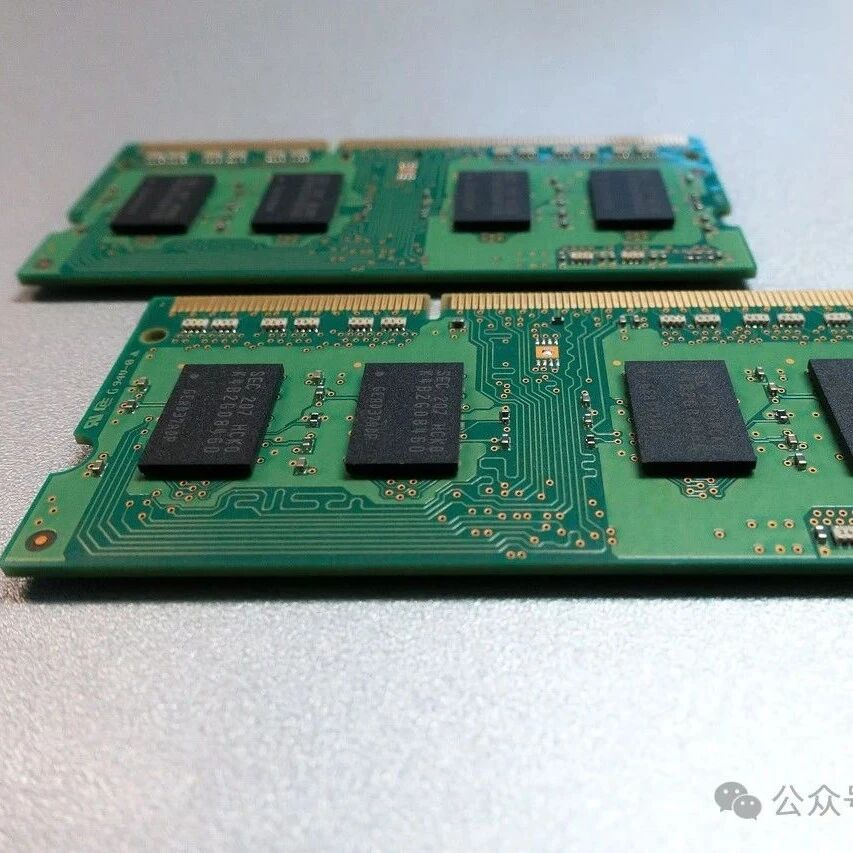
存储芯片,势头凶猛
半导体行业观察· 2025-09-30 03:31
Core Viewpoint - The semiconductor industry is on the brink of a "super cycle" due to historically low DRAM inventory levels and increasing demand driven by artificial intelligence and other factors [1][2]. Group 1: Market Dynamics - DRAM inventory levels have dropped to an average of 3.3 weeks, the lowest in history, similar to levels seen during the 2018 semiconductor super cycle [1]. - The demand for HBM (High Bandwidth Memory) has surged due to the rise of AI, particularly with NVIDIA's AI accelerators, leading to a decrease in overall DRAM production as companies like Samsung shift production lines [2]. - The upcoming server upgrades in data centers built between 2017 and 2018 are expected to further increase the demand for general DRAM and eSSD [2]. Group 2: Pricing Trends - Prices for DRAM products have been rising, with "DDR4 8Gb" reaching $6,350 and "DDR5 16G" increasing over 40% since the beginning of the year [3]. - Samsung and SK Hynix are planning to raise DRAM prices, indicating a sustained trend of increasing prices in the market [3]. Group 3: Future Outlook - Morgan Stanley predicts that the peak of the current semiconductor cycle will occur in 2027, with a prosperous period lasting over a year [3]. - Samsung is expected to be the biggest beneficiary of the semiconductor recovery cycle due to its capacity expansion at the Pyeongtaek plant [3].