半导体行业观察

Search documents
13桩收购,重塑芯片格局
半导体行业观察· 2025-12-31 01:40
Core Insights - The semiconductor and EDA industry is experiencing significant consolidation in 2025, driven by the transition to next-generation high-power chips for AI data centers [1] - Major acquisitions include Synopsys' $35 billion acquisition of Ansys, Marvell's acquisition of Celestial AI, and Nvidia's planned acquisition of Groq's technology [1][2] - SoftBank is increasing its investments in the semiconductor sector, acquiring Ampere Computing for $6.5 billion to enhance its AI capabilities [2] Group 1: Major Acquisitions - Synopsys completed the acquisition of Ansys, which focuses on physical modeling, particularly for chip modeling, after overcoming regulatory hurdles [1] - Marvell's acquisition of Celestial AI for $3.25 billion aims to enhance its optical interconnect technology for AI data centers [4][5] - Nvidia's acquisition of Groq's technology, valued at approximately $20 billion, is intended to enhance its capabilities in AI inference [4][7] Group 2: Strategic Implications - The acquisition of Celestial AI is seen as a milestone for Marvell, solidifying its leadership in AI connectivity and addressing the need for scalable architectures in AI infrastructure [5] - SoftBank's acquisition of Ampere Computing is part of a strategy to provide a complete system for server manufacturers, competing with AMD and Nvidia [2] - The consolidation trend in the semiconductor industry is evident with Cadence's acquisition of ARM's Artisan IP and Qualcomm's acquisition of Alphawave [3][5] Group 3: Market Dynamics - The semiconductor industry is undergoing rapid transformation, with a focus on scalable, high-performance, and energy-efficient solutions for AI workloads [5] - There are indications that the valuation multiples for some acquisitions, such as Celestial AI, may be perceived as insufficient by investors [6] - Synopsys faces challenges in integrating Ansys tools effectively to leverage the acquisition's full potential [6]




美国将建HBM封装产线
半导体行业观察· 2025-12-30 01:45
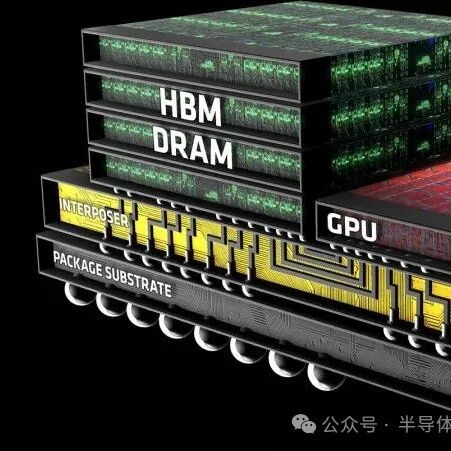
SK海力士位于美国首家工厂——Lastwepiet Packaging工厂,计划成为人工智能存储器尖端封装生产 基地。该工厂预计将于2028年下半年投产。为实现这一目标,SK海力士宣布将在美国投资38.7亿美 元(约合5.4万亿韩元)。 SK海力士之所以在加州西拉法叶新建一条封装生产线,主要原因在于其高带宽内存(HBM)。HBM 是人工智能半导体的关键组件,而美国政府一直在积极吸引包括SK海力士在内的主要半导体公司进 行本地投资,以加强美国尖端半导体供应链。 此外,SK海力士正计划在该工厂建设一条2.5D封装的量产生产线。2.5D封装技术通过在半导体和基 板之间插入一层称为硅中介层的薄膜,来提升芯片的性能和能效。全球科技巨头英伟达的高性能AI加 速器也采用2.5D封装技术制造,将HBM显存与高性能GPU和CPU集成在一起。 SK海力士此举被解读为旨在通过建立2.5D量产生产线来增强其整体人工智能半导体封装能力,包括 HBM。 公众号记得加星标⭐️,第一时间看推送不会错过。 SK海力士计划投资以获取超越HBM技术的尖端封装技术。据报道,该公司正准备在其位于美国的新 封装工厂建立首条2.5D封装量产生产线。 2. ...
内存价格飙升,引发产业巨震
半导体行业观察· 2025-12-30 01:45
Core Insights - The global PC market is projected to decline significantly, with a potential drop of up to 9% by 2026 under a pessimistic scenario, a revision from the previously estimated 2.5% decline [1] - The memory shortage has worsened beyond initial predictions, impacting the production focus from consumer-grade to enterprise-grade components, which may lead to prolonged effects rather than a typical cyclical downturn [1] Group 1: PC Market Outlook - The decline in PC shipments is exacerbated by the end of the Windows 10 lifecycle and the rise of "AI PCs," with average prices expected to increase by 6% to 8% due to rising DRAM and SSD costs [2] - Major OEMs like Dell, HP, Lenovo, and Asus are better positioned to withstand market pressures compared to smaller brands, particularly in the gaming PC segment where high memory configurations are common [3] - The anticipated growth in AI PCs is hindered by high memory requirements, which are currently scarce and expensive, leading to a mismatch between consumer demand and product pricing [3] Group 2: Market Dynamics and Historical Context - A 9% decline in the PC market is significant, comparable to the 11.9% drop during the 2009 financial crisis and the nearly 15% decline post-pandemic, indicating a serious market contraction [4] - The current situation is particularly concerning as it occurs during a period that should ideally see growth due to the end of Windows 10 support and the emergence of AI PCs, highlighting a fundamental shift in consumer hardware dynamics [4]
台积电2nm,悄然量产
半导体行业观察· 2025-12-30 01:45
Core Viewpoint - TSMC has quietly announced the commencement of volume production of its N2 (2nm) process technology, achieving its goal set for Q4 2025 without a formal press release [1][5]. Group 1: N2 Technology Overview - The N2 process utilizes the first-generation nanosheet transistor technology, providing significant improvements in performance and power consumption [1]. - TSMC's N2 technology is expected to be the most advanced in the semiconductor industry in terms of density and energy efficiency, addressing the growing demand for energy-efficient computing [1]. - The N2 design aims for a 10%-15% performance increase at the same power level and a 25%-30% reduction in power consumption at the same performance level [3][4]. Group 2: Performance Metrics - For mixed designs including logic, analog, and SRAM, transistor density is expected to increase by 15% compared to N3E, while pure logic designs will see a 20% increase [3][4]. - The N2 process will feature a significant reduction in power consumption, with estimates ranging from 25% to 30% compared to N3E [4]. Group 3: Production and Capacity - TSMC has begun production of 2nm chips at its Fab 22 facility near Kaohsiung, Taiwan, with expectations for ramp-up in capacity driven by demand from smartphones and high-performance computing AI applications in 2026 [5][8]. - The company is constructing two new fabs capable of N2 technology to meet the strong interest from partners, with plans to produce N2P and A16 chips starting in late 2026 [8]. Group 4: Future Developments - TSMC plans to introduce N2P, an enhanced version of the N2 process, which will further improve performance and power efficiency, with volume production expected in the second half of 2026 [8]. - The A16 chip, designed for complex AI and HPC processors, will also begin production in the second half of 2026, utilizing TSMC's advanced Super Power Rail design [8].

中芯国际重磅收购,新进展
半导体行业观察· 2025-12-30 01:45
公众号记得加星标⭐️,第一时间看推送不会错过。 中芯国际重磅收购,迎来新进展。 12月29日晚间,中芯国际公告称,公司拟向国家集成电路基金等5名中芯北方股东发行5.47亿股股份 购买其所持有的中芯北方49%股权,交易价格406.01亿元。公告显示,这五名股东分别为国家集成电 路基金、集成电路投资中心、亦庄国投、中关村发展、北京工投。 据悉,标的公司中芯北方成立于2013年,是中芯国际与北京市政府共同投资设立的12寸先进制程集 成电路制造厂,是中芯国际控股子公司。公司主要从事半导体(硅片及各类化合物半导体)集成电路 芯片的制造(含线宽28纳米及以下大规模数字集成电路制造)、针测及测试、光掩膜制造、测试封 装,是中芯国际重要的12英寸晶圆厂。 中芯国际作为中芯北方的控股股东与核心技术供给方,全面主导并负责中芯北方的生产运营管理,为 其技术落地与产能释放提供了坚实保障。 对于此次收购,公司表示,本次交易有利于进一步提高上市公司资产质量、增强业务上的协同性,促 进上市公司的长远发展。交易前后上市公司的主营业务范围不会发生变化。 公开资料显示,中芯国际拥有全方位一体化的集成电路晶圆代工核心技术体系,快速有效地帮助客户 ...

投资英特尔,英伟达大挣180亿
半导体行业观察· 2025-12-30 01:45
Core Viewpoint - NVIDIA's acquisition of Intel shares for $5 billion has turned into a strategic financial operation, now valued at $7.58 billion, following the approval from the Federal Trade Commission [1] Group 1: Acquisition Details - NVIDIA CEO Jensen Huang and Intel CEO Pat Gelsinger agreed on a purchase price of $23.28 per share for Intel stock, totaling 214 million shares [1] - The acquisition was completed on December 26, with Intel's stock closing at $36.68 per share on the following Monday [1] Group 2: Joint Development Agreement - NVIDIA and Intel will collaborate on developing "multi-generation" chips for data centers and personal computers, aiming to capture market share across their customer base [1] - Intel will customize x86 CPUs for NVIDIA, which will integrate these CPUs into its AI infrastructure platform [1] Group 3: Technical Advancements - The partnership will utilize NVIDIA's NVLink technology, providing a bandwidth of up to 1.8 TB/s per GPU, which is 14 times the bandwidth of PCIe 5.0 x16 slots [1] - Intel will also manufacture x86 system-on-chip (SoC) integrated with NVIDIA's RTX GPU chips, enhancing the performance of integrated CPU and GPU PCs [2] Group 4: Regulatory Context - The agreement is reminiscent of NVIDIA's previous attempt to acquire Arm for $40 billion, which faced regulatory scrutiny and was ultimately abandoned [2] - The Federal Trade Commission had previously expressed concerns that such mergers could stifle competition and innovation in the semiconductor industry [2]


芯片涨价潮来了
半导体行业观察· 2025-12-30 01:45
Core Viewpoint - TSMC is set to increase advanced process pricing from 2026 to 2029 due to high demand driven by AI applications, with a projected price increase of 3% to 10% for advanced processes starting January 2026 [1][2][3]. Group 1: Pricing Strategy - TSMC has communicated with clients about raising prices for advanced processes over the next four years, reflecting increased production costs and high demand [1][3]. - Despite the price increase, clients are actively reserving advanced process capacity, indicating strong demand in the AI sector [2][3]. - The expected price increase for 2026 is in the single-digit percentage range, with variations based on client procurement levels [1][3]. Group 2: Capital Expenditure - TSMC's capital expenditure for 2026 is projected to reach a historical high of between $42 billion and $45 billion, maintaining a strong investment trend [3]. - The company has already reported a capital expenditure of $29.39 billion for the first three quarters of 2023, with expectations for the fourth quarter to reach between $10.61 billion and $12.61 billion [3]. - Global semiconductor manufacturing capital expenditure is estimated to reach $160 billion in 2023, primarily supported by TSMC and Micron's investments [4]. Group 3: Market Dynamics - The semiconductor industry is experiencing a seller's market for advanced processes, with rising costs reflected in pricing strategies across various segments, including wafer foundry and advanced packaging [5][6]. - The strong demand for AI chips positions TSMC at the core of the AI market, enhancing its bargaining power [6]. - The anticipated price increases in advanced packaging and memory also indicate a trend towards "chip inflation," which may impact consumer electronics demand [5][6].

重磅,TI入局RRAM
半导体行业观察· 2025-12-30 01:45
Core Viewpoint - Weebit Nano has licensed its ReRAM technology to Texas Instruments (TI), indicating a significant step towards integrating advanced non-volatile memory solutions in embedded processing applications [1][2][3]. Group 1: Agreement Details - The agreement includes intellectual property licensing, technology transfer, and the design and certification of Weebit ReRAM within TI's process technology [1][2]. - Weebit ReRAM is characterized as a low-power, cost-effective non-volatile memory that has demonstrated excellent retention performance at high temperatures and has passed AEC-Q100 150°C operational certification [1][2]. Group 2: Industry Implications - TI's senior vice president, Amichai Ron, expressed enthusiasm about the collaboration, emphasizing that it will provide customers with leading non-volatile memory technology that excels in performance, scalability, and reliability, thereby reinforcing TI's position as a leading embedded processor supplier [3]. - Weebit CEO Coby Hanoch highlighted that this agreement underscores the industry's shift towards using ReRAM as a successor to flash memory in SoC designs, solidifying Weebit's status as a leading independent ReRAM technology supplier [3].

0.2nm 将到来,最新芯片路线图发布
半导体行业观察· 2025-12-30 01:45
Core Insights - The recent semiconductor technology roadmap by the Korean Society of Semiconductor Engineers (ISE) predicts advancements down to 0.2nm, indicating a shift in the competitive landscape of the semiconductor industry rather than just a focus on smaller process nodes [1][3]. Device and Process Technology Roadmap - The roadmap outlines a 15-year vision from 2025 to 2040, focusing on nine key semiconductor technology trends, including AI semiconductors, optical interconnects, and quantum computing [1][3]. - The evolution of logic devices aims to maintain performance and power efficiency while reducing size, with a shift from Design-Technology Co-Optimization (DTCO) to System-Technology Co-Optimization (STCO) [4][5]. Logic Technology Trends - Logic device nodes are projected to progress from 2nm in 2025 to 1nm by 2031, and approach 0.2nm by 2040, with key variables including gate length and 3D integration capabilities [5][12]. - The transition from FinFET to Gate-All-Around (GAA) structures is expected, with further innovations like CFET (Complementary FET) enhancing performance through 3D stacking [8][10]. Metal Interconnect Technology - Metal interconnects are becoming a critical performance bottleneck, necessitating innovations in materials and processes to achieve lower resistance and higher reliability [14][15]. - Backside Power Delivery Networks (BSPDN) are anticipated to be introduced around 2028, improving power efficiency and area utilization [14][15]. Memory Technology Trends - The semiconductor industry is shifting focus from computation to memory, with AI and HPC driving demand for high-capacity, high-bandwidth, low-latency, and low-power memory solutions [16][17]. - DRAM technology is evolving towards vertical channel transistors and stacked architectures, with significant advancements expected in the coming years [19][21]. Non-Volatile Memory (NVM) Developments - 3D NAND technology is projected to increase in layer count, reaching up to 2000 layers by 2040, while facing challenges in manufacturing processes [23][25]. - New NVM technologies like PCM and ReRAM are being explored, with PCM seen as having balanced scaling potential [26][27]. AI Semiconductor Roadmap - The AI hardware market is expected to grow significantly, with AI-related computing projected to account for about 20% of global computing demand by 2025 [29][30]. - Performance for training and inference hardware is expected to improve dramatically, with TOPS/W metrics increasing significantly by 2040 [30][31]. Optical Interconnect Technology - Optical interconnects are viewed as a key solution to the limitations of traditional copper interconnects, with applications expanding in data centers and AI-driven systems [33][36]. - The roadmap anticipates the introduction of Co-Packaged Optics (CPO) technology, which integrates optical and electronic components to enhance data transmission capabilities [42][44].
需求太旺盛,台积电3nm,即将涨价
半导体行业观察· 2025-12-29 01:53
Core Viewpoint - TSMC is set to benefit from the booming AI applications, leading to a tight supply of advanced process capacity below 3nm, with plans to raise prices for advanced processes from 2026 to 2029 [1][2] Group 1: Price Increase and Demand - TSMC has communicated with clients about a price increase for advanced processes, expected to be in the single-digit percentage range starting January 2026, reflecting higher production costs and strong demand [1][3] - Analysts predict that TSMC's advanced process pricing could increase by 3% to 10% in 2026, with variations depending on client procurement levels [1][2] Group 2: Capacity and Client Engagement - Major clients like NVIDIA and AMD are actively expanding AI applications, contributing to the sustained demand for TSMC's advanced processes [1][2] - TSMC's clients are eager to secure advanced process capacity to maintain a competitive edge in technology [2] Group 3: Capital Expenditure - TSMC's capital expenditure for 2026 is projected to reach a historical high of between $42 billion and $45 billion, maintaining a flexible approach to ensure revenue growth outpaces capital spending [3] - The actual capital expenditure for TSMC in the first three quarters of this year reached $29.39 billion, with expectations for the fourth quarter to contribute an additional $10.61 billion to $12.61 billion [3] Group 4: Industry Context - Global semiconductor manufacturing capital expenditure is estimated to reach $160 billion this year, with a 3% year-over-year growth, primarily driven by TSMC and Micron's significant investments [4]