美股研究社

Search documents
AI日报丨诺基亚计划在美国进行40亿美元AI投资,苹果“史上最薄iPhone”初期销量远逊预期
美股研究社· 2025-11-24 13:22
Group 1 - Nokia plans to invest $4 billion in the U.S. for AI research and production to enhance AI network connectivity [5][6] - Goldman Sachs partner Tony Pasquariello notes signs of capitulation among bulls in the U.S. stock market, indicating potential further sell-offs before stabilization [7][8] - Google introduces BigQuery AI, integrating generative AI into user data management, streamlining the machine learning lifecycle without data migration [9] Group 2 - Citic Securities highlights Nvidia's impressive earnings and guidance, along with Google's Gemini 3 model performance, indicating ongoing growth in the AI sector and recommending investment in the AI PCB segment [10] - Apple's iPhone 17 Air, marketed as the "thinnest iPhone ever," has underperformed in initial sales, leading to a production cut due to lower-than-expected demand [12] - Google aims to double its computing power every six months, with a long-term goal of a 1000-fold increase in capacity over the next 4 to 5 years, emphasizing the importance of AI infrastructure [13][14]






台积电(TSMC)仍具有极高定价权
美股研究社· 2025-11-24 13:22
Core Viewpoint - TSMC plays a crucial role as an irreplaceable technology supplier for AI development and deployment, which supports its strong financial performance. The company maintains significant pricing power even with its largest clients, leading to double-digit profit growth [1]. Company Overview - TSMC is one of the most advanced manufacturers globally, with core advantages that few competitors can match. The company actively defends its technological edge through legal means and has a customer base that includes major players like NVIDIA and Intel, which rely on TSMC for cutting-edge chips [3]. Potential Catalysts - **Exponential Growth of AI**: The competition among large data center operators in AI is a primary growth driver for TSMC, leading to a surge in demand for customized chips. TSMC is expanding capacity rapidly due to increased orders from NVIDIA, which could lead to supply bottlenecks if not managed [5]. - **Mitigation of Geopolitical Risks**: TSMC faces significant geopolitical risks that could impact its production capabilities. To address this, the company is expanding its manufacturing presence in new markets, including a commitment to build three factories in Arizona, USA [6]. Financial Overview - TSMC's financial strength is highlighted by total revenue of $119.13 billion and a gross profit of $70.26 billion, placing it at the top of its industry. The latest quarterly results show an EPS of $2.92, exceeding expectations, and revenue of $32.29 billion, also above market consensus [8]. - The company has a high gross margin of 58.98%, an EBIT margin of 49.52%, and a net profit margin of 42.29%, reflecting its efficient operational structure [8]. - TSMC's revenue grew by 36.96% year-over-year, with a diluted EPS increase of 49.62%. The three-year CAGR for revenue stands at 20.48% [9]. Future Growth Prospects - The forward revenue growth rate is projected at 29.08%, which is competitive compared to peers like Broadcom at 28.91% and AMD at 31.83% [10]. Target Price Logic - TSMC's liquidity totals $90.25 billion, with a strong cash flow from operations of $71.18 billion. Despite high capital expenditures of $41.89 billion, the company generated $20.61 billion in levered free cash flow, indicating robust financial health [12]. - The forward P/E ratio is 27.27, higher than the industry average of 22.89, but analysts consider this premium justified due to TSMC's market dominance and growth potential [13]. - A conservative target P/E of 25 is applied, leading to a target price of $312.50, indicating significant upside potential from the current stock price [14]. Conclusion - TSMC's strong financial health and growth trajectory position it as a primary beneficiary of the surge in demand for high-end chips driven by the AI boom. The company is taking measures to mitigate geopolitical and trade risks, reinforcing the rationale for its valuation premium [18].


不是比特币崩了,是储币模式被清算
美股研究社· 2025-11-24 13:22
Core Viewpoint - The recent decline in Bitcoin prices from approximately $125,000 to around $84,000 is attributed to a combination of macroeconomic factors and significant changes in the regulatory landscape, particularly concerning companies heavily invested in Bitcoin, such as Strategy Inc. [5][7][42] Group 1: Bitcoin Price Movement - Bitcoin reached a historical high of approximately $125,000 on October 6, 2025, before experiencing a decline to about $84,000 by late November, marking a maximum drawdown of nearly 30% [5][13]. - The decline is characterized as a typical "high position correction," influenced by cooling interest rate expectations, overall risk asset declines, and a shift from net inflows to net outflows in ETF investments [7][8]. Group 2: Strategy Inc. Overview - Strategy Inc., formerly known as MicroStrategy, has transformed from a software company into a Bitcoin fund, holding 649,870 Bitcoins with a total purchase cost of approximately $48.37 billion and an average purchase price of about $74,433 per Bitcoin [9][13]. - The market value of these holdings is estimated to be between $54 billion and $56 billion, representing about 3% of the total global Bitcoin supply [14]. Group 3: Financial Strategy and Market Dynamics - Since August 2020, Strategy has engaged in a "reflexive cycle" by using cash to purchase Bitcoin, which subsequently increased its net asset value and stock price, allowing for further stock issuance to buy more Bitcoin [17][18]. - This cycle has been successful, with Bitcoin holdings increasing from over 20,000 to over 640,000, and the company's market capitalization peaking near $60 billion [22]. Group 4: MSCI's Regulatory Impact - MSCI has initiated a consultation regarding how to classify companies like Strategy that hold a significant amount of digital assets, suggesting that if digital assets exceed 50% of total assets, these companies should be treated as investment funds rather than operating companies [25][27]. - The consultation period ends on December 31, 2025, with a decision expected to take effect on January 15, 2026, potentially leading to the exclusion of such companies from major stock indices [28][32]. Group 5: Market Reactions and Future Implications - If MSCI decides to exclude Strategy from its indices, passive funds tracking MSCI could be forced to sell approximately $2.8 billion worth of Strategy stock, with total potential sell pressure reaching around $8.8 billion if other index providers follow suit [34][35]. - The market has already begun to react, with the market-to-net asset value (mNAV) ratio for Strategy dropping from a peak of 2.5 to around 1.1, indicating a significant reduction in the premium investors are willing to pay for the stock [39][41].


美联储会议纪要暴严重分歧:多人认为不适合12月降息,一些人担心股市无序下跌
美股研究社· 2025-11-21 07:36
Core Viewpoint - The recent Federal Reserve meeting minutes reveal significant divisions among policymakers regarding the potential for a rate cut in December, with a consensus to halt the balance sheet reduction (QT) [2][3][10]. Group 1: Monetary Policy Outlook - Many participants believe that further rate cuts may be appropriate as the committee shifts towards a more neutral policy stance, although some express skepticism about a 25 basis point cut in December [3][4]. - The minutes indicate that the term "many" used in the context of the discussions suggests a number lower than "most," highlighting that those opposing a December rate cut remain in the minority [4][5]. - There is a prevailing hawkish sentiment within the Fed, as evidenced by the discussions around the potential inflation risks associated with further rate cuts [6]. Group 2: Financial Stability Concerns - Some Fed officials expressed concerns about high asset valuations in financial markets, particularly the risk of a disorderly decline in stock prices if the market reassesses the prospects of AI technologies [8]. - The discussions also touched on risks associated with corporate debt levels, indicating that the Fed is closely monitoring financial stability alongside inflation and employment [8]. Group 3: Balance Sheet Reduction - Almost all participants agreed that it is appropriate to end the balance sheet reduction on December 1, marking the conclusion of a three-and-a-half-year process that began on June 1, 2022 [10]. - The decision to stop the balance sheet reduction is seen as a response to tightening conditions in the money markets, with many participants noting that a higher proportion of short-term Treasury holdings would provide the Fed with greater flexibility [11].

英伟达业绩爆表却引发美股“大逆转”,标普创4月来最惨一日!
美股研究社· 2025-11-21 07:36
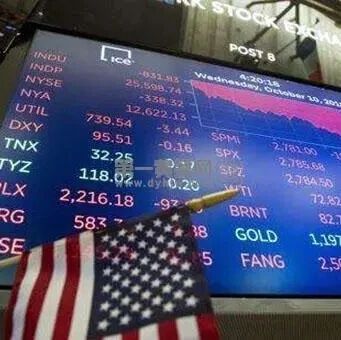
Core Viewpoint - The U.S. stock market experienced its most significant intraday reversal since April, with major indices dropping sharply, leading to a loss of over $2.7 trillion in market value, raising concerns among Wall Street traders about the underlying causes of the decline [5][6]. Market Performance - The S&P 500 index fell by 1.6%, marking a significant drop, while the Nasdaq 100 index saw a decline of 2.4%, reaching a new low since September, with a cumulative drop of 7.9% from its record high on October 29 [5][6]. - The VIX index, which measures expected stock volatility, rose above 26 for the first time since April, indicating increased market uncertainty [5][6]. Key Factors Behind the Decline - Concerns about whether AI projects can generate sufficient revenue or profits to justify substantial technological investments resurfaced [6]. - The strong employment report from September was interpreted as a signal that the Federal Reserve may not lower interest rates again this year [6]. - The drop in Bitcoin to a six-month low was viewed as a risk-off signal contributing to the stock market's decline [6]. - High stock valuations and rising volatility ahead of the expiration of approximately $3.1 trillion in nominal options were also cited as potential factors [6][7]. Analyst Insights - Analysts highlighted various unresolved economic and market challenges, including labor market strength, tariffs, inflation, and the sustainability of AI investments [11]. - Concerns about overvaluation and the trend of debt financing potentially overshadowing shareholder returns were emphasized [12]. - The mechanical outflow of funds from trend-following strategies could continue in the coming days, leading to further selling pressure [12]
AI日报丨英伟达乐观展望缓解AI泡沫担忧,谷歌生图模型升级受追捧
美股研究社· 2025-11-21 07:36
Core Viewpoint - The rapid development of artificial intelligence (AI) technology is creating extensive opportunities across various sectors, with significant discussions around its potential to alleviate poverty and enhance productivity [5][6]. Group 1: AI and Robotics - Elon Musk and Jensen Huang discussed the transformative potential of AI and humanoid robots at the Saudi Investment Forum, suggesting that these technologies could effectively eliminate poverty [5]. - Musk emphasized that Tesla will not be the only company producing humanoid robots but aims to create the first truly useful models, indicating a revolutionary shift in the industry [5]. Group 2: AI Hardware and Market Trends - SK Hynix plans to increase its monthly production capacity of the sixth-generation 10nm DRAM from 20,000 wafers to between 160,000 and 190,000 wafers, representing an increase of 8 to 9 times, driven by the surge in demand for AI applications [8]. - The company is expected to invest over 30 trillion Korean won in facilities next year, reflecting strong confidence in the "AI memory supercycle" [8]. Group 3: Market Reactions and Stock Performance - European stock markets ended a five-day decline, buoyed by Nvidia's unexpectedly strong revenue outlook, which alleviated concerns about an AI bubble [9]. - Nvidia's optimistic sales forecast provided relief to investors amid worries about high valuations in tech stocks and uncertainty regarding Federal Reserve interest rate policies [9]. - Despite Nvidia's positive earnings report, the U.S. stock market experienced significant volatility, with the S&P 500 index showing a drastic reversal from a 1.9% gain to a 1.1% loss within the same trading day [13][14].

当AI应用股回归基本面,哪一支是“低估值、高确定性”标的?
美股研究社· 2025-11-21 07:36
Core Viewpoint - The article emphasizes a shift in market sentiment towards AI applications that can demonstrate tangible performance, particularly in the advertising sector, where companies like JOYY (欢聚集团) are showing significant growth in their AI-driven advertising business, BIGO Ads [3][10]. Group 1: Market Sentiment and Performance - Since October, the US tech sector has experienced significant volatility, with a shift from blind faith in AI to a focus on performance metrics [3]. - Investors are increasingly favoring companies with a safety margin, steady profitability, and clear evidence of AI adding value [3]. - The advertising technology sector is highlighted as a mature field within AI applications, with companies like JOYY entering a profit realization phase [3]. Group 2: JOYY's Performance and Growth - JOYY reported a revenue of $540 million in Q3, with BIGO Ads contributing $104 million, marking a 33.1% year-over-year growth and a 19.7% quarter-over-quarter increase [3][12]. - Following the Q3 report, JOYY's stock surged over 12%, reaching a peak of $67.85 [5]. - The company’s advertising revenue now constitutes 28.1% of total revenue, reflecting a fundamental shift in its revenue structure [12]. Group 3: Competitive Landscape in AI Advertising - The AI advertising landscape is becoming increasingly differentiated, with companies like AppLovin showing strong growth but limited valuation flexibility due to high market expectations [7]. - JOYY, categorized previously as a "live streaming platform," is now being recognized for its potential in the AI advertising space, with its stock price not yet fully reflecting its growth potential [7][14]. Group 4: BIGO Ads' Growth Dynamics - BIGO Ads has shown consistent acceleration in its advertising business, with a 30% increase in core advertiser budgets quarter-over-quarter [8]. - The platform's advertising request volume has surged, with a 228% year-over-year increase, indicating strong demand and effective scaling [9]. - BIGO Ads is expanding its verticals beyond gaming into tools, finance, and e-commerce, positioning itself as a global advertising network [10]. Group 5: Financial Health and Valuation - JOYY's financial structure is supported by its stable live streaming business, which provides a "cash cow" effect, while BIGO Ads contributes high growth momentum [12]. - The company has a net cash position of $3.32 billion, with a market capitalization of approximately $3.2 billion, indicating that its cash alone covers its market value [13]. - The current market valuation does not fully reflect JOYY's intrinsic value, suggesting a potential revaluation as the market recognizes its growth and profitability [14].


以旧换新与智性消费共振,二手电商进入“结构化增速”
美股研究社· 2025-11-21 07:36
Core Viewpoint - The article highlights the significant growth of the second-hand electronics market driven by the new smartphone release cycle and government subsidy policies, positioning second-hand e-commerce as a crucial player in the circular economy [3][5][18]. Group 1: Market Dynamics - The upcoming releases of flagship smartphones like Xiaomi 17 and iPhone 17 are expected to trigger a new wave of device upgrades, benefiting the entire consumer electronics supply chain [3]. - The second-hand e-commerce sector, particularly companies like Wanwu Xingsheng (Ai Huishou), reported a total revenue of 5.15 billion yuan in Q3, a year-on-year increase of 27.1%, with non-GAAP operating profit reaching 140 million yuan, up 34.9% [3][5]. - The demand for second-hand devices is being fueled by a combination of AI advancements and the accelerated turnover of old devices, with consumers increasingly willing to trade in their old devices as part of a rational spending strategy [3][5]. Group 2: Policy and Consumer Behavior - The introduction of national subsidies for mobile and other 3C products has stimulated upgrade demand, with retail sales of communication devices increasing by 19.9% year-on-year in the first three quarters [5][6]. - Young consumers are shifting their perception of second-hand transactions from a sign of financial struggle to a rational decision that reflects environmental consciousness and consumer intelligence [6][20]. - Following the launch of the iPhone 17, search volume for second-hand Apple phones surged by 150%, and inquiries for device recycling increased by 210% [6]. Group 3: Industry Transformation - Second-hand e-commerce is evolving from a supplementary role in the consumer electronics market to a strategic hub for product circulation, supported by government initiatives to standardize second-hand goods transactions [7][9]. - The industry is expected to transition from reliance on subsidies to sustained demand driven by consumer habits and technological advancements [7][9]. - The second-hand market is becoming a vital part of the modern consumption system, necessitating platforms to enhance their capabilities in supply chain management and quality assurance [9][12]. Group 4: Technological Advancements - The integration of AI and automation in quality inspection and pricing processes is crucial for scaling the second-hand market, with Wanwu Xingsheng's Matrix system recognized for its contribution to waste reduction [13][15]. - The company has expanded its offline presence to 2,195 stores across 298 cities, enhancing its delivery capabilities and customer experience [12][15]. - The growth of the second-hand market is also reflected in the significant increase in compliance refurbishment revenue, which rose by 102% year-on-year [16]. Group 5: Circular Economy and Future Outlook - The second-hand market is positioned as a structural winner in the dual trends of a "stock society" and a circular economy, with the potential for significant growth as consumer awareness of resource efficiency increases [18][19]. - The expansion of multi-category recycling services has led to a 95% year-on-year increase in transaction volume for high-value items like luxury goods [19][23]. - The article emphasizes that the second-hand e-commerce sector is not just a business but a narrative about resource efficiency, consumer rationality, and sustainable growth [23].


AI日报丨“灵光”下载量破50万,冲上App Store免费工具榜第一,黄仁勋表示没有看到AI泡沫
美股研究社· 2025-11-20 12:12
Group 1 - The article highlights the rapid development of artificial intelligence (AI) technology, presenting significant opportunities in the market [3] - Ant Group's AI assistant "Lingguang" achieved over 500,000 downloads within three days of its launch, ranking first in the App Store's free tools category [5] - Kuaishou's CEO Cheng Yixiao emphasized the potential of the video generation sector, noting the ongoing competition and technological advancements in the industry [6] Group 2 - Broadcom launched the Brocade X8 Director and G820 switches, designed to enhance enterprise storage and modern data center infrastructure [7] - The Brocade Gen 8 product line incorporates SAN AI technology for infrastructure management automation and performance optimization [8] - NVIDIA's CEO Jensen Huang reported that cloud GPUs are sold out, indicating a significant increase in demand for computing power in AI applications [9] Group 3 - Elon Musk's xAI is negotiating to raise $15 billion at a valuation of $230 billion, a significant increase from its previous valuation of $113 billion [11] - xAI plans to collaborate with Saudi Arabia on a 500-megawatt data center project, utilizing NVIDIA chips to develop a world-class GPU network [12][13] - AMD, Cisco, and Humain have formed a joint venture to deliver up to 1 gigawatt of AI infrastructure by 2030, with an initial deployment of 100 megawatts in Saudi Arabia [14]


英伟达财报解读:AI浪潮下的高光与隐忧
美股研究社· 2025-11-20 12:12
Core Viewpoint - The analysis indicates that Nvidia's (NVDA) valuation is not at a bubble level, as the market has already reflected its strong execution and some growth expectations for the coming years [1][10]. Financial Performance - Nvidia's guidance for Q3 revenue was $54 billion, indicating a quarter-over-quarter growth of 15.5% and a year-over-year growth of 54%. The actual revenue reported was $57 billion, showing a quarter-over-quarter growth of 22% and a year-over-year growth of 62% [6]. - The earnings per share (EPS) expectation was $1.26, while the actual reported EPS was $1.30, exceeding expectations by approximately 3% [7]. - The data center business showed a quarter-over-quarter growth of 25%, with a year-over-year growth of 65%, which was significantly above market expectations [7][9]. Growth Drivers - The strong revenue performance is attributed to three major platform transformations driving data center growth: accelerated computing, powerful AI models, and intelligent applications [9]. - Nvidia's new Blackwell architecture has become mainstream among its customer base, with record sales reported [9]. Valuation and Future Outlook - Nvidia's current forward P/E ratio is approximately 30, with a projected year-over-year growth of 65% for Q4 [10]. - Market expectations for fiscal year 2027 indicate a year-over-year growth of 40%, and for fiscal year 2028, a growth of 25% [11]. - Analysts project a P/E ratio of 26 for 2028, even considering potential downturns, indicating a reasonable profit yield [12]. Long-term Growth Potential - The company is expected to maintain long-term compound growth, even with potential cyclical downturns, due to its strong execution and importance in the AI industry [14].