美股IPO

Search documents
台积电25Q3法说会:对人工智能大趋势的信心正在“增强”,上调全年销售预期和资本支出下限(附纪要全文)
美股IPO· 2025-10-16 08:06
Core Viewpoint - TSMC expects a nearly 30% revenue growth in 2025, with an increase in capital expenditure to $40 billion to $42 billion, up from a previous estimate of $38 billion to $42 billion [1][4][10]. Group 1: Performance Guidance - TSMC has raised its revenue growth forecast for 2025 to the mid-point of 30% [2]. - The company anticipates a gross margin of 59% to 61% for Q4, exceeding market expectations of 57% [2][4]. - Q4 sales are projected to be between $32.2 billion and $33.4 billion, surpassing market estimates of $31.23 billion [2][4]. Group 2: Artificial Intelligence - TSMC remains optimistic about AI growth prospects, noting that demand is stronger than anticipated three months ago [2][5]. - The company believes AI demand will remain robust throughout 2025, with a significant focus on expanding production capacity for AI-related products [5][11]. - TSMC is working to increase CoWoS capacity by 2026 due to tight AI-related production capacity [5][12]. Group 3: Capital Expenditure - TSMC's capital expenditure for the first nine months of 2025 totaled $29.39 billion, with an annual forecast of $40 billion to $42 billion [2][10]. - The company emphasizes that capital expenditure is unlikely to drop suddenly in any given year [4][10]. Group 4: Technology and Capacity - The A16 process is expected to achieve mass production in the second half of the year, while the 2nm process is set to begin mass production later this quarter [2][5]. - TSMC is accelerating capacity expansion in Arizona and has begun construction on its second wafer fab in Japan [3][13]. - The company is committed to maintaining a strong competitive edge through advanced manufacturing processes and technology [10][19].


超预期!AI芯片需求持续火热,台积电Q3净利润创历史新高,超预期增长39%,资本支出达97亿美元
美股IPO· 2025-10-16 08:06
台积电Q3净利润4523亿元台币,同比增长39%,超出预估的4054.7亿元台币;第三季度毛利率59.5%,较上季度的58.6%继续改善,高于分析师预估 的57.1%。 受益于人工智能基础设施投资热潮加速,台积电最新财报显示净利润同比增长39%,超出市场预期,创下历史新高。 周四,台积电公布第三季度财报,具体来看: 营收增长得益于先进制程技术的强劲需求,具体来看: Q3净利润4523亿元台币,同比增长39%,超出预估的4054.7亿元台币; 第三季度毛利率59.5%,较上季度的58.6%继续改善,高于分析师预估的57.1%。营业利润率达50.6%,环比提升1个百分点,连续两季度改善。 营收和营业利润同样表现亮眼。三季度营收9899.2亿新台币,同比增长30%,超出预期的9677亿新台币;营业利润5006.9亿新台币,同比增长39%,超过预期的 4586亿新台币。 资本支出方面,Q3资本支出97亿美元,前9个月资本支出总计293.9亿美元,维持在高位水平,预计全年资本支出400亿美元至420亿美元,此前预计380亿美元至 420亿美元 从平台收入分布看,HPC(高性能计算)占比57%,首次明显超过智能手机的30 ...

“贝尔斯登”翻版?投行Jeffries是如何深陷First Brand“暴雷”
美股IPO· 2025-10-16 08:06
Core Viewpoint - Jefferies Financial Group faces a significant trust crisis following the bankruptcy of First Brands Group, where it acted as both an investment banking advisor and a financing entity, leading to severe market repercussions and questions about its due diligence capabilities [1][3][9]. Group 1: Jefferies' Dual Role and Implications - Jefferies served as both the investment banking advisor and the financing provider for First Brands, which filed for bankruptcy with actual debts exceeding $116 billion, significantly higher than the $59 billion previously disclosed [1][3][5]. - The firm’s asset management division, through Point Bonita Capital, provided factoring financing, which involved First Brands selling future receivables to obtain cash flow, creating a potential risk of financial manipulation [4][5]. Group 2: Financial Discrepancies and Market Reaction - Jefferies' marketing materials claimed that 71% of First Brands' $50 billion sales were financed through factoring, misleadingly suggesting that this did not affect the company's creditworthiness [5][6]. - Following the bankruptcy announcement, Jefferies' stock price plummeted by 18%, resulting in a market capitalization loss of approximately $2.5 billion, raising concerns about the firm's judgment and due diligence [9][10]. Group 3: Broader Market Context and Comparisons - The situation has drawn parallels to the collapse of Bear Stearns in 2008, as both firms were heavily involved in high-risk financial practices that led to significant trust issues in the market [10][11]. - Analysts previously viewed Jefferies as a rising contender among top investment banks, but the current crisis has cast doubt on its operational integrity and risk management practices [10].

新IP“星星人”迅速崛起,Labubu产能提升10倍后依旧售罄,摩根大通上调泡泡玛特至“增持”
美股IPO· 2025-10-16 04:17
Core Viewpoint - Morgan Stanley upgraded Pop Mart's rating from "Neutral" to "Overweight" and raised the target price from 300 HKD to 320 HKD, citing strong performance of popular IPs and attractive valuation as key factors [2][3][4] Group 1: Strong IP Performance - The continued success of Labubu and the rapid rise of the new IP "Star People" demonstrate Pop Mart's ability to diversify its IP portfolio, reducing reliance on a single IP [1][3][10] - Labubu's production capacity has increased tenfold compared to Q1 2025, yet Labubu 3.0 and Mini Labubu remain sold out across all regions, dispelling market concerns about demand sustainability [5][10] - The new IP "Star People" is expected to contribute 8% to total sales by 2027, indicating strong market acceptance and a growing fan base [10][11] Group 2: Attractive Valuation - Pop Mart's stock price has declined 24% from its recent high of 335.40 HKD to 254 HKD, while the Hang Seng Index rose 7% during the same period, suggesting overly pessimistic market expectations [12][14] - Morgan Stanley forecasts a 5-7% increase in earnings estimates for 2025 to 2027, with projected sales growth of 165% and adjusted profit growth of 276% for 2025 [15][16] - The current forecasted P/E ratio for 2026 is only 20 times, which is attractive compared to other lower-quality consumer goods companies [17] Group 3: Global Supply Chain and Pricing Power - Morgan Stanley believes that the financial impact of global trade tensions on Pop Mart will be limited, as the company has prepared inventory for the 2025 Q4 shopping season [19][20] - The company has the ability to raise prices to offset rising costs, having successfully increased blind box prices by 12% and plush toy prices by 27% in April 2025 [20][21] - Pop Mart is planning six global manufacturing centers to support long-term expansion, with sales contribution from the Americas expected to rise from 21% in 2025 to 28% in 2027 [22][23]

从AI狂潮赚的“盆满钵满”,华尔街高管也开始警告“AI泡沫”
美股IPO· 2025-10-16 04:17
Core Viewpoint - Major Wall Street executives express concerns about the potential for an AI bubble, drawing parallels to the internet bubble, while also reporting record earnings driven by AI-related market excitement [3][4]. Group 1: Executive Warnings - Goldman Sachs CEO David Solomon suggests that the current situation resembles the internet bubble, warning of the risks associated with massive investments in AI infrastructure that could lead to a divide between successful and failing companies [3][4]. - Citigroup CFO Mark Mason highlights concerns about overvaluation in certain sectors, stating it is hard not to believe that some areas may be experiencing a bubble [4]. - Goldman Sachs COO John Waldron acknowledges the significant bets placed on AI to drive economic growth but cautions that it is too early to determine if an AI bubble exists [4]. Group 2: Record Earnings - Despite the warnings, major banks have reported record earnings for the quarter, with trading activity and revenues reaching new highs, partly attributed to the excitement surrounding AI [3][4]. - Goldman Sachs reported its highest quarterly revenue for the same period in its history, while Citigroup's five major business segments also achieved record revenues [3]. Group 3: AI Deployment and Future Returns - Major banks are actively deploying AI technologies, with Bank of America introducing a virtual financial assistant named Erica and JPMorgan Chase focusing on cost savings through AI [8]. - JPMorgan's co-CEO Troy Rohrbaugh indicates that while the bank is beginning to see some benefits from AI investments, significant returns will take time to materialize [9]. - Morgan Stanley CFO Sharon Yeshaya emphasizes that the potential applications of AI are vast, and the industry has only scratched the surface of what AI can achieve [9].



300万亿美元!史上最大“乌龙指”
美股IPO· 2025-10-16 04:17
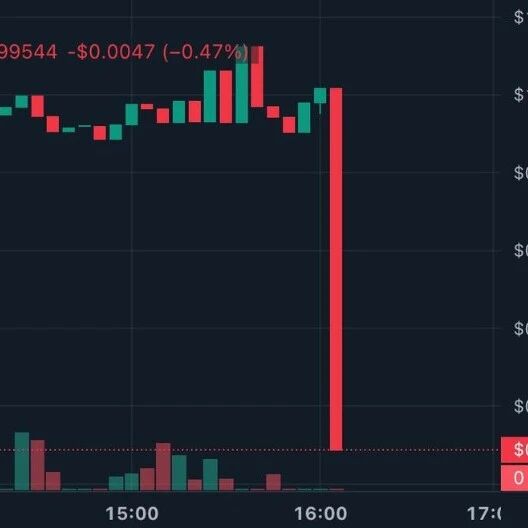
Core Viewpoint - The incident involving Paxos, which resulted in the minting and subsequent destruction of 300 trillion PYUSD stablecoins, highlights a significant operational error in the cryptocurrency market, leading to the largest token destruction in history [1][10]. Group 1: Incident Details - On October 15, Paxos minted 300 trillion PYUSD stablecoins, which are pegged to the US dollar at a 1:1 ratio, and then sent all of them to an inaccessible wallet for destruction within 22 minutes [2][4]. - The total value of the destroyed tokens is approximately 300 trillion USD, exceeding the combined GDP of all countries globally by more than double, according to IMF data [3][4]. Group 2: Market Impact - Following the incident, the decentralized lending protocol Aave temporarily froze PYUSD trading due to the unexpected high-volume transaction [4]. - Despite the incident, PYUSD maintained its dollar peg, with only a brief price drop of about 0.5% [6]. Group 3: Market Position - Currently, PYUSD has a market capitalization exceeding 2.3 billion USD, ranking sixth in the stablecoin market, behind Tether's USDt, USDC, Ethena USDe, Dai, and World Liberty Financial USD [8]. Group 4: Historical Context - This event set a record for the largest token destruction in cryptocurrency history, surpassing previous significant destruction events, such as OKX sending over 65 million OKB to an inaccessible address and the Bonk meme coin project destroying approximately 1.7 trillion BONK [11].
Oracle掌门人埃里森AI World主题演讲: 如何看待AI泡沫?AI赋能医疗、农业、环境,AI将颠覆一切
美股IPO· 2025-10-16 04:17
Core Viewpoint - AI is considered a transformative force that will empower humanity to solve problems rather than replace it, marking it as one of the most valuable technologies in human history [1][4][11]. AI Development Stages - The development of AI is divided into two main phases: the "Dawn of AI," which focuses on building large-scale multimodal neural network models requiring massive training data and investment, and the practical application of these models to solve real-world issues such as early cancer diagnosis and surgical assistance [2][6][9]. Oracle's Key Role in AI - Oracle is positioned to provide private data access by transforming its database to allow AI models to utilize private data for reasoning, thus combining public and private data [3][10]. - The company supports various mainstream AI models, including Grok, ChatGPT, Llama, and Gemini, ensuring compatibility and integration [3][10]. Specific AI Applications - AI applications include biometric technology for identity theft protection, autonomous drones for blood sample transport and forest fire monitoring, automated driving, code generation, and indoor farming to reduce water usage and carbon emissions [1][3][4][5]. AI Technology Challenges - The challenges in AI technology include ensuring data privacy while enabling AI to utilize private data for insights, as well as the need for significant computational power and infrastructure to support AI applications [7][37]. Oracle's Unique Advantages - Oracle is unique in that it simultaneously builds AI infrastructure and large-scale applications, providing end-to-end solutions that address real-world problems across various industries [7][58][59]. Future Vision - The future vision emphasizes that AI will improve quality of life, enhance health, and solve long-standing issues, with Oracle playing a crucial role in this transformation [2][58][63].

摩根大通CEO戴蒙承认:持有黄金“有些合理”,金价可能轻松涨至5000或10000美元
美股IPO· 2025-10-16 00:04
Core Viewpoint - Jamie Dimon, CEO of JPMorgan Chase, acknowledges the rationality of holding gold in the current environment, despite personally not purchasing it due to a 4% holding cost [2][3][12] Group 1: Gold Price and Market Trends - Gold prices have surged to a historical high of $4200 per ounce, with a year-to-date increase of nearly 60%, outperforming the stock market [3][4] - The allocation of gold among Wall Street professional investors remains low at only 2.4%, despite the significant price increase [5] - In comparison, cryptocurrency allocation is even lower at 0.4%, indicating that gold is still relatively under-allocated [7] Group 2: Investor Sentiment and Economic Concerns - The demand for safe-haven assets reflects concerns over inflation and geopolitical instability, with central bank gold purchases being a major driver of rising gold prices [8] - Dimon and Ken Griffin's comments suggest a shift in perspective among Wall Street leaders regarding the investment value of gold, indicating a reassessment of its role in portfolios [11] - Griffin views the shift towards gold as a sign of declining confidence in the dollar, highlighting rising concerns about the stability of fiat currencies [13]

重磅!贝莱德、英伟达、xAI 和微软组成财团,斥资400亿美元收购数据中心巨头Aligned
美股IPO· 2025-10-16 00:04
Core Viewpoint - The article discusses a landmark $40 billion acquisition in the data center industry led by BlackRock's AI Infrastructure Partnership (AIP), highlighting the growing demand for AI infrastructure assets and the strategic expansion plans for the acquired company, Aligned [2][4]. Group 1: Transaction Details - AIP, formed by BlackRock, NVIDIA, and Microsoft, has announced a $40 billion deal to acquire Aligned, marking one of the largest transactions in data center history [2][4]. - The transaction is expected to be completed in the first half of 2026, pending regulatory approval [2][4]. - Aligned currently operates or is developing approximately 50 facilities in the Americas, with a total operational and planned capacity of 5 gigawatts [3][5]. Group 2: Market Implications - This acquisition reflects strong market demand for AI infrastructure assets, with AIP aiming to raise up to $100 billion to expand data center and energy infrastructure supporting AI growth [4]. - The CEO of Abu Dhabi's MGX emphasized the significant global demand for capacity building in cloud computing and AI, estimating an annual requirement of about 20 gigawatts, with half of that expected in the U.S. [4]. - The deal represents a substantial return for Macquarie, which invested in Aligned in 2018 and expanded its stake in 2020, showcasing the value reassessment of data center assets driven by the AI wave [6][7].




核电股狂飙,美陆军公布“雅努斯”计划,将用微型核反应堆为基地供电
美股IPO· 2025-10-16 00:04
Core Viewpoint - The U.S. Army plans to deploy micro nuclear reactors with a capacity of less than 20 megawatts to address multiple energy challenges faced by military bases, supported by commercial companies and the Department of Energy [1][6][8]. Group 1: Janus Program - The U.S. military has launched the "Janus" program, aiming to provide micro reactors to military bases by 2028, ensuring continuous operation of weapon systems and critical bases during adverse weather or cyberattacks [3][6]. - The micro reactors are designed to be transportable via container ships or aircraft, capable of generating enough power to support a small town [6]. Group 2: Energy Challenges - The initiative addresses the vulnerabilities of the existing power grid, which has led to power outages in military bases during severe weather events, and the reliance on aging public grids and fossil fuels [7]. - New weapon systems, including drones and radar systems, have increasing energy demands that current power facilities struggle to meet [7]. Group 3: Privatization and Government Support - The micro reactors will be owned and operated by commercial companies, with the U.S. Army and Department of Energy providing technical support and key uranium fuel supply [8]. - The Army is selecting nine bases for the initial phase of the project and will choose commercial suppliers to build two micro reactors for each base by next year [8]. Group 4: Market Response - Following the announcement, nuclear power stocks surged, with Oklo Inc rising over 7%, Centrus Energy increasing over 13%, and NuScale Power experiencing a peak increase of over 23% [4].