
LI AUTO-W(02015)

Search documents
事关促消费 利好来了|南财早新闻
2 1 Shi Ji Jing Ji Bao Dao· 2025-11-26 23:29
Company Movements - China International Capital Corporation (CICC) is planning to absorb and merge Dongxing Securities and Xinda Securities through a share swap, involving both A and H shares, leading to a complex process with A shares currently suspended from trading [5] - Industrial Fulian has adjusted the upper limit for its share repurchase price from 19.36 yuan per share to 75 yuan per share [6] - ByteDance responded to media reports claiming that its Tomato series businesses would generate over 30 billion yuan in revenue and profits of 3 to 5 billion yuan, stating that the figures are inaccurate [6] - Ideal Auto reported third-quarter revenue of 27.4 billion yuan with a net loss of 360.3 million yuan, and a year-on-year decline in vehicle deliveries by 39% [6] Investment News - On November 26, the A-share market experienced a pullback, with the Shanghai Composite Index closing down 0.15% at 3864.18 points, while the Shenzhen Component Index rose by 1.02% and the ChiNext Index increased by 2.14%, with total market turnover reaching 1.8 trillion yuan [4] - Insurance funds are seeing new capital entering the market as Sunshine and Yuan Private Securities Investment Fund have been registered with the Asset Management Association of China, marking the 10th fund to officially begin operations [4] - The trial for optimizing brokerage account management functions has expanded for the first time in nearly three years, with eight brokerages including Guolian Minsheng and Huaxin Securities now qualified, bringing the total to 20 [4] - Southbound capital has significantly increased its investment in Hong Kong stocks, with a cumulative net purchase of 1.38 trillion Hong Kong dollars this year, the highest on record, contributing to a nearly 30% rise in the Hang Seng Index [4]





理想汽车:2025年第三季度营收274亿元
Cai Jing Wang· 2025-11-26 23:15
Core Insights - Li Auto reported a significant decline in revenue and net loss for Q3 2025, with revenue at 27.4 billion yuan, down 36.2% year-over-year and 9.5% quarter-over-quarter [1] - The company delivered 93,211 vehicles in Q3 2025, representing a 39.0% decrease compared to the same period last year [1] Financial Performance - Q3 2025 revenue was 27.4 billion yuan, a year-over-year decline of 36.2% and a quarter-over-quarter decline of 9.5% [1] - Net loss for Q3 2025 was 624.4 million yuan, compared to a net profit of 2.8 billion yuan in the same quarter last year and a net profit of 1.1 billion yuan in the previous quarter [1] - Adjusted net loss, not in accordance with US GAAP, was 359.7 million yuan, down from a net profit of 3.9 billion yuan year-over-year and a net profit of 1.5 billion yuan quarter-over-quarter [1] Operational Metrics - As of October 31, 2025, the company operated 551 retail centers across 157 cities and 554 after-sales service centers in 225 cities [1] - Li Auto has established 3,508 charging stations equipped with 19,400 charging piles [1]

理想(02015)电话会:李想宣布回归创业模式押注具身智能 2026年交付自研M100芯片AI系统
智通财经网· 2025-11-26 22:54
Core Viewpoint - Li Auto's third-quarter revenue fell by 36.2% year-on-year, resulting in a net loss of 624 million yuan, a stark contrast to a net profit of 2.8 billion yuan in the same period last year, highlighting significant delivery declines and pressures during the company's transition phase [1][16][18]. Financial Performance - Total revenue for Q3 was 27.4 billion yuan, down 36.2% year-on-year and 9.5% quarter-on-quarter, primarily due to reduced vehicle deliveries [16]. - Vehicle sales accounted for 25.9 billion yuan, a decrease of 37.4% year-on-year and 10.4% quarter-on-quarter [16]. - Gross profit for Q3 was 4.5 billion yuan, down 51.6% year-on-year and 26.3% quarter-on-quarter, with a vehicle profit margin of 15.5% compared to 20.9% in the same period last year [17]. - Operating loss for Q3 was 1.2 billion yuan, contrasting with an operating income of 3.4 billion yuan in the same period last year [18]. - Cash balance at the end of Q3 was 98.9 billion yuan, with net cash used in operating activities amounting to 7.4 billion yuan [18]. Strategic Direction - CEO Li Xiang announced a return to a "startup management model" to navigate the challenges of the next decade, moving away from a professional manager system [1][5]. - The company aims to redefine its products as "embodied intelligent robots," focusing on AI's understanding of the physical world and proactive service capabilities [1][10]. - The self-developed M100 AI chip is expected to be delivered by 2026, marking a significant shift from passive functions to proactive automation services [1][10][40]. Technology Development - Li Auto is developing a full-stack self-research capability in electric drive systems, including self-developed silicon carbide power chips and power modules [2][25]. - The company plans to mass-produce its self-branded 5C battery next year, enhancing charging speed and safety [2][25]. - The next-generation platform and chip development has already commenced, with a focus on improving perception, understanding, and response capabilities [40]. Product Strategy - The L series will undergo significant updates by 2026, featuring an 800V high-voltage platform and 5C ultra-fast charging technology, aiming to regain leadership in range-extended products and increase pure electric penetration [2][33]. - The company is focusing on user value and efficiency, emphasizing the importance of deep dialogue and problem identification in a rapidly changing environment [6][7].

American Lithium Reports Results of Annual General Meeting
Globenewswire· 2025-11-26 22:24
Core Points - American Lithium Corp. held its Annual General Meeting of Shareholders in Vancouver, where all nominees for the Board of Directors were elected with significant support [1][2][3] - Shareholders approved the number of directors to be fixed at six, the appointment of Davidson & Company LLP as the auditor, and the re-approval of the Company's omnibus incentive plan [2][3] Voting Results - The voting results for the election of the Board of Directors showed high approval rates, with Andrew Bowering receiving 98.77% of votes for, and Claudia Tornquist receiving 93.26% [1] - The number of directors was approved with 97.72% of votes for, while the appointment of auditors received 97.46% approval [3] Company Overview - American Lithium is developing two major lithium projects and the largest undeveloped uranium project in Latin America, including the TLC claystone lithium project in Nevada and the Falchani hard rock lithium project in Peru [4]

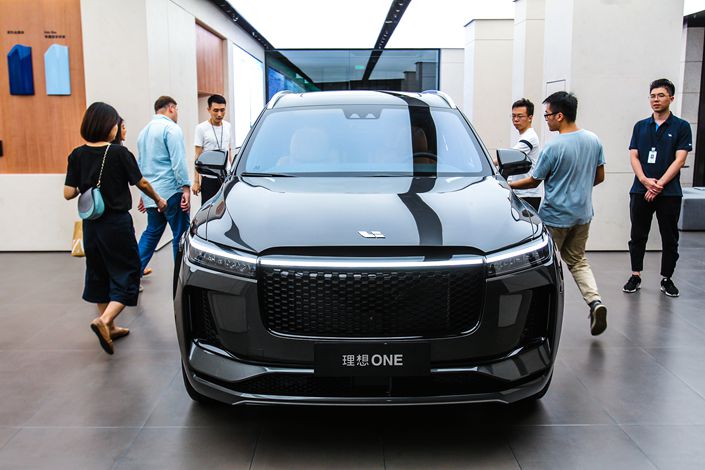
Li Auto Inc. (NASDAQ:LI) Faces Challenges in Q3 2025 Despite Revenue Beat
Financial Modeling Prep· 2025-11-26 20:00
Core Insights - Li Auto Inc. reported a third-quarter EPS of -$0.05, missing the estimated EPS of $0.04, but exceeded revenue expectations with approximately $3.84 billion [1][5] - The company experienced a 24% decline in stock price this year, primarily due to falling sales and earnings amid challenging economic conditions in China [2][5] - Vehicle deliveries reached 93,211 units, marking a 39% decrease compared to the same period last year, indicating significant sales pressure [3][5] Financial Metrics - Li Auto's price-to-earnings (P/E) ratio is approximately 16.69, while the price-to-sales ratio stands at about 0.94, suggesting investors are paying less than one dollar for every dollar of sales [4] - The enterprise value to sales ratio is around 0.71, reflecting the company's valuation relative to its revenue [4] - The company maintains a relatively low debt-to-equity ratio of approximately 0.23, indicating a strong balance sheet [4] Market Presence - Li Auto operates 542 retail stores across 157 cities and 546 servicing centers in 225 cities, maintaining a strong infrastructure presence in the Chinese market [3][5]
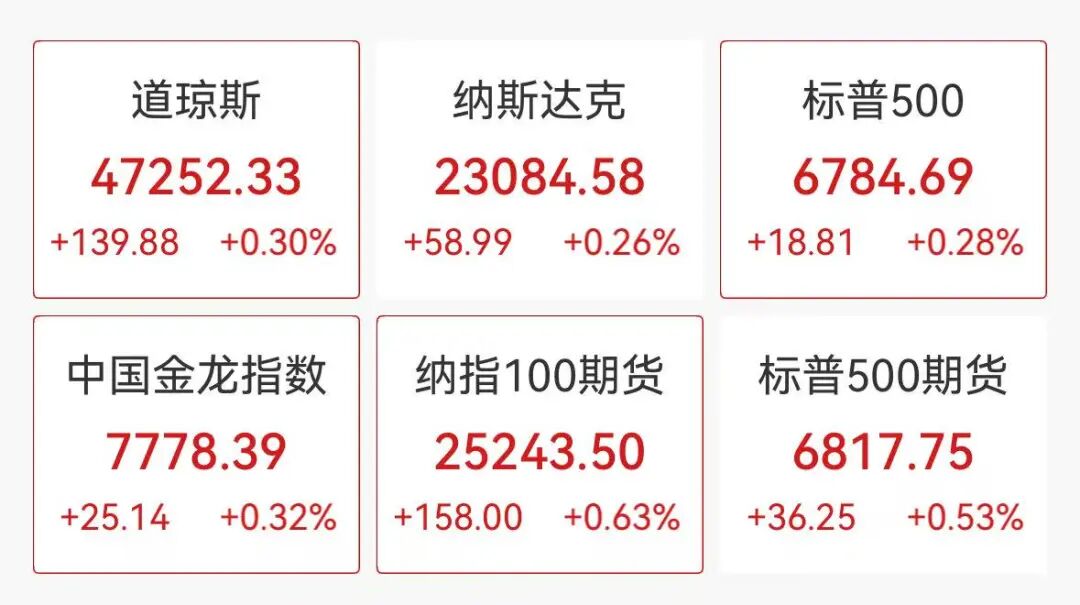
英伟达股价反弹 甲骨文涨超4% 中概股多数上涨 理想汽车、唯品会涨超3%
2 1 Shi Ji Jing Ji Bao Dao· 2025-11-26 15:58
Group 1 - Major US tech stocks showed mixed performance, with Nvidia rebounding over 1% after a previous drop of over 2%, while Facebook and Tesla saw slight declines, and Google fell over 1% [2] - Nvidia responded positively to competition from Google, asserting its continued supply to Google and claiming to be a generation ahead in the industry [2] - Oracle's stock rose over 4%, with Deutsche Bank analyst Brad Zelnick maintaining a buy rating and raising the target price from $335 to $375 [3] Group 2 - Cryptocurrency-related stocks in the US strengthened, with Robinhood rising nearly 8%, Cipher Mining up over 5%, and Coinbase increasing by nearly 2% [4] - Chinese concept stocks mostly rose, with Li Auto and Vipshop both gaining over 3%, while Pinduoduo and Miniso increased by over 2.7% [4] - Li Auto reported third-quarter revenue of 27.4 billion yuan and a net loss of 620 million yuan, attributing losses to the MEGA recall event, which caused approximately 1.113 billion yuan in losses [4] Group 3 - Spot gold prices showed strong performance, reaching a daily high of nearly 1% at $4,170 before retreating to around $4,140 [5] - Initial jobless claims in the US were reported at 216,000, lower than the expected 225,000 and the previous value of 220,000 [6]
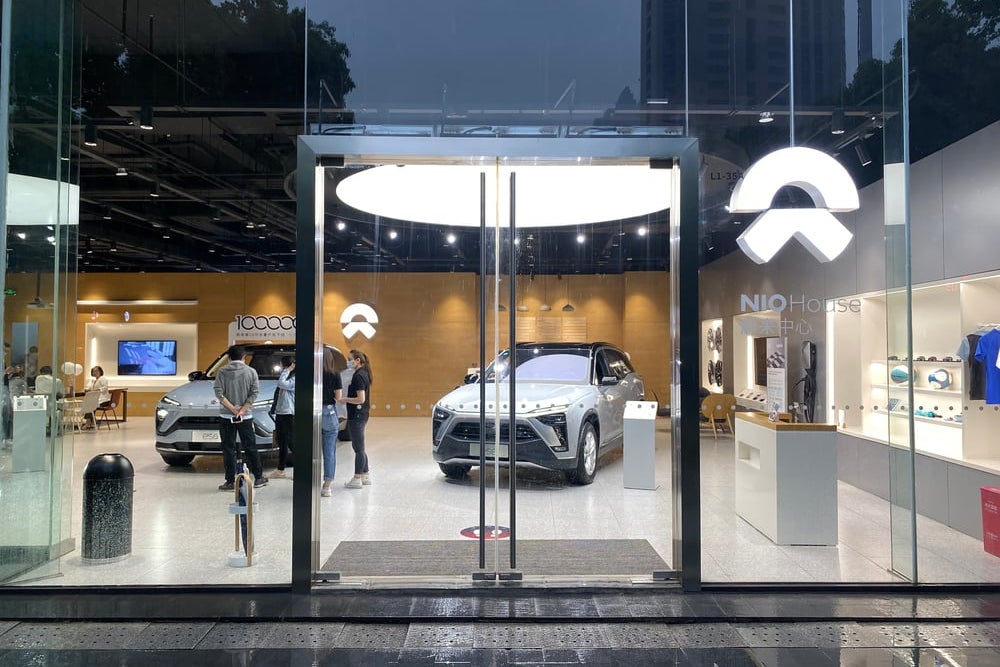
What's Going On With Nio Stock Wednesday? - NIO (NYSE:NIO)
Benzinga· 2025-11-26 15:12
Company Expansion - NIO Inc. is entering the Thailand market through a partnership with Thonburi Group, marking a significant step in its Southeast Asia strategy [1] - The partnership will also facilitate the entry of Onvo and Firefly into the Thailand market [1] - Thonburi Group has a long history in automotive manufacturing in Thailand, providing NIO with access to production capabilities and a regional distribution network [2] Market Strategy - NIO aims to leverage Thonburi's manufacturing and commercial infrastructure to accelerate its market penetration in Southeast Asia [2] - Firefly plans to enter both the United Kingdom and Thailand by 2026, indicating a broader expansion strategy [2] Analyst Sentiment - Macquarie analyst Eugene Hsiao downgraded NIO from Outperform to Neutral and reduced the price forecast from $6.70 to $5.30, citing regional challenges [3] Broader Industry Context - Investors monitoring NIO's expansion may also consider developments with XPeng Inc. and Li Auto Inc. [4] - Li Auto reported a significant decline in its fiscal third-quarter 2025 results, with a 36.2% year-over-year revenue drop to 27.4 billion Chinese yuan, although it slightly exceeded analyst expectations [5]

MEGA召回,冲击“理想”!
Zhong Guo Ji Jin Bao· 2025-11-26 15:04
Core Viewpoint - Li Auto reported a net loss of 6.24 billion RMB in Q3 2025, marking a significant shift from profit to loss year-on-year and quarter-on-quarter due to the impact of the MEGA recall event, resulting in losses exceeding 1.1 billion RMB [1][3]. Financial Performance - Vehicle sales revenue for Q3 2025 was 25.87 billion RMB, a decrease of 37.4% year-on-year and 10.4% quarter-on-quarter [2]. - Total revenue for Q3 2025 was 27.36 billion RMB, down 36.2% year-on-year and 9.5% quarter-on-quarter [4]. - Gross profit for Q3 2025 was 4.47 billion RMB, reflecting a 51.6% decline year-on-year and a 26.3% decline quarter-on-quarter [2]. - The gross margin for Q3 2025 was 16.3%, down 5.2 percentage points year-on-year [9]. Delivery and Market Position - Li Auto was the only new energy vehicle manufacturer among its peers to report a decline in revenue for Q3 2025, while competitors like NIO, Xpeng, and Leap Motor reported revenue growth [5][6]. - The total delivery volume for Q3 2025 was 93,200 units, a decrease of 39.0% year-on-year [8]. - In comparison, NIO, Xpeng, and Leap Motor reported delivery volumes of 87,000, 116,000, and 173,900 units respectively, with significant year-on-year growth [8][12]. Recall Impact - The MEGA recall involved 11,411 vehicles and was initiated following a fire incident, leading to an estimated impact of approximately 1.11 billion RMB on Li Auto's gross profit for Q3 2025 [9][11]. - The company plans to replace cooling liquid, power batteries, and front motor controllers for the recalled vehicles at no cost to customers [8]. Future Outlook - Li Auto's CEO indicated that the company is focusing on its electric vehicle transition, with strong order numbers for the new models i8 and i6, exceeding 100,000 units [10][11]. - For Q4 2025, Li Auto expects delivery volumes to range between 100,000 to 110,000 units, representing a year-on-year decline of 30.7% to 37.0% [11][12].

全文|理想汽车Q3业绩会实录:11月份起,i6的电池供应将正式启用双供应商模式
Xin Lang Ke Ji· 2025-11-26 15:03
Financial Performance - Li Auto reported total revenue of 27.4 billion yuan for Q3 2025, a year-over-year decline of 36.2% and a quarter-over-quarter decline of 9.5% [1] - The company incurred a net loss of 624.4 million yuan, compared to a net profit of 2.8 billion yuan in the same period last year and a net profit of 1.1 billion yuan in the previous quarter [1] - Adjusted net loss was 359.7 million yuan, down from a net profit of 3.9 billion yuan year-over-year and 1.5 billion yuan quarter-over-quarter [1] Management Insights - Li Auto's management emphasized a return to a startup mentality and outlined a ten-year product and technology roadmap, focusing on AI-driven product design [2] - The company anticipates that products equipped with the M100 chip will be delivered in 2026, fundamentally transforming user experience [2][3] - The management highlighted the importance of time in transitioning to new technologies and products, indicating that significant improvements may take time to materialize [2] Technology and Product Development - Li Auto is focusing on self-research in the three core areas of electric drive, battery, and electronic control, achieving key breakthroughs [4] - The company has developed a full-stack self-research capability in battery technology, emphasizing fast charging and safety [4] - Li Auto plans to mass-produce its self-developed 5C battery next year, enhancing battery safety and user charging experience [4] Market Strategy and Challenges - The company is addressing supply chain challenges by implementing a dual-supplier model for battery supply starting November, aiming to increase monthly production capacity of the i6 model to 20,000 units by early next year [6] - Li Auto's management acknowledged the impact of reduced delivery volumes on cash flow, attributing it to delivery pressures and shortened supplier payment cycles [6][7] - The company is optimistic about the long-term growth of the NEV market, projecting a penetration rate of 55%-60% by 2026 [8] Future Outlook - Li Auto is preparing for changes in replacement subsidy policies and increased vehicle purchase taxes, with strategies to mitigate short-term impacts while enhancing user value through technological advancements [8] - The 2026 L series will feature significant upgrades based on user feedback and core technology accumulation, aiming to strengthen the brand's position in the extended-range vehicle market [9][10] - The company is committed to delivering a historical breakthrough in delivery volumes in 2026, leveraging product strength and user value to navigate market uncertainties [8] AI and Innovation - Li Auto's VLA model has been fully deployed across its models, showing significant improvements in user experience and driving performance [12] - The company is continuously iterating on the VLA model, with upcoming updates aimed at enhancing safety and decision-making capabilities [12] - Li Auto is developing its self-research AI inference chip, expected to launch commercially next year, which aims to significantly reduce costs while improving performance [14]
理想汽车20251125
2025-11-26 14:15
Summary of Li Auto's Conference Call Company Overview - **Company**: Li Auto - **Industry**: Automotive, specifically electric vehicles (EVs) Key Points and Arguments Current Market Challenges - Li Auto faces significant competition from rivals such as Geely's Lynk & Co 900 and Zeekr 9X, leading to a decline in sales and stock price, particularly in the large six-seat SUV market [2][3] - Short-term challenges include insufficient battery supply for the Li L6 model due to constraints from CATL, resulting in low delivery numbers in October [2][4] - Long-term challenges arise from a diminishing reliance on range-extended vehicles and large six-seat SUVs, with increasing competition from models like the AITO M9 and Zeekr 9X, as well as potential new entrants like Xiaomi's Kunlun series E9 [2][4] Strategic Adjustments - To combat competition, Li Auto is updating its vehicle lineup to enhance features and cost-effectiveness, with the L9 series set to improve in space, configuration, chassis, and materials while maintaining stable pricing [2][5] - The company is moving away from its previous "platform sharing" strategy, which involved using similar designs to reduce costs, recognizing that this approach is insufficient against emerging competitors like Huawei and Xiaomi [2][6][10] - Organizational restructuring has been implemented, with CEO Li Xiang taking direct control of key decision-making areas to improve efficiency and responsiveness [2][7][10] Future Outlook - There is a high probability of a turnaround for Li Auto by 2026, although it is not guaranteed, as the company has begun strategic and organizational adjustments to enhance its market position [3][5] - The anticipated improvements in battery supply are expected to lead to increased delivery volumes, with projections of around 10,000 units for November and close to 20,000 units for December [4] - Li Auto aims to launch more differentiated new models in 2026, focusing on innovation and market appeal to strengthen its competitive edge [10] Competitive Landscape - The competitive landscape is intensifying, with established players like Huawei significantly improving their vehicle offerings over the past three and a half years, highlighting the need for Li Auto to accelerate its product updates and innovation [9][10] - The company recognizes the necessity to enhance its understanding of competitor features and address its weaknesses while reinforcing its strengths to achieve comprehensive improvements [10] Additional Important Insights - The decline in October deliveries, which were over 30% lower year-on-year, underscores the urgency for Li Auto to adapt to the rapidly changing market dynamics [3][4] - The shift in strategy towards more innovative and differentiated products is crucial for Li Auto to regain market share and improve its competitive positioning against both established and emerging rivals [5][10]