LI AUTO-W(02015)

Search documents
理想汽车第三季度营收274亿、经营亏损12亿
Cai Jing Wang· 2025-11-26 13:29
#理想汽车第三季度营收274亿#【#理想汽车第三季度经营亏损12亿#】理想汽车发布数据显示,2025年 第三季度营收274亿元,上年同期为428.7亿元;第三季度经营亏损为人民币12亿元(165.4百万美元), 而2024年第三季度的经营利润为人民币34亿元,2025年第二季度的经营利润为人民币827.0百万元;预 计2025年第四季度车辆交付量将在10万至11万辆之间。(一财) ...


LI AUTO(LI) - 2025 Q3 - Earnings Call Transcript
2025-11-26 13:02
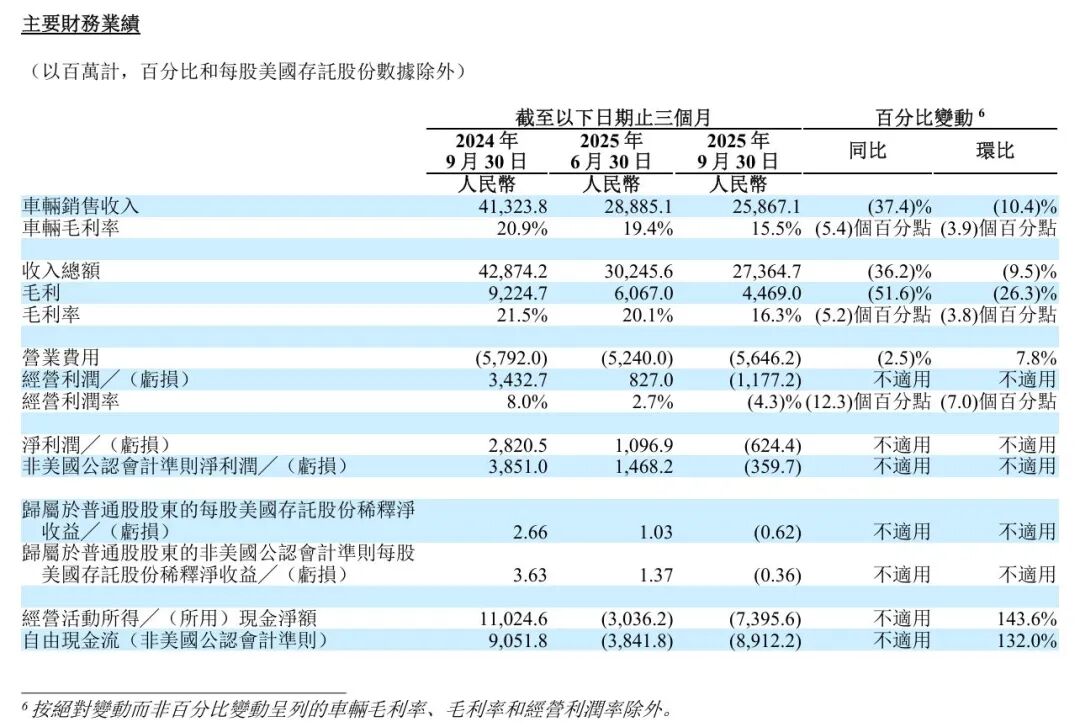
Financial Data and Key Metrics Changes - Total revenues in Q3 2025 were RMB 27.4 billion, a decrease of 36.2% year over year and 9.5% quarter over quarter [24] - Vehicle sales contributed RMB 25.9 billion, down 37.4% year over year and 10.4% quarter over quarter, primarily due to lower vehicle deliveries [24] - Gross profit was RMB 4.5 billion, down 51.6% year over year and 26.3% quarter over quarter, with a vehicle margin of 15.5% compared to 20.9% in the same period last year [25][26] - Operating expenses were RMB 5.6 billion, down 2.5% year over year and up 7.8% quarter over quarter [27] - Net loss in Q3 was RMB 624.4 million, compared to a net income of RMB 2.8 billion in the same period last year [28] - Cash position remained strong with a balance of RMB 98.9 billion at the end of the quarter [28] Business Line Data and Key Metrics Changes - R&D expenses increased to RMB 3 billion, up 15% year over year, reflecting investments in new vehicle programs and technology [27] - SG&A expenses decreased to RMB 2.8 billion, down 17.6% year over year, mainly due to share-based compensation recognition from the previous year [27] Market Data and Key Metrics Changes - The company expects deliveries in Q4 2025 to be between 100,000 and 110,000 vehicles, with total revenue projected between RMB 26.5 billion and RMB 29.2 billion [29] Company Strategy and Development Direction - The company plans to revert to an entrepreneurial model starting Q4 2025, focusing on long-term product and technology development [11][23] - Key strategic choices include focusing on embodied AI products, which are seen as the future of user interaction with vehicles [15][22] - The company aims to enhance its full-stack AI system, emphasizing the need for a different approach to technology that integrates physical and digital capabilities [16][22] Management's Comments on Operating Environment and Future Outlook - Management acknowledged challenges in supply chain and product lifecycle but emphasized a long-term vision for the next decade [4][23] - The transition from EREV to BEV is seen as a significant opportunity, with expectations for NEV penetration rates in China to reach 55-60% by 2026 [46] - The company is optimistic about achieving a historic breakthrough in deliveries in 2026, leveraging superior product strength and user value [49] Other Important Information - The company is implementing a dual supplier strategy for batteries to address production ramp-up challenges [42] - The recall of the Li Mega was recognized in Q3 due to its impact on operations and deliveries, affecting gross profit margins [54] Q&A Session Summary Question: What technology or product progress can be expected in 2026? - The company will launch an AI system based on the M100 chips, which will enhance user experience by transitioning products from passive to proactive machines [32][33] Question: How is the company preparing for the transition to BEV? - The company is focusing on in-house development of electric drive systems, battery systems, and electronic control to ensure efficiency and user experience [35][36] Question: What updates are there on orders and deliveries of the Li I8 and I6? - The I8 and I6 models are entering core BEV markets with increasing orders, and production capacity for the I6 is expected to reach 20,000 units monthly by early next year [41][42] Question: Why did operating cash flow decrease significantly? - The decrease in operating cash flow was attributed to lower deliveries impacting revenue and a shortened payment cycle to suppliers [43] Question: How will the company respond to changes in subsidy policies in 2026? - The company plans to implement a peace of mind purchase program to cover purchase tax differences for customers and will continue to focus on technological advancements to offset policy impacts [47][48]
LI AUTO(LI) - 2025 Q3 - Earnings Call Transcript
2025-11-26 13:02
Financial Data and Key Metrics Changes - Total revenues in Q3 2025 were RMB 27.4 billion, a decrease of 36.2% year-over-year and 9.5% quarter-over-quarter [24] - Vehicle sales contributed RMB 25.9 billion, down 37.4% year-over-year and 10.4% quarter-over-quarter, primarily due to lower vehicle deliveries [24] - Gross profit was RMB 4.5 billion, down 51.6% year-over-year and 26.3% quarter-over-quarter, with a vehicle margin of 15.5% compared to 20.9% in the same period last year [25][26] - Operating expenses were RMB 5.6 billion, down 2.5% year-over-year and up 7.8% quarter-over-quarter [27] - Net loss in Q3 was RMB 624.4 million, compared to a net income of RMB 2.8 billion in the same period last year [28] - Cash position remained strong with a balance of RMB 98.9 billion at the end of the quarter [28][29] Business Line Data and Key Metrics Changes - R&D expenses increased to RMB 3 billion, up 15% year-over-year, reflecting investments in new vehicle programs and technology [27] - SG&A expenses were RMB 2.8 billion, down 17.6% year-over-year, mainly due to the recognition of share-based compensation expenses from the previous year [27] Market Data and Key Metrics Changes - The company expects deliveries in Q4 2025 to be between 100,000 and 110,000 vehicles, with total revenue projected between RMB 26.5 billion and RMB 29.2 billion [29] Company Strategy and Development Direction - The company plans to revert to an entrepreneurial model to better adapt to a rapidly changing environment and technological challenges [11][23] - Focus will be on developing embodied AI products, which are seen as the future of user interaction with vehicles [15][22] - The strategy includes enhancing user value through innovative product offerings and technology advancements, particularly in electric drive, battery systems, and electronic control [35][36][37] Management's Comments on Operating Environment and Future Outlook - Management acknowledged challenges in supply chain and product lifecycle but emphasized a long-term vision for the next decade [4][23] - The transition from EREV to BEV is seen as a significant opportunity, with expectations for NEV penetration rates to reach 55%-60% in the domestic market by 2026 [46] - The company is optimistic about achieving a historic breakthrough in deliveries in 2026, leveraging superior product strength and user value [49] Other Important Information - The company is implementing a dual supplier strategy for batteries to address production ramp-up challenges [42] - The recall of the Li Mega was recognized in Q3 due to its impact on gross profit margin, with ongoing efforts to fulfill recall requirements [54] Q&A Session Summary Question: What technology or product progress can be expected in 2026? - The company will launch an AI system based on the M100 chips, which will enhance user experience by transitioning products from passive to proactive machines [32][34] Question: How is the company preparing for the transition to BEV? - The company is focusing on in-house development of electric drive systems, battery systems, and electronic control to ensure a smooth transition [35][36][37] Question: What updates are there on orders and deliveries of the Li I8 and I6? - The I8 and I6 models are entering core BEV markets with increasing orders, and production capacity for the I6 is expected to reach 20,000 units monthly by early next year [41][42] Question: Why was there an increase in operating cash outflow? - The increase in cash outflow was attributed to decreased deliveries impacting revenue and a shortened payment cycle to suppliers [43] Question: How will the company respond to changes in subsidy policies in 2026? - The company plans to implement a peace of mind purchase program to cover purchase tax differences and will continue to focus on technological advancements to offset policy impacts [47][48]
LI AUTO(LI) - 2025 Q3 - Earnings Call Transcript
2025-11-26 13:00
Financial Data and Key Metrics Changes - Total revenues in Q3 2025 were RMB 27.4 billion, a decrease of 36.2% year over year and 9.5% quarter over quarter [25] - Vehicle sales contributed RMB 25.9 billion, down 37.4% year over year and 10.4% quarter over quarter, primarily due to lower vehicle deliveries [25] - Gross profit was RMB 4.5 billion, down 51.6% year over year and 26.3% quarter over quarter, with a vehicle margin of 15.5% compared to 20.9% in the same period last year [26] - Operating expenses were RMB 5.6 billion, down 2.5% year over year and up 7.8% quarter over quarter [27] - Net loss in Q3 was RMB 624.4 million, compared to a net income of RMB 2.8 billion in the same period last year [29] - Cash position remained strong with a balance of RMB 98.9 billion at the end of the quarter [29] Business Line Data and Key Metrics Changes - R&D expenses increased to RMB 3 billion, up 15% year over year, reflecting investments in new vehicle programs and technology [27] - SG&A expenses decreased to RMB 2.8 billion, down 17.6% year over year, mainly due to prior year share-based compensation expenses [28] Market Data and Key Metrics Changes - The company expects deliveries in Q4 2025 to be between 100,000 and 110,000 vehicles, with total revenue projected between RMB 26.5 billion and RMB 29.2 billion [30] Company Strategy and Development Direction - The company plans to revert to an entrepreneurial model starting Q4 2025, focusing on long-term product and technology development [10][23] - Emphasis will be placed on developing embodied AI products, which are seen as the future of automotive technology [15][22] - The company aims to enhance user experience through a full-stack AI system, with a focus on in-house developed technologies [36][62] Management's Comments on Operating Environment and Future Outlook - Management acknowledged challenges in supply chain and product lifecycle impacting operations and deliveries [4] - The company is optimistic about the NEV penetration rate in China, expecting it to reach 55-60% in 2026 [47] - Management expressed confidence in navigating market cycles and leading technological transformation [23] Other Important Information - The company is implementing a dual supplier strategy for batteries to address production ramp-up challenges [42] - The recall of the Li Mega was recognized in Q3 due to its impact on operations and deliveries [55] Q&A Session Summary Question: What technology or product progress can be expected in 2026? - The company will launch an AI system based on the M100 chips, enhancing user experience and transitioning products to more proactive machines [33] Question: How is the company preparing for the transition from EREV to BEV? - The company is focusing on in-house development of electric drive systems, battery systems, and electronic control to ensure a smooth transition [35][36] Question: What is the impact of the upcoming changes in trade-in subsidy policy? - The company anticipates a pull-forward effect in deliveries at the end of 2025, followed by a dip in Q1 2026, but remains optimistic about long-term growth [47] Question: What updates can be provided regarding the recall of the Mega? - The recall was recognized in Q3 as a subsequent event, and the company is fulfilling recall requirements by reallocating battery packs [55] Question: What is the progress on in-house developed SOC and operating system? - The company has reduced development time and costs through in-house design and has open-sourced Halo OS for collaborative development [62]
理想汽车三季度营收274亿毛利率16.3%,纯电车型订单破10万
Zhong Guo Jing Ying Bao· 2025-11-26 12:54
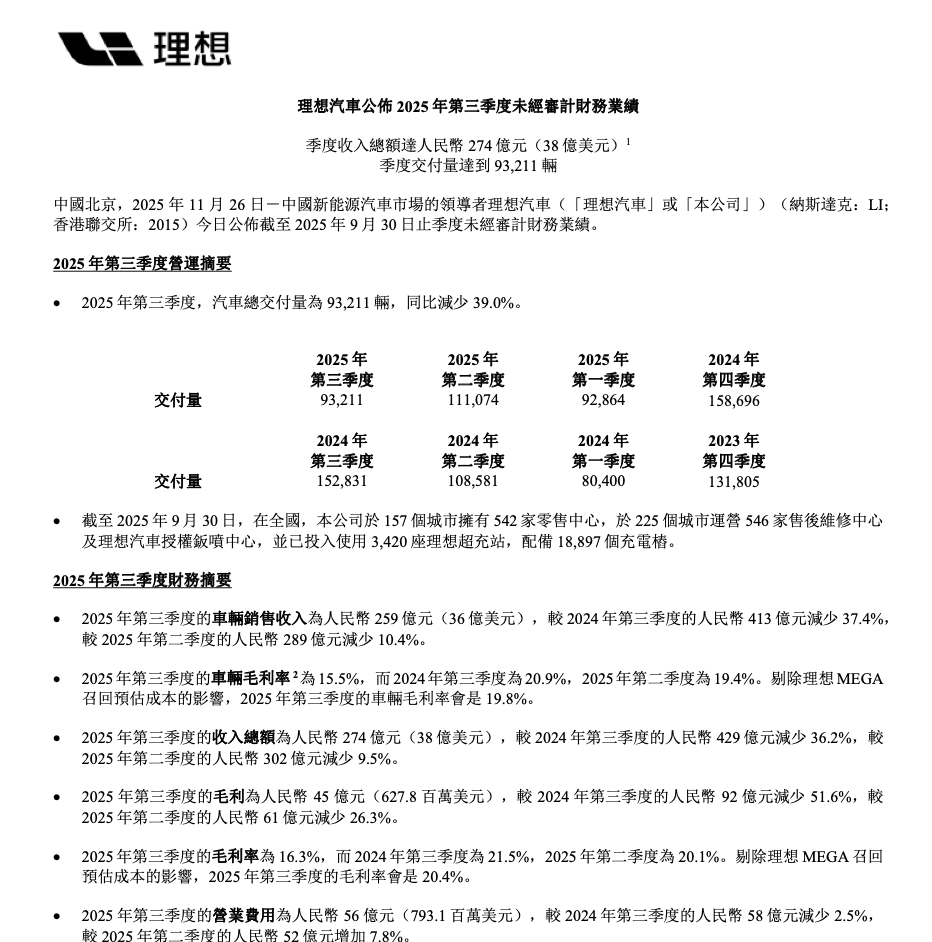
Core Insights - Li Auto reported a revenue of 27.4 billion RMB (approximately 3.8 billion USD) for Q3 2025, a decrease of 36.2% compared to 42.9 billion RMB in Q3 2024 [1][6] - The gross profit for Q3 2025 was 4.5 billion RMB, down 51.6% from 9.2 billion RMB in the same quarter last year, resulting in a gross margin of 16.3%, compared to 21.5% in Q3 2024 [1][6] - Total vehicle deliveries in Q3 2025 were 93,211 units, reflecting a 39.0% year-over-year decline [1][4] Financial Summary - Vehicle sales revenue for Q3 2025 was 25.9 billion RMB (approximately 3.6 billion USD), a decrease of 37.4% from 41.3 billion RMB in Q3 2024 and a 10.4% decline from 28.9 billion RMB in Q2 2025 [6] - The vehicle gross margin for Q3 2025 was 15.5%, down from 20.9% in Q3 2024 and 19.4% in Q2 2025. Excluding the estimated costs related to the Li MEGA recall, the gross margin would have been 19.8% [6] - The total revenue for Q3 2025 was 27.4 billion RMB, a decrease of 9.5% from 30.2 billion RMB in Q2 2025 [6] Operational Insights - The company faced supply chain bottlenecks and costs associated with the Li MEGA recall during Q3 2025 [2] - Li Auto's CEO highlighted strong demand for its electric models, with total orders for the Li i8 and Li i6 exceeding 100,000 units [2] - As of September 30, 2025, Li Auto operated 542 retail centers across 157 cities and had 3,420 charging stations with 18,897 charging piles [5]
理想汽车,三季度由盈转亏!MEGA召回导致损失约11亿元
Mei Ri Jing Ji Xin Wen· 2025-11-26 12:41
Core Insights - Li Auto reported a significant decline in revenue and profitability for Q3 2025, with total revenue of 27.4 billion RMB, a year-over-year decrease of 36.2% and a quarter-over-quarter decrease of 9.5% [1][2] - The company experienced a net loss of 624 million RMB, a stark contrast to a profit of 2.8 billion RMB in the same quarter last year [1][2] - Vehicle sales revenue also fell to 25.9 billion RMB, down 37.4% year-over-year and 10.4% quarter-over-quarter [2] Financial Performance - Gross profit for Q3 was 4.47 billion RMB, representing a 51.6% decline year-over-year and a 26.3% decline quarter-over-quarter [1][2][4] - The gross margin was reported at 16.3%, which would have been 20.4% if not for the impact of the MEGA recall [4][5] - Operating profit turned negative at -1.18 billion RMB, compared to a positive operating profit of 3.4 billion RMB in the previous year [2] Delivery and Sales - The total vehicle deliveries for Q3 were 93,211 units, a decrease of 39% year-over-year [2] - The company anticipates Q4 revenue to be between 26.5 billion RMB and 29.2 billion RMB, while market estimates are at 37.25 billion RMB [2] Product Development and Market Position - Li Auto's new models, the Li i8 and Li i6, have accumulated over 100,000 orders, and the Li MEGA was the top seller in the high-end electric vehicle market for Q3 [3][6] - The company invested 30 billion RMB in R&D for the quarter, with an annual forecast of 120 billion RMB, including over 60 billion RMB specifically for AI [3][6] Recall Impact - The MEGA recall, which involved 11,411 vehicles, is estimated to have cost the company approximately 1.11 billion RMB in Q3 [5][6] - The recall was initiated due to concerns over the coolant's anti-corrosion properties, which could lead to thermal runaway risks in the battery [6] Market Reaction - Following the earnings report, Li Auto's stock fell by 1.75% in pre-market trading [7]
理想汽车Q3季度财报公布 纯电战略成功 回归创始人模式企业提速
Zhong Guo Jin Rong Xin Xi Wang· 2025-11-26 12:25
Core Insights - Li Auto reported a revenue of 27.4 billion yuan for Q3 2025, leading among new energy vehicle companies, with a total revenue of 83.5 billion yuan for the first three quarters of the year [1] - The company maintains high R&D investment, with Q3 R&D expenses reaching 3 billion yuan and an expected annual total of 12 billion yuan, particularly focusing on AI with over 6 billion yuan allocated for the year [1] - Li Auto's cash reserves remain robust at 98.9 billion yuan, providing ample resources for product innovation and business expansion in a competitive environment [1] Organizational Changes - In 2025, Li Auto underwent significant organizational restructuring, shifting from a professional manager model back to a founder-led system to enhance strategic focus and market responsiveness [2][4] - The restructuring includes integrating sales and service under a single leadership, improving operational efficiency, and centralizing talent management and product strategy under founder Li Xiang [2][4] Product Strategy - Li Auto aims to achieve success in the pure electric vehicle market while maintaining its range-extended vehicle strategy, with the launch of the MEGA Home family edition and upcoming electric SUVs i6 and i8 showing promising market reception [4][6] - The company plans to streamline its product offerings by reducing SKU numbers and enhancing the competitiveness of its new products, expected to surpass the capabilities of the 2022 models [6] Supply Chain and Innovation - Li Auto is building a robust supply chain ecosystem, connecting nearly a thousand partners to enhance efficiency in R&D, manufacturing, and supply [8] - The VLA driver model has significantly improved user experience, with a tripling of daily active users and a substantial increase in driving mileage since its full rollout [9] Future Developments - The upcoming VLA charging feature will enhance user convenience by autonomously navigating to charging stations and facilitating seamless payment, with plans to cover over 2,900 charging stations by March 2026 [11] - Li Auto's strategic upgrades and technological advancements position it to achieve its vision of becoming a global leader in embodied intelligence within the automotive industry [11]
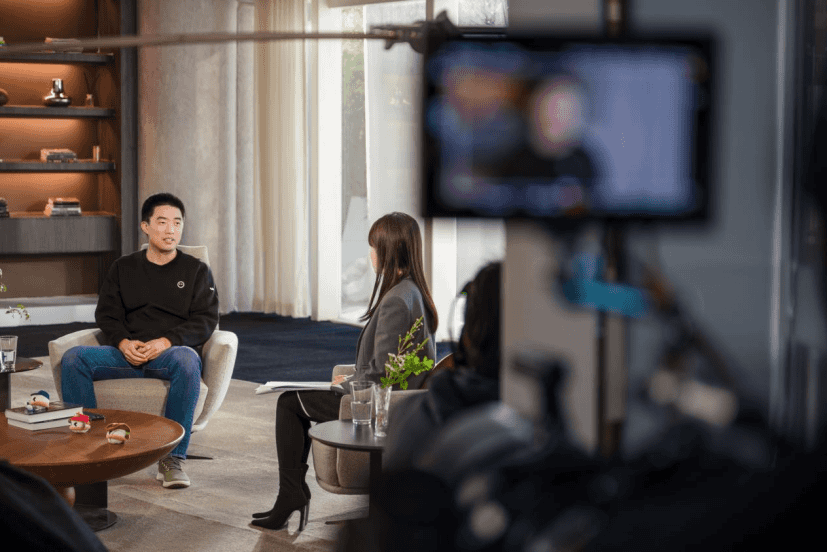
理想汽车第三季度营收274亿元 公司整体毛利率维持20.4%
Zhong Zheng Wang· 2025-11-26 12:23
Core Insights - Li Auto reported a revenue of 27.4 billion yuan for Q3 2025, a decrease of 9.5% quarter-on-quarter, while maintaining a leading position among new energy vehicle companies with a total revenue of 83.5 billion yuan for the first three quarters [1] - The company experienced a net loss of 624 million yuan in Q3 2025, compared to a net profit of 2.8 billion yuan in the same period last year and a net profit of 1.1 billion yuan in the previous quarter [1] - Vehicle gross margin for Q3 2025 was 15.5%, down from 20.9% in Q3 2024, but adjusted gross margin excluding the impact of the recall was 19.8% [1] Financial Performance - Total revenue for the first three quarters of 2025 was 83.5 billion yuan, maintaining a leading position among competitors [1] - The adjusted net loss under Non-GAAP for Q3 2025 was 359.7 million yuan, compared to a net profit of 3.9 billion yuan in the same period last year [1] - R&D expenses for the quarter were 3 billion yuan, with an expected total R&D investment of 12 billion yuan for the year, including over 6 billion yuan in AI [1] Sales and Market Position - The company reported that cumulative orders for the new models, Li Auto i8 and i6, exceeded 100,000 units, with Li MEGA becoming the sales champion in the high-end pure electric market for Q3 [1] - For Q4 2025, Li Auto expects vehicle deliveries to be between 100,000 and 110,000 units, representing a year-on-year decrease of 30.7% to 37.0% [2] - Projected total revenue for Q4 2025 is estimated to be between 26.5 billion yuan and 29.2 billion yuan, a year-on-year decrease of 34.2% to 40.1% [2] Strategic Outlook - Li Auto's CEO expressed confidence in the company's long-term vision and strategic goals, highlighting the strong performance of its pure electric models and advancements in AI technology [2] - The VLA driver model achieved a monthly usage rate of 91% in October, indicating a leading user penetration rate in the industry [2]
MEGA召回“拖累”理想汽车三季报,短期阵痛不改长期信心
Zhong Guo Jing Ji Wang· 2025-11-26 12:13
Core Insights - Li Auto reported a challenging Q3 financial performance, with significant declines in key metrics, including a 36.2% year-on-year drop in revenue to 27.4 billion RMB and a net loss of 624 million RMB compared to a profit of 3.4 billion RMB in the same period last year [1][3][10] Financial Performance - Vehicle sales revenue decreased by 37.4% year-on-year to 25.9 billion RMB, primarily due to a reduction in vehicle delivery volumes [2][3] - Gross profit fell by 51.6% to 4.5 billion RMB, with a gross margin of 20.4% after accounting for recall costs [2][4] - Operating expenses increased slightly by 2.5%, reflecting ongoing operational costs despite the revenue decline [2] - The company maintained a cash reserve of 98.9 billion RMB, providing a solid foundation for future investments and stability [6][10] Strategic Developments - Li Auto has initiated a recall of 11,411 units of the 2024 Li MEGA model, which has impacted short-term profitability but is seen as a necessary step for user safety and brand integrity [4][6] - The company is shifting focus towards electric vehicles (EVs) with the launch of the Li i8 and i6 models, aiming to establish a dual strategy of "range-extended + pure electric" vehicles [7][8] - The VLA driver model, a self-developed advanced driver-assistance system, has shown high user engagement, with a monthly usage rate of 91% and significant improvements in driving mileage [9][10] Market Position - Despite short-term challenges, Li Auto continues to lead in the new energy vehicle sector, with a total revenue of 83.5 billion RMB over the first three quarters of the year [3][10] - The company's proactive approach to recalls and user safety is expected to enhance brand loyalty and mitigate potential crises in the long run [6][10] - The dual strategy of expanding both range-extended and pure electric offerings aligns with industry trends, positioning Li Auto favorably against competitors [8][10]
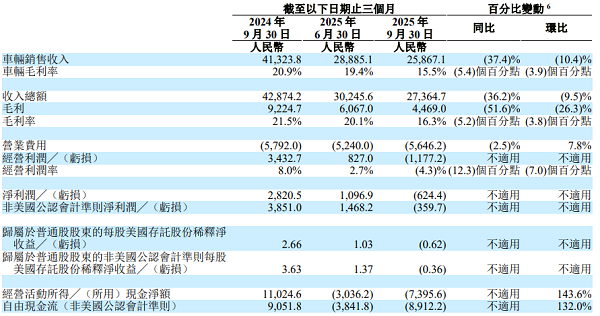
理想汽车第三季度实现营收274亿元 毛利率下降至16.3%纯电车型势头看涨
Zhong Guo Jing Ying Bao· 2025-11-26 11:40
Core Insights - Li Auto reported its Q3 2025 unaudited financial results, showing a revenue of 27.4 billion yuan, down from 42.87 billion yuan in the same period last year, indicating a significant decline in sales performance [4] - The company experienced a gross profit of 4.5 billion yuan, a 51.6% decrease year-over-year, with a gross margin of 16.3%, down from 21.5% in the previous year [4] - Total vehicle deliveries for Q3 2025 were 93,211 units, reflecting a 39.0% year-over-year decline [4] Financial Performance - For the first three quarters of 2025, Li Auto achieved a total revenue of 83.5 billion yuan [4] - The net loss for Q3 2025 was 624.4 million yuan, contrasting with net profits of 2.8 billion yuan and 1.1 billion yuan in Q3 2024 and Q2 2025, respectively [4] - The non-GAAP net loss for Q3 2025 was 359.7 million yuan, compared to non-GAAP net profits of 3.9 billion yuan and 1.5 billion yuan in the same periods [4] Strategic Outlook - The CEO of Li Auto, Li Xiang, emphasized the strong momentum of their pure electric models, with total orders for the Li i8 and Li i6 exceeding 100,000 units [5] - The CFO, Li Tie, noted challenges such as supply chain bottlenecks and costs associated with the Li MEGA recall, but highlighted a gross margin of 20.4% when excluding recall costs, showcasing operational resilience [5] - The company aims to continue focusing on product and technology innovation to enhance user experience and drive sustainable business growth [5]