ANTA SPORTS(02020)

Search documents
【早报】国家药监局征求意见,事关优化创新药临床试验审评审批;新一轮保险预定利率调降启幕
财联社· 2025-06-16 23:10
Company News - Midea Group plans to repurchase shares worth between 5 billion to 10 billion yuan [10] - CITIC Securities announced the issuance of technology innovation bonds not exceeding 6 billion yuan, receiving administrative approval from the People's Bank of China [11] - Yunlu Co., Ltd. announced that its chairman and general manager has been detained [12] - *ST Jiuyou received a decision for stock delisting [12] - Jiangbolong announced a memorandum of cooperation with SanDisk [13] - Wuzhou Xinchun plans to raise no more than 1 billion yuan through a private placement for the development of intelligent robots and key components for automotive intelligent driving [14] - Feitian Chengxin plans to reduce its holdings by no more than 4 million shares [15] - Zhongman Petroleum noted that geopolitical conflicts in the Middle East have led to a short-term rise in international oil prices [16] - Lakala is planning to list on the Hong Kong Stock Exchange to accelerate the application of digital currency in cross-border scenarios [16] - Three squirrels announced the termination of the acquisition of Hunan Ailing Technology's controlling stake [17] - Jinchengzi announced that revenue from 3D printing equipment products will account for less than 2% of the company's total revenue in 2024 [17] - Shanshui Technology plans to invest 6 billion yuan in a new chemical materials project [18] - Xinxunda plans to sell all shares of Huali Technology at an opportune time [19] - *ST Yazhen announced the completion of stock trading suspension review and resumption of trading [19] - Dianguang Media stated on the interactive platform that its subsidiary is selling products related to Pop Mart [19] - Yiwei Lithium Energy plans to extend the reduction of its holdings in Simor International by 3.5% [20] Industry News - A new round of insurance product interest rate adjustments has begun, with the new products from Tongfang Global Life Insurance lowering the preset interest rate from the current market cap of 2% to 1.5% [6] - The Ministry of Finance announced that Dalian and Hubei provinces will implement a tax refund policy for overseas travelers' shopping starting from July 1, 2025 [7] - The Hangzhou Municipal Bureau of Commerce is drafting implementation details for "Enjoy Immediate Purchase and Refund" to create an international consumption city, offering subsidies for new tax refund outlets [7] - The National Medical Products Administration is soliciting opinions on optimizing the review and approval of clinical trials for innovative drugs, aiming to complete reviews within 30 working days for eligible applications [6] - The liquid cooling technology is becoming a necessary option for new data centers due to increasing power density and energy consumption challenges [28] - The 3D printing industry in China is experiencing rapid growth, with production and export volumes significantly increasing [25] - Major companies like Walmart and Amazon are exploring the issuance of their own stablecoins, indicating a growing trend in the financial market [29]







港股人民币计价平稳运行两周年 纳入互联互通提上日程
Shang Hai Zheng Quan Bao· 2025-06-16 18:27
Core Viewpoint - The "Hong Kong Dollar-Renminbi Dual Counter Model" has been successfully implemented since June 19, 2023, with a total transaction volume of 49.051 billion RMB for 24 selected stocks, indicating a growing interest in RMB-denominated trading in the Hong Kong market [1][2][4]. Group 1: Market Performance - The top five stocks in the dual counter model by transaction volume are China Mobile-R, Ping An-R, Tencent Holdings-R, Hong Kong Exchanges-R, and Alibaba-WR, with total transaction volumes of 6.117 billion RMB, 5.775 billion RMB, 5.687 billion RMB, 5.356 billion RMB, and 4.872 billion RMB respectively over the past two years [1][3]. - The transaction volume for Tencent Holdings-R has seen significant growth, with multiple trading days exceeding 50 million RMB this year, and Hong Kong Exchanges-R achieving a daily transaction volume of over 200 million RMB on certain days [5][6]. Group 2: Regulatory Developments - The Hong Kong Securities and Futures Commission is actively promoting the inclusion of RMB counters in the Stock Connect program, which is expected to launch by the end of the year, enhancing the accessibility of RMB assets for investors [2][6]. - The dual counter model is anticipated to facilitate the use of RMB in Hong Kong stock trading, potentially expanding to more stocks and products in the future, thereby supporting the internationalization of the RMB [4]. Group 3: Investor Behavior - The dual counter model allows investors holding offshore RMB to directly invest in Hong Kong stocks, helping to mitigate exchange rate risk and increasing market demand for RMB-denominated assets [3][5]. - Despite the growth in transaction volumes, the average turnover rate for RMB-denominated stocks remains low, primarily due to the large market capitalization of the stocks involved and the preference of institutional investors for holding rather than frequent trading [6].




高盛再次唱多:全球资金回归中国 看好中国“十巨头”股票
凤凰网财经· 2025-06-16 15:09
Core Viewpoint - Goldman Sachs' chief China equity strategist Liu Jinjun indicates that the mid-term investment outlook for China's private enterprises is improving due to various macro, policy, and micro factors [1]. Group 1: Market Concentration - Goldman Sachs is optimistic about large private enterprises at the industry forefront, believing that market concentration in the private sector will increase [2]. - China has the lowest market concentration among major global stock markets, with the top ten companies (including state-owned enterprises) accounting for only 17% of total market capitalization, compared to 33% in the U.S. and 30% in other emerging markets [2]. - The recent transparency in China's antitrust and merger frameworks is seen as a positive sign for organic and acquisition-driven growth of private enterprises [2]. - Existing industry leaders are expected to further increase their market share and profitability [2]. - Some leading companies dominate their respective industry's profit pools, capital expenditures, and R&D, which are positively correlated with future returns and industry leadership [2]. - Many large private enterprises are key players in artificial intelligence, which is anticipated to have a transformative impact in the future [2]. - Global expansion is expected to enhance revenue growth and profitability for private enterprises [2]. - The average P/E ratio of China's top ten private listed companies is 13.9, representing a 22% premium over the overall market, compared to a 74% premium in 2021 and a 43% premium for the U.S. "Magnificent Seven" [2]. Group 2: China's "Ten Giants" - Goldman Sachs has identified a list of ten prominent private companies in China, referred to as the "Ten Giants," which includes Tencent, Alibaba, Xiaomi, BYD, Meituan, NetEase, Midea, Hengrui Medicine, Ctrip, and Anta [4]. - The total market capitalization of these ten companies reaches $1.6 trillion, accounting for 42% of the MSCI China Index weight, with a daily trading volume of $11 billion [4]. - Earnings for the "Ten Giants" are projected to grow by 13% (CAGR) over the next two years, with a P/E ratio of 16 times [4]. - These companies are expected to reflect the latest economic themes in China, including AI/technology development, international expansion, new consumption, and enhanced shareholder returns [4].


中国跑鞋:把国际品牌卷入价格战的下半场
3 6 Ke· 2025-06-16 12:06
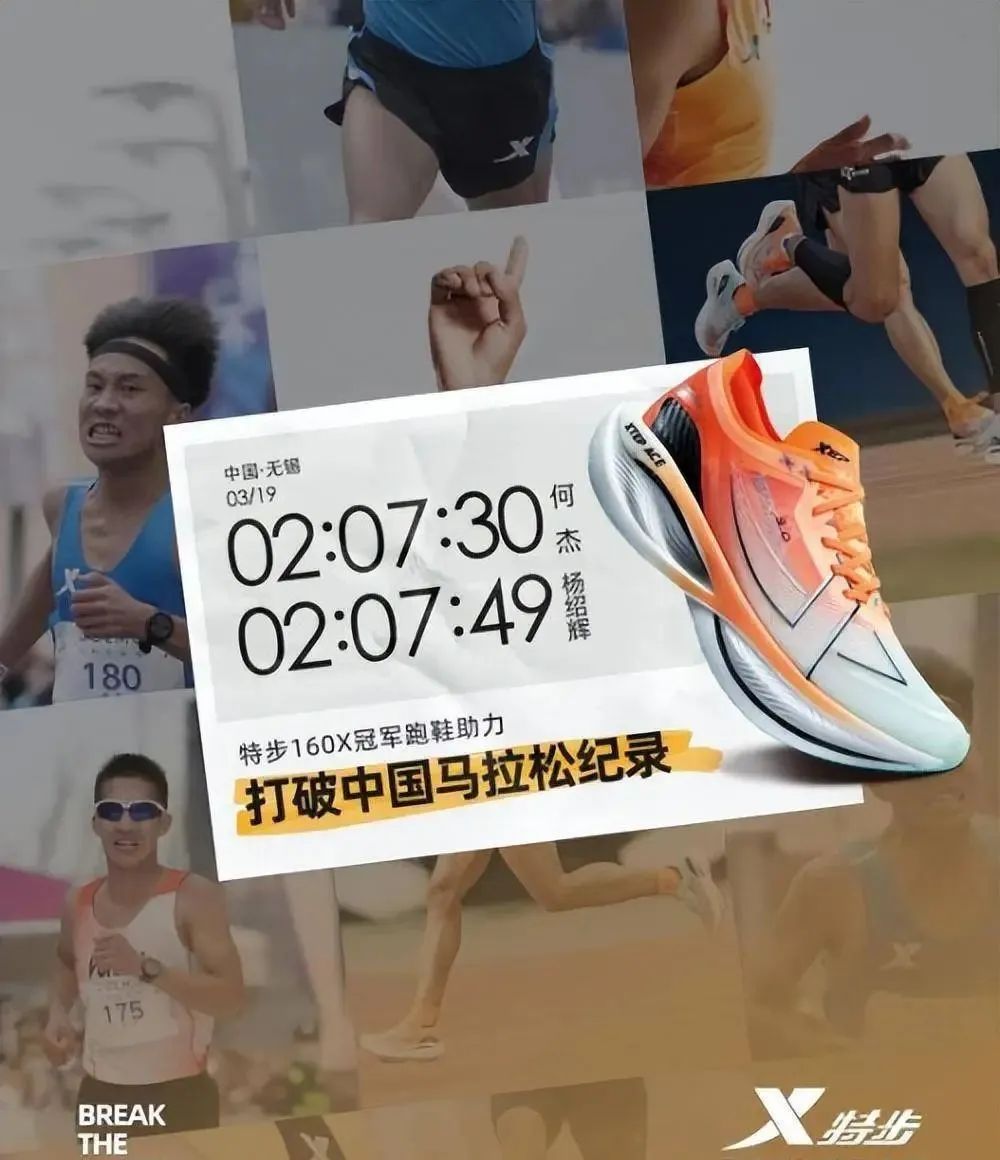
Core Insights - The article highlights the rise of domestic Chinese running shoe brands, particularly Xtep, which have gained significant market share and performance recognition, challenging established international brands like Nike and Adidas [1][9][25] Group 1: Market Performance - In the 2025 Xiamen Marathon, Xtep shoes had a wearing rate of 42.8%, while Nike's Vaporfly series accounted for only 19% [3] - Over 50% of the sub-three-hour finishers wore the Xtep 160X family, indicating a strong preference for domestic brands among elite runners [3][11] Group 2: Pricing and Value Proposition - International brands maintain high prices due to extensive marketing and brand history, with Nike spending over $1 billion annually on athlete endorsements, which constitutes 30% of its total marketing budget [5][7] - Domestic brands offer similar or superior performance at significantly lower prices, with Xtep's 160X 5.0 PRO priced at ¥2,299 compared to Nike's equivalent at ¥2,299, showcasing a price difference of 40%-60% for comparable performance [8][9] Group 3: Technological Advancements - Domestic brands have made significant technological advancements, such as Xtep's use of aerospace-grade PI fibers in carbon plates, enhancing durability and performance [12][15] - The Xtep ACE midsole technology boasts an energy return rate of 85%, surpassing Nike's 80%, and is produced using a unique 100% PEBA foaming technique [15][17] Group 4: Supply Chain and Innovation - The Chinese running shoe industry benefits from a highly efficient supply chain, allowing rapid prototyping and product iteration, which is significantly faster than international brands [20][21] - The collaborative ecosystem in regions like Jinjiang enables quick adjustments to designs and materials, fostering innovation and reducing costs [20][23] Group 5: Market Transformation - The shift from "Chinese manufacturing" to "Chinese innovation" is reshaping the global running shoe market, with domestic brands redefining value perceptions and competitive dynamics [25][27] - The article emphasizes that this transformation allows more runners, both professional and amateur, to access high-performance shoes at reasonable prices, democratizing the sport [25][27]


高盛喊出“新口号”:中国“民营十巨头”,直接对标“美股七姐妹”
华尔街见闻· 2025-06-16 09:59
Core Viewpoint - Goldman Sachs has introduced the concept of "Chinese Prominent 10," which includes ten major private enterprises in China, aiming to identify core assets with long-term dominance potential in the Chinese stock market, similar to the "Magnificent 7" in the US [2][3]. Group 1: Overview of the "Chinese Prominent 10" - The "Chinese Prominent 10" includes Tencent (market cap $601 billion), Alibaba ($289 billion), Xiaomi ($146 billion), BYD ($121 billion), Meituan ($102 billion), NetEase ($86 billion), Midea ($78 billion), Hengrui Medicine ($51 billion), Trip.com ($43 billion), and Anta ($35 billion) [4]. - These companies span various sectors such as technology, consumer goods, and automotive, representing new economic drivers in China, including AI, self-sufficiency, globalization, and service consumption upgrades [2][5]. Group 2: Financial Performance and Valuation - The expected compound annual growth rate (CAGR) for the earnings of these companies over the next two years is projected to be 13%, with a median of 12% [6]. - The average price-to-earnings (P/E) ratio for these stocks is 16 times, with a forward price-to-earnings growth (fPEG) ratio of 1.1, making them more attractive compared to the US "Magnificent 7," which has a P/E of 28.5 and an fPEG of 1.8 [6]. Group 3: Market Trends and Recovery - Since the low point at the end of 2022, the average increase in these ten stocks has been 54%, with a year-to-date rise of 24%, outperforming the MSCI China Index by 33 and 8 percentage points, respectively [7]. - Private enterprises in China are showing strong recovery signs after a significant market value loss of nearly $4 trillion since the end of 2020 [8]. Group 4: Policy and Technological Drivers - The Chinese government has increased its focus on private enterprises, with significant policy events boosting confidence among private business owners [10]. - Rapid advancements in AI technology, particularly with the emergence of models like DeepSeek-R1, have enhanced market optimism towards technology-driven private enterprises [11]. Group 5: Market Concentration and Growth Potential - The concentration of the Chinese stock market is relatively low, with the top ten companies accounting for only 17% of the total market value, compared to 33% in the US [13]. - As leading companies expand their dominance, market concentration is expected to increase in the coming years [14]. Group 6: Global Expansion and Profitability - Private enterprises are leading the "going out" strategy, with overseas sales increasing from 10% in 2017 to an estimated 17% in 2024 [19]. - Companies with strong balance sheets and cash flows are better positioned to benefit from overseas expansion, with some, like BYD, achieving significantly higher gross margins abroad [19]. Group 7: Valuation and Investment Opportunities - Despite improving fundamentals, the valuation of the "Chinese Prominent 10" remains at historical lows, with an average trading valuation of 13.9 times the expected P/E ratio, only 22% higher than the MSCI China Index [20]. - If these private enterprises achieve similar valuation premiums as their US counterparts, their market concentration could increase, adding $313 billion in market value [21].

高盛:中国“民营企业十巨头”总市值达1.6万亿美元
Zheng Quan Ri Bao Wang· 2025-06-16 09:50
Group 1 - Goldman Sachs' chief China equity strategist Liu Jinjun's team has released a series of reports indicating that the mid-term investment value of Chinese private enterprises has improved due to macroeconomic, policy, and micro factors [1] - The research team has identified the "Top Ten Private Enterprises" in China, which includes Tencent, Alibaba, Xiaomi, BYD, Meituan, NetEase, Midea, Hansoh Pharmaceutical, Ctrip, and Anta, similar to the "Big Seven" in the US stock market [1] - Goldman Sachs expects these "Top Ten Private Enterprises" to expand their dominance in the Chinese stock market, with all stocks rated as "Buy" by analysts [1] Group 2 - The total market capitalization of the "Top Ten Private Enterprises" is estimated at $1.6 trillion, accounting for 42% of the MSCI China Index weight, with an average daily trading volume of $11 billion [1] - The projected compound annual growth rate (CAGR) for earnings per share (EPS) over the next two years is 13%, indicating high market influence and investment appeal [1] - These enterprises demonstrate significant advantages in market capitalization, trading volume, profit growth potential, and valuation, making them worthy of investor attention [1] Group 3 - In the equity market, there are 5,121 listed private enterprises, with 3,771 listed on the A-share market and 1,350 on offshore markets, totaling a market capitalization of $9 trillion, which is 71% of the total MSCI China Index market capitalization [2] - The earnings weight of these private enterprises accounts for 31% of the index [2]
对标美股“七巨头”,高盛提出中国“十巨头”!腾讯阿里小米在列
21世纪经济报道· 2025-06-16 09:40
Core Viewpoint - The mid-term investment outlook for Chinese private enterprises is improving due to various macro, policy, and micro factors, as highlighted in a recent report by Goldman Sachs' chief China equity strategist Liu Jinjun [1] Group 1: Investment Opportunities - Goldman Sachs has identified a list of ten favored Chinese private listed companies, referred to as the "Ten Giants," which include Tencent, Alibaba, Xiaomi, BYD, Meituan, NetEase, Midea, Hengrui Medicine, Ctrip, and Anta [1] - The total market capitalization of these ten companies is approximately $1.6 trillion, accounting for 42% of the MSCI China Index weight, with a daily trading volume of $11 billion [1] - Analysts at Goldman Sachs project a 13% growth in earnings (compound annual growth rate) for the "Ten Giants" over the next two years, with a price-to-earnings ratio of 16 times [1] Group 2: Economic Themes - The "Ten Giants" are expected to reflect the latest economic themes in China, including advancements in artificial intelligence/technology, international expansion, new consumption trends, and enhanced shareholder returns [1] - Goldman Sachs emphasizes that investing in private enterprises does not exclude the preference for high-quality state-owned enterprises and shareholder return combinations [1]

被安踏收购后,这家国产品牌想做「瑜伽第一」丨36氪专访
3 6 Ke· 2025-06-16 08:48
Core Insights - Anta Sports has successfully acquired 75.13% of MAIA ACTIVE, a domestic yoga apparel brand focused on Asian women, enhancing its presence in the women's segment of the market [1][3] - MAIA's sales reached approximately 500 million yuan in 2022, with its flagship product, "waist-optimized pants," selling over 300,000 units [1] - The transition of MAIA's control to Anta is seen as a strategic move to overcome challenges in the online-to-offline integration process [2][3] Company Strategy - MAIA's new president, Zhao Guangxun, aims to maintain the brand's original tone while implementing strategic adjustments to focus on the mid-to-high-end market [5][13] - The brand has streamlined its product line by eliminating 10%-15% of non-core SKUs and is now concentrating on yoga-related products [13][19] - MAIA plans to expand its store count from approximately 45 to around 55, focusing on larger experiential stores [18][19] Market Positioning - MAIA aims to become the leading yoga brand in China and Asia, competing directly with established brands like Lululemon [8][26] - The brand's strategy includes a focus on product innovation tailored to the needs of Asian women, differentiating itself from Western brands [29][30] - MAIA's marketing efforts are bolstered by the appointment of new brand ambassador, Yu Shuxin, to embody the brand's "high-energy, high-emotional value, and high-deserving" image [8][33] Financial Performance - MAIA's revenue distribution has shifted from 100% online to a more balanced approach, with current estimates at 40% online and 60% offline, indicating a significant growth in offline sales [38][41] - Membership numbers have doubled since Zhao's appointment, reflecting successful community engagement strategies [35] Operational Efficiency - Anta's acquisition has led to more systematic management practices, enhancing logistics, supply chain control, and resource allocation [41][42] - The integration of the original team with new management has been smooth, fostering a collaborative work environment [42]

高盛唱多中国“民营企业十巨头”
Xin Lang Cai Jing· 2025-06-16 05:58
Group 1 - The core viewpoint of the report is that the mid-term investment outlook for Chinese private enterprises is improving due to various macro, policy, and micro factors [1] - Goldman Sachs has identified a list of "Ten Giants" among Chinese private companies, which includes Tencent, Alibaba, Xiaomi, BYD, Meituan, NetEase, Midea, Hengrui Medicine, Ctrip, and Anta, covering multiple sub-industries [1] - These "Ten Giants" represent five major investment trends: AI/technology development, self-sufficiency, globalization, service consumption, and improved shareholder returns in China [1] Group 2 - The "Ten Giants" are expected to have a compound annual growth rate (CAGR) of 13% over the next two years, with an average price-to-earnings (P/E) ratio of 16 times, making them more attractive compared to the U.S. "Seven Sisters" [2] - The average trading valuation of the "Ten Giants" is 13.9 times the expected 12-month P/E ratio, which is only a 22% premium over the MSCI China Index, significantly lower than the historical average and the 43% premium of the U.S. tech giants [2] - If Chinese private enterprises achieve a valuation premium similar to that of the U.S., their market concentration could increase from 11% to 13%, adding $313 billion in market value [2] Group 3 - AI technology is expected to drive a 2.5% annual profit growth for Chinese companies over the next decade, with private enterprises accounting for 72% of the defined AI-tech universe [3] - Private enterprises in the technology sector show significantly higher attention to AI compared to their peers, as analyzed from over 1,300 earnings call reports [3] - Companies that have a large customer base and data, and are embracing new AI technologies, are more likely to become long-term winners [3]
高盛发明“新口号”:中国“民营十巨头”,直接对标“美股七姐妹”
Hua Er Jie Jian Wen· 2025-06-16 03:38
Group 1 - Goldman Sachs has introduced the concept of "Chinese Prominent 10," which includes major private companies like Tencent, Alibaba, and Xiaomi, aiming to identify core assets in the Chinese stock market with long-term dominance potential [1][2] - The total market capitalization of these ten companies is approximately $1.6 trillion, representing 42% of the MSCI China Index, with an expected compound annual growth rate (CAGR) of 13% in earnings over the next two years [1][2] - The "Chinese Prominent 10" spans various high-growth sectors, including technology, consumer goods, and automotive, reflecting new economic drivers such as AI, self-sufficiency, globalization, and service consumption upgrades [1][2] Group 2 - The selected "Chinese Prominent 10" companies include Tencent ($601 billion), Alibaba ($289 billion), Xiaomi ($146 billion), BYD ($121 billion), Meituan ($102 billion), NetEase ($86 billion), Midea ($78 billion), Hengrui Medicine ($51 billion), Trip.com ($43 billion), and Anta ($35 billion) [2] - These companies collectively account for a daily trading volume of $11 billion, indicating significant market influence and investment appeal [2] - The average price-to-earnings (P/E) ratio for these companies is 16 times, with a forward price-to-earnings growth (fPEG) ratio of 1.1, making them more attractive compared to the U.S. "Magnificent 7" with a P/E of 28.5 and fPEG of 1.8 [2] Group 3 - Since the low point at the end of 2022, the average increase in stock prices for these ten companies has been 54%, with a year-to-date rise of 24%, outperforming the MSCI China Index by 33 and 8 percentage points, respectively [3] Group 4 - Following a significant market value loss of nearly $4 trillion since late 2020, private enterprises in China are showing signs of strong recovery, with profits and return on equity (ROE) rebounding by 22% and 1.2 percentage points, respectively, since 2022 [4] - Recent policies have increased the focus on private enterprises, boosting confidence among entrepreneurs, as evidenced by the private enterprise symposium in February and the introduction of the first Private Economy Promotion Law in April [4] - The rapid advancements in AI technology, particularly with the emergence of models like DeepSeek-R1, have enhanced market optimism towards technology-driven private enterprises [4] Group 5 - The concentration of the Chinese stock market is relatively low, with the top ten companies accounting for only 17% of the total market capitalization, compared to 33% in the U.S. and 30% in other emerging markets [6] - As leading companies expand their dominance, market concentration is expected to increase in the coming years [6] Group 6 - The investment interest from private enterprises is anticipated to support organic growth and acquisitions, aided by a more transparent and relaxed merger and acquisition framework [7] Group 7 - The average turnover rate of the top ten companies in China over the past decade has been only 12%, indicating strong competitive advantages and market "stickiness" among leading firms [8] - Factors such as capital expenditure, R&D investment, and market concentration are positively correlated with subsequent stock returns and market share representation [8] Group 8 - AI technology is reshaping the competitive landscape, with large private enterprises leveraging their customer base, data accumulation, and investment capabilities to excel in AI development and commercialization [9][10] - Private enterprises are leading the "going global" strategy, with overseas sales increasing from 10% in 2017 to an estimated 17% in 2024 [10] - Companies with strong balance sheets and cash flows are better positioned to capitalize on overseas market opportunities, where profit margins can be significantly higher than in domestic markets [10] Group 9 - Despite ongoing improvements in fundamentals, the valuations of the "Chinese Prominent 10" remain at historical lows, with an average trading valuation of 13.9 times the expected P/E ratio, only 22% higher than the MSCI China Index [11] - If these private enterprises achieve similar valuation premiums as their U.S. counterparts, their market concentration could increase from 11% to 13%, adding approximately $313 billion in market value [11]