ANTA SPORTS(02020)

Search documents
高盛推“中国民营十巨头”:价值挖掘还是资本刻意“造神”?
阿尔法工场研究院· 2025-06-19 10:30
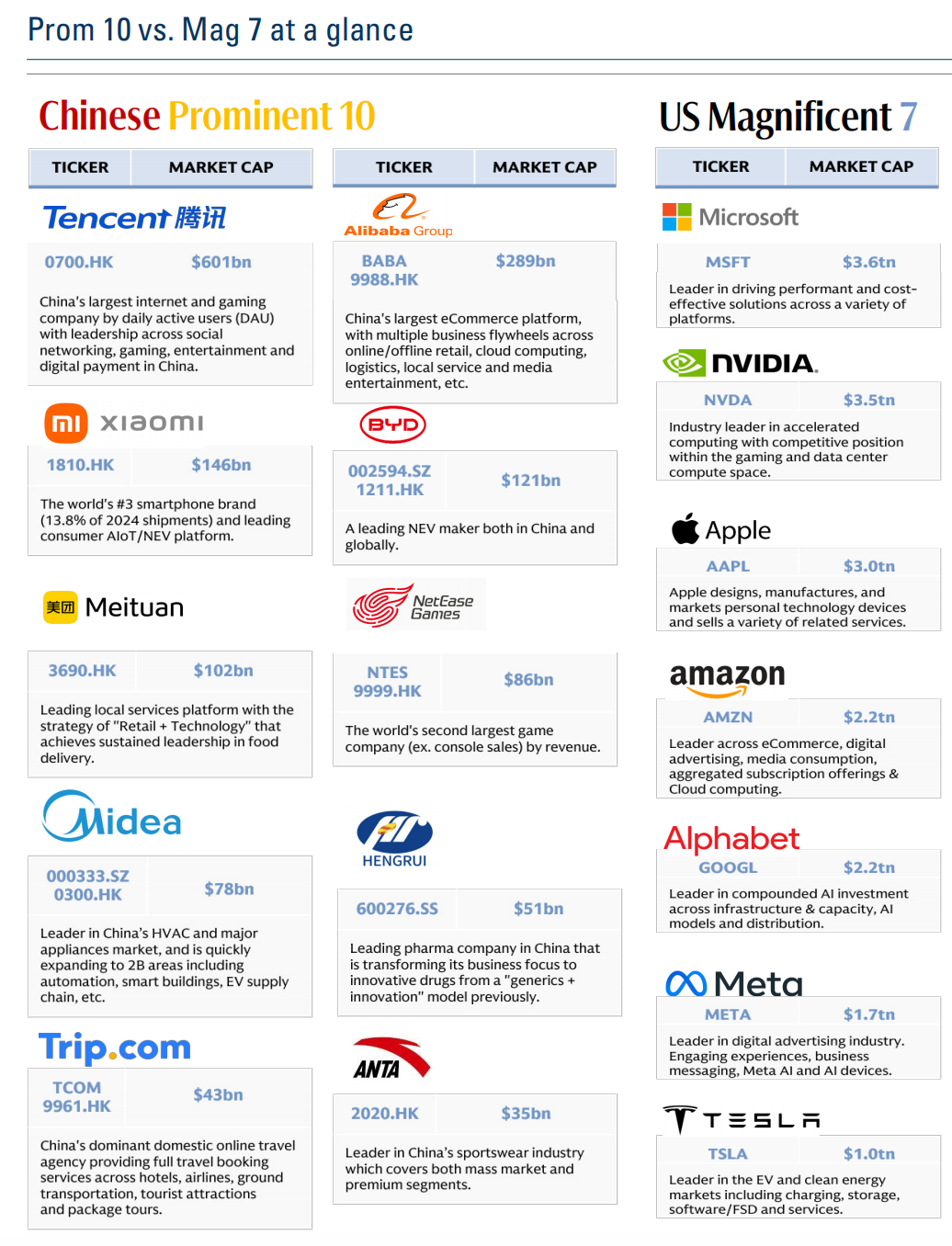
Core Viewpoint - Goldman Sachs has introduced the concept of "Ten Giants" in China's private sector, aiming to create a narrative system comparable to the U.S. stock market's "Magnificent 7" [2][5] Group 1: Market Dynamics - The "Ten Giants" include Tencent, Alibaba, Xiaomi, BYD, Meituan, NetEase, Midea, Heng Rui Pharmaceutical, Ctrip, and Anta, which collectively account for 42% of the MSCI China Index and have a daily trading volume of $11 billion [1] - Goldman Sachs predicts a 13% compound annual growth rate (CAGR) in earnings for these companies over the next two years, with an average price-to-earnings (P/E) ratio of 16, significantly lower than the 28.5 P/E ratio of the U.S. tech giants [1][4] Group 2: Policy Environment - The report highlights a significant policy shift in favor of private enterprises, marked by the February 2025 high-level meeting and the April 2025 implementation of the "Private Economy Promotion Law," which legally establishes the status of the private economy [2][7] - Current regulatory conditions for private enterprises are at their most lenient in five years, as indicated by Goldman Sachs' regulatory intensity index [2] Group 3: Valuation and Growth Potential - The report emphasizes a valuation gap, noting that the average P/E ratio of the "Ten Giants" is 13.9, with only a 22% premium over the MSCI China Index, much lower than the historical average and the 43% premium of the U.S. tech giants [4][14] - If the valuation premium of Chinese private enterprises returns to U.S. levels, it could add $313 billion in market value to these companies [4] Group 4: Technological and Globalization Trends - AI technology is projected to drive a 2.5% annual increase in earnings for Chinese companies over the next decade, with private enterprises comprising 72% of the defined AI-tech universe [8] - The globalization of private enterprises is evident, with overseas sales increasing from 10% in 2017 to 17% in 2024, and companies like BYD achieving a 30% gross margin overseas [10] Group 5: Market Structure and Investment Sentiment - The concentration of market capitalization among the top ten companies in China is only 17%, compared to 33% in the U.S., which may limit the potential for "leader premium" realization [23] - Despite the optimistic report, there is a discrepancy in market sentiment, as evidenced by the decline in stock prices for companies like Meituan and Ctrip since the report's release, indicating a lack of full market endorsement of the report's logic [19][21]







高盛捧杀中国民企
3 6 Ke· 2025-06-19 04:14
Core Viewpoint - Goldman Sachs has released a report titled "The Return of Chinese Private Enterprises: The Tide Has Turned," introducing a "Ten Giants" group of China's top ten private listed companies, which are compared to the U.S. tech giants known as the "Seven Sisters" [1][3]. Group 1: Selection of the "Ten Giants" - The selected "Ten Giants" include Tencent Holdings, Alibaba, Xiaomi Group, BYD, Meituan, NetEase, Midea Group, Hansoh Pharmaceutical, Trip.com, and Anta Sports [1]. - These companies have a combined market capitalization of $1.6 trillion, accounting for 42% of the MSCI China Index, and their average daily trading volume reaches $11 billion, indicating high liquidity and market influence [3]. Group 2: Comparison with U.S. "Seven Sisters" - The "Seven Sisters" concept refers to seven major U.S. tech companies that significantly influence the stock market, with a combined market capitalization exceeding $15 trillion, which is double that of Japan, Germany, the UK, and India combined [4]. - The "Seven Sisters" control 85% of AI core patents and 78% of cloud computing infrastructure, showcasing their dominance in the tech sector [7]. Group 3: Market Dynamics and Investment Opportunities - Goldman Sachs believes that the current low market concentration in China presents significant growth potential for capital returns, suggesting that leading companies may expand their dominance through mergers and acquisitions [11][12]. - The Chinese government is supportive of mergers and acquisitions, as evidenced by recent regulatory changes that have facilitated over 100 disclosed transactions in the Sci-Tech Innovation Board, amounting to over 33 billion yuan [15]. Group 4: AI and Competitive Landscape - The "Ten Giants" are expected to leverage their customer base, data accumulation, and investment capabilities to excel in AI development and commercialization, potentially leading to a winner-takes-all scenario [11][20]. - Chinese companies are increasingly applying AI across various sectors, from AI chips to drug development and smart factory solutions, indicating a rapid acceleration in AI adoption [19]. Group 5: International Investment Sentiment - International investment sentiment towards Chinese assets has been fluctuating, with Goldman Sachs' reports significantly impacting market perceptions and investor behavior [21][23]. - Despite the volatility in U.S. markets, the resilience of the "Seven Sisters" and their continued capital expenditure in AI suggest a strong competitive position that may not be easily disrupted [27].

野村:5-6月国内外运动服饰销售放缓 看好安踏及AMER
news flash· 2025-06-19 03:07
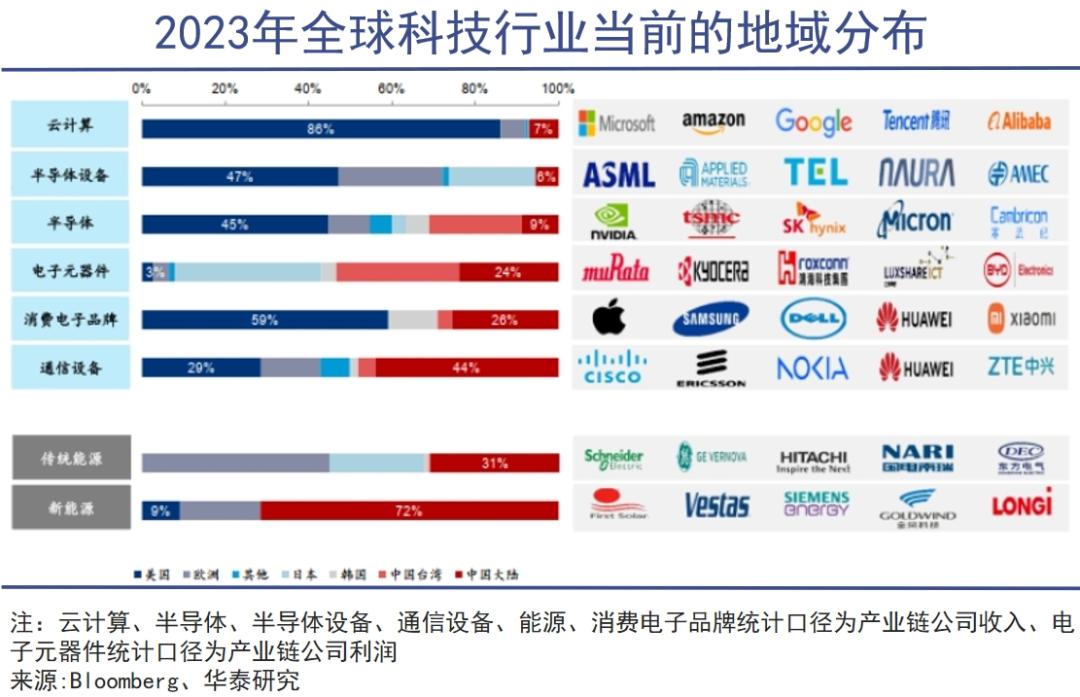
Group 1 - The core viewpoint of the article indicates that the sales momentum for domestic and international sportswear brands in China is slowing down, with a focus on consumer self-satisfaction rather than competitive sports [1] - Nomura's report highlights that the sales sentiment for major sportswear brands has weakened in the second quarter of this year, particularly during May and June [1] - The report anticipates that the sluggish sales momentum for major sportswear companies will persist until the second to third quarter of 2025, primarily due to weak sales in lower-tier cities and intensified competition in the apparel segment [1] Group 2 - The report expresses a positive outlook for Anta Sports (02020.HK) and AMER despite the overall slowdown in the market [1]
安踏2.9亿美元收购狼爪落地半月,派出姚剑掌帅
Nan Fang Du Shi Bao· 2025-06-18 14:37
Core Viewpoint - Anta Group's acquisition of the German outdoor brand Jack Wolfskin aims to enhance its presence in the mid-range outdoor market and expand its global footprint [2][3]. Group 1: Acquisition Details - Anta Group confirmed the appointment of Yao Jian as the president of Jack Wolfskin, effective July 1, 2025, to align with the group's strategic development [2]. - On April 10, Anta Sports announced the acquisition of Callaway Germany Holdco GmbH, the parent company of Jack Wolfskin, for $290 million [2]. - The acquisition was officially completed on June 2, making Jack Wolfskin a wholly-owned subsidiary of Anta [2]. Group 2: Brand Background - Jack Wolfskin, founded in 1981 and headquartered in Idstein, Germany, specializes in outdoor apparel, footwear, and equipment, recognized for its TEXAPORE technology and ergonomic designs [2]. - As of January this year, Jack Wolfskin operates 495 exclusive stores globally, with 226 in Europe and 269 in Asia, in addition to over 4,000 retail outlets [3]. Group 3: Market Strategy - Anta's acquisition is intended to fill gaps in its mid-range outdoor market offerings and enhance its brand portfolio [3]. - The group aims to leverage Jack Wolfskin's unique material technology and German engineering expertise to boost its competitiveness in the outdoor sports sector [3]. - Industry experts believe that Jack Wolfskin's strong market penetration in Europe, particularly in German-speaking regions, will provide Anta with valuable channel control and accelerate its expansion in the European market [3]. Group 4: Leadership Impact - Yao Jian's previous role as General Manager of Amer Sports Greater China saw significant revenue growth, with the region's contribution to Amer Sports rising from 8.3% in 2020 to 23.1% by Q3 2024 [4]. - Under Yao's leadership, Amer Sports Greater China achieved a revenue of $1.298 billion in 2024, marking a 53.7% year-on-year increase [4]. - His extensive industry experience and management skills are expected to help Jack Wolfskin develop a global strategy and expand its business footprint [4].
安踏任命姚剑为狼爪总裁,负责全球业务运营
Xin Lang Cai Jing· 2025-06-18 12:06
Core Insights - Anta Sports has appointed Yao Jian as the new president of the Jack Wolfskin brand, effective July 1, 2025, to align with the group's strategic development plan [1] - Anta Sports completed the acquisition of Jack Wolfskin on June 2, 2023, for a base price of $290 million (approximately 2.115 billion RMB), with adjustments for net working capital and other customary items [1] - Jack Wolfskin, founded in Germany in 1981, specializes in outdoor products and has a strong presence with 495 stores globally, including 226 in Europe and 269 in Asia [2] Company Strategy - The acquisition of Jack Wolfskin reflects Anta's ambition to penetrate the mass outdoor market in China, as it previously lacked a professional outdoor brand targeting the mid-range market [2] - Anta Sports has a diverse portfolio, including brands like Descente and KOLON, and previously acquired Amer Sports, which includes brands such as Arc'teryx and Salomon [2] Financial Performance - In 2024, Anta Sports reported a revenue increase of 13.58% to 70.83 billion RMB, marking its first revenue surpassing 70 billion RMB [3] - Combined revenues of Anta and its subsidiary Amer Sports exceeded 100 billion RMB for the first time, making it the third-largest sports goods group globally after Nike and Adidas [3] - In the first quarter of the current year, retail sales for Anta and FILA brands showed high single-digit growth compared to the same period last year [3]
中国版“美股七巨头”?港股热潮下高盛喊出民企“十强新贵”
Di Yi Cai Jing· 2025-06-18 03:36
Group 1 - The report by Goldman Sachs focuses on the strong return of Chinese private enterprises, the increasing size of large private companies, and the rise of the "Prominent 10" [2][4] - The "Prominent 10" includes Tencent, Alibaba, Xiaomi, BYD, Meituan, Netease, Midea, Hengrui, Trip.com, and Anta, which have seen significant stock price increases averaging 54% since the end of 2022 and 24% year-to-date, outperforming the MSCI China Index by 33 percentage points and 8 percentage points respectively [4][5] - The total market capitalization of the "Prominent 10" reaches $1.6 trillion, accounting for 10% of the total market value of A-shares, H-shares, and all US-listed Chinese stocks, with a weight of 42% in the MSCI China Index [5] Group 2 - Recent signals indicate a shift in the trend of Chinese private enterprises, with policymakers recognizing the importance of the private economy, including the convening of a meeting with private entrepreneurs and the issuance of the "Private Economy Promotion Law" [6] - The profitability of private enterprises has improved, with profits and return on equity (ROE) rising by 22% and 1.2 percentage points respectively since the low point in 2022 [6] - Despite the increasing competitiveness and market share of Chinese companies, their gross margins remain lower than those of major companies in developed markets, indicating a need for further concentration in the industry [7] Group 3 - If the profit margins of Chinese private enterprises continue to grow, there is potential for increased international investment, with many global investors expressing willingness to reallocate a portion of their assets to China [8] - Currently, 86% of global mutual funds are underweight in China, with a potential inflow of up to $44 billion if these funds were to allocate equally to Chinese stocks [8]
股市新风向!高盛买入中国“民营企业十巨头”!
Sou Hu Cai Jing· 2025-06-17 14:09
Core Insights - Goldman Sachs' chief China equity strategist Liu Jinjun released a report titled "The Return of Chinese Private Enterprises: The Tide Has Turned," indicating an improvement in the mid-term investment outlook for Chinese private enterprises driven by various macro, policy, and micro factors [1] - The report highlights a strong recovery in Chinese private enterprises, with profits and ROE rebounding by 22% and 1.2 percentage points, respectively, from their 2022 lows, and further recovery expected as profit margins normalize during industry consolidation [1] Group 1: Investment Opportunities - Goldman Sachs identified ten major Chinese private companies, referred to as the "Ten Giants," which include Tencent, Alibaba, Xiaomi, BYD, Meituan, NetEase, Midea, Hansoh Pharmaceutical, Ctrip, and Anta. These companies are expected to expand their dominance in the Chinese stock market, similar to the "Seven Giants" in the U.S. stock market [1][2] - The "Ten Giants" have shown significant advantages in market capitalization, trading volume, profit growth potential, and valuation, making them attractive to investors. They span high-growth sectors such as technology, consumer goods, and automotive, representing China's "new momentum" in AI, self-innovation, globalization, service, and new consumption [2] Group 2: Market Trends and Performance - Since the end of 2022, the stocks of these ten companies have risen by an average of 54%, outperforming the MSCI China Index by 33 percentage points and showing a 24% increase this year, surpassing the index by 8 percentage points [2] - Goldman Sachs estimates that 86% of global mutual funds are underweight in Chinese stocks, suggesting a potential inflow of up to $44 billion if these funds adopt equal-weight exposure to Chinese equities, with large private enterprises benefiting the most due to their size, liquidity, and index weight [3] Group 3: Broader Market Context - The report notes a significant increase in global funds returning to China and the ongoing growth of domestic "patient" and passive capital, which is expected to disproportionately benefit index-weighted stocks [3] - Recent trends indicate that Hong Kong stocks are outperforming A-shares, driven by fundamental recovery and inflows from southbound capital, with technology companies in Hong Kong showing superior performance in application areas [3]
高盛提出“中国民营十巨头”对标“美股七姐妹”,包含腾讯阿里美团小米等,不包含哪些?
Sou Hu Cai Jing· 2025-06-17 12:49
Group 1 - Goldman Sachs introduced the concept of "Chinese Prominent 10," identifying ten leading private enterprises in China, including Tencent, Alibaba, Xiaomi, BYD, Meituan, NetEase, Midea, Hansoh Pharmaceutical, Ctrip, and Anta [3][6] - The "Chinese Prominent 10" spans multiple sectors such as interactive media, retail, technology hardware, automotive, dining, entertainment, consumer goods, pharmaceuticals, hospitality, and textiles, contrasting with the tech-focused "Magnificent 7" in the US [6] - Goldman Sachs forecasts a compound annual growth rate (CAGR) of 13% for these companies' earnings over the next two years, with a median of 12%, and notes that their average price-to-earnings (P/E) ratio is 16 times, making them more attractive compared to the US counterparts' P/E of 28.5 times [6] Group 2 - Notable companies such as JD.com, Baidu, CATL, and SMIC were excluded from the "Chinese Prominent 10," despite JD.com ranking first in revenue among private enterprises in 2024 [3][6][8] - JD.com operates primarily on a direct sales model, differing from Alibaba's e-commerce approach, and has recently entered the food delivery market, showing strong growth [6][8] - NetEase's revenue for 2024 is projected at 105.3 billion yuan, with a year-on-year growth of 1.74%, while its music service revenue is significantly lower than Tencent's music revenue [8][9] Group 3 - The report emphasizes that investing in private enterprises does not exclude state-owned enterprises, as Goldman Sachs still favors "high-quality" state-owned enterprises and shareholder return combinations [10]

大摩:维持安踏目标价117港元及“增持”投资评级
news flash· 2025-06-17 02:52
Group 1 - Morgan Stanley maintains Anta Sports' target price at HKD 117 and an "Overweight" investment rating [1] - Anta's sales in May showed better growth compared to April, attributed to factors such as the earlier 6.18 shopping festival, increased holidays, and normalized weather [1] - Anta indicated that if demand weakens post the 6.18 shopping festival, it will consider offering more online discounts in June to boost sales [1] Group 2 - The retail sales growth for Anta and FILA is expected to reach 5-9% by Q2 2025, with FILA's growth anticipated to be stronger than Anta's [1] - Morgan Stanley maintains the operating profit margin guidance for Anta/FILA at 20-25%/~25% for 2025, while noting that Descente and KOLON currently have operating profit margins of over 30% and over 20% respectively [1]
美国高盛,遴选的中国民营企业10巨头,没有华为!
Sou Hu Cai Jing· 2025-06-17 02:41
Core Viewpoint - Goldman Sachs' newly selected list of "Top 10 Private Enterprises in China" has garnered significant market attention, highlighting the vitality of China's private economy and reflecting five core trends in industrial development: technological innovation, domestic demand-driven growth, globalization, consumption upgrades, and corporate governance optimization [1] Group 1: Company Overview - The selected 10 companies include Tencent, Alibaba, Xiaomi, BYD, Meituan, NetEase, Midea, Hengrui Medicine, Ctrip, and Anta, representing a complete ecosystem of China's new economy [3] - Tencent and Alibaba dominate the digital economy, with Tencent's fintech and enterprise services accounting for 34% of its revenue, while Alibaba's cloud computing business has achieved profitability for eight consecutive quarters [3] - BYD and Xiaomi serve as the dual engines of China's intelligent manufacturing, with BYD surpassing Tesla in electric vehicle sales and Xiaomi holding a 14.1% global market share in smartphones [3] Group 2: Financial Performance - The average compound annual growth rate of revenue for these 10 companies over the past five years is 19.8%, significantly outpacing other constituents of the MSCI China Index [5] - Meituan's takeout business shows stable growth, with new business losses narrowing to 4.8 billion yuan, while NetEase's overseas gaming revenue exceeds 35%, showcasing its strong cross-cultural operational capabilities [5] - The average R&D intensity of the top 10 companies is 8.2% of revenue, with Hengrui Medicine's R&D investment reaching 28%, indicating a strong commitment to future growth [5] Group 3: Valuation Insights - The average price-to-earnings ratio of these companies is 16 times, representing a 20% discount compared to their historical average [7] - Midea Group's dividend yield has risen to 4.5%, while Anta Sports' operating cash flow increased by 32% year-on-year, and Ctrip's total bookings have recovered to 1.3 times the level of 2019 [7] - Compared to U.S. tech giants, the PEG ratio of China's top 10 shows significant advantages, particularly in the commercialization of AI, with Alibaba's Tongyi Qianwen and Tencent's Hunyuan large model entering large-scale application phases [7] Group 4: Policy Environment - The top 10 companies benefit from favorable national policies, including the introduction of digital economy promotion regulations, continued tax exemptions for new energy vehicle purchases until 2027, and the expansion of green channels for innovative drug and medical device approvals [9] - The expansion of the Hong Kong Stock Connect and the reform of the A-share registration system have improved the financing environment for private enterprises, with estimated annual incremental capital inflows exceeding 80 billion yuan through these channels [9] Group 5: Future Outlook - These leading enterprises are expected to continue driving industrial transformation, with Tencent exploring virtual and real integration, Alibaba repositioning in the AI large model era, BYD's intelligent transformation, and Meituan's commercialization of drone delivery [11] - As the demand for wealth management among Chinese residents surges, these quality assets are poised to become key targets for both domestic and foreign capital allocation [11] Group 6: Notable Exclusion - Notably, Huawei is absent from Goldman Sachs' list of "Top 10 Private Enterprises in China" as it is not a publicly listed company, which is a criterion for inclusion [13]