
JD(09618)

Search documents
从宁德游向全国:一条大黄鱼的京东供应链跃升之路
Sou Hu Cai Jing· 2025-12-02 06:41
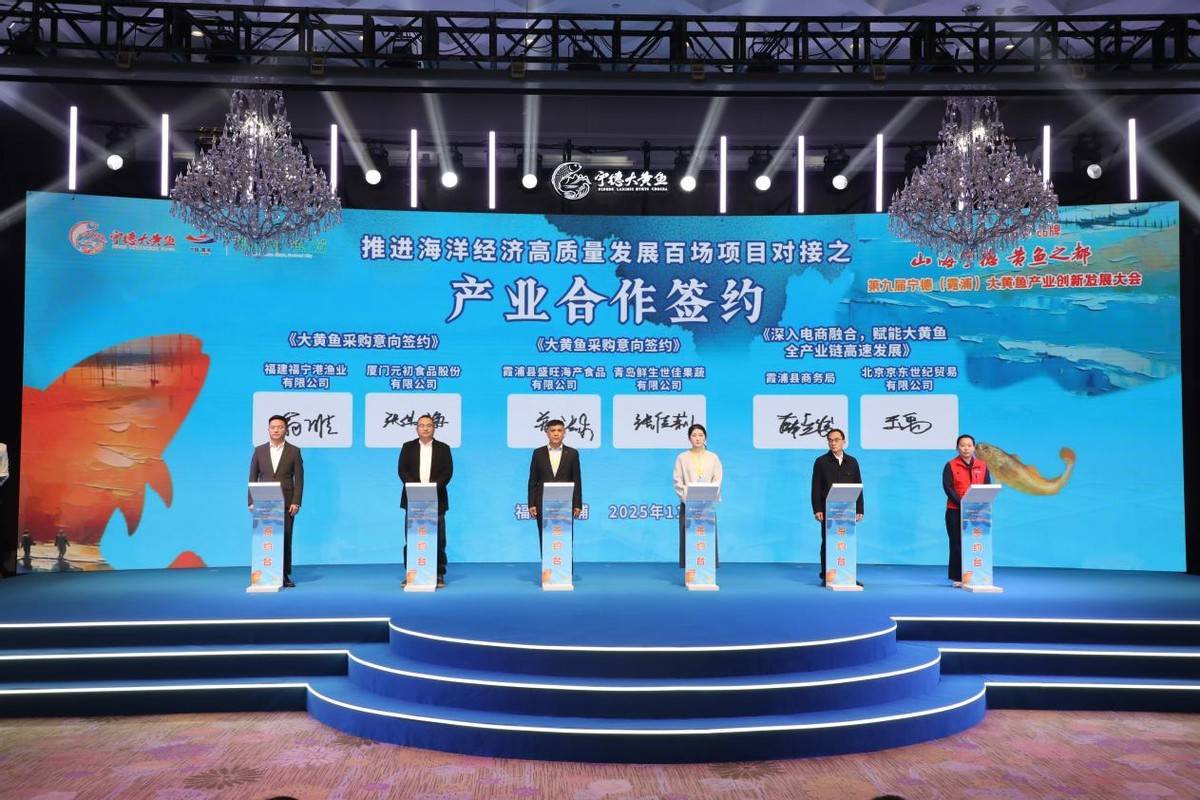
Core Viewpoint - The ninth Ningde (Xiapu) Large Yellow Croaker Industry Innovation Development Conference highlighted the strategic partnership between JD Fresh and the Xiapu County Commerce Bureau to promote the high-quality development of the entire large yellow croaker industry chain [1][3]. Industry Overview - Ningde, known as the "Capital of Large Yellow Croaker" in China, produces 80% of the country's large yellow croaker, with a projected output of 214,900 tons in 2024 and a total industry value exceeding 20 billion yuan [4]. - The large yellow croaker is a unique marine fish in China, highly regarded for its taste and nutritional value, often referred to as the "national fish" [3][4]. Company Strategy - JD Fresh leverages its super supply chain capabilities and a "source direct delivery + direct procurement" model to ensure that freshly caught large yellow croakers are processed within six hours and delivered quickly to consumers [3][6]. - The company has established a comprehensive quality assurance system covering all aspects of production, circulation, and sales, including strict pre-sale, in-sale, and post-sale quality control standards [6][8]. Product Innovation - JD Fresh has introduced a "three removals" process (scales, gills, and internal organs) to simplify cooking for consumers, along with a traceable QR code system for transparency from breeding to processing [8]. - The company offers competitive pricing by eliminating middlemen and utilizing direct sourcing, ensuring consumers receive high-quality products at lower prices [8]. Collaborative Efforts - JD Fresh is collaborating with leading brands in the large yellow croaker sector to establish a source direct delivery certification base, enhancing brand promotion and sales for Ningde large yellow croaker [9][11]. - The partnership aims to provide stable, high-quality supply and competitive pricing, thereby increasing JD's competitiveness in the large yellow croaker category [11][13]. Consumer Trends - There is a growing consumer demand for high-quality protein, leading to the introduction of premium products such as boneless yellow croaker fillets and various processed forms to cater to diverse consumer preferences [13].


京东奥莱即将在宿迁开业 阿迪达斯、COACH等百余大牌入驻
Sou Hu Cai Jing· 2025-12-02 06:36
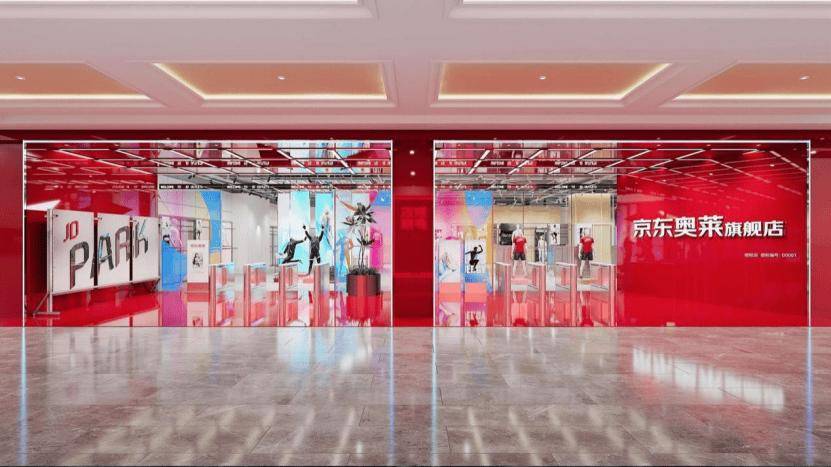
Core Insights - JD Outlet and Suqian have reached a collaboration, with the JD Outlet Suqian Central Mall set to open in early 2026, aiming to become a new fashion consumption landmark and commercial icon for the city [1][5] - The mall will feature nearly 100 well-known brands across various categories, including sportswear, light luxury, men's and women's clothing, and children's apparel, providing a one-stop discount shopping experience for consumers [3][5] Group 1 - The collaboration involves JD, Suqian City, and Hailan Group, focusing on deep cooperation in the field of consumption upgrades, leveraging JD's resource integration capabilities, Hailan's offline operational advantages, and Suqian's policy support [5][7] - The project aims to activate the regional consumption market and inject vitality into the economic and social development of Suqian [5][7] Group 2 - JD Outlet has established 47 stores nationwide since the project's launch, covering cities such as Jiangyin, Qingdao, Shijiazhuang, Foshan, Hefei, and Zibo, reaching over one million consumers [3][5] - The innovative retail model of JD Outlet is expected to provide more convenient and diverse discount shopping experiences for consumers as more stores open across various cities [7]

京东回应埃安UT super发票限制:近期将新增更多可开票城市
Bei Jing Shang Bao· 2025-12-02 06:09
活动现场,三方针对用户关注的问题逐一解答。关于"只能在广州、上海两地开票"的问题,京东汽车营 销负责人表示,在上海、广州两地开票,是三方为了让更多用户享受到政府补贴优惠,共同努力的结 果,并不影响各地上牌、保险等。对于部分用户希望开具其他地区发票的需求,目前三方已全力推进, 近期将新增更多城市,此外广州补贴也将延续到明年1月底,以上具体信息均可查看商品详情页。 为了尊重用户的选择,三方承诺对于自11月9日开始至23日支付定金5000元,在确认定制完成前(确认 定制包含用户需要逐一明确颜色、是否租电、发票提示、门店选择等)的用户,均可选择退款;对于在 11月24日(含)后选择立即定制的用户,在确认定制后48小时内均可选择退款。 北京商报讯(记者 蔺雨葳)12月1日晚,广汽埃安微信公众号发布的信息显示,针对广汽、宁德时代、 京东联手推出的埃安UT super,三方共同组织了一场"听劝"恳谈会。 ...


就埃安UT super上市争议,广汽埃安推出加赠2600元服务包等举措
Xin Lang Cai Jing· 2025-12-02 05:56
12月2日,在广汽、宁德时代、京东三方日前联合举办的用户恳谈会上,就埃安UT super上市争议对用 户造成的不便,广汽埃安对在12月31日前下定购买埃安UT super的用户加码赠送价值2600元的"无忧服 务包",包含车身养护等。同时,广汽埃安与京东、宁德时代三方明确细化了退订规则、发票开具城市 扩容、客服体系强化等政策。 ...
广汽埃安回应埃安UT super疑问:出现“天窗图片”是内容审核失误
Bei Jing Shang Bao· 2025-12-02 05:48
会上,对于用户关心的"是否有天窗"的疑问,广汽集团埃安BU副总裁、埃安品牌首席用户官杨龙表 示,这是埃安社区上介绍三方合作生态内容出现的一张"天窗图片",是内容审核的失误,在上市发布三 天后已发现并立刻修正,并对所有官方内容完成自查,对此深表歉意。 北京商报讯(记者 蔺雨葳)12月1日晚,广汽埃安微信公众号发布的信息显示,针对广汽、宁德时代、 京东联手推出的埃安UT super,三方共同组织了一场"听劝"恳谈会。 ...
深圳签收今年全国第1800亿件快件
Shen Zhen Shang Bao· 2025-12-02 05:43
Core Insights - The express delivery volume in Shenzhen reached 101.1 billion pieces in the first ten months of 2025, ranking third among major cities in China [2] - The national express delivery business volume surpassed 1.8 trillion pieces for the first time, marking a new milestone for China's postal and express industry [1] Industry Performance - The postal industry in Shenzhen completed a cumulative delivery volume of 64.3 billion pieces from January to October 2025, with a year-on-year growth of 1.2% [2] - The express delivery processing volume grew by 3.9% year-on-year, while the total express business volume reached 63.5 billion pieces, reflecting a 1.5% increase [2] - The cumulative revenue of the postal industry was 674.3 billion yuan, showing a year-on-year decline of 3%, with express business revenue at 519.8 billion yuan, down 2.7% [2] Technological Advancements - The industry is leveraging diverse application scenarios and rich data resources to adapt to new business models, increasing investment in technology research and development [2] - Automation in warehousing includes the use of robots and automated systems to enhance efficiency, while AI models in sorting centers significantly reduce errors and damages [2] - The expansion of pilot programs for drones, unmanned vehicles, and robots in delivery operations has effectively lowered costs [2] Company Initiatives - JD Logistics plans to purchase 3 million robots, 1 million unmanned vehicles, and 100,000 drones over the next five years to strengthen its position in smart logistics [3] - The average daily delivery volume at JD's Shenzhen Pingshan warehouse is around 15,000 pieces, with 5 unmanned vehicles capable of handling 1,000 deliveries daily [3]
广汽埃安致歉
Xin Lang Cai Jing· 2025-12-02 04:58
会上,三方宣布推出四大举措,包括加码赠送2600元服务包、发票开具新增更多城市、更灵活的退款退 订政策等。 活动当天下午,第1000辆埃安UT super还在北京完成了交付,实现交付开启后首周超1000辆的突破, 此前,10月14日,京东官宣将于双十一期间联合广汽、宁德时代正式推出一款"国民好车",并于京东平 台独家销售,预计售价在10万至12万。 图片来 源:京东APP 智通财经从埃安官方微信公众号获悉,12月1日,针对广汽、宁德时代、京东联手推出的埃安UT super,三方共同组织了一场"听劝"恳谈会。 会上,对于用户关心的"是否有天窗"的疑问,广汽集团埃安BU副总裁、埃安品牌首席用户官杨龙表 示,这是埃安社区上介绍三方合作生态内容出现的一张"天窗图片",是内容审核的失误,在上市发布三 天后已发现并立刻修正,并对所有官方内容完成自查,对此深表歉意。"从上市当天开始,在三方各种 平台的产品配置表上,也非常清晰地看到,没有天窗配置。" 11月5日,京东第一辆"国民好车"埃安UT super 1号车正式下线。这也是该款新车首次对外完整展示外观 设计、制造工艺、电池技术及换电过程等细节。11月9日,埃安UT su ...

京东数字人直播免费向所有商家开放
Zheng Quan Shi Bao Wang· 2025-12-02 03:19
Core Viewpoint - JD.com has officially announced the free availability of its digital human live streaming service to all merchants, allowing them to subscribe for a dedicated AI host [1] Group 1 - JD.com has made its digital human live streaming service accessible to all merchants [1] - Merchants can find the "JD Official Digital Human" in the Jingmai service market and follow the instructions to subscribe [1] - This initiative aims to enhance the online shopping experience by providing personalized AI hosts for merchants [1]

恒生科技ETF鹏华(520590)红盘向上,可灵AI发布全新视频和图像模型
Xin Lang Cai Jing· 2025-12-02 02:59
Core Insights - The Hang Seng Tech Index (HSTECH) has shown a positive trend, with notable increases in key component stocks such as BYD (3.52%), Alibaba (2.39%), Kuaishou (2.27%), Xiaomi (2.23%), and NetEase (1.89%) [1][2] - The launch of AI applications, particularly Alibaba's Quark AI glasses and Keling AI's new product, is expected to drive demand for AI computing power and upgrade the edge hardware industry [1][2] Company Developments - Alibaba has officially released the Quark AI glasses, featuring the latest Qianwen AI assistant, which integrates deeply with Alibaba's application ecosystem [1] - Keling AI has introduced the Keling O1, a multi-modal creation tool that addresses consistency issues in AI video generation, providing a comprehensive solution for various applications [1] Industry Trends - Open-source securities highlight that AI edge applications, such as the Quark AI glasses, may reshape AI interaction modes and accelerate the deployment of AI applications [2] - Dongwu Securities notes that the current AI development is primarily driven by large models, with the US and China being the leading regions in AI infrastructure and hardware investments, indicating rapid growth in the global AI industry [2] Market Composition - As of December 1, 2025, the top ten weighted stocks in the Hang Seng Tech Index account for 69.48% of the index, including Alibaba, Tencent, SMIC, NetEase, Meituan, BYD, Xiaomi, Kuaishou, JD.com, and Trip.com [2]






外卖大战,便宜了谁?
Tai Mei Ti A P P· 2025-12-02 02:30
Core Insights - The irrational competition in the food delivery sector is expected to transition to a more rational and mature phase, with platforms that possess deep industry insights, proven operational excellence, and sustainable high-quality growth becoming industry leaders [1] Group 1: Market Dynamics - The ongoing food delivery battle has led to significant financial losses for major players, with Meituan reporting a loss of 16 billion, Alibaba's profit dropping by 76%, and JD's net profit halving, resulting in over 77 billion burned in just one quarter [2][4][5] - The competition is characterized by a lack of unified victory standards, as the three major players (Meituan, Alibaba, and JD) are not competing on the same track, leading to a scenario where no clear winner emerges [9][14] Group 2: Company Strategies - JD initiated the competition but is now focusing on building its supply chain capabilities, with a projected loss of 34 billion in its instant retail business by 2025 [4][10] - Alibaba views food delivery as a high-frequency trigger to activate its broader e-commerce platform, aiming to enhance user engagement and overall consumption [11] - Meituan sees food delivery as a critical lifeline, emphasizing its foundational role in the company's ecosystem and its strategy to maintain market dominance [12][13] Group 3: Financial Performance - JD's net profit fell by 54.7% year-on-year to 5.3 billion, while its marketing expenses surged by 110.5% to 21.1 billion due to increased promotional activities [4] - Alibaba's adjusted EBITA dropped from 44.3 billion to 10.5 billion, primarily due to a significant reduction in flash sales [5] - Meituan's core local business revenue decreased by 2.8%, resulting in a loss of 14.1 billion, equating to a daily loss of 1.5 billion [6] Group 4: Future Outlook - The three companies have signaled a shift towards efficiency and strategic focus, with terms like "reduction," "unsustainable," and "strategic focus" being commonly used [15][17] - The future of the food delivery market will likely involve smarter subsidy strategies, with a shift from indiscriminate coupons to targeted promotions, and a focus on high-value user engagement [19][20]