
LEAPMOTOR(09863)

Search documents
零跑汽车(09863) - 临时股东大会通告
2025-11-18 22:30
(股份代號:9863) 臨時股東大會通告 茲通告浙江零跑科技股份有限公司(「本公司」)謹訂於2025年12月8日(星期一) 下午15:00 假座中國浙江省杭州市濱江區物聯網街451號芯圖大廈1樓會議中心5號會議 室舉行臨時股東大會(「臨時股東大會」),以審議並酌情通過下列決議案(不論有否修 訂): 普通決議案 ZHEJIANG LEAPMOTOR TECHNOLOGY CO., LTD. 浙江零跑科技股份有限公司 香港交易及結算所有限公司及香港聯合交易所有限公司對本公告的內容概不負責,對其準確性或完整性亦 不發表任何聲明,並明確表示,概不對因本公告全部或任何部分內容而產生或因倚賴該等內容而引致的任 何損失承擔任何責任。 (於中華人民共和國註冊成立的股份有限公司) 「動議: 待香港聯合交易所有限公司(「聯交所」)上市委員會批准因行使根據本公司 新購股權計劃(「2025年購股權計劃」)(其規則載於註有「A」字樣的文件, 該文件已提呈大會並由大會主席簽署,以資識別)可能授出的任何購股權而 可能將予發行及配發的本公司H股(「H股」)上市及買賣後及在其規限下, 批准及採納2025年購股權計劃及購股權計劃授權限額(定義見 ...
零跑汽车(09863) - 临时股东大会通函
2025-11-18 22:22
此乃要件 請即處理 閣下如對本通函任何方面或將採取的行動有任何疑問,應諮詢股票經紀或其他註冊證券交易商、銀行經 理、律師、專業會計師或其他專業顧問。 閣下如已售出或轉讓名下全部浙江零跑科技股份有限公司的股份,應立即將本通函連同隨附的代表委任表 格轉交買方或承讓人,或經手買賣或轉讓的銀行、股票經紀或其他代理商,以便轉交買方或承讓人。 香港交易及結算所有限公司及香港聯合交易所有限公司對本通函的內容概不負責,對其準確性或完整性亦 不發表任何聲明,並明確表示概不會就本通函全部或任何部份內容而產生或因倚賴該等內容而引致的任何 損失承擔任何責任。 ZHEJIANG LEAPMOTOR TECHNOLOGY CO., LTD. 浙江零跑科技股份有限公司 (於中華人民共和國註冊成立的股份有限公司) (股份代號:9863) 建議更換非執行董事 上調公司及下屬分╱子公司向銀行申請綜合信貸規模 建議採納2025年購股權計劃 上調為全資及控股子公司提供擔保額度 建議修訂公司章程 及 臨時股東大會通告 浙江零跑科技股份有限公司謹訂於2025年12月8日(星期一)下午15:00假座中國浙江省杭州市濱江區物聯 網街451號芯圖大廈1樓會議 ...
零跑汽车(09863):Q3维持正盈利,新品周期强势
Soochow Securities· 2025-11-18 15:03
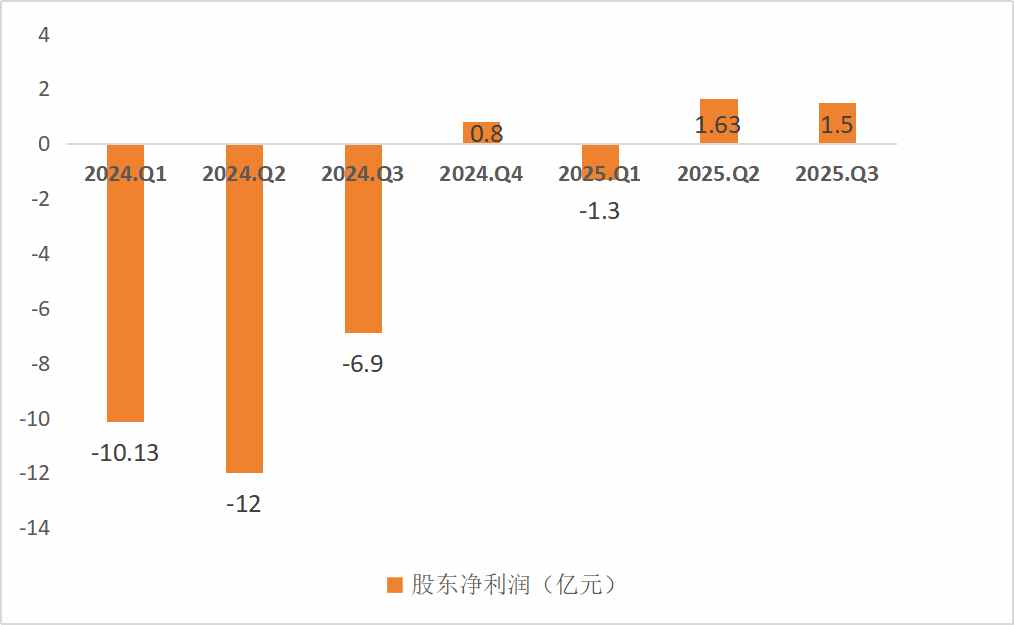
Investment Rating - The investment rating for the company is "Buy" (maintained) [1] Core Insights - The company achieved a quarterly revenue of 19.45 billion yuan in Q3 2025, representing a year-on-year increase of 97.3% and a quarter-on-quarter increase of 36.7% [7] - The company reported a net profit attributable to equity holders of 150 million yuan in Q3 2025, a significant improvement from a loss of 690 million yuan in Q3 2024 and a profit of 160 million yuan in Q2 2025 [7] - The company’s Q3 sales volume reached 174,000 units, with a year-on-year increase of 107.3% and a quarter-on-quarter increase of 29.6% [7] - The average selling price (ASP) for the company was 112,000 yuan, showing a year-on-year decrease of 4.8% but a quarter-on-quarter increase of 5.4% [7] - The gross margin for Q3 was 14.5%, reflecting a year-on-year increase of 6.4 percentage points and a quarter-on-quarter increase of 0.9 percentage points [7] - The company’s sales, management, and R&D expense ratios improved to 4.9%, 3.2%, and 6.2% respectively, compared to the previous year [7] - The company has expanded its sales service network to cover 292 cities with 866 sales outlets as of the end of September 2025 [7] - The company exported 17,000 vehicles in Q3 2025, a quarter-on-quarter increase of 36% [7] - The company plans to launch its Lafa5 model overseas in Q2 2026 and is actively pursuing local production capabilities in Malaysia and Europe [7] Financial Projections - The total revenue forecast for the company is projected to reach 65.8 billion yuan in 2025, with a year-on-year growth of 104.58% [1] - The net profit attributable to the parent company is expected to be 693.83 million yuan in 2025, with a significant year-on-year increase of 124.60% [1] - The earnings per share (EPS) is projected to be 0.49 yuan in 2025, with a P/E ratio of 103.14 [1] - The company’s gross margin is expected to improve to 15% in 2025 [8] - The company’s asset-liability ratio is projected to be 77.45% in 2025 [8]
汽车视点丨购置税影响几何、AI“新物种”何时落地?三家上市车企回应市场关切
Xin Hua Cai Jing· 2025-11-18 10:34
Core Insights - Three major automotive companies, Geely, Leapmotor, and Xpeng, reported record-high revenues, gross profits, and delivery volumes for Q3, while addressing market changes due to adjustments in vehicle purchase tax policies [1][2][3] Financial Performance - Geely achieved a record revenue of 89.2 billion yuan in Q3, a 15% increase quarter-on-quarter and a 27% increase year-on-year, with a net profit of 3.96 billion yuan, up 19% year-on-year [1] - Leapmotor reported Q3 revenue of 19.45 billion yuan, a 97.3% year-on-year increase, with a net profit of 150 million yuan and a gross margin of 14.5% [2] - Xpeng's Q3 revenue reached 20.38 billion yuan, a 102% year-on-year increase, with a net loss of 380 million yuan, significantly narrowing from a loss of 1.81 billion yuan in the same period last year [2] Market Outlook - The automotive market is expected to face challenges in 2026 due to the reduction of purchase tax incentives for new energy vehicles, transitioning from exemption to a 50% reduction [3] - Geely's CEO expressed confidence in the company's ability to adapt, highlighting that the market is maturing and that companies with strong strategic foundations will have advantages [3][4] - Leapmotor's management believes the tax policy changes will not significantly impact overall vehicle sales, as evidenced by the continued growth in new energy vehicle penetration [4] Strategic Initiatives - Geely plans to launch multiple new and updated models in Q4 to meet its annual sales target of 3 million vehicles, having achieved 2.477 million units by the end of October [1][4] - Leapmotor aims for a combined domestic and overseas sales target of 1 million vehicles by 2026, with a focus on expanding into new markets [4] - Xpeng is transitioning towards becoming a technology company, with plans to develop flying cars, humanoid robots, and Robotaxi services, aiming for significant advancements in AI applications [5][6] Future Innovations - Xpeng's CEO outlined plans for the launch of three Robotaxi models and humanoid robots by 2026, with initial deployments in commercial settings [5][6] - Leapmotor has completed strategic planning for its new product lines, with expectations to launch new products by 2027-2028 [6] - Geely is set to unveil a new five-year plan focused on AI and technology on January 1, 2026, emphasizing the importance of strong manufacturing capabilities in the automotive sector [6]
单季卖车超17万辆,净赚1.5亿元,零跑离冲击百万年销还有多远?
3 6 Ke· 2025-11-18 10:06
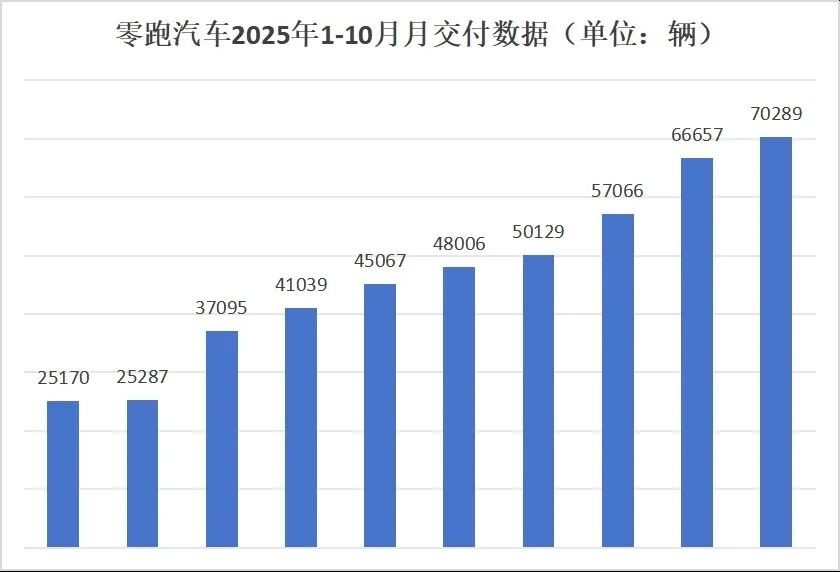
Core Insights - Leap Motor reported a significant revenue increase of 97.3% year-on-year, reaching 19.45 billion yuan in Q3 2025, compared to 9.86 billion yuan in Q3 2024 [1] - The company achieved a quarterly profit of 150 million yuan in Q3 2025, marking a turnaround from a net loss of 690 million yuan in the same period last year [1] - The growth in sales volume was the primary driver behind the revenue and profit increase, with a total vehicle delivery of 173,852 units in Q3 2025, up 101.77% from 86,165 units in Q3 2024 [2] Financial Performance - Leap Motor's gross margin improved to 14.5% in Q3 2025, up from 8.1% in Q3 2024 and 13.6% in Q2 2025 [1] - The company reported a total net profit of 180 million yuan for the first three quarters of 2025 [1] - R&D expenditure increased by 55.4% year-on-year to 1.21 billion yuan in Q3 2025 [13] Sales and Delivery - Leap Motor exceeded its annual sales target of 500,000 vehicles by achieving cumulative sales of over 500,000 units by November 15, 2025 [4] - The company set a new monthly sales record with 70,289 units delivered in October 2025 [2] - As of September 30, 2025, Leap Motor's sales network expanded to 866 stores across 292 cities [7] Global Expansion - Leap Motor exported 17,397 vehicles in Q3 2025, with a total of 37,772 units exported from January to September 2025 [7] - The company plans to accelerate its global localization strategy in 2026, starting with a project in Malaysia [7] Product Strategy - Leap Motor is set to launch multiple new models in 2025, including two new models on the B platform and three refreshed products on the C platform [8] - The company aims to enhance its product competitiveness and brand positioning, targeting different consumer segments [8] Market Position - Despite strong sales, Leap Motor's market capitalization was 77.915 billion HKD as of November 17, 2025, significantly lower than competitors like Xpeng and Li Auto [14][15] - The company faces challenges in achieving a higher market valuation due to its focus on mid-to-low-end models and the need to improve its core technology capabilities [15] Strategic Partnerships - There are rumors regarding FAW Group's potential acquisition of Leap Motor, which could enhance Leap Motor's market presence and technological capabilities [16]

业绩高质量增长,零跑持续盈利在手现金达339.2亿元
Zhi Tong Cai Jing· 2025-11-18 09:47
Core Viewpoint - Leap Motor has maintained its position as the leading new energy vehicle brand for eight consecutive months, achieving a monthly delivery volume exceeding 70,000 units and demonstrating strong financial performance with positive cash flow and profitability for two consecutive quarters [1][2][11] Financial Performance - In Q3 2025, Leap Motor reported record revenue of 19.45 billion yuan, a year-on-year increase of 97.3%, with a gross margin of 14.5%, up 6.4 percentage points year-on-year [1][2] - The company achieved a net profit of 150 million yuan for shareholders, marking two consecutive quarters of profitability [1][2] - Operating cash flow reached 4.88 billion yuan in Q3, with free cash flow of 3.84 billion yuan, indicating a strong ability to generate cash internally [4][2] Sales and Growth - Leap Motor's Q3 2025 sales reached approximately 174,000 units, a year-on-year increase of 101.77%, with a monthly sales record of 70,289 units in October [1][7] - The company has surpassed 500,000 cumulative sales by November 15, 2025, and anticipates exceeding 600,000 units for the year, with a target of 1 million units in 2026 [1][10][11] Market Position and Strategy - Leap Motor has established itself as a leader in the new energy vehicle market, focusing on high-quality growth while many competitors face ongoing losses and negative cash flow [1][2][11] - The company plans to launch 12 new models in 2026, including high-end D series and entry-level A series vehicles, to support its ambitious sales targets [10][11] - Leap Motor's global expansion strategy includes establishing over 700 outlets in approximately 30 international markets, with a focus on localizing production and sales [10][11] Technological Innovation - The company emphasizes continuous technological innovation, with all models equipped with the latest advancements, including the recently launched D platform technologies [5][9] - Leap Motor's B and C series models have become market hits, contributing significantly to its sales growth and brand recognition [7][9] Investment and Market Confidence - The founder of Leap Motor, Zhu Jiangming, has consistently increased his stake in the company, reflecting confidence in its future prospects, with a total investment of approximately 850 million HKD since August 2024 [11] - The company's market capitalization has increased by over 60% this year, indicating strong investor interest and confidence in its growth trajectory [11]
业绩高质量增长,零跑(09863)持续盈利在手现金达339.2亿元
智通财经网· 2025-11-18 09:40
连续8个月蝉联新势力销冠,月交付量突破7万台大关,且两个季度实现股东盈利,拥有正向自由现金流,零跑(09863)终是和同行拉开了差距。 智通财经APP了解到,11月17日,零跑发布2025年Q3财报,营收创下历史新高达194.5亿元,同比增长达97.3%,继续保持强劲的盈利能力,毛利率14.5%, 同比提升6.4个百分点,股东净利润1.5亿元,实现了连续两个季度的盈利。期间,该公司产生了经营现金流净额高达48.8亿元,自有现金流38.4亿元。 该公司成长速度领跑中国新能源车市,2025年Q3销量约17.4万台,同比增长101.77%,月度销量势如破竹,10月份突破7万台,拉开第二名的差距,并连续8 个月蝉联新势力销冠。在11月15日,公司年度累计销量破50万台,首个完成计划目标,并预期全年销量将突破60万台,明年将挑战100万台。 值得注意的是,新能源汽车行业来到了下半场决赛圈,大部分品牌虽然受益于行业高速增长,但忽视质量增长,持续性亏损,经营现金流净额持续为负,现 金储备不断消耗殆尽。而零跑一直遵从高质量发展理念,不仅实现了成长领跑,同时实现盈利及现金流的健康生态,是造车新势力中第二家实现盈利的品 牌。 高 ...
零跑汽车(09863):规模效应持续释放,零跑盈利质量进入改善通道
Haitong Securities International· 2025-11-18 08:55
Investment Rating - The report maintains an "OUTPERFORM" rating for Leapmotor [1][2][20]. Core Insights - Leapmotor has entered a clear margin-improvement cycle, with sustained profitability and enhanced gross margins driven by scale benefits and cost optimization [3][14]. - The company is on track to achieve its annual sales target of 580,000 to 650,000 units, with a revised forecast of 633,000 units for 2025 [4][15]. - Leapmotor's overseas expansion strategy is taking shape, with significant order growth and localization projects planned for 2026 [5][16][17]. - The company has established a comprehensive product matrix with four major series, enhancing its market positioning [6][18][19]. - Revenue forecasts for 2025-2027 have been updated, reflecting a strong model pipeline and expected market share growth [7][20]. Summary by Sections Financial Performance - In Q3 2025, Leapmotor reported revenue of Rmb19.45 billion, a 97% year-on-year increase, with a gross margin of 14.5% [3][14]. - The net profit for Q3 was Rmb150 million, marking a significant improvement from a loss of Rmb690 million in the same period last year [3][14]. - The company had cash reserves of Rmb33.92 billion at the end of Q3, indicating a strong liquidity position [3][14]. Sales and Delivery - Year-to-date deliveries reached 466,000 units through October, with management confident in achieving the full-year target [4][15]. - October saw single-month deliveries surpassing 70,000 units for the first time, reflecting strong demand [3][14]. Overseas Expansion - Leapmotor's overseas orders reached approximately 12,000 in October, with expectations to exceed 15,000 in November [5][16]. - The company aims for overseas sales of 100,000 to 150,000 units by 2026, maintaining a low-margin strategy for market penetration [5][16][17]. Product Development - Leapmotor has completed its ABCD product series, with new models set to launch in the coming months [6][18][19]. - The company is also developing a new category-creating product expected to launch in 2027 or 2028 [6][19]. Valuation - The updated revenue forecast for 2025-2027 is Rmb64.9 billion, Rmb94.6 billion, and Rmb127.6 billion, respectively [7][20]. - A target price of HK$73.51 is assigned based on a 1.0x price-to-sales ratio for 2026 [7][20].
港股延续受压态势 恒指低开0.8% 中国宏桥(01378)跌7.74%
Xin Lang Cai Jing· 2025-11-18 07:10
Market Overview - The Hong Kong stock market continues to face pressure, with the Hang Seng Index opening down 0.8%, the National Enterprises Index down 0.72%, and the Hang Seng Tech Index down 1.25% [1] - Major stocks such as China Hongqiao, Hansoh Pharmaceutical, Li Auto, and NetEase experienced declines, with China Hongqiao dropping 7.74% [1] Company Performance - XPeng Motors reported a significant reduction in net loss for the three months ending September 30, 2025, with a loss of 381 million RMB, down 78.93% year-on-year. Revenue reached 20.381 billion RMB, a 101.76% increase, with automotive sales revenue at 18.054 billion RMB, up 105.27% [1] - The gross profit for XPeng Motors was 4.104 billion RMB, a 166.26% increase, with a quarterly gross margin of 20.1%, up 4.8 percentage points from the same period in 2024 [1] - Leap Motor reported a net profit of 150 million RMB for Q3 2025, with total net profit for the first three quarters reaching 180 million RMB. Q3 revenue was 19.45 billion RMB, a 97.3% increase from 9.86 billion RMB in Q4 2024 [2] - The gross margin for Leap Motor in Q3 2025 was 14.5%, up 0.9 percentage points from Q2 2025 [2] Debt Issuance - Yanzhou Coal Mining Company announced the successful issuance of its third phase of technology innovation bonds for 2025, raising 3 billion RMB with a term of 3+N years and an interest rate of 2.06% [2] Market Sentiment - Investor sentiment is cautious due to cooling interest rate cut expectations and a lack of surprises in earnings reports, leading to a downward trend in major indices [3] - The overall market is expected to maintain a volatile pattern in the short term, with significant support at 26,000 points and resistance at 27,000 points [3]


港股新消费概念股持续下挫





Mei Ri Jing Ji Xin Wen· 2025-11-18 06:20
Core Viewpoint - The new consumption concept stocks in Hong Kong continue to decline, with significant drops observed in several companies [1] Group 1: Stock Performance - Xiaopeng Motors (09868.HK) experienced a decline of over 10% [1] - Hou Shang A Yi (02589.HK) fell nearly 4% [1] - Other companies such as Leap Motor (09863.HK), Laopu Gold (06181.HK), Li Auto (02015.HK), and Pop Mart (09992.HK) all saw declines exceeding 3% [1]