NIO(09866)

Search documents
车企自研、第三方合作“双轮驱动”,城市NOA规模化加速
Zhong Guo Jing Ji Wang· 2026-01-15 02:12
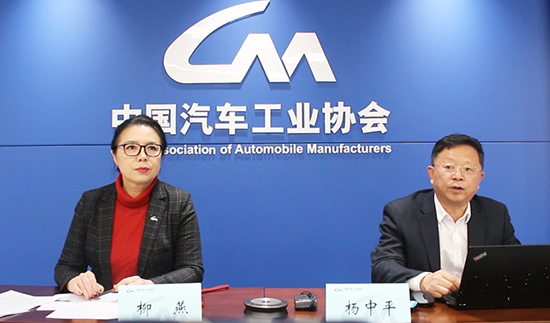
Core Insights - 2025 is identified as a critical year for the commercialization of urban NOA (Navigation Assisted Driving) in China, with a projected market scale growth [1] - The report indicates that from January to November 2025, the cumulative sales of passenger cars equipped with urban NOA reached 3.129 million units, with a penetration rate of 15.1%, an increase of 5.6 percentage points compared to the entire year of 2024 [1] Industry Background - NOA technology is seen as a key driver for smart connected vehicles, bridging advanced driver assistance and fully autonomous driving, which is crucial for enhancing user travel experience and asserting China's competitive voice in the global automotive industry [3] - The report highlights that among the passenger cars sold with urban NOA, domestic brands accounted for 2.5373 million units, representing 81.1% of the total, showcasing innovation and competitiveness in the smart connected vehicle sector [3] Market Dynamics - The current market for urban NOA is characterized by a dual-driven model of self-research by car manufacturers and collaboration with third-party suppliers [5] - Major players in self-research include Tesla, NIO, Xpeng, Li Auto, Xiaomi, and others, while approximately 29 brands collaborate with third-party suppliers [5] - The third-party supplier market is dominated by two key players, Momenta and Huawei, which together hold about 80% market share; Momenta's urban NOA installations reached 414,400 units, accounting for 61.06% of third-party suppliers, while Huawei's HI model accounted for 19.76% with 134,100 units [5] Technological Advancements - The rapid iteration of technology and market competition is driving systemic changes in smart driving technology, core architecture, and industrial ecology [9] - The report emphasizes that end-to-end large models are becoming the core engine for NOA technology iteration, facilitating a shift from modular architecture to integrated systems [10] - New energy vehicle manufacturers are building technological barriers through full-stack self-research, while traditional automakers are accelerating technology deployment through partnerships with third-party suppliers [10] Future Outlook - The report anticipates that by 2030, urban NOA will become a mainstream feature in both assisted and autonomous driving [10] - Recommendations for enhancing the high-quality development of NOA include improving top-level design, strengthening technological innovation, enhancing industry collaboration, and exploring global competitiveness for supply chain enterprises [11]


纳指收跌1%,甲骨文、博通跌超4%
Mei Ri Jing Ji Xin Wen· 2026-01-15 00:10
Market Overview - The three major U.S. stock indices closed lower, with the Dow Jones down 0.08%, the Nasdaq down 1.00%, and the S&P 500 down 0.53% [2] - Technology stocks experienced widespread declines, with Oracle and Broadcom falling over 4%, and Amazon, Microsoft, and Meta dropping over 2% [2] - Notably, Intel saw a contrary increase, rising over 3% [2] Chinese Stocks Performance - The Nasdaq Golden Dragon China Index decreased by 0.23%, with significant declines in several Chinese companies [2] - Ctrip fell over 17%, Pinduoduo dropped nearly 4%, and electric vehicle manufacturers such as Li Auto, NIO, and Xpeng, along with Bawang Tea, all declined over 2% [2] - In contrast, Bilibili experienced a rise of over 6% [2]


NIO Reaffirms European Expansion Despite New EU Tariff Framework - NIO (NYSE:NIO)
Benzinga· 2026-01-14 16:54
Core Viewpoint - Nio Inc. is facing challenges in the European market due to new EU policies regarding tariffs on China-made electric vehicles, but the company remains committed to expanding its business in Europe [1]. Group 1: EU Policy and Tariffs - The European Commission has formalized conditions for tariff alternatives on China-made electric vehicles, which has led to a decline in Nio's share price [1]. - An anti-subsidy investigation was initiated by the European Commission in October 2023 to assess whether Chinese government support has distorted competition, with potential additional tariffs to be imposed for five years following the probe's conclusion in 2025 [3]. Group 2: Nio's European Strategy - Nio has established direct sales outlets in several European countries and is transitioning to an asset-light model that relies on distributors for expansion [4]. - The company plans to use its Firefly sub-brand to enter additional overseas markets, initially intended for a European debut, but has instead launched the Firefly EV in China due to the EU tariffs [4]. Group 3: Market Performance - Nio's shares have decreased by 1.92%, trading at $4.60 as of the latest update [5].
港股汽车股午后下挫
Jin Rong Jie· 2026-01-14 06:28
Group 1 - Hong Kong automotive stocks experienced a decline in the afternoon trading session, with Leap Motor (09863.HK) dropping nearly 4% [1] - NIO Inc. (09866.HK) saw a decline of over 3% [1] - Other companies such as Li Auto (02015.HK) and BYD Company Limited (01211.HK) also followed the downward trend [1]

车企2025产销快报解析:四大板块齐头并进
Xin Lang Cai Jing· 2026-01-14 06:06
Core Insights - The Chinese passenger car market is projected to retail 23.78 million units in 2025, reflecting a 4% year-on-year growth, supported by policies like "trade-in" [20][21] - Major domestic automakers such as BYD, Geely, Changan, and Leap Motor have achieved significant breakthroughs, while several joint ventures are showing signs of recovery in China [20][21] Domestic Automakers Performance - BYD set a new annual sales record with 4.60 million units sold in 2025, a 7.73% increase, with pure electric vehicle sales reaching 2.25 million units, up 27.85% [21][22] - SAIC Group sold 4.51 million vehicles in 2025, marking a 12.3% increase, with its new energy vehicle sales growing by 33.1% to 1.64 million units [3][21] - China FAW achieved total vehicle sales of 3.30 million units, a 3.2% increase, with its new energy vehicle sales soaring by 71% to 366,000 units [3][22] - Geely exceeded its sales target with 3.02 million units sold, a 39% increase, and its new energy vehicle sales reached 1.69 million units, up 90% [4][22] - Changan's sales reached 2.91 million units, an 8.5% increase, with new energy vehicle sales growing by 51% to 1.11 million units [4][23] - Chery Group achieved a record high of 2.81 million units sold, with new energy vehicle sales increasing by 54.9% to 903,800 units [5][23] Joint Ventures Performance - Joint ventures are under pressure but some have found ways to adapt, with FAW-Volkswagen selling 1.59 million vehicles, maintaining its position as the top joint venture [26][27] - SAIC Volkswagen achieved sales of 1.06 million units, successfully surpassing the million mark [27] - Toyota's joint ventures in China reported positive growth, with FAW Toyota selling 805,500 units, marking three consecutive years of growth [27][28] New Energy Vehicle Market - The new energy vehicle segment is a common highlight across major automakers, with significant growth reported [21][22] - Leap Motor achieved a remarkable 103% year-on-year growth, delivering 596,600 units in 2025 [29] - Xpeng Motors delivered 429,400 units, a 126% increase, while NIO delivered 326,000 units, up 46.9% [30][31] Export Growth - China's automobile exports are expected to exceed 7 million units in 2025, marking a historic high [16][34] - Chery led the export of Chinese passenger cars with 1.34 million units, a 17.4% increase [34][35] - BYD's overseas sales surpassed 1 million units for the first time, reaching 1.05 million units, a 145% increase [35][36] Globalization Strategies - SAIC Group updated its overseas strategy, achieving 1.07 million units in overseas sales, a 3.1% increase [35][36] - Changan's overseas sales reached 637,000 units, an 18.9% increase, while Geely's overseas sales totaled 420,000 units [36][37] - New energy vehicle startups are also targeting international markets, with Leap Motor and Xpeng making significant strides in overseas deliveries [36][37]



车圈大佬预警!存储芯片、金属、电池价格全在涨!车企怎么办?|人民智行
Zheng Quan Shi Bao Wang· 2026-01-14 03:13
Core Insights - The automotive industry is facing unprecedented supply chain cost pressures due to rising prices of memory chips, metals, and batteries, which are significantly impacting manufacturing costs [1][4][10] - A predicted shortage of memory chips could lead to a supply satisfaction rate of less than 50% in 2026, exacerbating the cost challenges for automakers [2][8] - The competition for resources between the automotive sector and emerging industries like AI and energy storage is intensifying, leading to a resource squeeze on traditional manufacturing [4][11] Memory Chip Price Surge - The global DRAM market is experiencing its strongest price increase in history, with prices for DDR4 and DDR5 rising by 200-300% since last year [2][5] - High-end smart electric vehicles require significant storage, with demand for memory chips expected to reach TB levels, increasing costs per vehicle by hundreds to thousands of yuan [3][6] Impact of Metal Prices - Prices for key metals such as copper, silver, and lithium have been rising, contributing to increased costs in electric vehicle production [3][7] - The use of copper in electric vehicles is significantly higher than in traditional fuel vehicles, amplifying the cost impact [3][10] Supply Chain Challenges - Automakers are struggling to balance supply chain resilience with cost control, leading to potential price increases, configuration adjustments, and delivery delays [1][10] - The competition for high-end storage capacity is skewed in favor of AI companies, which are securing a majority of DRAM production capacity, leaving traditional industries with limited resources [5][6] Long-term Outlook - The supply chain crisis is expected to persist for 3-5 years, with automakers currently absorbing cost pressures without passing them on to consumers [8][10] - There is a growing recognition of the need for supply chain diversification and domestic production capabilities in the semiconductor industry [12][11] Strategic Responses - Automakers are exploring strategies such as long-term supply agreements and partnerships with local suppliers to mitigate risks associated with rising costs [11][12] - The industry may see a shift towards vertical integration, with companies considering in-house production of critical components like batteries and chips [12]
内存、金属、电池涨价潮共振 车企打响供应链成本“防御战”
Zheng Quan Shi Bao· 2026-01-13 18:06
Core Insights - The automotive industry is facing unprecedented supply chain cost pressures driven by rising prices of memory chips, metals, and batteries, which are significantly impacting manufacturing costs [1][4] - The demand for storage chips in modern electric vehicles is growing exponentially, with high-end models requiring between 64GB to 256GB, potentially reaching terabyte levels by 2030 [3][8] - The competition for resources between the automotive sector and emerging industries like AI and energy storage is intensifying, leading to a supply-demand imbalance for critical components [5][10] Memory Chip Supply Crisis - By 2026, the automotive industry may face a memory chip supply crisis, with a predicted supply satisfaction rate of less than 50% [2] - The global DRAM market is experiencing its strongest price surge, with prices for DDR4 and DDR5 chips increasing by 200-300% over the past year [2][8] - The automotive sector's transition to smart vehicles has made storage chips essential, as they support various functions from infotainment to autonomous driving systems [2][3] Rising Material Costs - The prices of key metals such as copper, silver, and lithium have been on the rise, contributing to increased manufacturing costs for vehicles [3][4] - The cost increase for raw materials is being passed down to battery production, further straining automotive manufacturers [3][7] - The automotive industry is struggling to balance supply chain resilience with cost control amid these pressures [1][4] Competitive Resource Allocation - The automotive industry is in a "disproportionate competition" with AI companies for high-end memory resources, as AI applications are prioritizing these components [5][6] - Major memory manufacturers are focusing on fulfilling orders from AI clients, which are often more profitable than those from the automotive sector [5][6] - Predictions indicate that by 2027, approximately 70% of global DRAM capacity will be allocated to AI, significantly reducing availability for traditional industries like automotive [5][6] Supply Chain Adjustments - Automotive companies are actively seeking ways to mitigate cost pressures through supply chain optimization and technology transformation [10][11] - Some companies are exploring partnerships with local suppliers and signing long-term contracts to secure better pricing and availability [10][11] - The ongoing supply chain challenges may lead to a significant restructuring of the automotive industry, with a focus on building more resilient and self-sufficient supply systems [11][12]
热门中概股多数走低,小马智行跌超6%
Mei Ri Jing Ji Xin Wen· 2026-01-13 15:30
Group 1 - The majority of popular Chinese concept stocks experienced declines on January 13, with Xiaoma Zhixing falling over 6% [1] - Pinduoduo saw a drop of more than 5% [1] - Kingsoft Cloud and Baidu both decreased by 4% [1] - NIO and Li Auto each fell by over 2% [1]


四大板块齐头并进——车企2025产销快报解析
Zhong Guo Qi Che Bao Wang· 2026-01-13 09:43
Core Insights - The Chinese passenger car market is projected to retail 23.78 million units in 2025, reflecting a 4% year-on-year growth, supported by policies like "trade-in" [2] - Major domestic automakers such as BYD, Geely, Changan, and Leap Motor have achieved significant progress, while several joint venture companies are showing signs of recovery in China [2] Domestic Automakers Performance - BYD achieved a record annual sales of 4.60 million units in 2025, a 7.73% increase, with pure electric vehicle sales reaching 2.25 million units, up 27.85%, surpassing Tesla in global sales [3] - SAIC Group sold 4.51 million vehicles in 2025, a 12.3% increase, with its new energy vehicle sales growing by 33.1% to 1.64 million units [3] - China FAW's total vehicle sales reached 3.30 million units, a 3.2% increase, with its new energy vehicle sales soaring by 71% to 366,000 units [4] - Geely's total sales reached 3.02 million units, a 39% increase, with new energy vehicle sales hitting 1.69 million units, up 90% [4] - Changan's sales reached 2.91 million units, an 8.5% increase, with new energy vehicle sales growing by 51% to 1.11 million units [5] - Chery Group achieved a record high of 2.81 million units sold, with new energy vehicle sales increasing by 54.9% to 903,800 units [5] Joint Venture Automakers Performance - Joint venture automakers are under pressure but some have found ways to adapt, with FAW-Volkswagen leading in sales with 1.59 million units sold [7] - SAIC Volkswagen achieved sales of 1.06 million units, maintaining a strong position in the market [8] - Toyota's joint ventures in China reported positive growth, with FAW Toyota selling 805,500 units, a 3-year consecutive growth [8] New Energy Vehicle Market - New energy vehicles are a common highlight across major domestic automakers, with significant growth in sales and market penetration [3][4][5] - New entrants like Leap Motor and NIO are also showing strong growth, with Leap Motor achieving 596,600 units sold, a 103% increase [10] - Xpeng Motors delivered 429,400 units, a 126% increase, while NIO delivered 326,000 units, a 46.9% increase [11] Export Growth - China's automobile exports are expected to exceed 7 million units in 2025, marking a historic high [13] - Chery led the export of Chinese passenger cars with 1.34 million units, a 17.4% increase [13] - BYD's overseas sales surpassed 1 million units, a 145% increase, with significant growth in Europe [14] - New energy vehicle exports are also on the rise, with companies like Leap and Xpeng expanding their international presence [16]


预售丨《公司的秘密》第七辑来了!
第一财经· 2026-01-13 08:39
Core Insights - The article announces the launch of the seventh edition of "The Company's Secrets," which is a compilation of in-depth research reports on large companies, focusing on financial performance and underlying business logic rather than superficial industry trends [3]. Group 1: Key Highlights of the Seventh Edition - NIO's L90 achieved a monthly sales figure of 15,000 units, attributed to a pricing strategy of 260,000 and a platform-based production model, marking a significant recovery from previous monthly sales of 5,000 [3]. - Pop Mart has adapted to changing market conditions by normalizing IP blockbuster releases, generating a revenue of 3.4 billion, surpassing global toy giant Mattel in profits [3]. - Bawang Tea Ji has ambitious plans with 7,000 stores, achieving a revenue increase of 167% through a strategy of high-end positioning and market expansion [3]. - The edition also covers challenges faced by Nintendo's Switch, Hengrui's transformation in centralized procurement, and Cambrian's resurgence in AI computing power, providing actionable insights for investors [3]. Group 2: Availability and Promotions - The previous six editions of "The Company's Secrets" have sold out completely, indicating strong demand for the content [4]. - The seventh edition is available for pre-order, offering immediate access to all content and previous editions, along with promotional gifts such as a calendar [5]. Group 3: Community Engagement - There are exclusive community benefits available for those who engage with the publication, enhancing the value proposition for readers [7].