
NIO(09866)

Search documents
大众ID.ERA 9X、蔚来ES9等 1月工信部新车盘点
Zhong Guo Zhi Liang Xin Wen Wang· 2026-01-13 06:56
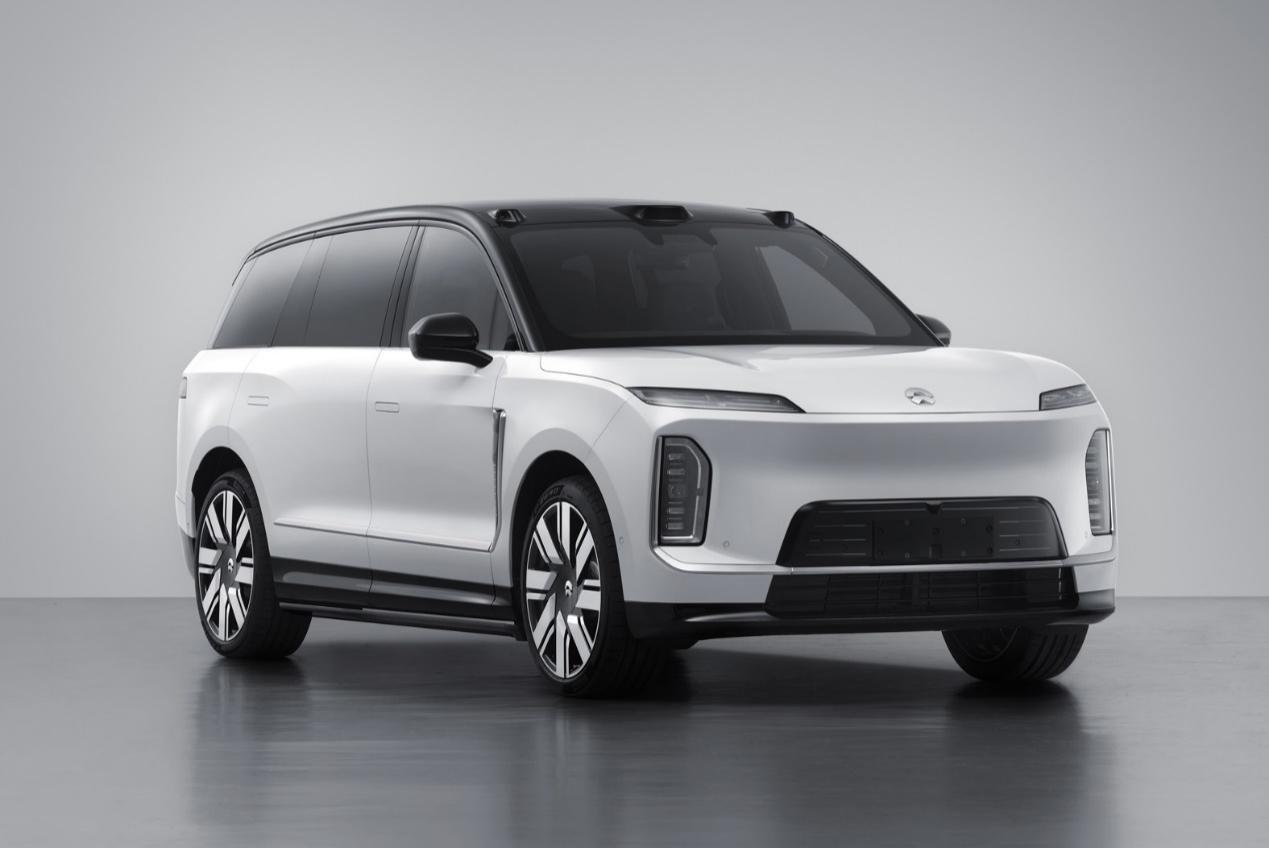
Group 1 - The Ministry of Industry and Information Technology announced the 403rd batch of "Announcement of Production Enterprises and Products of Road Motor Vehicles," featuring several new vehicles set to debut at the 2026 Beijing Auto Show [1] - NIO's ES9 is positioned as a full-size SUV with dimensions of 5365×2029×1870mm and a wheelbase of 3250mm, starting with a curb weight of 2845kg [3][5] - The Volkswagen ID.ERA 9X is a large range-extended SUV featuring a new design language, with dimensions of 5207×1997×1810mm and a wheelbase of 3070mm [4][5] Group 2 - The ID.ERA 9X offers single and dual motor versions, with peak power outputs of 160kW and 220kW for the dual motor version, and a range of battery options including 51.1kWh and 65.2kWh [7] - Leap Motor's D19 is a large SUV with both pure electric and range-extended versions set to launch in April, featuring a two-tone body and various customizable options [8] - The new Xiaomi SU7 has three configurations with pre-sale prices ranging from 229,900 to 309,900 yuan, expected to launch in April [13] Group 3 - The new generation Xiaomi SU7 features enhanced safety with standard laser radar and driving assistance systems, maintaining a similar design to the current model [15][17] - The Mercedes-Benz all-electric GLC is built on the MB.EA platform, with dimensions of 4949×1970×1710mm and a wheelbase of 3027mm, offering a design consistent with its fuel-powered counterpart [19] - The Zhijie V9, as the first MPV from Hongmeng Zhixing, features a 7-seat layout and dimensions of 5359×2009×1859mm, with a dual motor setup providing a total peak power of 463kW [20][21]


Nio stock jumps in Hong Kong after key EU news as a risky pattern nears
Invezz· 2026-01-13 05:17
Core Viewpoint - Nio's stock price increased by over 2% in Hong Kong, indicating a cautious recovery influenced by a European Union proposal that could enhance sales of Chinese electric vehicles (EVs) in the region [1] Company Summary - Nio's stock reached a high of $38 following the positive news regarding the EU proposal [1] Industry Summary - The European Union's proposal is expected to potentially boost sales of Chinese EVs, which may positively impact the overall market for electric vehicles in the region [1]
港股汽车股普涨,比亚迪股份涨超4%,中欧电车案获进展,对欧出口预计年增20%
Ge Long Hui· 2026-01-13 03:35
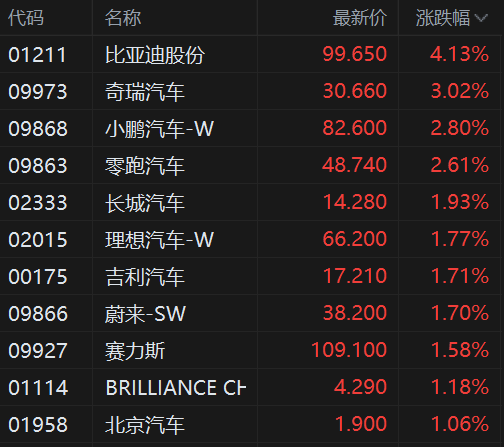
Group 1 - Hong Kong automotive stocks experienced a general increase, with BYD shares rising over 4%, Chery Automobile up 3%, and Xpeng Motors increasing by 2.8% [1] - Other notable gains included Li Auto, Great Wall Motors, Geely, NIO, and Seres, all rising close to 2% [1] - The latest stock prices and percentage changes for key companies are as follows: BYD at 99.650 (+4.13%), Chery at 30.660 (+3.02%), Xpeng at 82.600 (+2.80%), and others showing similar upward trends [2] Group 2 - The Ministry of Commerce announced progress in consultations regarding the EU-China electric vehicle case, agreeing to provide general guidance on price commitments for Chinese exporters of pure electric vehicles to the EU [2] - According to Cui Dongshu from the Passenger Car Association, initial implementation of the price commitment mechanism may lead to short-term fluctuations in sales as some manufacturers adjust pricing and product structure [2] - As manufacturers adapt to new rules, local production capacity is released, and product competitiveness improves, Chinese electric vehicle sales in the EU market are expected to gradually recover [3] - It is projected that from 2026 to 2028, Chinese electric vehicle exports to the EU will maintain an annual growth rate of around 20%, becoming a significant driver of global electric vehicle market growth [3]


港股异动丨汽车股普涨 比亚迪股份涨超4% 中欧电车案获进展 对欧出口预计年增20%
Ge Long Hui· 2026-01-13 03:13
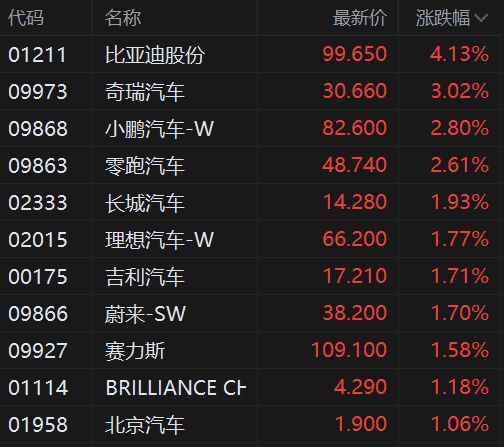
Group 1 - The core viewpoint of the news is that Hong Kong automotive stocks have generally risen, with significant increases in companies like BYD, Chery, and XPeng, driven by positive developments in the EU-China electric vehicle negotiations [1] - The Ministry of Commerce announced progress in consultations regarding electric vehicles, agreeing to provide general guidance on price commitments for Chinese exporters of pure electric vehicles to the EU [1] - Industry expert Cui Dongshu indicated that initial implementation of the price commitment mechanism may lead to short-term fluctuations in sales for some automakers as they adjust pricing and product structure [1] Group 2 - As automakers adapt to new rules, local production capacity is expected to be released, and product competitiveness will improve, leading to a gradual recovery in the sales of Chinese electric vehicles in the EU market [1] - Cui Dongshu forecasts that from 2026 to 2028, exports of Chinese electric vehicles to the EU will maintain an annual growth rate of around 20%, becoming a significant driver of growth in the global electric vehicle market [1] - Specific stock performance includes BYD rising by 4.13%, Chery by 3.02%, XPeng by 2.80%, and others showing increases, indicating a positive market sentiment towards these companies [2]
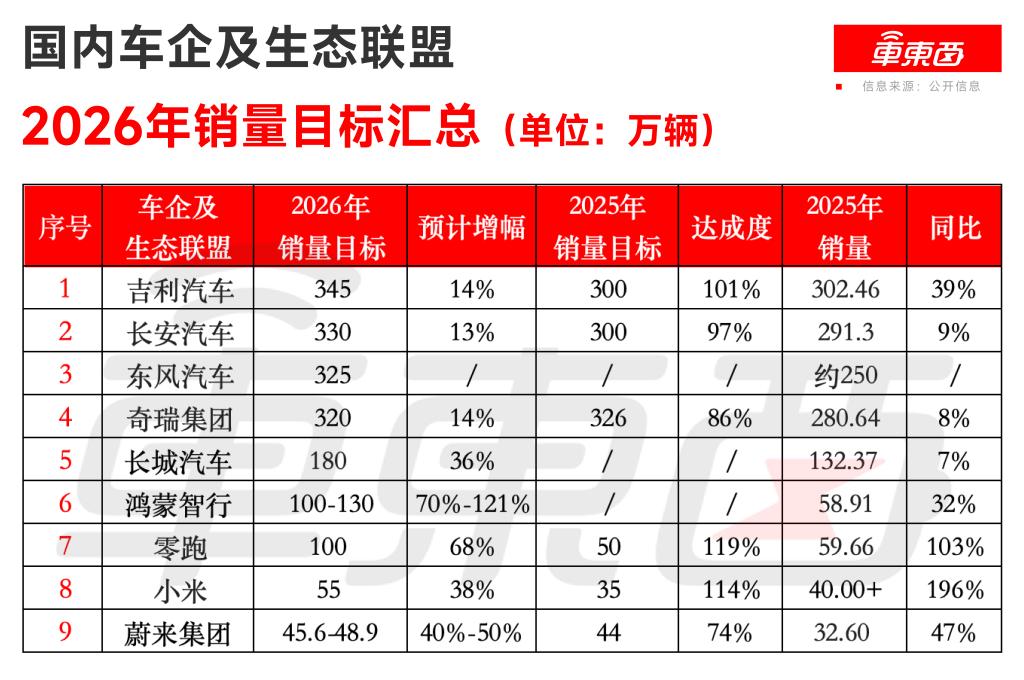
9大车企要卖超1800万台,鸿蒙智行冲刺销量翻番,四家车企瞄准300万年销
3 6 Ke· 2026-01-13 03:03
Core Viewpoint - The competition in the domestic automotive market is intensifying as major car manufacturers and alliances announce ambitious sales targets for 2026, totaling 18.339 million units, which exceeds the actual sales of 3.86 million units in 2025 [1] Group 1: New Energy Vehicle Manufacturers - New energy vehicle manufacturers such as Hongmeng Zhixing, Leap Motor, and NIO have set aggressive sales targets for 2026, with expected growth rates ranging from 40% to 121% [2][4] - Hongmeng Zhixing aims for sales between 1 to 1.3 million units, with a projected growth rate of 70%-121% [4] - Leap Motor targets 1 million units with a growth rate of 68%, while NIO's target is between 456,000 to 489,000 units, reflecting a growth of 40%-50% [2][12] - Xiaomi Auto plans to increase its sales target from 350,000 units in 2025 to 550,000 units in 2026, representing a growth of approximately 38% [8] Group 2: Traditional Automakers - Traditional automakers like Geely, Changan, and Chery have set more conservative targets, with Geely aiming for 3.45 million units, Changan for 3.3 million units, and Chery for 3.2 million units, reflecting growth rates of 14%, 13%, and 14% respectively [3][13] - Great Wall Motors plans to sell 1.8 million units in 2026, with a leading growth rate of 36% among traditional manufacturers [2][13] - Geely's target includes a significant focus on electric vehicles, aiming for 2.22 million units in 2026, up from 1.69 million in 2025, increasing its electric vehicle penetration from 56% to 64% [13][14] Group 3: Market Dynamics and Competition - The competition in the automotive market is shifting from mere scale expansion to a comprehensive contest involving technology, product offerings, and global strategies [18] - Market analysts predict that growth in the Chinese passenger car market may slow or even decline slightly in 2026, making every percentage point of growth critical and competitive [18] - The ability of companies to balance scale, profitability, and technological investment will determine their success in this increasingly fierce market [19]




汽车生产 谁在领跑?
Ren Min Ri Bao Hai Wai Ban· 2026-01-13 01:46
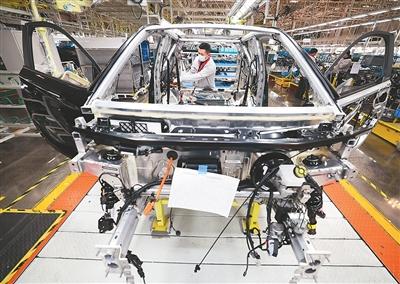
Core Insights - The automotive production landscape in China is experiencing significant growth, with several cities surpassing one million vehicles produced in 2025 [3][7] - Hefei leads the nation in new energy vehicle (NEV) production, with over 1.24 million units manufactured in the first 11 months of 2025 [4] - The shift in statistical methods for measuring production has altered the rankings of cities, impacting how production data is reported [7] Group 1: Automotive Production Statistics - Chongqing's automotive production reached 2.4981 million units in the first 11 months of 2025, marking a 12.1% year-on-year increase [3] - Beijing produced 1.335 million vehicles, a 27.6% increase compared to the previous year, while Shanghai's production was 1.6011 million units, with 1.042 million being NEVs [3] - Cities like Zhengzhou and Qingdao are approaching the one million vehicle production mark, with Zhengzhou at 956,300 units and Qingdao at 911,700 units [3] Group 2: New Energy Vehicle Leadership - Hefei's NEV production is the highest in the country, with 1.246 million units produced in the first 11 months of 2025, supported by a strong industrial layout [4] - The rapid growth of NEVs in Hefei is attributed to the presence of major manufacturers such as Jianghuai, NIO, and BYD [4] - In Hunan province, NEV production increased by 41.8% year-on-year, indicating a robust growth trend in the sector [6] Group 3: Industry Support and Innovation - The automotive industry in cities like Liuzhou and Qingdao benefits from a complete industrial chain, including raw materials and core components [5] - Chongqing is advancing in autonomous driving and vehicle networking technologies, with plans to establish itself as a hub for smart connected NEVs [6] - Policy support is crucial, with cities like Chongqing and Anhui focusing on developing their NEV industries as part of their strategic plans [6] Group 4: Statistical Changes and Future Outlook - The change in statistical methodology from "enterprise location" to "production location" has significantly impacted the reported production figures for various cities [7] - Guangzhou aims to accelerate its automotive industry transformation, focusing on smart and connected vehicles to regain competitive advantage [7] - Overall, China's automotive industry shows resilience and vitality, with production and sales figures reaching new highs in 2025 [8]
为什么说蔚来百万辆下线意义不凡?
Zhong Guo Qi Che Bao Wang· 2026-01-13 01:41
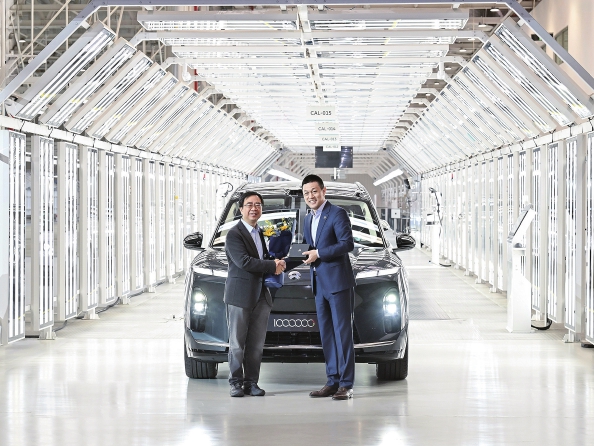
Core Insights - NIO officially entered the "one million club" with the production of its one millionth vehicle, a new ES8, at its Hefei factory, marking a significant milestone in the company's growth and commitment to innovation in China's advanced technology sector [2][3] - The achievement reflects NIO's long-term strategy and maturity in its operational capabilities, transitioning from a focus on survival to prioritizing quality in its third development phase [3][5] Company Performance - NIO's journey from its first production vehicle in May 2018 to reaching one million units by January 2026 demonstrates a robust growth trajectory, with a total investment of 650 billion yuan in core technology and 180 billion yuan in a nationwide charging and battery swap network [2][4] - In 2025, NIO delivered 326,000 vehicles, a 46.9% year-on-year increase, with the new ES8 achieving over 22,000 deliveries in a single month, setting a record for vehicles priced above 400,000 yuan [2][4] Industry Impact - NIO's success is seen as a representation of the upward trajectory of China's smart electric vehicle industry, breaking the stereotype that Chinese brands cannot produce luxury vehicles [4][5] - The company has established a strong presence in the high-end market, contributing to the transformation and upgrade of the Chinese automotive industry, and enhancing the global competitiveness of Chinese high-end new energy vehicles [4][5] Regional Development - NIO's growth is closely linked to the development of the automotive industry cluster in Hefei, which has seen significant advancements in production and competitiveness, with the region leading in automotive output and new energy vehicle production [5] - The collaboration agreements signed with local companies like Chery and Jianghuai, as well as partnerships with semiconductor firms, signify a shift from isolated breakthroughs to collective advancements in the automotive sector [5] Future Outlook - NIO's future strategy includes continued investment in its 12 core technology systems, infrastructure expansion with a goal of over 10,000 charging and battery swap stations by 2030, and a focus on maintaining a growth rate of 40%-50% annually while deepening its market presence in China and expanding globally [5]
乘用车2026 | 2025政策促需 2026高端发力+智能平权+出海提速
汽车琰究· 2026-01-13 00:05
Group 1 - The core viewpoint of the article emphasizes that the demand for automobiles is driven by the continuation of the trade-in policy, leading to an unexpected penetration of new energy vehicles (NEVs) and improved profitability through high-end products and overseas expansion [3][4][5][6][7][8] Group 2 - In 2025, the cumulative wholesale sales of passenger cars reached 24.119 million units, a year-on-year increase of 12.6%, with NEVs growing by 30.7% [3][8] - The penetration rate of NEVs in wholesale sales was 50.4%, up by 7.0 percentage points year-on-year, while the penetration rate for insurance reached 53.3%, an increase of 6.6 percentage points [3][46] - The share of domestic passenger cars in wholesale sales reached 69.3%, a year-on-year increase of 4.9 percentage points, with brands like Geely, Xiaomi, and Leap Motor showing significant growth [3][50] Group 3 - Looking ahead to 2026, the trade-in policy is expected to continue, supporting demand, with projected insurance sales of 22.32 million units, a decrease of 5.0% year-on-year, and wholesale sales of 30.10 million units, an increase of 1.0% [4][5] - The NEV insurance sales are expected to reach 13.8 million units, a year-on-year increase of 6.2%, while wholesale sales are projected to be 17.3 million units, up by 13.4% [4][15] Group 4 - The competitive landscape is shifting, with joint ventures declining and domestic brands accelerating their rise in the mid-to-high-end market [5][10] - In the 5-15 million price range, price-sensitive consumers are expected to drive competition, while brands like Geely, BYD, and Leap Motor are anticipated to gain higher sales growth due to their advantages in intelligence and cost-effectiveness [5][10] Group 5 - The article highlights the acceleration of intelligent driving technology, with major players like Huawei and BYD pushing for the democratization of advanced driving features [6][10] - The L3 commercial deployment is expected to gain momentum in 2026-2027, with various automakers launching new high-level driving systems and models [6][10] Group 6 - The export of passenger cars is projected to reach 6.64 million units in 2026, a year-on-year increase of 15.5%, driven by the technological advantages of domestic NEVs and the expansion of overseas manufacturing [7][11] - Companies like BYD and Geely are expected to increase their export efforts, with BYD establishing overseas factories and Geely accelerating NEV exports [7][11]



年终盘点2025汽车市场的“龙门一跃”:油退电进,全球登顶
3 6 Ke· 2026-01-12 10:37
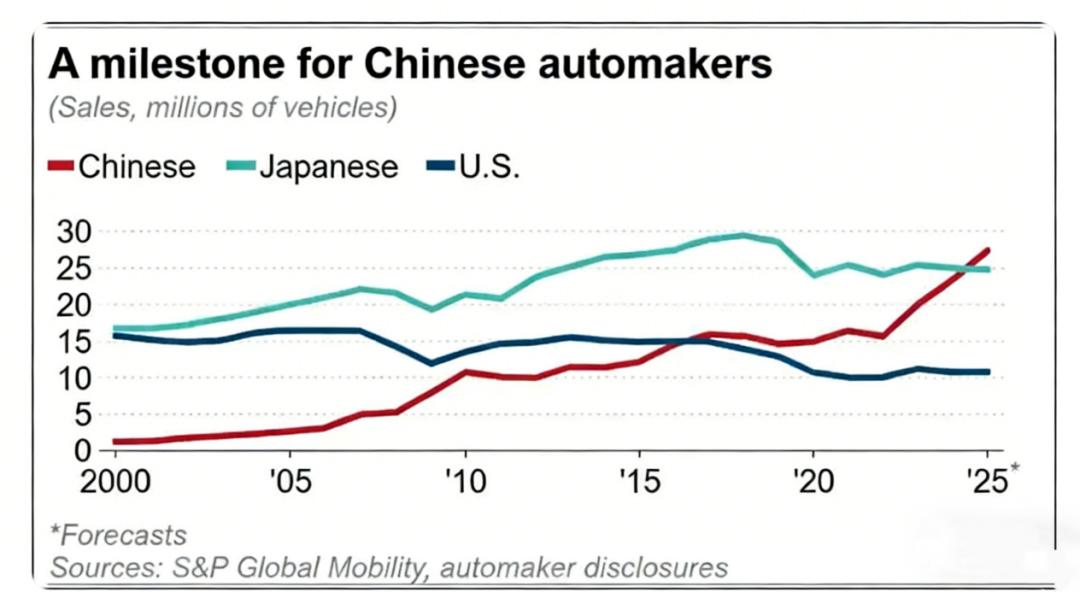
Core Insights - The penetration rate of new energy vehicles (NEVs) in China has surpassed 50%, marking a significant shift in the automotive market dynamics, transitioning from a "policy-driven" to a "product-driven" model [1][10] - The year 2025 is seen as a pivotal moment for the Chinese automotive industry, with the market experiencing a fundamental transformation akin to a "Nokia moment" [1] - The competition is evolving from price wars to value wars, emphasizing technology and product quality over mere volume [11] Industry Overview - In 2025, China's automotive manufacturers are projected to achieve global sales of 27 million vehicles, securing the top position in the global new car sales rankings for the first time [2] - China has overtaken Japan to become the world's largest automobile exporter, with NEVs accounting for a significant portion of this growth [4] - The domestic market's NEV sales are nearing 60%, reflecting a structural change in consumer preferences [4] Sales and Market Penetration - By November 2025, the retail penetration rate of NEVs reached 53.6%, with projections for the full year estimating a rate of 54.0% [6] - The rapid increase in NEV penetration is attributed to a combination of policy support, technological advancements, infrastructure development, and market demand [7] Policy and Technological Developments - The exit of purchase subsidies in 2023 has been offset by continued tax exemptions and various local incentives, which have helped maintain consumer interest in NEVs [7] - 2025 is expected to be a year of technological breakthroughs in NEVs, with advancements in high-voltage platforms, solid-state batteries, and smart driving technologies [8] Infrastructure and Consumer Experience - The expansion of charging infrastructure is crucial for alleviating consumer concerns about range anxiety, with projections of 20 million charging stations by the end of 2025 [9] - The cost advantages of NEVs are becoming increasingly apparent, with electric vehicles offering significantly lower operating costs compared to traditional fuel vehicles [9] Competitive Landscape - The shift from price competition to value competition is reshaping the industry, with companies focusing on technological innovation and profitability [11] - Some companies, like Leap Motor, have emerged as strong competitors, achieving significant sales growth and profitability [13] Global Expansion - In 2025, China's automotive exports are expected to exceed 7 million units, with NEV exports alone projected to reach 2.315 million units, marking a 102.9% increase [21] - Chinese automakers are transitioning to a "global + local" model, emphasizing localized production and R&D to better penetrate international markets [22] Challenges and Future Outlook - Despite rapid growth, challenges such as trade protectionism and compliance costs remain significant hurdles for Chinese automakers in global markets [24] - The automotive industry is expected to continue evolving, with a focus on sustainable growth and value creation as it navigates the transition from a subsidy-driven to a market-driven environment [25]


蔚来入选“2025中国企业ESG百强”榜单
Xin Lang Cai Jing· 2026-01-12 10:06
新浪财经ESG评级中心提供包括资讯、报告、培训、咨询等在内的14项ESG服务,助力上市公司传播ESG理念,提升ESG可持续发展表现。点 击查看【 ESG评级中心服务手册】 在全球可持续发展浪潮席卷而来的当下,ESG(环境、社会、公司治理)已成为衡量企业高质量发展的核心标尺,更是连接企业价值与社会价值的关键纽 带。随着国内ESG生态体系的加速完善,政策监管持续收紧、资本市场对ESG表现的关注度不断飙升,企业的可持续发展能力愈发成为其核心竞争力的重 要组成部分。 在此行业背景下,新浪财经重磅发布"2025中国企业ESG百强"榜单。该榜单依托新浪财经专业的ESG评级体系,以5000余家A股上市公司及在港上市内地 企业为评价对象,创新性搭建18套行业ESG评价模型,纳入150余项ESG指标,通过量化模型综合演算,对企业ESG表现进行全面、客观的综合评价,最 终筛选出中国ESG实践的标杆企业。榜单不仅为行业树立了发展典范,更为投资者提供了极具参考价值的决策依据。 蔚来在环境、社会、公司治理领域开展了大量工作,积累了丰富的创新实践与扎实的落地成果。凭借在ESG各领域的卓越表现,蔚来成功入选本次新浪财 经"2025中国企业 ...
