
XPENG-W(09868)

Search documents
恒生指数早盘跌0.97% 中国铝业逆市上涨超5%
Zhi Tong Cai Jing· 2025-12-03 04:10
Group 1 - The Hang Seng Index fell by 0.97%, down 252 points, closing at 25,842 points, while the Hang Seng Tech Index dropped by 1.3% [1] - China Aluminum (601600) (02600) rose by 5.66% as it plans to acquire stakes in three subsidiaries, enhancing its control [1] - CGN Mining (01164) increased by over 3% due to two major uranium suppliers lowering their 2026 production guidance, tightening supply and supporting uranium prices [1] - Longpan Technology (603906) (02465) surged over 10% after its subsidiary signed a nearly 5 billion yuan long-term contract with Sunwoda [1] - Yunji (02670) rose over 5%, reaching a new high since its listing, up 70% from its IPO price, leading in the smart hotel robot application competition [1] - Yijun Group Holdings (02442) resumed trading and skyrocketed by 66% after a change in controlling stake, receiving a buyout offer at over 80% discount [1] - LeMo Technology (02539) debuted with a 68% increase, recognized as a leader in shared massage equipment [1] - Jinyan Gaoling New Materials (02693) also debuted, rising by 3%, being the largest producer of precision casting mullite materials in China [1] - Yidu International Holdings (00259) increased by over 7% as Muxi Co., Ltd. plans to initiate its Sci-Tech Innovation Board application on December 5 [1] - Capital Market Financial Holdings (00204) plummeted over 50%, with mid-term losses expanding 3.73 times to 50.13 million HKD [1] Group 2 - XPeng Motors-W (09868) fell over 4% as November sales declined by 12% month-on-month, failing to meet the target of 40,000 units [2]



港股午评|恒生指数早盘跌0.97% 中国铝业逆市上涨超5%
智通财经网· 2025-12-03 04:07
Group 1 - The Hang Seng Index fell by 0.97%, down 252 points, closing at 25,842 points, while the Hang Seng Tech Index dropped by 1.3% [1] - China Aluminum (02600) rose by 5.66% as it plans to acquire stakes in three subsidiaries, enhancing its control [1] - CGN Mining (01164) increased by over 3% due to two major uranium suppliers lowering their 2026 production guidance, tightening supply and supporting uranium prices [1] - Longpan Technology (02465) surged over 10% after its subsidiary signed a nearly 5 billion yuan long-term contract with Sunwoda [1] - Yunji (02670) rose over 5%, reaching a new high since its listing, now 70% above its IPO price, leading in the smart hotel robot application competition [1] Group 2 - Yijun Group Holdings (02442) resumed trading and skyrocketed by 66% after a change in controlling interest, receiving a buyout offer at over 80% discount [2] Group 3 - Lemo Technology (02539) debuted with a 68% increase, recognized as a leader in shared massage equipment [3] - Jinyan High-Alumina New Materials (02693) also debuted, rising by 3%, being the largest producer of precision casting mullite materials in China [3] - Yidu International Holdings (00259) increased by over 7%, with its subsidiary, Sanfeng Information, being a core client and shareholder of domestic AI chip star company Muxi, which will start its Sci-Tech Innovation Board subscription on December 5 [3] Group 4 - Capital界金控 (00204) plummeted over 50%, with mid-term losses expanding 3.73 times to 50.13 million HKD [4] Group 5 - XPeng Motors-W (09868) fell over 4% as November sales decreased by 12% month-on-month, failing to meet the target of 40,000 units [5]
异动盘点1203 | 资本界金控跌超55%,怡俊集团控股复牌涨超60%;美股半导体股普涨,核电股集体拉升
贝塔投资智库· 2025-12-03 04:03
点击蓝字,关注我们 今日上午港股 10 . 象兴国际(01732)再涨超22%,截至发稿,涨16.67% 。消息面上,象兴国际发布公告称,西井控股 (香港)有限公司拟以每股0.21港元的价格,部分要约收购公司3.712亿股,占公司已发行股本的比例为 29%,要约价较上一交易日收盘价0.228港元折让约7.89%。 昨日美股 1 . 德银天下(02418)大跌36.06% 。消息面上,香港证监会公布,最近曾就德银天下(02418.HK)股权分 布查询。结果显示该公司于11月18日,有十名股东合共持有5.46亿股,相当于该公司已发行H股股本 98.9%。因此,该公司只有605.45万股,占已发行H股股本之1.1%由其他投资者持有。 2. 资本界金控(00204)大跌56.15% 。消息面上,资本界金控上月底发布截至9月底的中期业绩,该集团 取得其他收入520.2万港元,同比减少31.81%;公司拥有人应占亏损5013.4万港元,同比增加373.1%; 每股亏损0.57港仙。公告称,亏损主要由于按公平值计入在损益处理的财务资产的已变现亏损净额。 3 . 中国铝业(02600)涨5.48% 。消息面上,中国铝业近日宣 ...


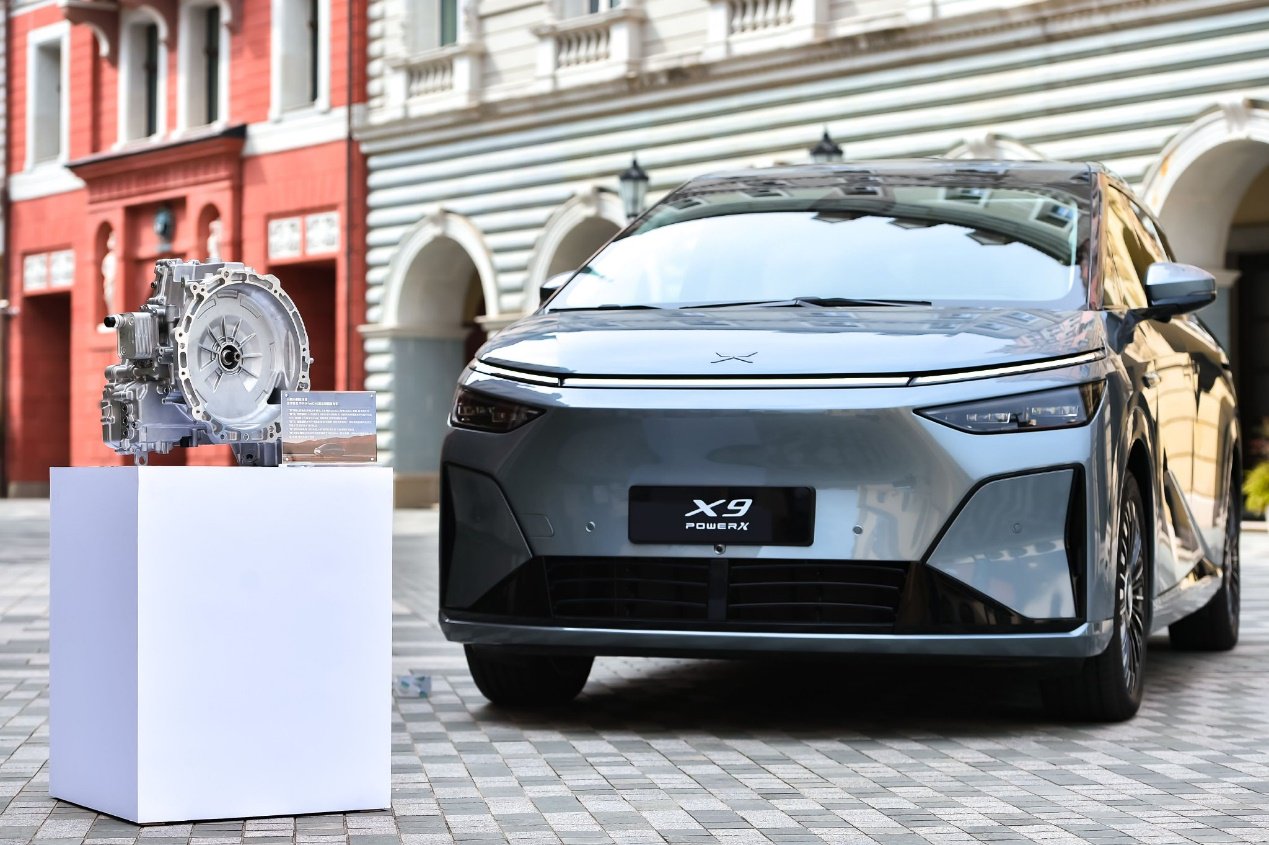
75kW持续发电功率 小鹏汽车联合华为发布下一代增程发电机
Zhong Guo Zhi Liang Xin Wen Wang· 2025-12-03 03:33
性能方面,华为DriveONE全栈高集成高压油冷发电机拥有高功率密度。得益于多冲片齿部喷油/冷却技术,赋予其更小的体积和更轻的体重,实现持续发电 功率密度高达1.88kW/kg。搭配1.5T高效增程器,带来85kW最大发电功率以及75kW持续发电功率,成为系统的"强力心脏"。配合小鹏自研的综合效率高达 93.5%的800V混合碳化硅同轴电驱,可实现150km/h巡航不亏电,8%低SOC动力不衰减。 NVH方面,小鹏与华为联合研发的精准主动停缸技术,启停时的噪音与振动降低超过60%,软件上还配备去旋变控制策略,通过精准算法与控制,同时加上 小鹏汽车增程器的结构深度优化与引入ENC主动降噪技术,最终实现增程器介入噪音≤0.5dB。 12月2日,小鹏汽车发布与华为合作的DriveONE全栈高集成高压油冷发电机。 效率方面,华为DriveONE全栈高集成高压油冷发电机实现了工况发电效率≥92%、燃油发电效率达3.6kWh/L,配合小鹏自研的高压纯电架构16.5kWh/100km 的电耗与小鹏自研超级增程模式的2.53L/100km油电折算综合油耗,使得小鹏X9增程版具备1602km的综合续航。 ...
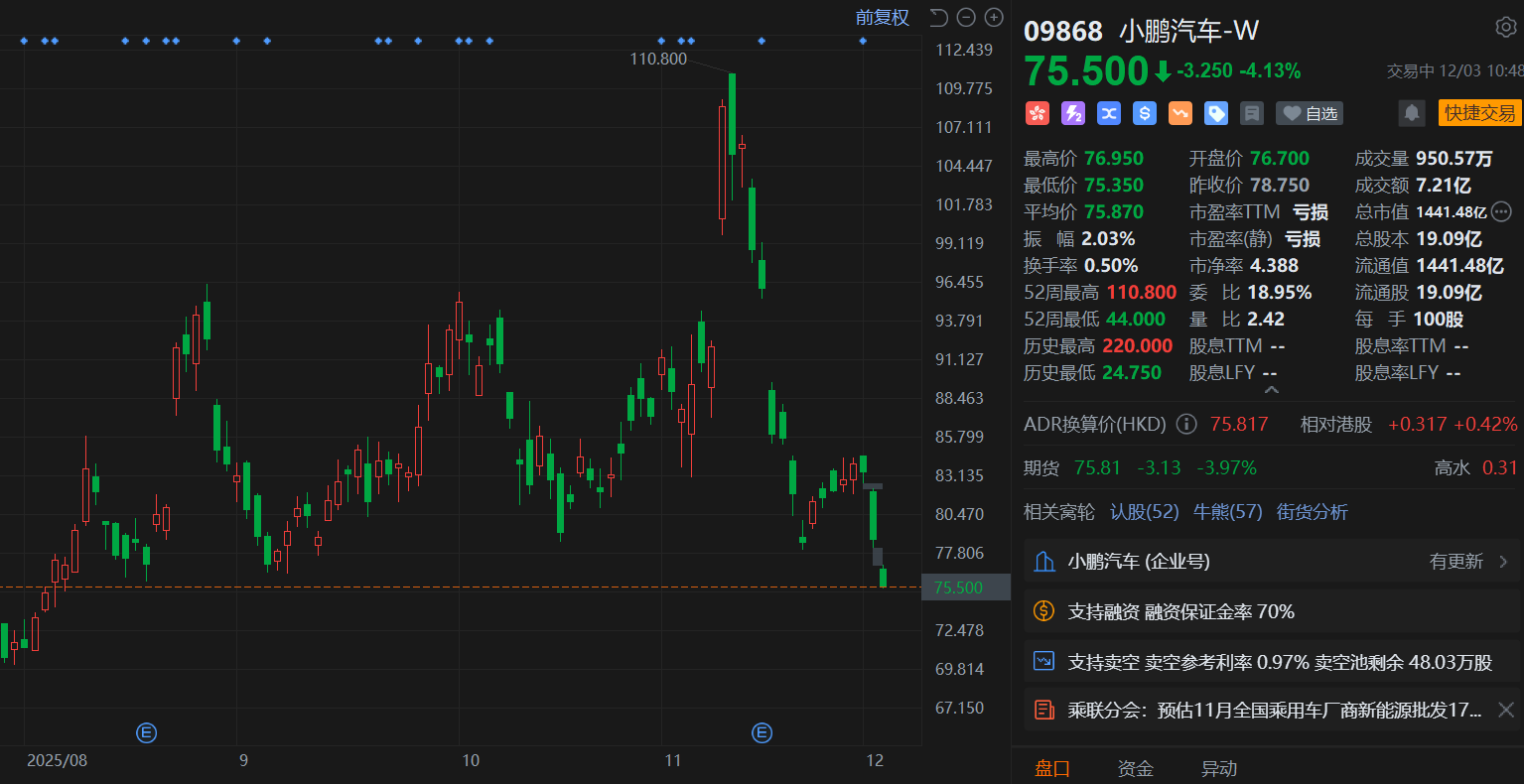
港股异动丨小鹏汽车续跌超4% 股价创4个月新低 11月交付环比下滑
Ge Long Hui· 2025-12-03 03:00
Core Viewpoint - Xiaopeng Motors (9868.HK) continues to experience a weak market trend, with a decline of over 4% to HKD 75.5, marking a four-month low and a total market capitalization of HKD 144.2 billion [1] Group 1: Sales Performance - Xiaopeng Motors reported November sales of 36,728 vehicles, representing a year-on-year increase of 19% [1] - However, there was a month-on-month decline of 12%, marking the first monthly sequential drop in six months [1] - The company failed to meet its previously set target of maintaining monthly deliveries above 40,000 vehicles since September [1] Group 2: Shareholding Changes - As of November 21, The Goldman Sachs Group, Inc. increased its stake in Xiaopeng Motors-WH shares from 4.57% to 5.15% [1]
资金逢低布局,港股科技ETF(159751)盘中净申购1000万份
Sou Hu Cai Jing· 2025-12-03 02:39
Core Viewpoint - The Hong Kong stock market is experiencing a pullback, but there is a counter-trend inflow of funds, particularly into the Hong Kong Technology ETF (159751), which saw a net subscription of 10 million units. The market is expected to continue its upward trend due to strong overall profitability and the scarcity of assets in sectors like the internet, new consumption, and innovative pharmaceuticals, alongside the anticipated interest rate cut by the Federal Reserve in December [1]. Group 1 - The Hong Kong Technology ETF (159751) closely tracks the CSI Hong Kong Stock Connect Technology Index, which selects 50 large-cap, high R&D investment, and high revenue growth technology companies to reflect the overall performance of technology leaders in the Hong Kong Stock Connect [1]. - As of December 3, 2025, the CSI Hong Kong Stock Connect Technology Index (931573) shows mixed performance among its constituent stocks, with Huahong Semiconductor (01347) leading with a 2.40% increase, followed by Gao Wei Electronics (01415) at 1.81%, and BYD Electronics (00285) at 1.28% [1]. - The overall valuation of the Hong Kong stock market remains low despite several months of increases, indicating a high long-term allocation cost-performance ratio [1]. Group 2 - As of November 28, 2025, the top ten weighted stocks in the CSI Hong Kong Stock Connect Technology Index (931573) include Alibaba-W (09988), Tencent Holdings (00700), and SMIC (00981), with these ten stocks accounting for 67.26% of the index [2].






港股异动 | 小鹏汽车-W(09868)再跌超4% 11月销量环比下滑12% 未能达成4万辆目标
智通财经网· 2025-12-03 02:22
智通财经APP获悉,小鹏汽车-W(09868)再跌超4%,截至发稿,跌3.49%,报76港元,成交额5.98亿港 元。 数据显示,自2025年1月至11月,小鹏汽车的累计交付量达到391,937辆,同比增长156%。 2025年1月至 11月,小鹏汽车的海外交付量达到39773辆,同比增长95%。 消息面上,12月1日,小鹏汽车公布其11月销量为36728辆,同比增长19%,环比上月却下滑了12%,这 是小鹏汽车近六个月来首次的单月环比下滑,也未能达成何小鹏此前给出"自9月起月交付稳健超过4万 辆"的目标。 ...
小鹏汽车-W再跌超4% 11月销量环比下滑12% 未能达成4万辆目标
Zhi Tong Cai Jing· 2025-12-03 02:22
数据显示,自2025年1月至11月,小鹏汽车的累计交付量达到391,937辆,同比增长156%。2025年1月至 11月,小鹏汽车的海外交付量达到39773辆,同比增长95%。 消息面上,12月1日,小鹏汽车公布其11月销量为36728辆,同比增长19%,环比上月却下滑了12%,这 是小鹏汽车近六个月来首次的单月环比下滑,也未能达成何小鹏此前给出"自9月起月交付稳健超过4万 辆"的目标。 小鹏汽车-W(09868)再跌超4%,截至发稿,跌3.49%,报76港元,成交额5.98亿港元。 ...
A股三大指数表现分化,沪指跌0.2%,锂电池产业链走强,港股低开低走,恒科指跌超1%,科技股普跌
Hua Er Jie Jian Wen· 2025-12-03 02:10
Market Performance - A-share indices showed mixed performance, with the Shanghai Composite Index down 0.2% and the ChiNext Index up 0.25% [1] - The Hang Seng Index opened lower and fell by 0.44%, while the Hang Seng Tech Index dropped over 1% [1][6] - Major tech stocks like Tencent, Alibaba, and JD.com experienced minor declines, with losses under 0.8% [1] - NIO and XPeng Motors continued to decline, with drops exceeding 4% [1][6] Sector Performance - The shipbuilding sector, liquid-cooled servers, AI smartphones, photolithography machines, and 6G concept stocks weakened [1] - The lithium battery supply chain showed strength, indicating potential investment opportunities [1] - Nuclear power stocks, building materials, cement, and new consumption concept stocks mostly rose [1] Commodity and Bond Market - Commodity futures opened mostly lower, with coking coal down 1.60%, low-sulfur fuel oil down 1.35%, and industrial silicon down 1.10% [1][7] - Silver futures rose by 1.62%, and the shipping index (European line) increased by 0.73% [1] - Government bond futures mostly increased, with the 30-year main contract up 0.07% and the 10-year main contract up 0.05% [1][2] New Listings - New stock Jin Yan Gao Ling New Materials opened over 27% higher, indicating strong market interest [1]



港股开盘 | 恒指低开0.44% 新能源汽车板块延续跌势 小鹏汽车(09868)跌2.6%
智通财经网· 2025-12-03 01:33
Group 1 - The Hang Seng Index opened down 0.44%, and the Hang Seng Tech Index fell by 0.51%. The new energy vehicle sector continued its downward trend, with Xpeng Motors (09868) dropping by 2.6%. Meanwhile, the new Hong Kong stock LeMo Technology opened up 62%, trading at HKD 64.8, compared to its issue price of HKD 40 [1] - According to CMB International, domestic demand policies are being promoted, and the market is focusing on the "New Year Opening" expectations. After a consolidation phase in November, the Hong Kong stock market is expected to welcome a layout window for the year-end rally in December. Attention is shifting from external environments to internal policies, particularly the Central Economic Work Conference scheduled for mid-December, which is expected to further detail the "14th Five-Year Plan" and set the fiscal tone for 2026 [1] - China Galaxy stated that as the year-end approaches, market risk appetite is becoming cautious, and the Hong Kong stock market may continue its volatile trend. Suggested sectors to watch include: (1) cyclical stocks that may continue to rebound due to changes in supply-demand dynamics and rising downstream commodity prices; (2) defensive dividend stocks as market risk appetite declines; (3) the positive development of China-U.S. trade relations, which is beneficial for overseas sectors in the medium to long term [1] Group 2 - GF Securities noted that historical data shows the Hong Kong Stock Connect High Dividend Total Return Index is about to enter a period (from December to mid-January) where calendar effects are most significant. The probability of achieving absolute and excess returns during this period is relatively high, and the performance of returns is expected to be considerable. In the current market environment, focusing on the allocation opportunities in the Hong Kong Stock Connect high dividend sector may become an effective strategy for investors to enhance year-end and early-year returns [1][2]