Baosteel(600019)

Search documents
在“硬核”景区,看钢铁如何炼成
Huan Qiu Shi Bao· 2025-06-20 01:58
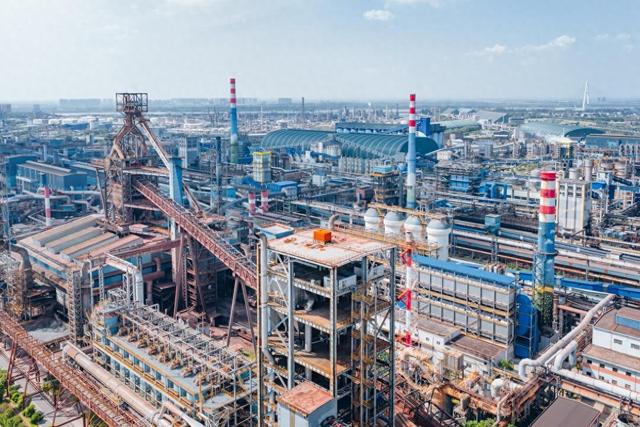
Core Viewpoint - The article highlights the transformation of the Wuhan Steel Cultural Tourism Zone into a popular industrial tourism destination, showcasing the history and technological advancements of the steel industry in China, particularly through the legacy of the Wuhan Iron and Steel Corporation [1][9][10]. Group 1: Industrial Tourism Development - The Wuhan Steel Cultural Tourism Zone is located within the Wuhan Steel Plant, featuring giant pipelines and towering structures that reflect the active production environment [1]. - The hot-rolled factory allows visitors to witness the process of steel production, with temperatures reaching up to 1600 degrees Celsius, emphasizing the automation of the industry [6][8]. - The site has become increasingly popular, attracting over 80,000 visitors from 11 countries and regions in 2024, indicating a growing interest in industrial tourism [16]. Group 2: Historical Significance - The No. 1 blast furnace, known as the "Champion Furnace," has a historical significance as it produced 54.26 million tons of pig iron over its 61 years of operation before being retired in 2019 [9]. - The blast furnace has been repurposed as a cultural and educational site, preserving its historical essence while serving as a base for science education and red culture transmission [9][10]. - Visitors, especially students, find the site meaningful as it connects them to the industrial history and the efforts of past generations in the steel industry [10].


全球非主流矿山新增产能释放稳步推进
Qi Huo Ri Bao Wang· 2025-06-18 01:48
Group 1: Global Iron Ore Market Overview - In 2024, global iron ore shipments are expected to total 158.745 million tons, representing a year-on-year increase of 1.5% [1] - Non-mainstream mines' shipments are projected to reach 27.406 million tons, up 6.2% year-on-year, accounting for 17.3% of the total global shipments [1] - The marginal output from non-mainstream mines is highly price-sensitive, serving as a price indicator and an important reference for market supply changes [1] Group 2: Onslow Iron Ore Project - The Onslow Iron Ore Project, developed by Mineral Resources Limited, Baowu Steel, AMCI, and POSCO, has a proven ore reserve of 359 million tons with an iron grade of 57.5% [2] - The project aims for an annual production capacity of 35 million tons and has signed long-term purchase agreements covering 50% to 75% of Mineral Resources Limited's equity [3] - The project commenced production in May 2024, with a cumulative output of 6.7 million tons expected in 2024 and a guidance production of 14.91 to 15.26 million tons for FY2025 [4] Group 3: Liberia Phase II Expansion Project - The Liberia Phase II Expansion Project, led by ArcelorMittal, aims to increase the Yekepa mine's capacity from 5 million tons to 20 million tons annually [5] - The project includes significant upgrades to existing rail infrastructure to support increased transport capacity from 4 million tons to 30 million tons per year [5] - By Q2 2025, the project is expected to reach a capacity of 1.5 million tons per year, increasing to 2 million tons by the end of the year [7] Group 4: Tonkolili Iron Ore Phase II Expansion Project - The Tonkolili Iron Ore Phase II Expansion Project in Sierra Leone aims to enhance mining capacity and processing capabilities, targeting an annual processing capacity of 12 million tons [8][9] - The project is expected to start production in May 2024, with an estimated annual output of 1.785 million tons in 2025, contributing an additional 945,000 tons [10] Group 5: Fenix Resources Expansion Plans - Fenix Resources is expanding its market share in Western Australia through the acquisition of the Shine mine and the advancement of the Beebyn-W11 project [11] - The Shine Iron Ore Project is expected to produce 120,000 tons in 2025, with an additional capacity of 86,000 tons [13] - The Beebyn-W11 project will contribute approximately 200,000 tons of new capacity in 2025, with a design capacity of 150,000 tons [14] Group 6: McPhee Creek Project - The McPhee Creek Project, developed by Atlas Iron, aims for an annual production capacity of 9.5 to 9.7 million tons, with an expected new capacity of 240,000 tons in 2025 [15][16] - The project is set to begin operations in June 2025, following upgrades to existing transport infrastructure [16] Group 7: Nimba High-Grade Iron Ore Project - The Nimba High-Grade Iron Ore Project, led by Ivanhoe Atlantic, features iron grades between 63% and 67.8% and aims for an initial production capacity of 200,000 tons in 2025 [17][18] - The project is expected to ramp up production to 3 million tons over the following 5 to 7 years, with an estimated additional output of 20,000 tons in 2025 [18]

2025年世界钢铁统计数据报告-世界钢铁协会
Sou Hu Cai Jing· 2025-06-14 02:19
Global Steel Production - In 2024, global crude steel production is projected to reach 1.885 billion tons, remaining stable compared to previous years, with China producing 1.005 billion tons, accounting for 53.3% of the total [1][2] - India ranks second with a production of 149 million tons, showing a year-on-year growth of 6%, while traditional steel-producing countries like Japan, the US, and Russia are experiencing declines [1][2] - The production process is dominated by the blast furnace-converter method, accounting for 70.4%, while electric arc furnace processes represent 29.1% [1][2] Steel Consumption - The global apparent steel consumption in 2024 is estimated at 1.742 billion tons, with a per capita consumption of 214.7 kg [2][3] - China leads in per capita consumption at 601.1 kg, while India lags at 102.6 kg, highlighting significant disparities between developing and developed nations [2][3] - Asia accounts for 72.4% of global consumption, with China and India contributing the majority of the growth, while Europe and North America see declining shares [2][3] Raw Materials and Trade - Iron ore remains a critical raw material, with Australia and Brazil together accounting for 72% of global exports; China is the largest importer, with imports reaching 1.18 billion tons in 2024 [3][4] - The reliance on iron ore has prompted the industry to seek alternatives, with direct reduced iron production increasing from 106 million tons in 2020 to 144 million tons in 2024 [3][4] - Global trade in scrap steel is on the rise, with a total of 95.8 million tons traded in 2024, primarily involving the EU, the US, and China [3][4] Sustainability - The steel industry's carbon emission intensity has decreased, with 2023 figures showing 1.92 tons of CO2 emitted per ton of crude steel produced [4][5] - Energy consumption intensity is reported at 21.27 GJ/ton, with material efficiency reaching 98.15%, indicating ongoing efforts in energy conservation and emissions reduction [4][5] - The industry is investing in new technologies, including electric arc furnaces and hydrogen metallurgy, to meet sustainability goals [4][5] Trade Dynamics - In 2024, global steel trade volume is expected to reach 449 million tons, with China exporting 117 million tons, primarily to emerging markets in Southeast Asia and Africa [5][6] - The EU and the US are major importers, with net imports of 15 million tons and 18.6 million tons, respectively [5][6] - Indirect trade, involving steel-containing products, significantly impacts global supply and demand dynamics, with 2019 figures showing 359 million tons traded [5][6] Future Outlook - The steel industry faces challenges and opportunities in low-carbon transformation, with technologies like hydrogen metallurgy and carbon capture set to play crucial roles [6][7] - Smart manufacturing through industrial internet and AI is expected to enhance efficiency and reduce energy consumption [6][7] - Emerging markets, particularly in Southeast Asia and Africa, are anticipated to drive future steel demand, with India's consumption projected to exceed 200 million tons by 2030 [6][7]


红利板块估值重塑预期升温,300红利低波ETF(515300)近9日“吸金”1.34亿元
Sou Hu Cai Jing· 2025-06-13 03:49
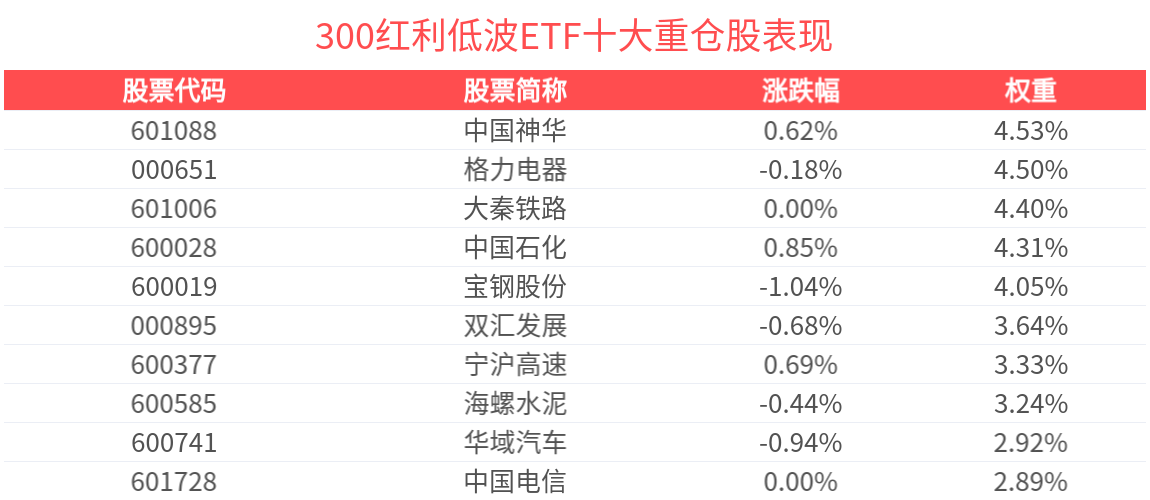
Core Viewpoint - The performance of the CSI 300 Dividend Low Volatility Index shows mixed results among its constituent stocks, with a slight overall decline, while the ETF associated with this index has seen significant inflows and strong long-term performance metrics [1][5]. Group 1: Index Performance - As of June 13, 2025, the CSI 300 Dividend Low Volatility Index decreased by 0.37% [1]. - The ETF associated with this index, CSI 300 Dividend Low Volatility ETF (515300), experienced a turnover of 4.49% during the trading session, with a total transaction value of 268 million yuan [1]. - Over the past month, the average daily transaction value of the ETF was 11.7 million yuan, and its latest scale reached 5.975 billion yuan [1]. Group 2: Stock Performance - Among the constituent stocks, Shanghai Port Group led with a gain of 1.39%, while Shanghai Bank, Industrial Bank, and Jiangsu Bank saw declines [1]. - The top ten weighted stocks in the index accounted for 36.97% of the total index weight, with China Shenhua and Gree Electric Appliances being the most significant contributors [2][4]. Group 3: Dividend and Investment Trends - The upcoming dividend season from May to July is expected to attract more investments into dividend-paying stocks, as the yield on dividend indices reaches new highs [5]. - Regulatory support for increasing insurance funds' market participation is anticipated to enhance the valuation expectations for dividend stocks [5]. - Investors without stock accounts can access investment opportunities through the corresponding CSI 300 Dividend Low Volatility ETF linked funds [5].





墨西哥对华冷轧钢板启动反倾销日落复审调查
news flash· 2025-06-10 08:41
Core Viewpoint - Mexico's Ministry of Economy has initiated a second sunset review investigation into anti-dumping measures on cold-rolled steel sheets originating from China, following a request from Ternium México, S.A. de C.V. [1] Group 1: Investigation Details - The investigation period for dumping is set from April 1, 2024, to March 31, 2025, while the damage investigation period spans from April 1, 2020, to March 31, 2025 [1] - The products involved are cold-rolled steel sheets with a width of at least 600 mm and a thickness between 0.5 mm and 3 mm, containing a boron content of at least 0.0008%, regardless of whether they are coated or not [1] - The relevant TIGIE tax codes for the products are 7209.16.01, 7209.17.01, and 7225.50.91 [1] Group 2: Historical Context - Mexico first initiated an anti-dumping investigation on cold-rolled steel sheets from China on April 24, 2014, and made a definitive ruling on June 19, 2015, imposing anti-dumping duties ranging from 65.99% to 103.41% on various Chinese companies [1] - The anti-dumping duties were reaffirmed during the first sunset review on August 16, 2021, maintaining the existing rates for another five years [1] - In July 2016, Mexico expanded the scope of the anti-dumping measures to include cold-rolled steel sheets with a boron content of at least 0.0008% under additional TIGIE tax codes [1]
金融属性驱动部分金属价格补涨
GOLDEN SUN SECURITIES· 2025-06-08 10:57
Investment Rating - The industry is rated as "Buy" for several key companies, including Xining Special Steel, Nanjing Steel, Hualing Steel, and Baosteel [8]. Core Viewpoints - The market remains in a state of fluctuation, with the non-ferrous sector outperforming the black metal sector. Financial attributes of metals like gold, silver, and copper are expected to benefit from the current economic conditions [2]. - The macroeconomic policies are showing effectiveness, with the manufacturing PMI rising to 49.5% in May, indicating an overall expansion in economic output [4][12]. - The steel industry is experiencing a divergence in profitability across the black metal supply chain, with some companies undervalued and presenting good strategic investment opportunities [2][4]. Supply Analysis - Daily molten iron production has slightly decreased to 2.417 million tons, with a minor decline in the utilization rate of blast furnaces to 90.6% [3][11]. - The total inventory of steel has decreased by 0.1%, with a narrowing decline rate of 2.2 percentage points [23][25]. Demand Analysis - Apparent consumption of the five major steel products has weakened, with rebar consumption dropping by 7.9% week-on-week [38][49]. - The average weekly transaction volume for construction steel has increased by 2.0% [40]. Raw Material Analysis - Iron ore prices have declined, with the Platts 62% iron ore price index at $96.1 per ton, down 0.7% week-on-week [57]. - The average daily iron ore import volume at 45 ports has increased by 17.9% week-on-week [57]. Price and Profit Analysis - Steel prices are showing a slight improvement, with the current spot price for rebar in Beijing at 3,170 RMB per ton, up 1.9% week-on-week [73]. - The immediate gross profit for long-process rebar is reported at -134 RMB per ton, indicating a slight improvement in margins [72][73].


白银价格大幅上涨,基本金属需求保持韧性
Shenwan Hongyuan Securities· 2025-06-08 10:11
Investment Rating - The report maintains a positive outlook on the metals and new materials industry, indicating a favorable investment environment [3][4]. Core Insights - The report highlights a significant increase in silver prices and resilient demand for base metals, suggesting a bullish trend in the market [3][4]. - The report emphasizes the ongoing increase in gold reserves by the People's Bank of China, which is expected to support long-term gold price growth [4][23]. - The report identifies potential investment opportunities in companies such as Zijin Mining, Luoyang Molybdenum, and Shandong Gold, among others, due to their favorable valuations and market positions [4][20]. Weekly Market Review - The Shanghai Composite Index rose by 1.13%, while the Shenzhen Component increased by 1.42%, and the CSI 300 Index gained 0.88% [5]. - The non-ferrous metals index increased by 3.74%, outperforming the CSI 300 Index by 2.86 percentage points [5][10]. - Year-to-date, the non-ferrous metals index has risen by 12.16%, exceeding the CSI 300 Index's growth by 13.70 percentage points [9]. Price Changes - Industrial metals and precious metals saw price changes, with copper, aluminum, lead, and zinc prices increasing by 2.05%, 0.27%, 1.05%, and 1.76% respectively [4][16]. - The report notes a significant rise in silver prices by 9.24% and gold prices by 0.54% [4][16]. Key Company Valuations - The report provides a detailed valuation of key companies in the metals sector, indicating potential growth in earnings per share (EPS) and price-to-earnings (PE) ratios for companies like Zijin Mining and Luoyang Molybdenum [20][21]. - Companies such as Shandong Aluminum and China Hongqiao are highlighted for their stable performance and dividend yields [4][20]. Copper Market Analysis - The report indicates a slight increase in copper supply costs, with the current TC at $42.9 per dry ton, reflecting a $0.55 increase [33]. - Domestic copper social inventory rose to 148,800 tons, an increase of 10,000 tons week-on-week [33]. Aluminum Market Insights - The report notes a decrease in aluminum prices, with the current average price reported at 20,230 CNY per ton, reflecting a week-on-week decline of 0.7% [48]. - The operating rate of downstream aluminum processing enterprises has decreased to 60.90% [48]. Steel Market Overview - The report highlights an increase in rebar prices, which rose by 10 CNY per ton to 3,140 CNY per ton [73]. - The total inventory of steel products remained stable, with slight fluctuations in production and demand across various steel categories [73].



钢铁周报20250608:焦煤价格反弹,关注淡季需求韧性-20250608
Minsheng Securities· 2025-06-08 03:31
Investment Rating - The report maintains a "Buy" recommendation for several steel companies, including Baosteel, Hualing Steel, and Nanjing Steel, among others [3][4]. Core Insights - The rebound in coking coal prices is noteworthy, with a focus on the resilience of demand during the off-season. The report indicates that domestic steel demand is gradually entering a seasonal decline, while external demand remains uncertain due to tariff adjustments by the U.S. government [3][4]. - The report highlights that the profitability of long-process steel production has increased, with specific profit margins for rebar, hot-rolled, and cold-rolled steel showing positive changes compared to the previous week [2][3]. - The overall steel production has decreased, with a total output of 8.8 million tons for major steel varieties, reflecting a slight decline from the previous week [2][3]. Summary by Sections Price Trends - As of June 6, 2025, steel prices in Shanghai showed mixed trends, with rebar prices at 3,140 CNY/ton (up 10 CNY), hot-rolled steel at 3,260 CNY/ton (up 60 CNY), and cold-rolled steel remaining stable at 3,580 CNY/ton [1][10]. Production and Inventory - The total production of major steel varieties was 8.8 million tons, with a week-on-week decrease of 0.47 million tons. Rebar production specifically decreased by 70,500 tons to 2,184,600 tons [2][3]. - Total social inventory of major steel varieties decreased by 16,100 tons to 9,298,600 tons, with rebar inventory dropping by 89,700 tons [2][3]. Investment Recommendations - The report recommends focusing on the following companies: 1. Baosteel, Hualing Steel, Nanjing Steel in the general steel sector 2. CITIC Special Steel, Yongjin Co., and Xianglou New Materials in the special steel sector 3. Jiuli Special Materials, Wujin Stainless Steel, and Youfa Group in the pipe materials sector [3][4].


力拓与中国宝武联手,百亿级澳洲合资铁矿投产
Xin Lang Cai Jing· 2025-06-07 00:38
Core Insights - The West Pilbara project, a joint venture between Rio Tinto and China Baowu Steel Group, is set to officially commence production, marking a significant milestone in their long-standing partnership [1][3][6] - The project has seen an investment of $2 billion (approximately 143.7 billion RMB) over the past two years for infrastructure development, including a giant crusher and conveyor systems [3][4] - The annual production capacity of the West Pilbara project is projected to be 25 million tons of iron ore, with China Baowu expected to purchase approximately 11.5 million tons annually [4][7] Company Collaboration - The partnership between Rio Tinto and China Baowu is a continuation of their previous collaboration on the East Pilbara project, which has already shipped over 200 million tons of iron ore [4][6] - The joint venture structure allows both companies to strengthen their operational ties and stabilize iron ore sales channels while mitigating investment risks [6][7] Market Context - China Baowu, as the world's largest steel producer, relies heavily on high-quality iron ore from Rio Tinto, with a significant portion of its iron ore procurement coming from this partnership [3][7] - The average iron content of the ore produced at the West Pilbara project is 62%, significantly higher than the average of 34.5% for domestic iron ore resources in China, highlighting the quality advantage [4][7] Future Plans - Rio Tinto aims to maintain sustainable operations by developing a new mine each year over the next five years, targeting an annual iron ore production of 345-360 million tons in the Pilbara region [9] - The company has invested approximately $8.5 billion (about 611 billion RMB) in the Pilbara region over the past three years and plans to invest over $13 billion (approximately 934 billion RMB) in the next three years for new mine development [9][11] Additional Projects - The Simandou project in Guinea, which has the potential to produce 120 million tons of high-quality iron ore annually, is also a key focus for Rio Tinto and China Baowu, with significant infrastructure development underway [9][11]

年产能2500万吨,宝武和力拓在澳大利亚联合开发的铁矿项目全面投产
Sou Hu Cai Jing· 2025-06-06 15:13
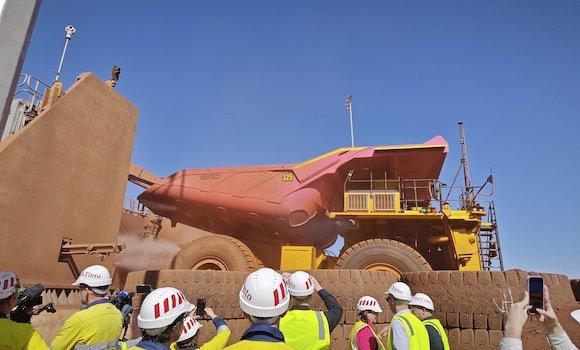
Core Viewpoint - The Rio Tinto Group and China Baowu Steel Group have officially launched the West Pilbara Iron Ore Project in Australia, which is expected to benefit both companies and the local economy [1][3]. Group 1: Project Overview - The West Pilbara Iron Ore Project is located in the Pilbara region of Western Australia, with a designed annual production capacity of 25 million tons [1]. - The total investment for the project is approximately $2 billion, with Rio Tinto holding a 54% stake and Baowu holding 46% [1][3]. Group 2: Economic Impact - The project is expected to enhance the economic development of the Pilbara region and contribute to the economy of Western Australia through royalties and taxes [1]. - The West Pilbara Iron Ore Project is seen as a critical component for the long-term operation of the Paraburdoo mining center, which is one of Rio Tinto's oldest mining sites [3]. Group 3: Strategic Importance - Baowu Steel is Rio Tinto's largest customer, and the project represents a strategic partnership between the two industry leaders, showcasing the cooperation between China and Australia [3]. - The project is viewed as a model for economic cooperation between the two countries, with commitments to sustainable development and innovation [3]. Group 4: Market Context - Australia exports over 900 million tons of iron ore annually from the Pilbara region, primarily to China, amidst increasing uncertainties in the steel industry due to rising tariffs [1][4]. - Current iron ore prices are around $95 per ton, with production costs for Australian companies estimated at $33 per ton for 2024 [4].