
CITIC Securities Co., Ltd.(600030)

Search documents
营养健康食品公司「仙乐健康」冲刺A+H上市,中信证券独家保荐
Xin Lang Cai Jing· 2026-02-01 07:59
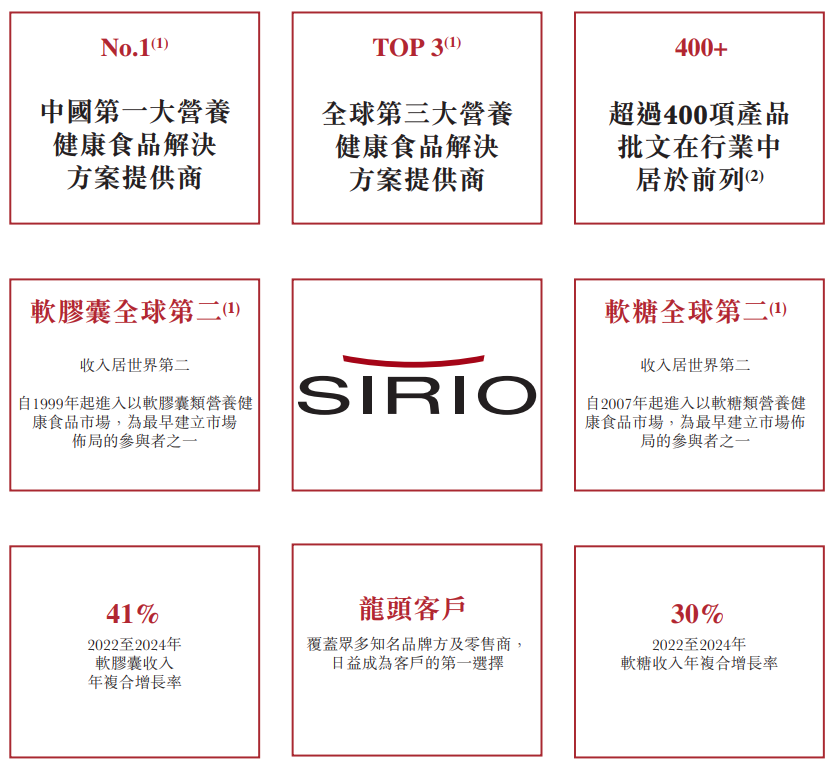
Core Viewpoint - SIRIO PHARMA CO., LTD. (referred to as "Xianle Health") submitted its IPO application to the Hong Kong Stock Exchange on January 29, 2026, aiming for a listing on the main board, with CITIC Securities as the sole sponsor. The company, which went public on the A-share market in September 2019, has a total market capitalization of approximately 7.199 billion RMB as of January 29, 2026. Xianle Health is a leading provider of nutritional health food solutions, holding the third-largest market share globally and the largest in China in this sector based on 2024 revenue [1][1]. Financial Performance - For the fiscal years ending December 31, 2024, and the first nine months of 2025, the company's revenues were approximately 4.211 billion RMB and 3.291 billion RMB, respectively. The net profit for the same periods was 2.82 billion RMB and 0.56 billion RMB, showing a significant decline of 73.89% year-on-year for the first nine months of 2025. The gross profit margins were 30.61% and 31.47% for these periods [7][9][11]. Market Position - Xianle Health is recognized as the third-largest player in the global nutritional health food solutions market and the largest in China, based on revenue projections for 2024. The company is also the second-largest provider of gummy and soft capsule nutritional health food solutions worldwide [1][1]. Product Offerings - The company has developed a comprehensive range of solutions catering to various customer needs across different demographics, including pregnant women, infants, children, adolescents, and the elderly. Its product categories address core health needs such as basic vitamins and minerals, gut health, metabolic health, and immune support, among others. Additionally, Xianle Health has established a presence in the pet nutrition sector [3][3]. Global Operations - Xianle Health has a global business footprint that spans markets in China, the Americas, Europe, and the Asia-Pacific region. The company operates six production bases (with one under construction) and five global R&D centers, reaching customers in over 50 countries and regions. Notably, overseas market revenue accounted for 61.2% of total revenue during the first nine months of 2025 [5][9]. Revenue Sources - The primary revenue for Xianle Health comes from the sales of nutritional health food products, with soft capsules and gummies being the largest contributors. In 2024, these two product types accounted for a significant portion of the company's revenue, while other forms such as drinks, tablets, powders, and hard capsules contributed less [9][9].


中信证券:判断本轮ETF集中赎回潮基本结束
Sou Hu Cai Jing· 2026-02-01 07:29
来源:读创财经综合 中信证券研报认为,判断本轮ETF集中赎回潮基本结束,权重股迎来修复窗口;大周期维度下的风格切 换正在发生,从小盘切大盘,从题材切质量;沃什被提名美联储主席代表了"美国版脱虚向实"的政策意 愿,无论是否能成功践行理念,对全球风险资产的风格都会产生巨大影响。站在A股视角,从资源热到 周期热,涨价线索的全面演绎可能贯穿一季度。周期板块的底层共性是利润率修复空间大,背后是中国 的政策从扩大规模逐步向提质增效的转变。配置的底层思路还是应围绕中国具备竞争优势的行业在全球 定价权的重估,化工、有色、电力设备、新能源的底仓配置思路依然成立,但对投机属性越发明显的贵 金属板块要开始保持警惕;消费和地产链的躁动修复理应发生在春季,这与制造、科技并不对立。 ...
中信证券:沃什被提名新任联储主席对市场影响几何?
Xin Lang Cai Jing· 2026-02-01 07:21
Core Viewpoint - The nomination of Kevin Warsh as the next Federal Reserve Chairman by President Trump aims to satisfy multiple demands, indicating a potential return to monetarism and the advancement of Fed reforms, although the aggressive implementation of "balance sheet reduction + interest rate cuts" may face constraints [1][2][4]. Group 1: Nomination and Background - Warsh's nomination is seen as fulfilling Trump's desire for a chairman who meets various criteria, including loyalty and independence, while also shifting towards a more dovish stance on interest rates [2][10]. - Warsh has a background in Morgan Stanley and served as a Fed governor from 2006 to 2011, where he was a key link between Wall Street and the Fed during the financial crisis [2][10]. Group 2: Economic Policy Implications - Warsh's return to the Fed may signify a resurgence of monetarist principles, advocating for controlling money supply to manage inflation expectations rather than maintaining high interest rates [3][11]. - He has criticized quantitative easing (QE) for exacerbating wealth inequality and has called for a clear exit strategy from such policies, suggesting that the Fed's balance sheet should only meet currency circulation needs [3][11]. Group 3: Regulatory and Monetary Policy Directions - Warsh is expected to focus on regulatory simplification and may adjust leverage ratios, reflecting his long-standing criticism of the Dodd-Frank Act and Basel III [4][12]. - The proposed combination of "balance sheet reduction + interest rate cuts" aims to support fiscal and real economic growth while addressing wealth disparity and inflation expectations, but current economic conditions may limit the extent of these measures [4][12]. Group 4: Market Reactions and Asset Implications - Warsh's nomination is likely to create significant short-term market volatility, but the long-term investment logic for certain assets may remain unchanged [5][13]. - In the currency market, Warsh advocates for a stable monetary policy to maintain a strong dollar, opposing currency devaluation for trade advantages [5][13]. - The bond market may experience further steepening of the yield curve if aggressive rate cuts or balance sheet reductions are pursued, making policy decisions critical for bond yields [5][13]. - The stock market outlook appears favorable overall, but increased volatility may arise from the Fed's smaller bank policies, with a focus on opportunities for small businesses [5][14].
中信证券:脱虚向实,重视涨价线索的扩散
Xin Lang Cai Jing· 2026-02-01 07:11
Group 1 - The current wave of ETF redemptions is coming to an end, providing a recovery window for large-cap stocks [2][10] - The shift in investment style is occurring on a macro level, transitioning from small-cap to large-cap and from thematic to quality stocks [3][11] - The nomination of Waller as the next Federal Reserve Chair reflects a policy intention towards "real economy" in the U.S., which could significantly impact global risk assets [3][11] Group 2 - Price increases are expected to be a theme throughout the first quarter, driven by various sectors including upstream resources, midstream manufacturing, and downstream real estate [4][13] - The underlying commonality in cyclical sectors is the significant potential for profit margin recovery, as China's policy shifts from expansion to quality improvement [6][12] - The investment strategy should focus on industries where China has competitive advantages and is undergoing a reassessment of global pricing power, particularly in chemicals, non-ferrous metals, and new energy [7][14] Group 3 - The recovery in consumer and real estate sectors is anticipated to occur in the spring, aligning with the broader market recovery [8][15] - Current market capitalization of real estate companies is only 1.0% of the total A-share market, indicating a potential for recovery in this sector [8][15] - Recommendations for the consumer sector include focusing on duty-free, aviation, hotels, and tea beverage industries, while for the real estate sector, attention should be on quality developers and building materials [8][16]
中信证券:资金流出高峰已过 银行股配置价值稳步回升
智通财经网· 2026-02-01 06:52
Core Viewpoint - The report from CITIC Securities indicates that the peak of capital outflow from the banking sector has passed, revealing the value of investment opportunities as the market stabilizes [2]. Group 1: Capital Outflow and Market Response - In January, there was a significant outflow of passive funds, with 11 bank-related ETFs experiencing a net outflow of 3,773 billion yuan and 9,102 billion yuan respectively, leading to an estimated net outflow of 485 billion yuan from bank stocks [1][2]. - The outflow pressure has been largely released, with the subsequent impact on the market expected to be limited, as the share of the CSI 300 and SSE 50 ETFs fell by 48% and 53% respectively [2]. - Despite the largest weekly net outflow of bank-related ETFs in January, the CITIC Bank Index recorded a gain of 0.87%, indicating a renewed interest from institutional investors [2]. Group 2: Performance of City Commercial Banks - Recent performance reports from two city commercial banks, Qingdao Bank and Xiamen Bank, show resilience in operations, with Qingdao Bank's revenue and net profit increasing by 7.97% and 21.66% respectively, while Xiamen Bank's revenue and net profit grew by 1.69% and 1.52% [3]. - Both banks demonstrated strong loan and deposit growth, with Qingdao Bank's loans and deposits increasing by 16.53% and 16.41%, and Xiamen Bank's loans and deposits rising by 18.39% and 13.75% [3]. - Asset quality remains strong, with Qingdao Bank's non-performing loan ratio improving to 0.97% and Xiamen Bank's at 0.77%, alongside significant increases in their provision coverage ratios [3]. Group 3: Outlook for Banking Sector - The banking sector is expected to maintain a proactive lending strategy in the first quarter, aiming for a "good start" with new credit issuance anticipated to be on par with the previous year [4]. - Corporate lending is projected to be the main driver of credit growth, focusing on infrastructure, advanced manufacturing, and technology finance, while retail lending is expected to stabilize [4]. - Net interest margins are expected to stabilize despite a downward trend in asset yields, supported by effective cost management and asset structure optimization [4].
非银金融行业投资策略周报:券商与保险基本面持续向好,关注非银板块配置价值-20260201
GF SECURITIES· 2026-02-01 06:10
Core Viewpoints - The non-bank financial sector, including brokerage and insurance, shows continued improvement in fundamentals, highlighting the investment value of the non-bank sector [1] Group 1: Market Performance - As of January 31, 2026, the Shanghai Composite Index reported 4117.95 points, down 0.44%, while the Shenzhen Component Index was at 14205.89, down 1.62% [10] - The CSI 300 Index increased by 0.08%, and the ChiNext Index decreased by 0.09% [10] - The CITIC II Securities Index fell by 0.71%, while the CITIC II Insurance Index rose by 5.41% [10] Group 2: Industry Dynamics and Weekly Commentary Insurance Sector - Listed insurance companies are expected to maintain high growth, with a marginal improvement in long-term interest rate spreads [15] - As of January 30, 2026, the 10-year government bond yield was 1.81%, down 2 basis points from the previous week, indicating a cautious risk preference in the equity market [12] - The insurance sector is benefiting from a stable long-term interest rate environment and an upward trend in the equity market, which is expected to drive performance growth in Q1 2026 [15] Securities Sector - The securities market is showing positive core indicators, with a projected high growth in Q1 2026, supported by improved trading volume and margin financing [16] - As of January 30, 2026, 17 brokerages reported a total net profit of 1153.44 billion CNY for 2025, a year-on-year increase of 60.27% [19] - The average daily trading volume of all A and B shares reached 2.90 trillion CNY, a 144.26% increase compared to the same period in 2025, indicating a significant rise in market activity [21] Group 3: Investment Opportunities - The launch of commercial real estate REITs is expected to expand business opportunities, with the first three products anticipated to raise over 13 billion CNY [27] - The REITs initiative aims to activate existing commercial real estate assets and enhance the supply of capital market products, indicating strong market demand [27] - The insurance sector is advised to focus on companies like China Ping An, China Life, and New China Life, which are expected to benefit from favorable market conditions [15]



公募基金去年四季度加码非银金融,保险、券商股获青睐
Huan Qiu Wang· 2026-02-01 03:00
Core Viewpoint - The non-bank financial sector has become a significant focus for fund allocation, with public funds increasing their positions in this area, particularly in insurance and brokerage stocks, which are now the fourth largest area of increase in holdings [1][3]. Group 1: Non-Bank Financial Sector - Public funds have increased their allocation to non-bank financials (insurance, brokerages) by over 1 percentage point, making it the fourth largest area of fund increase, following non-ferrous metals, communications, and basic chemicals [1]. - The insurance sector has shown remarkable performance, with leading companies like China Ping An and China Pacific Insurance receiving significant over-allocations due to improved balance sheets and recovery in new business value [3]. - The brokerage sector is experiencing a trend of concentration among leading firms, with public funds increasing their holdings in major brokerages like CITIC Securities and Huatai Securities, while smaller firms see limited increases [3]. Group 2: Investment Trends and Market Outlook - The current increase in non-bank financials is primarily driven by value-oriented funds, contrasting with growth-driven sectors like non-ferrous metals and communications [3]. - The insurance index has risen by 23.42% in the fourth quarter of 2025, significantly outperforming bank and brokerage stocks, highlighting the sector's stability and growth potential [3]. - The outlook for the non-bank financial sector remains focused on "performance-driven" strategies, with attention on new policy developments and market activity levels, suggesting that this sector may become a key allocation area for medium to long-term funds in a low-interest-rate environment [4].


中信证券:太空光伏并非炒作 正在进入规模化部署的前夜 远期市场空间有望增长30倍以上
Ge Long Hui A P P· 2026-02-01 01:12
Group 1 - The core viewpoint is that space photovoltaic technology is not a hype but is on the verge of large-scale deployment, driven by real demand, engineering implementation, and a commercial loop [1] - The explosion of space photovoltaic technology is attributed to the new demands of "space computing power + AI" and the ongoing competition for low Earth orbit resources globally [1] - China's accelerated deployment of satellite constellations is primarily for strategic orbit occupation, followed by building communication capabilities, and finally enhancing computing power and AI [1] Group 2 - It is projected that the number of satellite launches will increase from 5,000 to 50,000 between 2025 and 2040, with gallium arsenide batteries dominating in the short term at an 80% penetration rate [2] - As costs decrease and technology advances, the penetration rates of P-type HJT and perovskite/silicon tandem batteries are expected to rise, with perovskite/silicon tandem batteries projected to reach a 60% penetration rate in the long term [2] - The overall market space for photovoltaic cells in the satellite sector is estimated to reach 328.8 billion yuan, representing a growth of over 30 times compared to the short-term market space [2]
中信证券:AI芯片架构改革推动液冷市场空间快速成长 关注结构性投资机会
Zhi Tong Cai Jing· 2026-02-01 00:04
Group 1 - The demand for AI computing power and the increase in chip power consumption are driving the transition to liquid cooling as a definitive trend, with major cloud service providers (CSPs) adopting liquid cooling as the default standard for next-generation architectures [1] - The liquid cooling industry is in a rapid growth phase, with North America's top four CSPs expected to increase total capital expenditures by 52% to $383.6 billion by 2025, providing strong downstream demand support for the liquid cooling sector [2] - The global liquid cooling supply chain is currently dominated by Taiwanese manufacturers, who have established significant ecological closed loops in liquid cooling components due to long-term collaborations with chip giants like NVIDIA [3] Group 2 - Domestic companies are accelerating their efforts to catch up by achieving full industry chain layouts in core components and seeking to overcome certification barriers for entry into overseas supply chains [4] - High demand for computing power is driving rapid iterations in liquid cooling technology, with advancements in phase change latent heat utilization and the emergence of new cooling media such as fluorinated liquids, which are expected to replace traditional solutions [5] - The penetration rate of liquid cooling in global AI data centers is projected to rise from 14% in 2024 to 47% by 2026, indicating significant growth potential for the liquid cooling market [2]
中信证券:当前房地产市场出现了一些积极信号
Xin Lang Cai Jing· 2026-01-31 14:07
Core Viewpoint - The report from CITIC Securities indicates that the real estate market is expected to stabilize by 2026, with a recovery in housing prices being crucial for the repair of real estate companies' balance sheets [1] Group 1: Market Performance - As of December 2025, the price index for new and second-hand homes in 70 large and medium-sized cities has decreased by 12.6% and 21.3% from their peak, respectively [1] - The decline in gross profit margins for completed projects and the provision for inventory impairment are the main reasons for the performance downturn of real estate companies [1] Group 2: Positive Signals - The report highlights some positive signals in the current real estate market, despite the historical performance reflected in profit statements [1] - An article in "Qiushi" magazine emphasizes the need for comprehensive real estate policies to shorten market adjustment periods and boost buyer confidence [1] Group 3: Financial Health - The cash flow statement of the household sector remains healthy, supporting the potential for continued recovery in operating cash flows for companies [1] - The shift in the main financing cash inflow from credit bonds to project financing (such as REITs and property operation loans) is addressing the mismatch between assets and liabilities for companies [1]