SAIC MOTOR(600104)

Search documents
理想比亚迪吉利……中国车企ESG的优势与突出毛病在哪
虎嗅APP· 2025-10-20 14:12
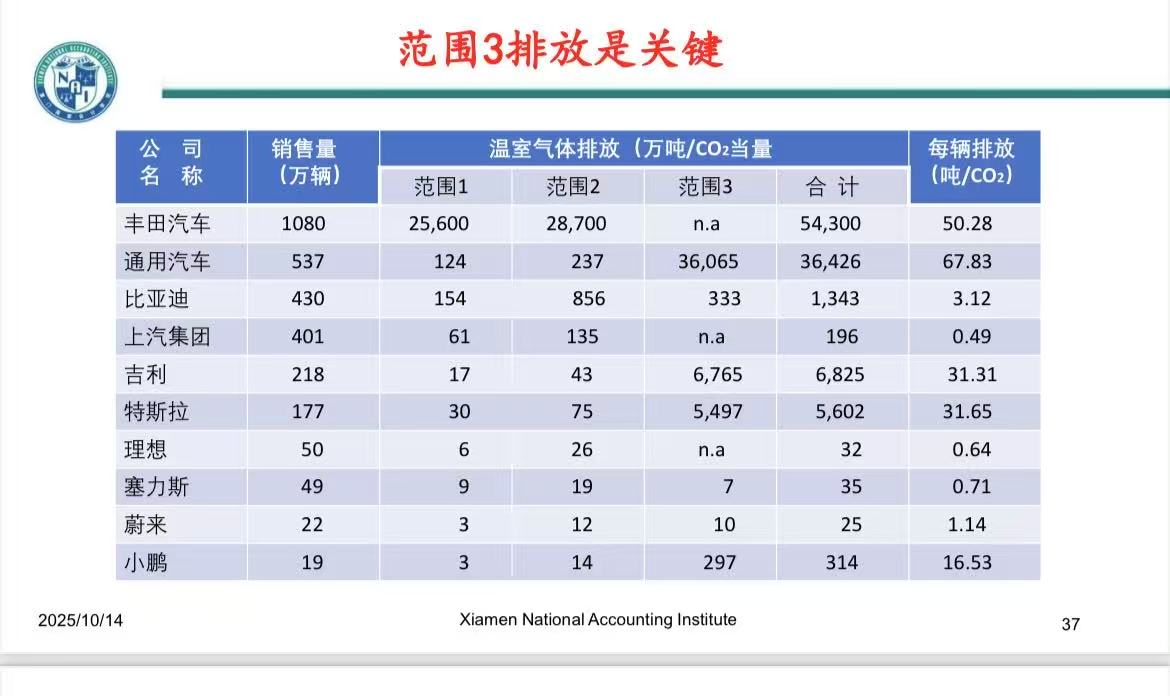
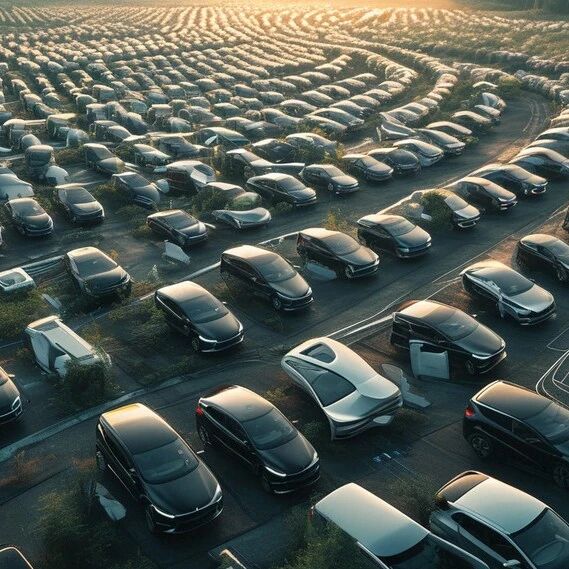
"低碳转型、重视ESG能力建设是大势所趋,未来十年二十年关系到车企的生死存亡,"中国会计学会 副会长、厦门国家会计学院教授黄世忠对虎嗅表示。在电动化之外,车企如何构建ESG能力,如何提 升碳足迹核算和披露水平,正逐步影响它们在全球资本、监管、市场层面的"通关能力"。 那么,中国主流车企在ESG治理上到底处于什么水平?哪些品牌开始"做得像样",又有哪些还停留在 口号与营销噱头? 环境维度: 头部新势力领跑,传统车企治理 出品|虎嗅ESG组 作者|陈玉立 头图|AI生成 本文是 #ESG进步观察 #系列第151篇文章 本次观察关键词:车企ESG 今年上半年,Wind 数据显示A 股新能源汽车整车行业在 ESG 信息披露方面的活跃度显著提升:16 家上市公司中已有 14 家发布了 ESG 或可持续发展报告,披露率高达 87.5%。 具体到企业,小鹏汽车于上半年完成四款在售车型的全价值链碳核算,在新势力车企中率先公开披露 范围三碳排放分类明细数据;吉利也在最新发布的ESG报告中披露"单车全生命周期碳排放下降 18%"。一系列动作背后,是汽车企业在电动化浪潮中对 ESG 能力的重新审视——在"卷性能""卷智 驾"之后, ...





乘用车板块10月20日涨0.19%,长城汽车领涨,主力资金净流出10.78亿元
Zheng Xing Xing Ye Ri Bao· 2025-10-20 08:21
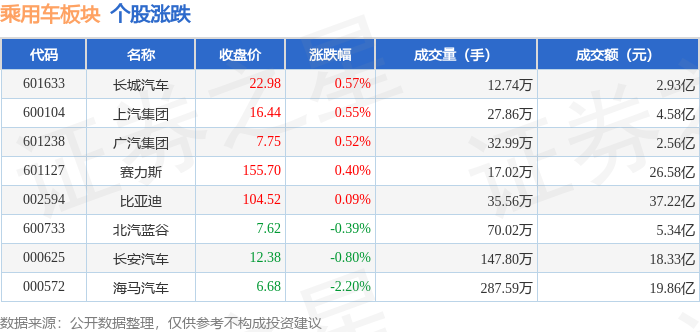
Core Insights - The passenger car sector experienced a slight increase of 0.19% on October 20, with Great Wall Motors leading the gains [1] - The Shanghai Composite Index closed at 3863.89, up 0.63%, while the Shenzhen Component Index closed at 12813.21, up 0.98% [1] Passenger Car Sector Performance - Great Wall Motors (601633) closed at 22.98, with a gain of 0.57% and a trading volume of 127,400 shares, amounting to a transaction value of 293 million [1] - SAIC Motor (600104) closed at 16.44, up 0.55%, with a trading volume of 278,600 shares and a transaction value of 458 million [1] - GAC Group (601238) closed at 7.75, gaining 0.52%, with a trading volume of 329,900 shares and a transaction value of 256 million [1] - BYD (002594) closed at 104.52, with a minimal gain of 0.09%, trading 355,600 shares for a total value of 3.722 billion [1] - Changan Automobile (000625) closed at 12.38, down 0.80%, with a trading volume of 1.478 million shares and a transaction value of 1.833 billion [1] Fund Flow Analysis - The passenger car sector saw a net outflow of 1.078 billion from institutional investors, while retail investors contributed a net inflow of 674 million [1] - Among individual stocks, SAIC Motor had a net inflow of 18.776 million from institutional investors, while Great Wall Motors experienced a net outflow of 15.0508 million [2] - BYD faced a significant net outflow of 633 million from institutional investors, indicating a potential concern among larger investors [2]




9月轻客狂销4.4万辆大涨37% 长安/大通/江铃居前三 谁领涨?
第一商用车网· 2025-10-20 07:09
Core Viewpoint - The light commercial vehicle (LCV) market in China has shown significant growth, achieving a 37% year-on-year increase in September 2025, marking a continuous upward trend for six consecutive months [3][10][22]. Market Performance - In September 2025, the overall bus market sold 55,800 units, with a month-on-month increase of 25% and a year-on-year increase of 34%. The light bus segment accounted for 43,600 units sold, reflecting a month-on-month growth of 26% and a year-on-year growth of 37% [3][4]. - The light bus market's share in the overall bus market reached 78.17% in September, slightly up from 77.59% in August. For the first nine months of 2025, the light bus segment's market share was 79.67%, an increase from 77.18% in the entire year of 2024 [4][9]. Historical Trends - An analysis of the light bus sales over the past five years reveals a fluctuating trend, with September 2025 recording the highest sales of 43,600 units, surpassing the previous five-year high and the lowest sales in September 2022 by 12,700 units [6][22]. - Cumulatively, from January to September 2025, the light bus market achieved sales of 324,500 units, the highest in five years, with an increase of over 30,000 units compared to the same period last year [6][15]. Market Share and Competition - The top three companies—Changan, Dongfeng, and Jiangling—held a combined market share of 75.38% in September 2025, with individual shares of 31.36%, 22.06%, and 21.96% respectively [14][20]. - Among the top ten companies, eight experienced sales growth compared to the previous year, with Changan, Dongfeng, and Yutong showing significant increases of 75%, 77%, and 90% respectively [11][18]. Future Outlook - The light bus market has maintained a growth trajectory since April 2025, with cumulative sales growth of 10% year-on-year by the end of September. The industry is keen to see if this upward trend can continue [9][22].




汽车和汽车零部件行业周报20251019:2025Q3前瞻:销量环比提升,成本端向好-20251019
Minsheng Securities· 2025-10-19 14:20
Investment Rating - The report maintains a positive investment rating for the automotive and automotive parts industry, highlighting potential growth opportunities in the sector [6]. Core Insights - The automotive industry is experiencing a sequential increase in sales and favorable cost conditions, with a notable rise in both total and new energy vehicle sales in Q3 2025 [2][3]. - The report emphasizes the importance of intelligent and globalized breakthroughs in the automotive sector, recommending key players such as Geely, Xpeng, Li Auto, BYD, and Xiaomi Group [4][5]. Summary by Sections 0.1 Passenger Vehicles - Total passenger vehicle sales in Q3 2025 reached 7.686 million units, representing a year-on-year increase of 14.7% and a quarter-on-quarter increase of 8.1% [11][24]. - New energy passenger vehicle sales were particularly strong, with 4.024 million units sold, up 24.2% year-on-year and 10.9% quarter-on-quarter, achieving a penetration rate of 52.4% [11][24]. - The report notes a stable pricing environment, with discounts remaining consistent compared to previous months [25]. 0.2 Auto Parts - The auto parts sector is benefiting from a decrease in raw material costs and shipping fees, which is expected to alleviate cost pressures for companies [3][45]. - Key raw materials such as polypropylene and hot-rolled coil prices have seen significant declines, contributing to improved margins for auto parts manufacturers [45]. 0.3 Heavy Trucks - The heavy truck market is experiencing a boost due to the implementation of trade-in subsidy policies, with wholesale sales reaching 282,000 units in Q3 2025, a year-on-year increase of 58.1% [3]. - New energy heavy truck sales surged by 181.5% year-on-year, indicating strong demand in this segment [3]. 0.4 Motorcycles - The report forecasts a total of 258,000 units for mid-to-large displacement motorcycles in Q3 2025, reflecting an 18.9% year-on-year increase [4]. - Export sales for motorcycles are also strong, with a 50.5% year-on-year increase, driven by growth in the 500-800cc segment [4]. 1.1 Weekly Insights - The automotive sector's performance has been weaker than the overall market, with a 6.1% decline in the A-share automotive sector during the week of October 13-17, 2025 [2]. - The report suggests focusing on key companies such as Geely, Xpeng, and BYD for potential investment opportunities [2][4]. 1.2 Intelligent Electric Vehicles - The report highlights the accelerating growth of intelligent electric vehicles, recommending companies involved in smart driving and smart cockpit technologies [4]. 1.3 Robotics - The report notes the entry of leading companies into the robotics sector, indicating a new era of embodied intelligence [4]. 1.4 Liquid Cooling - The demand for AI is driving the need for higher power density in liquid cooling solutions, positioning it as a necessary choice for high-density applications [4]. 1.5 Motorcycles - The report identifies a trend towards consumer upgrades in the motorcycle segment, recommending leading companies in the mid-to-large displacement category [4]. 1.6 Heavy Trucks - The expansion of trade-in subsidy policies is expected to stimulate demand for medium and heavy trucks, contributing to market recovery [4]. 1.7 Tires - The report emphasizes the ongoing acceleration of globalization in the tire industry, recommending leading and high-growth companies [4].

我国到27年将建成2800万个充电设施,德国26年起重启电动车购车补贴激励
Dong Zheng Qi Huo· 2025-10-19 13:20
1. Report Industry Investment Rating No relevant content provided. 2. Core Viewpoints of the Report - The penetration rate of China's new energy vehicle market exceeded 30% in 2023 and 50% in 2024. In 2025, high - competitiveness new models continue to be launched, and price wars are gradually ending. - Overseas markets face risks from trade protectionism in Europe and the US, so new growth points such as the Belt and Road countries and the Middle East should be focused on. - In the competitive landscape, the market share of domestic brands continues to expand. Attention should be paid to companies with strong product strength, smooth overseas expansion, and stable supply [5][121]. 3. Summary According to the Directory 3.1 Financial Market Tracking - The weekly price changes of relevant sectors and listed companies are presented. Among listed companies, some vehicle manufacturers like BYD, Great Wall Motor, and SAIC Motor had price drops, while GAC Group and Chang'an Automobile had price increases. In the battery and materials sector, companies such as Contemporary Amperex Technology Co., Limited (CATL) and EVE Energy Co., Ltd. had price drops, and Do - fluoride New Materials Co., Ltd. had a price increase [13][16]. 3.2产业链数据跟踪 3.2.1 China New Energy Vehicle Market Tracking - **Sales and Exports in the Chinese Market**: In September, China's new energy vehicle sales were 1.604 million, a year - on - year increase of 24.6%. From January to September, cumulative sales were 11.228 million, a year - on - year increase of 34.9%. In September, exports were 222,000, a year - on - year doubling, and from January to September, cumulative exports were 1.758 million, a year - on - year increase of 89.4%. From October 1 - 12, new energy vehicle retail sales decreased by 1% year - on - year, and cumulative retail sales this year increased by 23% year - on - year [3][110][111][112][113]. - **Inventory Changes in the Chinese Market**: Relevant data on new energy vehicle inventory changes are presented, including channel inventory and manufacturer inventory [26]. - **Delivery Volume of Chinese New Energy Vehicle Manufacturers**: Data on the monthly delivery volumes of various new energy vehicle manufacturers such as Leapmotor, Li Auto, XPeng, and NIO are presented [29]. 3.2.2 Global and Overseas New Energy Vehicle Market Tracking - **Global Market**: From January to August, global new energy vehicle sales increased by 30.6% year - on - year to 13.257 million. Europe and other regions had strong growth. Europe's cumulative sales were 2.442 million, with a year - on - year growth rate of 30.8%, and other regions' cumulative sales were 665,000, with a year - on - year growth rate of 50.6%. The North American market's cumulative sales were 1.205 million, with a year - on - year growth rate of 4.8% (from January to September, cumulative sales were 1.399 million, with a year - on - year growth rate of 8.3%). The US had record - high new energy vehicle sales and penetration rates in August and September due to the expiration of the federal electric vehicle tax credit on September 30 [4][119]. - **European Market**: Europe's new energy vehicle market had a relatively strong growth, with cumulative sales of 2.442 million from January to August, a year - on - year growth rate of 30.8% [4][119]. - **North American Market**: The North American market had relatively slow growth in the early stage, with a cumulative sales of 1.205 million from January to August, a year - on - year growth rate of 4.8% (from January to September, cumulative sales were 1.399 million, with a year - on - year growth rate of 8.3%). The US had record - high sales and penetration rates in August and September [4][119]. - **Other Regions**: Other regions had a relatively high growth rate, with cumulative sales of 665,000 from January to August, a year - on - year growth rate of 50.6% [4][119]. 3.2.3 Power Battery Industry Chain - Data on power battery installation volume, export volume, weekly average price of battery cells, material cost, and the operating rates and prices of various battery materials are presented [79]. 3.2.4 Other Upstream Raw Materials - Data on the daily prices of raw materials such as rubber, glass, steel, and aluminum are presented [100]. 3.3 Hot News Summary 3.3.1 China: Policy Dynamics - The National Development and Reform Commission and other departments issued the "Three - Year Doubling Action Plan for the Service Capacity of Electric Vehicle Charging Facilities (2025 - 2027)", aiming to build 28 million charging facilities nationwide by the end of 2027, providing over 300 million kilowatts of public charging capacity to meet the charging needs of over 80 million electric vehicles. - The Ministry of Industry and Information Technology organized the formulation and revision of relevant regulations to improve the access requirements for vehicle production enterprises and products, promote the improvement of product quality and safety, and adapt to the development trend of the automotive industry [108][109]. 3.3.2 China: Industry Dynamics - In September, China's automobile sales were 3.226 million, a year - on - year increase of 14.9%, and new energy vehicle sales were 1.604 million, a year - on - year increase of 24.6%. From January to September, automobile production and sales were 24.333 million and 24.363 million respectively, with year - on - year increases of 13.3% and 12.9%. New energy vehicle production and sales were 11.243 million and 11.228 million respectively, with year - on - year increases of 35.2% and 34.9%. - In September, automobile exports were 652,000, a year - on - year increase of 21%, and new energy vehicle exports were 222,000, a year - on - year doubling. From January to September, automobile exports were 4.95 million, a year - on - year increase of 14.8%, and new energy vehicle exports were 1.758 million, a year - on - year increase of 89.4%. - From October 1 - 12, new energy vehicle retail sales decreased by 1% year - on - year, and cumulative retail sales this year increased by 23% year - on - year. - In September, China's power battery installation volume was 76 GWh, a year - on - year increase of 39.5%. From January to September, the cumulative installation volume was 493.9 GWh, a year - on - year increase of 42.5% [110][111][112][113][114]. 3.3.3 Overseas: Policy Dynamics - Germany extended the electric vehicle tax exemption period from the end of 2030 to the end of 2035 and will launch a new pure - electric vehicle subsidy plan in 2026, with a maximum subsidy of 4,000 euros. This is a resumption of support for electric vehicle purchases since the end of the previous subsidy policy in December 2023 [4][120]. 3.4 Industry Views - In the domestic market, from October 1 - 12, new energy vehicle retail sales decreased by 1% year - on - year, and cumulative retail sales this year increased by 23% year - on - year. In September, new energy vehicle sales were 1.604 million, a year - on - year increase of 24.6%, and cumulative sales were 11.228 million, a year - on - year increase of 34.9%. - Policy - wise, the goal is to build 28 million charging facilities nationwide by the end of 2027. - In the global market, from January to August, new energy vehicle sales increased by 30.6% year - on - year. Europe and other regions had strong growth, while the North American market had relatively slow growth. Germany extended the tax exemption period and will restart the subsidy policy [3][4][118][119][120]. 3.5 Investment Suggestions - China's new energy vehicle market penetration rate has reached a high level. In 2025, high - competitiveness new models are continuously launched, and price wars are ending. - Overseas markets face trade protectionism risks, so attention should be paid to new growth points such as the Belt and Road countries and the Middle East. - In the competitive landscape, domestic brands' market share is expanding, and attention should be paid to companies with strong product strength, smooth overseas expansion, and stable supply [5][121].


投资主线继续聚焦机器人,持续关注后续催化:汽车行业周报(20251013-20251019)-20251019
Huachuang Securities· 2025-10-19 12:45
Investment Rating - The report maintains a positive investment rating on the automotive sector, particularly focusing on robotics as the main investment theme for Q4 [3][4]. Core Insights - The automotive market remains optimistic despite short-term adjustments and concerns over US-China trade tensions. The bullish trend is expected to continue, with robotics being a key investment focus [4]. - The report highlights several catalysts that could drive future growth, including Tesla's product iterations, North American giants' market entry, domestic star companies' expansions, and supportive industrial subsidy policies [4]. Data Tracking - In early October, the discount rate slightly decreased to 9.5%, with a discount amount of 21,384 yuan, reflecting a year-on-year increase of 2,937 yuan [6]. - The report tracks various automotive components and companies, recommending several key players in the automotive parts and robotics sectors, including Minth Group, Top Group, and others [8]. Industry News - In September, the retail sales of passenger cars reached 2.241 million units, a year-on-year increase of 6.3%, with cumulative sales for the year reaching 17.004 million units, up 9% [33]. - The report notes that the production and sales of automobiles in September exceeded 3 million units for the first time in history, with year-on-year growth rates remaining above 10% for five consecutive months [33][34]. - The report also mentions significant developments in the electric vehicle sector, with domestic brands accounting for 59.5% of electric vehicle exports in the first three quarters [33].

2025/10/13-2025/10/17汽车周报:反弹看科技成长,智能化催化静待落地-20251019
Shenwan Hongyuan Securities· 2025-10-19 11:15
Investment Rating - The report suggests a focus on companies with effective supply release capabilities, such as Geely, BYD, Great Wall, Li Auto, and NIO, while also recommending attention to "future industries" driven by technology [2][3]. Core Insights - The fourth quarter is expected to see a surge in market demand due to tightening subsidy limits, with a wave of new model launches anticipated to boost sales [2]. - The report emphasizes the importance of companies with strong performance support and relatively low valuations, particularly in sectors like robotics, AI, and low-altitude economy [2]. - The report highlights the ongoing reforms in state-owned enterprises, particularly in companies like SAIC and Dongfeng, which are expected to bring significant changes [2]. Market Situation Update - In the 40th week of 2025, retail sales of passenger cars totaled 469,000 units, a month-on-month decrease of 27.85% but a year-on-year increase of 16.64% [3]. - Traditional energy vehicle sales were 234,000 units, down 16.43% month-on-month but up 6.70% year-on-year, while new energy vehicle sales were 235,000 units, down 36.49% month-on-month but up 28.49% year-on-year, with a penetration rate of 50.11% [3]. - The automotive industry index fell by 5.99% during the week, underperforming compared to the Shanghai and Shenzhen 300 index, which dropped by 2.22% [14]. Company Performance - The report identifies key companies with strong growth potential, including Kobot, Xingyu, Jifeng, and Songyuan, as well as those with recovering performance and attractive valuations like Minshi and Ningbo Huaxiang [2]. - The report notes that 43 stocks in the automotive sector rose while 228 fell, with the largest gainers being Haima Automobile, Meichen Technology, and Fute Technology, which rose by 19.2%, 16.8%, and 13.0% respectively [19]. Industry Events - The 2025 World Intelligent Connected Vehicle Conference was held in Beijing, focusing on industry opportunities and future directions, highlighting China's advantages in policy support, infrastructure, and autonomous driving technology [11][12]. - The report mentions the launch of new models such as the Leapmotor D19 and the Gao Shan 7, which are positioned to capture market segments with advanced features and competitive pricing [4][8].
先惠技术(688155):出海硕果有望加速兑现,携手上汽清陶驰骋固态蓝海
Tianfeng Securities· 2025-10-19 05:09
Investment Rating - The report assigns a "Buy" rating for the company with a target price of 122.00 CNY, based on a current price of 61.99 CNY [6]. Core Insights - The company, Xianhui Technology, is recognized as a national-level "specialized and innovative" small giant in the lithium battery equipment sector, focusing on both equipment and structural components to drive growth [1][14]. - The company has entered a new phase of global expansion and solid-state battery development, with significant achievements in overseas markets and partnerships [1][4][39]. - The domestic lithium battery equipment market is expected to see a turning point in growth, driven by increasing production capacity and demand from leading battery manufacturers [2][39]. Summary by Sections Company Overview - Xianhui Technology specializes in intelligent manufacturing equipment for fuel and new energy vehicles, having been recognized as a national-level specialized small giant in 2021 [1][14]. - The acquisition of Fujian Dongheng in 2022 allowed the company to enter the lithium battery structural components market, creating a dual-driven product layout [1][14]. Lithium Battery Equipment - The global lithium battery shipment volume is projected to grow significantly, with a forecast of 5,154 GWh by 2030, indicating a robust expansion phase for the industry [39][40]. - The company is well-positioned to benefit from this growth, with its domestic lithium battery equipment revenue expected to rebound significantly in the coming years [2][39]. International Expansion - The company has established subsidiaries in Europe and North America, achieving a 482% increase in overseas revenue in 2024 compared to the previous year [3][23]. - By the end of 2024, 68% of the company's orders were from overseas projects, highlighting the importance of international markets for future growth [3][23]. Solid-State Battery Development - Xianhui Technology is collaborating with Qingtao to advance solid-state battery equipment research, aiming to enhance production capabilities and accelerate the commercialization of solid-state batteries [4][39]. - The establishment of a joint laboratory for advanced solid-state battery technology is expected to foster innovation and development in this area [4][39]. Financial Performance - The company is projected to achieve revenues of 3.08 billion CNY in 2025, with a significant increase in net profit expected in the following years [5][26]. - The financial outlook indicates a recovery in profitability, with a forecasted net profit of 3.24 billion CNY in 2025, reflecting a strong growth trajectory [5][26]. Management and Shareholding - The management team has a strong background, with significant ownership stakes in the company, ensuring alignment with shareholder interests [34][37]. - The company maintains close ties with major automotive groups, which could enhance business opportunities and collaboration in the future [34][37].

9.58万起!上汽大通纯电大VAN新品上市 或冲击市场格局
第一商用车网· 2025-10-18 13:34
Core Viewpoint - The launch of MAXUS DANA M1 and DANA V1L marks a significant shift in the electric VAN market, aiming to meet diverse operational needs in passenger transport, logistics, and customized modifications [1][5][22]. Product Launch and Pricing - The DANA M1, equipped with a CATL 83 kWh battery, starts at 197,800 yuan, while the DANA V1L with the same battery starts at 170,800 yuan. A variant with a 50 kWh battery is priced at 124,800 yuan, with a limited-time offer starting at 95,800 yuan [1]. Technological Advancements - The new vehicles are supported by the Hongtu Super Commercial Electric Architecture 2.0, which enhances power, space, and intelligence, transitioning electric commercial vehicles from mere tools to comprehensive wealth-creating partners [3][5][12]. Market Positioning - As the leading brand in the light commercial vehicle sector, MAXUS leverages its past success in fuel vehicles to address the challenges of the electric VAN market through a combination of technology, product matrix, and ecosystem services [5][22]. User-Centric Design - The DANA M1 offers configurations for 7 and 9 passengers, with features addressing common industry pain points such as space constraints and high operational costs. It includes a spacious passenger area and optimized energy consumption for cold weather [8][10]. Logistics Optimization - The DANA V1L is designed for logistics, featuring a high cargo space utilization rate of 70% and a maximum volume of 8.9 cubic meters. It also boasts a low loading height and high operational efficiency, with a range of 535 kilometers [10][12]. Ecosystem Development - The launch of the Lingju Ecosystem aims to create a one-stop wealth creation platform, addressing user pain points in vehicle selection, management, and freight sourcing, with features like zero-deposit rentals and real-time vehicle monitoring [17][18][20]. Future Outlook - MAXUS aims to continue enhancing the Hongtu Super Commercial Electric Architecture 2.0 and leverage the Lingju Ecosystem to establish itself as a leader in the electric commercial vehicle market, promoting wealth creation for users [22].

理想比亚迪吉利……中国车企ESG的优势与突出毛病在哪
Hu Xiu· 2025-10-18 03:21
Core Insights - The article highlights the significant improvement in ESG (Environmental, Social, and Governance) disclosure among Chinese electric vehicle manufacturers, with 87.5% of listed companies releasing ESG or sustainability reports in the first half of the year [1] - The focus on low-carbon transformation and ESG capability building is becoming crucial for the survival of automotive companies in the next 10 to 20 years [1] - The article questions whether Chinese EV companies are beginning to prioritize ESG as they have previously focused on performance and intelligent driving [1] Group 1: ESG Disclosure and Ratings - 14 out of 16 listed companies in the A-share new energy vehicle sector have published ESG reports, indicating a strong commitment to transparency [1] - Companies like Xpeng Motors and Li Auto have received AAA ratings from MSCI, showcasing their comprehensive ESG reporting and governance strategies [2] - BYD has made notable progress in governance by establishing a sustainability committee and disclosing Scope 3 emissions for the first time in its 2024 report [3][4] Group 2: Carbon Emissions and Reduction Efforts - Xpeng Motors is projected to reduce over 3.11 million tons of CO2 emissions through its electric vehicle production in 2024, emphasizing its commitment to carbon reduction [2] - Geely reported an 18% decrease in lifecycle carbon emissions per vehicle compared to the 2020 baseline, showcasing its efforts in sustainability [3] - The article notes that while companies like BYD have detailed disclosures, there is still room for improvement in the completeness of their Scope 3 emissions data [4] Group 3: Supply Chain and Operational Challenges - Traditional automakers face challenges in ESG governance due to complex governance structures and supply chain issues, which hinder their ability to disclose comprehensive ESG data [6] - The article discusses the aggressive operational capital management strategies employed by both new energy and traditional automakers, which often involve delaying payments to suppliers [7] - The need for fair competition and responsible supply chain management is emphasized, as aggressive strategies can harm suppliers and disrupt the industry [13] Group 4: Recommendations for Improvement - Companies are advised to integrate environmental and social issues into their business strategies and governance structures to enhance their ESG performance [15][16] - Establishing dedicated teams and processes for managing ESG issues is crucial for effective governance [15] - The article suggests that companies should set clear sustainability goals and integrate them into their annual performance metrics [17]