
BUCID(600266)

Search documents
北京城建+铭嘉地产以底价28.09亿元摘得北京昌平东小口地块
Bei Jing Shang Bao· 2025-10-30 07:33
出让文件显示,该宗地块土地面积约3.13万平方米;规划建筑面积约8.78万平方米。 北京商报讯(记者 王寅浩 李晗)10月30日,北京城建+铭嘉地产以底价28.09亿元摘得北京市昌平区东 小口镇贺村中滩村组团B地块重点村旧村改造项目CP02-0405-0001地块。 ...

中国城市运行周期跟踪(2025.Q3):量价持续回落,需求动能不足
Haitong Securities International· 2025-10-30 04:32
Investment Rating - The investment rating for the real estate industry is "Outperform" based on the analysis of major companies [35]. Core Insights - As of Q3 2025, only 19% of the 27 major cities show signs of stabilization in the real estate market, with transaction volumes indicating a split where second-hand homes outperform new homes [38][39]. - New and second-hand home prices continue to decline on a quarter-on-quarter basis, with new home prices seeing expanded declines in Q3 2025 after a period of narrowing declines since October 2024 [39][41]. - Inventory pressure remains significant, with over 80% of cities having new home clearance cycles exceeding 18 months, indicating a persistent supply-demand imbalance [38][41]. Summary by Sections 1. Transaction Decline and Lengthening Clearance - The real estate market is characterized by a decline in transaction volumes and an increase in clearance cycles, reflecting local policy differences and reliance on land finance [5][9]. 2. Price Trends in Q3 - New home prices experienced an expanded decline in Q3 2025, while second-hand home prices followed a similar trend, indicating a lack of sustained recovery [11][16]. - Despite some cities showing signs of price stabilization, the overall trend remains uncertain, with significant variations across different cities [12][20]. 3. Transaction Numbers and Recovery - The overall market shows weak recovery, with first-tier cities slightly outperforming second-tier cities, which continue to face negative growth in new home transactions [40][29]. - First-tier cities saw a 5% year-on-year increase in new home transactions by September, while second-tier cities maintained a -16% year-on-year decline [40][29]. 4. Weakened Demand and Rising Inventory Cycles - Demand has weakened, leading to rising inventory cycles, particularly in first-tier cities where clearance cycles have increased to 19.9-21.1 months [41][31]. - Second-tier cities face even higher inventory pressures, with clearance cycles reaching a three-year high of 24.8 months due to weak new home transactions and structural issues [41][31].





“十五五”规划建议点评:再定义未来十年地产
HTSC· 2025-10-29 05:44
Investment Rating - The report maintains an "Overweight" rating for the real estate development and services sectors [8]. Core Insights - The "15th Five-Year Plan" emphasizes high-quality development in real estate, transitioning from quantity to quality, with a focus on improving housing quality and supply systems [2][4][6]. - The report suggests that product capability will be a core competitive advantage for real estate companies, reshaping market positions and competitive dynamics [2][6]. Summary by Sections Institutional Improvement - The government aims to enhance the foundational systems related to commercial housing throughout its lifecycle, focusing on development, financing, and sales regulations [3]. - A new safety management system for the entire lifecycle of housing is expected to be established, enhancing property quality and long-term value [3]. Supply System Enhancement - The focus of affordable housing supply will shift from merely increasing quantity to improving quality, with an emphasis on meeting the needs for improved housing [4]. - The report highlights the importance of tailored policies for different cities to address housing needs effectively [4]. Housing Quality Improvement - The concept of "good housing" is defined by five dimensions: standards, design, materials, construction, and maintenance, which will guide the market towards companies with strong product capabilities [5]. - The implementation of a safety management system and enhanced property service quality is anticipated to elevate service standards in the industry [5]. Long-term Policy Empowerment - The "15th Five-Year Plan" is expected to empower the long-term development of the industry, providing room for valuation recovery as the standard for "good housing" becomes more prominent [6]. - The report recommends focusing on companies with strong credit, good cities, and quality products, highlighting specific stocks for investment [6][10]. Recommended Stocks - The report lists several stocks with "Buy" ratings, including: - Greentown China (3900 HK) with a target price of 13.69 HKD - Yuexiu Property (123 HK) with a target price of 7.06 HKD - China Overseas Development (688 HK) with a target price of 19.08 HKD - China Resources Land (1109 HK) with a target price of 36.45 HKD - New World Development (16 HK) with a target price of 111.51 HKD [10][12].


房地产开发2025W43:本周新房成交同比-26.1%,9月70城二手房价全面下跌
GOLDEN SUN SECURITIES· 2025-10-26 08:11
Investment Rating - The report maintains an "Overweight" rating for the real estate industry [4][6] Core Insights - The report highlights that the current policy environment is being driven by fundamental pressures, suggesting that the policy response may exceed the measures taken in 2008 and 2014 [4] - Real estate is viewed as an early-cycle indicator, serving as a barometer for economic trends, making it a strategic investment focus [4] - The competitive landscape within the industry is improving, with leading state-owned enterprises and select mixed-ownership and private companies performing well in land acquisition and sales [4] - The report continues to favor investment in first-tier cities and two-thirds of second-tier cities, indicating that this city combination has shown better performance during sales rebounds [4] - Supply-side policies, including land storage and management of idle land, are critical areas to monitor, with first and second-tier cities expected to benefit more [4] Summary by Sections New Housing Market - In the week, new housing transaction area in 30 cities was 2.111 million square meters, down 0.2% week-on-week and down 26.1% year-on-year [2] - The cumulative new housing transaction area for the year in these cities is 78.941 million square meters, reflecting a year-on-year decline of 5.7% [2] Second-Hand Housing Market - The transaction area for second-hand housing in 14 sample cities was 2.117 million square meters, down 4.4% week-on-week and down 16.3% year-on-year [2] - Year-to-date, the cumulative transaction area for second-hand housing is 84.533 million square meters, showing a year-on-year increase of 13.9% [2] Credit Bonds - In the week of October 20-26, 18 credit bonds from real estate companies were issued, totaling 18.030 billion yuan, an increase of 10.155 billion yuan from the previous week [3] - The net financing amount reached 11.171 billion yuan, reflecting an increase of 8.309 billion yuan week-on-week [3] Market Performance - The report notes that the Shenwan Real Estate Index had a cumulative change of 1.5%, lagging behind the CSI 300 Index by 1.73 percentage points, ranking 18th among 31 Shenwan primary industries [14] - A total of 89 stocks in the real estate sector rose this week, with the top five gainers being Xinhua Lian, Mianshi Investment, Wan Fang Development, Rongfeng Holdings, and Shen Zhen Ye A, with gains of 61.0%, 27.6%, 23.4%, 19.8%, and 14.7% respectively [14]


北京城建,再向虎山行
Sou Hu Cai Jing· 2025-10-23 17:06
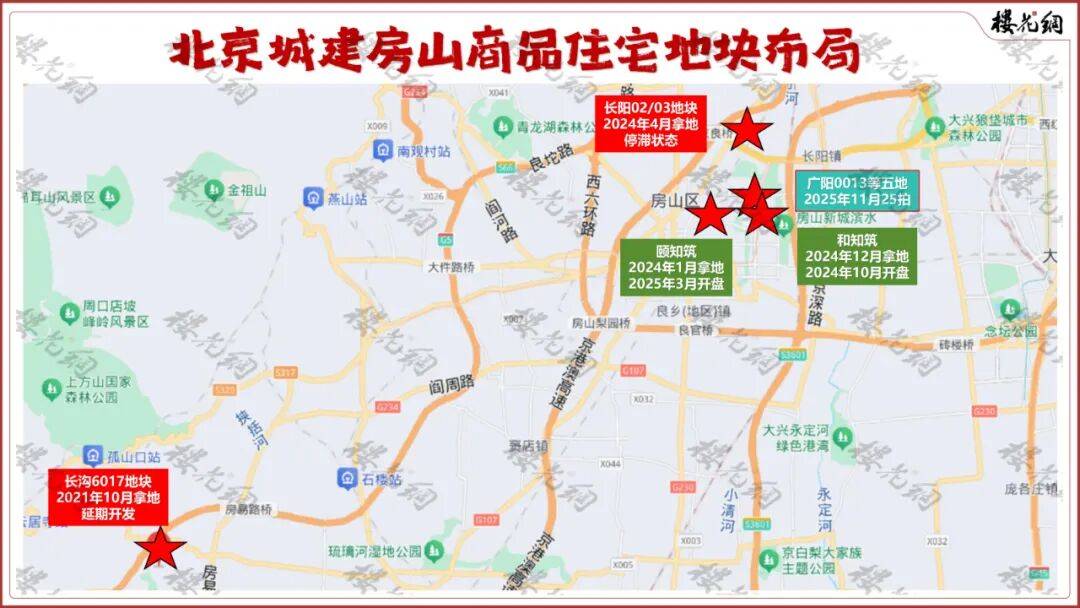
Core Viewpoint - Beijing Urban Construction Group is intensifying its investment in the Fangshan district, with a new land bidding plan for the Guangyang City area, indicating a strategic push despite previous underperformance in the region [2][3]. Group 1: Land Acquisition and Development - Beijing Urban Construction Ruifeng Investment Development Co., Ltd. announced a bidding plan for a land parcel in Guangyang City, covering five plots with a total construction area of approximately 90,000 square meters and an estimated investment of 1.182 billion yuan [2][5]. - The Guangyang City land was quickly added to the supply list on October 17, with pre-application on the same day, and is set for auction on November 25 [2][3]. - The land includes residential, community service, and kindergarten facilities, with a starting price of 1.471 billion yuan and a starting floor price of 15,300 yuan per square meter [5]. Group 2: Changes in Land Use and Planning - The 0016 plot has undergone a change in designation from "other multifunctional land" to "Type II urban residential land," allowing for more flexible planning [6][10]. - The land supply documents encourage high-standard design under the "good housing" criteria, which may include features like elevated first floors and open balconies, marking a significant shift in the local housing market [12][19]. Group 3: Market Impact and Competition - The introduction of the Guangyang City project is expected to impact existing properties in the area, particularly the nearby Hezhizhu and Yizhi projects, which lack certain desirable features [20][21]. - The project is anticipated to set a new standard for housing in Fangshan, potentially affecting the sales of current listings and second-hand properties [20][21]. Group 4: Historical Performance of Beijing Urban Construction - Over the past four years, Beijing Urban Construction has acquired multiple plots in Fangshan, but progress has been slow, with significant delays and low sales performance in existing projects [21][24][27][29]. - The Hezhizhu project has a land price coverage rate of 141%, while the Yizhi project has a dismal sales rate of only 12.88% [24][27].

年底融资潮起,房企备战土储与销售“关键一役”
Bei Ke Cai Jing· 2025-10-23 13:55
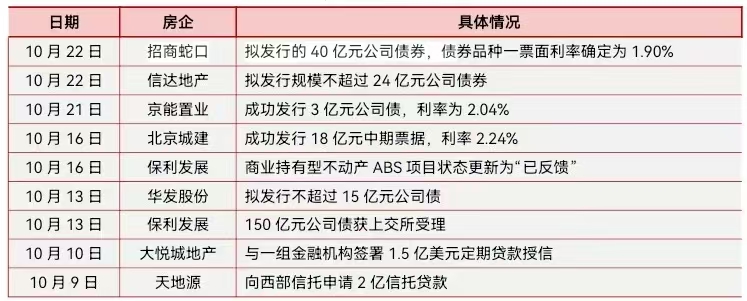
Core Viewpoint - The real estate industry is accelerating financing through various channels such as credit bonds, overseas bonds, and asset securitization to address year-end debt maturity pressures and prepare for future development amid increased supply of quality land parcels [1][3][10]. Financing Trends - In September, the total bond financing in the real estate sector reached 561 billion yuan, marking a year-on-year increase of 31%, with credit bond financing alone amounting to 322 billion yuan, a significant year-on-year growth of 89.5% [3][9]. - The average issuance term for credit bonds in September was 3.65 years, indicating a trend towards longer financing terms, which helps optimize debt structure and alleviate short-term repayment pressures [7]. Company Financing Activities - Several companies are actively issuing bonds, including China Merchants Shekou with a planned issuance of 40 billion yuan at a coupon rate of 1.90%, and China Vanke with a bond issuance of up to 24 billion yuan [6][8]. - Notable issuances include Beijing Urban Construction Group's successful issuance of 18 billion yuan in medium-term notes and Poly Developments' 150 billion yuan bond application accepted by the Shanghai Stock Exchange [6][8]. Challenges in Sales and Cash Flow - Despite the positive financing trends, real estate companies face significant challenges in sales, with a reported 8.4% year-on-year decline in funds received by real estate developers from January to September, particularly in deposits and pre-sales [9][10]. - The ongoing sluggish sales market continues to exert pressure on the overall cash flow of real estate companies, making it crucial for them to balance external financing with internal cash generation [10]. Debt Restructuring Progress - Some distressed real estate companies have made substantial progress in debt restructuring, with over 75% of creditors approving restructuring plans for companies like Longfor Group and Sunac China [8].





两家创始股东齐退场 中关村“拓荒者”北科建未来何往?
2 1 Shi Ji Jing Ji Bao Dao· 2025-10-22 23:08
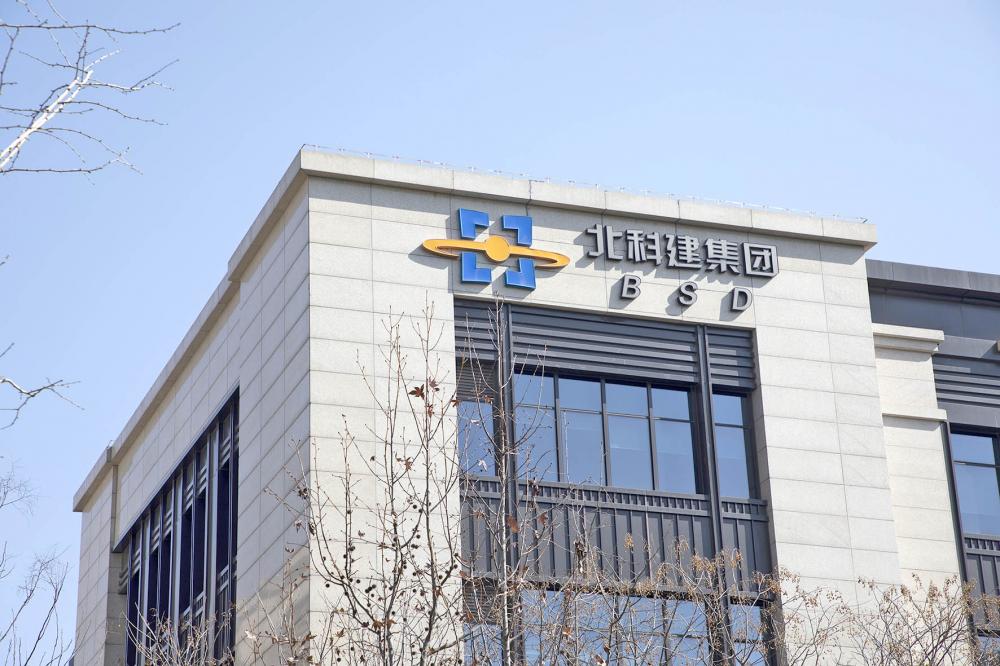
Core Viewpoint - Beijing Urban Development Group and Beijing Construction Investment Development Co. are divesting their stakes in Beijing Science and Technology Park Construction Group, indicating a strategic shift amid declining performance and changing market conditions [1][2][11]. Group 1: Company Background - Beijing Science and Technology Park Construction Group, established in 1999, is a state-owned enterprise known for developing the Zhongguancun Science Park and focusing on industrial park operations and technology real estate [1][4]. - The company has four major shareholders, with Beijing State-owned Assets Management Company holding 69.93%, followed by Jiangsu Bank Suzhou Branch at 17.45%, and the two divesting shareholders, Beijing Urban Development and Beijing Construction Investment, holding 3.38% and 9.24% respectively [5][11]. Group 2: Recent Developments - The divestment aims to optimize asset structure and resource allocation, enhancing operational efficiency as stated by the divesting shareholders [1][2]. - The performance of Beijing Science and Technology Park Construction Group has been declining, with a reported revenue of 70.67 billion yuan in 2024, down 5.99% year-on-year, and a net loss of 54.02 billion yuan [11]. Group 3: Market Context - The divestment occurs against a backdrop of new requirements for state-owned enterprises in Beijing and a significant downturn in the real estate market, marking a critical juncture for the company [2][11]. - The exit of the two state-owned shareholders reflects a broader trend of state-owned enterprises focusing on core businesses and reducing involvement in less efficient operations, aligning with the directive from the State-owned Assets Supervision and Administration Commission [11].

合肥城建发展股份有限公司2025年第三季度报告
Shang Hai Zheng Quan Bao· 2025-10-22 18:17
Core Viewpoint - The company reported a significant decline in net profit and cash flow for the third quarter of 2025, primarily due to decreased gross margins and increased financial expenses [5]. Financial Performance - The net profit attributable to shareholders decreased by 144.55% compared to the same period last year [5]. - The net cash flow from operating activities dropped by 546.32% year-on-year, mainly due to increased payments for land and project costs [5]. Corporate Governance - The company held its 25th meeting of the 8th Board of Directors on October 22, 2025, where the third-quarter report was approved unanimously [7][17]. - The company decided to abolish the supervisory board and have the audit committee of the board perform the supervisory functions as per the Company Law [22][9]. Shareholder Meeting - The company plans to hold its third extraordinary general meeting of shareholders on November 19, 2025, to discuss various proposals, including the amendments to the Articles of Association [25][26]. - The meeting will allow both on-site and online voting, with specific time slots for participation [27][28].

两家创始股东齐退场 “中关村神话”缔造者北科建未来何往?
2 1 Shi Ji Jing Ji Bao Dao· 2025-10-22 11:31
Core Viewpoint - Beijing Urban Development Group and Beijing Construction Investment Development Co. are divesting their stakes in Beijing Science and Technology Park Construction Group, indicating a strategic shift amid declining performance and changing market conditions [1][10]. Group 1: Company Background - Beijing Science and Technology Park Construction Group, established in 1999, is a state-owned enterprise known for developing the Zhongguancun Science Park and focusing on industrial park operations and technology real estate [1][2]. - The company has four major shareholders, with Beijing State-owned Assets Management Company holding 69.93% as the largest shareholder, followed by Jiangsu Bank Suzhou Branch at 17.45% [3]. Group 2: Recent Developments - The divestment by the two state-owned enterprises aims to optimize asset structure and resource allocation, reflecting a broader trend of state-owned enterprises focusing on core business areas [1][10]. - The financial performance of Beijing Science and Technology Park Construction Group has been declining, with a reported revenue of 70.67 billion yuan in 2024, down 5.99% year-on-year, and a net loss of 54.02 billion yuan [10]. Group 3: Market Context - The real estate market has undergone significant adjustments, impacting the company's performance, particularly as its real estate operations are a major revenue source [10]. - The company has faced challenges in land acquisition and project development, with its last public land acquisition occurring in March 2024 for 2.35 billion yuan [9][10]. Group 4: Future Outlook - The exit of the two shareholders may lead to a restructuring of the company, focusing on park operations and light asset services, aligning with the current policy direction for state-owned enterprises to streamline operations [11].
货币宽松时代如何反周期置业?天坛府打开顶序玩家资产配置密码
Sou Hu Cai Jing· 2025-10-21 10:45
Core Viewpoint - The Federal Reserve's decision to lower interest rates in 2025 has triggered a global market response, prompting high-net-worth individuals to reassess their asset allocation strategies, particularly in the residential real estate market [1][3]. Summary by Sections Federal Reserve Actions - In 2025, the Federal Reserve lowered the federal funds rate target range by 25 basis points to 4.00%–4.25%, following three rate cuts in 2024 [1]. Global Market Impact - The rate cut has activated a "hot start" for global markets, significantly affecting capital flows and asset values, with 44% of family offices planning to increase investments in the residential market [1]. Demand for Core Assets - High-net-worth individuals are showing strong interest in "core assets," defined as luxury properties in prime locations of first-tier cities, which are perceived to have robust risk resistance [1][3]. Performance of Luxury Real Estate - The luxury real estate market in China, particularly in first-tier cities like Beijing, Shanghai, Guangzhou, and Shenzhen, is demonstrating strong resilience, with notable sales figures in high-end residential projects [3][4]. Characteristics of Tian Tan Fu - Tian Tan Fu, located in Beijing's inner city, exemplifies a core asset with its unique cultural and historical significance, comprehensive amenities, and high-end living environment [1][4][5]. Market Statistics - From January to May 2025, Shanghai saw 25 "sunshine plates," primarily high-end residential projects priced above 100,000 yuan per square meter. In Beijing, the proportion of properties priced over 10 million yuan increased by 8.7% [3]. Unique Selling Proposition - Tian Tan Fu's location offers access to significant cultural heritage sites and major commercial areas, enhancing its appeal as a luxury residence [4][5]. Supply Constraints - The supply of residential land within Beijing's second ring road has been extremely limited, with only one plot available from 2020 to 2024, further enhancing the value of properties like Tian Tan Fu [5]. Sales Performance - Since its launch in 2021, Tian Tan Fu has dominated Beijing's residential sales, achieving over 34 billion yuan in sales and maintaining a leading position in the market [7][9]. Architectural Design - The project features low-density buildings designed by renowned architects, blending traditional cultural elements with modern living standards, which enhances its market appeal [8][9]. Comprehensive Development - Tian Tan Fu is a large-scale development that integrates residential, commercial, and educational facilities, covering approximately 1 million square meters, which positions it as a model for urban living in Beijing [11][14]. Current Offerings - The project currently has a limited number of high-end units available, catering to high-net-worth individuals seeking stable and quality assets during uncertain economic times [14].