
HAIER SMART HOME(600690)

Search documents
国投证券:海尔智家Q3内销增长提速 外销稳步提升 数字化变革成效持续凸显
Zhi Tong Cai Jing· 2025-11-01 12:09
Core Insights - Haier Smart Home (600690) reported a revenue of 234.05 billion yuan for the first three quarters of 2025, representing a year-over-year increase of 10.0%, and a net profit attributable to shareholders of 17.37 billion yuan, up 14.7% YoY [1][2] - In Q3 alone, the company achieved a revenue of 77.56 billion yuan, a YoY increase of 9.5%, with a net profit of 5.34 billion yuan, reflecting a 12.7% YoY growth [1][2] Revenue Growth - Q3 domestic revenue grew by 10.8% YoY, while overseas revenue increased by 8.3%, compared to H1 growth rates of 8.8% and 11.7% respectively [2] - The domestic market saw a significant boost from popular products and expanded channel touchpoints, with the home air conditioning sector experiencing over 30% revenue growth in Q3 [2] - In overseas markets, rapid growth was maintained in emerging regions such as South Asia, Southeast Asia, and the Middle East, while developed markets like North America and Europe showed stable operations [2] Profitability and Cost Management - Q3 gross margin improved to 27.9%, up 0.1 percentage points YoY, driven by digital transformation in procurement, R&D, and manufacturing in the domestic market, alongside a high-end brand strategy in overseas markets [3] - The company optimized its expense ratio in Q3, with a decrease of 0.1 percentage points in both sales and management expense ratios, leading to a net profit margin of 6.9%, up 0.2 percentage points YoY [3] - Operating cash flow for Q3 was 6.35 billion yuan, an increase of 290 million yuan YoY, attributed to expanded revenue scale and a significant increase in cash received from sales [3] Strategic Outlook - The company is enhancing its incentive mechanisms, which is expected to boost management and employee motivation [3] - Continued focus on global expansion and digital transformation is anticipated to leverage the advantages of a multi-brand, cross-product, and cross-regional balanced layout, driving revenue and profitability growth [3]

国投证券:海尔智家(06690)Q3内销增长提速 外销稳步提升 数字化变革成效持续凸显
智通财经网· 2025-11-01 12:05
Core Insights - Haier Smart Home (06690) reported a revenue of 234.05 billion yuan for the first three quarters of 2025, representing a year-on-year increase of 10.0%, and a net profit attributable to shareholders of 17.37 billion yuan, up 14.7% YoY [1][2] - In Q3 alone, the company achieved a revenue of 77.56 billion yuan, with a YoY growth of 9.5%, and a net profit of 5.34 billion yuan, reflecting a 12.7% increase YoY [1][2] Revenue Growth - Q3 domestic revenue grew by 10.8% YoY, while overseas revenue increased by 8.3% YoY, compared to H1 growth rates of 8.8% and 11.7% respectively [2] - The domestic market saw a significant boost from popular products and competitive product lines, with the home air conditioning sector experiencing over 30% revenue growth in Q3 [2] - In overseas markets, rapid growth was maintained in emerging regions such as South Asia, Southeast Asia, and the Middle East, while developed markets like North America and Europe showed stable operations [2] Profitability and Cost Management - Q3 gross margin improved to 27.9%, up 0.1 percentage points YoY, driven by digital transformation in procurement, R&D, and manufacturing in the domestic market, alongside a high-end brand strategy in overseas markets [3] - The operating expense ratio decreased by 0.1 percentage points YoY, with sales and management expense ratios also down by 0.1 percentage points each, reflecting enhanced operational efficiency [3] - The net profit margin for Q3 was 6.9%, an increase of 0.2 percentage points YoY, indicating improved profitability [3] Cash Flow and Financial Health - Q3 operating cash flow net amount was 6.35 billion yuan, an increase of 290 million yuan YoY, primarily due to expanded revenue scale [3] - Cash received from sales of goods and services increased by 7.62 billion yuan YoY, indicating strong demand from distributors, as evidenced by a 17.9% YoY rise in contract liabilities to 4.15 billion yuan [3] Strategic Outlook - The company is enhancing its incentive mechanisms, which is expected to boost management and employee motivation [3] - Continued focus on global expansion and digital transformation is anticipated to leverage the advantages of a multi-brand, cross-product, and cross-regional strategy, driving revenue and profitability growth [3]
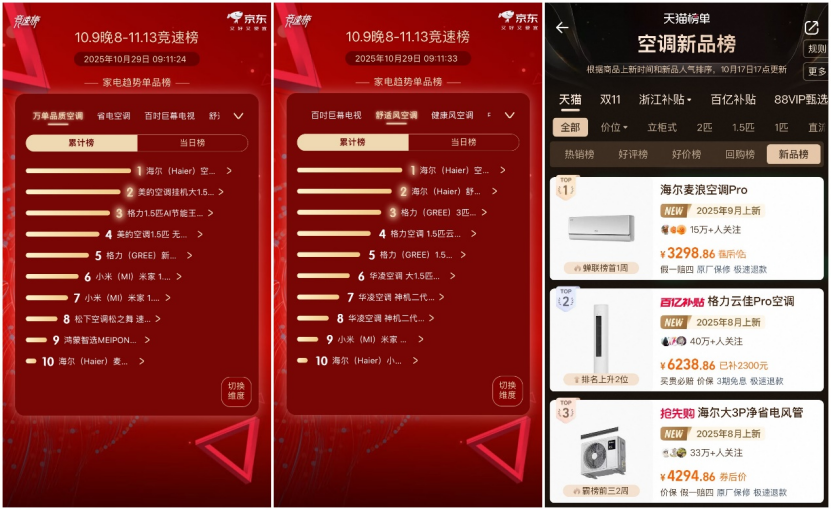
海尔空调制热季多产品位列榜首 增长韧性再现
Zhong Guo Jin Rong Xin Xi Wang· 2025-11-01 09:39
Core Insights - The air conditioning industry is experiencing a new landscape in 2025 due to demand upgrades and technological iterations, with Haier Air Conditioning showing strong performance in both cooling and heating seasons [1][3] Group 1: Performance Overview - Haier Air Conditioning achieved a net sales share growth of 2.5% from January to September, being the only brand among the top three to realize positive growth during the cooling season [1] - During the heating season, Haier's products topped multiple e-commerce rankings, including the "Quality Air Conditioner List" and "Comfort Wind Trend Air Conditioner List" on JD.com, indicating a strong market presence [1][3] Group 2: Innovation and User Engagement - Haier Air Conditioning's strong start in the heating season is attributed to a unique user engagement strategy, including a large-scale user testing event that allowed consumers to interact with AI products directly [3][5] - This innovative marketing approach transformed abstract concepts of technology into tangible experiences for users, enhancing trust and understanding of the products [5] Group 3: Market and Technical Strengths - The company is well-positioned to capitalize on market trends such as energy-saving policies and increasing heating demands in southern regions, aligning its product development with these trends [5][7] - Haier's technological advancements, such as the ability to operate effectively at -35°C and the integration of heating and cooling solutions, address specific consumer needs for winter heating [7] Group 4: User Trust and Brand Advocacy - The trust built through user testing is being leveraged as users share their experiences on social media, effectively becoming brand advocates through real-life demonstrations of product performance [7] - The growth strategy of Haier Air Conditioning is increasingly focused on user needs, supported by technological innovation and enhanced user experiences, setting the stage for continued market success [7]

白电三季报分化:美的重B端,海尔向海外,格力多元化
Bei Ke Cai Jing· 2025-11-01 09:07
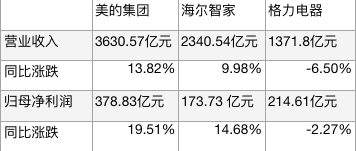
Core Viewpoint - The home appliance industry is experiencing a divergence in performance among major players, with Midea Group and Haier Smart Home showing stable growth, while Gree Electric is facing pressure and a decline in performance in the third quarter of 2025 [1][4]. Group 1: Company Performance - Midea Group reported a revenue of 363.06 billion yuan, a year-on-year increase of 13.82%, and a net profit of 37.88 billion yuan, up 19.51% [5]. - Haier Smart Home achieved a revenue of 234.05 billion yuan, with a growth of 9.98%, and a net profit of 17.37 billion yuan, increasing by 14.68% [5]. - Gree Electric's revenue was 137.18 billion yuan, down 6.50%, and its net profit was 21.46 billion yuan, a decrease of 2.27% [5]. Group 2: Market Trends - The home appliance industry (excluding 3C) saw a retail sales figure of 198.8 billion yuan in Q3 2025, a year-on-year decline of 3.2%, while the total retail sales for the first three quarters reached 670.1 billion yuan, up 5.2% [4]. - The air conditioning market is experiencing intense competition, leading to price wars among brands, with Midea leveraging its Hualing brand and Haier promoting its Tongshuai brand [3][11]. Group 3: Business Strategies - Midea Group's B-end business is outperforming its C-end business, with a 18% growth in ToB revenue compared to 13% in ToC [7]. - Haier Smart Home is deepening its multi-brand strategy, with high-end brand Casarte growing by 18% and Leader brand revenue increasing by 25% [8]. - Gree Electric is expanding its non-air conditioning product lines and has launched new brands targeting the price-sensitive market segment [15]. Group 4: Future Outlook - Analysts expect Midea's humanoid robots to enter offline commercial settings in the second half of the year, focusing on enhancing operational capabilities [10]. - Xiaomi is planning to become a leading brand in the home appliance sector within five years, aiming for a significant market share in air conditioning [14].


百强企业提质增效,青岛经济加速“向新”
Xin Hua Wang· 2025-11-01 02:46
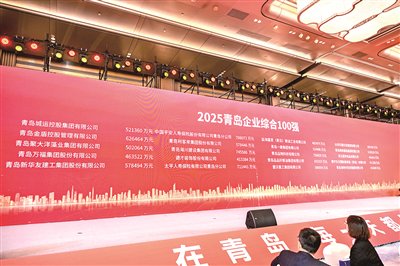
Core Insights - The 2025 Qingdao Top 100 Enterprises list was released, highlighting the resilience and innovation of large enterprises in Qingdao amidst complex economic conditions [3][4] - The manufacturing sector remains a cornerstone of Qingdao's economy, with a significant increase in the number of enterprises achieving over 1 billion yuan in revenue [8][4] Group 1: Enterprise Performance - The threshold for entering the 2025 Qingdao Top 100 was set at 3.943 billion yuan, an increase of 0.14 billion yuan from the previous year [3] - The number of enterprises with revenues exceeding 10 billion yuan remained stable at 46, while those with revenues between 5 billion and 10 billion yuan increased by 3 to a total of 36 [3][4] Group 2: Leading Enterprises - Haier Group topped the list with a revenue of 401.625 billion yuan, becoming the first enterprise in Qingdao to surpass 400 billion yuan in annual revenue [4] - Shandong Neng Chain Holdings emerged as a notable newcomer, ranking 10th with a revenue of 41.088 billion yuan, leveraging digital technologies in the energy sector [4][6] Group 3: Manufacturing Sector Resilience - Manufacturing enterprises accounted for 53.88% of the total revenue of the top 100, an increase of 4.25 percentage points from the previous year [8] - New entrants in the manufacturing sector include Qingdao Fusion Equipment Technology and Qingdao Daan Environmental Protection, showcasing the sector's transition towards high-end and advanced manufacturing [8][9] Group 4: Social Responsibility and Sustainable Development - Qingdao enterprises are actively engaging in green development and social responsibility, with several recognized as model enterprises for their contributions to sustainable practices [11][12] - Companies like Qingdao Financial Group and Haibay Chemical are implementing innovative technologies to reduce energy consumption and promote low-carbon development [11][12]

太平洋给予海尔智家“买入”评级,2025Q3业绩双位数增长表现优秀,数字变革提效深化
Sou Hu Cai Jing· 2025-11-01 02:27
Core Viewpoint - Pacific released a report on November 1, giving Haier Smart Home (600690.SH, latest price: 26.81 CNY) a "Buy" rating based on its strong financial performance and growth prospects in emerging markets and AI-driven operational improvements [1] Financial Performance - For the first three quarters of 2025, Haier Smart Home reported revenue of 234.05 billion CNY, an increase of 15.31% year-on-year, and a net profit attributable to shareholders of 17.37 billion CNY, up 14.64% [1] - In Q3 2025, the company achieved revenue of 77.56 billion CNY, reflecting a growth of 15.16%, with a net profit of 5.34 billion CNY, which is a 12.79% increase [1] - The adjusted net profit for Q3 2025 was 5.19 billion CNY, marking a 14.70% rise [1] Market and Operational Insights - The company is experiencing high growth in emerging markets, particularly in its air conditioning business [1] - AI and digital transformation initiatives are leading to operational efficiency and cost optimization [1]
鲁股观察 | 三季报收官,310家上市公司总盈利超1400亿
Xin Lang Cai Jing· 2025-11-01 01:18
Core Insights - The overall financial performance of Shandong A-share listed companies in Q3 2025 shows a steady growth trend, with total revenue reaching 22,983.85 billion yuan and net profit attributable to shareholders at 1,411.62 billion yuan, reflecting year-on-year increases of 5.22% and 0.85% respectively [1][2] Group 1: Profitability and Performance - Over 80% of Shandong stocks achieved profitability in the first three quarters, with 32 companies reporting net profits exceeding 1 billion yuan [2] - Haier Smart Home led with a net profit of 173.73 billion yuan, followed by Wanhua Chemical at 91.57 billion yuan, and several other companies exceeding 50 billion yuan in profits [2] - Some industry leaders, like Yanzhou Coal, faced profit declines due to cyclical industry impacts, while others, such as Zhongji Xuchuang, benefited from emerging technologies like AI, resulting in significant profit increases [2][3] Group 2: Sector Analysis - Consumer sectors exhibited less cyclical volatility, with leading companies maintaining stable performance and relatively low valuations, making them attractive for investment [3] - Haier Smart Home has shown consistent growth since its listing, achieving a record net profit this year, attributed to operational efficiency and digital transformation initiatives [3] Group 3: Impact of Technological Innovation - Approximately half of the Shandong stocks reported year-on-year profit growth, with 31 companies seeing profits more than double [4] - Hengyu Environmental's profit surged by 17,879.81% due to increased production capacity driven by UK orders, highlighting the role of technological innovation in driving performance [4] - Companies like Xianda Co. and Tianneng Heavy Industry also reported significant profit increases, showcasing the impact of product pricing and operational reforms on profitability [4] Group 4: Market Trends - The A-share market has seen a significant rise, with the Shanghai Composite Index increasing over 40% since September 2022, driven by technology stocks [5] - The current technological revolution and industrial transformation are seen as key factors in enhancing productivity and economic growth, supported by financial mechanisms [5]




伤敌一千自损八百?价格战后Q3遇冷:白电三巨头业绩继续分化
Hua Xia Shi Bao· 2025-10-31 21:37
Core Insights - The financial performance of China's major white goods manufacturers, Midea Group, Haier Smart Home, and Gree Electric Appliances, has shown significant divergence in Q3 2023, with Gree experiencing declines in both revenue and net profit, while Midea and Haier reported growth in these metrics [2][3][4]. Financial Performance - Midea Group reported revenue of approximately 363.1 billion yuan, a year-on-year increase of 13.82%, and a net profit of about 37.9 billion yuan, up nearly 20% [2]. - Haier Smart Home's revenue was close to two-thirds of Midea's, with a year-on-year growth of nearly 10%, and a net profit of 17.4 billion yuan, reflecting a 14.68% increase [2]. - Gree Electric Appliances saw revenue of about 137.2 billion yuan, a decline of 6.5%, and a net profit of approximately 21.5 billion yuan, down 2.27% [3]. Market Conditions - Q3 2023 was characterized by a challenging environment for the white goods market, with significant differentiation in performance among the major players [4][5]. - The overall market for large home appliances showed a mixed performance, with air conditioning sales growing by about 3%, while washing machines and refrigerators saw declines of approximately 16% and 30%, respectively [4][5]. - The decline in Gree's financial metrics is attributed to its heavy reliance on air conditioning sales, which faced intense price competition [5][6]. Pricing Strategies - Major brands, including Gree, Midea, and Haier, have reduced their air conditioning prices in response to market pressures, with average prices dropping by 7% to 11% year-on-year [6]. - The entry of new competitors, such as Xiaomi, has intensified competition in the air conditioning market, impacting the sales of established brands [6][7]. Export Challenges - The export market for white goods, particularly air conditioning units, has also faced challenges, with a reported 12.9% decline in export volumes in Q3 [7]. - High inventory levels in certain overseas markets have contributed to this downturn, alongside increased competition from new entrants [7]. Future Outlook - The upcoming Q4, which includes the Double Eleven shopping festival, may not yield significant improvements for the white goods sector due to high comparative bases from the previous year and ongoing price wars [8]. - Analysts express skepticism about the effectiveness of promotional strategies in stimulating demand, given the current market conditions [8].

海尔智家(600690):经营效率持续提升,全球化布局加速深化
Shenwan Hongyuan Securities· 2025-10-31 14:21
Investment Rating - The investment rating for Haier Smart Home is "Buy" (maintained) [2] Core Insights - Haier Smart Home's Q3 performance exceeded expectations, with total revenue of 234.05 billion yuan for the first three quarters of 2025, representing a year-on-year growth of 10%. The net profit attributable to shareholders reached 17.37 billion yuan, up 15% year-on-year [7] - The company continues to enhance operational efficiency, achieving a gross margin of 27.2% in the first three quarters, a slight increase of 0.1 percentage points year-on-year. Operating cash flow also improved, with a net cash flow of 17.49 billion yuan, up 21% [7] - The report maintains profit forecasts for 2025-2027, expecting net profits of 21.55 billion, 24.78 billion, and 28.50 billion yuan respectively, with a consistent growth rate of 15% [7] Financial Data and Profit Forecast - Total revenue projections for Haier Smart Home are as follows: - 2025E: 305.13 billion yuan - 2026E: 323.38 billion yuan - 2027E: 341.89 billion yuan - Net profit forecasts are: - 2025E: 21.55 billion yuan - 2026E: 24.78 billion yuan - 2027E: 28.50 billion yuan - The expected earnings per share (EPS) for 2025E is 2.30 yuan, with a projected PE ratio of 12 [6][9]
海尔智家:截至10月底累计回购4048.25万股A股
Zhi Tong Cai Jing· 2025-10-31 14:16
海尔智家(600690)(06690)发布公告,2025年10月当月,公司未实施A股(下同)股份回购;本次回购实施 起始日(2025年4月7日)至2025年10月底,公司已累计回购股份4048.25万股,占公司总股本的比例为 0.431%,购买的最高价为26.64元/股、最低价为23.60元/股,支付的金额为10.17亿元。 ...