
Shede Spirits (600702)

Search documents
2025白酒年度事件大盘点:告别高增长,行业挑战下的变革与新机
Sou Hu Cai Jing· 2025-12-31 14:12
Core Insights - The Chinese liquor industry is entering an adjustment phase in 2025, facing challenges such as the "ban on alcohol," rising inventory pressure, and declining profits, yet opportunities for growth are emerging through innovation and market expansion [2][4]. Policy Impact - A strict "ban on alcohol" policy was introduced, prohibiting public officials from consuming alcohol during workdays and even at home gatherings, with severe penalties for violations [2][4]. - This policy aims to curb corruption and address public health concerns related to alcohol consumption [4]. Digital Transformation - Leading liquor companies are advancing their digital transformation from isolated upgrades to comprehensive collaborative development, with initiatives like the first "lighthouse factory" by Luzhou Laojiao and 5G-connected factories by Shede [5]. - The Ministry of Industry and Information Technology has released guidelines for digital transformation in the liquor industry, with companies actively contributing to industry mapping [5]. ESG Practices - ESG efforts among listed liquor companies have shifted from compliance to value creation, with companies like Zhenjiu Li Du setting ambitious carbon neutrality goals and achieving high water recycling rates [7]. - Companies are integrating ESG principles into performance assessments and utilizing blockchain for product traceability [7]. Market Dynamics - The liquor market is experiencing severe inventory issues, with major companies implementing supply control measures and channel reforms to reshape pricing structures [8][10]. - In the first three quarters of 2025, liquor exports reached $704 million, a 5.3% increase year-on-year, indicating a growing international market [8][10]. Young Consumer Trends - The younger generation is increasingly favoring low-alcohol and flavored beverages, with participation rates among Gen Z rising from 66% in 2023 to 73% in 2025 [12]. - Major companies are launching low-alcohol products to cater to this demographic, with Wuliangye and Luzhou Laojiao leading the way [12]. Personnel Changes - The liquor industry is undergoing significant personnel changes, with over 20 companies experiencing nearly 30 key position shifts, indicating a trend towards younger management [14][16]. - The new management is expected to focus on refined operations and innovation to navigate industry pressures [16]. Financial Performance - In the first nine months of 2025, only two companies, Kweichow Moutai and Shanxi Fenjiu, reported positive net profit growth, while the average profit of 20 liquor companies fell by 39.2% [18]. - The average inventory turnover days for these companies surged to 1456.29 days, marking a significant increase from the previous year [18]. Health-Oriented Products - The health-oriented liquor market is gaining traction, with sales of functional products like Jinjian's red label liquor increasing by 50% in the first half of the year [20]. - However, the market faces challenges such as product homogeneity and compliance risks, with a projected market size exceeding 58 billion yuan [22]. Price Fluctuations - Moutai's price fell below the official guidance price of 1499 yuan per bottle in December 2025, raising concerns about future price trends [22]. - Following a price drop, Moutai's wholesale prices rebounded due to supply control measures and increased market demand during the peak season [24].








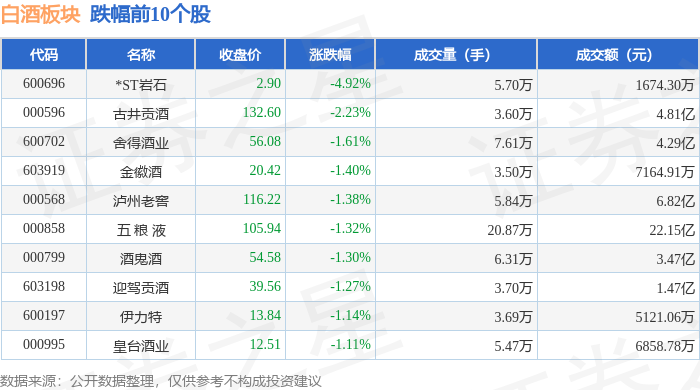
白酒板块12月31日跌1.01%,*ST岩石领跌,主力资金净流出15.73亿元
Zheng Xing Xing Ye Ri Bao· 2025-12-31 08:59
Core Viewpoint - The liquor sector experienced a decline of 1.01% on December 31, with *ST Yanshi leading the drop, while the overall market showed mixed results with the Shanghai Composite Index up by 0.09% and the Shenzhen Component Index down by 0.58% [1] Liquor Sector Performance - The closing prices and percentage changes for key liquor stocks are as follows: - *ST Yanshi: 2.90, -4.92% - Gujing Gongjiu: 132.60, -2.23% - Shede Manye: 56.08, -1.61% - Quanwei Jiu: 20.42, -1.40% - Luzhou Laojiao: 116.22, -1.38% - Wuliangye: 105.94, -1.32% - Zhisi Cha: 54.58, -1.30% - Yingjia Gongjiu: 39.56, -1.27% - Yilite: 13.84, -1.14% - Huangtai Jiuye: 12.51, -1.11% [1] Capital Flow Analysis - The liquor sector saw a net outflow of 1.573 billion yuan from main funds, while retail investors contributed a net inflow of 712 million yuan [1] - The detailed capital flow for selected stocks indicates: - Gujing Gongjiu: Main net inflow of 5.437 million yuan, retail net inflow of 2.302 million yuan - *ST Yanshi: Main net outflow of 4.866 million yuan, retail net inflow of 4.265 million yuan - Other stocks like Jinzhongzi Jiu and Kuozi Jiao experienced significant net outflows from main and retail funds [2]


舍得酒业(600702) - 舍得酒业2026年第一次临时股东会会议材料
2025-12-30 08:15
舍得酒业股份有限公司 2026 年第一次临时股东会 会议材料 股票简称:舍得酒业 股票代码:600702 2026 年 1 月 13 日 | | | 一、2026 年第一次临时股东会会议议程 .................................. 1 议案一:《关于选举谢佑平先生为公司第十一届董事会独立董事的议案》 ..... 3 舍得酒业 2026 年第一次临时股东会会议材料 2026 年第一次临时股东会会议议程 一、本公司董事会拟以现场投票和网络投票相结合的方式召开舍得酒业股份 有限公司 2026 年第一次临时股东会。 (一)现场会议召开的日期、时间和地点 召开的日期时间:2026 年 1 月 13 日 9 点 30 分 召开地点:公司艺术中心会议室 参会人员:公司股东及股东代表、公司董事、高级管理人员及公司聘请的律 师等。 (二)网络投票的系统、起止日期和投票时间 二、2026 年第一次临时股东会会议议案 二、会议议程: (一)主持人介绍到会情况,介绍到会董事、高级管理人员情况及本次会议的 见证律师;宣布会议开始。 (二)宣读议案:审议《关于选举谢佑平先生为公司第十一届董事会独立董事 的议 ...
观酒 头部酒企集体押注低度化,白酒降度能让年轻人买账吗?
Nan Fang Du Shi Bao· 2025-12-29 07:29
Core Insights - The Chinese liquor industry is undergoing significant transformation in 2025, driven by high channel inventory and weak terminal sales, alongside new opportunities arising from changing policies, consumption patterns, and scenarios [1] - The trend towards "lower alcohol content" is becoming mainstream, with major liquor companies launching new low-alcohol products to attract younger consumers [3][4] Industry Trends - The low-alcohol wave in the liquor industry has evolved from sporadic attempts to a concentrated effort, with major brands like Wuliangye and Luzhou Laojiao leading the charge [4][10] - Wuliangye's launch of the 29-degree "Wuliangye·Yijianqingxin" has set a precedent, achieving over 100 million yuan in sales within two months [4] - Other companies, such as Shede and Gujing Gongjiu, are also introducing low-alcohol products targeting specific consumption scenarios, indicating a shift in marketing strategies [6][8] Consumer Behavior - The shift towards low-alcohol products is largely driven by generational changes in consumer behavior, with younger consumers preferring lighter, more comfortable drinking experiences [11][13] - The younger demographic, particularly those born between 1985 and 1994, now constitutes a significant portion of the liquor consumer base, leading to a demand for products that align with their lifestyle [11] Market Dynamics - The industry is facing challenges such as high inventory levels and sluggish sales, prompting companies to seek new growth avenues through low-alcohol offerings [13] - The trend towards lower alcohol content is also seen as a response to increasing health consciousness among consumers, who are more sensitive to the burdens of alcohol consumption [13][14] Strategic Implications - The low-alcohol trend is not merely about reducing alcohol content but involves a comprehensive restructuring of product offerings, including fruit wines and sparkling liquors [10][14] - Companies are exploring international markets for low-alcohol products, which may facilitate cultural export and align with global drinking preferences [14] Challenges Ahead - Despite the momentum, the industry faces the challenge of ensuring that lower alcohol products resonate with younger consumers, who may not be willing to pay for them if they lack flavor innovation [15][16] - The need for emotional connection and cultural relevance remains critical, as traditional liquor culture may alienate younger consumers [15][17]

舍得酒业斩获金融界“金智奖”消费者信赖产品 破局低度酒难题引领消费新趋势
Jin Rong Jie· 2025-12-29 02:35
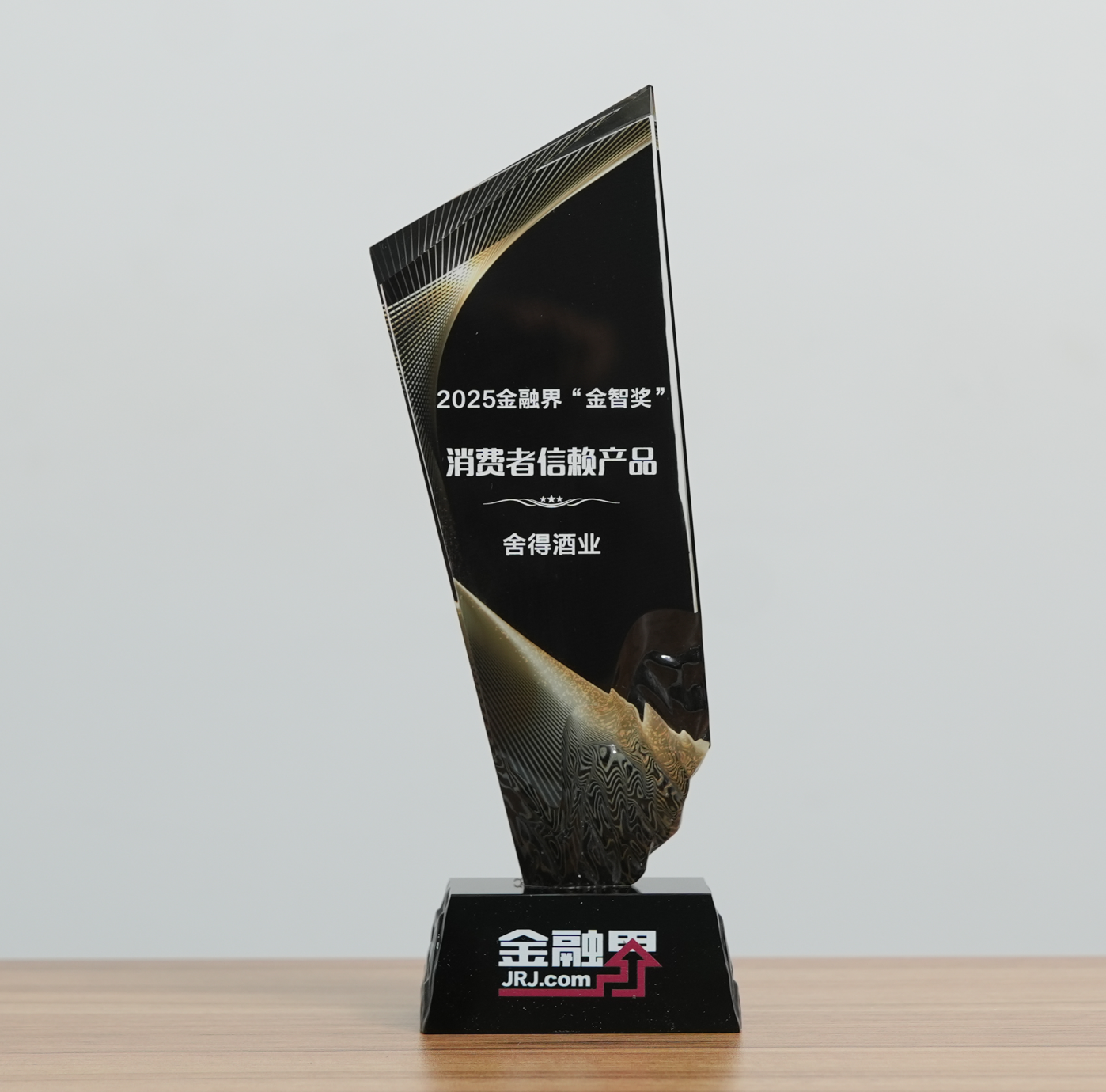
Group 1 - The "Qihang·2025 Financial Summit" was successfully held in Beijing, focusing on the theme of "New Starting Point, New Momentum, New Journey," gathering hundreds of leaders and guests from regulatory bodies, industry associations, financial institutions, listed companies, and media [1] - The 14th "Jinzhi Award" results were announced, with Shede Liquor winning the "Consumer Trust Product" award, highlighting its commitment to quality and innovation [1][3] Group 2 - The "Jinzhi Award" aims to set benchmarks for high-quality development, guiding listed companies to focus on their core business, innovate continuously, and fulfill social responsibilities, with nearly 200 companies recognized from over 8,000 evaluated [3] - The "Consumer Trust Product" award emphasizes product quality, innovation, safety, after-sales service, brand integrity, and social responsibility, aiming to enhance consumer confidence and promote high-quality market development [4] Group 3 - Shede Liquor's award signifies its development path based on quality and innovation, establishing strong brand credibility and becoming a trusted industry model [5] - The company has focused on the aged liquor strategy, creating a competitive edge with high-quality aged liquor and filling industry gaps with new standards [5][6] - Shede Liquor has expanded its product matrix, achieving growth in both high-end and mass markets, with strategic products driving revenue increases [5] Group 4 - In response to changing consumer preferences, Shede Liquor launched the industry's first low-alcohol aged liquor, "Shede Zizai," and introduced innovative products like the "Shede Blind Box" to engage younger consumers [6] - The company plans to continue its commitment to quality, deepen its aged liquor strategy, and innovate products and experiences while connecting emotionally with modern consumers [6]
舍得酒业:2026年1月13日召开2026年第一次临时股东会
Zheng Quan Ri Bao Wang· 2025-12-26 12:43
Group 1 - The company, Shede Liquor (stock code 600702), announced that it will hold its first extraordinary general meeting of shareholders in 2026 on January 13 [1]
赋能绿色酿造 | 舍得酒业光伏项目顺利并网发电
Xin Lang Cai Jing· 2025-12-26 12:23
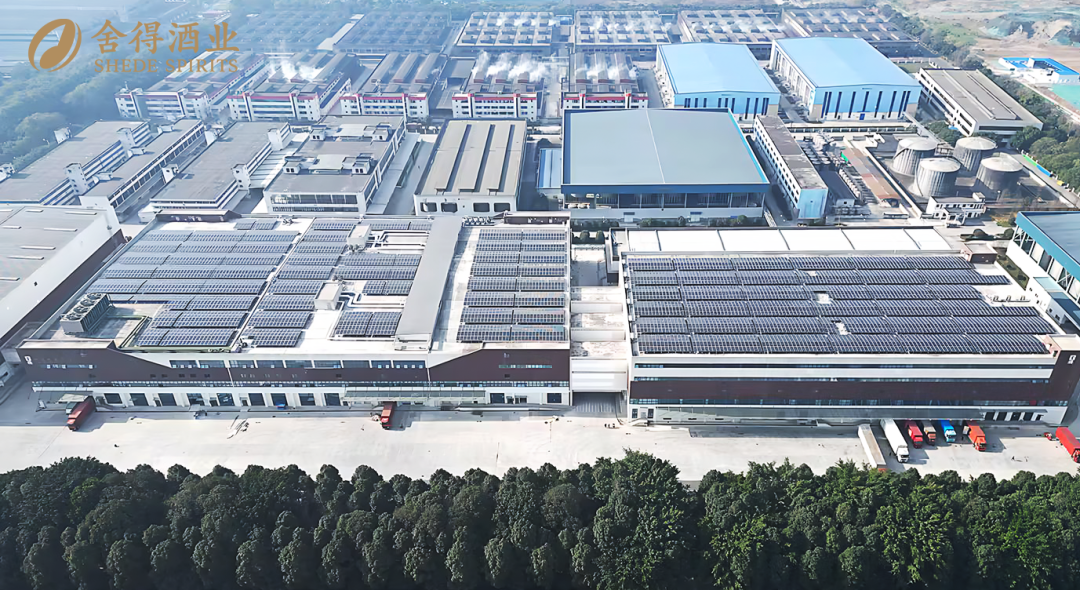
Core Viewpoint - Shede Liquor has successfully completed and connected its distributed photovoltaic power generation project, marking a significant step in its efforts towards energy conservation, carbon reduction, and sustainable development [1][2][3]. Group 1: Project Details - The distributed photovoltaic project covers an area of 25,000 square meters and has an installed capacity of 5.5 megawatts, with an expected annual power generation of 4.5 million kilowatt-hours [3][5]. - The project is anticipated to reduce carbon emissions by 240 metric tons of CO2 equivalent per year [3][5]. Group 2: Strategic Integration - Shede Liquor has integrated green development into its strategic planning and daily operations, establishing a clear path for carbon peak and carbon neutrality [3][5]. - Initiatives include the installation of solar street lights within the factory area and the promotion of electric vehicles, showcasing the company's commitment to exploring and applying green energy [3][5]. Group 3: Future Commitment - The company aims to continue embedding sustainable development principles into every aspect of its production and operations, focusing on ecological priority and high-quality green low-carbon development [3][5]. - Shede Liquor intends to contribute more "Shede wisdom" and "Shede strength" to the industry's green transformation and to create more green products for a better life [3][5].
舍得酒业(600702):首次覆盖报告:保持定力,强化内功,蓄势待发
Shanghai Aijian Securities· 2025-12-26 11:44
Investment Rating - The report assigns an initial investment rating of "Buy" for the company [2][3]. Core Views - The company is expected to achieve revenues of 4.77 billion, 5.16 billion, and 5.73 billion yuan for the years 2025, 2026, and 2027, respectively, with year-on-year growth rates of -10.9%, 8.1%, and 11.0%. The net profit attributable to shareholders is projected to be 520 million, 598 million, and 742 million yuan for the same years, with growth rates of 50.3%, 15.0%, and 24.2% [3][5]. - The company maintains a long-term strategy focused on "strong sales, promoting opening bottles, and destocking," which is expected to yield benefits as policy pressures ease and industry demand recovers [3][4]. - The Chinese liquor industry is experiencing steady growth, with sales revenue from large-scale liquor enterprises reaching 756.3 billion yuan in 2023, and a compound annual growth rate (CAGR) of 9.8% from 2016 to 2023 [3][4]. Summary by Relevant Sections Financial Data and Profit Forecast - Total revenue for 2023 is reported at 7.08 billion yuan, with a year-on-year growth rate of 16.9%. However, a significant decline of 24.3% is expected in 2024, followed by a recovery in 2025 with a projected growth of -10.9% [5][18]. - The gross profit margin is expected to decrease from 74.5% in 2023 to 63.0% in 2025, before stabilizing around 65.0% by 2027 [5][18]. - The return on equity (ROE) is projected to improve from 5.1% in 2024 to 8.6% in 2027 [5][18]. Industry and Company Analysis - The company focuses on mid-to-high-end liquor and ordinary liquor, with a product matrix that includes the "Shede" series targeting the mid-to-high-end market and the "Tuopai" series catering to the mass market [3][4]. - In the first three quarters of 2025, the company reported revenues of 3.7 billion yuan, with mid-to-high-end liquor contributing 2.66 billion yuan, accounting for 71.9% of total revenue [3][4]. - The company has implemented proactive destocking measures, which have shown effectiveness in improving channel health and preparing for future growth [3][4]. Growth Catalysts - The report identifies several catalysts for growth, including the nearing end of proactive destocking, the trend towards lower alcohol consumption appealing to younger demographics, and ongoing cost reduction and efficiency improvement initiatives [4].
舍得酒业绿色转型加速,“魏家营废水处理中心”投运进入倒计时
Bei Ke Cai Jing· 2025-12-26 11:36
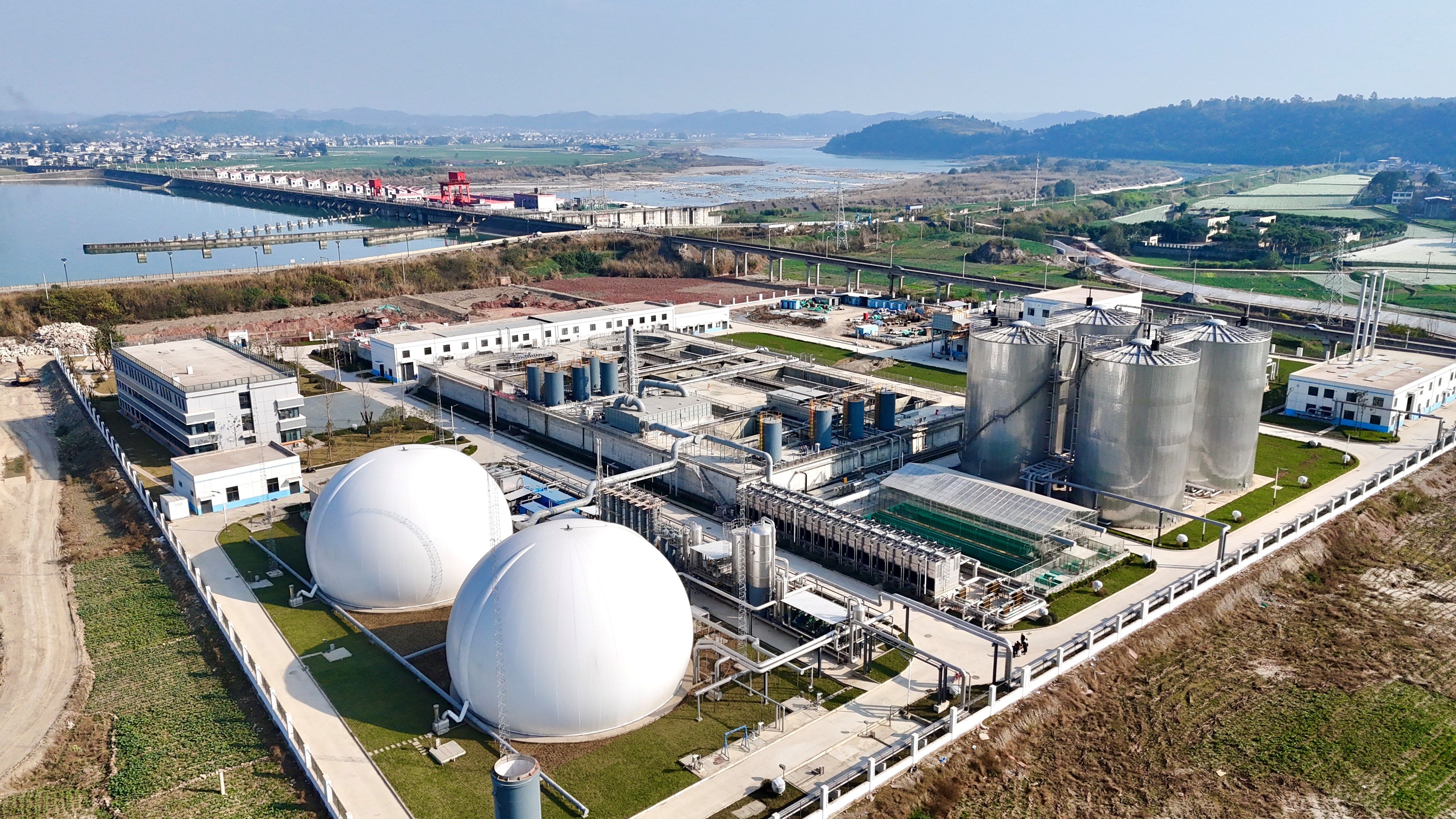
Core Viewpoint - The article emphasizes the commitment of Shede Distillery to green development as a key aspect of China's modernization, highlighting its efforts in ecological brewing and sustainable practices to promote regional economic growth and environmental protection [1]. Group 1: Environmental Initiatives - Shede Distillery is accelerating the construction of the Weijia Ying Wastewater Treatment Center, with a total investment of approximately 390 million yuan, expected to be operational by January next year, capable of treating 12,000 tons of wastewater daily, and up to 18,000 tons in the long term [2]. - The Weijia Ying Wastewater Treatment Center is a core supporting project for Shede Distillery's production expansion, benefiting from comprehensive policy support from local governments [4]. - The design of the wastewater treatment center saves 6,500 square meters of land and achieves energy cascading utilization, making the project a low-carbon model [5]. Group 2: Technological Advancements - The center features an AI control system that significantly enhances the precision of chemical dosing in wastewater treatment, improving response speed by 300 times compared to traditional methods [5]. - The project includes a biogas purification system that can convert methane generated during wastewater treatment into bio-natural gas, with an annual utilization capacity of approximately 10 million cubic meters, reducing carbon dioxide emissions by 19,500 tons [6]. Group 3: Resource Utilization and Circular Economy - The project addresses sludge disposal challenges through low-temperature belt drying technology, controlling sludge moisture content below 30%, thus facilitating resource reuse [8]. - The Weijia Ying Wastewater Treatment Center will not only handle Shede Distillery's wastewater but also accept wastewater from other enterprises in the park, contributing to regional ecological protection [9]. Group 4: Industry Impact and Recognition - The project aligns with China's dual carbon goals and represents a significant step in the green transformation of the liquor industry, showcasing Shede Distillery's leadership in sustainable development [10]. - The project has been approved by the World Bank as part of China's renewable energy promotion project, indicating international recognition of Shede Distillery's ESG practices [11]. - The establishment of this "environmental fortress" supports Shede Distillery's long-term strategy and enhances local ecological protection and cultural tourism development [12].
舍得酒业(600702) - 舍得酒业关于提名独立董事候选人、选举职工代表董事的公告
2025-12-26 10:45
证券代码:600702 证券简称:舍得酒业 公告编号:2025-056 舍得酒业股份有限公司 关于提名独立董事候选人、选举职工代表董事的公告 经公司第十一届董事会提名委员会第五次会议及第十一届董事会第十九次会 议审议通过,公司董事会提名谢佑平先生为公司第十一届董事会独立董事候选人 (简历附后),任期自公司股东会审议通过之日起至第十一届董事会任期届满之日 止。根据《上市公司独立董事管理办法》的有关规定,谢佑平先生的任职资格尚需 上海证券交易所审核无异议。本事项尚需提交公司股东会审议。 公司董事会提名委员会发表如下意见:谢佑平先生具备担任上市公司独立董事 所需的任职条件、专业背景和工作经验,其任职资格符合相关法律、行政法规、规 范性文件的要求。我们一致同意提名谢佑平先生为公司第十一届董事会独立董事候 选人,任期自公司股东会审议通过之日起至第十一届董事会届满之日止,并同意将 本议案提交董事会审议。 二、关于选举职工代表董事的情况 经公司第二届职工代表大会第十七次全体会议审议通过,同意选举刘强先生为 公司第十一届董事会职工代表董事(简历附后),任期自本次职工代表大会选举通 1 过之日起至第十一届董事会任期届满之日止。 ...