
CNOOC(600938)

Search documents
A股异动,盘中集体拉升,发生了啥
Zheng Quan Shi Bao· 2025-11-03 08:16
Group 1: Oil Sector Performance - The oil sector experienced a significant rally, with companies like China National Offshore Oil Corporation (CNOOC) and China Petroleum gaining over 5% and 4% respectively [1][5] - The performance of the "Big Three" oil companies (China National Petroleum, China Petroleum & Chemical, and CNOOC) showed resilience compared to international peers, with their net profit declines being less severe during the third quarter [5][6] - Analysts noted that the integrated refining projects of China National Petroleum and China Petroleum & Chemical are progressing, enhancing their competitive edge in the refining sector [6] Group 2: Coal Sector Dynamics - The coal sector mirrored the oil sector's upward movement, with companies like Antai Group and Jinkong Coal Industry hitting their daily price limits [8][10] - Recent increases in coal prices are attributed to supply constraints and rising demand due to seasonal heating needs, with coal prices expected to rise further [10][11] - Analysts believe that the current coal market is at the beginning of a new upward cycle, with strong fundamentals and policies supporting the sector [10][11]






A股异动!盘中,集体拉升!发生了啥?
券商中国· 2025-11-03 08:06
Group 1: Oil Sector Performance - The oil sector experienced a significant rally, with companies like China National Offshore Oil Corporation (CNOOC) and China Petroleum gaining over 5% and 4% respectively [1][4] - The performance of the "Big Three" oil companies (China National Petroleum, China Petroleum & Chemical, and CNOOC) showed resilience compared to international peers, indicating a strong long-term investment value [1][4] - Despite a decline in net profit growth for the "Big Three" in the first three quarters, their performance during the downturn in oil prices demonstrated a certain cyclical resilience [4][5] Group 2: Coal Sector Dynamics - The coal sector mirrored the oil sector's upward movement, with companies like Antai Group and Jinkong Coal Industry seeing significant gains, including a near 8% rise for Jinkong [7][9] - Recent increases in coal prices are attributed to supply constraints and rising demand due to seasonal factors, particularly heating needs in northern regions [9][10] - Analysts suggest that the current coal prices are at historical lows, providing room for potential rebounds, especially as the market enters a new cycle of upward momentum [9][10]


石油板块拉升,惠博普、洲际油气涨停,中国海油等走高
Zheng Quan Shi Bao Wang· 2025-11-03 07:12
Group 1 - The oil sector experienced a strong rally on the 3rd, with companies like Huibo and Intercontinental Oil hitting the daily limit, while China National Offshore Oil Corporation (CNOOC) and China Petroleum gained over 4% [1] - By the third quarter of 2025, the oil and gas equivalent production of China Petroleum, Sinopec, and CNOOC is expected to grow by 2.6%, 2.2%, and 6.7% year-on-year, respectively [1] - The "Big Three" oil companies will continue to enhance reserves and production, with planned growth in oil and gas equivalent production of 1.6%, 1.5%, and 5.9% for China Petroleum, Sinopec, and CNOOC by 2025 [1] Group 2 - The refining sector is transitioning towards low-cost "oil conversion" and high-value "oil specialty," with sales divisions actively transforming into comprehensive energy service providers [1] - China Petroleum and Sinopec have accelerated the construction of refining integration projects, with new material projects progressing rapidly, which is expected to strengthen their competitive edge in the refining sector [1] - The "anti-involution" policy is entering a deep governance phase in specific industries, with the petrochemical sector likely to see further implementation, leading to the accelerated clearance of refining capacity below 200,000 tons [1] Group 3 - Everbright Securities maintains a positive long-term outlook on the "Big Three" oil companies and oil service sectors, citing a favorable supply-demand balance for crude oil amid geopolitical uncertainties [2] - The recovery of the macro economy is expected to boost chemical demand, with long-term capacity clearance benefiting leading enterprises in the sector [2] - The profitability of large-scale refining, coal chemical, and ethylene is anticipated to improve in the long run [2]

资金涌入高股息资产 A股市场再现大象起舞行情
Zhong Guo Zheng Quan Bao· 2025-11-03 06:37
Group 1: Market Trends - The recent market discussion revolves around the concept of "high-low switching," with leading stocks in computing power experiencing a collective surge last Friday [1] - On the other hand, leading stocks in sectors such as new energy and non-ferrous metals, including CATL and Zijin Mining, saw declines today [1] - Major banks, including Industrial and Commercial Bank of China and Agricultural Bank of China, experienced an increase in stock prices, reflecting a strong performance in high-dividend assets [1] Group 2: Oil and Gas Sector - The oil and gas extraction sector showed significant strength, with major players like PetroChina and CNOOC seeing stock price increases of 4.15% and 4.94% respectively [2] - OPEC+ is expected to pause production increases in the first quarter of next year, as the organization balances market share and signs of oversupply [2] - For the first three quarters, PetroChina reported a net profit of 126.28 billion yuan, Sinopec 29.98 billion yuan, and CNOOC 10.20 billion yuan, with all three companies focusing on increasing reserves and production [2] Group 3: Coal Sector - The coal sector has seen significant gains, with companies like Antai Group and Lu'an Environmental Energy experiencing substantial stock price increases [3] - Coal prices have been recovering since the third quarter, with prices for 5500 kcal thermal coal and coking coal rebounding to 674 yuan/ton and 1555 yuan/ton respectively [3] - The coal industry's long-term support is attributed to the rigid supply and rising costs, with companies maintaining healthy balance sheets and improved dividend ratios [3]
石油股涨幅居前 OPEC+明年一季度暂停增产 三桶油业绩相较海外巨头韧性凸显
Zhi Tong Cai Jing· 2025-11-03 06:33
Group 1 - Oil stocks have seen significant gains, with China National Petroleum (601857) up 3.62% to HKD 8.31, China National Offshore Oil (600938) up 3.69% to HKD 20.5, Shanghai Petrochemical (600688) up 1.5% to HKD 1.35, and Sinopec (600028) up 1.45% to HKD 4.19 [1] - OPEC+ announced that eight member countries led by Saudi Arabia will increase production by 137,000 barrels per day in December, consistent with the increases in October and November, but will pause production increases from January to March next year due to seasonal factors [1] - Following the OPEC+ announcement, Brent crude oil prices rose above USD 65 per barrel, while WTI crude oil hovered around USD 61 per barrel [1] Group 2 - According to a report from Everbright Securities, by Q3 2025, international oil and gas giants will experience a year-on-year decline in operating performance due to falling oil prices and low refining margins, with ExxonMobil, Chevron, Shell, and Total reporting net profit declines of -14.3%, -33.9%, -9.6%, and -13.4% respectively [2] - China's three major oil companies (China National Petroleum, China National Offshore Oil, and Sinopec) showed a smaller decline in net profit compared to many international oil and gas giants during the oil price downturn, highlighting their operational resilience [2] - The three major oil companies continue to strengthen their reserves and production, indicating long-term value [2]
A股突变,发生了什么?
天天基金网· 2025-11-03 05:24
Market Overview - The recent market discussion has focused on the "high-low switch" as A-share companies have completed their Q3 reports, with significant movements in various sectors [3][4] - The A-share market saw the Shanghai Composite Index rise by 0.05%, while the Shenzhen Component Index and the ChiNext Index fell by 1.06% and 1.37%, respectively [4][5] - The mining sector showed strength, particularly in oil and gas extraction, with major companies like PetroChina and Sinopec experiencing notable increases in stock prices [5][6] Oil and Gas Sector - In Q3, major oil companies reported substantial profits: China National Petroleum Corporation (CNPC) achieved a net profit of 126.28 billion yuan, Sinopec reported 29.98 billion yuan, and China National Offshore Oil Corporation (CNOOC) reached 101.97 billion yuan [8] - The "three barrels of oil" (CNPC, Sinopec, CNOOC) have shown resilience in their earnings, benefiting from increased production and effective cost control, outperforming historical oil price levels [8][9] - OPEC+ is expected to pause production increases in Q1 of next year, balancing market share and signs of oversupply [7] Coal Sector - The coal sector has seen a rebound in prices, with the price of 5500 kcal thermal coal rising to 674 yuan/ton and coking coal to 1555 yuan/ton, reflecting a recovery from previous lows [10] - The coal industry's profitability is improving, supported by rigid supply and rising costs, which are expected to maintain price stability [10] AI Application Sector - The AI application sector is gaining momentum, with significant increases in stock prices for companies involved in short video games and AI-related technologies [11][12] - As of September, the number of active mobile users for AI applications has surpassed 700 million, indicating strong growth potential in this area [15] - Key investment themes in AI include hardware-software integration, software for consumer markets, enterprise services, and large model deployments for businesses [15]

今天上午,A股“大象起舞”
Zhong Guo Zheng Quan Bao - Zhong Zheng Wang· 2025-11-03 04:58
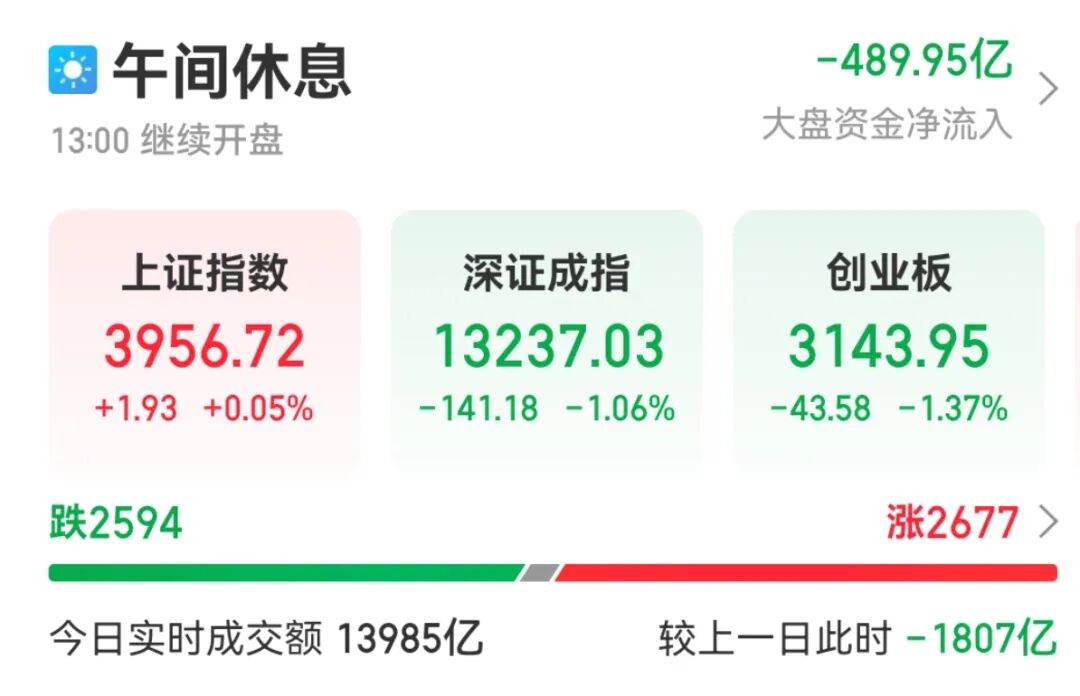
Market Overview - The recent market trend has been characterized by a "high-low switch," with leading stocks in computing power experiencing a collective surge last Friday, while today, leading stocks in new energy and non-ferrous metals, such as CATL and Zijin Mining, have seen declines [1] - Major banks, including Industrial and Commercial Bank of China and Agricultural Bank of China, have shown strong performance, with respective increases of 1.8% and 1.13%, bringing their total market capitalization close to 3 trillion yuan [1] - The Shanghai Composite Index rose by 0.05%, while the Shenzhen Component Index and the ChiNext Index fell by 1.06% and 1.37%, respectively [1] Energy Sector Performance - The mining sector has shown strength, particularly in oil and gas extraction, with major players like PetroChina and CNOOC seeing increases of 4.15% and 4.94%, respectively [3] - The "three barrels of oil" (PetroChina, Sinopec, and CNOOC) reported significant profits for the first three quarters, with PetroChina achieving a net profit of 126.28 billion yuan, Sinopec 29.98 billion yuan, and CNOOC 101.97 billion yuan [6] - The performance of the "three barrels of oil" has been bolstered by continuous production increases and effective cost control, indicating resilience during periods of declining oil prices [6] Coal Sector Insights - The coal price has been recovering since the third quarter, with prices for 5500 kcal thermal coal and coking coal rebounding to 674 yuan/ton and 1555 yuan/ton, respectively [7] - The coal sector is supported by rigid supply and rising costs, with companies showing healthy balance sheets and improved dividend ratios, suggesting a comparative advantage for coal stocks [7] AI Application Sector - The AI application sector has gained traction, with significant increases in stocks related to short video games and AI content, such as Fushi Holdings and 37 Interactive Entertainment [8] - As of September, the number of monthly active users for mobile AI applications in China has surpassed 700 million, indicating strong growth potential in this sector [9] - Key investment themes in AI applications include hardware integration, software for consumer markets, enterprise services, and large model deployments for businesses [9]


今天上午 A股“大象起舞”
Zhong Guo Zheng Quan Bao· 2025-11-03 04:54
Market Overview - The recent market discussion revolves around the concept of "high-low switching," with leading stocks in computing power experiencing a collective surge last Friday [1] - This morning, leading stocks in sectors such as new energy and non-ferrous metals adjusted, with companies like CATL, Zijin Mining, and Huayou Cobalt seeing declines [1] - Major banks saw a rise in stock prices, with Industrial and Commercial Bank of China up by 1.8% and Agricultural Bank of China up by 1.13%, both nearing a market capitalization of 3 trillion yuan [1] - The coal, oil and gas extraction, and transportation sectors saw gains, with major players like Sinopec and China Shenhua also rising [1] Oil and Gas Sector - The oil and gas extraction sector showed strength, with the "three barrels of oil" (China National Petroleum, China Petroleum & Chemical, and China National Offshore Oil) collectively rising, with increases of 4.15%, 4.94%, and 1.83% respectively [3] - According to the third quarter financial reports, China National Petroleum reported a net profit of 126.279 billion yuan, China Petroleum & Chemical reported 29.984 billion yuan, and China National Offshore Oil reported 101.971 billion yuan [6] - The "three barrels of oil" have shown resilience in performance during the recent oil price fluctuations, with expectations for continued high capital expenditure and market expansion in natural gas [6] Coal Sector - The coal sector has seen a recovery in prices, with the price of 5500 kcal thermal coal and coking coal rebounding to 674 yuan/ton and 1555 yuan/ton respectively, compared to lower prices in the second quarter [7] - The coal market is supported by rigid supply and rising costs, with healthy balance sheets among coal companies and improved dividend ratios [7] AI Application Sector - The AI application sector is gaining momentum, with significant increases in stocks related to short drama games and AI content [9] - A report from QuestMobile indicates that the number of monthly active users for AI applications on mobile platforms in China has surpassed 700 million, reaching 729 million as of September [11] - Key areas of focus for AI applications include emerging hardware that combines software and hardware, software for consumer markets, enterprise services, and large model deployments for businesses [11]


突发利空,集体大跌
中国基金报· 2025-11-03 04:50
Market Overview - A-shares experienced mixed fluctuations on November 3, with the Shanghai Composite Index rising by 0.05%, while the Shenzhen Component and ChiNext Index fell by 1.06% and 1.37%, respectively [1][2] - The total market turnover was approximately 1.4 trillion yuan, slightly lower than the previous day, with nearly 2,600 stocks declining [2] Sector Performance - The coal, oil and petrochemical, media, and banking sectors saw gains, while lithium battery, precious metals, and semiconductor sectors faced significant declines [2][3] - The precious metals sector, particularly jewelry stocks, experienced a collective drop, with notable declines in companies like Chaohongji and Pengxin Resources [6][7] Hong Kong Market - The Hong Kong market also showed volatility, with the Hang Seng Index up by 0.58% and the Hang Seng Technology Index down by 0.24% [4][5] - Chow Tai Fook led the decline among Hang Seng constituents, dropping over 7% [5][11] Regulatory News - On November 1, the Ministry of Finance and the State Administration of Taxation announced tax policy changes regarding gold transactions, which may impact market sentiment [11][12] Company-Specific Developments - Qingyue Technology's stock hit the daily limit down of 20% due to an investigation by the China Securities Regulatory Commission for suspected financial misconduct [19][20][23] - The stock of Shikong Technology, which had previously seen a significant rise, also fell to its limit down [23] Energy Sector Activity - The coal and oil sectors were active, with companies like Antai Group and China Oilfield Services seeing substantial gains [14][16] - The recent cold weather has increased seasonal demand for coal, which may support prices in the near term [14]





近2600只个股下跌
Di Yi Cai Jing· 2025-11-03 03:56
Market Overview - The Shanghai Composite Index rose by 0.05%, while the Shenzhen Component Index fell by 1.06% and the ChiNext Index decreased by 1.37% [2] - The total trading volume in the Shanghai and Shenzhen markets reached 1.38 trillion yuan, a decrease of 175.5 billion yuan compared to the previous trading day, with nearly 2,600 stocks declining [2] Sector Performance - Oil and gas stocks experienced a significant rally, with China National Offshore Oil Corporation (CNOOC) rising over 5% and China Petroleum gaining more than 4% [5] - The Hainan Free Trade Port concept stocks showed strength, with notable gains in companies like Ronshine China Holdings and Hainan Development Holdings [5] - The banking sector also saw short-term gains, with Shanghai Bank increasing by over 2% [6] Commodity and Futures - The main contract for soybean meal futures surged by 4%, reaching 2,486 yuan per ton [7] - Precious metals sector faced declines, with companies like Hunan Gold and Chow Tai Fook Jewelry Group dropping over 2% [10] Stock Specifics - BYD's stock price fell below the 100 yuan mark, decreasing by 1.30% [8] - The semiconductor and storage chip sectors faced significant declines, with major companies experiencing substantial drops [11]
