
CNOOC(600938)

Search documents
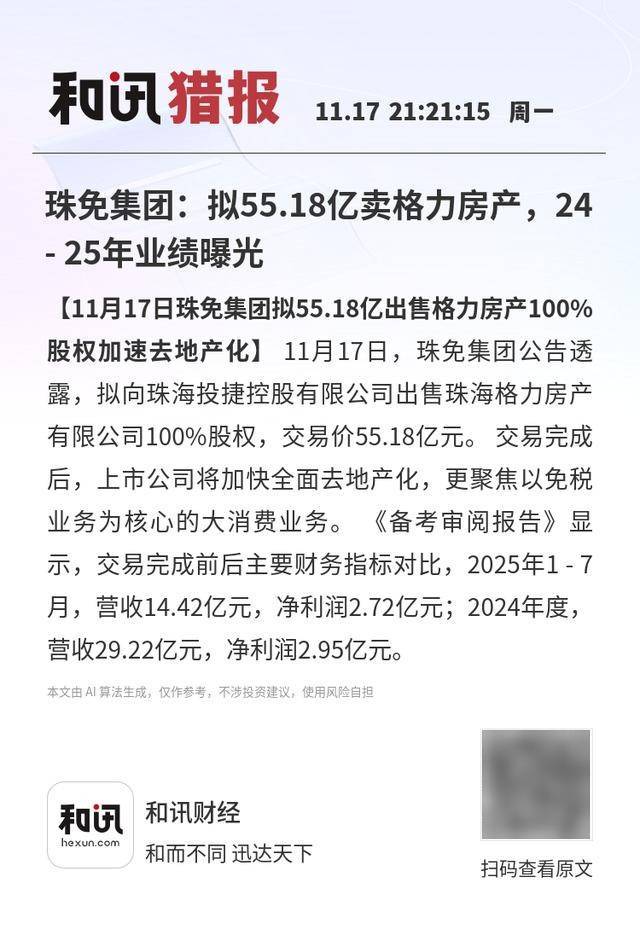
珠免集团:拟55.18亿卖格力房产,24 - 25年业绩曝光
Sou Hu Cai Jing· 2025-11-18 03:37
Group 1 - The core point of the article is that Zhuhai免集团 plans to sell 100% equity of Zhuhai Gree Real Estate Co., Ltd. to Zhuhai Toujie Holdings Co., Ltd. for 5.518 billion yuan, accelerating its divestment from real estate and focusing on the duty-free business as its core consumer segment [1][3] - Following the transaction, the company aims to enhance its focus on the duty-free business, indicating a strategic shift towards large-scale consumer operations [1][3] - The financial indicators before and after the transaction show projected revenues of 1.442 billion yuan and net profits of 272 million yuan for the first seven months of 2025, and revenues of 2.922 billion yuan with net profits of 295 million yuan for the year 2024 [1][3]



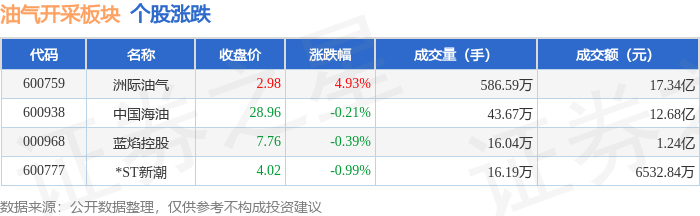
油气开采板块11月17日涨0.09%,洲际油气领涨,主力资金净流入9305.03万元
Zheng Xing Xing Ye Ri Bao· 2025-11-17 09:00
Core Insights - The oil and gas extraction sector experienced a slight increase of 0.09% on November 17, with Intercontinental Oil leading the gains [1] - The Shanghai Composite Index closed at 3972.03, down 0.46%, while the Shenzhen Component Index closed at 13202.0, down 0.11% [1] Sector Performance - Intercontinental Oil (600759) closed at 2.98, up 4.93%, with a trading volume of 5.8659 million shares and a transaction value of 1.734 billion [1] - Other notable stocks included China National Offshore Oil (600938) down 0.21%, Blue Flame Holdings (000968) down 0.39%, and ST Xinchao (600777) down 0.99% [1] Capital Flow - The oil and gas extraction sector saw a net inflow of 93.0503 million in main funds, while retail investors experienced a net outflow of 98.8204 million [1] - Main fund inflows for Intercontinental Oil were 11.8 million, representing 6.82% of total transactions, while retail investors had a net outflow of 118 million, indicating a negative sentiment [2]


OPEC预期供给过剩,本周油价下跌:能源周报(20251110-20251116)-20251117
Huachuang Securities· 2025-11-17 08:34
Investment Strategy - The oil and gas capital expenditure trend is declining, leading to a slowdown in supply growth. Since the signing of the Paris Agreement in 2015, global capital expenditure in the oil and gas upstream sector has significantly decreased, with a notable drop of nearly 22% from the 2014 peak to $351 billion in 2021. This trend is expected to continue as major energy companies face pressure from policies aimed at carbon reduction and are shifting focus towards energy transition and renewable projects [10][27]. - The current active drilling rig count in the US remains low, and the cost of new wells is close to current oil prices, limiting profit margins. This suggests that the growth rate of US oil production is likely to slow down, with evidence of this trend emerging in the first half of 2025 [10][27]. - OPEC+ has implemented production cuts that exceed expectations, indicating that there will be limited supply growth in the coming year [10][27]. Oil Industry - OPEC has shifted its outlook from a supply shortage to an anticipated oversupply in the global oil market, resulting in a significant drop in oil prices. Brent crude oil prices fell to $63.14 per barrel, down 2.56% week-on-week, while WTI prices decreased to $59.69 per barrel, down 0.65% [11][32]. - The report suggests monitoring companies that may benefit from the mid-high price fluctuations of oil, such as China National Offshore Oil Corporation (CNOOC), China Petroleum & Chemical Corporation (Sinopec), and China National Petroleum Corporation (PetroChina) [11]. Coal Industry - The market for thermal coal remains stable, with prices experiencing fluctuations. The average market price for thermal coal at Qinhuangdao Port was reported at 817.1 yuan per ton, an increase of 4.67% from the previous week. However, downstream demand remains cautious, with many buyers adopting a wait-and-see approach [12][13]. - The report highlights the importance of domestic coal companies like China Shenhua Energy and Shaanxi Coal and Chemical Industry Group, which are expected to benefit from the stable pricing environment and their resource advantages [13]. Natural Gas Industry - There is a growing demand for LNG imports in Asia, driven by energy transition efforts in major economies such as China, Japan, and South Korea. This has led to active negotiations for long-term contracts with major LNG exporting countries [15][16]. - The average price of natural gas in the US increased to $4.5 per million British thermal units, reflecting a 4.6% rise from the previous week [15][30]. Oilfield Services Industry - The oilfield services sector is expected to maintain its growth due to government policies aimed at ensuring energy security. In 2023, the total capital expenditure of the three major oil companies reached 583.3 billion yuan, reflecting a compound annual growth rate of 4.9% since 2018 [17][18]. - The report indicates that despite falling oil prices, capital expenditures remain high, which is likely to sustain the industry's overall health [17].




油价底部支撑叠加红利属性,油气ETF(159697)冲击4连涨
Sou Hu Cai Jing· 2025-11-17 07:15
Core Viewpoint - The oil and gas sector is experiencing upward movement in stock prices, driven by geopolitical tensions and supply disruptions, particularly from Russia, which has halted exports equivalent to 2% of global supply [1]. Group 1: Market Performance - As of November 17, 2025, the National Oil and Gas Index (399439) increased by 0.28%, with significant gains in constituent stocks such as Shun Oil (603353) up 9.99% and Victory Shares (000407) up 9.93% [1]. - The Oil and Gas ETF (159697) rose by 0.60%, marking its fourth consecutive increase, with the latest price at 1.18 yuan [1]. Group 2: Supply and Price Dynamics - The geopolitical situation has led to a suspension of exports from Russian Black Sea ports, impacting supply by approximately 2% of global oil production, equating to 2.2 million barrels per day [1]. - According to Huatai Securities, multiple factors including OPEC+ production increases, rising risks of Russian oil sanctions, and an increase in U.S. commercial crude oil inventories have contributed to a downward trend in oil price levels [1]. Group 3: Key Holdings - As of October 31, 2025, the top ten weighted stocks in the National Oil and Gas Index include major companies such as China National Petroleum (601857) and Sinopec (600028), collectively accounting for 65.09% of the index [2]. - The Oil and Gas ETF is closely tracking the National Oil and Gas Index, reflecting the price changes of publicly listed companies in the oil and gas sector [1][2].




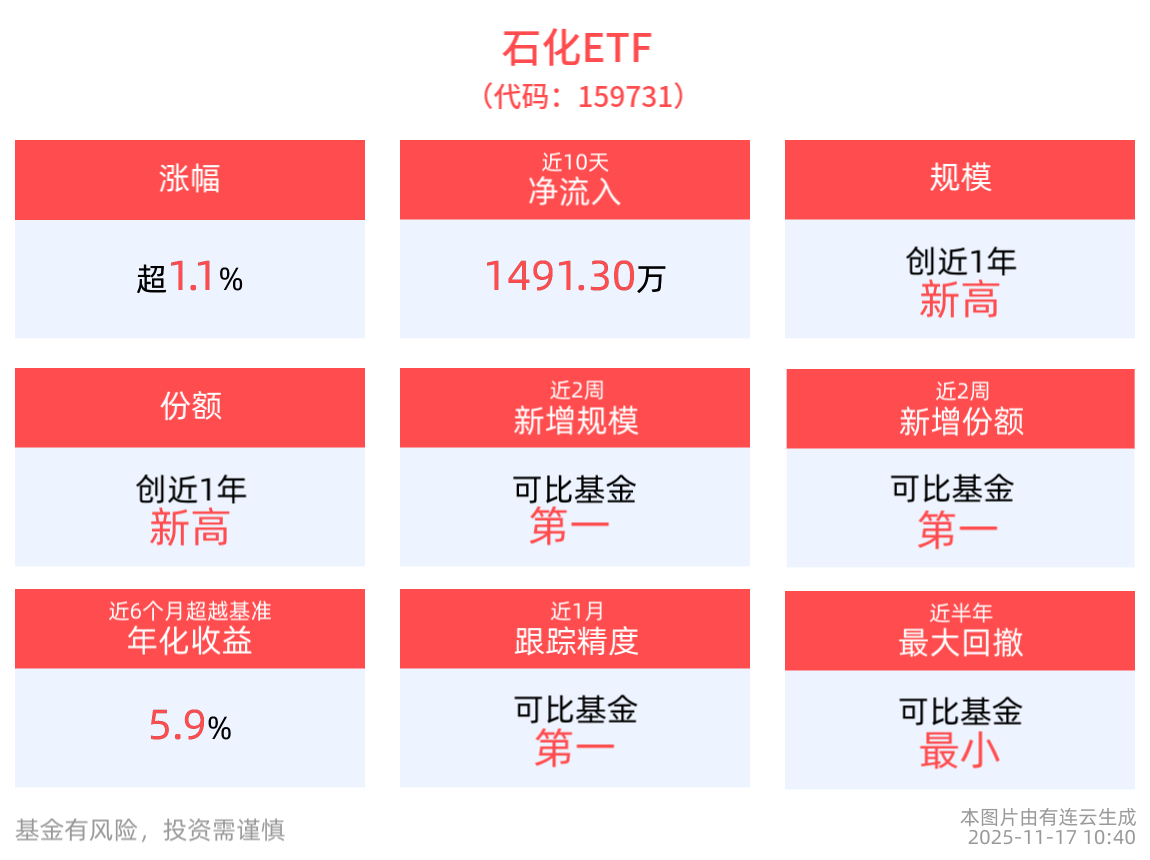
涨超1.1%,石化ETF(159731)近10个交易日净流入1491.3万元
Sou Hu Cai Jing· 2025-11-17 03:02
Core Insights - The China Petroleum Industry Index has seen a strong increase of 1.22% as of November 17, 2025, with leading stocks including Salt Lake Co., Jinfa Technology, and Hengli Petrochemical [1] - The Petrochemical ETF (159731) rose by 1.18%, reaching a latest price of 0.86 yuan, with a net inflow of 4.2581 million yuan [1] - Over the past 10 trading days, there have been 8 days of net inflows totaling 14.913 million yuan, with the ETF's latest share count reaching 204 million and a total scale of 173 million yuan, both hitting a one-year high [1] Performance Metrics - As of November 14, 2025, the Petrochemical ETF has experienced a net value increase of 26.25% over the past six months [3] - The ETF's highest single-month return since inception was 15.86%, with the longest consecutive monthly gains being 6 months and a maximum increase of 23.51% [3] - The average return during the rising months is 5.06%, and the ETF has outperformed its benchmark with an annualized excess return of 5.9% over the last six months [3] Top Holdings - The top ten weighted stocks in the China Petroleum Industry Index account for 56.05% of the index, with Wanhua Chemical, China Petroleum, and Salt Lake Co. being the top three [3] - The weightings of the top stocks are as follows: Wanhua Chemical (10.47%), China Petroleum (7.63%), Salt Lake Co. (6.44%), and China Petrochemical (6.44%) [5]



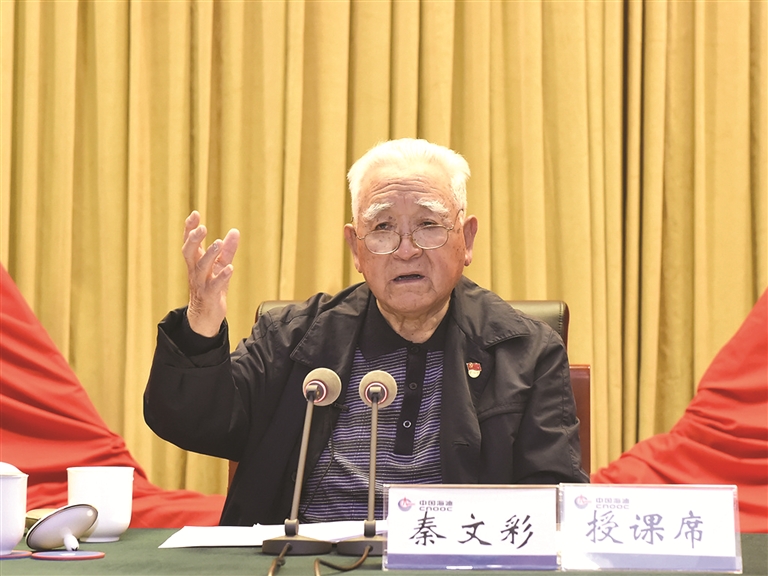
秦文彩:新中国海洋石油事业的开创者
Zhong Guo Hua Gong Bao· 2025-11-17 03:02
Core Viewpoint - The article pays tribute to Qin Wencai, the former general manager of China National Offshore Oil Corporation (CNOOC), highlighting his significant contributions to the development of China's offshore oil industry over his 35-year career in the oil sector [1][19]. Group 1: Early Life and Military Service - Qin Wencai was born in February 1925 and joined the Communist Party at the age of 16, participating in the Anti-Japanese War and the Liberation War [2][3]. - He self-taught Japanese to aid in the war effort and quickly became an exemplary Communist Party member [2]. Group 2: Contributions to Oil Industry - From 1952, Qin Wencai worked in the oil industry, transitioning from military service to becoming a key figure in China's oil exploration and production [11][12]. - Under his leadership, the oil production in China increased significantly, with national crude oil output surpassing 1 million tons by the late 1970s [14]. Group 3: Establishment of CNOOC - CNOOC was established in February 1982, with Qin Wencai as its first general manager, marking the beginning of China's offshore oil exploration and international cooperation [21][25]. - By 1986, CNOOC had signed 33 oil contracts with foreign companies, significantly increasing its operational capacity and foreign investment [25]. Group 4: Technological Advancements - Qin Wencai emphasized technological innovation, leading to the development of various drilling techniques and the establishment of a marine oil research center [24]. - By 1985, CNOOC had mastered 70 foreign technologies and initiated multiple projects to enhance its technological capabilities [24]. Group 5: Economic Impact - By the end of 1986, CNOOC's crude oil production had risen from 90,000 tons in 1982 to nearly 380,000 tons, with total assets increasing from 2.8 billion yuan to 5.3 billion yuan [25]. - The company contributed significantly to the national economy, with foreign companies paying approximately $100 million in taxes and CNOOC itself contributing nearly 50 million yuan in taxes by 1986 [25].
供给过剩趋势下,国际油价走势纠结 | 投研报告
Zhong Guo Neng Yuan Wang· 2025-11-17 02:22
Group 1 - The core viewpoint of the report indicates that international oil prices experienced slight fluctuations, with Brent crude oil prices increasing slightly while WTI prices decreased slightly as of November 14, 2025 [1][2] - In the first half of the week, China's crude oil imports increased, and the US dollar weakened, contributing to a rise in oil prices due to improved market risk appetite [1][2] - The latter part of the week saw a downward adjustment in OPEC's monthly report, indicating a supply surplus, which released bearish signals to the market [1][2] Group 2 - As of November 14, 2025, Brent crude oil futures settled at $64.39 per barrel, up $0.76 per barrel (+1.19%), while WTI crude oil futures settled at $59.39 per barrel, down $0.45 per barrel (-0.75%) [2] - The price of Russian Urals crude remained stable at $65.49 per barrel, while Russian ESPO crude decreased by $1.43 per barrel (-2.51%) to $55.47 per barrel [2] Group 3 - As of November 10, 2025, the number of global offshore self-elevating drilling rigs was 370, an increase of 1 rig from the previous week, while the number of floating drilling rigs decreased by 2 to 128 [3] - As of November 7, 2025, US crude oil production was 13.862 million barrels per day, an increase of 211,000 barrels per day from the previous week [3] - The number of active drilling rigs in the US increased by 3 to 417 as of November 14, 2025 [3] Group 4 - As of November 7, 2025, US total crude oil inventories increased by 7.211 million barrels (+0.87%) to 838 million barrels [4] - The US gasoline inventory decreased by 0.946 million barrels (-0.46%), while diesel inventory decreased by 0.637 million barrels (-0.57%) [4] Group 5 - The report highlights relevant companies in the sector, including China National Offshore Oil Corporation (CNOOC), China Petroleum & Chemical Corporation (Sinopec), and China National Petroleum Corporation (PetroChina) [5]



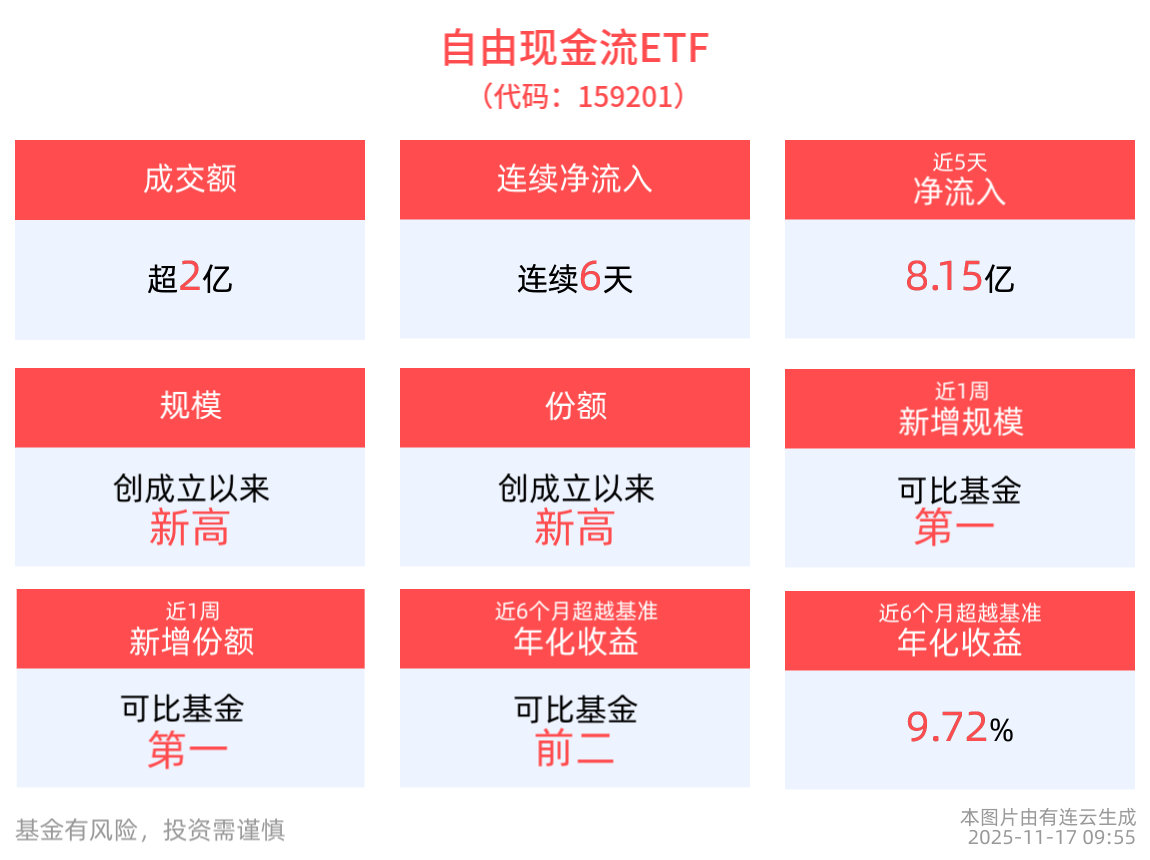
成交额超2亿元,自由现金流ETF(159201)连续6天净流入,合计“吸金”8.88亿元
Sou Hu Cai Jing· 2025-11-17 02:18
Core Insights - The Guozheng Free Cash Flow Index has decreased by 0.86% as of November 17, 2025, with mixed performance among constituent stocks [1] - The Free Cash Flow ETF (159201) has dropped by 1.07%, currently priced at 1.21 yuan, with a trading volume of 2.02 billion yuan [1] - Over the past six days, the Free Cash Flow ETF has seen continuous net inflows, totaling 8.88 billion yuan, with a daily average net inflow of 1.48 billion yuan [1][4] Performance Metrics - The Free Cash Flow ETF has achieved a net value increase of 22.85% over the past six months [4] - Historical performance shows a maximum monthly return of 7%, with the longest consecutive monthly gain of 6 months and a total gain of 22.69% [4] - The ETF has a monthly profit percentage of 87.5% and a historical 100% profit probability for holding over six months [4] Fund Details - The management fee for the Free Cash Flow ETF is 0.15%, and the custody fee is 0.05% [5] - As of October 31, 2025, the top ten weighted stocks in the Guozheng Free Cash Flow Index account for 54.79% of the index, including China National Offshore Oil Corporation and SAIC Motor [5] Stock Performance - The top ten stocks in the index have shown varied performance, with notable declines in stocks like Gree Electric Appliances (-1.08%) and China Aluminum (-2.57%) [7]




我国海洋装备产业有效专利全球占比超5成 为建设海洋强国筑牢专利根基
Zhong Guo Chan Ye Jing Ji Xin Xi Wang· 2025-11-16 22:12
Core Viewpoint - China's shipbuilding industry is making significant advancements in marine equipment technology, breaking foreign monopolies and achieving notable milestones in patent innovation and application [1][2][5]. Group 1: Patent Innovations and Achievements - China's shipbuilding industry has developed high-precision marine measurement instruments, marking a breakthrough in high-end ship types and breaking the long-standing foreign supplier monopoly [1]. - The effective patent count in the global marine equipment industry has reached 306,400, with China holding approximately 166,600 patents, accounting for 54.4% of the global total [1]. - Since 2015, global marine equipment patent applications have exceeded 490,000, with China's annual patent application growth rate at 12.6%, significantly higher than the global average of 5.8% [2]. Group 2: Technological Focus Areas - Key technological directions in marine equipment innovation include green technology, intelligent vessels, polar equipment, and deep-sea resource development [4]. - Green power technology has seen a shift since 2021, with related patents surpassing traditional marine power patents, focusing on multiple fuel technologies such as LNG, ammonia, methanol, and hydrogen [4]. - The deep-sea resource development sector has experienced explosive patent growth since 2020, with China, the U.S., Japan, and Australia being the main innovators [4]. Group 3: Industry Development and Trends - The marine equipment sector is witnessing a transformation towards high-end, intelligent, and green projects, with significant developments in large cruise ships, LNG vessels, and deep-sea exploration [5]. - Emerging marine industries are accelerating, with new vessels like the 150,000-ton large aquaculture vessel "Guoxin 1" entering operation [6]. - The marine tourism market in China has seen a value increase to 771.8 billion yuan, driven by favorable policies and rising consumer interest [6]. Group 4: Strategic Insights - As China advances its marine power strategy, the industry is at a critical juncture, emphasizing the need for a robust patent ecosystem to support innovation and competitiveness [7].

石油化工行业周报:全球石油库存将持续增长至2026年,EIA预计今年全球原油将有184万桶、天的供应过剩-20251116
Shenwan Hongyuan Securities· 2025-11-16 12:15
Investment Rating - The report maintains a positive outlook on the petrochemical industry [3] Core Views - Global oil inventories are expected to continue increasing until 2026, with the EIA forecasting a supply surplus of 1.84 million barrels per day for this year [5][11] - The EIA has raised its price forecasts for crude oil and natural gas for 2025 and 2026, expecting an average crude oil price of $69 per barrel in 2025 and $55 per barrel in 2026 [6][8] - Demand growth for global oil is projected at 790,000 barrels per day in 2025 and 770,000 barrels per day in 2026, with significant contributions from the US, China, and Nigeria [8][45] Summary by Sections Supply and Demand Analysis - The EIA and IEA have both adjusted their global oil supply forecasts upwards by 100,000 to 150,000 barrels per day due to OPEC's announced production increases [10][11] - The EIA expects global oil production to rise by 2.81 million barrels per day in 2025 and 1.39 million barrels per day in 2026 [10][11] - The IEA anticipates a demand increase of 310,000 barrels per day in 2025 and 250,000 barrels per day in 2026, with a total average supply reaching 108.7 million barrels per day [46][47] Upstream Sector - Brent crude oil futures closed at $64.39 per barrel, reflecting a week-on-week increase of 1.19%, while WTI futures rose to $60.09 per barrel, up 0.57% [20] - The number of active oil rigs in the US increased to 549, with a slight week-on-week rise [35] Refining Sector - The report indicates an improvement in refining profitability due to rising product price spreads, despite current levels being relatively low [5][13] - The Singapore refining margin increased to $24.26 per barrel, while the US gasoline-WTI spread decreased to $20.84 per barrel [5] Polyester Sector - The profitability of PTA and polyester filament yarn has improved, with PTA prices rising to 4,585.4 CNY per ton [5][13] - The report suggests a recovery in the polyester sector, with expectations for improved profitability as supply and demand dynamics shift [13] Investment Recommendations - The report recommends focusing on leading companies in the polyester sector such as Tongkun Co. and Wankai New Materials, as well as top refining companies like Hengli Petrochemical and Sinopec [5][13] - It also highlights the resilience of oil companies like PetroChina and CNOOC in the face of potential price declines, recommending those with high dividend yields [13]


