SKSHU(603737)

Search documents
三棵树跌3.06% 月初国投证券给予买入评级
Zhong Guo Jing Ji Wang· 2026-02-26 09:29
中国经济网北京2月26日讯 三棵树(603737.SH)今日收报52.64元,跌幅3.06%。 (责任编辑:徐自立) 国投证券股份有限公司研究员董文静、陈依凡2月2日发布研报《三棵树(603737):2025年归母净 利润同比高增 高端零售战略转型卓有成效》称,给予三棵树"买入-A"评级,12个月目标价66.6元。 ...

立邦中国25FY财报点评:外资涂料BC端均承压下滑,重点关注国产涂料
Shenwan Hongyuan Securities· 2026-02-26 03:05
行 业 及 产 业 郝子禹 A0230524060003 haozy2@swsresearch.com 建筑材料/ 装修建材 2026 年 02 月 26 日 行 业 研 究 / 行 业 点 评 证券分析师 任杰 A0230522070003 renjie@swsresearch.com 宋涛 A0230516070001 songtao@swsresearch.com 郝子禹 A0230524060003 haozy2@swsresearch.com 研究支持 郝子禹 A0230524060003 haozy2@swsresearch.com 联系人 外资涂料 BC 端均承压下滑,重点关注国产涂料 看好 ——立邦中国 25FY 财报点评 本期投资提示: 投资分析意见: ⚫ 持续重点关注建筑涂料国产企业三棵树。对比看,2025 年三棵树预计盈利 7.6-9.6 亿元,同比增长 129%-189%,显著跑赢立邦中国。2025 年三棵树 C 端预计有较高速增长,B 端预计小幅回落;C 端依靠美丽乡村、马上住、 艺术漆实现高增长,小 B 端维持基本平稳,26 年整体有望维持高增。 风险提示: ⚫ 需求持续承压,翻新 ...
建材周专题 2026W7:电子布上涨预期强化,看好需求爆发和产能挤压的超级周期
Changjiang Securities· 2026-02-25 01:06
Investment Rating - The industry investment rating is "Positive" and maintained [9] Core Viewpoints - The report emphasizes the strengthening expectation of price increases for electronic fabrics, driven by explosive demand and capacity constraints, indicating a "super cycle" characterized by strong demand rigidity and prolonged duration [5][6] - The report identifies three main lines for 2026: the stock chain, the Africa chain, and the AI chain, suggesting strategic focus areas for investment [8] Summary by Relevant Sections Basic Situation - Cement shipments are experiencing seasonal declines, with an average shipment rate of approximately 9% in key regions, a month-on-month decrease of about 15 percentage points, and a year-on-year decrease of about 4 percentage points [7][22] - Glass inventory has slightly increased, with a total inventory of 51.63 million weight boxes, a month-on-month increase of 2.14 million weight boxes, reflecting a 4.32% growth [7][30] Outlook for 2026 - The stock chain focuses on optimizing demand and clearing supply varieties, with residential renovation demand expected to rise from 50% currently to nearly 70% by 2030 [8] - The Africa chain highlights undervalued growth opportunities in the African market, recommending leading companies such as Keda Manufacturing and Huaxin Cement [8] - The AI chain looks at the industrial upgrade of special electronic fabrics, with a focus on Low-Dk products and domestic substitution opportunities [8] Price and Inventory - The national average price for cement before the festival was 346.29 yuan/ton, with a month-on-month decrease of 0.32 yuan/ton and a year-on-year decrease of 47.90 yuan/ton [23] - The national average price for glass before the festival was 63.24 yuan/weight box, with a month-on-month increase of 0.06 yuan/weight box and a year-on-year decrease of 11.07 yuan/weight box [32]


未知机构:天风建筑建材新材料周观点20260223节前12-20260224
未知机构· 2026-02-24 03:55
【天风建筑建材 & 新材料】周观点 20260223 节前1-2周涨幅较好的主线为:①AI 算力相关电子材料主线,以特种电子布为核心的玻纤领涨建材板块;PCB 基材、半导体封装材料、液冷相关标的领涨新材料板块;②AI + 建筑主线,VR/AR 应用、算力 + 工程咨询设计相 关标的领涨建筑板块;③外围市场 PCB 核心基材、半导体设备/材料主线领涨。 下周重点关注: 1、科技主线持续回归,核心推荐【电子布】赛道:①供需格局持续失衡,行业整体供需缺口约 20%,26 年 1 月 起全品类电子布均出现供应紧张,企业在手订单已达 2 个月水平,预计26 年全年将维持供应偏紧格局;②产能供 给刚性收缩,普通电子布产能向高端转移带来60% 产能损失,全品类供给持续收缩;③涨价节奏加快、弹性充 足,25 年电子布行业普遍提价 4-5 次,26 年 已提价10%,高端 DK 布、Q 布、CTE布价格仍处上行通道;④扩产 瓶颈短期无法突破,高端产品生产依赖的丰田高端织布机交付周期长达 1-2 年,但需关注池窑法突破(单个池窑 年产3000吨VS坩埚36吨)带来的供应增加(29年有可能供过于求);⑤库存与需求端共振,CCL及电 ...




亚坤夜读丨惦记福临三棵树(有声)
Xin Lang Cai Jing· 2026-02-20 14:30
......(节选) 有谁知道一棵树活着的真正理由?或许,它们活着,原本就不需要理由。能够顽强地活着,挺过严寒、 挺过干枯,见过丰盈、见过亏欠,经历过欢喜、也经历过灾祸后依然活着——就像养静寺前这棵银杏, 活得足够长久,就够了吧。 在这个世界上,有几个人能够自信地说,我比一棵树高明?树看似什么都不做,只用无言却耐心的等 待,把很多物事熬成了虚无——而它,依然挺立于大地。 最让我惦记的那棵树,其实不是树,是一个人。其精神与人格已深深扎根于历史,虽不张扬,却一直在 惠泽一方——他的名字里有个"树"字,他,就是陈树湘。 距离上次去福临,转眼已过去半年多。早就计划好了,今年油菜花开的时候,选择一个风和日丽的周 末,我要约上三两好友,再上福临。尤其是,再会会这几棵树。 这个普通却不凡的名字,或许静默了不短的时间。但,静默并不表示他不存在,甚至被人彻底遗忘。当 他的故事被罗开富在《红军长征追踪》里再次讲述,尤其是新时代被习近平总书记提及之后,这棵初生 于枫树湾的树越来越根深叶茂,荫庇一方,又持续赋能。 树湘精神的特质是绝对忠诚。树也一样,只要有水、有阳光,就会倔强地生长;一旦扎根某处便立场坚 定,从不挪窝。 或许有人会因 ...
建材行业双周报(2026/01/30-2026/02/12):“防内卷”带来建材供需格局优化,电子布价格提升预期增强-20260213
Dongguan Securities· 2026-02-13 08:48
Investment Rating - The report maintains a "Market Weight" rating for the building materials industry, indicating that the industry index is expected to perform within ±10% of the market index over the next six months [46]. Core Insights - The building materials industry is experiencing an optimization in supply and demand dynamics due to the "anti-involution" policies, with expectations for price increases in electronic fabrics [2][4]. - The cement sector is anticipated to see a further contraction in total production capacity in 2026, driven by regulatory measures and a potential recovery in real estate sales in key cities [4][39]. - The flat glass market is showing signs of recovery with a slight increase in production and prices, although short-term demand remains weak due to seasonal factors [4][40]. - The photovoltaic glass market is facing challenges with excess supply and ongoing losses, but long-term demand is expected to be supported by the development of new energy bases [4][40]. - The glass fiber industry is in a structural recovery phase, with increasing demand for high-end products driven by advancements in AI and 5G technologies [4][40]. Summary by Sections Cement - The Ministry of Industry and Information Technology has implemented measures to control cement production capacity, leading to an expected reduction in total capacity in 2026 [4][39]. - Recent data indicates a recovery in real estate sales, which, combined with major infrastructure projects, may improve the supply-demand balance in the cement industry [4][39]. - Recommended stocks include Shangfeng Cement, Taipai Group, and Huaxin Cement, which have favorable fundamentals and high dividend yields [4][39]. Glass and Fiberglass - The flat glass production in 2025 is projected to be 97,591 million weight boxes, a 3% decrease year-on-year, but December 2025 saw a 3.4% increase compared to the previous year [4][40]. - The price of float glass has shown a slight recovery, with expectations for price stabilization due to supply-side adjustments [4][40]. - The fiberglass market is benefiting from increased demand for low-DK glass fabrics, with Taiwanese manufacturers shifting production to meet this demand [4][40]. - Recommended stocks in the fiberglass sector include China Jushi, which is expected to benefit from the structural recovery in the industry [6][40]. Consumer Building Materials - Leading companies like Keshun and Sankeshu have announced price increases due to rising raw material costs, indicating a trend of price stabilization in the industry [6][42]. - The demand for new construction is weakening, but renovation and urban renewal projects are expected to drive growth [6][42]. - Recommended stocks include Beixin Building Materials, Tubaobao, and Sankeshu, which are well-positioned to recover ahead of their peers [6][42].


成本改善叠加渠道红利!借道建材ETF(159745) 把握板块盈利修复双主线
Sou Hu Cai Jing· 2026-02-13 03:55
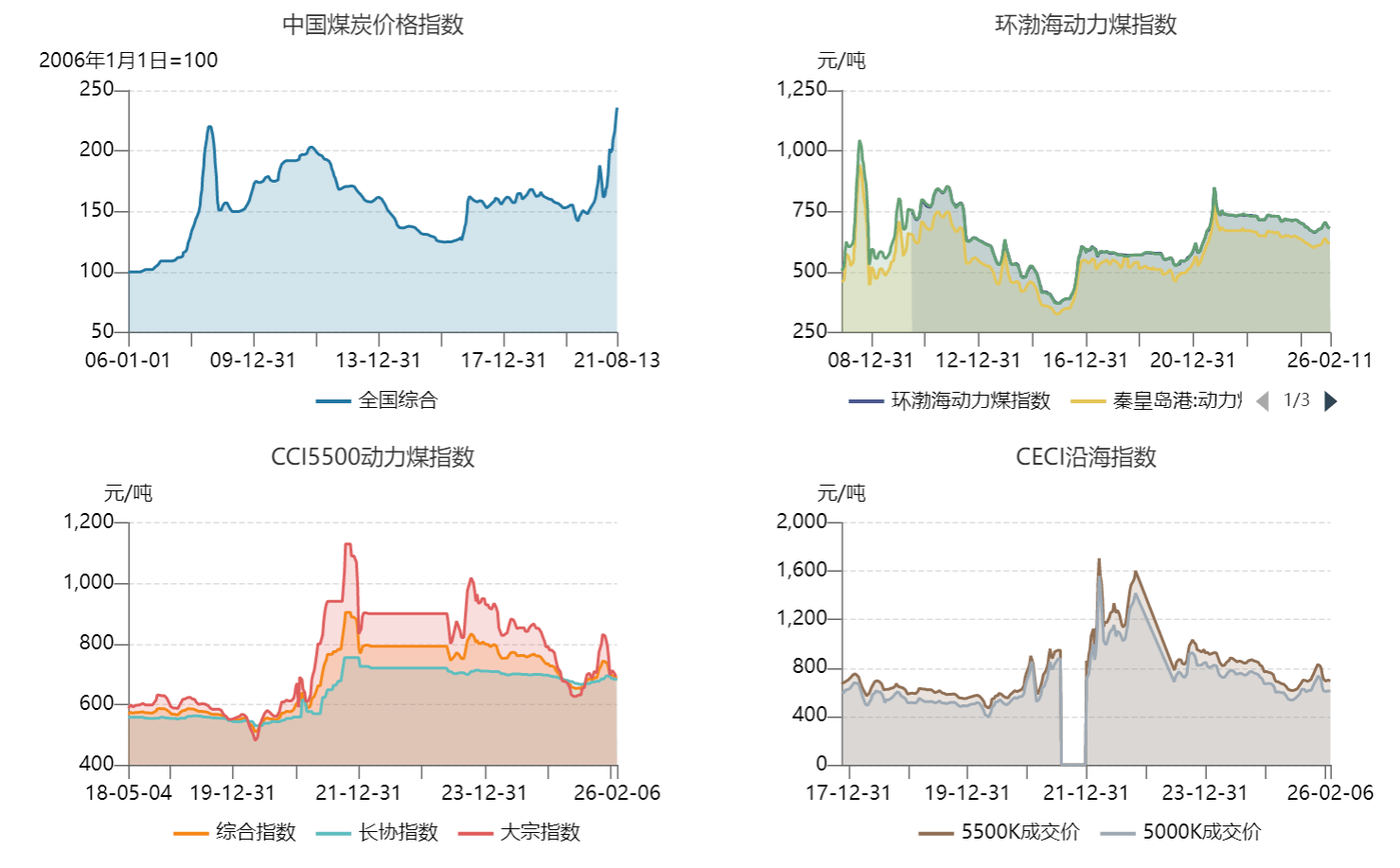
Core Viewpoint - The construction materials industry is experiencing profit improvement driven by two main paths: cost-side improvements leading to profit elasticity release and a revaluation of channel value in the C-end retail transformation [1][2]. Group 1: Cost-side Improvement - The construction materials industry, being resource-intensive, has over 60% of its production costs attributed to energy and raw materials, making it sensitive to price fluctuations of commodities like coal, natural gas, soda ash, and PVC [2]. - Following the high volatility of global energy prices in 2022-2023, current coal supply policies have stabilized price levels, and international natural gas prices have significantly decreased from historical peaks, providing relief on the cost side for construction material companies [2][4]. - The recent decline in coal prices indicates a potential weakening in market demand, which could further impact profit margins positively [4]. Group 2: C-end Retail Transformation - The real estate sector is transitioning into a stock update era, fundamentally changing the demand structure, with a shift from new housing development to renovation and upgrading of existing properties [4][5]. - This shift compels construction material companies to move from a reliance on B-end bulk procurement to a dual-channel strategy that includes both B and C-end operations, enhancing cash flow quality and brand premium capabilities [4][5]. - C-end retail offers advantages such as stable cash flow, higher profit margins, and strong customer loyalty compared to B-end business, which is characterized by longer payment terms and slower receivables [4][5]. Group 3: Market Sentiment and Investment Trends - Institutional investors are increasingly aligning their portfolios with the construction materials sector, as evidenced by a rising proportion of active equity funds in the industry since Q2 2025, indicating a clear left-side layout for the industry cycle [6][10]. - By late January 2026, there was a significant increase in net inflows for construction materials ETFs, marking a transition from active institutional allocation to passive market resonance, suggesting an improvement in liquidity conditions [7][10]. - The construction materials ETF (159745) tracks the CSI Construction Materials Index, which includes leading companies across the entire industry chain, reflecting the overall performance of the sector [10][12].


十万亿化债资金开闸!财政组合拳重塑建材板块逻辑,建材ETF(159745)早周期配置窗口开启
Sou Hu Cai Jing· 2026-02-12 03:28
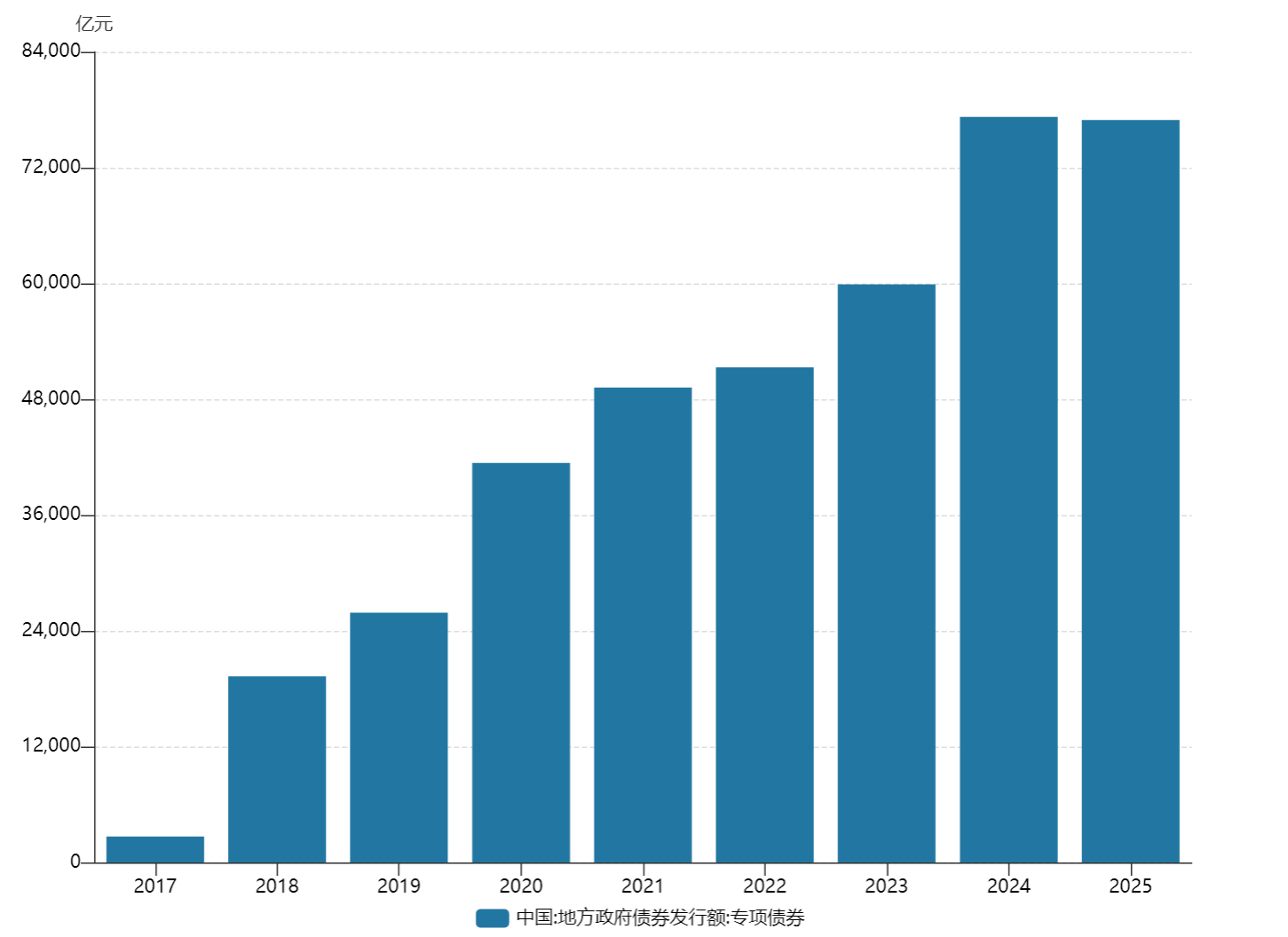
Core Viewpoint - The construction materials industry is experiencing a sustainable growth momentum due to unprecedented debt resolution actions, which are expected to improve market expectations and drive investment recovery in infrastructure and real estate sectors [1] Fiscal Perspective - The current debt resolution measures, including debt swaps and the expansion of special bonds, have systematically alleviated liquidity constraints for local governments, improving fiscal space for infrastructure investments [1] - Special bonds issued by local governments have been increasing annually since 2017, with projections for 2024 and 2025 to exceed 7 trillion yuan, and the total issuance in 2025 expected to surpass 10 trillion yuan for the first time in history [1][4] Infrastructure Investment - The issuance of special bonds is expected to lead to a significant increase in construction activity in transportation, municipal, and water conservancy sectors, with a projected surge in physical work volume in the first half of 2025 [4][6] - Despite a decline in infrastructure investment growth, the sector still holds a significant share of fixed asset investment, indicating its critical role in the overall economy [4] Policy Transition - The policy environment is shifting from "debt replacement" to "investment stimulation," which is likely to further enhance demand for construction materials [5] Demand Dynamics - The demand structure for construction materials is changing, with traditional materials benefiting from infrastructure support and renovation materials gaining from the demand for upgrading existing properties [6] - The dual drivers of infrastructure and real estate are expected to provide a solid foundation for the construction materials sector during this debt resolution cycle [6] Profitability and Market Outlook - The profitability of the cement industry is recovering, with expectations of improved margins due to supply-side adjustments and a favorable demand outlook from real estate policies [8] - The construction materials sector is characterized by high cash flow and potential for stable dividends, with forecasts indicating overall profit recovery by 2026 [8] Investment Opportunities - The construction materials ETF (159745) tracks the performance of the construction materials index, providing investors with a tool to efficiently allocate resources in the sector [8][11] - The sector is viewed as a core cyclical investment opportunity, especially in the context of a market shift towards undervalued, high-dividend stocks [11]
财政"万亿级"弹药就位!基建复苏打响估值修复战,建材ETF(159745)锁仓顺周期龙头
Sou Hu Cai Jing· 2026-02-11 09:28
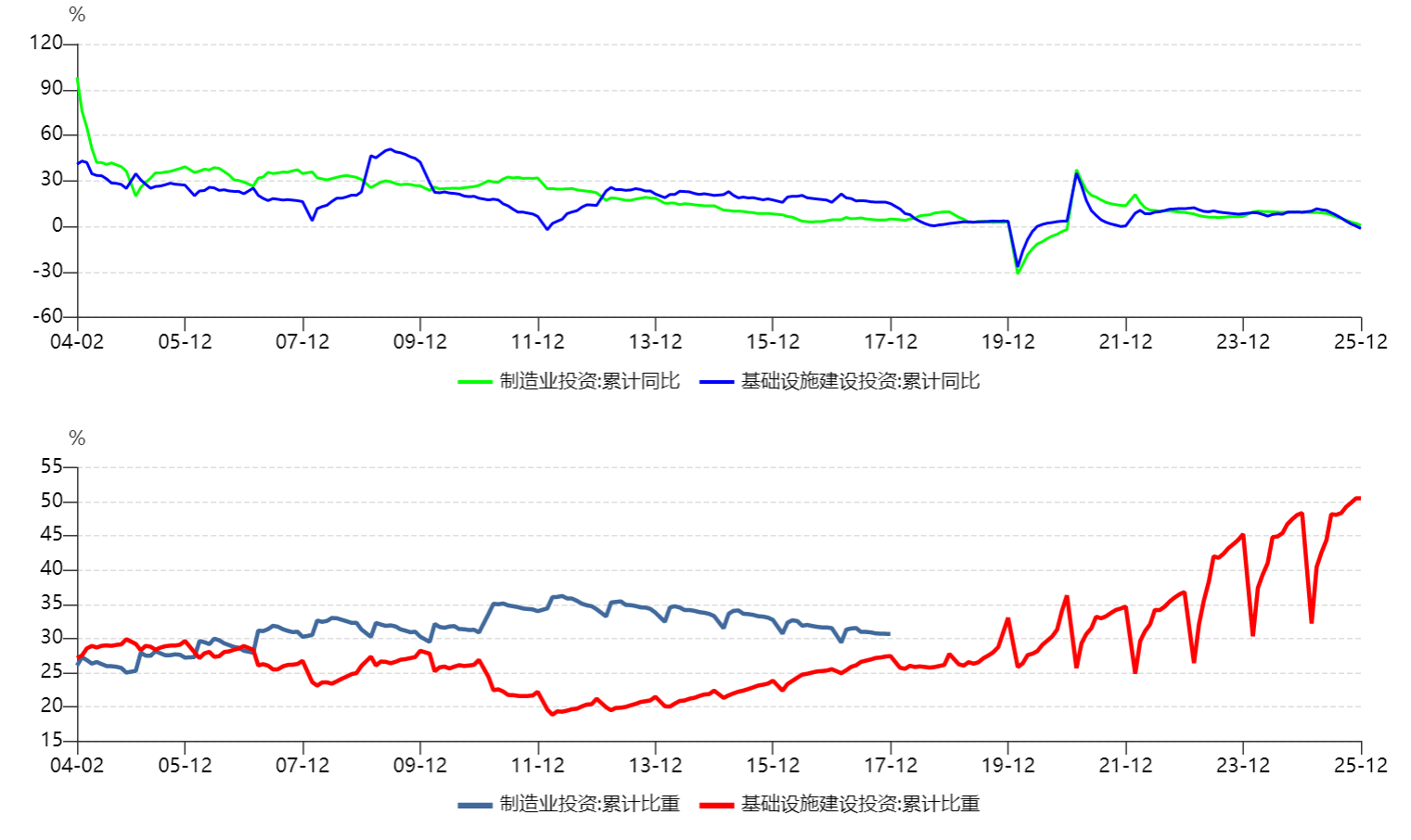
Core Viewpoint - Current infrastructure investment is becoming a crucial support for the economy, with fiscal policies continuously strengthening, leading to a configuration window driven by infrastructure recovery in the building materials sector [1] Group 1: Infrastructure Investment Dynamics - The "14th Five-Year Plan" is entering its final year, accelerating the implementation of major engineering projects, which is providing solid support for the improvement of the industry fundamentals through the demand pull of infrastructure [1] - Since the second half of 2024, active fiscal policies have significantly increased, with the pace of special bond issuance accelerating and the launch of ultra-long special government bonds injecting ample funds into infrastructure investment [1] - Infrastructure investment has a clear policy orientation and planning, unlike the endogenous fluctuations of real estate investment, with 2025 being a key year for the transition between the "14th" and "15th" Five-Year Plans [1][4] Group 2: Investment Trends and Performance - Despite a year-on-year decline in cumulative infrastructure construction investment to -1.48% in December, the cumulative proportion of infrastructure investment remained high at 50.49% in December 2025, reflecting its significant position in fixed asset investment [1][4] - Key areas for current infrastructure investment include urban agglomerations, metropolitan areas, and the connectivity of infrastructure along the "Belt and Road" [4] - Major infrastructure projects are expected to drive demand for cement, pipes, waterproof materials, and other building materials, with a focus on water conservancy and disaster prevention projects [4][5] Group 3: Building Materials Sector Outlook - The building materials industry is currently in a low operating state after inventory destocking, and the concentrated release of infrastructure demand is expected to trigger price elasticity [5] - The profitability transmission from infrastructure recovery is anticipated to drive the development of the building materials sector, with a notable improvement in gross profit margins due to supply-side discipline and cost pressure relief [6] - The building materials sector is characterized by "valuation repair + profit improvement," with the risk of a cliff-like decline in demand eliminated by infrastructure support, leading to a systematic uplift in valuation [8] Group 4: Investment Vehicles and Strategies - The building materials ETF (159745) tracks the CSI All-Share Building Materials Index, covering leading enterprises across the entire industry chain, providing an efficient tool for investors to layout in the building materials sector [8][9] - The top ten holdings in the ETF reflect a high concentration in leading companies across various segments of the building materials industry, accounting for over 60% of the total holdings [9] - The building materials sector is highlighted as a core cyclical investment, with low valuations and high dividends, making it attractive for investors during market shifts towards cyclical stocks [12]



建材行业周报:关注春节后的涨价预期与地产催化
GUOTAI HAITONG SECURITIES· 2026-02-10 13:30
Investment Rating - The report assigns an "Accumulate" rating for the building materials industry [5] Core Insights - The report emphasizes the expectation of price increases post-Spring Festival and the potential catalyst from the real estate sector. It highlights that the consumption building materials sector may begin to show fundamentals independent of real estate from 2025-2026, with a focus on the resilience of the real estate market after the Spring Festival [2][7] - The report recommends leading companies in the consumption building materials sector that have independent growth logic and sufficient dividend valuation support, particularly in the waterproof materials sub-sector [5][7] Summary by Sections Building Materials Industry Investment Strategy - The consumption building materials sector is anticipated to benefit from potential macroeconomic improvements, with a focus on the resilience of the real estate market post-Spring Festival. The report highlights the importance of observing second-hand housing transactions for signs of market recovery [7] - Recommended companies include Oriental Yuhong, Beixin Building Materials, Weixing New Materials, and others that are expected to perform well due to their growth strategies and market positions [7] Market Review - From February 2 to February 6, 2026, the building materials sector increased by 0.70%, with specific segments like glass manufacturing rising by 5.32% [10] - The report notes significant individual stock movements, with companies like Hanjian Heshan and Jinjing Technology showing notable weekly gains [17] Cement Industry - The national cement market price decreased by 1% week-on-week, with significant price drops in regions like Henan and Hubei. The average shipment rate for cement companies fell by approximately 8 percentage points [24][25] - The report anticipates a stabilization in cement prices as the market enters a holiday period, with a focus on the execution of production restrictions in 2026 [7][24] Glass Industry - The average price of domestic float glass increased to 1154.49 RMB/ton, reflecting a week-on-week rise of 9.69 RMB/ton. However, demand is expected to weaken as downstream processing plants shut down for the holiday [42] - The report recommends leading companies in the glass sector, including Fuyao Glass and Xinyi Glass, due to their strong market positions and dividend yields [42][43] Fiberglass Industry - The report indicates that the fiberglass market is experiencing price increases, particularly in the electronic yarn segment, driven by tight supply and steady demand [55] - Recommended companies in this sector include China Jushi and Zhongcai Technology, which are expected to benefit from structural demand upgrades [55]