CHANGAN AUTOMOBILE-B(000625)

Search documents
商业航天板块持续爆发,63位基金经理发生任职变动
Sou Hu Cai Jing· 2025-12-29 08:15
Market Performance - The A-share market showed mixed results on December 29, with the Shanghai Composite Index rising by 0.04% to 3965.28 points, marking a nine-day consecutive increase, while the Shenzhen Component Index fell by 0.49% to 13537.1 points, and the ChiNext Index decreased by 0.66% to 3222.61 points [1]. Fund Manager Changes - From December 27 to December 29, a total of 63 fund managers experienced changes in their positions, with 83 fund products announcing departures of fund managers during this period, involving 32 managers [3]. - Over the past 30 days (November 29 to December 29), 696 fund products saw changes in their fund managers, indicating significant turnover in the industry [3]. - The reasons for the changes included 26 managers leaving due to job changes, one due to personal reasons, four due to product expiration, and one due to resignation [3]. Fund Manager Performance - Dai Jie from Pengyang Fund currently manages assets totaling 298 million yuan, with the highest return of 235.16% achieved by the Hui'an Fengze Mixed A fund (003889) during his tenure of 6 years and 147 days [5]. - Zhang Xun, also from Pengyang Fund, manages assets of 10.543 billion yuan, with the highest return of 129.11% from the Pengyang Digital Economy Pioneer Mixed A fund (012456) over a tenure of 1 year and 124 days [5]. Fund Company Research Activity - In the past month (November 29 to December 29), Huaxia Fund conducted the most company research, engaging with 39 listed companies, followed by Southern Fund, Bosera Fund, and Huitianfu Fund, which researched 34, 32, and 31 companies respectively [7]. - The most researched industry was specialized equipment, with 146 instances, followed by the computer equipment industry with 111 instances [7]. Recent Fund Research Focus - In the last week (December 22 to December 29), Lingyi Zhizao, a company in the consumer electronics sector, was the most researched, receiving attention from 40 fund institutions [9]. - Other companies with significant research interest included Pulite, Nord Shares, and Desai Xiwai, with 28, 23, and 22 fund institutions respectively [9].





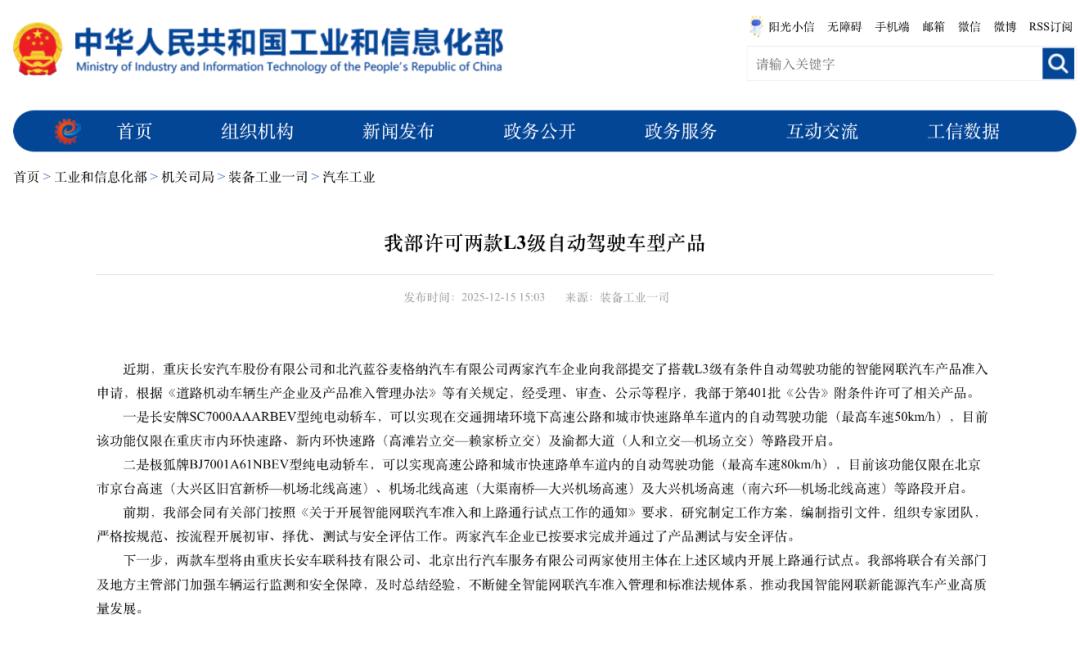
长安深蓝汽车C轮融资落地 总额达61.22亿元
Sou Hu Cai Jing· 2025-12-29 07:37
Group 1 - Changan Automobile's subsidiary, Deep Blue Auto, announced the completion of its Series C financing round on December 25, raising a total of 6.122 billion yuan [2][4] - The financing was contributed by Changan Automobile, Chongqing Yufu Holding Group, and CMB Financial Asset Investment Company, with Changan contributing 3.122 billion yuan, including 2.079 billion yuan in cash and 1.043 billion yuan in intangible assets [4] - After the financing, Deep Blue Auto's registered capital increased from 328 million yuan to 466 million yuan, with Changan maintaining a 50.9959% stake [4] Group 2 - Deep Blue Auto has delivered over 700,000 vehicles globally, ranking first in sales among state-owned enterprises in the new energy vehicle sector, and operates in nearly 100 countries and regions [5] - The company has become one of the first to receive L3-level autonomous driving product approval and recently introduced a dedicated license plate for L3-level autonomous driving [5] - The financing aims to enhance the competitiveness of the sub-brand rather than merely filling a funding gap, laying the groundwork for Deep Blue Auto's higher sales targets and deeper global expansion by 2026 [5]
揭晓!2025中国汽车十大新闻!
Bei Jing Ri Bao Ke Hu Duan· 2025-12-29 04:17
Group 1 - The core theme of 2025 in the automotive industry is "anti-involution and strong regulation," with significant policy support and market response to boost automotive consumption [2][4] - The Ministry of Industry and Information Technology and other departments have intensified enforcement against issues like false evaluations and unfair competition, promoting a shift from price competition to value competition [4] - The "old-for-new" vehicle replacement program has led to over 11.2 million applications, accounting for about one-third of total sales, with new energy vehicles making up approximately 60% of this figure [6] Group 2 - The first batch of L3-level conditional autonomous driving vehicles has received approval for road testing in designated areas, marking a significant step towards commercialization [8] - The establishment of China Changan Automobile Group as the third state-owned automotive enterprise reflects the government's push for electric vehicle development and aims to enhance global competitiveness [10][11] - The "Energy-saving and New Energy Vehicle Technology Roadmap 3.0" outlines a vision for the automotive industry to achieve peak carbon emissions by 2040, with over 80% penetration of new energy vehicles [13] Group 3 - The "Automotive Industry Steady Growth Work Plan (2025-2026)" aims for total vehicle sales of approximately 32.3 million in 2025, with new energy vehicle sales targeted at 15.5 million [14] - China's automotive exports have reached 6.34 million units in the first 11 months of 2025, with a year-on-year growth of 18.7%, and are expected to exceed 7 million units by year-end [16] - Major automotive companies have committed to reducing payment terms to within 60 days, addressing long-standing issues of delayed payments to suppliers [18][19] Group 4 - New national standards for electric vehicle batteries, set to be implemented in July 2026, aim to enhance safety and quality, marking a significant upgrade in regulatory standards [21] - The Ministry of Commerce and other departments have introduced stricter regulations on used car exports to ensure compliance and promote healthy market development [23]

320亿,重庆超级IPO来了
投中网· 2025-12-29 03:30
Core Viewpoint - The article discusses the rapid competition in the automotive industry, particularly focusing on the rise of Avita Technology, a high-end electric vehicle manufacturer backed by Changan Automobile, CATL, and Huawei, which is preparing for its IPO in Hong Kong [6][15]. Group 1: Company Overview - Avita Technology, established in 2018 as a joint venture between Changan Automobile and NIO, aims to become a global leader in luxury smart electric vehicles [8]. - The company has launched four main production models, including the Avita 11 and Avita 12, with prices ranging from 200,000 to 700,000 yuan, offering both pure electric and range-extended options [9]. - Avita Technology's revenue has seen significant growth, reaching approximately 56.45 billion yuan in 2023, 151.95 billion yuan in 2024, and 122.08 billion yuan in the first half of 2025 [9]. Group 2: Financial Performance - Despite the revenue growth, Avita Technology has incurred cumulative losses exceeding 11.3 billion yuan over three and a half years due to high sales, marketing, and R&D expenditures [10]. - The company has successfully raised 19 billion yuan in financing over three years, achieving a valuation of approximately 32 billion yuan [11][14]. Group 3: Strategic Partnerships - Avita Technology benefits from strategic partnerships with Changan Automobile, CATL, and Huawei, which provide support in manufacturing, supply chain, and technology development [9][12]. - The company has signed comprehensive strategic cooperation agreements with Huawei, including joint product development and marketing plans, and has acquired a 10% stake in Huawei's subsidiary for 11.5 billion yuan [9][12]. Group 4: Market Expansion Plans - Avita Technology plans to enter over 50 countries by 2025 and over 80 countries by 2030, establishing more than 700 sales channels globally [10]. - The company is also expanding into Southeast Asia, the Middle East, Africa, Eurasia, and Latin America as part of its global strategy [10]. Group 5: Industry Trends - Several automotive companies, including Avita Technology, are pursuing IPOs in Hong Kong as part of their globalization strategies, responding to the competitive pressures in the Chinese automotive market [15][18]. - The trend of automotive companies going public in Hong Kong is seen as a way to enhance their capital base and support international expansion [18].

研判2025!中国汽车镁合金轮毂行业市场政策、产业链图谱、市场规模、竞争格局及发展趋势分析:汽车轻量化浪潮席卷,未来大有可为[图]
Chan Ye Xin Xi Wang· 2025-12-29 02:35
Overview - The rapid rise of the new energy vehicle industry is driving the growth of the automotive magnesium alloy wheel hub sector, with increasing demand for lightweight components to alleviate range anxiety [1][9] - The market size of China's automotive magnesium alloy wheel hub industry is projected to reach 1.42 billion yuan in 2024, representing a year-on-year growth of 47.9%, although the current market share of magnesium alloy wheel hubs is less than 2% [1][9] Market Policies - China has implemented a series of policies to support the development of the automotive magnesium alloy wheel hub industry, creating a favorable policy environment [4] Industry Chain - The upstream of the automotive magnesium alloy wheel hub industry includes suppliers of magnesium alloys and coating materials, while the downstream primarily targets the automotive market, with new energy passenger vehicles being the largest demand source [5][7] Current Development - The automotive market in China is experiencing rapid growth, with production and sales of automobiles reaching 24.43 million and 24.36 million units respectively in the first nine months of 2025, showing year-on-year growth of 13.3% and 12.9% [7][8] Competitive Landscape - The industry is transitioning from "technical reserves" to "scale application," with few companies capable of mass production. Key players include Dewey Technology Co., Ltd., Baowu Magnesium Industry, and others [9][10] Development Trends - Continuous optimization of material formulations is expected, with a focus on combining magnesium with rare earths and carbon fibers to enhance performance [13] - Smart manufacturing processes will be integrated into production, utilizing AI and 3D printing technologies to improve efficiency [14] - Green production will become a core competitive advantage, with a focus on reducing carbon emissions and enhancing recycling systems [15] - Vertical integration of the industry chain will be pursued by leading companies to ensure supply stability and reduce costs [16]





自动驾驶又火了,离完全替代司机还有多久?
3 6 Ke· 2025-12-29 00:31
Core Viewpoint - The recent developments in L3 level autonomous driving, including the approval of vehicles from BAIC and Changan, indicate a significant step towards practical implementation of autonomous driving technology in China [3][5][6]. Group 1: Regulatory Approvals - BAIC and Changan have received official approval from the Ministry of Industry and Information Technology for their L3 level conditional autonomous driving vehicles, which can operate at speeds of up to 80 km/h and 50 km/h in designated areas of Beijing and Chongqing respectively [3]. - This approval marks a transition from testing to real-world application, suggesting that L3 level autonomous driving is moving closer to practical use [5]. Group 2: Industry Developments - He Xiaopeng, CEO of XPeng Motors, has expressed confidence in the advancements of autonomous driving, stating that XPeng's upcoming VLA 2.0 will match Tesla's FSD V14.2, potentially allowing users to skip L3 and access L4 capabilities directly [7]. - The competition in the autonomous driving sector is intensifying, with companies like Tesla and Waymo showcasing different technological approaches, highlighting the ongoing evolution of the industry [19]. Group 3: Levels of Automation - The classification of driving automation ranges from L0 to L5, with L2 being the current mainstream level that requires driver supervision, while L3 allows for conditional automation where the driver can disengage under certain circumstances [9][11]. - Higher levels, L4 and L5, promise complete automation in specific environments, which could significantly enhance user experience and convenience [13][14]. Group 4: Safety and Technology - The transition to higher levels of automation raises questions about safety and responsibility, with L2 placing responsibility on the driver, while L3 shares it with manufacturers, and L4 and L5 shift it entirely to manufacturers [16]. - Recent incidents, such as the power outage affecting Waymo's autonomous taxis, underscore the vulnerabilities of different autonomous systems and the importance of robust safety measures [18][19]. Group 5: Market Trends and Collaborations - The market is seeing a trend towards collaboration with third-party suppliers like Huawei, which could enhance efficiency and reduce costs in the development of autonomous driving technologies [21][23]. - By the end of 2025, it is projected that vehicles equipped with Huawei's intelligent driving systems will account for a significant market share, indicating a shift towards more accessible L3 level vehicles for consumers [23].


长安汽车申请制动能量回收方法专利,提高用户的驾驶体验
Jin Rong Jie· 2025-12-29 00:27
Group 1 - The core point of the article is that Chongqing Changan Automobile Co., Ltd. has applied for a patent related to a "braking energy recovery method, device, and vehicle," which aims to enhance driving experience through optimized braking energy recovery based on vehicle scenario perception information [1] Group 2 - Chongqing Changan Automobile Co., Ltd. was established in 1996 and is primarily engaged in the automotive manufacturing industry, with a registered capital of 991,408.606 million RMB [2] - The company has invested in 120 enterprises and participated in 5,000 bidding projects, holding 3,129 trademark records and 5,000 patent records, along with 1,053 administrative licenses [2]
深蓝汽车一年半亏21.3亿获61亿增资 前11月交付30.2万辆仅完成目标84%
Chang Jiang Shang Bao· 2025-12-28 23:19
Core Viewpoint - Changan Automobile is providing significant financial support to Deep Blue Automotive through a capital increase of approximately 61 billion yuan, despite Deep Blue's ongoing losses and challenges in meeting its sales targets [1][2][4]. Group 1: Financial Performance - Deep Blue Automotive has accumulated losses of 2.125 billion yuan over the past year and a half, with total assets of 26.095 billion yuan and total liabilities of 30.141 billion yuan as of mid-2025, resulting in a debt-to-asset ratio of approximately 116% [1][5]. - For the year 2024, Deep Blue's revenue was 37.225 billion yuan, with a net loss of 1.572 billion yuan. By the end of 2024, total assets reached 34.295 billion yuan, and total liabilities were 37.798 billion yuan, maintaining a debt-to-asset ratio of about 110% [5]. - As of mid-2025, Deep Blue's revenue was 20.654 billion yuan, with a net loss of 553 million yuan, and the company continued to face a debt-to-asset ratio of approximately 116% [5]. Group 2: Capital Increase Details - Changan Automobile announced a capital increase for Deep Blue Automotive, with a total fundraising scale of approximately 61.22 billion yuan, which includes both public and private placements [2][3]. - Changan will contribute 31.22 billion yuan through a combination of cash and intangible assets, including patents and proprietary technologies related to Deep Blue's S05 and G318 models, with an assessed value of 1.043 billion yuan [2][3]. - After the capital increase, Changan's ownership will remain at 50.9959%, while new investors, Chongqing Yufu Holding Group and China Merchants Bank Financial Asset Investment, will hold 12.0934% and 2.4187%, respectively [3]. Group 3: Sales Performance and Targets - Deep Blue's sales target for 2025 is set at 360,000 units, but as of November, the company had delivered 302,100 units, achieving only about 84% of its target [1][7]. - The delivery volume for November saw a month-on-month decline of approximately 10% and a year-on-year decline of about 8% [1][7]. - To meet its sales target for December, Deep Blue would need to deliver 57,900 units, which is considered unrealistic given the recent performance [8].
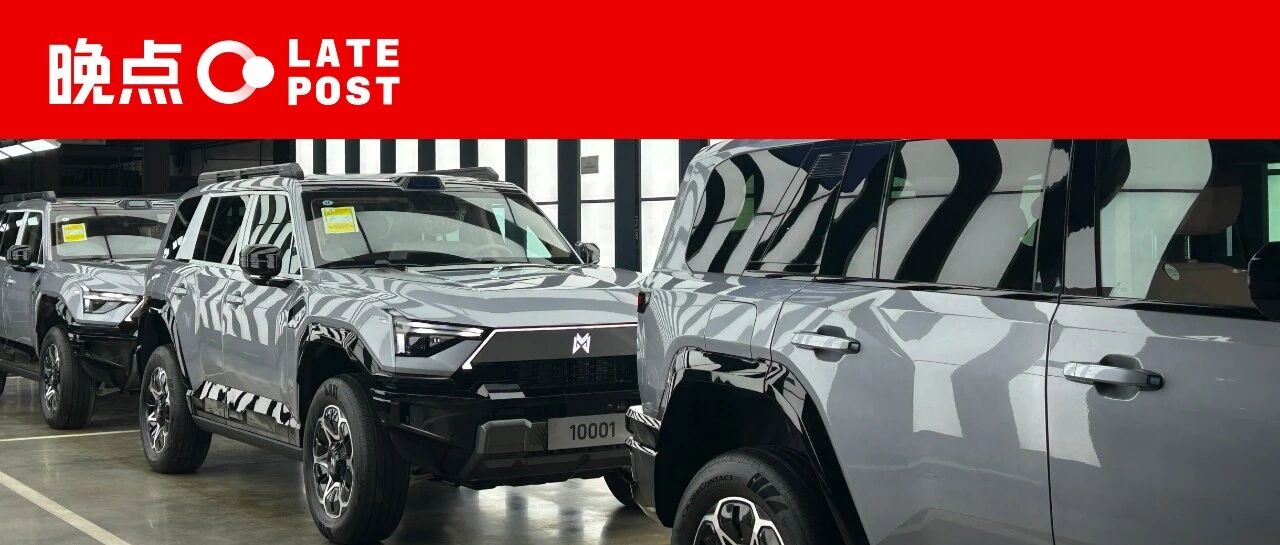
万台猛士 M817 下线,华为乾崑如何打造豪华智能越野?
晚点LatePost· 2025-12-28 14:20
Core Viewpoint - The success of the Mengshi M817 represents a case study on how Huawei QianKun aids automakers in producing high-quality vehicles, leading to the establishment of a new product category and a novel collaboration paradigm [2][4]. Group 1: Product Launch and Performance - The Mengshi M817, a rugged off-road vehicle developed in collaboration with Huawei QianKun, has achieved a significant milestone with the production of its 10,000th unit [3]. - Since its delivery began in September, the Mengshi M817 has experienced a continuous month-on-month sales increase, with nearly 2,000 units sold in November alone [3]. - The factory's design capacity was originally set at 2,200 units per month, but due to the sustained sales growth of the Mengshi M817, the production capacity has been increased to 2,500 units per month [3]. Group 2: Market Potential and Trends - The off-road vehicle market in China is relatively small, contributing less than 4% to the total automotive sales, with an expected sales volume of 940,000 units in 2024 [5]. - Despite the small base, the off-road vehicle segment is anticipated to grow, particularly with the rise of electric vehicles, which are expected to lower usage costs and enhance the riding experience [5][6]. - The trend towards outdoor activities post-pandemic has led to a growing interest in off-road vehicles, with a notable preference for "boxy" designs [6]. Group 3: Technological Integration and Innovation - The Mengshi M817 incorporates Huawei QianKun's full-stack solutions, including intelligent driving, cockpit, vehicle control, and communication systems, tailored specifically for off-road scenarios [3][4]. - The vehicle features advanced driving assistance systems (ADS) that enhance safety and usability in both urban and off-road environments, with capabilities such as automated parking and long-distance driving without intervention [7][8]. - The integration of 27 sensors, including a 192-line LiDAR and multiple cameras, allows the Mengshi M817 to maintain high perception accuracy in various environmental conditions [9][10]. Group 4: New Collaboration Paradigm - The partnership between Huawei QianKun and Mengshi marks a shift from traditional supplier relationships to a collaborative model where both parties define requirements and co-develop products [15][17]. - This new approach not only enhances product offerings but also transforms Mengshi into a user-centric enterprise, focusing on rapid response to customer feedback and needs [16]. - Future collaborations will expand into product definition, marketing, and ecosystem services, indicating a deeper integration of Huawei's capabilities into the entire vehicle development process [17][18].
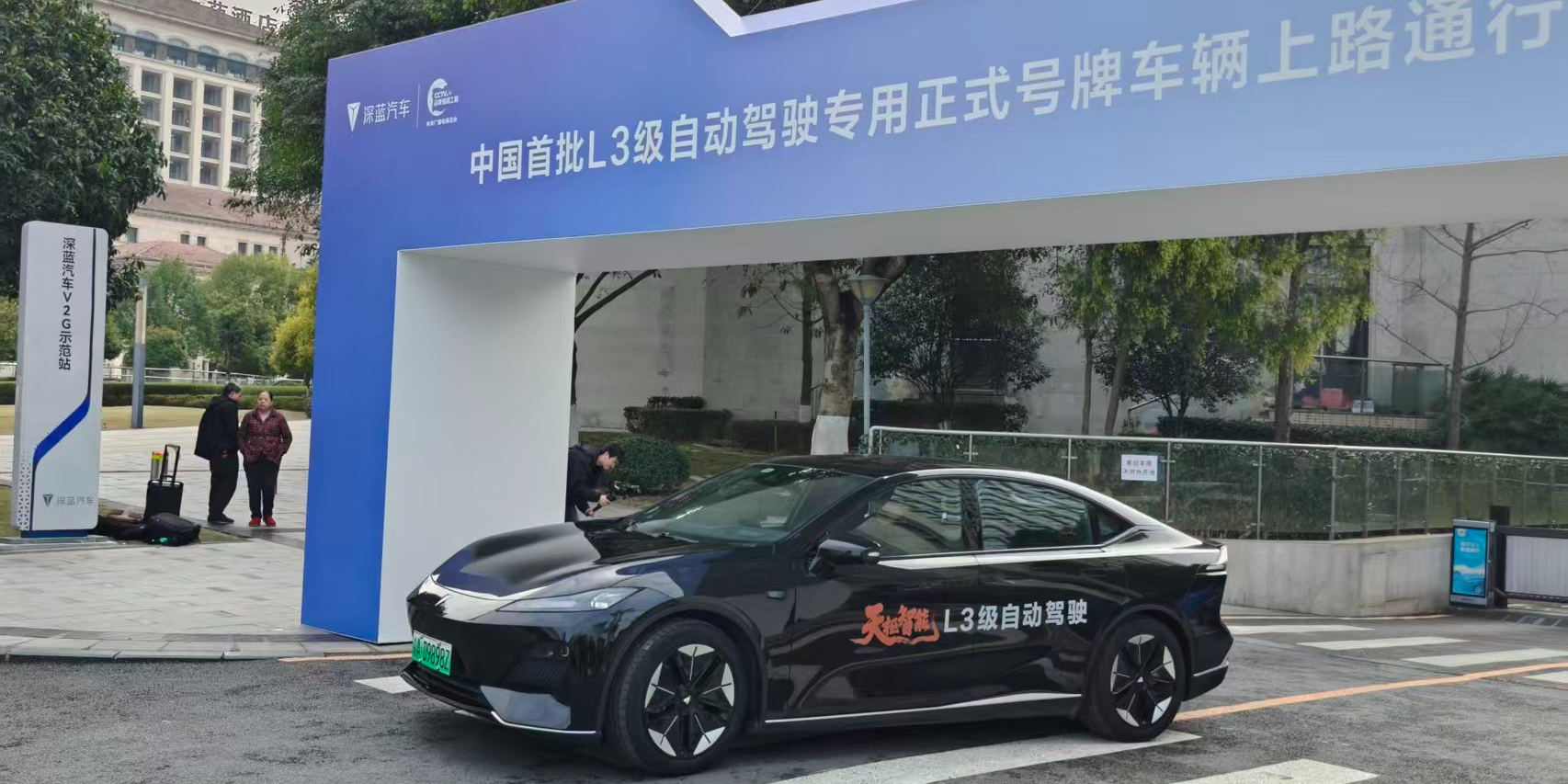
深蓝汽车邓承浩:下一代车型全部都有L3级自动驾驶功能
Jing Ji Guan Cha Wang· 2025-12-28 13:24
Core Viewpoint - The successful launch of L3 autonomous driving vehicles by Deep Blue Automotive marks a significant milestone in China's autonomous driving technology, indicating a transition to large-scale road operation [2][3]. Group 1: L3 Autonomous Driving Milestone - Deep Blue Automotive's vehicles with "L3 Autonomous Driving" labels have begun operating on urban roads in Chongqing, following the acquisition of the first official L3 autonomous driving license in China [2]. - The company has a long history of research in L3 technology, with nearly 10 years of development leading to this achievement [2][3]. - The SL03 model, which received the L3 product approval, was developed five years ago, showcasing the company's early commitment to L3 technology [3]. Group 2: Financing and Future Plans - Deep Blue Automotive completed a C-round financing of 6.122 billion yuan, with investments from Changan Automobile, Chongqing Yufu Holdings, and other entities, aimed at supporting the next phase of development and commercialization of advanced autonomous driving [11][12]. - The financing will be directed towards new vehicle development, core technology innovation, and enhancing global brand presence [11][12]. - The company aims to achieve a balance between profitability and self-sustaining growth within the next 2 to 3 years, with a target of selling 2 million vehicles globally by 2030 [12]. Group 3: Technical and Operational Aspects - The L3 vehicles are currently limited to a maximum speed of 50 km/h to gather data in congested driving scenarios, emphasizing a cautious approach during the exploratory phase [7]. - Deep Blue Automotive's strategy includes both independent research and collaboration with partners like Huawei to enhance its autonomous driving capabilities [4]. - The company is preparing to develop L3 and L4 functionalities for its next generation of vehicles, indicating a commitment to advancing its technology offerings [10].