
Yanghe(002304)

Search documents
【转|太平洋食饮-26年度策略】底部向阳,寻找结构性亮点
远峰电子· 2026-01-18 11:38
Overall Sector Review - The food and beverage sector significantly underperformed the market, with a year-to-date decline of -0.62%, lagging behind the Shanghai Composite Index by 15.0 percentage points [2] - The sector experienced a deep correction after an initial rebound driven by expectations of consumption recovery and supportive policies, but the actual recovery rate was lower than anticipated, leading to a consensus on weak domestic demand [2] Subsector Performance - The snack sector outperformed with a year-to-date increase of 28.88%, driven by channel expansion and a revenue growth rate of 30.97% in the first three quarters [4] - Soft drinks also showed resilience with a 10.11% stock price increase, benefiting from strong travel demand and low-cost, high-frequency consumption [4] - The restaurant chain sector saw a rebound with gains of approximately 10.34% and 10.29% for pre-processed and baked goods, respectively [4] - The liquor sector, particularly high-end liquor, faced challenges with weaker sales and declining prices, while beer performance was supported but affected by high-end market constraints [4] Investment Insights - The sector is under pressure from deflationary trends and a weak recovery, with consumer confidence remaining low, indicating a shift to a "new normal" of low growth [8] - High-end consumption has shown slight recovery due to stock market wealth effects, but sustainability remains a concern [9] - The food and beverage sector's valuation is at historical lows, with a current PE (TTM) of 21.9X, indicating potential investment opportunities in undervalued segments [12] Fund Holdings - As of Q3 2025, the food and beverage sector's fund holdings decreased to 6.38%, nearing levels seen in 2016, with the liquor segment comprising 5.52% of this [14] - Fund holdings in the liquor sector increased for certain subsectors, including white liquor and seasoning products, while others saw declines [16] Long-term Trends - The liquor industry is undergoing its longest adjustment period since 2003, with significant price corrections and a potential bottoming out of valuations [21] - The white liquor sector has underperformed the market with a year-to-date return of -4.87%, reflecting weak demand and a divergence from broader market trends [24] - The third quarter of 2025 saw a significant decline in revenue and net profit for the white liquor sector, indicating a deep adjustment phase [27] Pricing Dynamics - The white liquor market is experiencing a general decline in prices, particularly in high-end segments, while lower price segments show resilience [29] - The average price of high-end products like Moutai has dropped significantly, while mid-range and lower-range products have maintained stability or slight increases [31] Investment Recommendations - The white liquor sector is advised to focus on inventory reduction and demand recovery, with a preference for leading brands that can maintain pricing power and product stability [32]







酒行业周度市场观察-20260118
Ai Rui Zi Xun· 2026-01-18 05:08
Investment Rating - The report does not explicitly provide an investment rating for the industry Core Insights - The liquor industry is undergoing a transformation with the rise of instant retail, prompting companies to adapt their strategies for full-chain competition [2] - The market for loose liquor is expected to grow significantly, from 800 billion yuan in 2024 to over 1 trillion yuan in 2025, driven by community consumption and the appeal to younger consumers [2] - The trend of low-alcohol liquor is gaining traction, with major brands launching products to cater to the preferences of younger consumers, although challenges remain in maintaining flavor and stability [5] - The white liquor market is experiencing a shift from high-end to mid-range products, with a focus on value and quality rather than brand prestige [6] - The concept of "user co-creation" is emerging as a key strategy for brands to engage consumers and enhance brand loyalty [13] Industry Environment - Instant retail is becoming a new frontier for liquor sales, with leading brands exploring online channels and innovative models like live streaming [2] - The loose liquor market is being targeted by several well-known brands as a response to inventory pressures and price discrepancies [2] - The high-end liquor segment is facing challenges with declining sales and inventory issues, prompting brands to adjust their strategies [9] - The 400-600 yuan price range for liquor is disappearing in many markets, with actual transaction prices dropping to 300-400 yuan [9] - The wedding market is seeing a resurgence, but overall liquor consumption is declining due to economic pressures [14] Top Brand Dynamics - Wuliangye is implementing a "youthful and scenario-based" strategy with the opening of a cultural experience center in Hangzhou [21] - Shede Liquor is collaborating with high-end dining experiences to showcase the value of premium liquor [22] - The introduction of light-flavored liquor by Niulanshan aims to attract younger consumers and adapt to changing market demands [22] - The report highlights the success of Jinjiao liquor in appealing to young female consumers, marking a shift in the health liquor market [28] - Muddy Pit Liquor is achieving growth through a focus on quality and brand empowerment during the industry's downturn [25]



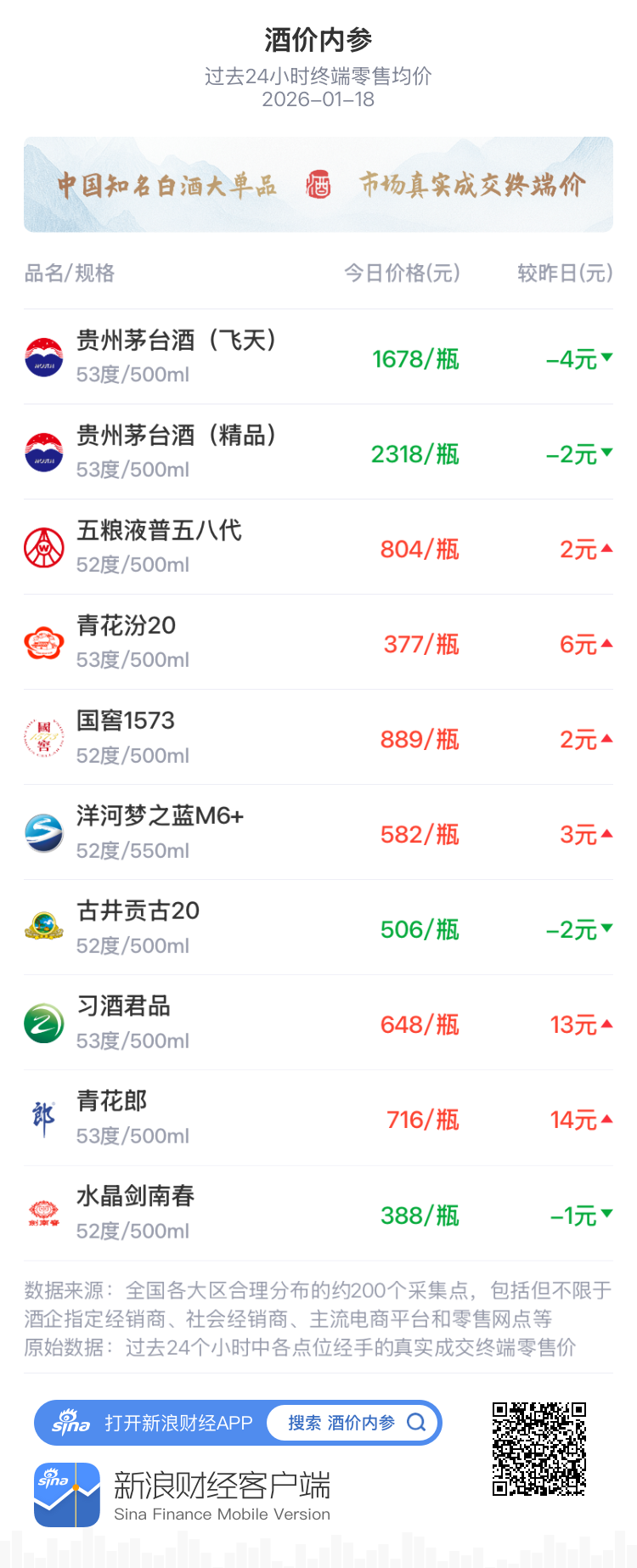
酒价内参1月18日价格发布 十大单品涨跌互现整体价格温和反弹
Xin Lang Cai Jing· 2026-01-18 01:19
Core Insights - The Chinese liquor market shows a mixed trend with six products increasing in price and four decreasing over the past 24 hours, indicating ongoing industry adjustments and a lack of significant improvement in market sentiment [1] Price Movements - The overall price for a package of the top ten liquor products is 8,906 yuan, which is an increase of 31 yuan from the previous day [1] - Among the products that increased in price, Qinghua Lang rose by 14 yuan per bottle, while Xijiu Junpin followed with a 13 yuan increase [1][4] - Other notable increases include Qinghua Fen 20 (up 6 yuan), Yanghe Dream Blue M6+ (up 3 yuan), and Guojiao 1573 and Wuliangye Pu 58th generation (both up 2 yuan) [1][3] Declining Products - Feitian Moutai continues to decline, with a decrease of 4 yuan per bottle, influenced by the "price anchoring" effect from the iMoutai platform [1][3] - Other products that saw a decrease include Boutique Moutai (down 2 yuan), Gujing Gong Gu 20 (down 2 yuan), and Shuijing Jian Nan Chun (down 1 yuan) [1][4]

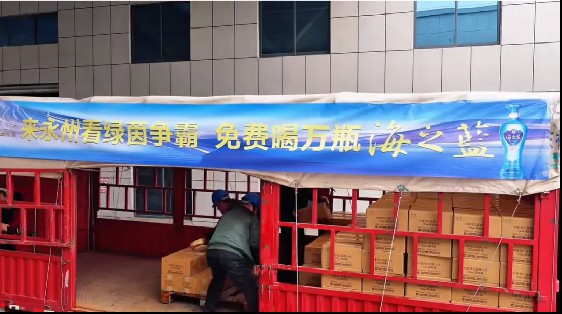
致敬永州队,绵软洋河情,海之蓝15999瓶回礼彰显尊崇
Zhong Jin Zai Xian· 2026-01-16 02:41
Core Viewpoint - The article highlights a collaborative initiative between Yanghe and the cities of Yongzhou and Suqian, emphasizing the connection through football and the sharing of local products and culture, symbolized by the distribution of Yanghe's "Sea Blue" liquor and local delicacies [5][10]. Group 1: Event and Collaboration - Yanghe prepared a gift of 15,999 bottles of 100mL "Sea Blue" liquor to express gratitude towards Yongzhou, with the number "15999" symbolizing a lasting relationship [5]. - The initiative is part of a broader interaction between Suqian and Yongzhou, showcasing local specialties such as crabs, noodles, and snacks alongside the liquor [7]. Group 2: Marketing and Promotion - The campaign includes creative advertising and public displays, such as light shows in Nanjing, promoting the message "Please Champion, Drink Good Wine" to support the 2026 CMG Mass Football Invitation Tournament [10]. - A special free entry program for residents of Taizhou, Yongzhou, and Ganzhou to visit the Yanghe Cultural Tourism Area has been launched, incentivizing participation with free bottles of liquor [14]. Group 3: Cultural Significance - The initiative reflects a deep appreciation for football, life, and human connections, with the liquor serving as a medium for expressing these sentiments [16].
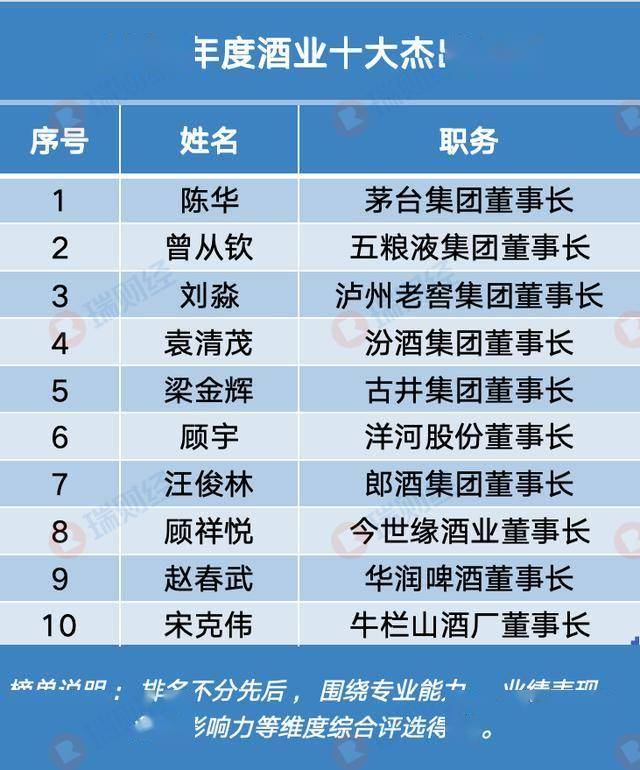
洋河股份董事长顾宇入选“2025年度酒业十大杰出人物”
Sou Hu Cai Jing· 2026-01-16 02:10
Core Viewpoint - The "2025 Annual Top Ten Outstanding Figures in the Liquor Industry" list was announced by Rui Finance, highlighting the achievements of key industry leaders, including Gu Yu, Chairman of Yanghe Co., Ltd. [2] Group 1: Industry Recognition - Gu Yu was selected for the "2025 Annual Top Ten Outstanding Figures in the Liquor Industry" based on professional ability, performance, and industry influence [2] - The list includes notable figures such as the chairmen of Moutai Group, Wuliangye Group, and Luzhou Laojiao Group, indicating a competitive landscape in the liquor industry [2] Group 2: Company Leadership - Gu Yu, born in May 1978, has held various governmental and administrative roles before becoming the Chairman of Yanghe Co., Ltd. [3] - Under Gu Yu's leadership, Yanghe Co., Ltd. focuses on "de-stocking, enhancing momentum, and stabilizing prices" as its main operational strategy for 2025 [3] - The company aims to achieve product matrix upgrades, diversify brand marketing strategies, and optimize channel operations [3]
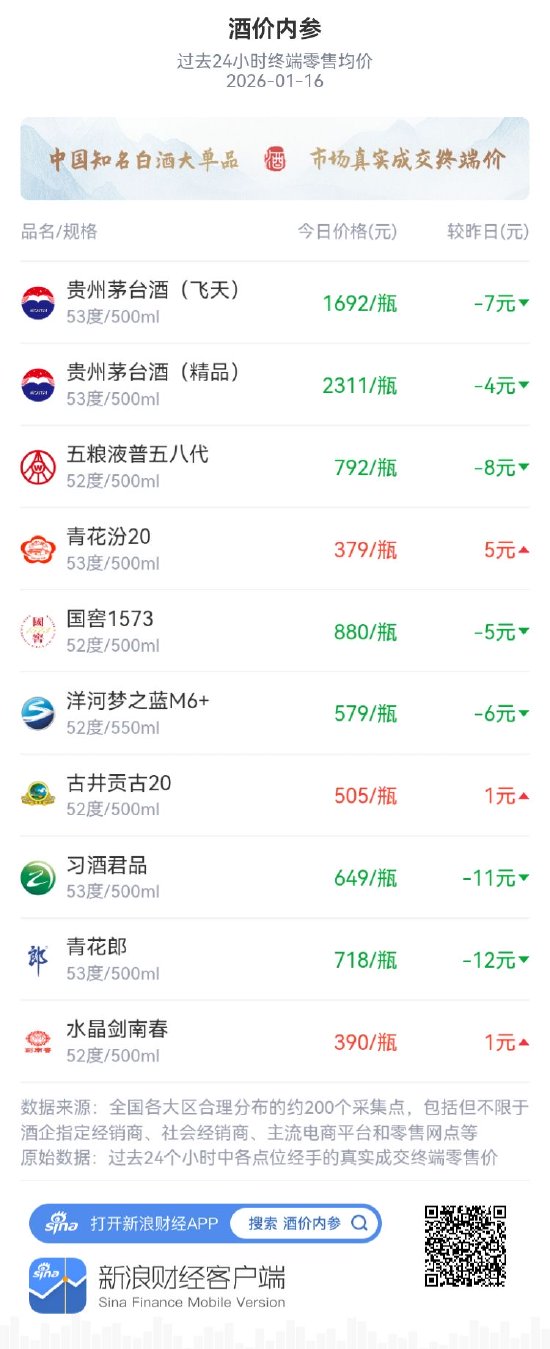
酒价内参1月16日价格发布 青花汾20上涨5元
Xin Lang Cai Jing· 2026-01-16 01:24
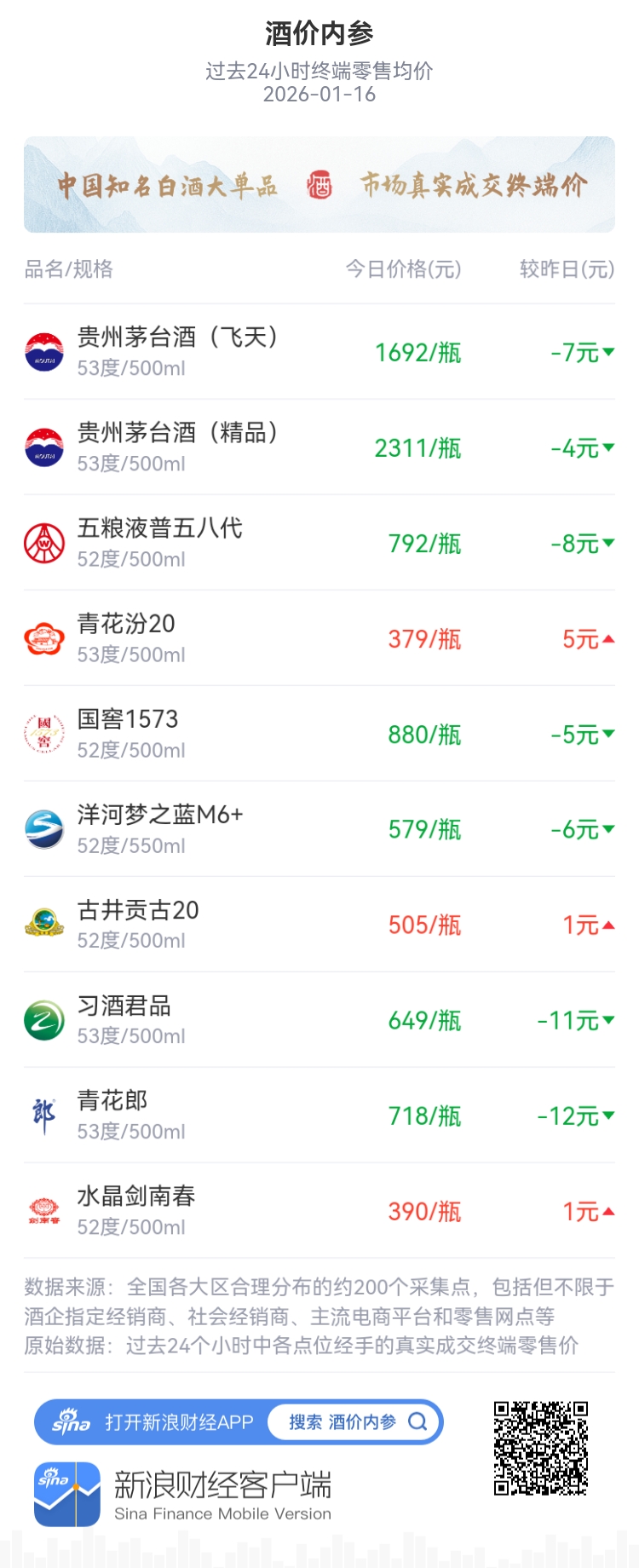
Core Insights - The core viewpoint of the article highlights a significant decline in the retail prices of major Chinese liquor brands, indicating ongoing inventory adjustments within the industry [1][7]. Price Trends - The average retail price of the top ten liquor products in China fell to 8,895 yuan on January 16, a decrease of 46 yuan from the previous day, marking the lowest price level in nearly two months [1][7]. - Among the ten products, seven experienced price drops while three saw increases, with key products collectively contributing to the decline in average prices [1][7]. Specific Product Price Changes - Leading the price declines were Qinghua Lang and Xijiu Junpin, which fell by 12 yuan and 11 yuan per bottle, respectively [1][7]. - Wuliangye Pu Wu Eight Generation decreased by 8 yuan, while Feitian Moutai dropped by 7 yuan, influenced by the iMoutai platform's pricing strategies and inventory adjustments [1][7]. - Other notable declines included Yanghe Dream Blue M6+ and Guojiao 1573, which fell by 6 yuan and 5 yuan, respectively [1][7]. - In contrast, Qinghua Fen 20 saw an increase of 5 yuan, while Gujing Gonggu 20 and Shuijing Jian Nan Chun rose by 1 yuan each [1][7]. Market Dynamics - The decline in prices is attributed to differentiated consumer demand and price adjustments by leading brands, reflecting the ongoing inventory reduction process in the liquor industry [1][7]. - The iMoutai platform's recent sales of Moutai products at competitive prices have had a magnetic effect on the market, contributing to the observed price changes [2][8]. Sales and Marketing Strategies - Moutai has been leveraging digital marketing through the iMoutai platform, which has seen significant engagement, including the rapid sell-out of new product releases [3][9]. - The platform's popularity surged, reaching the top of the Apple App Store's shopping category, with over 2.7 million new users added within nine days of launching a new product [3][9]. - Moutai's board has approved a market-oriented operational strategy, enhancing its sales model to include a dynamic pricing adjustment mechanism based on market conditions [3][9].
酒价内参1月14日价格发布 市场普跌回调价格中枢下探
Xin Lang Cai Jing· 2026-01-16 01:21
Core Viewpoint - The Chinese liquor market, particularly for the top ten baijiu products, has experienced a general price adjustment, with a moderate decline in retail prices as of January 14, indicating cautious market sentiment [1]. Price Trends - The total retail price for a package of the top ten baijiu products is 8925 yuan, down 44 yuan from the previous day [1]. - Eight out of the ten products have seen price declines, reflecting a bearish market trend [1]. - The leading product, Feitian Moutai, has decreased by 9 yuan per bottle, while other notable declines include Gujing Gonggu and Qinghua Lang, both down 8 yuan per bottle [1][2]. Individual Product Pricing - Feitian Moutai (53 degrees, 500ml) is priced at 1692 yuan, down 7 yuan [2]. - The premium Moutai variant is significantly down by 470 yuan, now at 2311 yuan [2]. - Wuliangye (Pu Wu 8th generation, 52 degrees, 500ml) is priced at 792 yuan, down 8 yuan [2]. - Other products like Guojiao 1573 and Yanghe Dream Blue M6+ have also seen minor declines of 5 yuan and 6 yuan respectively [2][3]. Market Dynamics - The market is characterized by a general decline in prices, with only Wuliangye showing a slight increase of 1 yuan, while Qinghua Fen remains stable [1]. - The overall market sentiment appears cautious, with a narrowing of trading volumes and a clear differentiation in product performance [1].
当不齐舞团遇见洋河酒:新春带你一起“骉福舞”出圈
Zhong Jin Zai Xian· 2026-01-15 11:12
Group 1 - The "Yanghe Biaofu Dance" challenge, created by the Unqi Dance Troupe, launched on Douyin and WeChat Video, aiming to celebrate the New Year with vibrant dance moves [2][7] - The dance incorporates festive elements and blessings, with a dedicated teaching video and original music titled "Yanghe Biaofu," enhancing the celebratory atmosphere [2][7] - Participants can join the challenge by using the hashtag NewYearBiaowuPowerOn, with opportunities to win cash rewards and Yanghe zodiac-themed gifts by showcasing specific dance moves [4][5] Group 2 - Yanghe's "Dream Blue M6+" has been the exclusive timekeeping partner for CCTV's New Year's Eve Gala for seven consecutive years, reinforcing its presence during family reunions [7] - The challenge has sparked significant consumer engagement, with various demographics participating and sharing their dance performances, contributing to a lively online community [7][9] - The creative combination of dancing and showcasing Yanghe products has led to increased interaction on social media, with users encouraging each other to share their unique dance versions [7][11]

1月15日深证国企ESG(970055)指数涨0.27%,成份股中钨高新(000657)领涨
Sou Hu Cai Jing· 2026-01-15 10:39
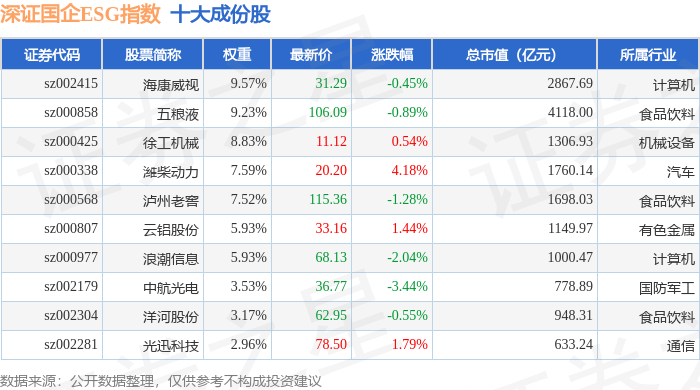
Core Viewpoint - The Shenzhen State-owned Enterprise ESG Index (970055) closed at 1472.43 points, up 0.27%, with a trading volume of 49.598 billion yuan and a turnover rate of 1.79% [1] Group 1: Index Performance - On the day, 23 constituent stocks rose, with Zhongtung High-tech leading with a 5.52% increase, while 25 stocks fell, with Taisen Wind Power leading the decline at 6.2% [1] - The index's constituent stocks experienced a net outflow of 1.149 billion yuan from major funds, while retail investors saw a net inflow of 1.065 billion yuan [1] Group 2: Top Constituents - The top ten constituents of the Shenzhen State-owned Enterprise ESG Index include: - Hikvision (sz002415) with a weight of 9.57%, latest price at 31.29 yuan, down 0.45% [1] - Wuliangye (sz000858) with a weight of 9.23%, latest price at 106.09 yuan, down 0.89% [1] - Xugong Machinery (sz000425) with a weight of 8.83%, latest price at 11.12 yuan, up 0.54% [1] - Weichai Power (sz000338) with a weight of 7.59%, latest price at 20.20 yuan, up 4.18% [1] - Luzhou Laojiao (sz000568) with a weight of 7.52%, latest price at 115.36 yuan, down 1.28% [1] - Yun Aluminum (sz000807) with a weight of 5.93%, latest price at 33.16 yuan, up 1.44% [1] - Inspur Information (sz000977) with a weight of 5.93%, latest price at 68.13 yuan, down 2.04% [1] - AVIC Optoelectronics (sz002179) with a weight of 3.53%, latest price at 36.77 yuan, down 3.44% [1] - Yanghe Distillery (sz002304) with a weight of 3.17%, latest price at 62.95 yuan, down 0.55% [1] - Guangxun Technology (sz002281) with a weight of 2.96%, latest price at 78.50 yuan, up 1.79% [1] Group 3: Fund Flow Details - Major funds saw significant inflows in stocks such as: - Deep Technology (000021) with a net inflow of 503 million yuan [2] - Weichai Power (000338) with a net inflow of 1.12 million yuan [2] - Zhongtung High-tech (000657) with a net inflow of 95.263 million yuan [2] - Conversely, stocks like Yun Aluminum (000807) and Xugong Machinery (000425) experienced net outflows from major funds [2]



洋河股份:公司将不断升级和提升产品品质
Zheng Quan Ri Bao Wang· 2026-01-15 03:06
Core Viewpoint - Yanghe Co., Ltd. emphasizes its commitment to consumer-oriented strategies, leveraging scale and technological advantages to continuously upgrade and enhance product quality [1] Group 1 - The company will maintain a consumer-oriented approach in its operations [1] - Yanghe Co., Ltd. aims to utilize its scale advantages to improve product offerings [1] - The company is focused on enhancing product quality through technological advancements [1]