GANFENG LITHIUM(002460)

Search documents
港股异动 | 赣锋锂业(01772)午后跌超4% 碳酸锂期货午后转跌 后续供需两端都有转弱预期
智通财经网· 2026-01-08 06:04
卓创资讯锂电分析师苏津仪表示,当前碳酸锂现货价格已经创下2024年以来的新高,后续仍然具备上行 空间,但近期涨势中也包含了情绪驱动的成分。从未来供需格局看,2026年2月份前后,供需两端都有 转弱预期,市场可能逐步进入淡季。 智通财经APP获悉,赣锋锂业(01772)午后跌超4%,截至发稿,跌3.84%,报55.1港元,成交额6.38亿港 元。 消息面上,1月8日,碳酸锂主力期货价格早盘一度逼近15万元/吨,午后快速转跌。据央广网1月7日报 道,面对锂价波动,业内不少经销商都采取了在期货市场套期保值的策略,但锂价连续大涨让他们措手 不及,只能被迫追加保证金,接下来甚至有爆仓风险。一些经销商表示,下游客户近期采购热情降低, 也决定了碳酸锂价格不太可能持续大涨。 ...

碳酸锂又大涨,逼近15万元/吨!还会涨吗?是否会带动新能源汽车涨价?
Xin Lang Cai Jing· 2026-01-08 03:17
据央广网1月7日报道,面对锂价波动,业内不少经销商都采取了在期货市场套期保值的策略,但锂价连 续大涨让他们措手不及,只能被迫追加保证金,接下来甚至有爆仓风险。一些经销商表示,下游客户近 期采购热情降低,也决定了碳酸锂价格不太可能持续大涨。 炒股就看金麒麟分析师研报,权威,专业,及时,全面,助您挖掘潜力主题机会! 1月8日,A股储能、锂电池板块早盘持续上涨,板块内多只个股涨停。碳酸锂期货价格一度逼近15万元/ 吨。 消息面上,1月7日,工业和信息化部、国家发展改革委、市场监管总局、国家能源局联合召开动力和储 能电池行业座谈会。 会议指出,我国动力和储能电池产业发展迅速,在全球范围内取得阶段性竞争优势。同时,受多种因素 影响,行业内存在盲目建设情况,出现低价竞争等非理性竞争行为,扰乱正常市场秩序,削弱行业可持 续发展能力,必须予以规范治理。要强化市场监管,加强价格执法检查,加大生产一致性和产品质量监 督检查力度,打击涉知识产权违法行为。要优化产能管理,健全产能监测和分级预警机制,加强宏观调 控,防范产能过剩风险。要支持行业自律,发挥行业协会作用,引导企业科学布局产能,推动构建优质 优价、公平竞争的市场秩序。要加强 ...
“反内卷”叠加增长预期, 2026年碳酸锂能否继续“狂飙”?
Zhong Guo Jing Ying Bao· 2026-01-08 03:03
Core Viewpoint - The lithium carbonate market is expected to experience a rebound in 2025, with prices showing a V-shaped recovery after hitting a low of 59,000 yuan/ton in June, eventually surpassing 130,000 yuan/ton by December, marking an increase of over 120% from the low point [1][2]. Price Trends - In early 2025, lithium carbonate prices fluctuated around 75,200 yuan/ton, dropping below 70,000 yuan/ton by the end of April and reaching a low of 59,000 yuan/ton in June [1]. - By July 2025, prices began to rebound, breaking through 65,000 yuan/ton on July 14, 70,000 yuan/ton on July 21, and closing at 76,680 yuan on July 24, eventually exceeding 120,000 yuan/ton by December 23 [2]. - The price increase is attributed to a combination of factors, including strong demand from the energy storage sector and a reduction in market inventory [2][3]. Demand and Supply Dynamics - The global demand for lithium carbonate is projected to reach 2 million tons by 2026, driven by the growth in electric vehicles and energy storage applications [6]. - The domestic market in China accounted for 63.3% of global power battery installations from January to October 2025, with significant contributions from leading companies [3]. - The new energy storage capacity in China exceeded 100 million kilowatts by September 2025, representing a growth of over 30 times compared to the end of the 13th Five-Year Plan [4]. Industry Performance - Companies in the lithium sector, such as Tianqi Lithium and Ganfeng Lithium, have seen significant stock price recoveries, with increases of over 160% and 173% respectively since their lows in April [3]. - Ganfeng Lithium reported a 364.02% year-on-year increase in net profit for the third quarter [3]. Future Outlook - The lithium market is expected to face uncertainties in 2026, with potential price corrections if demand from the energy storage sector does not meet expectations [7]. - The development of alternative technologies, such as sodium batteries, may introduce new dynamics to the market, although current production costs and scale are not yet comparable to lithium batteries [8].



多重因素共振 机构看涨有色金属后市
Zheng Quan Shi Bao· 2026-01-07 18:09
Group 1 - The prices of non-ferrous metals are on an upward trend due to multiple factors such as geopolitical risks, supply-demand dynamics, and policy support, leading to optimistic performance forecasts for the sector [1][4] - The Ministry of Natural Resources announced a new round of mineral exploration actions, achieving significant results during the 14th Five-Year Plan period, including the discovery of 10 large oil fields and 19 large gas fields, with substantial increases in resources like uranium, copper, gold, lithium, and potassium salt [2] - The Ministry of Industry and Information Technology projects an average annual growth of about 5% in the added value of the non-ferrous metal industry and a 1.5% annual growth in the production of ten major non-ferrous metals from 2025 to 2026 [2] Group 2 - Major non-ferrous metal prices are expected to continue rising in 2025, with significant increases reported: London gold up 64.56%, London silver up 147.79%, and LME copper and tin both over 30% [3] - Investment demand, particularly from emerging fields like artificial intelligence and energy storage, is anticipated to drive a new commodity cycle, with industrial metal prices expected to rise further due to ongoing liquidity easing and supply constraints [4] - The non-ferrous metal sector has seen net inflows of 12.981 billion yuan since December 2025, with several companies, including Ganfeng Lithium and Zijin Mining, receiving significant financing [5] Group 3 - Companies such as Chifeng Gold and Zijin Mining have announced positive earnings forecasts for 2025, with Chifeng Gold expecting a net profit of 3 to 3.2 billion yuan, a year-on-year increase of 70% to 81%, and Zijin Mining projecting a net profit of 51 to 52 billion yuan, a year-on-year increase of 59% to 62% [6][7] - Chifeng Gold's expected gold production for 2025 is approximately 14.4 tons, with sales prices rising by about 49%, while Zijin Mining plans to produce 105 tons of gold, 120,000 tons of copper, 12,000 tons of lithium carbonate, and 520 tons of silver in 2026 [7]


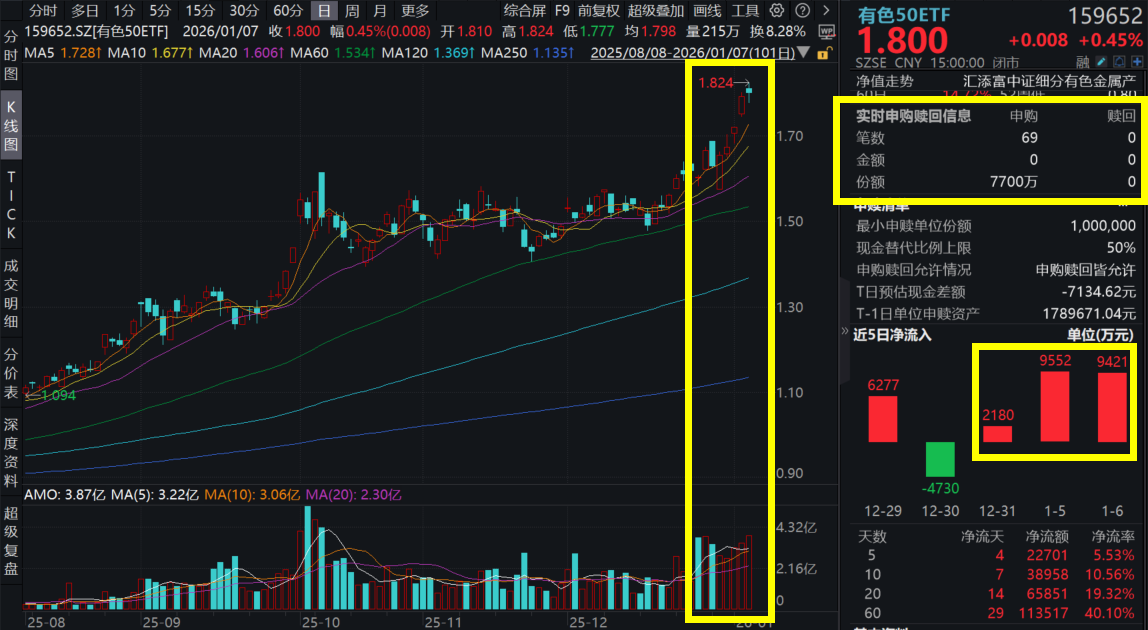
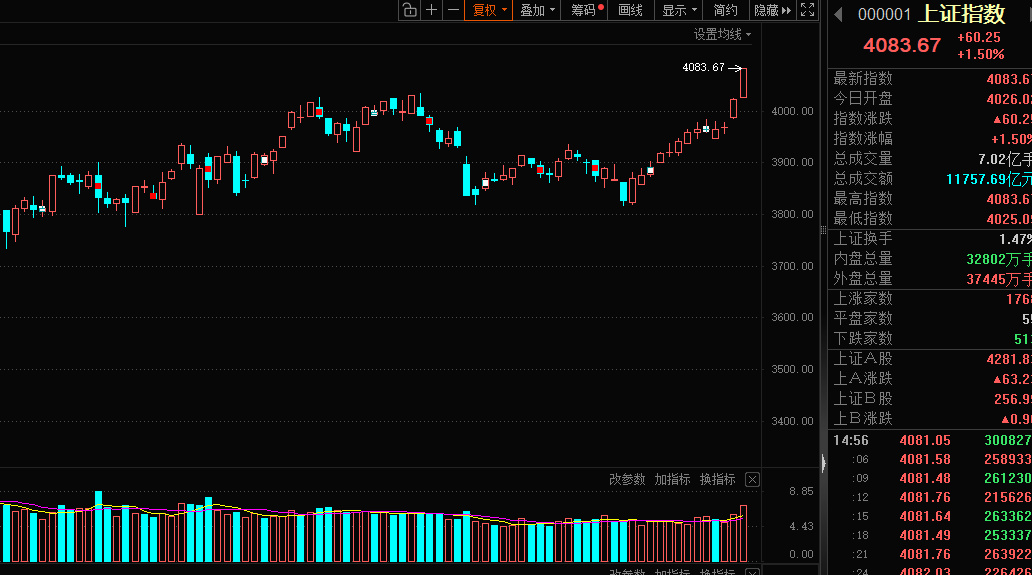
沪指喜提14连阳!北方稀土涨超4%,有色50ETF(159652)五连涨,全天强势吸金,连续4日获净申购3.5亿!花旗上调铜价预期至14000美元
Xin Lang Cai Jing· 2026-01-07 09:24
Market Overview - On January 7, the A-share market experienced a volatile upward trend, with the Shanghai Composite Index closing in the green, marking a 14-day winning streak [1] - The Nonferrous 50 ETF (159652) saw a slight increase of 0.45% after a morning surge, achieving five consecutive days of gains and attracting over 1.38 billion yuan in net inflow, totaling 3.5 billion yuan over four days [1] Industry Performance - The performance of constituent stocks in the Nonferrous 50 ETF was mixed, with Huayou Cobalt rising over 5%, Northern Rare Earth up over 4%, and Luoyang Molybdenum increasing by 1%. Conversely, Yun Aluminum fell over 3%, and Zijin Mining dropped over 2% [6] Copper Price Forecast - Citigroup updated its copper price forecast, suggesting that the London Metal Exchange (LME) copper price could rise to $14,000 per ton within the next three months due to strong market momentum and bullish factors [3] - Factors contributing to this bullish outlook include cross-exchange arbitrage related to the U.S. market, global demand and growth expectations, and constrained copper supply [3] Supply and Demand Dynamics - The supply side remains frequently disrupted, with Canadian miner Captone announcing a strike at its Manto Verde copper-gold mine in Chile [4] - From a financial perspective, the ongoing interest rate cuts by the Federal Reserve and a weak dollar are expected to support higher copper prices. The supply-demand dynamics indicate a robust demand side, driven by AI and emerging market developments [4][5] Long-term Price Projections - According to CITIC Securities, the LME copper price is projected to gradually rise to $9,800 per ton, $10,600 per ton, $11,200 per ton, and $12,000 per ton from 2025 to 2028, driven by the scarcity of copper resources and increasing demand [5] - The global refined copper demand is expected to grow at an average rate of around 2.5%, with supply gaps widening in the coming years [7] Investment Opportunities - The Nonferrous 50 ETF (159652) is highlighted as a strategic investment vehicle, covering various metal sectors and benefiting from the super cycle in nonferrous metals [9] - The ETF has a high concentration of copper and gold, with copper content at 34% and gold content at 12%, making it a leading option in its category [9] - The ETF's performance has been driven by earnings rather than valuation, with a PE ratio of 26.27, down 52% from five years ago, indicating a favorable valuation environment [14]




固态电池产业化加速,这些公司已布局
Zheng Quan Shi Bao Wang· 2026-01-07 09:09
Group 1 - The solid-state battery industry is accelerating towards commercialization, with significant advancements expected in the near future [6][8] - A Finnish startup, Donut Lab, has announced the world's first commercially viable solid-state battery, set to be showcased at CES 2026, which promises to surpass traditional lithium battery technology in energy density, charging speed, and lifespan [8] - The industry consensus is moving towards reducing liquid electrolyte content and increasing solid electrolyte usage, which is seen as a disruptive technology that will drive innovation and competition among global companies [8][9] Group 2 - Companies involved in solid-state battery technology, such as Tianqi Lithium (002460), Enjie (002812), and others, are expected to see significant profit growth, with some projected to double their net profits this year [11][12] - Research indicates that solid-state battery manufacturers will benefit first from the industry's acceleration, with new equipment opening up additional growth opportunities [9] - Key players like Tianqi Materials (002709) and Xiamen Tungsten (厦钨新能) are making strides in solid-state battery materials, with advancements in sulfide electrolytes and oxide-based materials [10][12]




有色ETF基金(159880)涨超2%,稀土黄金双双上行
Sou Hu Cai Jing· 2026-01-07 03:50
Core Viewpoint - The rare earth and precious metals sectors are experiencing significant price increases, driven by supply constraints and strong demand, particularly in the context of China's regulatory measures and global economic conditions [1][2]. Group 1: Market Performance - The National Securities Nonferrous Metals Industry Index (399395) rose by 1.88%, with notable gains in individual stocks such as Rare Earth (600259) up 10.00%, Shengtun Mining (600711) up 9.01%, and Xingye Silver Tin (000426) up 7.57% [1]. - The Nonferrous ETF Fund (159880) increased by 2.01%, marking its fifth consecutive rise, with the latest price reported at 2.13 yuan [1]. Group 2: Supply and Demand Dynamics - On the supply side, domestic rare earth supply regulation is expected to smooth out the issuance of quotas, while overseas supply is projected to continue growing as new projects come online [2]. - Demand for rare earths is anticipated to remain strong, particularly from the electric vehicle sector and robotics, further emphasizing the scarcity of resources and potentially driving prices higher [2]. Group 3: Gold and Silver Market Insights - Global central banks continue to increase their gold holdings, which supports the ongoing bullish trend in gold prices, especially during periods of interest rate cuts [2]. - Silver ETF holdings are expected to rise significantly by 2025, driven by its financial attributes, which will likely contribute to an increase in silver prices [2]. Group 4: Index Composition - As of December 31, 2025, the top ten weighted stocks in the National Securities Nonferrous Metals Industry Index (399395) include Zijin Mining (601899), Luoyang Molybdenum (603993), and Northern Rare Earth (600111), collectively accounting for 51.65% of the index [3].


2026碳酸锂年度报告:碳酸锂供需双增,价格重心上移
Ning Zheng Qi Huo· 2026-01-07 02:44
Group 1: Report Industry Investment Rating - No relevant content provided Group 2: Core Viewpoints of the Report - In 2026, due to high - speed consumption growth, lithium carbonate is expected to shift from an oversupply situation to a tight - balance pattern. The smooth release of supply is likely under high - profit conditions, and attention should be paid to the actual realization of consumption [4][55]. - If the consumption end exceeds expectations and the supply end encounters force majeure, the short - term supply - demand may be tight. There is a high possibility of inventory accumulation in the first half of next year. If consumption fails to meet expectations, the price may correct and return to the cost - pricing model. If consumption continues to exceed expectations and supply - side production falls short of expectations in the second half of the year, the lithium carbonate price is expected to strengthen further [4][55]. - It is expected that the lithium carbonate futures price will range from 80,000 to 150,000 yuan per ton in 2026. As the overall industry oversupply narrows, the price center may rise, and the overall fluctuation range remains large [4][55]. Group 3: Summary by Directory Chapter 1: Review of Lithium Carbonate Trends in 2025 - In 2025, lithium carbonate first declined and then rose. Before the mid - year, the price hit a low of 58,000 yuan per ton. After the mid - year, with the "anti - involution" policy and unexpected demand growth, the price accelerated upwards and reached 120,000 yuan per ton at the end of the year [7]. - From March to May, after the Spring Festival, the resumption of production at the Jiaxiaowo Mine, the decline in overseas Australian ore guide costs, and weak consumption led to inventory accumulation and bottom - building of the futures price [7]. - From May to July, under the "anti - involution" background, policies from the State Council and the Ministry of Industry and Information Technology drove the futures price out of the bottom [8]. - In mid - and early August, the shutdown of the Jiaxiaowo Mine and the mining license issues of 8 mines in Jiangxi disturbed the market, causing the futures price to soar [8]. - From late August to mid - October, inventory gradually decreased, but high inventory suppressed the price, and trading sentiment faded [8]. - From late October to the end of the year, supply disruptions and a surge in energy - storage demand led to a significant shortage in supply - demand, and the futures price exceeded 120,000 yuan per ton [9]. Chapter 2: Outlook for the Domestic Macroeconomic Situation 2.1 The Beginning of the 15th Five - Year Plan: Stabilize Growth and Expand Domestic Demand - In 2026, economic growth will be emphasized more. Policy strength is expected to be between that after September 2024 and that from July 2025 to the present [15]. 2.2 Policy: Fiscal Policy as the Mainstay and Monetary Policy as a Supplement - Fiscal policy will continue to be "more proactive", with a deficit rate of about 4% and a deficit scale of about 5.9 trillion yuan. Special bond quotas are expected to be set at 4.5 - 5 trillion yuan. Fiscal policy will shift from "scale expansion" to "efficiency improvement" [17]. - Monetary policy will maintain a "moderately loose" tone but be more cautious in operation. There will be at least one round of reserve - requirement ratio cuts and interest - rate cuts in 2026, with a reserve - requirement ratio cut of 0.25 - 0.5 percentage points and an interest - rate cut of 10 - 20 BP [17]. 2.3 The Possibility of Spill - over Risks in the Real Estate Market Has Significantly Decreased - In 2025, there were no strong national real - estate policies. The change in policy statements may indicate a shift in policy priorities and a change in risk positioning for the real - estate market [21]. 2.4 The "Anti - Involution" Policy May Enter the Implementation Stage - The "anti - involution" policy may enter the implementation stage in 2026, but the public - opinion enthusiasm may decrease, and policies will have priorities [23]. Chapter 3: Sufficient Production Capacity, and the Rising Lithium Price Center Stimulates Supply Elasticity 3.1 Lithium Carbonate Production Capacity Remains Sufficient - In 2025, the overseas supply structure was significantly differentiated. Global lithium carbonate production - capacity layout is accelerating towards Western Australia, South America, and Africa. By the end of 2025, global lithium carbonate smelting capacity exceeded 2 million tons, with domestic capacity exceeding 1.5 million tons [25][26]. - In 2026, it is expected to be the last peak of this round of production - capacity expansion cycle, with new and upcoming projects having a total capacity of over 160,000 tons. Global lithium resource supply is expected to grow by about 30% [24]. 3.2 Slight Increase in Imports, with Significant Growth in Argentina This Year - In October 2025, China's lithium carbonate import volume was 23,800 tons, a month - on - month increase of 21.9% and a year - on - year increase of 3.0%. From January to October, the import volume was 196,900 tons, a year - on - year increase of 4.9%. Imports from Argentina increased significantly [32]. 3.3 The Continuous Growth of Domestic Production Is Mainly Driven by Spodumene - In October 2025, China's lithium carbonate production was 92,300 tons, a month - on - month increase of 5.7% and a year - on - year increase of 54.6%. From January to October, the cumulative output was 776,000 tons, a year - on - year increase of 43.2%. The main driving force for production growth was spodumene [35]. 3.4 The Growth Rate of Lithium Ore Imports Is Slow, while Domestic Ore Production Continues to Increase Significantly - In September 2025, China's lithium concentrate import volume was 521,000 tons, a month - on - month increase of 10.6% and a year - on - year increase of 38%. From January to September, the import volume was 4.37 million tons, a year - on - year increase of 3.4%. In October, China's lithium ore production was 20,050 tons LCE, a month - on - month increase of 0.5% and a year - on - year increase of 20.2% [37][38]. Chapter 4: Strong Consumption Expectations, Attention to Realization 4.1 Strong Domestic Consumption Demand, with a Faster Energy - Transition Pace than the Global Average - In 2025, China's total lithium carbonate consumption was about 520,000 tons LCE, accounting for 76% of global demand. The Yangtze River Delta, the Pearl River Delta, and the Chengdu - Chongqing Economic Circle were the main consumption areas [41]. - In the domestic lithium carbonate consumption structure in 2025, power batteries accounted for about 74%, and energy - storage accounted for 18%, indicating a faster energy - transition pace than the global average [42]. 4.2 Power Batteries Remain Dominant, and the Proportion of Energy - Storage Continues to Increase - In 2025, in the global lithium carbonate demand structure, power batteries remained dominant, but the proportion of energy - storage and other emerging fields continued to increase. The demand for lithium carbonate from power batteries decreased from 82% in 2023 to 78% in 2025, while the energy - storage proportion increased from 11% to 15% [45]. 4.3 Lithium Iron Phosphate Has Become the Main Source of Growth in Lithium Carbonate Consumption - In 2025, lithium iron phosphate accounted for 82% of the demand in the downstream material structure of lithium carbonate, becoming the main source of growth in lithium carbonate consumption. The demand proportion of ternary materials decreased to 13%, and the combined proportion of lithium manganate and lithium cobaltate was less than 5% [48]. Chapter 5: The Marginal Impact of Cost Reduction Weakens, and the Price Gradually Moves Away from the Bottom - The cost range of lithium carbonate is large. The cost of using salt - lake production is the lowest, at 30,000 - 50,000 yuan per ton. The cash cost of self - owned mine enterprises is 40,000 - 60,000 yuan per ton, and the cost of externally purchased ore is about 60,000 - 80,000 yuan per ton. The cost of the recycling end is the highest, about 100,000 - 200,000 yuan per ton [50]. - In 2026, the global lithium ore market is still in an oversupply situation, but the degree of oversupply has narrowed. The industry cycle is expected to shift from oversupply to tight - balance, and the price of lithium ore is unlikely to fall to the 2025 low [50]. Chapter 6: Outlook for the Lithium Carbonate Price Trend in 2026 - In 2026, due to high - speed consumption growth, lithium carbonate is expected to shift from an oversupply pattern to a tight - balance pattern. The smooth release of supply is likely under high - profit conditions. Attention should be paid to the actual realization of consumption [4][55]. - If consumption exceeds expectations and supply encounters force majeure, short - term supply - demand may be tight. There is a high possibility of inventory accumulation in the first half of the year. If consumption fails to meet expectations, the price may correct. If consumption continues to exceed expectations and supply - side production falls short of expectations in the second half of the year, the price is expected to strengthen [4][55]. - It is expected that the lithium carbonate futures price will range from 80,000 to 150,000 yuan per ton in 2026, with a rising price center and large fluctuations [4][55].

2026年碳酸锂年报:储能乘风,锂价向青山
An Liang Qi Huo· 2026-01-07 02:36
Report Industry Investment Rating No relevant information provided. Core Views of the Report - From a fundamental perspective, the lithium carbonate market in 2026 is expected to show a tight - balance pattern with strong supply and demand. The supply side will have a clear division in regions and resource types, with domestic growth led by salt - lake lithium extraction and overseas by ore - based lithium projects. The demand side will be driven by the booming energy - storage market and the rapid increase in the penetration rate of new - energy heavy trucks, along with the stable growth of new - energy vehicle production and sales [2]. - From a technical perspective, given the previous sharp rise and overall bullish market sentiment, the possibility of a rapid and reverse decline in lithium carbonate prices is low. The current price is close to the first important high after the rebound following the decline of lithium carbonate futures, and it may take time to break through this level [2]. Summary by Relevant Catalogs 2025 Lithium Carbonate Trend Analysis: V - shaped Reversal - In 2025, the lithium carbonate market showed a typical V - shaped trend, divided into a unilateral decline from January to June due to weak industry fundamentals and external policy shocks, and an upward - trending period after late June driven by policies and events [5]. - From January to June, the market was in a state of structural oversupply, with downstream new - energy vehicle growth slowing and energy - storage demand under - performing. Social inventory reached 96,000 tons by the end of April, the highest since 2021. After April, the market accelerated its decline due to the US tariff policy, and prices dropped below the break - even point [6]. - After late June, the market rebounded. In July, the "anti - involution" policy boosted sentiment. From late July to September, supply - side events strengthened the expectation of supply contraction, and prices first rose and then fell. After the National Day, the booming energy - storage demand drove prices above 100,000 yuan/ton, and in early December, a new round of upward trend began [7]. Lithium Carbonate Supply Side Capacity and Production - In 2026, the global new lithium carbonate production capacity is expected to be about 30 - 330,000 tons LCE, with a clear division in regions and resource types. Domestic capacity growth will mainly come from salt - lake lithium extraction, while overseas growth will be mainly from ore - based lithium projects. The actual capacity release depends on the price of lithium carbonate [9]. - In 2025, domestic lithium carbonate production increased strongly, with a cumulative output of 871,200 tons from January to November, a year - on - year increase of 44%. The growth was mainly driven by spodumene - based lithium extraction. In 2026, the domestic supply structure is expected to be further optimized, with salt - lake lithium extraction as the key incremental source, but the actual supply release still faces uncertainties [11][12]. Import - At the end of 2025, China's lithium carbonate imports remained stable, with an annual total of about 2.5 million tons. Imports from Argentina increased by 56%, while those from Chile decreased by 17%. In 2026, the import pattern is expected to shift from South - American dominance to diversified supply, with the total import volume expected to be between 2 - 2.5 million tons, but the growth rate may slow [14]. Inventory - Since August 2025, domestic lithium carbonate inventory has been continuously decreasing. In 2026, the market is expected to show a pattern of "both supply and demand increasing, with a tight balance", and the inventory center is expected to move down further and may show seasonal fluctuations [16]. Demand Side Energy Storage - From January to October 2025, the domestic energy - storage winning - bid capacity reached 148GWh, a year - on - year increase of 39%. In 2026, the energy - storage cell shipment is expected to reach 850GWh, and the annual demand for lithium carbonate in this field is expected to increase by more than 162,000 tons LCE. The global energy - storage demand is expected to grow at a compound annual growth rate of 30% - 40% in 2026, with China contributing more than 40% [19]. New - energy Vehicles - From January to October 2025, China's new - energy vehicle market grew strongly, with production and sales increasing by more than 30% year - on - year, accounting for 46.7% of the total new - vehicle sales. Exports reached 2.65 million vehicles, a year - on - year increase of 54%. In 2026, new - energy vehicle production and sales are expected to continue to grow, driving up the demand for lithium carbonate [22][23]. New - energy Heavy Trucks - In 2025, the new - energy heavy - truck market in China grew strongly, with cumulative sales of 1.0423 million vehicles in the first 11 months, a year - on - year increase of 27%. In 2026, the market is expected to enter a stable development stage at a high level, and the penetration rate of new - energy heavy trucks is expected to exceed 30%, even reaching 35% - 40%, which will support the demand for lithium carbonate [24]. Cost Side - As of December 29, the forward spot price of Australian spodumene (5.5% - 6%) was $1680/ton, and the price of lithium - mica concentrate (2% - 2.5%) was 1850 yuan/ton, with monthly increases of over 45%. The weighted cost of lithium carbonate is about 82,000 yuan/ton, which further strengthens the bottom support [28][29]. Summary - The environmental rectification and shutdown of Jiangxi's mica mines in 2025 was the key turning point for the lithium carbonate market from oversupply to tight balance. In 2026, the core contradiction in domestic supply lies in the resumption rhythm and intensity of lithium - mica mines in Jiangxi. Meanwhile, the explosive growth of energy - storage demand requires close tracking of policy implementation and actual demand fulfillment [3][30]. - Historically, the probability of price increases in the second half of the year is higher than in the first half. However, the market may show two scenarios in 2026, especially in the first half: either range - bound at the current high level or form a double - top pattern and then enter an adjustment phase. The depth and timing of subsequent corrections depend on the resumption progress of leading manufacturers and the actual fulfillment of energy - storage demand [3][30].
新一轮找矿行动开启,有色金属牛市有望持续?
Zheng Quan Shi Bao· 2026-01-07 00:13
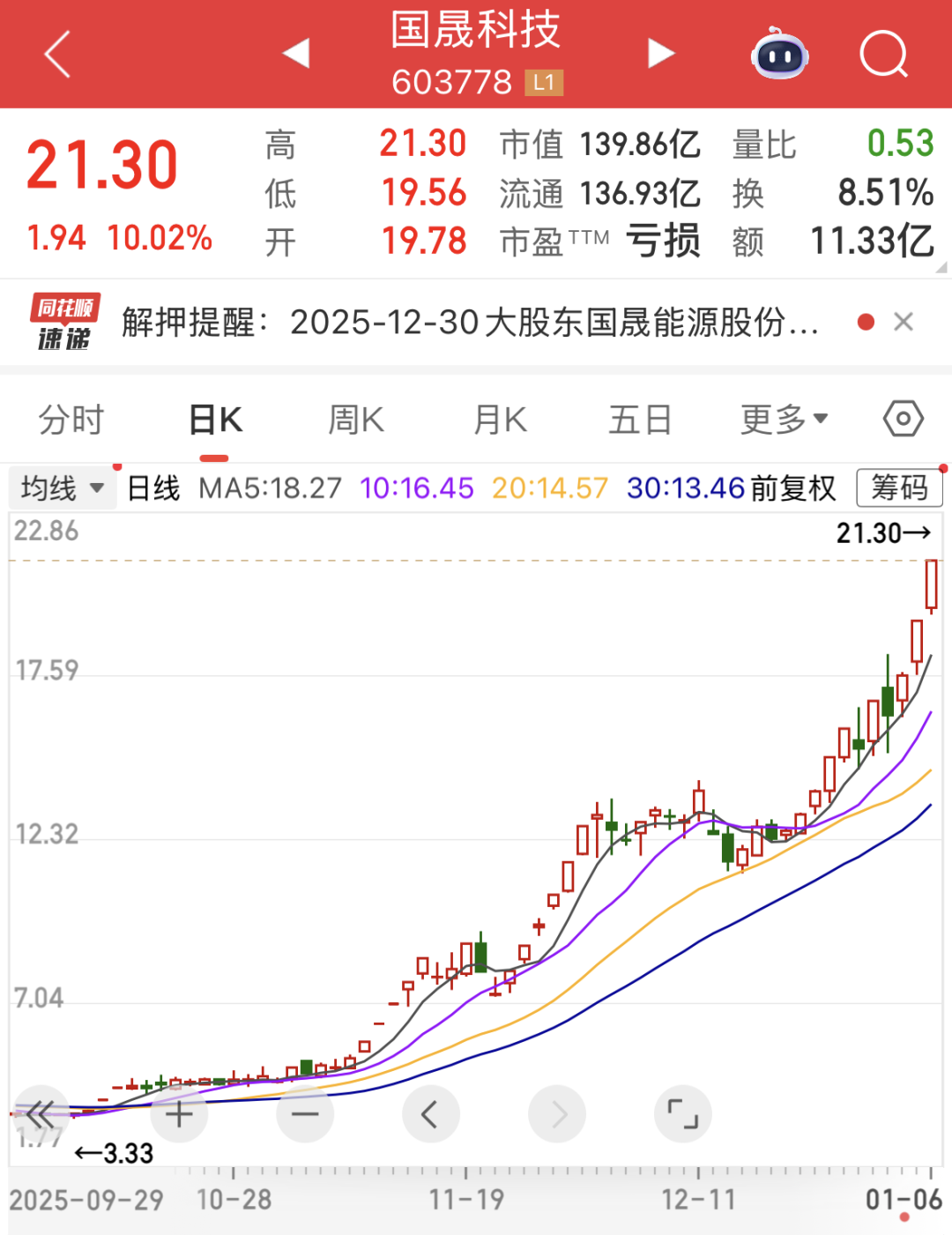
Group 1 - The core viewpoint of the news is that China's new round of mineral exploration actions is expected to drive up precious metal prices due to continued investment demand [1][5][6] Group 2 - Guosheng Technology announced a stock suspension for verification due to significant stock price fluctuations, with a cumulative increase of 370.20% during the specified period, indicating potential market overheating and irrational speculation risks [2] - The company's latest price-to-book ratio is significantly higher than the industry average, suggesting a bubble in stock prices, while the company remains in a loss-making state with a net profit of -151 million yuan for the first three quarters of 2025 [2] - The company is also facing uncertainties regarding external investments and high pledge ratios of controlling shareholders [3] Group 3 - The Ministry of Natural Resources reported that during the 14th Five-Year Plan period, significant progress was made in mineral exploration, with the discovery of 10 large oil fields and 19 large gas fields, and substantial increases in resources such as uranium, copper, gold, lithium, and potassium salt [5][6] - The exploration strategy will continue into 2026, focusing on improving the exploration, development, and reserve capabilities of strategic mineral resources [6] Group 4 - The global prices of non-ferrous metals have been on the rise, with London gold and silver experiencing significant increases of 64.56% and 147.79% respectively in 2025, marking the highest annual growth since 1980 [8] - As of January 6, 2026, non-ferrous metals continued their upward trend, driven by geopolitical risks, supply constraints, and steady demand [9] Group 5 - The non-ferrous metal sector has seen substantial net financing inflows, with a total of 10.97 billion yuan since December 2025, ranking fourth among all industries [10] - Companies such as Zijin Mining and Ganfeng Lithium have reported significant profit increases, with Zijin Mining expecting a net profit of 51 to 52 billion yuan for 2025, a year-on-year increase of 59% to 62% [10]