TLC(002466)

Search documents
碳酸锂周报:碳酸锂市场冲高回落,政策扰动与需求现实博弈加剧-20260126
Zhong Yuan Qi Huo· 2026-01-26 03:32
Report Summary 1. Report Industry Investment Rating No relevant information provided. 2. Core View of the Report - The lithium carbonate market has experienced a sharp rise and then a fall, with intensified games between policy disturbances and demand realities. The market is currently in a high - level wide - range oscillation stage, and the core contradiction lies in the game between the expected supply contraction caused by policy disturbances on the supply side and the weak demand reality of new - energy vehicles downstream. It is expected that the lithium carbonate price will enter a high - level oscillation and consolidation stage in the next 1 - 2 weeks [2]. 3. Summary by Related Catalogs Lithium Salt Market Introduction - **Price Changes**: The battery - grade lithium carbonate spot price increased by 12.33% to 156,250 yuan/ton this week. The futures price of lithium carbonate rose 1.94% to 146,200 yuan/ton. The spot prices of lithium hydroxide also had significant increases, with the price of electric - carbon (coarse particles) rising 14.02% to 150,500 yuan/ton, electric - carbon (fine powder) rising 13.48% to 155,700 yuan/ton, and industrial - carbon rising 14.60% to 145,200 yuan/ton [2][4]. - **Premium Changes**: The premium of different raw materials and enterprises has changed to varying degrees. For example, the premium of spodumene raw materials increased by 100 yuan, and the premium of Ganfeng Lithium Co., Ltd. increased by 200 yuan [7]. Lithium Salt Fundamentals - **Supply**: The domestic lithium carbonate capacity utilization rate remained at a high level of 87.14% with no week - on - week change. The supply side is mainly affected by news such as overseas mining rights policies and domestic environmental protection actions, and there is an expected long - term supply contraction. The production of lithium carbonate and lithium hydroxide in China and their production in different regions and from different raw materials are also involved in the report, but specific data are not detailed here [2]. - **Demand**: Downstream demand is differentiated. The production start - up rate of energy - storage cells has increased, but the new - energy vehicle sales data in early January decreased significantly year - on - year. The production schedule of cathode material factories in January is expected to decline month - on - month, and procurement is mainly for rigid demand [2]. - **Import and Export**: The salable inventory of port lithium ore traders decreased by 4.83% to 13.8 tons week - on - week, indicating a tight supply of imported raw materials. The freight cost of some routes increased slightly, such as the Nigeria route, which increased by 6.67% week - on - week [2][27]. - **Inventory**: The exchange warehouse receipt inventory increased by 8.27% to 27,458 lots, with significant increases in warehouses such as Jiangsu Benniu Port and Shanghai Xiangyu Sichuan Warehouse, indicating that spot goods are flowing into the futures market and inventory pressure has increased [2][40]. - **Cost and Profit**: The production cost of externally purchased lithium concentrate increased by 3.1% to 158,106 yuan/ton, higher than the futures closing price. The production profit decreased by 86.98% to - 1,856 yuan/ton, showing the effect of cost support [2]. Lithium - Battery Fundamentals - **Market and Supply of Cathode Materials**: The report involves the market and supply of cathode materials, including production volume and price, but specific data are not detailed [44][46]. - **Supply of Electrolytes**: The price and production volume of electrolytes are also mentioned, but specific data are not detailed [48]. - **Demand for Cathode Materials**: The consumption of cathode materials is involved, but specific data are not detailed [50]. - **Import and Export of Lithium - Battery Materials and Batteries**: The import and export of lithium - battery materials and batteries are mentioned, but specific data are not detailed [52][54]. - **Cost and Profit of Ternary Materials**: The cost and profit of ternary materials are involved, but specific data are not detailed [56]. - **Lithium - Battery Recycling**: Lithium - battery recycling is mentioned, but specific data are not detailed [58]. - **New - Energy Vehicle Production and Sales**: The production and sales of new - energy vehicles and other important data are involved, but specific data are not detailed [60][62].


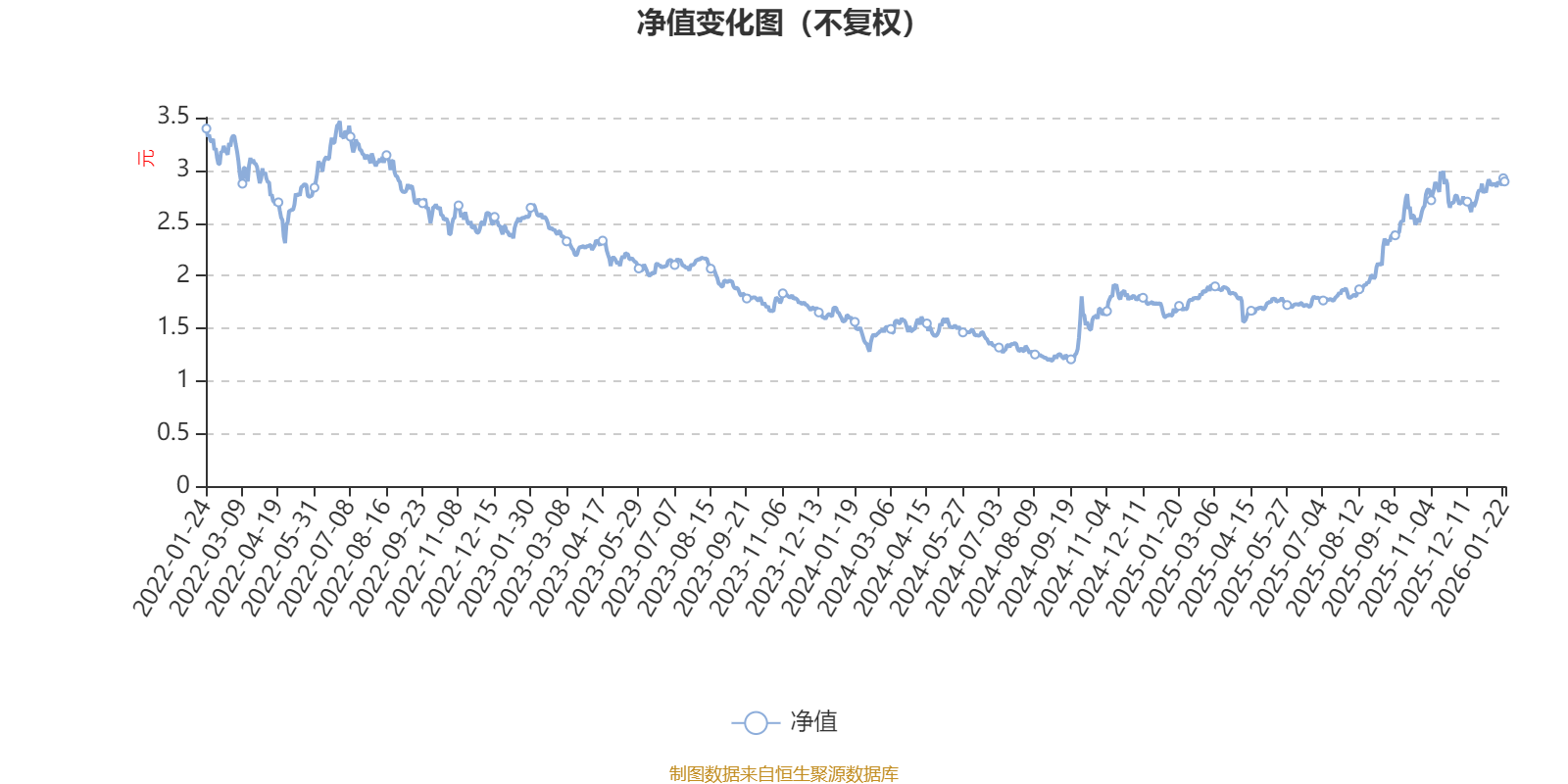
嘉实新能源新材料股票A:2025年第四季度利润5844.23万元 净值增长率2.04%
Sou Hu Cai Jing· 2026-01-25 11:23
Core Viewpoint - The report highlights the performance and strategic adjustments of the Jiashi New Energy Materials Stock A Fund, indicating a positive growth trajectory and a focus on resource-oriented upstream assets in the new energy sector [2][3]. Fund Performance - The fund reported a profit of 58.44 million yuan in Q4 2025, with a weighted average profit per fund share of 0.0539 yuan [2]. - The net asset value (NAV) growth rate for the fund was 2.04% during the reporting period, with a total fund size of 2.855 billion yuan as of the end of Q4 [2][15]. - As of January 22, the fund's one-year compounded NAV growth rate reached 71.59%, ranking 4th among comparable funds [3]. Comparative Performance - Over the past three months, the fund's compounded NAV growth rate was 15.47%, ranking 11th out of 39 comparable funds [3]. - The fund's six-month compounded NAV growth rate was 57.48%, placing it 3rd among its peers [3]. - The fund's three-year Sharpe ratio was 0.5367, ranking 12th out of 32 comparable funds [8]. Risk and Exposure - The fund's maximum drawdown over the past three years was 55.48%, ranking 28th out of 32 comparable funds, with the largest quarterly drawdown occurring in Q3 2022 at 24.88% [9]. - The average stock position over the past three years was 91.63%, higher than the industry average of 87.73%, with a peak position of 94.62% at the end of 2023 [12]. Holdings and Strategy - The fund has a high concentration of holdings, with stable stock targets. As of Q4 2025, the top ten holdings included companies like CATL, Salt Lake Potash, and Huayou Cobalt [19]. - The fund management indicated a strategic shift towards increasing exposure to upstream assets related to lithium carbonate, cobalt, and nickel, in response to macroeconomic and market conditions [2].





能源金属行业周报:碳酸锂价格短期或继续上行,看好价格重估背景下的关键金属全面行情-20260125


HUAXI Securities· 2026-01-25 11:07
Investment Rating - The industry rating is "Recommended" [3] Core Views - Short-term raw material supply tightness is expected to support nickel prices, with LME nickel spot price reaching $18,630 per ton, up 5.70% from January 16 [1] - The cobalt market is anticipated to see continued price increases due to structural supply tightness, with electrolytic cobalt priced at 438,000 yuan per ton, down 3.74% from January 16 [2][5] - Domestic antimony supply remains tight, providing price support, with antimony ingot prices at 160,500 yuan per ton [6] - Lithium carbonate prices are expected to continue rising, with a market average of 171,100 yuan per ton, up 8.36% from January 16 [8][19] - Supply uncertainties in the rare earth market are expected to support prices, with significant global supply concentration in China [10][20] - Tin prices are supported by overseas supply uncertainties, with LME tin prices at $54,200 per ton, up 9.66% from January 16 [11][21] - Tungsten market supply-demand imbalance is notable, with white tungsten concentrate prices at 535,500 yuan per ton, up 5.93% from January 16 [13][22] - Uranium supply tightness is expected to persist, with global uranium prices at $63.51 per pound [14][15] Summary by Sections Nickel and Cobalt Industry Update - Nickel prices are supported by supply constraints, with Indonesia's nickel mining production quota expected to be reduced to 250-260 million tons [1][16] - Cobalt supply is projected to tighten further, with Congo's export quotas confirmed to extend into 2026 [2][17] Antimony Industry Update - Antimony supply remains tight, with domestic prices expected to rise due to export restrictions and seasonal supply issues [6][18] Lithium Industry Update - Lithium carbonate prices are expected to remain strong due to demand support and supply uncertainties, particularly regarding the recovery of key lithium mines [8][19] Rare Earth Industry Update - The rare earth market is facing supply tightening due to export bans and geopolitical factors, with China maintaining a dominant position [10][20] Tin Industry Update - Tin prices are supported by uncertainties in overseas supply, particularly from Myanmar and Congo [11][21] Tungsten Industry Update - The tungsten market is experiencing a supply-demand imbalance, with prices expected to rise due to limited new supply [13][22] Uranium Industry Update - Uranium prices are supported by ongoing supply tightness and geopolitical factors affecting production [14][15]
有色金属大宗金属周报(2026/1/19-2026/1/23):库存累积,铜铝价格高位震荡-20260125
Hua Yuan Zheng Quan· 2026-01-25 09:03
Investment Rating - The investment rating for the non-ferrous metals industry is "Positive" (maintained) [4] Core Views - The report highlights that copper prices are experiencing high-level fluctuations amidst inventory accumulation, with short-term price adjustments expected to be limited due to the financial attributes of copper supported by rising gold prices. The supply-demand balance for copper may shift from tight equilibrium to shortage in the medium to long term, driven by insufficient capital expenditure in copper mines and frequent supply disruptions. The report suggests monitoring companies such as Zijin Mining, Luoyang Molybdenum, Jiangxi Copper, and others [5] - For aluminum, the report notes that both alumina and aluminum prices are under pressure due to high inventory levels. The short-term outlook for aluminum prices is expected to remain stable amidst high demand, particularly in the air conditioning and consumer goods sectors [5] - Lithium demand remains strong despite seasonal trends, with lithium carbonate prices entering an upward cycle driven by supply-demand reversal. The report recommends focusing on companies with high self-sufficiency in lithium resources [5] - Cobalt prices are expected to continue rising due to tight raw material supply, with the report suggesting companies like Huayou Cobalt and others for investment [5] Summary by Sections 1. Industry Overview - The report provides insights into macroeconomic indicators, including the U.S. core PCE price index and unemployment claims, which align with expectations [9] - Key announcements include Zijin Mining's completion of the second phase of the Jilong Copper Mine, significantly increasing its production capacity [10] 2. Market Performance - The non-ferrous metals sector outperformed the Shanghai Composite Index, with a weekly increase of 6.03% compared to the index's 0.84% rise [11] - The report lists the top-performing stocks in the sector, highlighting significant movements in various sub-sectors [11] 3. Valuation Changes - The report notes that the TTM PE for the non-ferrous metals sector is 33.82, with a change of 1.79, while the PB is 4.18, reflecting a significant premium over the broader market [20][23]




华安中证有色金属矿业主题 ETF:价值重估新周期,布局稀缺资源
Changjiang Securities· 2026-01-24 14:08
- The report focuses on the "CSI Nonferrous Metal Mining Theme Index," which selects 40 listed companies with nonferrous metal mineral reserves as index samples, reflecting the overall performance of nonferrous metal mining-themed listed companies. The index emphasizes upstream mining companies due to their higher profit elasticity and direct benefits from metal price increases. The index is designed to capture the value of upstream resource enterprises and is suitable for investors optimistic about resource cycle trends[27][28][32] - The index adopts a balanced strategy for selecting constituent stocks. It first excludes the bottom 10% of low-liquidity stocks based on daily trading volume, then selects the top three securities from each CSI fourth-level industry based on market capitalization rankings over the past year. If fewer than three securities are available, all are included. Remaining samples are added based on market capitalization rankings until the total reaches 40 stocks. This ensures representation across various resource categories, including gold, aluminum, rare earths, cobalt, lithium, and other strategic metals. The index is adjusted semi-annually in June and December[28][32] - The index's constituent stocks are distributed across four major sectors: industrial metals, energy metals, precious metals, and strategic small metals. This structure aligns with high-demand downstream industries such as new energy, AI computing power, power infrastructure, and semiconductors, enabling precise capture of core investment opportunities across the entire industry chain[7][32][40] - The index's market capitalization distribution is concentrated in large-cap stocks, with 55.61% of the weight allocated to stocks with a market capitalization above 1 trillion RMB. Mid-cap stocks (200-1000 billion RMB) account for 43.09% of the weight, providing effective support. This structure avoids risks associated with small-cap stocks while leveraging the resource barriers of large-cap leaders and capturing growth opportunities in niche sectors[41][46] - The index demonstrates strong performance across various timeframes. Over the past year, its return reached 120.35%, significantly outperforming major broad-based indices like the CSI 300 (24.58%) and the Shanghai Composite Index (27.13%). It also surpassed industry indices such as the SW Nonferrous Metals Index (107.58%). In the medium term, its six-month return was 95.59%, and its three-month return was 28.48%. Short-term performance was equally impressive, with a one-month return of 24.06%[59][62][64]


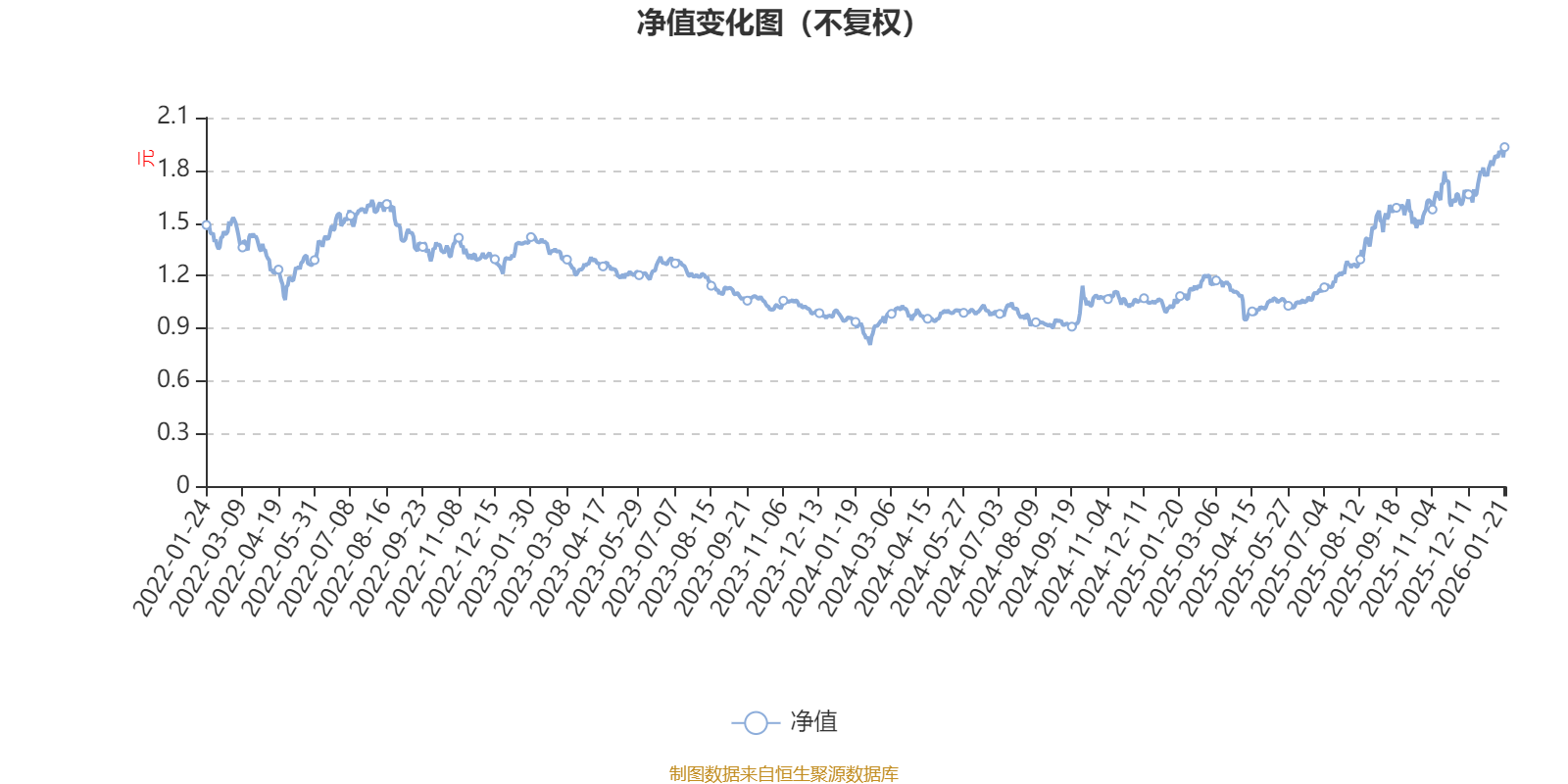
长江新能源产业混合型A:2025年第四季度利润1224.32万元 净值增长率10.18%
Sou Hu Cai Jing· 2026-01-24 08:44
Core Insights - The AI Fund Changjiang New Energy Industry Mixed A (011446) reported a profit of 12.24 million yuan for Q4 2025, with a weighted average profit per fund share of 0.1594 yuan. The fund's net value growth rate for the reporting period was 10.18%, and the fund size reached 123 million yuan by the end of Q4 2025 [2][13]. Fund Performance - As of January 21, the fund's unit net value was 1.932 yuan. Over the past year, the fund achieved a cumulative growth rate of 76.8%, outperforming its peers [2]. - The fund's performance over different time frames includes a 27.27% growth rate over the past three months, ranking 7 out of 621 comparable funds, and a 59.78% growth rate over the past six months, ranking 27 out of 621 [3]. Investment Strategy - The fund focuses on the new energy industry and its upstream and downstream sectors, seeking opportunities in supply-demand reversals and technological advancements within the industry. The management plans to continue tracking and identifying investment opportunities in these areas [2]. Risk Metrics - The fund's Sharpe ratio over the past three years is 0.6629, ranking 173 out of 526 comparable funds [7]. - The maximum drawdown over the past three years was 43.48%, with the largest single-quarter drawdown occurring in Q2 2022 at 21.13% [9]. Portfolio Composition - As of December 31, the fund's average stock position over the past three years was 78.37%, compared to the industry average of 85.83%. The fund reached its highest stock position of 86.26% at the end of 2021 and its lowest of 72.55% by the end of Q3 2024 [12]. - The top ten holdings of the fund include Tianqi Lithium, Huayou Cobalt, CATL, Tianhua New Energy, Yongxing Materials, China National Materials, Liyuanheng, Guoci Materials, Sifang Co., and Keda Technology [16].


天齐锂业:截至2026年1月20日公司A股股东户数为284897户
Zheng Quan Ri Bao· 2026-01-23 13:26
证券日报网讯 1月23日,天齐锂业在互动平台回答投资者提问时表示,截至2026年1月20日,公司A股股 东户数为284897户,公司A股股东中机构股东户数为3883户。 (文章来源:证券日报) ...
有色金属行业2026年投资策略:资源大周期,把握金属全面牛市
Southwest Securities· 2026-01-23 10:36
Core Insights - The report highlights a bullish outlook for the metals sector, driven by macroeconomic factors such as the Federal Reserve's interest rate cuts and a recovering global economy, particularly in China [3][44] - Key investment themes for 2026 include expanding demand for precious metals like gold and silver, improving fundamentals for aluminum and copper, strategic opportunities in rare earths, and supply-side disruptions due to overcapacity in certain sectors [3][4] Group 1: Precious Metals - The report suggests a long-term bullish view on gold, with expectations of price increases driven by anticipated interest rate cuts and geopolitical tensions, which enhance gold's appeal as a safe-haven asset [3][44] - Silver is also highlighted as a key investment opportunity due to its high price ratio to gold, indicating potential for significant price appreciation [3] - Specific companies to watch include Shandong Gold (600547.SH) and Zijin Mining (601899.SH), which are expected to benefit from increased production and operational efficiencies [4] Group 2: Industrial Metals - The report notes that aluminum and copper are set to see improved profitability due to lower production costs and increased demand, particularly in the context of infrastructure investments [3][4] - Companies such as Zhongfu Industrial (600595.SH) and Zijin Mining (601899.SH) are identified as having strong positions in the copper market, with expected profit growth [4] - The report emphasizes the importance of monitoring supply chain dynamics, particularly in copper, where inventory levels are shifting significantly [18][58] Group 3: Rare Earths and Strategic Metals - The report identifies rare earth elements as a critical area for investment, particularly in light of geopolitical tensions between the US and China, which may create opportunities for companies involved in rare earth mining and processing [3][4] - Companies like Northern Rare Earth (600111.SH) and China Rare Earth (000831.SZ) are highlighted for their potential to benefit from price increases in rare earth materials [4] Group 4: Energy Metals - The report discusses the rebound in lithium and nickel prices, driven by strong demand from the battery sector, with specific mention of companies like Tianqi Lithium (002466.SZ) and Ganfeng Lithium (002460.SZ) [4][27] - The expected growth in energy storage solutions is also noted as a significant driver for demand in these metals [4] Group 5: Overall Market Performance - The overall performance of the non-ferrous metals sector is noted to have outperformed the broader market, with a cumulative increase of 96.46% in 2025 compared to a 21.65% increase in the Shanghai Composite Index [33][35] - The report indicates that while the sector has seen significant gains, valuations are currently at historical averages, suggesting potential for further growth [35]



数据复盘丨钙钛矿电池、商业航天等概念走强 191股获主力资金净流入超1亿元



Zheng Quan Shi Bao Wang· 2026-01-23 09:56
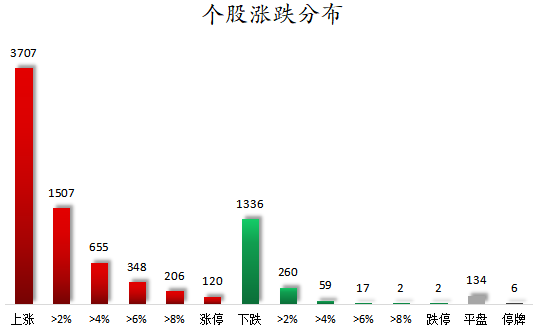
Market Overview - The Shanghai Composite Index closed at 4136.16 points, up 0.33%, with a trading volume of 1.3369 trillion yuan. The Shenzhen Component Index rose 0.79% to 14439.66 points, with a trading volume of 1.7484 trillion yuan. The ChiNext Index increased by 0.63% to 3349.50 points, with a trading volume of 822.63 billion yuan. The STAR Market 50 Index closed at 1553.71 points, up 0.78%, with a trading volume of 110.8 billion yuan. The total trading volume of both markets was 3.0853 trillion yuan, an increase of 393.5 billion yuan compared to the previous trading day [1]. Sector Performance - The market saw more sectors gaining than losing, with notable increases in power equipment, non-ferrous metals, precious metals, defense and military, steel, media, computer, environmental protection, and textile and apparel sectors. Concepts such as perovskite batteries, commercial aerospace, satellite internet, sapphire, lithium mining, cultivated diamonds, small metals, gold, and interactive short dramas were particularly active. In contrast, sectors like communication, insurance, banking, coal, and home appliances experienced declines [1]. Individual Stock Performance - A total of 3707 stocks rose, while 1336 stocks fell, with 134 stocks remaining flat and 6 stocks suspended. Excluding newly listed stocks, there were 120 stocks hitting the daily limit up and 2 stocks hitting the limit down [2]. - Among the stocks that hit the daily limit up, 23 stocks had consecutive limit-up days of 2 or more, with Fenglong Co., Ltd. leading with 18 consecutive limit-ups [3]. Capital Flow - The net capital outflow from the two markets was 4.167 billion yuan, with the ChiNext seeing a net inflow of 1.515 billion yuan. The CSI 300 index experienced a net outflow of 1.005 billion yuan, while the STAR Market saw a net outflow of 3.171 billion yuan. Out of 31 sectors, 13 sectors had net capital inflows, with the power equipment sector leading with a net inflow of 8.977 billion yuan [4][6]. - The top sectors with net inflows included non-ferrous metals (4.552 billion yuan), media (2.173 billion yuan), and defense and military (2.157 billion yuan). Conversely, the communication sector had the highest net outflow of 7.992 billion yuan, followed by electronics (6.350 billion yuan) and machinery (5.077 billion yuan) [4][6]. Notable Stocks - 191 stocks had net capital inflows exceeding 1 billion yuan, with Jin Feng Technology receiving the highest net inflow of 1.861 billion yuan. Other notable stocks included Lens Technology (1.594 billion yuan), Qian Zhao Optoelectronics (1.267 billion yuan), and Xian Dao Intelligent (1.217 billion yuan) [7][8]. - Conversely, 116 stocks experienced net capital outflows exceeding 1 billion yuan, with Xin Yi Sheng leading with a net outflow of 3.471 billion yuan, followed by Zhong Ji Xu Chuang (3.103 billion yuan) and Li Ou Shares (2.604 billion yuan) [10][11]. Institutional Activity - Institutional investors had a net selling of approximately 1.02 billion yuan, with 22 stocks seeing net purchases and 14 stocks net sales. Jin Feng Technology was the most purchased stock by institutions, with a net purchase amount of approximately 266 million yuan [13][14].
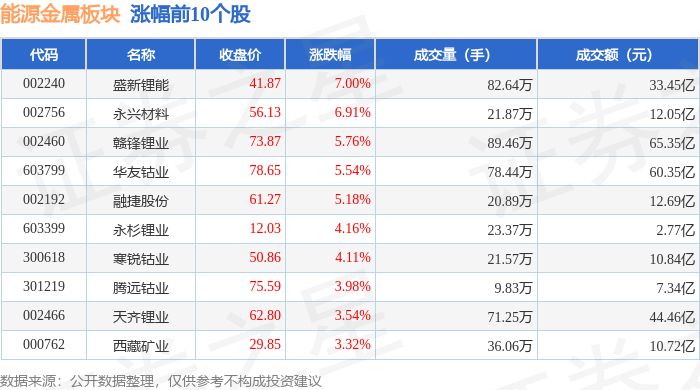
能源金属板块1月23日涨3.95%,盛新锂能领涨,主力资金净流入25.15亿元
Zheng Xing Xing Ye Ri Bao· 2026-01-23 09:04
Core Insights - The energy metals sector experienced a significant increase of 3.95% on January 23, with Shengxin Lithium Energy leading the gains [1] - The Shanghai Composite Index closed at 4136.16, up 0.33%, while the Shenzhen Component Index closed at 14439.66, up 0.79% [1] Energy Metals Sector Performance - Shengxin Lithium Energy (002240) closed at 41.87, up 7.00% with a trading volume of 826,400 shares and a transaction value of 3.345 billion [1] - Yongxing Materials (002756) closed at 56.13, up 6.91% with a trading volume of 218,700 shares and a transaction value of 1.205 billion [1] - Ganfeng Lithium (002460) closed at 73.87, up 5.76% with a trading volume of 894,600 shares and a transaction value of 6.535 billion [1] - Huayou Cobalt (603799) closed at 78.65, up 5.54% with a trading volume of 784,400 shares and a transaction value of 6.035 billion [1] - Other notable performers include Rongjie Co. (002192) and Yongsan Lithium (603399), with increases of 5.18% and 4.16% respectively [1] Capital Flow Analysis - The energy metals sector saw a net inflow of 2.515 billion in main funds, while retail funds experienced a net outflow of 1.592 billion [2] - Ganfeng Lithium (002460) had a main fund net inflow of 830 million, but retail funds saw a net outflow of 452 million [3] - Huayou Cobalt (603799) recorded a main fund net inflow of 549 million, with retail funds experiencing a net outflow of 581 million [3] - Shengxin Lithium Energy (002240) had a main fund net inflow of 353 million, while retail funds saw a net outflow of 278 million [3]