
BYD(002594)

Search documents
大市场“中”力量丨新能源汽车“链”变记——“大市场‘中’力量”系列报道之五
He Nan Ri Bao· 2025-12-21 23:48
Core Insights - The article highlights the rapid transformation of Henan's new energy vehicle (NEV) industry, showcasing its significant growth in production and exports, positioning it as a key player in China's NEV landscape [1][2][3][4][5][6][7][8][11] Production Capacity - Henan's NEV production reached 681,000 units in 2024, marking a more than tenfold increase compared to three years ago [11] - The province's NEV exports amounted to 8.85 billion yuan, reflecting a year-on-year growth of 91.4% [11] - In the first eleven months of the year, Henan exported 102,000 NEVs, a staggering increase of 25 times compared to the previous year [11] Industry Development - The establishment of major production bases, such as BYD's facility in Zhengzhou, has led to high levels of automation, with a production line efficiency of 98% [2] - BYD's Zhengzhou base produced over 200,000 vehicles in 2023, contributing to a total output value exceeding 20 billion yuan [2][3] - SAIC Motor's Zhengzhou base has also seen significant production, surpassing 2 million vehicles since its inception [3] Supply Chain and Ecosystem - Henan is moving beyond being merely an "assembly factory" to creating a robust, collaborative industrial ecosystem [4][5] - The region has developed a comprehensive supply chain involving key local companies, enhancing the overall competitiveness of the NEV sector [4][5][6] - The establishment of a specialized racing test track for NEVs in Zhengzhou signifies the commitment to innovation and development in the sector [4] Export and Global Reach - The international logistics capabilities of Henan, including the Zhengzhou International Land Port, facilitate efficient export of NEVs to global markets [7] - The province's NEV exports have expanded to over 60 countries, with significant deliveries to markets like Chile, Morocco, and Pakistan [3][8] - The shift from product output to technology and solution exports is evident, as seen in partnerships with countries for localized production [8] Future Potential - The NEV industry in Henan is not just about current production but also about future potential, with investments in high-end models and advanced manufacturing capabilities [7][8] - The establishment of a comprehensive automotive ecosystem, including data centers and battery production facilities, positions Henan as a leading hub for NEV manufacturing [8]



新能源汽车“链”变记(大市场“中”力量)
He Nan Ri Bao· 2025-12-21 22:17
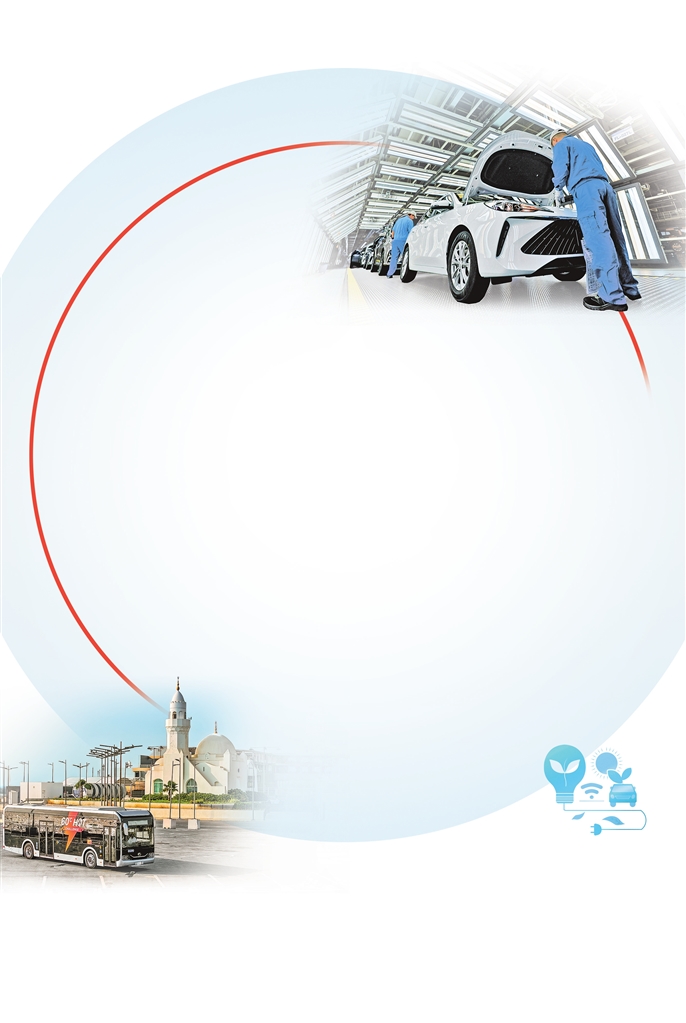
Core Viewpoint - The article highlights the rapid transformation of Henan's automotive industry, particularly in the electric vehicle (EV) sector, showcasing significant growth in production and exports, driven by strategic initiatives and a robust industrial ecosystem [2][11]. Production Capacity Leap - Henan's new energy vehicle (NEV) production reached 681,000 units in 2024, a tenfold increase compared to three years ago [12] - The province's NEV exports amounted to 8.85 billion yuan, reflecting a year-on-year growth of 91.4% [12] - In the first eleven months of this year, Henan exported 102,000 NEVs, marking a staggering 25-fold increase [12] Industry Ecosystem Development - The establishment of a highly collaborative and self-sustaining industrial ecosystem is a key focus for Henan, moving beyond merely being an "assembly factory" [6] - The integration of various supply chain enterprises, including local and international firms, has strengthened the overall industrial chain [7] - The presence of over 600 large-scale enterprises across the entire NEV value chain has become evident, covering upstream materials to downstream services [8] Strategic Partnerships and Investments - A strategic partnership between the Henan provincial government and BYD has led to the establishment of a major production base, which has achieved a production value of 33.47 billion yuan and over 200,000 vehicles produced in its first year [4] - The local automotive industry has seen significant contributions from companies like Yutong, which has expanded its export capabilities, delivering electric buses to multiple countries [5] Future Potential and Market Expansion - The logistics capabilities of the Zhengzhou International Land Port facilitate the export of NEVs to broader markets, enhancing Henan's position in international trade [9] - The development of high-end models, such as the IM LS9 by SAIC, is expected to further elevate Henan's manufacturing capabilities and smart ecosystem [9][10] - The article emphasizes that Henan's rise in the NEV sector serves as a model for other industries aiming for similar upgrades and breakthroughs [11]

让研发告别“手搓试错”国产BDA软件赋能智造万亿锂电产业
Zheng Quan Shi Bao· 2025-12-21 18:07
Core Insights - The integration of AI with lithium battery research is revolutionizing traditional development methods, significantly reducing time and costs associated with material testing and performance prediction [1][4][6] Industry Overview - China is the largest producer and user of lithium-ion batteries globally, with a projected shipment volume of 1214.6 GWh in 2024, representing a 36.9% year-on-year increase and accounting for 78% of global shipments [1] - The industry is valued at over 1 trillion yuan, but the research and development (R&D) processes have been hampered by inefficient traditional methods [1][2] R&D Challenges - The current R&D model relies heavily on trial and error, leading to lengthy development cycles of one to several years for battery cells, with costs reaching millions of yuan for traditional methods [2][4] - The complexity of lithium battery R&D is characterized by "cross-scale, long process, and multiple factors," which complicates the development process [1][2] Technological Innovation - The BDA software, developed by a collaboration between Peking University and Yigen Technology, utilizes a dual-drive model of "physical simulation + AI" to enhance the efficiency of battery R&D [3][4] - This software has already been adopted by leading companies such as CATL, BYD, and GAC, resulting in significant improvements in efficiency and cost reduction [4][5] Efficiency and Cost Reduction - The BDA software can potentially reduce the R&D cycle for battery cells from 1-2 years to just six months, and material testing time from months to days [4] - It can lower R&D costs by 30% to 40% by optimizing material formulations through computer simulations [4][6] Broader Applications - The BDA software's applicability extends beyond lithium-ion batteries to other battery types and materials, including solid-state batteries and sodium batteries, as well as semiconductor and display materials [5][6] - The underlying algorithms of BDA are designed to address common challenges across various industries, indicating a wide potential for application [5] Future Trends - In the next 3-5 years, AI is expected to fundamentally change industrial production and R&D processes, shifting from trial-and-error methods to digital simulation and precise prediction [6] - This transformation is anticipated to reshape competitive dynamics within industries, with more companies focusing on in-house development of core materials and components [6] Challenges Ahead - The integration of AI in industrial applications faces challenges such as a shortage of interdisciplinary talent, conservative corporate cultures, and data security concerns [7] - There is a need for targeted policy support to foster the development of AI industrial software, as current funding mechanisms are often too broad and not industry-specific [7]

让研发告别“手搓试错” 国产BDA软件赋能智造万亿锂电产业
Zheng Quan Shi Bao· 2025-12-21 18:06
通过自主研发的电池设计自动化(BDA)软件,原本耗时数月的材料实验仅需数日即可完成性能预测;而 锂电池企业在使用该软件后,研发成本大幅下降。这一幕正在宁德时代(300750)等新能源头部企业的 研发中心上演。当人工智能(AI)与锂电池这一新能源核心产业相遇,一场颠覆传统研发模式的产业革新 正悄然到来。 让研发告别"手搓试错" 我国已是全球锂离子电池生产与应用第一大国。EVTank数据显示,2024年中国锂离子电池出货量达到 1214.6GWh,同比增长36.9%,在全球锂离子电池总体出货量的占比达到78%,行业市值超过1万亿元。 但光鲜的产业规模背后,研发环节却长期受制于低效的传统模式。 "绝大多数锂电池企业的研发模式还是'手搓试错',靠调配方反复做实验,效率较低。"屹艮科技创始人 兼首席科学家郑家新在接受证券时报记者采访时表示。锂电池研发堪称工业领域的"复杂系统工程",其 核心挑战集中在"跨尺度、长流程、多因素"三大特性。 更严峻的是,当前商业化锂电池能量密度已接近极限,而具有超高能量密度潜力的新一代锂金属电池和 全固态电池,仍面临诸多科学与工程难题,难以商业化。为了破解这些交叉学科难题,企业只能依赖大 量 ...

“变”“拓”“融”绘就汽车产业发展新图景
Zheng Quan Ri Bao Zhi Sheng· 2025-12-21 16:08
Core Insights - The article highlights the significant transformation of the Chinese automotive industry, emphasizing its shift from product export to establishing a global ecosystem, with a market share reaching 38% [1] - Key trends include the rise of smart driving technology, increased penetration of new energy vehicles, and a robust export growth, indicating a strong synergy between policy and market forces [1] Transformation - By 2025, the year is expected to mark a historic leap for smart driving technology, with new car sales featuring advanced driving assistance systems projected to exceed 5 million units, achieving a penetration rate of over 20% [2] - The cost of smart driving hardware has decreased by approximately 50% over two years, with companies like BYD successfully integrating advanced systems into lower-priced models [2] - Software advancements, particularly in large model technology, are expected to further reduce costs and enhance the availability of smart driving features in mid-range vehicles [2][3] Expansion - In 2025, China's automotive exports are anticipated to reach a record high, with 4.95 million vehicles exported in the first three quarters, reflecting a year-on-year growth of 14.8% [4] - The export model is evolving from merely selling vehicles to a collaborative output of technology, standards, and supply chains, enhancing the global competitiveness of Chinese automotive brands [5] Integration - The automotive industry is experiencing a wave of IPOs, with several companies successfully listing on the Hong Kong Stock Exchange, indicating a trend towards capitalizing on market opportunities [6] - Internal consolidation efforts are underway, with companies restructuring to create a more robust and efficient industry framework, moving away from fragmented operations [6] - The concept of "boundaryless cars" is emerging, with companies like Li Auto and XPeng exploring cross-industry innovations, such as AI integration and flying cars, redefining the automotive value chain [7] Future Outlook - The Chinese automotive industry is poised to transition from a follower to a leader in the global market, leveraging technological advancements and a strong export strategy to enhance its global presence [8]

工信部进一步对隐藏式门把手做出限制!小米等品牌获L3级自动驾驶测试牌照!红旗HS6 PHEV、欧拉5、智趣烈马上市!丨一周大事件
电动车公社· 2025-12-21 16:04
New Car Launches - Hongqi HS6 PHEV launched with a price range of 178,800 to 228,800 yuan, featuring a family design style and dimensions of 4925/1970/1740mm [3][4][6] - Ora 5 launched with a price range of 99,800 to 133,800 yuan, offering five models and a limited-time trade-in subsidy of 8,000 yuan [15][16][18] - Ford Mustang Mach-E launched with a price range of 229,800 to 282,800 yuan, available in both pure electric and range-extended versions [24][25][27] Company Developments - BYD's 15 millionth new energy vehicle rolled off the production line, achieving this milestone in 17 years, with the last 5 million produced in just 13 months [65][66][70] - Honda plans to suspend or reduce production at its factories in Japan and China due to semiconductor shortages [71][72][75] - Lantu Motors and CATL signed a ten-year deepening cooperation agreement to advance battery technology [76][77] - GAC Group announced the establishment of a new business unit combining its high-end brand Haobo and mass-market brand Aion for better resource synergy [80][81] - Li Auto is establishing an AI R&D center in Silicon Valley, focusing on smart driving technology [82][85] Industry News - The Ministry of Industry and Information Technology (MIIT) has issued new regulations limiting hidden door handles in vehicles, effective from January 1, 2027 [98][99][102] - The European Union has decided to relax its 2035 ban on internal combustion engines, allowing plug-in hybrid vehicles to continue being sold [103][105][107] - Japan plans to impose a weight-based tax on electric vehicles starting May 2028, with tax rates increasing based on vehicle weight [108][110][112]




汽车行业周报:宇树机器人伴舞获马斯克称赞,自动驾驶加速迈向“量产应用”-20251221
Huaxin Securities· 2025-12-21 15:38
Investment Rating - The report maintains a "Recommended" rating for the humanoid robot sector and the automotive industry [2][12]. Core Insights - The humanoid robot industry is accelerating from technology development to large-scale commercial application, with significant order growth from leading manufacturers [7]. - The first batch of L3 autonomous driving vehicles has received approval for conditional market entry, marking a critical step towards commercialization in China [10]. - The overall order volume for humanoid robots in 2025 is projected to exceed 30,000 units, with leading companies like UBTECH and UTree capturing significant market shares [6]. Summary by Sections Humanoid Robot Sector Market Performance - The Huaxin humanoid robot index fell by 1.47% this week, with a year-to-date return of 88.8% [21]. - The total order value for leading companies in the humanoid robot sector has surpassed 5 billion, with UBTECH's Walker series accounting for 1.3 billion [6][4]. Automotive Sector Market Performance and Valuation - The CITIC automotive index increased by 0.1%, outperforming the broader market by 0.4 percentage points [37]. - The automotive sector's PE ratio is at 31.8, positioned at the 36.4% percentile over the past four years, while the PB ratio is at 3.0, at the 96.3% percentile [54]. Industry Data Tracking - From December 1-14, the average daily retail of passenger vehicles in China decreased by 24% year-on-year, with total retail reaching 76.4 million units [60]. - The average price of rubber has increased, while prices for steel, copper, and aluminum have decreased [67]. Company Announcements - UBTECH has secured a strategic partnership with Texas Instruments, with total orders exceeding 1.3 billion [5]. - Moulding Technology has signed a procurement framework agreement for humanoid robot components, marking a significant step into the humanoid robot industry [74].


谷歌TPU需求大增,自动驾驶产业迎来催化,关注液冷及智驾产业链公司
Orient Securities· 2025-12-21 14:10
Investment Rating - The report maintains a neutral investment rating for the automotive and parts industry [5] Core Insights - The demand for Google's TPU is surging, which is expected to provide incremental opportunities for domestic liquid cooling industry companies. The next-generation TPU v7e chip orders have reportedly doubled compared to initial plans, indicating strong market recognition and potential for reshaping the AI chip competitive landscape [8][12] - Tesla's launch of the fully autonomous Robotaxi testing and the Ministry of Industry and Information Technology's approval of the first batch of L3 autonomous driving models are expected to enhance the hardware and software supply for intelligent driving [13][52] - The recent financing round of over $300 million for Galaxy General reflects market confidence in the commercialization prospects of domestic humanoid robots, with significant orders from major clients [14] Summary by Sections Investment Suggestions and Targets - The report suggests focusing on companies within the humanoid robot chain, liquid cooling industry, T chain, Huawei industry chain, and intelligent driving industry. Key liquid cooling stocks include Invec (未评级), Yinlun (买入), Top Group (买入), Sanhua Intelligent Control (买入), and Feilong (未评级) [3][15] - Other relevant stocks include SAIC Motor (买入), JAC Motors (未评级), BYD (未评级), and several others across various segments of the automotive industry [15][16] Sales Tracking - From December 1-14, 2025, the wholesale sales of passenger cars in China were 734,000 units, a year-on-year decrease of 31%. Cumulatively, wholesale sales for the year reached 27.499 million units, a 9% increase [17] - Retail sales during the same period were 764,000 units, down 24% year-on-year, with cumulative retail sales of 22.247 million units, up 5% [17] Market Trends and Industry Dynamics - The automotive sector showed stability, with the automotive index slightly outperforming the broader market. The automotive sales and service sector performed particularly well, with a 4.29% increase [30][31] - The report highlights the growth in the automotive manufacturing sector, with an 11.8% increase in value added from January to November 2025, indicating a robust recovery in the industry [51]

行业周报:首批L3级自动驾驶车型获准入许可,全球首条具身智能机器人电池产线在宁德时代规模化落地-20251221
KAIYUAN SECURITIES· 2025-12-21 14:00
Investment Rating - The investment rating for the automotive industry is "Positive" (maintained) [1] Core Insights - The automotive sector is experiencing a significant shift with the approval of the first batch of L3 autonomous driving models in China, marking a transition from testing to commercial application [5][13] - Changan Automobile has achieved over 1 million annual sales of new energy vehicles, aiming for 5 million by 2030, indicating strong growth potential in the electric vehicle market [5][14] - The collaboration between Lantu Motors and CATL aims to enhance battery technology, which is crucial for the competitiveness of electric vehicles [5][15] - The automotive industry is witnessing a competitive landscape with various companies launching new models and technologies, including Tesla's advancements in autonomous driving and the introduction of new electric models by other manufacturers [5][18][21] Industry News Highlights - The first L3 autonomous driving models, Deep Blue SL03 and Arcfox Alpha S, have received approval for pilot testing in Beijing and Chongqing [5][13] - Changan Automobile's new energy vehicle sales have surpassed 1 million units, with a target of 5 million by 2030 [5][14] - Lantu Motors and CATL have signed a ten-year cooperation agreement to prioritize advanced battery technology [5][15] - Ford has terminated a significant battery supply agreement with LG Energy Solution, reflecting a strategic shift in its electric vehicle business [5][17] - The domestic Tesla Model Y L has received EU certification and is expected to enter the international market in 2026 [5][18] - SAIC MG is projected to exceed 300,000 units in European sales by 2025, maintaining its position as the top-selling Chinese brand in Europe [5][19] - Xiaomi is investing over 100 million yuan to subsidize dealers, accelerating its nationwide channel layout [5][20] Market Performance - The automotive sector's performance this week shows a slight increase of 0.13%, ranking 19th among A-share industries [6][28] - The passenger vehicle index has seen a decline of 1.64%, while the commercial vehicle index decreased by 0.43% [6] - The automotive parts index increased by 1.12%, indicating a positive trend in this segment [6] Investment Recommendations - For passenger vehicles, the demand for domestic high-end luxury cars is exceeding expectations, with recommended stocks including JAC Motors and Seres, while Geely is identified as a beneficiary [7] - In the automotive parts sector, profitability is expected to improve, with recommended stocks including Desay SV, Zhejiang Xiantong, and Meili Technology [7]

小鹏第三个海外本地化生产项目落地马来西亚;阿里云与爱诗科技达成全栈AI合作|36氪出海·要闻回顾
36氪· 2025-12-21 13:35
Group 1 - Xiaopeng Motors has launched its third overseas localized production project in Malaysia, following projects in Indonesia and Austria, with plans for mass production by 2026 to serve the ASEAN right-hand drive market [5] - Alibaba Cloud has signed a full-stack AI cooperation agreement with Aishi Technology to enhance AI video generation capabilities, leveraging Alibaba's cloud infrastructure and AI services [5] - SF Middle East has signed a cooperation agreement with Oman Asyad Group to enhance cross-border transportation and logistics collaboration [6] Group 2 - Li Auto has officially entered the markets of Egypt, Kazakhstan, and Azerbaijan, launching its L-series models to meet local luxury market demands [6] - The Singapore Land Transport Authority has awarded contracts for 660 electric buses, with Chinese companies like BYD and Yutong winning bids [8] - Temu is accelerating its expansion into the Swiss market, attracting dozens of local merchants to join its platform [7] Group 3 - The sales of Chinese television brands on AliExpress have surged by 300% over the past year, with Xiaomi leading in sales during overseas shopping events [9] - Dunhuang.com announced new regulations for shipping to Saudi Arabia, requiring compliance with new address labeling rules starting January 1, 2026 [9] - CATL has secured a 6.2 GWh energy storage order in Southeast Asia, with plans to supply a large-scale solar power project in Indonesia [10] Group 4 - Mixue Ice Cream has opened a store in Los Angeles and is expanding its overseas presence, with plans to increase its global store count to 53,014 by June 2025 [10] - The autonomous driving company Baixiniu has completed a new round of financing to accelerate its market expansion and technology development [11] - Galaxy General Robotics has raised over 3 billion yuan in a new financing round, enhancing its global market presence [11] Group 5 - Oculab has completed a $30 million Series B financing to advance its dual-specificity antibody eye drug into clinical trials in the US and China [12] - Chinese autonomous driving companies are increasingly focusing on emerging markets, particularly in the Middle East and Southeast Asia [13] - China's energy storage companies have seen a significant increase in overseas orders, with a 246% year-on-year growth in the first half of 2025 [14] Group 6 - Trade with Belt and Road Initiative countries has exceeded 21 trillion yuan, accounting for over half of China's total foreign trade, with a notable export growth rate of 11.3% [14] - Argentina has eliminated small import tariffs, leading to a 237% increase in online packages from Chinese e-commerce platforms [14]


