
YanKershop(002847)

Search documents
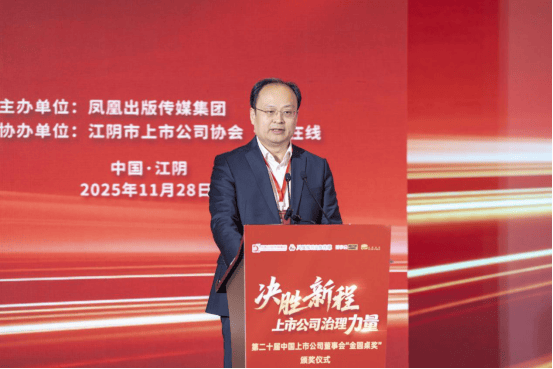
决胜新程——第二十届中国上市公司董事会“金圆桌奖”颁奖仪式在江阴成功举办
Sou Hu Cai Jing· 2025-12-02 06:29
Core Points - The 20th "Golden Roundtable Award" ceremony for Chinese listed companies was held in Jiangyin, attended by over 200 guests including executives, scholars, and media representatives, highlighting achievements in corporate governance [1][2][3] - The event recognized over 100 listed companies with a total market value exceeding 10 trillion, including 16 companies with market values over 100 billion [1][2] Group 1 - The opening speech by Li Zhenqiang emphasized the importance of the "Golden Roundtable Award" as a platform for consensus and wisdom, aiming to support the transformation and upgrading of Chinese listed companies [2][3] - Jiangyin's Vice Mayor Ji Zhen highlighted the city's achievements as a manufacturing hub, with 66 listed companies and a total market value exceeding 300 billion, positioning Jiangyin as a leader among county-level cities [5][6] Group 2 - Liu Yunhong, a professor, discussed the development of corporate governance rules in China, identifying six key issues in current practices and advocating for a shift from "formal compliance" to "substantive effectiveness" [12] - Zhu Zhengyi shared insights from Longji Technology's acquisition of Xingke Jinpeng, emphasizing the strategic role of corporate secretaries in governance [12][13] - Su Mei analyzed the trends in the A-share market under the registration system, stressing the importance of value management for high-quality development [15] Group 3 - The award ceremony recognized outstanding companies and individuals in various categories, including "Most Influential Independent Director" and "Excellent Board of Directors," showcasing achievements in governance and value creation [18][20][33] - The "Best Board of Directors" award was presented to leading companies such as Weichai Power and China Ping An, reflecting their exemplary governance practices and strategic foresight [33][36]





盐津铺子(002847):厉兵秣马,整装待发
Soochow Securities· 2025-12-01 09:23
Investment Rating - The report maintains a "Buy" rating for the company [1] Core Views - The company has demonstrated strong adaptability to market trends over its 20-year development, transitioning from a follower to a leader in the Chinese snack industry [2][15] - The company has established a comprehensive competitive advantage in channels, supply chain, and brand management, positioning itself to become a platform-type snack enterprise [3][18] - The company is expected to achieve significant profit growth, with net profits projected to reach 819.71 million, 1,008.28 million, and 1,224.11 million yuan for 2025, 2026, and 2027 respectively, reflecting year-on-year growth rates of 28%, 23%, and 21% [1][3] Summary by Sections Company Overview - The company has evolved through three stages: initial exploration (2005-2016), rapid expansion (2017-2020), and strategic upgrade (2021-present) [15][17] - During the initial phase, the company focused on capturing offline channel benefits through direct sales and partnerships with major supermarkets [15] - The rapid expansion phase saw the introduction of new product lines and innovative sales strategies, such as the "store island" model, which significantly boosted sales [16] Strategic Developments - The company has initiated a multi-brand and multi-category strategy, aiming for a comprehensive channel and supply chain upgrade [17][18] - The introduction of the "1+7" strategy in 2023 aims to cultivate various sub-brands, focusing on one core sub-brand every 1-2 years [18][19] - The company has successfully launched notable products like "Big Devil" and "Egg Emperor," enhancing its market presence [18] Financial Performance - The company has shown a steady increase in revenue, with a projected compound annual growth rate (CAGR) of 32.5% from 2021 to 2024 [18] - Profit margins have improved, with net profit margins reaching approximately 14% in 2025, driven by scale effects and brand strength [48] - The company's financial metrics indicate strong inventory and receivables turnover, outperforming industry averages [53]
情系香江 爱满湘江!湘籍企业和企业家积极募捐驰援香港



Chang Sha Wan Bao· 2025-11-30 23:32
Core Viewpoint - The article highlights the collective efforts of Hunan enterprises and individuals in response to a significant fire incident in Hong Kong, showcasing solidarity and support for the affected community [1]. Group 1: Donations and Contributions - Multiple Hunan enterprises have actively participated in fundraising efforts, with the Hong Kong Hunan Association and 21 member organizations expected to donate 5 million HKD [2]. - Notable contributions include: - Lens Technology donating 13.1 million HKD - SANY Group donating 10 million HKD and providing energy equipment for emergency power supply - Afuni Future Capital donating 10 million HKD - Other companies like Zhongwei New Materials, Simore International, and Aier Eye Hospital each donating 5 million HKD [2]. - Additional donations include 2 million RMB from Yanjin Puzhi Food Co., 1 million HKD from Wanxing Technology, and 200,000 RMB from SHOWVEN [2]. Group 2: Individual Contributions - Several Hunan entrepreneurs have also made personal donations, including: - Hu Guoan, Vice President of the Hong Kong Hunan Association, donating 1 million RMB - Lian Zhen'en, Executive President of the association, donating 300,000 HKD - Other individuals contributing smaller amounts [3]. - SANY Group has activated a global disaster response mechanism to assist affected individuals [3]. Group 3: Call for Support and Initiatives - The Hong Kong Hunan Association has initiated a fundraising campaign, encouraging the community to donate cold-weather relief supplies and seek assistance if needed [4]. - The Changsha Municipal Federation of Industry and Commerce and the Changsha Guangcai Foundation have issued a call to action for local businesses to contribute to the relief efforts, emphasizing the importance of social responsibility [4].
盐津铺子的“增长神话”,是零食行业的“幸存者偏差”吗?
Sou Hu Cai Jing· 2025-11-29 04:41
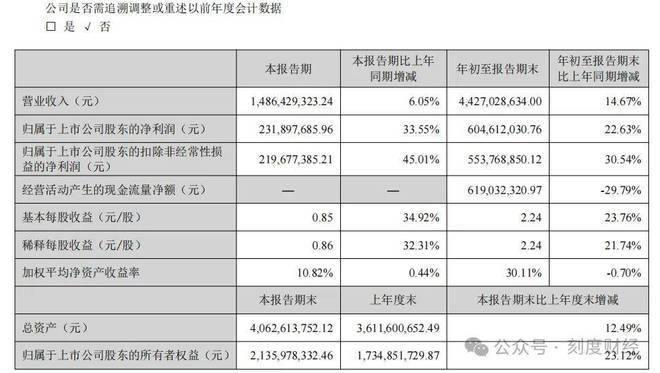
Core Insights - The snack industry is experiencing intense competition, with companies like Salted Fish and others facing challenges in profitability despite revenue growth [1][3] - Salted Fish has shown resilience, reporting a revenue of 44.27 billion yuan and a net profit of 6.05 billion yuan for the first three quarters of 2025, marking year-on-year growth of 14.67% and 22.63% respectively [1][3] - The company is expanding its market presence by targeting high-end channels and investing in a production base in Thailand [3][19] Financial Performance - For Q3 2025, Salted Fish achieved a revenue of 14.9 billion yuan, a 6.1% increase year-on-year, with a net profit of 2.3 billion yuan, reflecting a significant 33.6% growth [1][3] - The company's gross margin improved by 1.0 percentage points to 31.6%, driven by higher sales of high-margin konjac products and optimization of product structure [3][5] - The first three quarters of 2025 saw a net profit margin of 13.66%, with a cash flow from operating activities of 619 million yuan, indicating a decline of 29.79% [2][8] Market Position and Strategy - Salted Fish has successfully captured market share in the high-end snack segment while also expanding its distribution channels, covering over 40,000 retail outlets [5][15] - The company relies heavily on its konjac products, which accounted for 26.9% of total revenue in the first half of 2025, with a staggering year-on-year growth of 155.10% [10][12] - Despite its successes, Salted Fish faces challenges due to over-reliance on a single product category and the potential for market saturation [12][13] Industry Challenges - The snack industry is shifting from a focus on channel expansion to a need for innovation and efficiency, with many companies struggling to adapt [9][16] - Salted Fish's growth strategy has not addressed fundamental industry issues such as product homogeneity and weak innovation capabilities [9][17] - The competitive landscape is intensifying, with companies needing to enhance supply chain efficiency and product differentiation to maintain market relevance [16][20] Future Outlook - The snack market is projected to exceed 3.8 trillion yuan in 2025, but the underlying challenges of low entry barriers and intense competition remain [20][21] - Salted Fish's current growth model, which capitalizes on health trends and channel advantages, may not be sustainable in the long term without significant innovation and market adaptation [20][21] - The company must transition from being a beneficiary of market trends to a creator of lasting value to avoid potential declines in growth [21]
【四中全会精神在基层】助企服务精准发力
Jing Ji Ri Bao· 2025-11-29 00:17
Core Viewpoint - The article highlights the effective collaboration between government and enterprises in the Henan province, particularly in the context of the rapid transformation of a production line to meet market demands, showcasing the importance of streamlined processes and supportive government initiatives [1][2]. Group 1: Government Initiatives - The Central Committee's suggestions emphasize the combination of an effective market and proactive government to create a unified, open, competitive, and orderly market system [1]. - The Luyi Economic Development Zone has implemented reforms to enhance government services, including the introduction of a comprehensive service window that integrates 657 administrative services, achieving over 92% in "immediate handling" cases [2]. - The local government has adopted a "one-stop service" approach, ensuring a closed-loop mechanism for collecting, assigning, supervising, and providing feedback on enterprise issues, achieving a 100% problem resolution rate [2]. Group 2: Company Operations - Salted Fish Food Co., Ltd. in Luyi faced challenges in changing its production line from meat jerky to konjac products due to complex inter-departmental processes [1]. - The project timeline for the konjac production line was significantly reduced from an expected 6 months to just 15 days, with production now set to begin in November 2023 instead of April 2026, potentially generating an additional output value of over 500 million yuan [2]. - The collaboration between various departments, including power, water, and fire safety, led to expedited approvals and operational efficiency, demonstrating the effectiveness of government support in facilitating business growth [2].
助企服务精准发力
Jing Ji Ri Bao· 2025-11-28 21:59
Core Viewpoint - The article highlights the effective collaboration between government and enterprises in the Luoyang Economic and Technological Development Zone, which has significantly accelerated the project approval and implementation process for the Salted Fish Company, leading to enhanced production capabilities and economic output [1][2]. Group 1: Government Support and Efficiency - The government has implemented a "green channel" for power supply, completing the expansion of the substation within 72 hours, which is a significant improvement in service efficiency [2]. - The water department recalibrated water usage indicators and coordinated pipeline construction, demonstrating a proactive approach to support local businesses [2]. - The fire safety approval process was streamlined using a "pre-review + segmented acceptance" model, reducing waiting time by 60% [2]. Group 2: Project Timeline and Economic Impact - The original six-month process for project changes was reduced to just 15 days, allowing the new konjac product line to commence production earlier than expected, moving from April 2026 to November 2023 [2]. - The new production line is projected to generate an additional output value exceeding 5 billion yuan [2]. Group 3: Continuous Improvement in Services - The Luoyang Economic and Technological Development Zone has introduced a comprehensive service window that integrates 657 administrative services, with over 92% of services being processed immediately [2]. - The "helping and acting on behalf" initiative and the "deficient acceptance" mechanism provide full-chain, point-to-point services to enterprises, ensuring a 100% problem resolution rate [2]. - The local government aims to enhance the quality of industrial projects by focusing on their economic, innovative, and environmental value [2].
食品饮料2026年投资策略:拐点显现、板块次第筑底、积极布局
China Post Securities· 2025-11-28 13:40
Group 1: Economic Indicators and Consumer Trends - The CPI in October showed a slight improvement, with a year-on-year increase of 0.2% and a month-on-month increase of 0.2%, indicating a potential recovery trend that may continue into the first half of next year [6][10] - The retail sales of consumer goods in October reached 46,291 billion yuan, growing by 2.93% year-on-year, with significant improvements in essential consumption categories such as food and beverages [10] - The restaurant sector saw a monthly revenue of 5,199 billion yuan in October, reflecting a year-on-year growth of 3.8%, driven by the National Day and Mid-Autumn Festival holidays [10] Group 2: Frozen and Food Supply Industry - The frozen food and catering industry is witnessing a shift from price wars to product innovation and channel development, with companies focusing on quality and service rather than just price competition [11] - Major players like Anjiyuan and Qianwei Central Kitchen are transitioning their strategies to emphasize product quality and operational efficiency, leading to improved profitability [11][15] - The industry is entering a "hard strength reshuffle period," where companies are expected to enhance their product offerings and service capabilities to maintain competitiveness [11] Group 3: Snack Food Sector - The snack food sector is experiencing a weak recovery, with a clear differentiation in growth among brands and channels, driven by strategic adjustments and product innovations [33][34] - The emergence of the konjac category as a significant growth driver, with market potential expected to reach 300 billion yuan by 2025, indicates a strong consumer demand for healthy snacks [34][40] - Companies like Yummy Foods and Salted Fish are leveraging their core products and channel strategies to achieve substantial growth, with a focus on high-margin products and efficient cost management [34][42] Group 4: Specific Company Strategies - Anjiyuan is focusing on high-margin products and channel expansion, with significant growth in its core offerings like volcanic stone grilled sausages and high-end dumplings [12][13] - Qianwei Central Kitchen is seeing improvements in its direct sales and distribution channels, with a focus on enhancing profitability through strategic adjustments in customer structure and resource allocation [15][18] - Salted Fish is capitalizing on the konjac trend and optimizing its product mix to improve profitability, with a strong emphasis on high-margin products and efficient channel management [40][41]




盐津铺子(002847) - 2025年中期权益分派实施公告
2025-11-27 12:30
证券代码:002847 证券简称:盐津铺子 公告编号:2025-061 盐津铺子食品股份有限公司 2025年中期权益分派实施公告 本公司及董事会全体成员保证信息披露的内容真实、准确、完整, 没有虚假记载、误导性陈述或重大遗漏。 特别提示: 1、根据《深圳证券交易所上市公司自律监管指引第 9 号-回购股份》的相关 规定,盐津铺子食品股份有限公司(以下简称"公司")回购专用证券账户持有 的公司股份 1,050 股不享有参与本次利润分配的权利。 2、因公司回购股份不享有参与本次利润分配的权利,因此,本次权益分派 实施后除权除息价格计算时,每股现金红利应以 0.3999984 元/股计算,每 10 股 现金红利为 3.999984 元。 公司总股本折算每股现金红利比例计算如下: 按总股本折算每股现金红利=实际现金分红总金额/总股本(含回购股份), 即:109,083,451.60 元÷272,709,679 股=0.3999984 元/股; 除权除息参考价=除权除息日的前一交易日收盘价-按总股本折算每股现金 红利; 综上,2025 年中期权益分派实施后的除权除息价格按照上述原则及计算方 式执行,即本次权益分派实施后的 ...
盐津铺子:关于部分限制性股票回购注销完成的公告
Zheng Quan Ri Bao· 2025-11-26 13:11
Summary of Key Points Core Viewpoint - Salt Lake Puzhou announced the repurchase and cancellation of restricted stocks for five incentive targets, totaling 70,000 shares, which represents 0.03% of the total share capital before cancellation [2]. Group 1: Repurchase Details - The repurchase prices for the restricted stocks were 27.12 yuan/share and 25.07 yuan/share, reflecting differences in the grant prices of various stock incentive plans and associated bank interest [2]. - The total amount for this repurchase was 1,858,220.00 yuan, funded by the company's own resources [2]. - Following the completion of the repurchase and cancellation, the company's total share capital decreased from 272,779,679 shares to 272,709,679 shares [2].
盐津铺子(002847) - 关于部分限制性股票回购注销完成的公告
2025-11-26 09:32
证券代码:002847 证券简称:盐津铺子 公告编号:2025-060 盐津铺子食品股份有限公司 关于部分限制性股票回购注销完成的公告 本公司及董事会全体成员保证信息披露的内容真实、准确、完整, 没有虚假记载、误导性陈述或重大遗漏。 重要内容提示: 1、盐津铺子食品股份有限公司(以下简称"公司")本次回购注销限制性 股票的激励对象共 5 名,回购注销的限制性股票数量合计为 70,000 股,注销股 份占注销前总股本 272,779,679 股的 0.03%。 2、本次回购价格分别为 27.12 元/股、25.07 元/股(回购价格差异系不同期 次股权激励计划对应的授予价格不同,加之其授予日不同对应的银行利息存在一 定差异所致)。 3、本次回购的总金额为 1,858,220.00 元,资金来源为自有资金。 4、截至本公告日,上述限制性股票已在中国证券登记结算有限责任公司深 圳分公司完成回购注销手续。 5、本次回购注销完成后,公司总股本由 272,779,679 股变更为 272,709,679 股。 盐津铺子食品股份有限公司(以下简称"公司")于 2025 年 8 月 20 日召开 第四届董事会第十九次会议和第 ...