
CHINA PET FOODS(002891)

Search documents
中宠股份(002891) - 关于2025年第四季度可转债转股情况的公告
2026-01-05 11:47
证券代码:002891 证券简称:中宠股份 公告编号:2026-001 债券代码:127076 债券简称:中宠转 2 烟台中宠食品股份有限公司 关于 2025 年第四季度可转债转股情况的公告 本公司及董事会全体成员保证信息披露的内容真实、准确、完整,没有虚假记载、 | | | 债券代码:127076 债券简称:中宠转 2 转股价格:27.46 元/股 转股起始时间:2023 年 5 月 4 日 转股截止时间:2028 年 10 月 24 日 转股股份来源:仅使用新增股份转股 一、可转换公司债券基本情况 (一)可转换公司债券发行情况 经中国证券监督管理委员会"证监许可[2022]2063 号"文核准,烟台中宠食 品股份有限公司(以下简称"公司")于 2022 年 10 月 25 日公开发行了 7,690,459.00 张可转换公司债券,每张面值 100.00 元,发行总额为 76,904.59 万元。 误导性陈述或重大遗漏。 重要提示: (三)可转换公司债券转股期限 本次发行的可转债转股期自可转债发行结束之日(2022 年 10 月 31 日,T+4 日)起满 6 个月后的第一个交易日起至可转债到期日止,即 2 ...
农林牧渔展望 2026 行业报告:周期破晓见曦,成长擎画新篇
Haitong Securities International· 2026-01-05 06:40
Investment Rating - The report recommends focusing on the cyclical turning points in the pig and beef farming sectors, highlighting companies like Muyuan Foods and WH Group as potential investments. The pet industry shows clear growth potential, with companies that integrate production, sales, and research expected to succeed, such as Zhongchong Co., Guibao Pet, and Petty Co. The planting sector also has significant growth potential, with recommendations for companies like Morning Light Bio and Noposion [11]. Core Insights - The pig farming sector is expected to face continued low prices in the first half of 2026, driven by both policy and cyclical factors, with a focus on cost improvement and growth potential in pig farming enterprises [2][15]. - The poultry sector is experiencing a recovery phase, with white chicken prices remaining low and yellow chicken demand potentially increasing due to promotional activities [3][37]. - The beef farming sector is characterized by a long production cycle, with supply-side contractions likely to drive prices upward, particularly from 2025 onwards [4][46]. - The feed and animal health sectors are expected to see growth in sales, with a focus on the competitive landscape and the impact of low profits on animal health demand [5][63]. - The planting sector is projected to see stable grain prices, driven by domestic control and innovation, with a focus on specialty crops and plant extracts [6][69]. Summary by Sections Pig Farming - Prices are expected to remain low in the first half of 2026, with a gradual increase in supply due to rising breeding sow inventories [15]. - Capacity policies and cyclical adjustments are leading to a continued reduction in production capacity, with a focus on cost reduction and debt management among pig farming companies [23][27]. - Companies like Muyuan Foods are highlighted for their cost improvements, with expectations of further reductions in production costs [29]. Poultry Farming - The white chicken industry is in a deep price slump, with recovery expected to take time, while yellow chicken prices may see slight recovery due to promotional efforts [32][37]. - Leading companies are improving their operational efficiencies to cope with low prices, which may enhance their performance when prices recover [33]. Beef Farming - The long production cycle and fragmented market structure of beef farming in China are significant factors, with supply reductions expected to lead to price increases starting in 2025 [41][46]. - The beef supply is projected to decrease in the latter half of 2025, with expectations of continued price increases through 2027 [47]. Feed and Animal Health - The feed sector is expected to see a recovery in sales, with high inventory levels in the livestock sector supporting growth [52]. - The animal health sector may face pressure due to low profits in the livestock sector, but there are opportunities for breakthroughs in key products [63][65]. Planting - Grain prices are expected to stabilize and rise, with a focus on domestic production and innovation in seed varieties [69][75]. - The planting sector is seeing a shift towards high-quality, innovative seed varieties, with companies like Kangnong Seed showing strong growth potential [87].


暴利的宠物,大厂的坟墓
创业邦· 2026-01-04 10:35
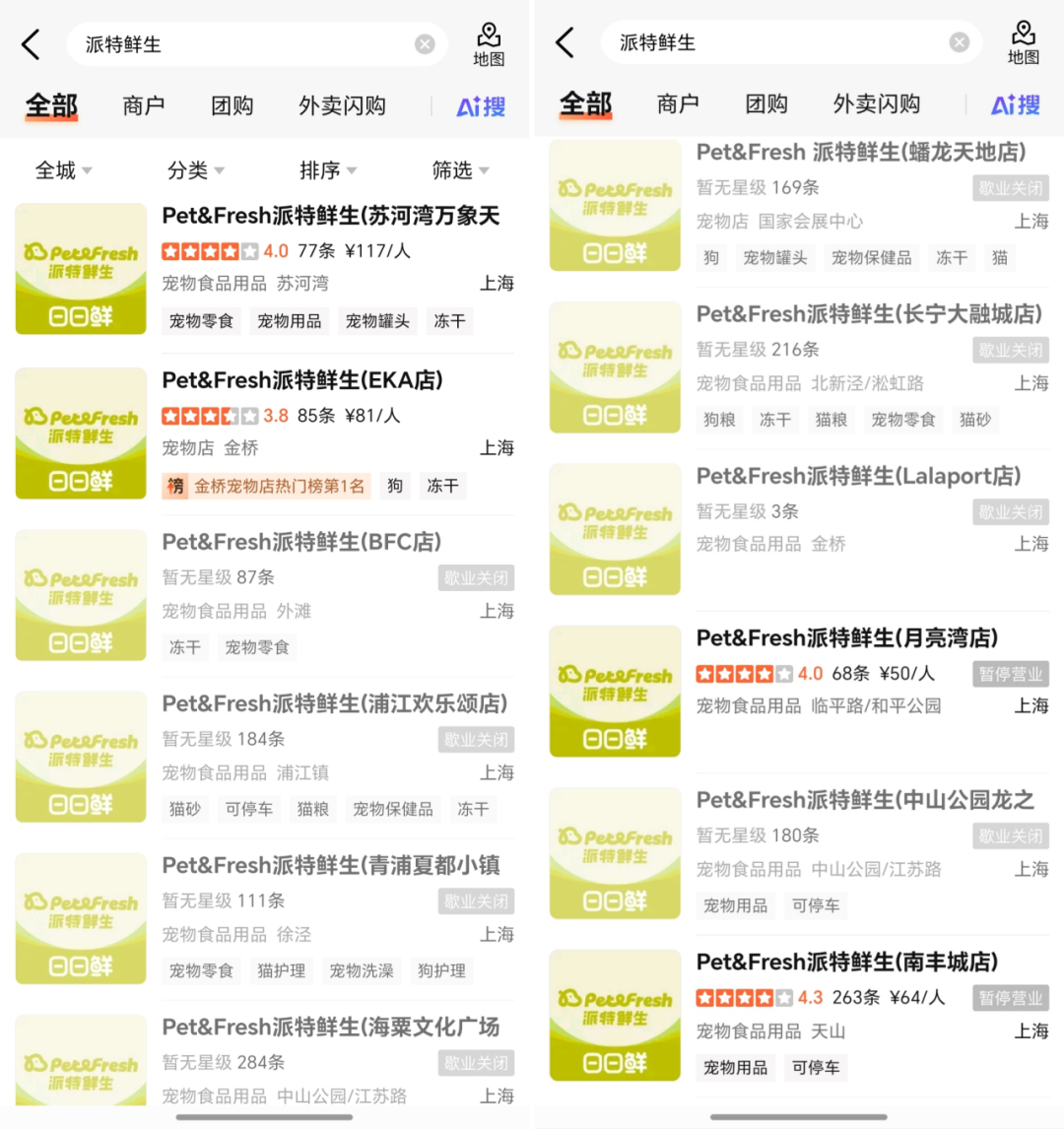
Core Viewpoint - The pet economy, with a market size of 300 billion and a gross margin of up to 50%, appears lucrative but is proving challenging for large companies to profit from [6]. Group 1: Market Dynamics - The pet food sector is the most popular category, with domestic brands achieving gross margins of 40%-50%, and some products, like high-end cat food, reaching a gross margin of 44.7% [8]. - Despite the high gross margins, many companies in the pet industry, such as Zhongchong Co. and Petty Co., report low net profit margins, with Zhongchong's gross margin at 28.16% and net margin at only 9.33% for 2024 [9]. - The high gross margins in the pet economy are often offset by significant marketing and operational costs, leading to a situation where companies struggle to convert revenue into profit [11][12]. Group 2: Challenges Faced by Large Companies - Large companies entering the pet market, like Hema, have faced significant losses, with Hema's Pet Fresh store losing over 20,000 yuan per month and closing after just nine months [6][9]. - The reliance on KOLs (Key Opinion Leaders) for marketing has led to increased sales expenses, which can consume a large portion of revenue, making it difficult for companies to achieve profitability [12][16]. - The pet economy is characterized by a high degree of fragmentation, with many successful businesses being small, owner-operated shops rather than large chains [20][24]. Group 3: Emotional Value vs. Cost - The perceived high margins in the pet economy are often attributed to the emotional value pet owners place on their pets, but this emotional value comes with significant costs, particularly in marketing and service delivery [11][14]. - Services like pet grooming and veterinary care can be profitable, but they require skilled personnel, making it difficult for large companies to scale effectively [20][23]. Group 4: Comparison with Other Industries - The challenges faced by the pet economy are similar to those in other high-margin industries like beauty and medical aesthetics, where the profitability often lies with individual practitioners rather than large companies [18][19]. - The pet industry, like the beauty industry, is heavily reliant on personal relationships and trust, which complicates efforts to scale operations [22][24].



东方证券农林牧渔行业周报(20251229-20260104):年底猪价延续偏强,关注补库进程影响-20260104
Orient Securities· 2026-01-04 05:30
Investment Rating - The industry investment rating is "Positive" and is maintained [5] Core Viewpoints - The pig farming sector is expected to benefit from recent policies and market dynamics that promote capacity reduction, leading to a potential price turning point in Q2 2026, with long-term performance improvements anticipated for related stocks [3][43] - The structural growth trend in the post-cycle sector continues, with profits likely to gradually transmit downstream if the current round of pig capacity reduction proceeds smoothly, benefiting the animal health sector [3] - The planting chain shows a confirmed upward trend in grain prices, indicating favorable fundamentals for planting and seed industries, highlighting significant investment opportunities [3] - The pet food sector is experiencing growth and price increase logic, with continuous recognition of domestic brands and sustained growth of leading companies [3] Summary by Sections Pig Farming - The average price of live pigs as of December 31 was 12.76 yuan/kg, a week-on-week increase of 10.38%, while the average price of 15 kg piglets was 19.44 yuan/kg, up 2.21% week-on-week [12][51] - The supply side shows a widening price gap for fattened pigs, supporting price increases, while demand is boosted by consumption expectations during the New Year holiday [12][17] Poultry - The price of white feather broilers increased to 7.82 yuan/kg, up 6.39% week-on-week, and chick prices rose to 3.59 yuan/chick, up 1.7% week-on-week [17][51] - The supply of meat chickens has increased, leading to a more relaxed market supply, while demand has weakened due to some slaughterhouses reducing operations [17] Feed Sector - The prices of corn, wheat, and soybean meal have risen, with corn averaging 2351.57 yuan/ton, up 0.57% week-on-week, and soybean meal at 3172.29 yuan/ton, up 0.96% week-on-week [27][51] - Increased selling enthusiasm among farmers is noted, although the pace of supply remains slow [27] Major Agricultural Products - The domestic natural rubber futures price was 15605 yuan/ton as of December 31, down 0.29% week-on-week, with inventory levels increasing [38][51] - The current down cycle for sugar prices continues, with no significant recovery expected [39]


农林牧渔展望2026行业报告:周期破晓见曦,成长擎画新篇
GUOTAI HAITONG SECURITIES· 2026-01-03 14:20
Investment Rating - The report assigns an "Accumulate" rating for the agricultural industry [9] Core Insights - In 2026, the pig and beef cattle farming sectors are expected to reach a cyclical turning point, with clear growth potential in the pet sector and significant opportunities in specialty planting [2][13] - Companies with complete production, sales, and research capabilities in the pet industry are likely to succeed amid competitive pressures [8] Summary by Sections Pig Farming - Price: The pig price is expected to remain low in the first half of 2026, leading to continued low profits in the industry [3] - Capacity: Policy and cyclical adjustments are driving capacity reduction, with a focus on cost improvement and growth potential in pig farming enterprises [3][27] - Debt Reduction: The average debt-to-asset ratio for listed pig farming companies has decreased to 56.27%, indicating improved financial health [27] Poultry Farming - White Chicken: The industry is experiencing deep price declines, with a return to supply-demand balance expected to take time [4][30] - Yellow Chicken: Prices may see slight recovery, supported by promotional activities for native chicken varieties [35] Beef Farming - Long Cycle: The beef farming cycle is lengthy, with a fragmented supply structure impacting pricing dynamics [39] - Price Outlook: A supply contraction is expected to support continued price increases for beef from 2025 onwards [46] Feed and Animal Health - Feed: The feed sector is anticipated to see growth in sales, with a positive outlook for 2026 as livestock numbers remain high [49] - Animal Health: Demand for animal health products may face pressure due to low profits in farming, but breakthroughs in key products are worth monitoring [58][59] Planting - Grain Prices: Grain prices are expected to trend upwards, driven by increased focus on food security and innovation in seed varieties [7][64] - Specialty Planting: Opportunities in specialty crops like blueberries and mushrooms are highlighted, with a focus on innovation and market demand [7][70] Pet Industry - Growth Potential: The pet market is thriving, with strong consumer willingness to spend, indicating clear growth prospects [8][13] - Competitive Landscape: Companies with integrated production, sales, and research capabilities are rare and likely to outperform in the competitive environment [8][13]

暴利的宠物,大厂的坟墓
36氪· 2026-01-03 13:08
Core Viewpoint - The pet economy, while appearing lucrative with a market size of 300 billion and gross margins up to 50%, is not a profitable venture for large companies due to high operational costs and reliance on human capital rather than scalable business models [4][10][30]. Industry Overview - The pet economy is characterized by high gross margins, particularly in pet food, where domestic brands can achieve margins of 40%-50% [10][11]. - Service sectors such as grooming and veterinary care also show high potential margins, but the actual profitability for companies is often low due to high operational costs [10][15]. Company Performance - Major players like Pet Fresh and others have faced significant losses, with Pet Fresh closing 18 stores after burning through 178 million RMB in just nine months, averaging losses of over 200,000 RMB per store monthly [5][11]. - Companies like Zhongchong Co. and Petty Co. report low net profit margins, with Zhongchong's gross margin at 28.16% and net margin at only 9.33% [11][12]. Marketing and Sales Costs - The cost of acquiring customers through KOLs (Key Opinion Leaders) and marketing has skyrocketed, with sales expenses for companies like Guibao Pet increasing from under 100 million RMB in 2017 to 500 million RMB in 2024, leading to diminished net profit margins despite increased sales [13][14]. Challenges in Scaling - The pet economy is heavily reliant on personal relationships and trust between pet owners and service providers, making it difficult for large companies to replicate the success of smaller, independent businesses [27][30]. - The high costs associated with maintaining quality service and customer trust, such as expensive store locations and high employee wages, hinder profitability for larger firms [15][28]. Comparison with Other Industries - Similar challenges are observed in other high-margin industries like beauty and medical services, where the core value lies in skilled personnel rather than scalable business operations [19][20][24]. - The pet industry exemplifies a trend where the most profitable segments are those that rely on individual expertise and customer relationships, rather than mass-market strategies [30].

宠物经济,暴利的烂生意
Tai Mei Ti A P P· 2025-12-31 09:15
Core Insights - The pet economy, with a market size of 300 billion and gross margins reaching 50%, appears to be a lucrative business, but the reality is more complex and challenging for large companies [1][4]. Group 1: Market Dynamics - Major players like Hema have entered the pet market with high expectations, but have faced significant losses, exemplified by Pet Fresh's closure of 18 stores after just 9 months, with an average monthly loss exceeding 200,000 RMB per store [2][6]. - Despite the high gross margins in pet food, with domestic brands achieving 40%-50% margins, the actual profitability for many companies is low, with some reporting negative net margins [5][6]. Group 2: Cost Structure - The high gross margins in the pet industry are offset by substantial marketing and operational costs, particularly in advertising through KOLs (Key Opinion Leaders), which can consume a significant portion of revenue [8][10]. - Companies like Zhongchong and Peidi have shown that even leading firms struggle with profitability, with Zhongchong's gross margin at 28.16% and net margin at only 9.33% [6][9]. Group 3: Business Model Challenges - The pet economy is characterized by a reliance on personal relationships and trust between pet owners and service providers, making it difficult for large companies to replicate the success of smaller, independent operators [22][23]. - The expansion of large pet service providers often leads to operational inefficiencies and customer dissatisfaction, as seen with companies like Jichongjia, which faced closures after rapid expansion [22][24]. Group 4: Comparison with Other Industries - The challenges faced in the pet economy mirror those in other high-margin industries like beauty and medical services, where the core value often lies in individual expertise rather than scalable business models [14][20]. - The pet industry, much like the beauty and medical sectors, is fundamentally a "people-driven" business, where success is tied to individual skills and customer relationships rather than just operational efficiency [20][23].
饲料板块12月31日跌1.08%,天康生物领跌,主力资金净流出7586.85万元
Zheng Xing Xing Ye Ri Bao· 2025-12-31 08:56
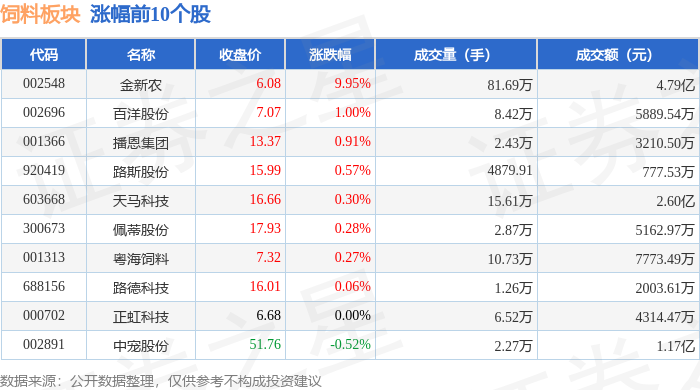
Market Overview - The feed sector experienced a decline of 1.08% on December 31, with TianKang Biological leading the drop [1] - The Shanghai Composite Index closed at 3968.84, up 0.09%, while the Shenzhen Component Index closed at 13525.02, down 0.58% [1] Individual Stock Performance - JinXinNong (002548) saw a significant increase of 9.95%, closing at 6.08, with a trading volume of 816,900 shares and a transaction value of 479 million [1] - TianKang Biological (002100) declined by 3.03%, closing at 7.37, with a trading volume of 337,500 shares and a transaction value of 250 million [2] - Other notable performers include ZhiYang Co. (002696) with a 1.00% increase, and Boen Group (001366) with a 0.91% increase [1] Capital Flow Analysis - The feed sector experienced a net outflow of 75.87 million from institutional investors, while retail investors saw a net inflow of 22.40 million [2] - JinXinNong had a net inflow of 64.54 million from institutional investors, but a net outflow of 36.08 million from retail investors [3] - TianMa Technology (603668) had a net inflow of 11.83 million from institutional investors, while retail investors experienced a net outflow of 13.32 million [3]


研判2025!中国宠物风味剂行业分类、产业链、发展现状、竞争格局和未来趋势分析:宠物市场的蓬勃发展,带动宠物风味剂市场上涨[图]
Chan Ye Xin Xi Wang· 2025-12-29 01:20
Core Insights - The pet flavoring agent market is experiencing rapid growth due to the increasing demand for palatable pet food products, with the market size expected to reach 1 billion yuan in 2024 and 1.05 billion yuan in 2025 [1][6][7] Industry Overview - Pet flavoring agents, also known as palatants or appetite enhancers, are designed to increase the interest of pets in food, primarily made from animal muscle tissue or organs [2][4] - The production process involves hydrolyzing proteins into smaller molecules and using specific enzymes, resulting in a product that enhances the palatability of pet food [2][3] Market Size and Growth - The pet flavoring agent market in China is projected to grow from 1 billion yuan in 2024 to 1.05 billion yuan in 2025, driven by advancements in technology and the development of diverse flavor products [1][7] - The overall pet economy market in China is expected to reach 362.6 billion yuan in 2024, with pet food accounting for 48% of this market [6][7] Competitive Landscape - The pet flavoring agent industry features numerous players, primarily small to medium-sized enterprises, including companies like Yantai Zhongchong Food Co., Ltd. and Tianjin Maihai Biotechnology Co., Ltd. [2][8] - The competition is intensifying as more companies enter the market, attracted by the promising growth prospects [7][8] Development Trends - The market for pet flavoring agents is expected to expand significantly due to increasing consumer spending on pets and a growing focus on the palatability of pet food [9] - Companies are also looking to expand their global presence, with firms like Jiangsu Yibang Biotechnology Co., Ltd. exploring international markets to mitigate risks associated with single market dependency [10] - Regulatory measures are anticipated to be introduced to standardize the use of flavoring agents, ensuring safe consumption for pets [11]

农林牧渔周观点:二育进场猪价反弹,宠物新国货大会召开-20251228
Shenwan Hongyuan Securities· 2025-12-28 12:42
Investment Rating - The industry investment rating is "Overweight" indicating that the industry is expected to outperform the overall market [5][6]. Core Insights - The report highlights a significant rebound in pig prices due to the re-entry of the second batch of fattening pigs and a rise in consumer sentiment as the year-end approaches. However, it notes that this price increase may not be sustainable in the coming quarters due to an oversupply situation [5][6]. - The report emphasizes the need to focus on the ongoing capacity reduction in the pig farming sector and suggests left-side investment opportunities in this area. It also mentions a potential valuation shift in the pet sector as it undergoes adjustments [5][6]. - The report provides specific recommendations for companies to watch, including Muyuan Foods, Wens Foodstuff, Dekang Agriculture, Tiankang Biological, Noposion, Guai Bao Pet, Zhongchong Pet, and Petty [5][6]. Summary by Sections Agricultural Stock Market Performance - The Shenwan Agricultural, Forestry, Animal Husbandry, and Fishery Index rose by 0.3%, while the CSI 300 Index increased by 1.9%. The top five gainers included Shennong Technology (35.7%), Guotou Zhonglu (20.8%), and Jinliang Holdings (19.9%) [5][6]. Pig Farming - The average selling price of external three yuan pigs was 12.21 yuan/kg, with a week-on-week increase of 7.0%. The report indicates that the current price increase is driven by several factors, including the re-entry of fattening pigs and a decrease in available pig sources [5][6]. - The report forecasts that pig prices will continue to fluctuate at the bottom level, with a focus on the progress of capacity reduction in the industry [5][6]. Pet Sector - The report mentions the seventh Pet New National Goods Conference held in Wuhan, projecting the annual market size of China's pet industry to be between 154.5 billion and 160 billion yuan. It highlights the rapid growth in the pet market and the emergence of new customer segments [5][6]. - Ruipai Pet Hospital has submitted an application for listing on the Hong Kong Stock Exchange, indicating a positive outlook for the pet medical service sector [5][6]. Poultry Farming - The average selling price of white feather broiler chicks was 3.37 yuan/chick, with a week-on-week decrease of 0.6%. The report notes that the supply of white feather broilers remains abundant, which is expected to be a theme for 2025-2026 [5][6].