Morgan Stanley(MS)

Search documents
多家投行预警!这个领域投资过热
Jing Ji Wang· 2025-10-23 02:39
Core Viewpoint - The investment community is increasingly concerned about the potential for an AI bubble as tech giants like Nvidia, Broadcom, and Microsoft drive U.S. stock markets to record highs, prompting warnings from major investment banks about the risks of overvaluation in the AI sector [1][2][3] Group 1: Investment Risks and Market Dynamics - Goldman Sachs highlights that U.S. stock valuations have reached a 20-year peak, with nearly half of the returns in the S&P 500 index coming from valuation expansion rather than fundamental improvements [1] - The concentration of market gains among seven major tech companies, including Google, Amazon, and Microsoft, has reached unprecedented levels, contributing approximately 41% to the S&P 500 index's increase this year [2] - Morgan Stanley suggests that the current wave of spending on AI may soon yield positive impacts on company revenues, indicating that the spending cycle is still in its early stages despite high valuations [4] Group 2: Wealth Impact and Market Sentiment - JPMorgan reports that 30 AI-related stocks have significantly increased U.S. household wealth by over $5 trillion in the past year, with a potential decline in these stocks leading to a substantial decrease in household wealth and consumer spending [3] - The proportion of U.S. households' stock holdings has reached 45%, surpassing levels seen before the internet bubble burst in the late 1990s, raising concerns about market sustainability [2] - Goldman Sachs emphasizes the importance of cautious stock selection in the current environment, as historical trends suggest that markets often overreact to new technologies before their actual potential is realized [1][2]


亚洲经济学 - 哪些亚洲经济体更易受中国通缩压力影响-Asia Economics-Which Asian economies are more exposed to deflationary pressures from China
2025-10-23 02:06
Summary of Key Points from the Conference Call Industry Overview - The focus is on the **Asia Pacific** region, particularly the economic impacts of **China's deflationary pressures** on other Asian economies. Core Insights and Arguments 1. **China's Deflationary Environment**: - China's economy has been experiencing deflation for 10 consecutive quarters, with a GDP deflator of -1.0% as of Q3 2025, indicating persistent deflationary pressures [2][4][44]. - The non-commodity Producer Price Index (PPI) in Asia excluding China is also declining, influenced by China's trade surpluses and excess capacity [1][10]. 2. **Impact on Asia Ex China**: - The report identifies **Thailand, Malaysia, and Korea** as the most exposed economies to China's deflationary pressures, while **Australia and Japan** are the least exposed [3][76][80]. - The PPI for Thailand is at -1.2%, Malaysia at -5.0%, and Korea at 0.7%, indicating varying levels of exposure to deflation [76]. 3. **Central Banks' Response**: - Central banks in Asia are likely to continue easing monetary policy, as inflation is within or below comfort zones for eight out of ten economies in the region [5]. 4. **Trade Dynamics**: - China's trade surplus has increased significantly, from **US$890 billion** in September 2024 to **US$1,174 billion** currently, with exports to the US declining by **27%** year-on-year [56][62]. - The share of Asia ex China in China's exports has risen from **39%** to **41%** [10]. 5. **Sectoral Analysis**: - Sectors most affected by China's deflation include **motor vehicles, electronics, and battery manufacturing**. These sectors are experiencing significant pricing pressures due to competitive dynamics with China [67][70]. - The report highlights that **13 out of 14 non-commodity manufacturing sectors** in China are seeing price declines, with pharmaceuticals and automotive sectors being particularly impacted [47][52]. Additional Important Insights 1. **Risks to the Economic Outlook**: - Potential risks include stronger global growth or intensified anti-involution efforts in China, which could alter the current deflationary trajectory [6]. 2. **Framework for Assessment**: - A scorecard approach is introduced to assess the exposure of Asian economies to China's deflation, considering factors like PPI weight, correlation with China's PPI, and export similarity [3][75]. 3. **Long-term Implications**: - Without significant stimulus to boost demand, achieving a sustained exit from deflation in China remains challenging, which will continue to affect the broader Asian economic landscape [4][43]. 4. **Sector-Specific Pricing Trends**: - Pricing trends in key sectors such as **autos and batteries** remain weak, with significant price declines noted in recent months [52][54]. 5. **Comparative Analysis of Economies**: - Japan and Australia show resilience with positive PPI growth, indicating lower exposure to deflationary pressures compared to their Asian counterparts [80][81]. This summary encapsulates the critical insights from the conference call, highlighting the interconnectedness of China's economic conditions and their implications for the broader Asia Pacific region.
美联储监测 - 十月 FOMC 会议前瞻:我们的货币政策预测-Federal Reserve Monitor-Ahead of the October FOMC Our Monetary Forecasts
2025-10-23 02:06
October 22, 2025 08:59 PM GMT Federal Reserve Monitor | North America Ahead of the October FOMC: Our Monetary Forecasts We participate in the NY Fed's Survey of Market Expectations, which collects expectations about monetary policy and the economy before each FOMC meeting. This note provides a snapshot of our responses to the survey. | M | | | | --- | --- | --- | | | | Idea | | October 22, 2025 08:59 PM GMT | | | | Federal Reserve Monitor North America | Morgan Stanley & Co. LLC | | | | Michael T Gapen | | ...
这场盛会,多位大咖发声
Zhong Guo Ji Jin Bao· 2025-10-22 12:58
Core Viewpoint - The Chinese market is becoming a focal point for global investors, with experts from top investment institutions expressing optimism about investment opportunities despite a complex global macro environment [1]. Group 1: Market Outlook - The current bull market in A-shares is believed to be in its second phase, driven by fundamental improvements rather than just policy [3]. - The bull market is compared to the "5·19 market" of 1999, indicating a similar macro policy shift and market sentiment recovery [3]. - The market is expected to continue its upward trajectory, with technology as the main driver and value sectors like real estate and liquor showing potential for revaluation [4]. Group 2: Investment Strategies - Investment strategies recommended include focusing on high-tech sectors such as AI, automation, and biotechnology, while also considering high-quality dividend stocks to mitigate short-term volatility [9]. - The MSCI China index is projected to exceed a net asset return of 12% by the end of 2026, indicating a positive long-term outlook for Chinese equities [9]. - Gold is highlighted as a valuable asset for diversification and risk hedging, with expectations of a 5% price increase due to geopolitical uncertainties and central bank purchases [12]. Group 3: Global Economic Context - The global investment landscape is shifting, with long-term capital from Europe, Latin America, and the Middle East increasingly entering the Chinese market [11]. - The Federal Reserve's interest rate cuts are expected to influence global asset allocation, with a projected total reduction of 75 basis points by the first quarter of next year [11].



QFII最新持股动向曝光!
证券时报· 2025-10-22 12:31
Core Viewpoint - QFII has increased its holdings in several listed companies during the third quarter of 2025, with many of these companies reporting strong performance in their financial results [2][4][8]. Group 1: QFII Holdings and Increases - As of the end of the third quarter of 2025, over 30 listed companies have QFII among their top ten shareholders, involving more than ten different QFII institutions [4]. - J.P. Morgan Securities PLC increased its holdings in China Western Power from approximately 56.82 million shares at the end of Q2 to about 129.67 million shares by the end of Q3, an increase of approximately 7.285 million shares [4]. - J.P. Morgan also increased its stake in Ruixin Technology from about 777,800 shares to 1,223,800 shares, adding approximately 446,000 shares [5]. - Morgan Stanley raised its holdings in Siyuan Electric from about 8.1067 million shares to approximately 11.6187 million shares, an increase of about 3.512 million shares [5]. - Morgan Stanley also increased its stake in Shunma Power from the previous quarter, holding approximately 3.4073 million shares, up by about 776,000 shares [5]. - Goldman Sachs held 1.8317 million shares of Xingwang Yuda, a slight increase of about 13,900 shares [6]. Group 2: Performance of Companies Favored by QFII - Companies that received increased QFII investments generally reported good performance, with most showing year-on-year growth in revenue and profit for the first three quarters of 2025 [8]. - China Western Power reported a revenue of 16.959 billion yuan for the first three quarters, a year-on-year increase of 11.85%, and a net profit of 939 million yuan, up 19.29% [9]. - Siyuan Electric's revenue for the first three quarters was approximately 13.827 billion yuan, a year-on-year increase of 32.86%, with a net profit of about 2.191 billion yuan, up 46.94% [9]. - Shunma Power reported a revenue of 1.163 billion yuan for the first three quarters, a year-on-year increase of 29.91%, and a net profit of 277 million yuan, up 28.49% [9].



这场盛会,多位大咖发声
中国基金报· 2025-10-22 12:06
Core Viewpoint - The article emphasizes that despite the complex global macro environment, investment opportunities in the Chinese market are becoming increasingly prominent, with a bullish outlook on the A-share market and a focus on technology and high-dividend strategies [2]. Group 1: Market Outlook - The current bull market in A-shares is believed to be in its second phase, driven by fundamental improvements, with the starting point traced back to September 24 of last year [4]. - The bull market is compared to the "5·19行情" of 1999, indicating a similar macro policy-driven initiation during a period of market adjustment [4]. - The market is currently experiencing a phase where technology is the main focus, with value sectors like real estate and liquor showing potential for revaluation [5]. Group 2: Investment Strategies - Investment strategies recommended include focusing on high-quality assets amidst global economic slowdowns and adjusting allocations among stocks, bonds, commodities, and currencies [9]. - Long-term investment areas highlighted include AI, energy, and health economics, particularly where AI intersects with health [12]. - The article suggests maintaining a position in gold as a hedge against market volatility, with expectations of a 5% price increase due to various supporting factors [9][13]. Group 3: Global Context - The article notes a trend of global diversification in investments, with long-term funds from Europe, Latin America, and the Middle East beginning to enter the Chinese market [12]. - The anticipated interest rate cuts by the Federal Reserve are expected to influence global asset allocation, with a projected total of 75 basis points of cuts by the first quarter of next year [12].


失业率或临时性上升!美国政府停摆进入第22天,创史上第二长纪录
Hua Er Jie Jian Wen· 2025-10-22 11:55
Core Viewpoint - The U.S. government shutdown has entered its 22nd day, becoming the second longest in history, with potential implications for economic data and Federal Reserve decision-making [1][2] Economic Data Impact - The shutdown is causing a "data black hole," leading to the suspension of key economic data releases, which poses a direct challenge for the Federal Reserve's decision-making process [2] - Morgan Stanley estimates that 750,000 federal employees will be furloughed daily, which will temporarily inflate the unemployment rate by 44 basis points, despite eventual back pay [2][3] Economic Loss Assessment - Despite the chaos in data, Morgan Stanley believes the actual economic loss is manageable, estimating a GDP drag of about 0.25%, with most impacts expected to be repaired in the following quarter [3] - Federal employees will miss their first full paycheck this Friday, exacerbating economic damage, and the White House warns of potential disruptions in military pay and federal food assistance [3] Political Stalemate - The shutdown stems from a deadlock between Democrats and Republicans over healthcare subsidies, with Democrats demanding relief for 22 million Americans facing rising insurance premiums [4] - Former President Trump has stated that negotiations will not occur until the shutdown ends, complicating the path to a resolution [4] Cost Disagreement - The core disagreement revolves around the cost of extending healthcare subsidies, which were initially introduced as emergency measures during the pandemic and are projected to increase federal debt by $350 billion over the next decade [5] - Moderate senators have not made progress in private negotiations, with key figures expressing skepticism about finding a way out of the deadlock [5]
增持中国资产是大势所趋!四位大咖把脉全球资产配置
Zheng Quan Shi Bao· 2025-10-22 09:25
Core Insights - The global investment diversification trend is evident, with Chinese assets, particularly in the technology sector, experiencing a revaluation opportunity, while gold remains a valuable asset for allocation [1][7]. Group 1: Economic Perspectives - CICC's chief economist, Peng Wensheng, noted that the strong performance of the A-share market is primarily due to a decrease in risk premiums rather than improvements in corporate earnings [2]. - Guosen Securities' chief economist, Xun Yugen, believes the current bull market has entered its second phase, driven by fundamentals, particularly in the technology sector [3]. - Morgan Stanley's chief China equity strategist, Wang Ying, emphasized the increasing global interest in Chinese assets, particularly in high-tech sectors, despite their relatively low allocation in global portfolios [4]. Group 2: Global Economic Outlook - Wang Ying projected a slowdown in global GDP growth from 3.0% in 2025 to 2.8% in 2026, with inflation rates expected to remain stable [5]. - UBS's Hu Yifan highlighted the global diversification trend and the opportunities arising from the global rate-cutting cycle, suggesting that the Fed's rate cuts will positively impact stock markets [6]. Group 3: Gold as an Investment - There is a consensus among economists regarding the value of gold as an investment, with expectations of at least a 5% increase in gold prices [7][8]. - Hu Yifan pointed out that the depreciation of the dollar and the downgrade of U.S. Treasury ratings have led to increased interest in gold as a risk diversification strategy [9]. Group 4: Stock Market Strategies - Morgan Stanley's Wang Ying recommended equal-weighted global stock allocations but noted significant regional disparities, favoring the U.S. market for its scale and quality [11]. - In the Chinese market, Wang Ying expressed optimism due to macroeconomic stabilization and global recognition of innovation capabilities in AI and biotechnology [12].
增持中国资产是大势所趋!四位大咖把脉全球资产配置
证券时报· 2025-10-22 09:11
Core Insights - The article discusses the perspectives of four leading economists on global asset allocation and investment opportunities in China, particularly in the technology sector and gold as a safe-haven asset [2]. Group 1: Economic Perspectives - CICC's chief economist, Peng Wensheng, attributes the strong performance of the A-share market to a decrease in risk premium rather than improvements in corporate earnings, indicating a significant improvement in market expectations since last year [5]. - Guosen Securities' chief economist, Xun Yugen, believes the current bull market began on September 24, 2024, and compares it to the "5.19 Bull Market" of 1999, suggesting that the current market is still in its early stages [7]. - Xun Yugen also emphasizes that the bull market is driven by fundamentals, particularly in the technology sector, and suggests a rotation towards undervalued sectors like real estate and consumer goods [10]. Group 2: Investment Opportunities in China - Morgan Stanley's chief China equity strategist, Wang Ying, notes that global investors have a relatively low allocation to Chinese stocks, indicating a trend towards increasing investment in high-tech sectors such as AI and automation [11]. - Wang Ying forecasts that global GDP growth will slow from 3.0% in 2025 to 2.8% in 2026, with inflation rates expected to remain stable, providing central banks with policy flexibility [14]. Group 3: Global Monetary Policy and Gold - UBS's Hu Yifan highlights the global trend of declining interest rates, which, along with strong corporate earnings and advancements in AI, presents new investment opportunities [16]. - There is a consensus among economists regarding the value of gold in asset allocation, with Wang Ying predicting at least a 5% increase in gold prices due to historical performance during rate-cutting cycles and geopolitical uncertainties [20]. - Hu Yifan supports the view that holding gold is a good strategy for diversifying investments and hedging against risks, especially in light of the recent depreciation of the US dollar [21]. Group 4: Global Market Differentiation - In terms of global stock market allocation, Morgan Stanley suggests an equal-weight strategy but notes significant regional differentiation, favoring the US market for its scale and quality [24]. - The firm recommends focusing on high-quality stocks and cyclical stocks in the US while being cautious about trade uncertainties that could lead to market volatility [24]. - For emerging markets, Morgan Stanley prefers domestically oriented companies and financial stocks, avoiding exporters and semiconductor hardware firms [25].

2200亿美元,国际顶级投行从质疑到All-in中国创新药
3 6 Ke· 2025-10-22 01:00
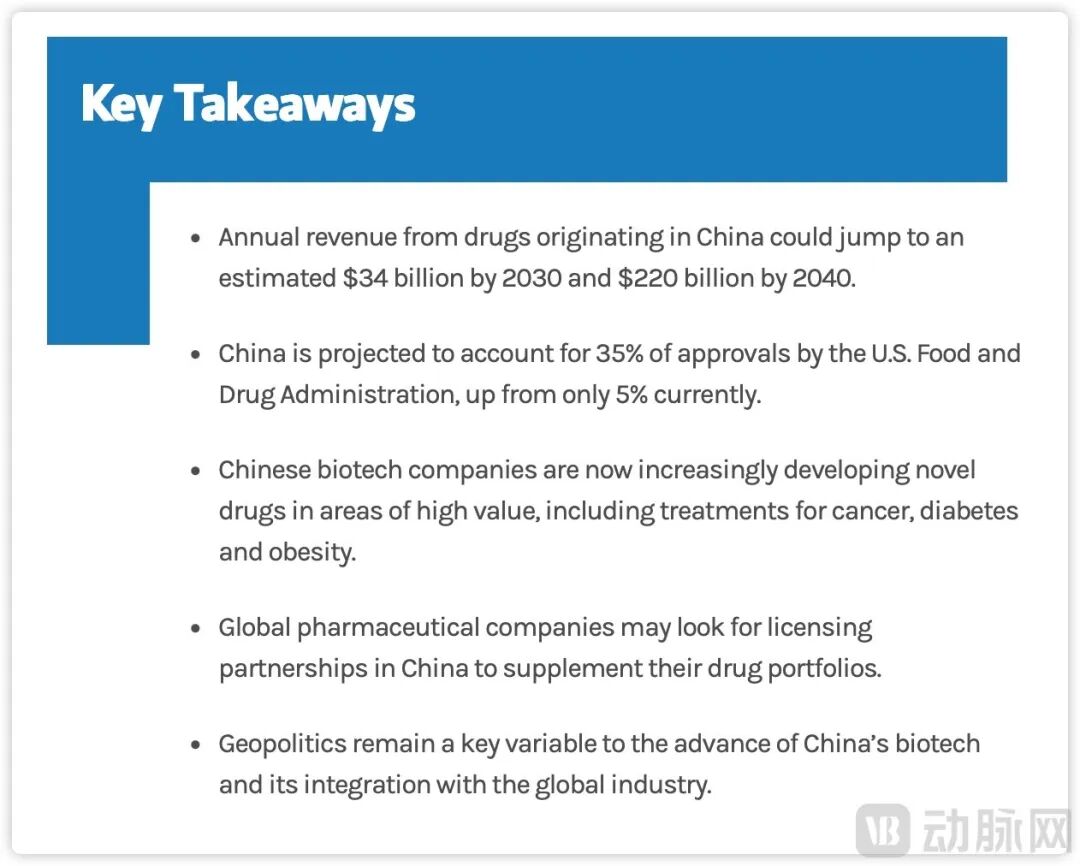
Core Insights - The attitude of foreign capital towards Chinese medical assets has dramatically reversed within a year, shifting from a neutral to a positive outlook on the biotechnology sector in China [1][3][7] Group 1: Market Sentiment Shift - Morgan Stanley's report titled "China Biotech: Innovation Dawn" indicates that China's biotechnology sector is now viewed as a critical part of the global new drug supply chain, with projected pharmaceutical revenues reaching $34 billion by 2030 and $220 billion by 2040 [1][3] - The number of foreign institutions conducting research on Chinese biotech companies has surged, with notable firms like State Street Bank and BlackRock showing increased interest [1][2] - The collective buying actions of foreign investors, such as JPMorgan and Citigroup, reflect a significant shift in sentiment towards Chinese innovative drug companies [2][5] Group 2: Investment Dynamics - The efficiency of converting research interest into actual holdings is evident, as seen in the stock price surge of WuXi AppTec, which rose by 6.52% due to increased foreign investment [2] - Major foreign investors have increased their holdings in key Chinese biotech firms, indicating a trend of strategic accumulation among top foreign capital [5][6] - The report highlights that foreign capital is now viewing specific sectors in China as essential assets in the global technology race, with over 90% of U.S. investors expressing plans to increase exposure to Chinese stocks, particularly in biotechnology [6][7] Group 3: Industry Evolution - The narrative surrounding China's pharmaceutical industry has shifted from being cost-driven to innovation-driven, acknowledging the significant advancements in the sector [3][4] - Morgan Stanley and Goldman Sachs both emphasize the growing recognition of China's innovative capabilities in biotechnology, with expectations that several leading biotech firms will reach breakeven by 2025-2026 [4][8] - The report outlines that the Chinese biotech sector is becoming a key player in filling the revenue gaps created by patent expirations in multinational corporations (MNCs), with an estimated $115 billion revenue loss due to patent cliffs by 2035 [8][10] Group 4: Future Projections - By 2040, China's share of FDA-approved drugs is expected to rise from 5% to 35%, with a projected global sales figure exceeding $1.22 trillion even in the most pessimistic scenarios [25][27] - The report anticipates that the collaboration between MNCs and Chinese biotech firms will intensify, driven by the need to address revenue shortfalls from patent expirations [10][14] - The overall improvement in clinical trial data integrity and the increasing number of new molecular entities launched in China are contributing to a more favorable investment landscape [20][22]