
NTES(NTES)

Search documents
美股三大指数小幅收跌,市场静待美联储利率决议,中概股多数上涨
Feng Huang Wang· 2025-09-16 22:27
Market Overview - The three major U.S. stock indices closed lower amid cautious trading ahead of the Federal Reserve's interest rate decision, with expectations of a 25 basis point rate cut to counteract the deteriorating labor market [1] - The Dow Jones fell by 125.18 points (0.27%) to 45758.27, the Nasdaq decreased by 14.79 points (0.07%) to 22333.96, and the S&P 500 dropped by 8.49 points (0.13%) to 6606.79 [3] Economic Indicators - U.S. retail sales data for August showed a higher-than-expected increase, indicating strong consumer spending, yet this did not alter market expectations for a rate cut [1] - Principal Asset Management's global chief strategist noted that while labor demand is slowing, the risk of recession remains limited, suggesting a moderate 25 basis point cut is more appropriate than a larger reduction [2] Company News - Eli Lilly announced a $5 billion investment to build a manufacturing facility in Virginia, aimed at enhancing the production of targeted cancer therapies and other advanced treatments, resulting in a stock price increase of over 2.2% [7] - Google, in collaboration with over 60 organizations, launched the Agent Payments Protocol (AP2) to facilitate secure AI-driven payment processing across platforms, indicating a shift towards AI-driven business models [8] - Novo Nordisk reported positive results from a Phase 3 trial of its new weight loss drug Cagrilintide, showing an average weight loss of 11.8% over 68 weeks compared to 2.3% in the placebo group [9] - Microsoft plans to invest over $30 billion in the UK over the next four years, including $15.5 billion for capital expansion and $15.1 billion for various business initiatives [10] Stock Performance - Major tech stocks showed mixed results, with Tesla up 2.82%, Meta up 1.87%, and Amazon up 1.13%, while Microsoft and Nvidia saw declines of 1.23% and 1.61%, respectively [4] - Webtoon Entertainment's stock surged by 39% following a partnership with Disney to launch a new digital comic platform [4] - New Fortress Energy's stock rose by 45% after securing a $4 billion, seven-year agreement to supply liquefied natural gas to Puerto Rico [4] - Occidental Petroleum's shares increased by 5% due to concerns over supply tightness following an attack on a Russian refinery [5]


中概股深夜飙涨,百度涨超5%,蔚来涨3%,黄金升破3700美元
21世纪经济报道· 2025-09-16 15:42
Core Viewpoint - The article discusses the recent performance of U.S. stock indices, the anticipated interest rate cuts by the Federal Reserve, and the potential impacts on global markets, particularly focusing on Chinese assets and the RMB exchange rate. Market Performance - As of September 16, U.S. stock indices showed a collective decline, with the Dow Jones Industrial Average at 45,723.21, down 0.35% year-to-date increase of 7.47% [2] - The Nasdaq China Golden Dragon Index rose by 1.05%, reaching 8,540 points, marking a year-to-date increase of over 26% [1][2] - Notable performances among tech giants included Tesla rising by 2.38% and Amazon by 1.51%, while Google and Microsoft experienced slight declines [2] Federal Reserve Interest Rate Cuts - The Federal Reserve is expected to announce a rate cut of at least 25 basis points, with a small chance of a 50 basis point cut during the upcoming meeting [6][10] - There are concerns about potential dissent within the Fed, which could lead to a divided vote, marking a significant moment since 2019 [6][10] - Analysts suggest that the Fed's decision could trigger a global wave of interest rate cuts, impacting markets worldwide [11] Impact on Chinese Assets - The anticipated Fed rate cuts may provide a boost to the A-share market, potentially leading to a second wave of upward momentum in the "golden September and silver October" period [11] - Historical analysis indicates that during previous Fed rate cuts, A-shares and Hong Kong stocks showed varied performance, with growth sectors benefiting from low interest rates [12] - The Fed's actions could alleviate pressure on the China-U.S. interest rate differential, attracting foreign investment into Chinese bonds, particularly government and policy financial bonds [12][13] RMB Exchange Rate - The article suggests that the Fed's rate cuts and the impact of U.S. tariffs on the economy may exert downward pressure on the U.S. dollar index, providing upward momentum for the RMB [13] - It is expected that the RMB exchange rate will remain stable, with limited risks of rapid appreciation or significant depreciation [13]



美股异动|网易盘前涨近1%势创新高,年内已累涨超77%,获高盛上调目标价至161美元
Ge Long Hui· 2025-09-16 09:24
Core Viewpoint - NetEase (NTES.US) stock is experiencing strong performance driven by the success of evergreen games like "Naraka: Bladepoint" and anticipated acceleration in sales growth for Q3 [1] Group 1: Stock Performance - NetEase shares rose nearly 1% pre-market, reaching $156.25, and hit a new high after opening [1] - Goldman Sachs raised NetEase's target price from $145 to $161, maintaining a "Buy" rating [1] Group 2: Game Performance and Future Outlook - The strong stock performance is attributed to the exceeding expectations of evergreen games and the robust performance of traditional games [1] - Looking ahead to 2026, two upcoming major titles, "Sea of Remnants" and "Ananta," along with new successes in overseas markets, are expected to create a favorable product cycle [1]
传媒行业周报:游戏市场持续高景气,关注国庆档定档情况-20250916
Guoyuan Securities· 2025-09-16 07:52
Investment Rating - The report maintains a "Buy" rating for several companies in the media sector, including Giant Network, Kaiying Network, and others [4][9][6]. Core Insights - The media industry has shown strong performance with a weekly increase of 4.27%, ranking 4th among industries, while the Shanghai Composite Index rose by 1.52% [12][20]. - The gaming market remains robust, with significant revenue growth from major players like Tencent and Point Interactive, and the upcoming National Day film releases are anticipated to boost box office performance [3][4][41]. Market Performance - The media industry (Shenwan) increased by 4.27% from September 6 to September 12, 2025, outperforming the Shanghai Composite Index, which rose by 1.52% [12]. - The gaming II sector saw a rise of 6.61%, while the film industry also experienced a notable increase of 6.58% during the same period [15][12]. Key Data and Dynamics AI Applications - In August, the top five AI products by web traffic included ChatGPT and New Bing, with Deepseek leading domestic traffic at 316 million visits, despite a month-over-month decline of 8.52% [24][25]. - The domestic AI search engine Nano AI ranked second with 307 million visits, also showing a decline of 7.52% [24][25]. Gaming Data - In August, Tencent, Point Interactive, and NetEase were the top three mobile game publishers globally, with total revenues of $2.04 billion, accounting for 35.1% of the top 100 publishers' income [29][30]. - Giant Network's revenue surged by 72% due to the success of "Supernatural Action Group," which entered the top ten for global mobile game revenue [29][30]. Film Data - The total box office for the week of September 6-12 was 358 million yuan, with "Chasing the Wind" leading at 120 million yuan [41]. - Nine films have been scheduled for release during the National Day holiday, indicating a strong upcoming box office potential [41][42]. Investment Recommendations - The report highlights a positive outlook on themes such as AI applications and cultural exports, with a focus on sub-sectors like gaming, IP, short dramas, and publishing [4]. - Specific companies recommended for investment include Giant Network, Kaiying Network, and Perfect World, among others [4][9].


网易回应前COO再创业:2011年离职 后续经历与公司无关
Xi Niu Cai Jing· 2025-09-16 06:37
Group 1 - NetEase issued a statement addressing recent rumors regarding its former COO's new venture and related disputes, clarifying that the individual left the company in 2011 and that any subsequent activities are unrelated to NetEase [2] - The statement emphasized that the controversies surrounding the individual do not represent NetEase's position [2] Group 2 - Information shows that the former COO, Zhan Zhonghui, joined NetEase in 1999 and served as COO until his departure in 2011, after which he founded Guangzhou Jianyue [5] - In September 2017, after Guangzhou Jianyue was integrated into Alibaba's entertainment division, Zhan Zhonghui took charge of Alibaba's interactive entertainment division [5]

大行评级|中银国际:中资科网股中长期首选腾讯、阿里、网易和腾讯音乐
Ge Long Hui· 2025-09-16 05:23
Group 1 - The core viewpoint of the report is that AI, macroeconomic recovery, competitive landscape, regulatory environment, shareholder return execution, and Sino-US tensions will be the six key factors affecting the financial performance and valuation of Chinese internet-listed companies in the next 6 to 12 months [1] - The ranking of sub-industries within the mainland internet sector is as follows: cloud computing > online music, online gaming, and online advertising (tied) > e-commerce > others [1] - The long-term preferred stocks identified are Tencent, Alibaba, NetEase, and Tencent Music, while Bilibili and Baidu are favored for the short term [1]
预见2025:《2025年中国游戏产业全景图谱》(附市场规模、细分市场发展现状、产业竞争格局等)
Qian Zhan Wang· 2025-09-16 02:18
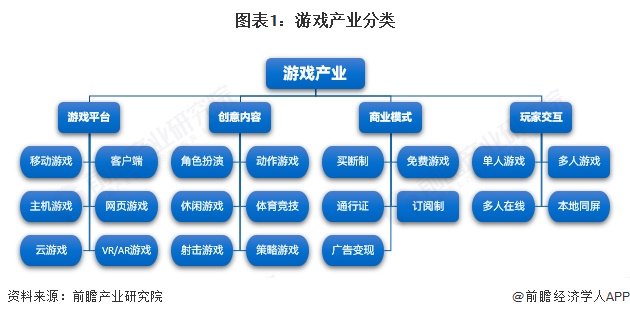
Industry Overview - The gaming industry is defined as an ecosystem economy centered around "content + technology + users," encompassing activities such as development, marketing, sales, and after-sales of video games [1] - Key participants include game developers, operators, distributors, and players, operating across various platforms like PC, mobile devices, and consoles [1] Industry Chain Analysis - The upstream of the gaming industry includes IP owners and game developers, while the midstream consists of comprehensive game publishers, and the downstream involves terminal distribution and marketing channels [2] Industry Development History - The development of China's gaming industry can be divided into several key stages: 1. **Emergence and Initial Phase (1980s-2000s)**: Introduction of arcade games and home consoles [5] 2. **Exploration and Growth Phase (2003-2015)**: Rise of domestic online games supported by national policies [5] 3. **Full Explosion and Mobile Transformation (2015-2020)**: Transition to mobile gaming with the growth of 4G users [6] 4. **High-Quality Development and Adjustment Phase (2021-Present)**: Shift towards regulated growth and overseas markets [6][7] Current Industry Status - The gaming market in China is rebounding, with a projected market size of 325.78 billion yuan in 2024, reflecting a year-on-year growth of 7.53% [9] - After a brief decline from 2020 to 2022, the market is expected to grow at over 7% annually, reaching 168 billion yuan by mid-2025 [9] - Overseas revenue for Chinese gaming is projected to reach 18.557 billion USD in 2024, marking a historical high with a year-on-year increase of 13.39% [10] Market Segmentation - **Mobile Gaming**: Expected revenue of 238.217 billion yuan in 2024, with a growth rate of 5.01% [14] - **Web Games**: Revenue is declining, with a projected 2.203 billion yuan in 2025, down 5.87% [19] - **Client Games**: Stable growth with a projected revenue of 35.403 billion yuan in 2025, up 4.86% [20] - **Console Games**: Rapid growth with a projected revenue of 1.034 billion yuan in 2025, up 29.78% [23] Competitive Landscape - The majority of listed gaming companies are concentrated in developed regions like Guangdong and Beijing, with Guangdong having the highest number at 27 [24] - The market is fragmented, but major players like Tencent and NetEase dominate, accounting for 60% of the market capitalization of listed gaming companies [27] Future Development Trends - The gaming industry in China is expected to continue growing, with a market size projected to exceed 360 billion yuan by 2025 and potentially reach 500 billion yuan by 2030 [33] - There is a trend towards deeper integration of traditional culture into gaming products, supported by favorable policies [34]
美股三大指数集体收高 纳指和标普再创历史新高 原油黄金双双上涨
Sou Hu Cai Jing· 2025-09-15 23:52
Group 1 - US stock market closed higher on Monday, with the Nasdaq and S&P 500 indices reaching both intraday and closing all-time highs [1] - Major technology stocks mostly rose, with Amazon up 1.44%, Meta up 1.21%, Apple up 1.12%, and Microsoft up 1.07%, while Nvidia fell 0.04% [1] - Alphabet, the parent company of Google, increased by 4.5%, closing with a market capitalization of $3.04 trillion, becoming the fourth US publicly traded company to surpass a $3 trillion market cap [1] Group 2 - Tesla shares rose 3.6% after CEO Elon Musk purchased 2.57 million shares for approximately $1 billion [1] - Nuclear power stocks saw significant gains, with Oklo up 15.7%, Nano Nuclear up 13%, and Uranium Energy up 10.6% [1] - Popular Chinese concept stocks mostly increased, with the Nasdaq Golden Dragon China Index rising 0.87%, and notable gains from Li Auto (over 6%), Bilibili (over 5%), NIO (over 4%), and XPeng (over 2%) [1] Group 3 - Brent crude oil futures rose by $0.45, or 0.67%, closing at $67.44 per barrel [1] - West Texas Intermediate (WTI) crude oil futures increased by $0.61, or 0.97%, closing at $63.30 per barrel [2] - COMEX gold futures rose by 0.9%, closing at $3,719.5 per ounce, with an intraday high of $3,724.9 per ounce [2]


互联网传媒周报:重视互联网云计算重估-20250915
Shenwan Hongyuan Securities· 2025-09-15 09:15
Investment Rating - The industry investment rating is "Positive" for the Internet Media sector, indicating an expectation of outperforming the overall market [2][3]. Core Insights - The report emphasizes the importance of the revaluation of Internet cloud computing, driven by AI advancements and self-developed chips. It suggests that the domestic market is replicating the growth trajectory seen in North American cloud giants, with a positive feedback loop between capital expenditure (capex) and revenue growth in cloud computing and advertising [3]. - Key catalysts for growth include advancements in domestic AI models and self-developed chips, which are expected to drive revenue acceleration in Q2 2025 for major cloud service providers [3]. - The report highlights strong revenue growth for major players in Q2 2025, with Alibaba Cloud reporting a revenue of 33.4 billion RMB, a year-on-year increase of 26%, and other companies like Kingsoft Cloud and Baidu also showing significant growth [3]. Summary by Sections Internet Cloud Computing - The report identifies a positive cycle in the cloud computing sector, driven by AI and self-developed chips, which enhances competitive advantages and profit margins [3]. - Major domestic cloud providers are experiencing accelerated revenue growth, with AI-related income contributing significantly to traditional cloud product revenues [3]. AI Applications - AI applications are entering a strategic phase, with companies like Meitu showing competitive advantages in user engagement and operational capabilities [3]. - The report forecasts a net profit of 1.33 billion RMB for Meitu in 2026, with a price-to-earnings (PE) ratio of 30x [3]. Gaming Sector - The gaming sector is expected to see continued growth, with new product contributions anticipated in Q3 2025. The report suggests a PE range of 15-20x for 2026, indicating potential for valuation uplift [3]. - Key companies to watch include Tencent, Giant Network, and others, with a focus on their ability to develop sustainable gaming products and expand globally [3]. Long Video Series - The report notes a potential recovery in the long video series sector, with companies like Yuewen Group and Mango Excellent Media showing signs of improvement [3]. Consumer Trends - The report continues to recommend investments in consumer sectors, highlighting companies like NetEase Cloud Music and Pop Mart as key players [3].

段永平挣了大钱的3家公司
Sou Hu Cai Jing· 2025-09-15 09:10
Core Insights - The primary investment risk is a lack of understanding of the companies being invested in, rather than macroeconomic trends or stock price fluctuations [1] Investment Success Stories - Notable investments by a successful investor include: - NetEase: Initial investment of over $2 million, held for 8-9 years, resulting in over 100 times return, earning approximately 2 billion RMB [2] - Apple: Purchased in 2011, held for over 14 years, with a return exceeding 20 times, and current holding value over $10 billion [2] - Kweichow Moutai: Investment at 8-10 times PE, held for over 12 years, yielding over 10 times return, with a holding value exceeding 20 billion RMB [3] Understanding and Belief in Investments - The investor's background in gaming and technology, along with a deep understanding of the companies, contributed to their ability to hold investments confidently [4] - The investor's personal enjoyment of Moutai also played a role in their belief and commitment to the investment [5] Investment Philosophy - The investor emphasizes a disciplined approach of "not touching what one does not understand," leading to impressive investment performance despite spending less than 20% of their time on investments [5] - The investor does not manage institutional funds, allowing for a long-term focus on a single stock like Apple [6] Investment Opportunities - Notable investors like Charlie Munger and Warren Buffett suggest that a few well-understood investment opportunities can lead to significant success, with Munger stating that 4-5 great opportunities in a lifetime are sufficient [6][7] - The investor's experience aligns with this philosophy, having identified and invested heavily in a limited number of companies over a decade [7]

