TSMC(TSM)

Search documents
Taiwan Semiconductor Manufacturing Company Limited (TSM) Surged on Strong Market Sentiment
Yahoo Finance· 2025-12-16 12:23
Core Insights - Magellan Global Fund's third-quarter 2025 investor letter indicates a focus on high-quality companies at attractive prices while managing macroeconomic risks [1] - The global equities, as measured by the MSCI World Index in USD, rose by 7.3% in the September quarter, but the fund underperformed due to the strong performance of more speculative companies [1] Company Performance - Taiwan Semiconductor Manufacturing Company Limited (NYSE:TSM) reported a one-month return of 3.54% and a 52-week gain of 43.40%, closing at $287.74 per share with a market capitalization of $1.492 trillion on December 15, 2025 [2] - TSMC was a significant contributor to the fund's performance, benefiting from positive sentiment in the semiconductor sector and strong second-quarter results, leading to an upgraded full-year 2025 forecast [3] Market Position - TSMC ranked 9th among the 30 most popular stocks among hedge funds, with 194 hedge fund portfolios holding its shares at the end of the third quarter, up from 187 in the previous quarter [4] - TSMC's revenue increased by 6% sequentially in NT during the third quarter of 2025, indicating robust demand for its manufacturing capacity [4]

美喊话台积电投资2000亿美元!
国芯网· 2025-12-16 12:09
Core Insights - The article discusses the significant investments by TSMC in the United States, with expectations of exceeding $200 billion and creating 30,000 jobs [2][4]. - It highlights the criticism of the Biden administration's chip subsidy effectiveness, where $6 billion in subsidies resulted in $60 billion in factory investments, deemed inadequate [4]. Investment and Expansion - TSMC plans to increase its investment in the U.S. to $1,600 billion, in addition to the existing $650 billion investment [4]. - The total investment in the U.S. is projected to reach $1,650 billion, including the construction of two advanced packaging plants and a research center [4]. Production Challenges - TSMC faces challenges in building chip factories in the U.S., including high costs, a shortage of qualified factories, and cultural differences in the workplace [4]. - The profitability of TSMC's U.S. subsidiary has significantly declined, with Q3 earnings dropping to 0.41 million New Taiwan dollars, a 99% decrease from Q2 [4].

数据中心供配电设备行业跟踪:AI及数据中心维持高景气,电力设备需求旺盛
Shanghai Aijian Securities· 2025-12-16 08:32
Investment Rating - The report rates the industry as "Outperform" [3] Core Insights - The data center industry has become a core incremental application scenario for the power equipment sector, directly driving demand growth and technological iteration in power equipment [3][7] - The report emphasizes the need to incorporate multi-dimensional indicators from the AI industry to accurately gauge the demand for power distribution equipment in data centers, given the capital expenditure scale and long investment return cycles in the data center sector [3][7] - The demand side is driven by capital expenditures from leading cloud providers, which serve as a direct "barometer" for short-term demand potential for power distribution equipment [3][8] Summary by Sections Demand Side - Capital expenditures from overseas cloud providers reached $99.617 billion in Q3 2025, a year-on-year increase of 80.39% and a quarter-on-quarter increase of 9.54% [4][9] - Domestic capital expenditures from Alibaba and Tencent showed a slowdown, with Alibaba's expenditure at 31.501 billion yuan, a year-on-year increase of 80.10% but a quarter-on-quarter decrease of 18.55% [4][14] - The report highlights that the investment rhythm of data centers is constrained by GPU supply, necessitating tracking of key supply chain data to validate demand progress [3][7] Supply Chain - Nvidia's revenue reached 362.571 billion yuan in Q3 2025, marking a historical peak with a quarter-on-quarter growth of 24.63% and a year-on-year growth of 62.49% [4][18] - TSMC reported revenue of 343.614 billion New Taiwan dollars in November 2025, a year-on-year increase of 24.5% [4][24] - The CPU price index rose to 98.20 in October 2025, while DRAM spot prices surged over 200% from $12.85 to $38.76 within two months, indicating strong server demand [4][27] Application Side - The report notes a steady increase in the number of AI models and application deployments, which directly influence the capital expenditure cycle of data centers [4][29] - The OpenRouter platform recorded a token call volume of 5.78 trillion from December 2 to December 8, 2025, reflecting a week-on-week decrease of 6.62% [4][37] - The prices for tokens of models scoring over 40 on the Artificial Analysis Intelligence Index dropped by over 50% in Q3 2025 [4][47]

谷歌TPU,卖爆了
半导体行业观察· 2025-12-16 01:22
Core Insights - Google is significantly increasing its orders for Tensor Processing Units (TPUs) from MediaTek, with the order volume exceeding initial plans by multiple times [2] - MediaTek's first TPU, the v7e, is set to enter risk trial production by the end of next season, and it has also secured orders for the next-generation TPU, v8e [2][3] - The collaboration with TSMC is expected to boost MediaTek's production capacity for Google projects, with a projected sevenfold increase in CoWoS capacity by 2027 [2][3] Group 1 - The demand for Google TPUs is driven by strong client needs, leading to an increase in CoWoS capacity from 10,000 to 20,000 units annually for the v7e project [3] - MediaTek's ASIC business is anticipated to contribute significantly to its revenue, with estimates suggesting that the v7e could add over two times its equity in profits by 2027 [2][3] - MediaTek's CEO expressed confidence in the growth of ASIC revenue, targeting $1 billion in cloud-related ASIC revenue by 2026 and potentially reaching several billion by 2027 [4] Group 2 - Meta is exploring a partnership with Google to utilize TPUs for its AI projects, which could challenge NVIDIA's market dominance [6][7] - If successful, Meta plans to start renting TPUs from Google Cloud in 2026 and deploy them in its data centers by 2027, marking a significant shift in its AI infrastructure [6][7] - The potential collaboration has led to a drop in NVIDIA's stock price, reflecting investor concerns about Meta's future chip orders [7] Group 3 - Analysts predict that Google plans to double its TPU production by 2028, with TSMC expected to produce 3.2 million TPUs in 2024, increasing to 5 million by 2027 and 7 million by 2028 [10] - Morgan Stanley estimates that Google could generate up to $13 billion in revenue for every 500,000 TPUs sold to external clients [9] - Google's vertical integration strategy aims to enhance its technological advantages and profitability by developing its AI hardware and software [8][11]


Emerging Markets ETFs on the Rise: 3 Stocks Driving EM Forward
Etftrends· 2025-12-15 18:09
Core Insights - U.S. equities have performed well in 2023, prompting investors to shift from underweight to neutral or overweight positions in foreign equities, particularly emerging markets [1][2] - The decline of the dollar and specific market events have contributed to the strong performance of foreign equities compared to U.S. investments [1] - Emerging markets are seen as having more growth potential due to being ahead in their rate cycles, making them attractive for investment [2] Emerging Markets Equities - Taiwan Semiconductor Manufacturing Co. (TSM) has returned 46.4% year-to-date (YTD) and is a significant holding in the Fidelity Emerging Markets Multifactor ETF (FDEM) [3] - Tencent Holdings (TCEHY) has achieved a YTD return of 48.1%, with a diverse portfolio that includes video games, social media, and e-commerce [4] - Alibaba Group (BABA) has returned 86.1% YTD, despite uncertainties surrounding Chinese stocks, benefiting from a shift away from U.S. equities [5] Fidelity Emerging Markets Multifactor ETF (FDEM) - FDEM has returned 25.4% YTD as of November 6, charging 27 basis points [6] - The ETF employs a multifactor approach, investing in stocks with attractive valuations, positive momentum, and high-quality profiles, while tilting towards sectors less correlated to U.S. stocks [6] - The ETF includes investments in firms like SK Hynix, indicating a strategy focused on outperforming companies in emerging markets [6]


Better Artificial Intelligence Stock: ASML vs. TSMC
Yahoo Finance· 2025-12-15 17:15
Group 1 - ASML Holdings is a leading AI infrastructure company with a 90% market share in the lithography market, and its technology is estimated to be at least a decade ahead of competitors [4] - ASML's service revenue increased by 39% to €6 billion ($7 billion) in the first nine months of 2025, indicating strong recurring revenue potential [5] - ASML's revenue rose by 21% to €23 billion ($27 billion) in the first nine months of this year, with diluted earnings per share increasing by 40% to $17.38 [6] Group 2 - Taiwan Semiconductor Manufacturing Company (TSMC) is the leading manufacturer of advanced processors, holding an estimated 90% market share [7] - TSMC's sales doubled to $33 billion in the third quarter, with earnings increasing by 39% to $2.92 per American depositary receipt (ADR) [8] - TSMC is considered slightly cheaper than ASML, making it an attractive investment option in the AI sector [9]

12 Days of Investing: My Top 12 Stocks to Buy Before 2026
The Motley Fool· 2025-12-15 16:10
Core Viewpoint - The article presents a list of 12 stocks that are recommended for investment during the countdown to the new year, highlighting their long-term growth potential and current market conditions. Group 1: Recommended Stocks - **Apple**: Expected to achieve an 11% gain for the year, with a strong brand and growing AI integration across products, which may drive future revenue growth [5][6]. - **Costco**: Trading at 43x forward earnings estimates, down from over 58x, with a strong business model and high membership renewal rates above 90% in the U.S. and Canada [7][9]. - **Carnival**: The world's largest cruise operator has returned to profitability and is paying down debt, trading at only 11x forward earnings estimates [11][12]. - **Intuitive Surgical**: A leader in robotic surgery with a strong moat due to high costs of its systems and recurrent revenue from instruments and accessories [13][15]. - **Vertex Pharmaceuticals**: Leading in cystic fibrosis treatment with strong revenue and growth potential in new treatment areas [16][18]. - **Coca-Cola**: Strong brand and distribution network with a history of dividend increases for over 50 consecutive years, making it a solid choice for passive income [19][20]. - **Pool Corp.**: The largest supplier of pool equipment, trading at 22x forward earnings estimates, with consistent demand for maintenance services [21][22]. - **Amazon**: A leader in e-commerce and cloud computing, benefiting from AI growth, with AWS reporting a $132 billion annual revenue run rate [24][25]. - **Target**: Facing challenges but may recover in 2026, trading at 13x forward earnings estimates, presenting a potential buying opportunity [27][28]. - **CRISPR Therapeutics**: Recently approved a blood disorder treatment, with expected significant growth in the coming year [29][30]. - **Broadcom**: A networking giant emerging as a potential AI chip winner, with high demand for custom chips [31][32]. - **Taiwan Semiconductor Manufacturing**: A key player in chip production for AI, benefiting from multiple clients and significant investments in U.S. manufacturing [33][34].



2026 Market Outlook: Buy AI Infrastructure And Sell European Stocks
Seeking Alpha· 2025-12-15 14:00
Group 1 - The focus is on identifying high-quality companies with a strong track record of capital reinvestment and impressive returns [1] - The ideal companies should demonstrate long-term capital compounding capabilities with a high compound annual growth rate, potentially delivering tenfold returns or more [1] - A long-term investment perspective is emphasized as a strategy to achieve higher returns compared to market indices in a rapidly changing investment environment [1] Group 2 - A conservative investment strategy is primarily adopted, with occasional pursuit of opportunities that present a favorable risk-reward ratio [1] - Investments are carefully considered and allocated proportionally within the portfolio to maintain overall stability [1]


半导体2026展望:AI主体持续领航,2026循光前行
Zhao Yin Guo Ji· 2025-12-15 11:11
Investment Rating - The report maintains a positive investment rating for the semiconductor industry, highlighting four core investment themes for 2026: AI-driven structural growth, China's semiconductor self-sufficiency trend, high-yield defensive positioning, and industry consolidation through mergers and acquisitions [2][4]. Core Insights - The global semiconductor market is projected to grow by 26% year-on-year in 2026, reaching $975 billion, with AI-related segments leading this growth [4][48]. - Key recommended stocks include Zhongji Xuchuang (300308 CH), with a target price of RMB 707, and Shengyi Technology (600183 CH), with a target price of RMB 90, both expected to benefit significantly from AI infrastructure investments [3][5]. Summary by Themes Theme 1: AI-Driven Structural Growth - The AI supply chain is experiencing strong revenue growth and profit margin expansion, indicating a robust demand for infrastructure rather than a temporary investment craze [5]. - Capital expenditure from major cloud providers is expected to reach $367 billion in 2025, a 59% increase year-on-year, and further rise to $495 billion in 2026 [5][6]. - The demand for AI technology is expanding beyond large cloud service providers to include sovereign funds and enterprise clients [5][10]. Theme 2: China's Semiconductor Self-Sufficiency Trend - The self-sufficiency of the semiconductor supply chain in China is identified as a core theme with long-term growth potential, driven by geopolitical shifts and domestic policy support [3][38]. - Companies like Northern Huachuang (002371 CH) are positioned to benefit from this trend, with a target price of RMB 460 [39]. Theme 3: High-Yield Defensive Positioning - Major Chinese telecom operators are recommended as core defensive positions due to their strong balance sheets and attractive dividend yields, with China Mobile offering a yield of 6.0% [43][44]. Theme 4: Accelerating M&A Activity in the Semiconductor Industry - The report anticipates an acceleration in M&A activities within the semiconductor sector, with key players actively seeking to fill technology gaps and enhance supply chain resilience [46][47]. - Notable transactions in 2025 include Northern Huachuang's acquisition of Xinyuan Micro and other strategic consolidations aimed at strengthening market positions [47].


HBM 4,新标准
半导体芯闻· 2025-12-15 10:17
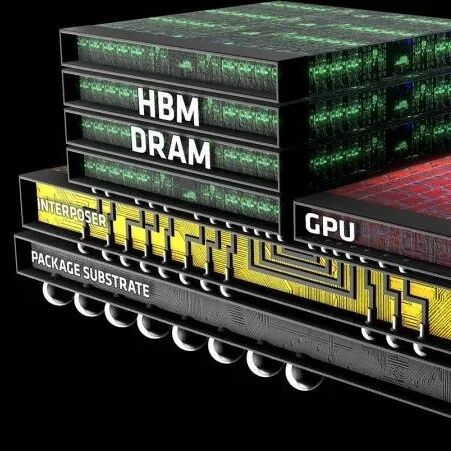
Core Viewpoint - The semiconductor industry is developing a new type of High Bandwidth Memory (HBM) called SPHBM4, which aims to reduce design complexity and manufacturing costs while maintaining performance similar to existing HBM products. This development could significantly impact companies like Samsung Electronics and SK Hynix, as well as the broader ecosystem including TSMC and NVIDIA [3][6]. Group 1: SPHBM4 Development - JEDEC is in the final stages of developing the SPHBM4 standard, which utilizes the same DRAM as HBM4 but serializes I/O pins at a 4:1 ratio, reducing the number of I/O pins from 1024 to 512 while still supporting the same bandwidth [3][4]. - The SPHBM4 standard is expected to be released in the coming months, according to Eliyan, a U.S. semiconductor startup that supports the new standard [4][5]. Group 2: Technical Aspects - SPHBM4's performance relies on stable interconnect technology that can achieve over four times the transmission speed per I/O pin, which is crucial for its operation [4]. - The introduction of SPHBM4 will necessitate a redesign of the substrate chip responsible for memory controller functions, as the I/O pin count will be significantly reduced [5]. Group 3: Packaging and Cost Implications - The intermediary layer, which connects HBM and the printed circuit board (PCB), can simplify connections due to the reduced number of I/O pins, allowing for the use of organic intermediary layers instead of more expensive silicon layers [5]. - The adoption of organic intermediary layers is expected to lower packaging manufacturing costs while allowing for more flexible designs, potentially increasing overall storage capacity [5]. Group 4: Market Uncertainty - The commercialization of SPHBM4 remains uncertain, as the standard is still under development and may undergo changes or even be rejected by the JEDEC board [6]. - Major tech companies are currently focused on enhancing both the speed and density of HBM, indicating that SPHBM4 may be one of several attempts to reduce manufacturing costs for AI accelerators based on HBM technology [6].