
江淮汽车

Search documents
滴滴出海,与“中国制造”共赢
Sou Hu Cai Jing· 2025-11-29 08:45
Core Insights - Didi's Q3 2025 financial report shows a total gross transaction value (GTV) of 115.82 billion yuan, a year-on-year increase of 14.8%, marking five consecutive quarters of GTV exceeding 100 billion yuan [2] - The total order volume reached 4.69 billion, up 13.8% year-on-year, with daily orders surpassing 50 million for the first time [2] - Net profit for the quarter was 1.46 billion yuan, reflecting a 57% year-on-year growth [2] Domestic Business Performance - Didi's domestic ride-hailing business GTV was 86.02 billion yuan, a 10.1% increase year-on-year, with order volume at 3.52 billion, up 10.7% [2] - The domestic business continues to show stable growth amidst a recovering market [10] International Business Growth - Didi's international business GTV surged 31% year-on-year to 29.8 billion yuan, with order volume increasing 24.3% to 1.16 billion [2] - The international segment has achieved healthy and sustainable growth, with adjusted EBITDA turning profitable in the first three quarters [2] - Didi's food delivery service, 99Food, has been relaunched in over 30 cities in Brazil, with plans to expand to 100 cities by mid-2026 [8] Strategic International Expansion - Didi's internationalization began in 2015, focusing on strategic investments in regional ride-hailing platforms to understand local markets [5] - The company has made significant moves in Latin America, including acquiring Brazil's largest ride-hailing company, 99, and entering multiple countries in the region [5] - Didi emphasizes a strategy of "cooperation and win-win" and "localization" in its international operations, aiming to develop alongside local markets [9] Future Growth Potential - The overseas market for ride-hailing and food delivery is still in a rapid growth phase, with significant room for penetration compared to developed markets [9] - Didi's promotion of electric vehicle fleets in Mexico positions it as a leader in sustainable transportation in Latin America [9] - The company is expected to transition from a focus on scale to profitability as its international business matures and diversifies into financial technology and other services [10]


汽车行业2026年年度策略报告:高端化+出口驱动总量,智驾+机器人带动产业升级-20251129
CAITONG SECURITIES· 2025-11-29 08:02
Group 1 - The overall demand for passenger vehicles is expected to remain stable, with incremental growth driven by high-end market expansion and exports [3][6][35] - The penetration rate of new energy vehicles (NEVs) is stabilizing, with domestic market competition gradually reaching a steady state [23][35] - The average price of passenger vehicles is anticipated to increase, particularly in the mid-to-high-end market, as domestic brands continue to replace foreign brands [6][35] Group 2 - The heavy truck market faces pressure domestically, but exports are expected to recover as the pressure on sales to Russia eases [46][50] - The export of medium and large buses is projected to maintain rapid growth, with profitability largely dependent on the European market [55] - The rapid growth of AI data centers is expected to create additional demand in the diesel engine sector [3][46] Group 3 - The smart driving sector is entering a new phase of resonance between China and the US, with advancements in L2 and L3 driving standards expected [58][63] - The Robotaxi market in the US is anticipated to experience explosive growth, driven by companies like Tesla and Waymo [72][75] - The integration of robotics into the automotive supply chain is becoming increasingly significant, with automotive suppliers likely to extend their capabilities into the robotics sector [87][90] Group 4 - Recommended stocks in the passenger vehicle sector include Jianghuai Automobile, BYD, and BAIC Blue Valley, with a focus on high-end vehicles and exports [4][94] - In the robotics sector, recommended stocks include Top Group, Yinlun, and BlueDye Technology, with a focus on companies capable of transitioning into robotics [4][94] - For smart driving, recommended stocks include Bertel, Horizon, and Pony.ai, focusing on the growth of L2 driving technology and Robotaxi commercialization [4][94]




越南正“飞跃”进入电动汽车时代
Shang Wu Bu Wang Zhan· 2025-11-29 04:47
Core Insights - Vietnam is experiencing rapid growth in the electric vehicle (EV) market, driven by an expanding middle class and rising income levels [1][2] - The Vietnamese government aims for an annual growth rate of 14%-16% in the automotive market by 2030, with a target consumption of 1-1.1 million vehicles [1] - The introduction of affordable electric vehicles, such as VinFast VF3 and Wuling Hongguang MINI EV, is lowering the economic barrier for consumers [1] Group 1: Market Growth - Vietnam's car ownership rate is currently 55 vehicles per 1,000 people, with an annual growth rate of 17% from 2015 to 2020, the highest globally [1] - The country's GDP per capita is projected to increase from $3,552 in 2020 to approximately $5,000 by 2025 [1] - By 2024, electric and hybrid vehicles are expected to account for 22% of new car sales in Vietnam [2] Group 2: Government Initiatives - The Vietnamese government is actively promoting EV adoption through investments in charging infrastructure and implementing subsidies and tax reductions [1] - Charging costs for electric vehicles are 30%-40% lower than fuel costs, further encouraging the shift towards electric mobility [1] Group 3: Consumer Behavior - The perception of cars is shifting from luxury items to essential personal transportation tools for the middle class [1] - The trend of transitioning directly from motorcycles to electric vehicles is anticipated to become mainstream in the market [2]
从单品竞技到生态博弈 解码商用车“十四五”的转型与跃迁
Zhong Guo Jing Ying Bao· 2025-11-28 20:47
Core Insights - The commercial vehicle industry in China has undergone a structural transformation during the "14th Five-Year Plan" period, shifting from policy-driven to market-driven dynamics [1][2][3] - The industry has seen a significant increase in the penetration of new energy vehicles (NEVs), with NEVs accounting for 24.6% of domestic commercial vehicle sales from January to October 2025 [2][3] - Companies are focusing on technological innovation, ecological collaboration, and global expansion to enhance competitiveness and adapt to market demands [4][5][6] Group 1: Market Trends - The commercial vehicle sector experienced a "W"-shaped recovery, with production and sales declining over 30% in 2022, followed by a strong rebound in 2023 and a slight adjustment in 2024 [1] - In the first three quarters of 2023, the light truck market saw sales of 448,400 units, a growth rate of 20.67%, with new energy light trucks achieving a penetration rate exceeding 26% [2] - The industry is moving towards a multi-technology approach, with electric, hybrid, and hydrogen fuel cell technologies competing in various market segments [3] Group 2: Technological Advancements - Companies like Yutong are advancing in core technologies, focusing on electric, hybrid, and hydrogen fuel platforms, achieving significant breakthroughs in battery, motor, and control technologies [5] - The introduction of the "Rui Control E Platform" by Yutong allows for high integration of hardware and software, improving vehicle range by over 10% and reducing operational costs by 20% [3][5] - The industry is witnessing a shift from merely selling vehicles to providing comprehensive service solutions, emphasizing the importance of ecosystem collaboration [4][6] Group 3: Future Outlook - By 2035, pure electric vehicles are expected to dominate new vehicle sales, with the overall penetration rate of new energy commercial vehicles projected to increase significantly [6] - The competition landscape is anticipated to evolve from product competition to ecosystem competition, where companies that can integrate the entire value chain will emerge as leaders [6][7] - Yutong aims to enhance its global competitiveness by focusing on both domestic and international markets, leveraging its strengths in new energy vehicles and core components [7]

江淮帅铃S9以七大“超级实力”引领商用车价值升级
Zhong Guo Qi Che Bao Wang· 2025-11-28 09:48
Core Insights - The JAC Motors' Shuailing S9 Zunyao version has been awarded the "Annual Cargo Truck (N2 Group)" title at the "2026 China Commercial Vehicle Annual Model" event, reflecting the technological leadership and high-quality development of the Chinese commercial vehicle industry [2] - The Shuailing S9 offers innovative solutions for the logistics and transportation sector amidst challenges such as fluctuating freight rates, rising operational costs, and stricter environmental regulations [2] Group 1: Technical Innovations - The Shuailing S9 is equipped with the Ankang B2.5 engine, achieving a maximum horsepower of 185, representing a 22% increase in power compared to similar products in the industry [3] - The engine's peak pressure has been raised to 200 bar, significantly enhancing torque output, with a broad torque range of 1400-2600 r/min, ensuring optimal performance under various load conditions [3] - The second-generation EGR technology and a high-performance 9-hole fuel injector improve fuel efficiency, while a 2000 bar ultra-high rail pressure system enhances fuel atomization [3] Group 2: Reliability and Comfort - The Shuailing S9 adheres to German production standards, ensuring high quality and durability, which is crucial for users' operational profitability [5] - The vehicle features a spacious 2090mm wide cab, advanced noise isolation, and improved shock absorption, enhancing driver comfort and reducing fatigue during long drives [5] Group 3: Smart Driving and Service Innovations - The vehicle's dynamic performance has been enhanced through systematic optimizations in handling, stability, and braking, making the driving experience more akin to that of passenger cars [6] - The integration of smart technologies includes a remote vehicle control system and comprehensive safety features, such as lane departure warning and adaptive cruise control, elevating safety standards in the commercial vehicle sector [6] - The Shuailing S9's service policy includes free maintenance within the first 60,000 kilometers and lifetime free safety checks, addressing users' concerns about operational efficiency and maintenance costs [8]

11月行业“换帅”潮起!福田/江淮/广汽/动力新科等高层调整 | 头条
第一商用车网· 2025-11-28 06:57
Core Viewpoint - The commercial vehicle industry in China is undergoing a significant wave of personnel changes at the management level, with major companies like Foton, JAC, Dongfeng, and others announcing key appointments and adjustments in leadership roles [1]. Group 1: JAC Motors - JAC Motors held its ninth board meeting, where it elected Xiang Xingchu as the chairman and appointed Li Ming as the general manager [2][3][6][9]. - The board also established various committees, including the nomination, compensation and assessment, strategy, and audit committees, with specific members appointed to each [7][8]. Group 2: Foton Motors - Foton Motors announced the nomination of candidates for its tenth board of directors, including the appointment of Chang Rui as a non-independent director [15][16]. Group 3: GAC Group - GAC Group's GAC Lingcheng has undergone a change in legal representative and chairman, with Zheng Heng taking over from Yan Zhuangli [18]. Group 4: Power New Technology - Power New Technology appointed Liu Jiantao as the new general manager following the retirement of Xu Qiuhua [19][20][24]. Group 5: Dongfeng Motors - Dongfeng Motors appointed Liu Wei as the chief accountant and a member of the party committee [26]. Group 6: Beiqi Heavy Truck - Beiqi Heavy Truck announced the appointment of Huo Jialin as the new party secretary [28][29]. Group 7: Jiangling Motors - Jiangling Motors appointed Qu Xiaobing as the new party committee member and discipline inspection secretary [30][31]. Group 8: Yunnei Power - Yunnei Power experienced a board member resignation and the election of Chen Yong as a worker representative director [33][36][37]. Conclusion - The personnel adjustments in November may signal the beginning of a reshaping of the industry landscape, with new leaders expected to drive their companies forward [40].



中国银河证券:双轮驱动下的行业变革 2026年Robotaxi迈入规模化商用拐点
Zhi Tong Cai Jing· 2025-11-28 06:49
Core Viewpoint - The report from China Galaxy Securities indicates that by 2026, the Robotaxi sector is expected to reach a commercialization turning point driven by policy support, technological advancements, and cost reductions [1][4]. Group 1: 2025 Overview - The Chinese automotive industry in 2025 is characterized by stable volume and gradual price increases, driven by both domestic demand recovery and the dual engines of exports and new energy vehicles [2]. - The wholesale and retail sectors are projected to grow year-on-year, with an increasing penetration rate of new energy vehicles, while exports continue to contribute positively despite external challenges [2]. - The ongoing price war is expected to further pressure industry profitability, leading to a situation where revenue growth outpaces profit growth [2]. Group 2: 2026 Outlook - The exemption of the purchase tax for new energy vehicles will continue until the end of 2025, with a planned reduction to half in 2026-2027, which may significantly impact sales, especially for vehicles priced below 300,000 yuan [3]. - Companies like Hongmeng Zhixing, Leap Motor, Geely, and JAC are entering a period of intensive new product launches, which may help them increase sales and market share due to their technological advantages and diverse product offerings [3]. - Major automakers are expected to scale up new electric models based on validated platforms, while L3-level intelligent driving technology is anticipated to become a key driver for new model launches in 2026 [3]. Group 3: Emerging Businesses - The Robotaxi sector is benefiting from policy support, technological progress, and cost reductions, leading to a commercial breakthrough, with major manufacturers and tech giants expanding their operations both domestically and internationally [4]. - Low-speed unmanned logistics vehicles and mining trucks are gradually moving towards scale due to policy support and economic advantages [4]. - The integration of the intelligent automotive supply chain with the robotics industry is expected to create multiple advantages, including technological migration, precision manufacturing capabilities, and supply chain resource consolidation [4]. Group 4: Investment Recommendations - The report recommends focusing on leading passenger vehicle companies in a strong new car cycle, as well as the intelligent and humanoid robotics sectors, highlighting Geely and Great Wall Motors as key players in the passenger vehicle segment [4]. - In the intelligent sector, companies such as Suyuan Juchuang, Desay SV, Bertley, Kobot, and Jingwei Hengrun are recommended, with Horizon Robotics identified as a beneficiary [4]. - For the humanoid robotics sector, Top Group is recommended, along with beneficiaries like Aikedi, Junsheng Electronics, Zhongding Holdings, and Anpeilong [4].

“动刀”子品牌,江淮全力押注尊界
Guo Ji Jin Rong Bao· 2025-11-28 06:37
Core Insights - The launch of the high-end brand "Zun Jie" has shifted Jianghuai Automobile's strategic focus, with the Zun Jie S800 achieving significant sales in the ultra-luxury sedan market [1][5] - Jianghuai is restructuring its operations to prioritize the Zun Jie brand, integrating various business units and pausing investments in other brands like Yuwei [3][4] Group 1: Zun Jie Brand Development - Zun Jie plans to introduce six new models next year, covering multiple vehicle categories including SUVs and MPVs [3] - The Zun Jie S800, launched at a price range of 708,000 to 1,018,000 yuan, is positioned to target high-net-worth individuals with advanced technology features [5][6] - In just four months, Zun Jie S800 has received over 15,000 orders, with October sales reaching 1,970 units, making it the best-selling model in the ultra-luxury segment [8] Group 2: Financial Performance - Jianghuai's third-quarter revenue reached 11.534 billion yuan, a year-on-year increase of 5.52%, with a gross margin improvement to 14.10% [8][10] - The average revenue per vehicle sold increased by 26.47% year-on-year, from 100,100 yuan to 126,600 yuan [8] - Despite the positive sales performance, the company reported a net loss of 661 million yuan, influenced by high initial investments in the Zun Jie brand and competitive pressures in the export market [10] Group 3: Challenges and Market Position - The Yuwei brand, which was expected to play a key role in Jianghuai's transition to electric vehicles, has not met market expectations, with low sales figures [4] - Jianghuai's other brands, including Jianghuai and Jianghuai Ruifeng, are also struggling, with monthly sales figures in the hundreds for some models [4]

人口增量第一、工业增速第一!这个省会,爆发了!
3 6 Ke· 2025-11-28 06:14
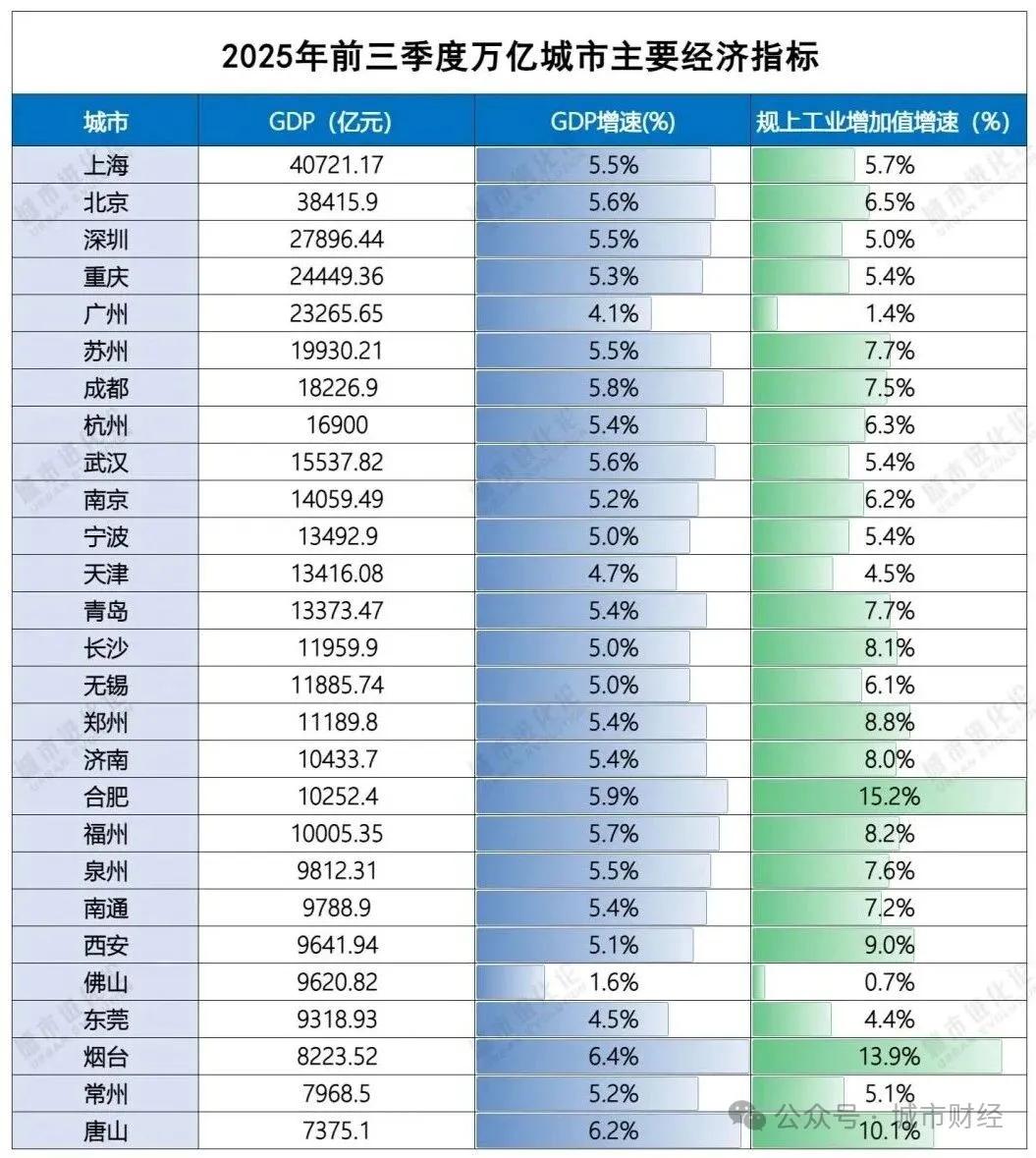
Core Insights - Hefei has achieved the highest industrial growth rate among trillion-yuan cities, reaching 15.2% in the first three quarters, marking a 44-month high [1] - The city's GDP growth is driven by significant contributions from the electronic information and automotive industries, with manufacturing value-added in these sectors increasing by 46.6% and 10.4% respectively [5][6] - Hefei's GDP has grown from 896.67 billion yuan in 2004 to 1.35077 trillion yuan in 2024, a nominal increase of 1406.43%, making it the fastest-growing provincial capital in China [9][23] Economic Performance - In the first three quarters of 2025, Hefei's GDP reached 1025.24 billion yuan, with a growth rate of 5.9%, ranking third among trillion-yuan cities [2][4] - The city's industrial output value has significantly increased, with major products like lithium-ion batteries and semiconductor devices seeing production growth rates of 54.5% and 52.2% respectively [5][6] Population Growth - Hefei's resident population increased by 219,000 in 2023, ranking first in the nation, and is projected to exceed 10 million by 2024 [11][13] - The city has experienced a total population increase of 537,000 over the past three years, the highest in the country [11] Industrial Development - Hefei's industrial strategy has focused on emerging sectors, including "chip, screen, and automotive" industries, which have attracted significant investments and talent [16][20] - The automotive industry, particularly in electric vehicles, has seen rapid growth, with a target of producing over 1.5 million electric vehicles by 2025 [21][22] Strategic Positioning - Hefei's development has been supported by a strong provincial capital strategy, which has led to a significant economic concentration, with 26.9% of the province's GDP generated in the city [29][30] - The city has successfully integrated into the Yangtze River Delta economic zone, enhancing its regional influence and economic performance [35][36]
中国银河证券:双轮驱动下的行业变革 2026年Robotaxi迈入规模化商用拐点 @李程
Zhi Tong Cai Jing· 2025-11-28 05:41
Core Insights - The report from China Galaxy Securities highlights that by 2026, the Robotaxi sector is expected to reach a commercialization turning point driven by policy support, technological advancements, and cost reductions [1][3] - The automotive industry in China is projected to experience stable volume and gradual price increases in 2025, with a dual drive from exports and new energy vehicles [1][2] Group 1: 2025 Overview - In 2025, the Chinese automotive industry is expected to achieve a pattern of "stable volume and gradual price increase," supported by the effective recovery of domestic demand due to vehicle replacement policies [1] - Both wholesale and retail sales are anticipated to grow year-on-year, with an increasing penetration rate of new energy vehicles [1] - The industry is facing continued price wars, leading to further pressure on profitability, with revenue growth outpacing profit growth [1] Group 2: 2026 Outlook - The exemption of the new energy vehicle purchase tax is expected to continue until the end of 2025, with a reduction to half in 2026-2027, potentially impacting sales significantly, especially for vehicles priced below 300,000 yuan [2] - Major automakers like Hongmeng Zhixing, Leap Motor, Geely, and JAC are entering a period of intensive new product launches, which may enhance their sales and market share [2] - The mainstream automakers' pure electric platforms are expected to be validated by 2025, with new models being launched at scale in 2026 [2] - The rollout of L3-level intelligent driving technology is imminent, becoming a key driver for new model launches in 2026 [2] Group 3: Emerging Business Opportunities - The Robotaxi sector is benefiting from policy support, technological progress, and cost reductions, leading to a commercial breakthrough, with major manufacturers and tech giants expanding their operations [3] - Low-speed unmanned logistics vehicles and mining trucks are moving towards scale due to policy support and economic advantages [3] - The integration of the intelligent automotive supply chain with the robotics industry is creating multiple advantages, including technological migration and resource consolidation [3] Group 4: Investment Recommendations - The report recommends focusing on leading passenger vehicle manufacturers, the intelligent industry chain, and humanoid robotics industry, highlighting companies like Geely and Great Wall Motors as key players [3] - Beneficiary stocks include JAC Motors and Leap Motor in the passenger vehicle sector, and companies like SUTENG and Desay SV in the intelligent sector [3] - In the humanoid robotics sector, companies such as Top Group and Aikodi are identified as beneficiaries [3]

