腾讯

Search documents
在大厂,人人都想成为老白兔
Xin Lang Cai Jing· 2025-12-09 09:53
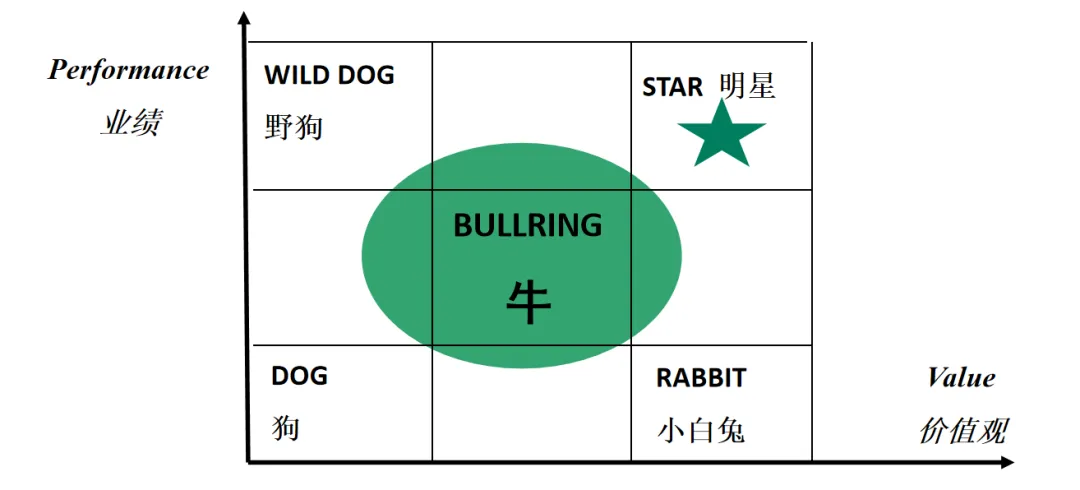
Core Insights - The concept of "Old White Rabbit" refers to employees who are perceived as low performers but have been in the company for a long time, often creating a burden on organizational efficiency [4][12][15] - As the internet industry matures and growth slows, companies are increasingly intolerant of these "Old White Rabbits," leading to a push for organizational restructuring and efficiency [1][6][20] - The presence of "Old White Rabbits" is seen as a symptom of deeper organizational issues, including rigid structures and outdated systems, which hinder overall performance [10][18][21] Group 1: Definition and Origin - "Old White Rabbit" originated from Alibaba's talent assessment matrix, categorizing employees based on values and performance, with the term evolving to describe long-tenured employees who underperform [4][6] - The term has been publicly criticized by industry leaders, with discussions around the negative impact of such employees on company performance [6][12] Group 2: Organizational Dynamics - Companies are facing challenges in removing "Old White Rabbits" due to the costs associated with turnover and the potential disruption to team dynamics [20][21] - The phenomenon is exacerbated by a lack of growth opportunities for older employees, leading to a culture where staying in place becomes a survival strategy [11][22] Group 3: Employee Perspectives - Employees express frustration with "Old White Rabbits," noting their reluctance to collaborate and the negative impact on team productivity [16][17] - There is a growing sentiment among younger employees that the organizational culture is shifting towards a model that rewards low-effort, risk-averse behavior, mirroring the traits of "Old White Rabbits" [22][25] Group 4: Industry Trends - The trend of "Old White Rabbits" is becoming more pronounced as companies in the internet sector shift focus from rapid growth to cost-cutting and efficiency [12][20] - As the industry matures, the need for a more agile and performance-driven workforce is becoming critical, yet many organizations struggle to adapt due to entrenched practices [10][21]


港股资金面的变化
Sou Hu Cai Jing· 2025-12-09 09:48
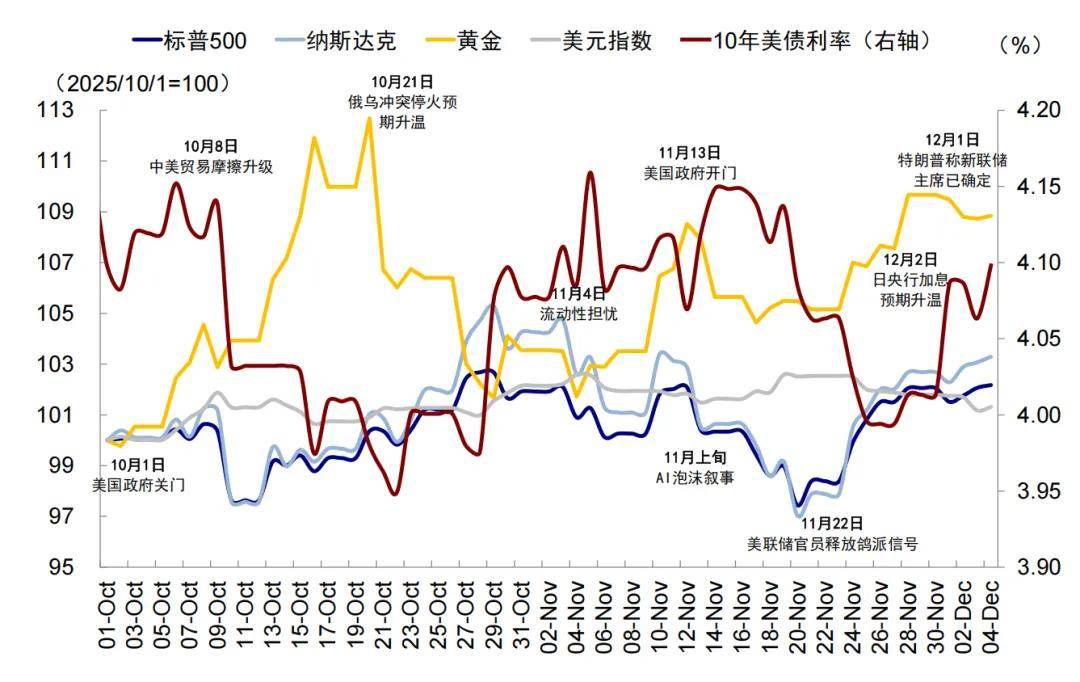
Market Overview - The Hong Kong stock market is experiencing weakness due to two main factors: concerns over public fund managers' performance being tied to returns, leading to potential sell-offs, and apprehension regarding the Federal Reserve's interest rate decisions [1][2] - The recent tightening of market liquidity has contributed to the decline, with the Nasdaq dropping by 7.3% and the Hang Seng Tech Index falling by 12.6% [2] Federal Reserve Impact - The Federal Reserve's upcoming statements on interest rates are crucial, with expectations that a dovish stance could boost market risk appetite and challenge historical highs [4] - Key economic indicators, such as the CPI and non-farm payroll data, will guide the Fed's future actions, particularly if unemployment rates weaken [4] Sector Analysis - The sectors most negatively impacting the Hang Seng Tech Index include food delivery and electric vehicles, particularly companies like Meituan and Xiaomi [7] - Meituan's performance expectations have been lowered, and competition in the food delivery sector is expected to ease in the coming quarters [7] - Xiaomi's weight in the Hang Seng Tech Index has fluctuated, with recent adjustments potentially attracting new investments [7][8] Corporate Actions - Companies like Xiaomi are beginning to repurchase shares, providing some support against further declines [8] - There is speculation that major shareholders of Tencent may slow down their selling, which could also stabilize the stock [8] Fund Flows - Recent net inflows from southbound funds indicate a growing interest in Hang Seng Tech stocks, with significant amounts flowing into Alibaba, Xiaomi, and Meituan [13][15] - Insurance companies are encouraged to invest in equities, with projections of an additional 550-600 billion yuan entering the market next year [13] AI Development - The recent lifting of export restrictions on Nvidia's H200 to China is seen as a positive development for internet companies, enhancing their capabilities in AI applications [16][18] - If major companies like Tencent and Alibaba are approved to purchase H200, it could lead to a revaluation of internet stocks in the market [18] Investment Opportunities - The Hang Seng Tech ETF (513010) is highlighted as a potential investment opportunity, especially if the Federal Reserve adopts a dovish tone [23] - The launch of the Hong Kong Stock Exchange's Technology 100 Index may provide new investment avenues in the tech sector [23]
港股收盘 | 恒指收跌1.29% 有色金属、芯片股承压 中国中冶重挫21%
Zhi Tong Cai Jing· 2025-12-09 08:51
1. 有色金属股跌幅居前。截至收盘,江西铜业(600362)股份(00358)跌6.51%,报33.58港元;洛阳钼业 (603993)(03993)跌6.42%,报17.92港元;中国铝业(601600)(02600)跌5.69%,报10.77港元;紫金矿 业(601899)(02899)跌4.24%,报32.5港元。 盘面上,大型科技股悉数下跌,阿里巴巴跌1.63%,腾讯跌0.41%。特朗普宣布允许英伟达对华出售 H200芯片,芯片股集体走低,中芯国际跌超4%,数据中心股万国数据则涨超2%;内房股普遍下行,雅 居乐集团跌超18%;水泥、钢铁、石油、航空股等承压。另一边,部分医药股逆势走强,歌礼制药 ASC30治疗肥胖症的13周II期研究取得积极顶线结果,股价劲升18%。 市场预计日本央行将调整加息步伐;欧洲央行执委Schnabel的鹰派讲话,促使市场押注明年加息;美联 储影子主席哈塞特发表的不够鸽派的言论,同样打压明年降息预期。分析人士指出,市场几乎已消化美 联储本周降息的预期,但投资者认为其政策声明和主席鲍威尔的讲话可能暗示进一步降息的门槛提高。 市场等待本周美联储议息会议,港股三大指数今日再度走低,恒 ...

云鲸张峻彬否认“被收购”传闻,称正全力为IPO做最后冲刺准备
Zheng Quan Shi Bao Wang· 2025-12-09 08:50
Core Viewpoint - The CEO of Yunji, Zhang Junbin, denied rumors regarding a potential acquisition by Jiuyang and emphasized the company's commitment to preparing for an IPO in Hong Kong, despite external interest in strategic investments or acquisitions [1][2] Company Summary - Yunji's capital market team is actively preparing for a Hong Kong IPO, with a valuation exceeding 10 billion yuan following a $100 million financing round led by Tencent and Beijing Robotics Industry Fund [1] - The company has experienced significant internal management changes, including the recent departure of its China region head, Wang Jun, and product head, Li Yang, who is reportedly focusing on AI companion robots in his next venture [1][2] - Zhang Junbin acknowledged the company's organizational changes and challenges faced during operations, urging employees to prioritize efficiency and results as 2026 is deemed a critical year for Yunji [2] Industry Summary - The competition in the robotic vacuum cleaner industry is intensifying, with Yunji holding a 14.7% market share in China's online market, ranking fourth behind leading brands like Ecovacs, Roborock, and Xiaomi [2] - The industry is characterized as a "red ocean," with IDC reporting a decline in average shipment prices since 2025, further squeezing profit margins for manufacturers [2] - The top five brands in the Chinese robotic vacuum market are nearing a combined market share of 90%, indicating a highly concentrated competitive landscape [2]
谷歌“救”了“易中天”
Hu Xiu· 2025-12-09 07:51
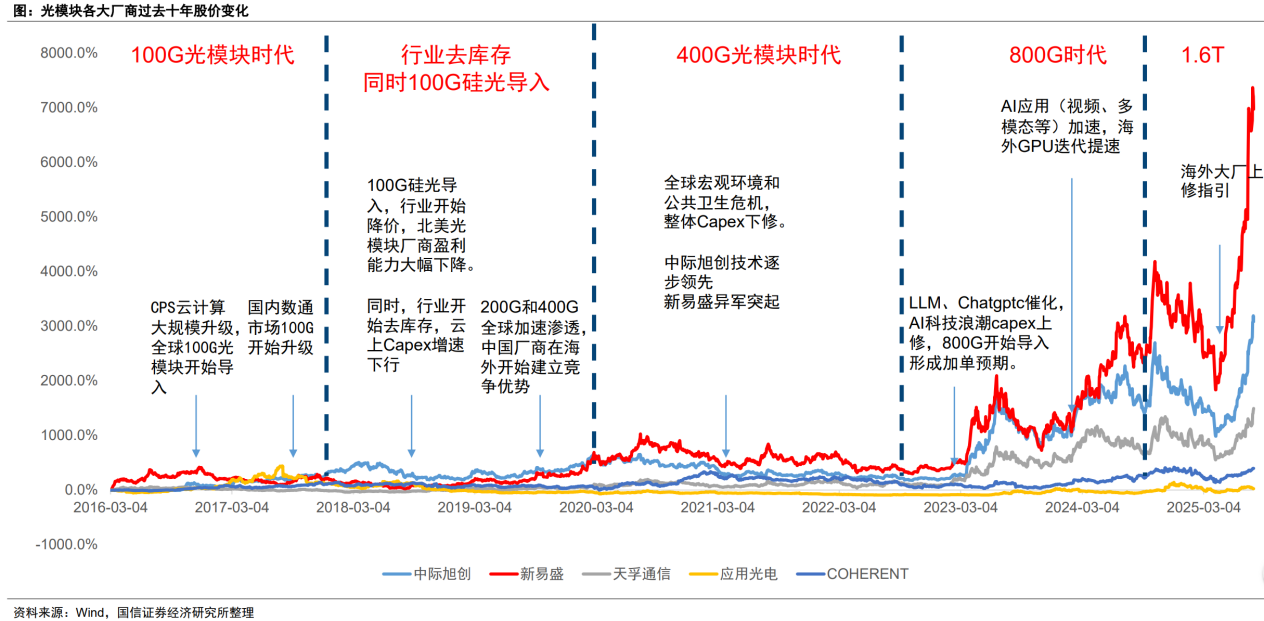
Core Viewpoint - The article discusses the recent surge in the A-share market related to AI and optical modules, driven by companies like Google and their TPU technology, which has positively impacted the valuation logic of optical module firms in China. Group 1: Market Dynamics - The A-share AI frenzy is focused on two main themes: chip manufacturing and connectivity, with companies like 中际旭创 (Inspur) and 天孚通信 (Tianfu Communication) leading the charge in optical modules [1][2] - 中际旭创, 天孚通信, and 新易盛 (NewEase) have market capitalizations of 633.3 billion, 184.2 billion, and 402.1 billion respectively as of December 8 [1] - The historical average PE ratio for the communication industry is around 15-20, raising concerns about the high valuations of optical module companies, which have seen PE ratios of 40-80 [1][2] Group 2: Google's Impact - Google's TPU technology is reshaping the AI computing landscape and is expected to drive demand for optical modules, which are essential for data transmission [2][3] - The introduction of TPU v7, which can integrate up to 9,216 chips, necessitates a significant increase in optical module deployment to maintain low latency and high bandwidth [6][10] - The demand for 1.6T optical modules is expected to rise due to Google's aggressive expansion plans, with projections indicating that 1.6T module shipments could exceed 25 million by 2026 [8][10] Group 3: Capital Expenditure Trends - Major cloud companies, including Alibaba, Tencent, and the "Big Four" in the U.S. (Google, Microsoft, Meta, Amazon), are significantly increasing their capital expenditures, which is a key indicator of optical module demand [12][14] - The total capital expenditure for the "Big Four" is projected to reach $230 billion in 2024, a 55% increase year-over-year, further supporting the growth of the optical module market [12][13] - Forecasts suggest that capital expenditures will continue to rise, with a projected 35% increase in 2026, indicating sustained demand for optical modules [15] Group 4: Company Performance and Valuation - 中际旭创 reported a Q3 revenue of 10.22 billion yuan, with a year-over-year growth of 56.83%, while 天孚通信 and 新易盛 showed lower-than-expected performance [22][23] - Despite mixed Q3 results, 中际旭创 is expected to receive a higher valuation due to its strong performance and the positive outlook driven by Google's TPU [24][25] - Analysts predict that 中际旭创's net profit will grow at a compound annual growth rate of 59% from 2025 to 2028, leading to a target price increase of 62% to 762 yuan [25][26]
特朗普:英伟达H200可以卖给中国,但有个条件
Guan Cha Zhe Wang· 2025-12-09 07:08
Core Viewpoint - The announcement by President Trump to allow Nvidia to export its H200 AI chips to China marks a significant policy shift from the Biden administration's strict export controls on chip technology aimed at hindering China's semiconductor modernization efforts [3][6]. Group 1: Policy Changes - Trump stated that the decision includes conditions to safeguard U.S. national security and that the U.S. government will receive a 25% share of the revenue from these exports [1][6]. - The announcement effectively ends the ban on U.S. companies selling AI chips to China, contrasting sharply with previous restrictions [3][6]. - Nvidia's spokesperson described the decision as a "well-considered balance" that supports high-paying jobs and manufacturing in the U.S. [3]. Group 2: Market Impact - Following the announcement, Nvidia's stock price rose nearly 3% in after-hours trading, indicating positive market sentiment [3]. - The H200 chip is reported to have significantly enhanced performance, being nearly six times more powerful than its predecessor, the H100 [3][4]. Group 3: Competitive Landscape - Nvidia's CEO Jensen Huang views this policy change as a victory, believing that increased sales to China will lead to greater reliance on Nvidia's technology and more funding for R&D [6]. - Despite the approval for the H200 chip, concerns remain about whether Chinese buyers will purchase it, especially given the previous restrictions and the introduction of alternative domestic AI chips by Chinese companies [7][8]. - Chinese firms are actively developing their own AI chips to compete with Nvidia, with major players like Huawei and Alibaba increasing their investments in chip R&D [8].


智谱开源可操控手机的智能体模型:AI手机只在一家做是不够的
Xin Lang Cai Jing· 2025-12-09 06:53
Core Insights - The company Zhiyu AI, part of the "Big Model Six Tigers," has announced the open-sourcing of its core AI Agent model, AutoGLM, aiming to enable AI to effectively "use mobile phones" [1][5] - Zhiyu emphasizes that the development of AI mobile capabilities should not be limited to a few companies, as this could restrict innovation and user access to essential devices [1][2] Company Overview - Zhiyu AI, founded in 2019 and incubated by a team from Tsinghua University, has gained recognition in the AI sector with its GLM model series [4] - The company has completed over ten rounds of financing, raising more than 10 billion RMB, with significant investments from firms like Hillhouse Capital and major internet companies such as Meituan, Alibaba, Tencent, and Xiaomi [5] Product Development - The AutoGLM model was first introduced in October last year, capable of executing a complete operation chain on real devices, including tasks like sending mobile red envelopes [1][4] - The upcoming AutoGLM 2.0, set for release in 2025, will be integrated into a virtual phone that operates in the cloud, allowing for action replay, auditing, and sensitive data isolation [1] Open Source Strategy - The open-sourcing of AutoGLM includes the core trained model, Phone Use capability framework, tools, and a demo covering over 50 Chinese apps, along with an adaptation layer for Android [2] - This strategy allows enterprises and developers to maintain control over data and privacy while utilizing the technology in a compliant environment [2] Industry Trends - The development of AI mobile technology is seen as an irreversible trend, with industry leaders advocating for an open approach to enhance user experience [5] - Recent collaborations, such as between Doubao and Nubia, highlight the growing interest in AI mobile applications, despite ongoing discussions about their challenges [5]

A股算力生态建设提速,科创芯片ETF(588200)一键布局国产芯片投资机遇
Xin Lang Cai Jing· 2025-12-09 05:20
Core Viewpoint - The semiconductor sector in China is experiencing fluctuations, with the STAR Market Chip Index showing a slight decline, while certain stocks are performing well, indicating mixed market sentiment in the industry [1] Industry Summary - As of December 8, U.S. chip stocks saw gains post-market, with NVIDIA rising nearly 3%, reflecting positive trends in the global semiconductor market [1] - Dongguan Securities highlights that artificial intelligence remains a key innovation driver in the tech sector, with various segments such as computing power, storage, equipment, and advanced packaging expected to benefit [1] - Domestic AI chip companies have rapidly developed and achieved significant progress in localization, with firms like Moore and Muxi accelerating their capital market strategies [1] - Major internet companies, including Tencent, are actively adapting to domestic computing power chips, which is expected to expedite the formation of a domestic computing power ecosystem [1] Company Summary - As of November 28, the top ten weighted stocks in the STAR Market Chip Index include Haiguang Information, Cambrian, SMIC, and others, collectively accounting for 59.66% of the index [1] - The STAR Chip ETF (588200) serves as a convenient tool for investors looking to gain exposure to the STAR Market chip sector [1] - Investors without stock accounts can access investment opportunities in domestic chips through the STAR Chip ETF linked fund (017470) [1]
国证国际港股晨报-20251209
Guosen International· 2025-12-09 04:18
Group 1: Market Overview - The Hong Kong stock market experienced a decline on December 8, with the Hang Seng Index falling by 1.23% and the Hang Seng China Enterprises Index dropping by 1.25% [2] - The total trading volume in the market was HKD 206.23 billion, with short selling accounting for 16.66% of the total trading volume [2] - Northbound capital saw a net inflow of HKD 1.54 billion, with Xiaomi Group, SMIC, and Pop Mart being the most actively bought stocks [2][3] Group 2: Policy Insights - The Central Political Bureau emphasized the continuation of a proactive fiscal policy and a loose monetary policy to stimulate consumption and counter economic downward pressure [4] - The meeting outlined eight key principles for economic work in 2026, with a focus on domestic demand, innovation, reform, and green transformation [4] Group 3: Company Analysis - Bosideng (3998.HK) - Bosideng reported a revenue of HKD 8.928 billion for the first half of the fiscal year ending September 30, 2025, representing a year-on-year increase of 1.4%, while net profit rose by 5.3% to HKD 1.189 billion [6] - The brand's down jacket business saw an 8.3% increase in revenue to HKD 6.568 billion, although the gross margin decreased by 2.0 percentage points to 59.1% [6] - The OEM business faced challenges, with revenue declining by 11.7% to HKD 2.044 billion, but gross margin improved by 0.4 percentage points to 20.5% due to effective cost management [7] Group 4: Future Outlook - The company is expected to perform well in the upcoming peak season, with projected EPS for fiscal years 2026-2028 at HKD 0.35, 0.38, and 0.43 respectively [8] - A target price of HKD 6.0 is set for the 2025/26 fiscal year, reflecting a 16 times PE ratio [8]
中国战队剑指国际赛场,CFM 电竞开启全球化新篇
Yang Zi Wan Bao Wang· 2025-12-09 03:33
Core Insights - CFM esports is accelerating its international expansion with the announcement of the new world-class tournament CFLC and the launch of the SEA Southeast Asia region, marking a significant step for Chinese mobile esports on the global stage [1][3]. Group 1: Event Overview - The CFML S18 Autumn Finals and the 10th Anniversary Celebration of CFM esports took place on December 6 at the Olympic Sports Center in Zhengzhou, Henan [1]. - CFM esports has established a comprehensive event matrix, including professional leagues (CFML), mass participation events, and university competitions, creating a complete talent development pathway [3]. Group 2: International Expansion - The SEA Southeast Asia qualifiers are currently underway, covering countries such as the Philippines, Indonesia, Vietnam, Thailand, and Malaysia, indicating the official launch of CFM esports' overseas presence [3]. - The newly announced CFLC tournament aims to gather top teams from around the world to compete for the championship, establishing a high-level competitive platform that connects domestic and international esports [3]. Group 3: Future Prospects - The launch of the SEA region and the CFLC tournament signifies a new phase of "domestic cultivation and global competition" for CFM esports, enhancing its international operational capabilities [5]. - The commitment to creating the most professional and comprehensive FPS mobile esports events reflects the industry's ambition to elevate the quality of esports competitions [5].