奔驰

Search documents
BBA集体失守中国市场
21世纪经济报道· 2025-08-04 15:42
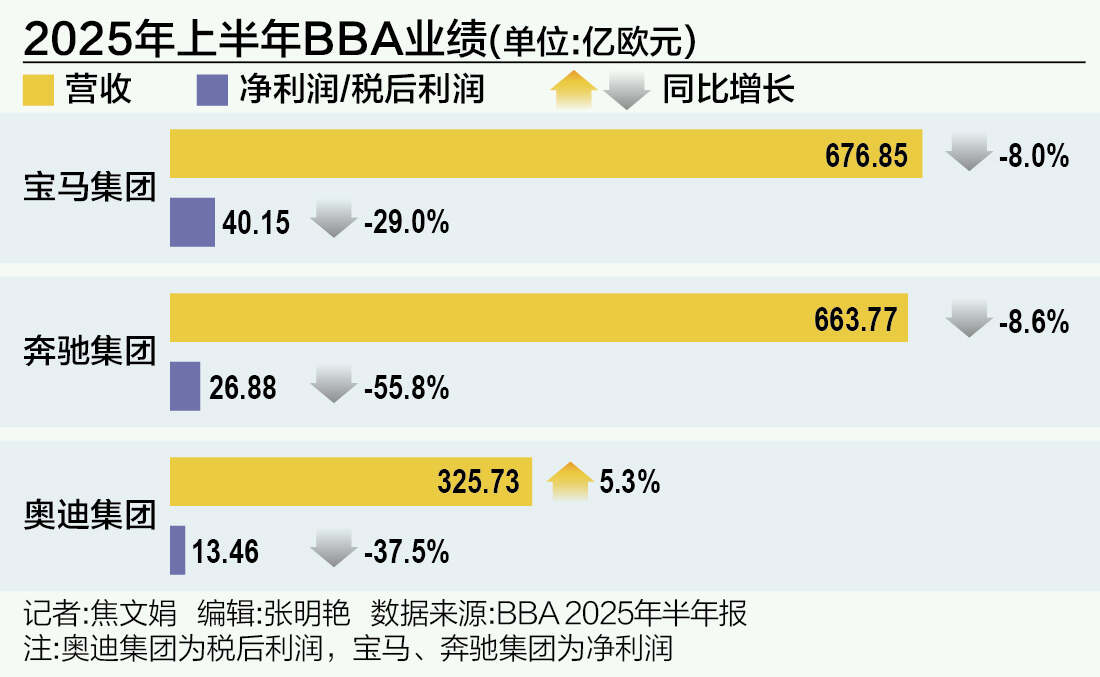
Core Viewpoint - The traditional luxury car giants BBA (BMW, Mercedes-Benz, Audi) are collectively facing growth bottlenecks, with declining revenues and profits, particularly in the Chinese market, indicating a deep transformation pain that requires immediate and decisive action to recover and seize future opportunities [1][3][6]. Group 1: Financial Performance - In the first half of 2025, BBA's financial results showed a trend of "two declines and one increase" in revenue, with all three companies experiencing a "full-line decline" in net profits [3][6]. - BMW led with a revenue of €67.685 billion, despite an 8% year-on-year decline; Mercedes-Benz followed with €66.377 billion, suffering the largest revenue drop of 8.6% and a net profit halved; Audi was the only brand with revenue growth, reaching €32.573 billion, but its net profit was only €1.346 billion, one-third of BMW's [3][6]. - The decline in performance has led BBA to lower their profit forecasts, with Audi adjusting its annual revenue target to €65-70 billion and profit margin expectations down to 5-7%; BMW expects a decrease in profit margin to 5-7%; and Mercedes-Benz anticipates lower sales than the previous year, adjusting its return on sales from 6-8% to 4-6% [6]. Group 2: Market Challenges - BBA has collectively lost ground in the Chinese market, which is their most important single market globally, with delivery volumes declining by 15.5% for BMW, 14.2% for Mercedes-Benz, and 10.3% for Audi [5][6]. - The entry-level models of BBA, priced between 200,000 to 400,000 yuan, are facing fierce competition from domestic brands, leading to a decline in both volume and profit [8][9]. - BMW's popular models, such as the X3/X4 and i3/i4, saw delivery declines of 24.6% and 70.8%, respectively, indicating significant pressure in the mid-range segment [8][9]. Group 3: Electric Vehicle Transition - The shift to electric vehicles (EVs) is seen as essential for BBA's recovery, with distinct strategies emerging: BMW is leading, Audi is gaining momentum, while Mercedes-Benz is lagging [11][12]. - Audi reported a 32.3% increase in pure electric vehicle sales, achieving a penetration rate of 12.8% with 101,400 units delivered; BMW's electric vehicle sales reached 220,600 units, up 15.7%, while Mercedes-Benz's sales fell by 14% to 87,300 units [15][16]. - BMW is focused on a clear electric future, with plans for a new generation platform expected to boost electric vehicle sales significantly, aiming for 50% of its sales to be electric by 2035 [16][17]. Group 4: Strategic Adjustments - Audi has adopted a more cautious approach to its electric vehicle strategy, delaying the complete phase-out of combustion engines and planning to launch new internal combustion and hybrid models from 2024 to 2026 [16]. - Mercedes-Benz has adjusted its electric vehicle strategy, aiming for a maximum of 50% of its sales to be new energy vehicles by 2030, while still planning to introduce new electric models [17]. - The BBA's transition to electric vehicles is characterized by a pragmatic return to rationality, facing the dual challenge of accelerating the transition while addressing shortcomings in smart technology [18].

BBA的下跌叙事中,谁将率先突围?
2 1 Shi Ji Jing Ji Bao Dao· 2025-08-04 14:01
Core Viewpoint - The traditional luxury car giants BBA (BMW, Mercedes-Benz, Audi) are facing significant growth challenges, with declining revenues and profits, particularly in the Chinese market, indicating a critical transformation phase for these companies [1][2][4]. Financial Performance - In the first half of 2025, BBA's financial results showed a mixed performance: BMW led with revenues of €67.685 billion, down 8% year-on-year; Mercedes-Benz followed with €66.377 billion, experiencing the largest revenue drop of 8.6%, and a net profit halved to €26.88 billion; Audi reported revenue growth to €32.573 billion but with a net profit of only €1.346 billion, one-third of BMW's [2][4][8]. - The overall net profit for BBA saw significant declines, with Mercedes-Benz's net profit dropping 55.8%, BMW's down 29%, and Audi's down 37.5% [7][8]. Market Challenges - BBA collectively struggled in the Chinese market, with delivery volumes down 15.5% for BMW, 14.2% for Mercedes-Benz, and 10.3% for Audi, making it the largest single market decline globally for these brands [4][10]. - The entry-level models of BBA are facing intense competition from domestic brands, leading to a decline in both volume and profit margins [9][10]. Strategic Adjustments - BBA has lowered their profit forecasts: Audi revised its revenue target to €65-70 billion with a profit margin expectation of 5-7%; BMW anticipates a decline in its automotive EBIT margin to 5-7%; Mercedes-Benz expects lower sales than the previous year with a revised return on sales (ROS) of 4-6% [4][10]. - The companies are adjusting their strategies towards electric vehicle (EV) production, with BMW leading in EV sales, while Mercedes-Benz has delayed its full electrification target to 2030 [11][16]. Electric Vehicle Transition - Audi reported a 32.3% increase in EV sales, leading BBA, with a total of 101,400 units delivered; BMW's EV sales reached 220,600 units, up 15.7%, while Mercedes-Benz saw a 14% decline in EV sales to 87,300 units [14][16]. - BMW is focusing on its new generation platform to boost EV sales, aiming for 50% of its sales to be electric by 2035, while Audi is cautiously expanding its EV lineup [15][16]. Future Outlook - The BBA's transition to electric and smart vehicles is seen as a necessary response to market pressures, with the potential for new growth opportunities emerging from current challenges [17].
国金证券:产业链淡季量价趋稳 关注固态商业化落地
智通财经网· 2025-08-04 09:36
Core Viewpoint - The lithium metal is identified as a long-term direction for solid-state battery anodes, with the rolling method expected to achieve large-scale implementation first, while evaporation and liquid-phase methods are potential future development directions for ultra-thin lithium strips [1][4]. Industry Changes - Lithium carbonate price decreased to 59,000 yuan/ton, down 8% month-on-month; lithium hydroxide price decreased to 61,000 yuan/ton, down 7% month-on-month [2]. - In June, domestic wholesale sales of new energy passenger vehicles reached 1.11 million units, up 27% year-on-year and 2% month-on-month; cumulative sales from January to June reached 6.1 million units, up 39% year-on-year [2]. Market Review - Since July 2025, the lithium battery sector has been active, with most segments outperforming the CSI 300 and SSE 50 indices; lithium mining sector led with an 11% increase, while segments like intelligent driving and lithium iron phosphate cathodes saw declines of -0.4%, -1%, and -3% respectively [3]. - The trading volume in lithium battery-related sectors continued to grow, driven by active trading in solid-state battery segments [3]. Research Focus - Lithium metal anodes can achieve higher energy density compared to graphite and silicon-carbon, making them a long-term iteration direction for solid-state batteries; the global market for lithium metal is expected to approach 10 billion yuan by 2030 [4]. - The rolling method is expected to achieve large-scale implementation first, while evaporation and liquid-phase methods are seen as potential future directions for ultra-thin lithium strips [4]. Industry Insights - In June, new energy vehicle sales in China reached 1.11 million units, with a penetration rate of 50%; Europe and the U.S. followed with 300,000 and 120,000 units respectively [5]. - Domestic energy storage installations in June were 6.9 GWh, down 41% month-on-month and 70% year-on-year, while cumulative installations from January to June reached 49.0 GWh, up 162% year-on-year [5]. Lithium Battery Production Tracking - In July, production of lithium batteries is expected to see a month-on-month change of -2% to 3%, with year-on-year growth of 7% to 49% [6]. - Overall lithium battery material prices stabilized, with lithium salt and separator prices continuing to decline [6]. New Technologies - Solid-state battery commercialization is expected to be influenced by policies and the emergence of new technologies; the focus is on oxide and polymer routes for future development [7].




第一创业晨会纪要-20250804
First Capital Securities· 2025-08-04 09:31
Macro Economic Group - In July, the seasonally adjusted non-farm employment in the US increased by 73,000, the lowest level in nine months, with a downward revision of the previous two months' figures totaling a decrease of 258,000 jobs [2][4] - The unemployment rate in July was 4.2%, matching expectations, while the labor force participation rate was 62.2%, slightly down from the previous month [2][4] - Average hourly wages increased by 3.9% year-on-year in July, slightly above expectations, indicating ongoing wage pressures in the labor market [2][4] Advanced Manufacturing Group - Xiangfenghua, a company specializing in lithium battery anode materials, reported a revenue of 688 million yuan in the first half of 2025, a decrease of 2.8% year-on-year, with a net loss of 2.95 million yuan, down 107.7% [12] - The decline in revenue is attributed to oversupply in the market and intensified competition, leading to a drop in product prices [12] - The overall capacity utilization in the lithium battery anode materials industry is around 60%, indicating severe structural overcapacity and heightened competition [12] Automotive Industry Group - Major automotive companies such as Mercedes-Benz, BMW, and Volkswagen reported significant declines in their half-year performance, with Mercedes-Benz's sales revenue dropping by 8.6% to 72.6 billion euros [13] - The performance decline is attributed to US tariffs and fierce competition in the Chinese market, highlighting a shift in market dynamics where Chinese automakers are increasingly competitive [13] - New energy vehicle manufacturers like XPeng and Leap Motor reported substantial sales growth, with XPeng delivering 36,717 vehicles in July, a year-on-year increase of 229% [14] Consumer Electronics Group - XGIMI Technology expects a significant improvement in its half-year performance, with projected revenue of 1.626 billion yuan, a year-on-year increase of 1.63%, and a net profit of 88.66 million yuan, up 2062.33% [16] - The growth is driven by cost reduction and efficiency improvements, alongside successful product launches and expansion into overseas markets [16] - The company is also diversifying its business by entering the vehicle-mounted and commercial sectors, supporting its growth strategy [16]

产业链淡季量价趋稳,关注固态商业化落地 | 投研报告
Zhong Guo Neng Yuan Wang· 2025-08-04 06:50
Core Insights - The lithium battery sector has shown significant activity since July 2025, outperforming the CSI 300 and SSE 50 indices, with the lithium mining segment leading with an 11% increase [1][2] - Lithium carbonate and lithium hydroxide prices have decreased by 8% and 7% respectively in July, indicating a downward trend in raw material costs [2] - The sales of new energy vehicles in China reached 1.11 million units in June, reflecting a year-on-year increase of 27% and a cumulative increase of 39% for the first half of the year [2][4] Lithium Battery Sector - The lithium battery sector has experienced a recovery in monthly transaction volumes, driven by active trading in solid-state battery segments [1][2] - The three-year historical valuation of over half of the lithium battery-related segments is at a high level, indicating increased market attention [2] New Technologies - Lithium metal anodes are identified as a long-term direction for battery technology, with the potential to achieve energy densities exceeding 500Wh/kg [3] - The first global test of a lithium metal anode solid-state battery was conducted by Mercedes, with predictions of a market size nearing 10 billion yuan by 2030 [3] Energy Storage - In June, domestic energy storage installations fell to 6.9 GWh, a year-on-year decrease of 41%, while cumulative installations for the first half of the year reached 49.0 GWh, a 162% increase [5] - The U.S. energy storage market remained relatively stable, with 3.7 GWh installed in June, reflecting a year-on-year increase of 32% for the first half of the year [5] Investment Recommendations - The lithium battery sector is expected to transition from broad market-driven growth to structural opportunities led by technological breakthroughs and new application areas in 2025 [7] - Key companies recommended for investment include CATL, EVE Energy, and Keda Technology, as well as Xiamen Tungsten [7]
从奔驰到特斯拉,怀挡为啥成了豪车和电车的“新宠”
3 6 Ke· 2025-08-04 02:09
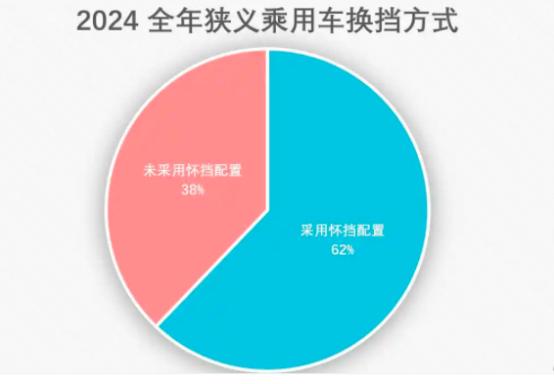
Core Viewpoint - The increasing adoption of the "怀挡" (Huaidang) gear shift design in electric vehicles (EVs) reflects a shift in consumer preferences towards more user-friendly and space-efficient designs, with 62% of new passenger vehicles in China featuring this design in 2024 [1][12]. Group 1: Definition and History - "怀挡" refers to a gear shift layout where the gear lever is positioned near the steering wheel, allowing for a more streamlined cabin design [3]. - The first "怀挡" was introduced by Pontiac in 1938, aimed at enhancing cabin aesthetics while addressing space constraints [3][5]. - The design gained popularity with the rise of automatic transmissions, which alleviated earlier mechanical limitations [3][7]. Group 2: Popularity and Adoption - The trend towards "怀挡" accelerated with Tesla's Model S in 2012, which utilized a similar electronic gear shift, making it accessible to a broader audience [9]. - The simplicity of electric vehicle powertrains allows for more innovative gear shift designs, enhancing user experience and cabin space [9][12]. - The design is particularly suited for the needs of modern drivers, offering intuitive controls that align with the expectations of EV users [11][16]. Group 3: Safety Considerations - Concerns about the safety of "怀挡" have been addressed by manufacturers through advanced electronic control systems that prevent accidental gear shifts while driving [12][14]. - New vehicles with "怀挡" typically require multiple confirmations for gear changes, enhancing operational safety [14][16]. - The electronic nature of "怀挡" allows for a more reliable system that minimizes the risk of unintended gear shifts compared to traditional mechanical systems [14][16]. Group 4: Conclusion - The widespread adoption of "怀挡" is driven by its advantages in aesthetics, convenience, space efficiency, and safety, making it a fitting choice for modern electric vehicles [16][17].

固态电池加速变革导入,新能源+AI是核心 | 投研报告
Zhong Guo Neng Yuan Wang· 2025-08-04 01:56
Core Viewpoint - The report highlights the acceleration of solid-state battery adoption and the integration of AI in the new energy sector as key trends shaping the future landscape [2][3]. New Energy Vehicle Industry Insights - Solid-state batteries are rapidly being introduced in the downstream market, benefiting companies like CATL and Aulton. Mercedes plans to mass-produce solid-state battery electric vehicles within five years, collaborating with Factorial Energy and Huineng Technology, with vehicle testing already underway [3]. - Huineng Technology has globally launched the fourth-generation superfluid solid electrolyte, achieving an ionic conductivity of 57 mS/cm, which is 5-6 times higher than traditional electrolytes [3]. - The EVTEKER QianTu 01GT electric motorcycle features an 11 kWh all-solid-state battery, offering a maximum range of 300 km and fast charging from 20% to 80% in just 40 minutes [3]. - The introduction phase of solid-state batteries emphasizes new technologies and products, with companies like Tiantian Technology, Shanghai Xiba, and Naconor benefiting from recent developments [3]. - Notable second-tier leaders with strong product capabilities, such as Aulton, are expected to gain market share, as seen with Dongfeng Nissan's N7 model, which achieved the highest sales in its category due to its partnership with Aulton [3]. Photovoltaic Industry Insights - The "anti-involution" trend in the photovoltaic sector remains a primary theme, benefiting companies like GCL-Poly and Flat Glass. Recent political meetings have emphasized the need for regulated competition and capacity management in key industries [4]. - Due to increased inventory and cost support, the price of photovoltaic glass is expected to rise in August [4]. Energy Storage and Green Electricity Insights - Policies supporting green electricity and rapid development in energy storage are expected to improve market conditions for companies like Sungrow and Haibo Innovation. The Shaanxi Provincial Development and Reform Commission has announced pilot projects for direct green electricity connections [5]. - By the first half of 2025, there will be 7,737 new energy storage projects registered in China, with a total capacity of 664.86 GWh, representing a year-on-year growth of over 120% [5]. AI and New Energy Industry Insights - The integration of AI with new energy and humanoid robots is gaining traction, benefiting companies like Zhejiang Rongtai and Keda Li. Recent product launches include a humanoid robot priced at 158,000 yuan and the global debut of Midea's home humanoid robot [6]. - The controlled nuclear fusion sector is entering a critical adoption phase, with companies like Helion Energy and Jingda Co. benefiting from the construction of the first commercial fusion power plant [6]. - The AI and new energy sectors, including smart glasses and PCBs, are experiencing continuous growth, with companies like Haopeng Technology and Defu Technology seeing significant developments, such as a twofold increase in sales of Ray-Ban Meta smart glasses [6].

技术补课、产品补齐、渠道补强,BBA蓄势反扑
Zhong Guo Qi Che Bao Wang· 2025-08-04 01:55
Core Insights - The German luxury car trio, BMW, Mercedes-Benz, and Audi (BBA), is facing unprecedented challenges in the transition to electric and intelligent vehicles, particularly in the Chinese market [2][7] - BBA is launching a comprehensive counterattack by collaborating with local tech firms, introducing electric models tailored for Chinese consumers, and enhancing their retail strategies [2][4][7] Intelligent Technology Development - BMW has partnered with Momenta to develop a China-specific intelligent driving solution, while Mercedes-Benz and Audi have also engaged with Momenta and Huawei, respectively [3] - BBA's strategies reflect different paces and considerations in their transformation, with Audi's collaboration with Huawei being the most extensive [3] - Sales data indicates a significant decline in BBA's performance in China, with BMW's sales down 15.5%, Mercedes-Benz down 14%, and Audi down 16.78% in early 2025 [3] Electric Vehicle Strategy - BBA is intensifying its electric vehicle (EV) offerings, with Mercedes-Benz planning to launch 10 pure electric models in the next two years, and BMW's Neue Klasse platform set to produce its first model in China by 2026 [4] - The electric vehicle strategy shows strong localization, with tailored designs and features for the Chinese market [4] - Despite maintaining a leading position in the fuel vehicle market, BBA's share in the 300,000 yuan and above segment has dropped from 72% in 2021 to 39% in 2025 [4] Channel and Service Innovation - BBA is transforming its retail strategies to enhance customer experience, with initiatives like Mercedes-Benz's EQ experience center and BMW's future mobility experience center [4] - The traditional dealership model is being re-evaluated to meet the demands of the electric vehicle era [4] Competitive Challenges - BBA faces significant challenges in building sustainable competitive advantages, including high costs, changing consumer perceptions, and the need for an integrated ecosystem [5][6] - The cost of BBA's electric models is generally 20% higher than that of domestic brands, with specific examples highlighting the cost disparity [6] - Consumer preferences are shifting towards intelligent technology, with 47% of younger buyers prioritizing smart features over brand prestige [6] Strategic Adjustments - BBA is adjusting its strategies in China by empowering local teams and establishing design centers to better understand consumer preferences [6][7] - These strategic shifts reflect a deeper recognition of the Chinese market, although the effectiveness of these changes will take time to assess [6][7]

二线高端品牌自砍一刀抢市场
Zhong Guo Qi Che Bao Wang· 2025-08-04 01:25
Group 1 - The core viewpoint is that second-tier premium automotive brands are facing significant pressure to lower prices in response to the competitive landscape dominated by electric vehicles (EVs) [2][4][10] - Second-tier premium brands like Volvo, Jaguar, and Lincoln have initiated substantial price cuts, with models now starting at around 160,000 to 200,000 yuan, reflecting a shift in market dynamics [2][4] - The decline in sales for these brands is stark, with Volvo's sales down 5.94% to 59,400 units, Lincoln's down 32.5% to 33,000 units, and Jaguar Land Rover's down to 22,000 units, contrasting with the overall market growth of 11.4% [5][7] Group 2 - The price strategy of "exchanging price for volume" has failed, as consumers are no longer swayed solely by lower prices, leading to a decline in sales even with significant discounts [7][8] - The competitive pressure from EVs has forced second-tier brands to lower their prices to below 200,000 yuan, where EVs are increasingly competitive in terms of technology and features [4][8] - The perception of second-tier brands has shifted, with consumers viewing them as outdated and lacking in modern appeal, further complicating their market position [4][9] Group 3 - Industry experts suggest that second-tier premium brands should focus on maintaining their high-end positioning rather than engaging in price wars, emphasizing personalized services and brand identity [9][10] - The rapid development of the EV market in China contrasts with slower progress in other regions, where second-tier brands may still find some viability through their traditional fuel vehicle offerings [10] - There is a growing concern that if second-tier premium brands cannot adapt to the competitive landscape in China, they may face significant challenges, potentially leading to their exit from the market [10]

上汽奥迪联姻华为智驾,燃油豪车绝地反击
Jing Ji Guan Cha Bao· 2025-08-03 13:51
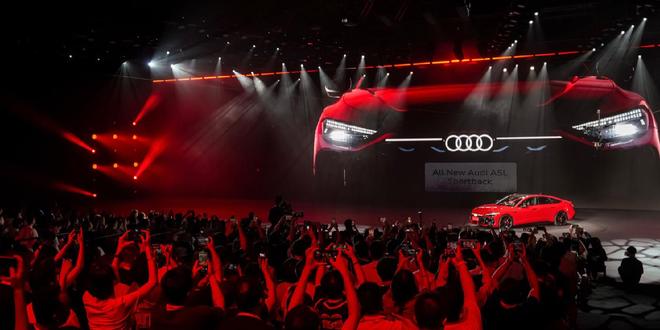
Group 1 - The launch of the SAIC Audi A5L Sportback on August 1 marks a significant product in the transition of traditional luxury brands, featuring hidden laser radars for advanced driver assistance systems [2] - The A5L Sportback is the world's first fuel vehicle equipped with Huawei's QianKun intelligent driving system, highlighting the collaboration between a multinational automotive company and a Chinese tech firm [3][5] - Despite the rapid development of new energy vehicles in China, fuel vehicles still hold a substantial market share, with projected sales of 18.57 million units in 2024, a 9.8% year-on-year decline, yet maintaining nearly 60% market share [2] Group 2 - The intelligentization of fuel vehicles has lagged behind electric vehicles, with challenges such as slow system response times and insufficient redundancy [3] - SAIC Audi's partnership with Huawei aims to address three core challenges in fuel vehicle intelligentization: stable energy management, real-time data feedback, and precise motion response [3] - The A5L Sportback is priced starting at 259,900 yuan after limited-time discounts, positioning it competitively against the Tesla Model 3 [3][5] Group 3 - SAIC Audi, established in 2021, is a young joint venture brand that previously focused on niche markets with models like the A7L and Q6 [4] - The A5L Sportback is a key step in SAIC Audi's dual-brand strategy, with plans to balance electric transformation and fuel vehicle competitiveness [5] - The new AUDI brand will focus on new energy vehicles, while the traditional Audi four-ring brand will continue to develop high-end fuel vehicles with advanced driver assistance systems [5]