阳光电源

Search documents
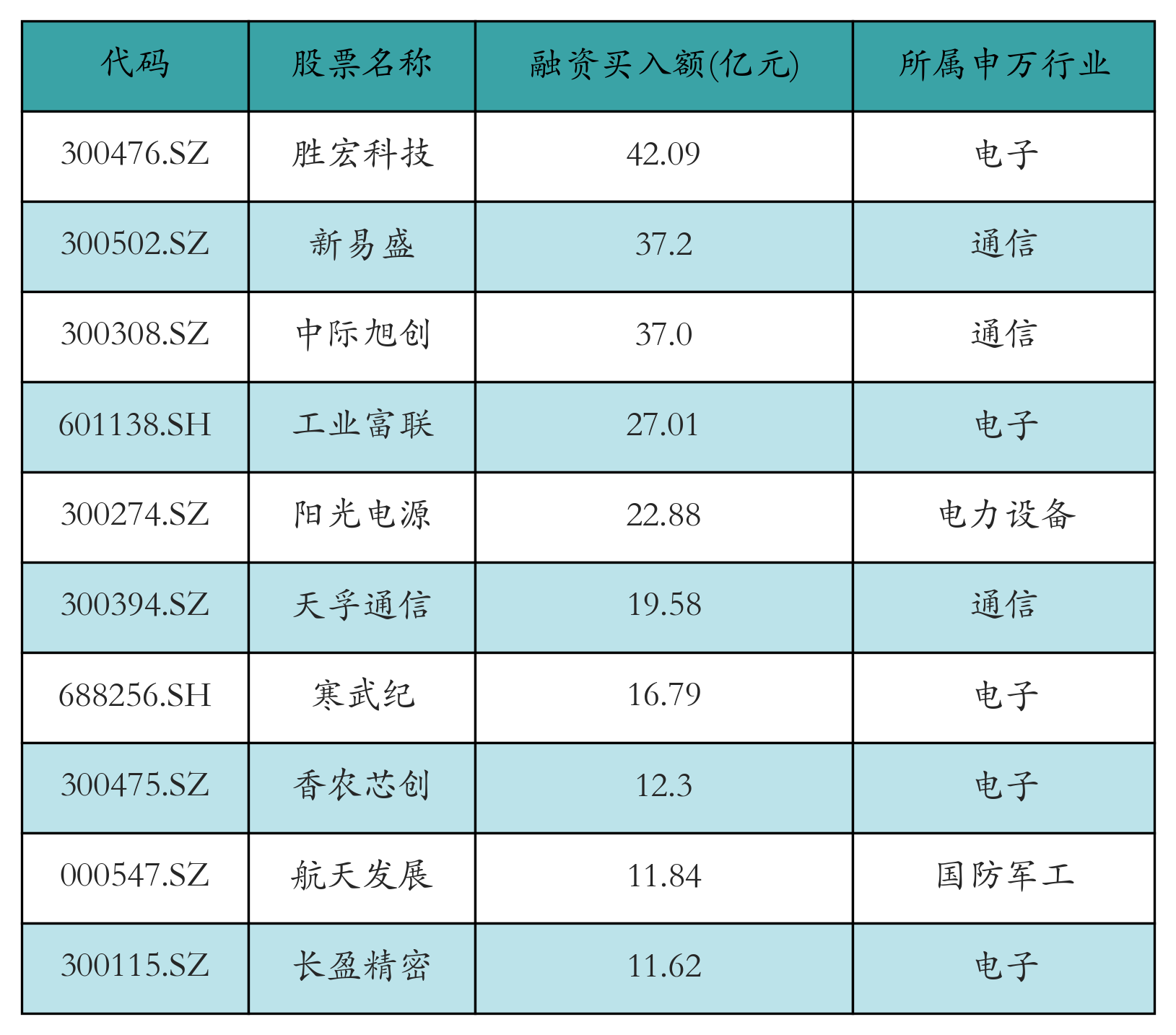
胜宏科技获融资资金买入超42亿元丨资金流向日报
2 1 Shi Ji Jing Ji Bao Dao· 2025-12-10 02:32
一、证券市场回顾 南财金融终端数据显示,昨日(12月9日,下同)上证综指日内下跌0.37%,收于3909.52点,最高3923.9点;深证成指日内下跌0.39%,收于13277.36点,最 高13398.25点;创业板指日内上涨0.61%,收于3209.6点,最高3235.54点。 昨日有8只新基金发行,分别为:英大上证科创板综合指数增强发起A、英大上证科创板综合指数增强发起C、国泰多资产稳健甄选3个月持有混合(FOF)A、 汇泉安悦90天持有债券A、汇泉安悦90天持有债券C、国泰多资产稳健甄选3个月持有混合(FOF)C、易方达如意盈享6个月持有混合发起式(FOF)A、易方达如 意盈享6个月持有混合发起式(FOF)C,详情见下表: | 代码 | 基金名称 | | --- | --- | | 026163.OF | 英大上证科创板综合指数增强发起A | | 026164.OF | 英大上证科创板综合指数增强发起C | | 025796.OF | 国泰多资产稳健甄选3个月持有混合(FOF) | | 026023.OF | 汇泉安悦90天持有债券A | | 026024.OF | 汇泉安悦90天持有债券C | | ...


光伏概念股早盘走弱,相关ETF跌超2%
Sou Hu Cai Jing· 2025-12-10 02:08
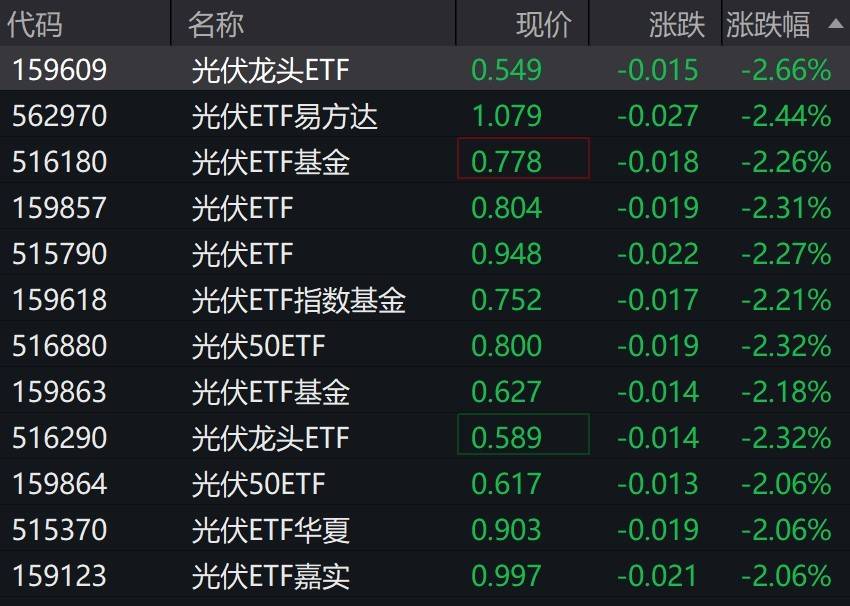
光伏概念股早盘走弱,阳光电源、通威股份跌超4%,特变电工跌超3%,捷佳伟创、TCL中环跌超2%。 受盘面影响,光伏相关ETF跌超2%。 有券商认为,光伏行业估值仍处于历史偏低位置。展望后市,后续围绕反内卷的产品销售价格措施、企业间并购整合、 行业准入门槛的提高以及产品质量标准提高的政策将会相继落地。光伏行业竞争格局和产业链生态有望优化,行业估值 存在修复契机。 每日经济新闻 | 代码 | 名称 | 现价 | 涨跌 | 涨跌幅 ▲ | | --- | --- | --- | --- | --- | | 159609 | 光伏龙头ETF | 0.549 | -0.015 | -2.66% | | 562970 | 光伏ETF易方达 | 1.079 | -0.027 | -2.44% | | 516180 | 光伏ETF基金 | 0.778 | -0.018 | -2.26% | | 159857 | 光伏ETF | 0.804 | -0.019 | -2.31% | | 515790 | 光伏ETF | 0.948 | -0.022 | -2.27% | | 159618 | 光伏ETF指数基金 | 0.752 ...
中金 | 储能观市系列(1):政策迎风期,中国独立储能建设加速
中金点睛· 2025-12-09 23:46
Core Viewpoint - The Chinese large-scale energy storage industry is transitioning from "policy-driven" to "market-driven," with clearer business models and diversified application scenarios, entering a new phase of large-scale and high-quality development [2]. Group 1: Market Trends and Data - The domestic new energy storage bidding scale reached 205.30 GWh from January to October 2025, a year-on-year increase of 45%, with central and state-owned enterprises' procurement scale increasing by 61% [4]. - The supply side of leading battery manufacturers is nearing full capacity, and the tight supply-demand situation is expected to continue until the second quarter of 2026 [4]. - The theoretical installation space for independent energy storage is estimated to be around 158 GW/634 GWh for 2026-2027, supported by declining electricity costs on the generation side [5]. Group 2: Business Model Evolution - Before the "Document 136," the value of energy storage was primarily derived from "obtaining renewable energy project permits," with low utilization rates [6]. - After the "Document 136," independent energy storage can realize its true value through "peak-valley price arbitrage + capacity market + ancillary services," with internal rates of return (IRR) exceeding 10% in regions like Inner Mongolia and Xinjiang [4][5]. - The capacity price policy has led to a short-term rush for installations, with independent energy storage expected to benefit from this policy window [5]. Group 3: Capacity Compensation Mechanism - The capacity compensation mechanism is gradually replacing the previous capacity leasing price, with provinces like Inner Mongolia and Gansu already implementing compensation standards [15]. - The compensation standards vary, with Gansu setting a preliminary compensation of 330 yuan/kW·year, while Inner Mongolia compensates based on actual discharge [15]. - The establishment of a capacity compensation mechanism aims to create stable price signals to guide investment in flexible resources like energy storage [15]. Group 4: Auxiliary Services Market - The auxiliary services market is evolving from single peak and frequency regulation to a more diversified and market-oriented approach [18]. - Independent energy storage currently participates mainly in frequency regulation services, with significant compensation in provinces like Guangdong and Shanxi [20]. - As the auxiliary services market develops, energy storage is expected to expand its participation to include backup and ramping services, providing additional revenue streams [20]. Group 5: Economic Viability of Independent Energy Storage - The economic viability of independent energy storage projects is influenced by peak-valley price differences, capacity compensation, and ancillary service revenues [21]. - Initial calculations indicate that the capital IRR for independent energy storage in regions like Inner Mongolia can reach up to 37.3%, primarily driven by capacity compensation [24]. - The sensitivity of capital IRR to capacity compensation levels and duration is significant, with longer compensation periods enhancing project attractiveness [25].

ESG动态跟踪月报(2025年11月):碳市场新增行业配额方案落地,国际政策分化下绿色金融保持活跃-20251209
CMS· 2025-12-09 15:08
Quantitative Models and Construction Methods Model 1: Carbon Emission Intensity Deviation and Carbon Emission Intensity Coefficient - **Model Name**: Carbon Emission Intensity Deviation and Carbon Emission Intensity Coefficient - **Model Construction Idea**: The model aims to allocate carbon quotas based on the deviation of a company's carbon emission intensity from the industry average, incentivizing companies to reduce emissions. - **Model Construction Process**: - The carbon emission intensity deviation (X) is calculated as the difference between a company's unit product carbon emission and the industry average, divided by the industry average: $$ X = \frac{I - BP}{BP} $$ where \( I \) is the company's unit product carbon emission, and \( BP \) is the industry average. - The carbon emission intensity coefficient (α) is determined based on the deviation (X): $$ \alpha = \begin{cases} -3\% & \text{if } X \leq -20\% \\ 15\% \times X & \text{if } -20\% < X \leq 20\% \\ +3\% & \text{if } X > 20\% \end{cases} $$ - The quota amount (A) is calculated as: $$ A = E \times (1 + \alpha) $$ where \( E \) is the company's verified emissions for the year. - **Model Evaluation**: This model ensures that differences in emission control levels among companies are reflected in their quota allocations, providing positive incentives for emission reduction while maintaining overall quota stability.[8][9][11] Model Backtesting Results - **Carbon Emission Intensity Deviation and Carbon Emission Intensity Coefficient**: - The model's implementation is expected to significantly expand the coverage of the national carbon market, enhancing the price discovery function of carbon prices and reflecting marginal abatement costs more clearly.[12][13] Quantitative Factors and Construction Methods Factor 1: National Certified Voluntary Emission Reduction (CCER) Methodology - **Factor Name**: National Certified Voluntary Emission Reduction (CCER) Methodology - **Factor Construction Idea**: The factor aims to provide a quantifiable method for voluntary emission reduction projects, converting emission reductions into tradable environmental credits. - **Factor Construction Process**: - The methodology includes three key scenarios: offshore oilfield associated gas recovery, onshore gas field test gas recovery, and onshore oilfield low-gas-volume associated gas recovery. - Each scenario has specific mechanisms for emission reduction, monitoring, and accounting requirements. - For example, the offshore oilfield associated gas recovery scenario involves recovering gas that would otherwise be flared, converting it into usable products, and reducing methane emissions. - **Factor Evaluation**: This methodology provides clear technical specifications and market incentives for methane emission reduction projects in the oil and gas industry, supporting the achievement of methane control targets.[14][15] Factor Backtesting Results - **National Certified Voluntary Emission Reduction (CCER) Methodology**: - The implementation of this methodology is expected to lead to the initiation of more associated gas recovery projects, contributing to the achievement of China's dual carbon goals and supporting the green and low-carbon transition of the oil and gas industry.[14][15]






4GWh!宁德时代再拿储能大单
行家说储能· 2025-12-09 11:04
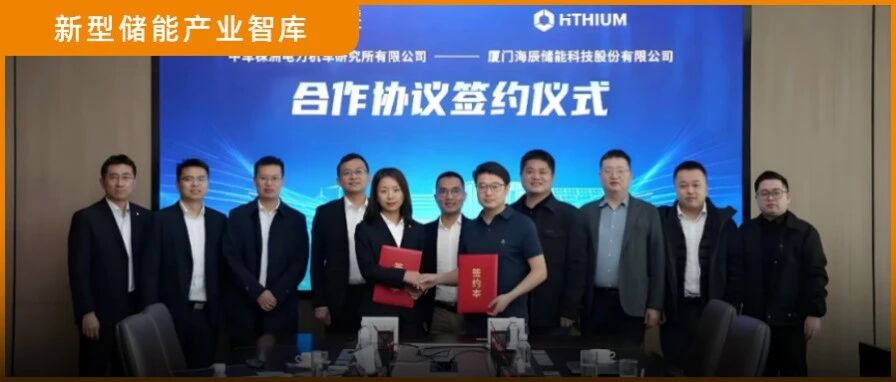
新型储能产业如何把握电力市场改革与数智化机遇?行家说储能正联合 中车株洲所、弘正储能、海辰储能、为恒智能、融和元储 等头部企业, 编 撰 《2025电力市场与数智化储能调研报告》,该报告将于1月8日行家说储能峰会上发布。欢迎更多企业参与,共抓产业风口。 继587Ah储能电芯已出货2GWh( 点这里 )后,宁德时代再传新订单,拿下 4GWh 储能系统协议。 ▋ 宁德时代供4GWh储能产品 日前,据外媒报道,宁德时代与新加坡可再生能源开发商 Vena Energy 签署了框架供应协议。根据该协议,宁德时代将向Vena Energy当地子公司PT Infrastruktur Terbarukan Sedaya提供4GWh的EnerX电池储能系统 (BESS) 解决方案。 ▋ 挖掘百亿市场,中企重码押注 数据显示,东南亚储能市场潜力巨大,预计规模将从2025年的35.5亿美元(约合人民币252亿元)增长至2030年的49.2亿美元(约350亿元人民币),东 盟区域装机量预计在2025年达到12GWh。 市场由各国碳中和目标及高比例可再生能源规划强力驱动,呈现鲜明特点: 此前,行家说储能整理了关于东南亚地区部分国家储能 ...
AI点燃史无前例的“电力需求周期”! 亚洲电网设备与储能股票站上超级风口
Zhi Tong Cai Jing· 2025-12-09 09:27
Core Insights - Citi's report highlights that the rapid expansion of AI data centers and the acceleration of global electrification will lead to a significant increase in global electricity demand, potentially creating a critical bottleneck for the expansion of AI technology and data centers [1] - The report emphasizes that the competition in AI is fundamentally a race for AI computing infrastructure, which relies heavily on a stable and large electricity supply [1] - Goldman Sachs has revised its forecast for global data center electricity demand by 2030, predicting it will exceed 945 terawatt-hours (TWh), driven primarily by AI applications [2] Group 1: Electricity Demand Drivers - The combination of AI data centers, electrification, and renewable energy integration is identified as the "triple driver" of electricity demand [3] - The demand for high-voltage transformers is significantly increasing due to AI data centers, grid reinforcement, and renewable energy integration [3] - The report indicates that the electrification and renovation of aging power grids will also create substantial demand for grid equipment [4] Group 2: Investment Opportunities - Asian markets are expected to benefit from a bull market trajectory in grid equipment and large-scale storage stocks, particularly high-voltage and ultra-high-voltage transformers [5] - Large-scale energy storage systems (ESS) will benefit from grid upgrades, renewable energy fluctuations, and backup power needs for data centers [6] - Companies like Sungrow Power Supply and Chung Hsin Electric are highlighted as key beneficiaries, with potential stock price increases of approximately 32% and 35% respectively [6]
ETF盘中资讯|如何利好光模块?英伟达获准,向中国出售H200芯片!寒武纪股价再超茅台,双创龙头ETF(588330)逆市涨超1.8%
Sou Hu Cai Jing· 2025-12-09 07:12
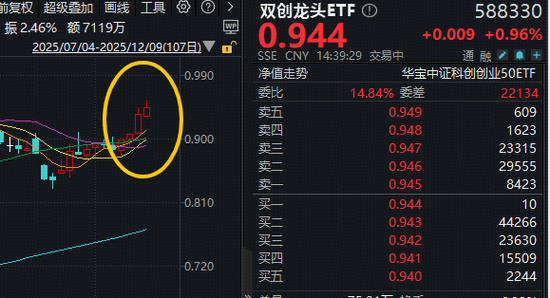
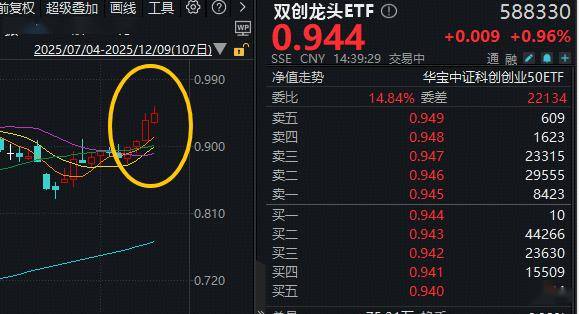
Core Viewpoint - The market is experiencing consolidation, with A-shares mainly in the red, while the "Double Innovation Leading" ETF (588330) is showing resilience, rising over 1.8% intraday and currently up 0.96%, indicating strong technical momentum and active trading with a transaction volume exceeding 71 million yuan [1]. Group 1: ETF Performance - The "Double Innovation Leading" ETF has shown a cumulative increase of 89.28% since its low on April 8, significantly outperforming major indices such as the ChiNext Index (76.53%), the Sci-Tech Innovation Index (54.39%), and the Sci-Tech 50 Index (46.16%) [5][6]. - The ETF is currently positioned above all moving averages, indicating strong upward momentum [1]. Group 2: Key Stocks Performance - Leading stocks within the ETF include Shenghong Technology, which surged by 8.15%, and major players in the optical module sector such as Zhongji Xuchuang and Xinye Sheng, which rose by 6.24% and 3.37% respectively [3]. - AI chip leader Cambricon Technologies saw a nearly 1% increase, surpassing Kweichow Moutai to become the highest-valued stock in A-shares [3]. Group 3: Market Trends and Insights - The demand for computing power is surging, leading to a supply gap in the optical module industry, with a significant increase in demand for 800G/1.6T optical modules associated with the H200 chip [4]. - Analysts predict that the optical module sector will benefit from the release of the H200 chip, which is expected to drive growth in shipment volumes and enhance product pricing due to technological upgrades [4]. - The "new quality productivity" sector is anticipated to experience substantial growth driven by technological breakthroughs, policy support, and commercial implementation, particularly in TMT and advanced manufacturing sectors [4].

反内卷与科技引领,触底反弹启新篇 | 投研报告
Zhong Guo Neng Yuan Wang· 2025-12-09 07:08
Core Viewpoint - The electric power equipment and new energy industry index is expected to accelerate its growth in the second half of 2025, with a year-to-date increase of 39.0%, ranking third among 29 industries that have seen index growth in 2025 [1][2]. Industry Overview - The new energy industry has gradually emerged from difficulties characterized by capacity expansion, supply-demand imbalance, plummeting product prices, and widespread corporate losses, supported by anti-involution policies [1][2]. - The industry is experiencing a rebalancing of supply and demand, with new technologies and market expansions driving demand [1][2]. Financial Performance - Overall industry profitability indicators have stopped declining, although the photovoltaic sector still faces significant profit pressure [3]. - Revenue has ceased its accelerated decline and is showing signs of a rebound entering 2025, while photovoltaic revenue continues to decline year-on-year [4]. - Net profit attributable to the parent company shows a rebound for lithium batteries, wind power, and power grids, while photovoltaic profits are declining at a slower rate, indicating signs of bottoming out [5]. Inventory and Capital Expenditure - The industry is in a destocking cycle, with significant alleviation of inventory risks; battery inventory has rebounded from its low point, while photovoltaic inventory continues to decrease [6][7]. - Absolute inventory values have significantly decreased from their peak, with battery inventory showing a notable rebound, while photovoltaic inventory is still rapidly declining [7]. - Capital expenditure, a key indicator for current investments, has been declining for batteries and photovoltaics since their peak in 2021, while wind power capital expenditure has rebounded from its low point [8]. Investment Trends - The electric new energy industry has experienced three years of volatility, with current fund holdings at historically low levels; as supply and demand recover and prices rebound, the investment value of the industry is increasing, indicating potential for fund holdings to rise [8]. - In Q3 2025, the electric new energy industry’s fund overweight ratio is 2.1%, significantly down from the 2022 peak and at a near five-year low [9]. - Among the top 15 companies by fund holdings in the electric new energy sector, nine are from the lithium battery supply chain, showing a strong correlation between institutional allocation trends and industry recovery [9]. - Leading companies like CATL have seen their fund holding ratio increase by 4.62 percentage points to 9.06% in Q3 2025, with an overweight ratio of 7.22%, indicating enhanced investment attractiveness due to performance and growth certainty [9].
11月国内光伏组件产量环比下降,储能电芯延续高景气态势 | 投研报告
Zhong Guo Neng Yuan Wang· 2025-12-09 07:02
Core Viewpoint - The photovoltaic and energy storage industry is experiencing a decline in production and demand, with domestic and international markets showing signs of weakness, leading to adjustments in production plans and pricing strategies [1][2]. Production - Photovoltaic module production in November 2025 decreased by 2.43% compared to October, with domestic installation progress in December falling short of expectations, leading to increased inventory levels [1][2]. - In December 2025, the production forecast for China's market of power, storage, and consumer batteries is 220 GWh, a 5.3% increase month-on-month, with energy storage batteries accounting for approximately 35.3% of this production [2]. Pricing - As of December 3, 2025, the price of polysilicon remained stable at 52.00 CNY/kg, while the average price of 183N monocrystalline silicon wafers decreased slightly to 1.18 CNY/piece [3]. - The average bid price for lithium iron phosphate battery storage systems in October 2025 was 0.5547 CNY/Wh, reflecting a 10% increase month-on-month [3]. Demand - In October 2025, the export value of photovoltaic modules was approximately 2.258 billion USD, a year-on-year increase of 4.39% but a month-on-month decrease of 19.34% [4]. - Domestic photovoltaic installations in October 2025 reached 12.6 GW, a month-on-month increase of 30.4%, while cumulative installations for the year totaled 252.87 GW, a year-on-year increase of 39.5% [4]. Investment Recommendations - The report suggests focusing on companies related to photovoltaic and energy storage sectors, recommending stocks such as Sungrow Power Supply (300274.SZ), Narada Power Source (300068.SZ), and others [5].


如何利好光模块?英伟达获准,向中国出售H200芯片!寒武纪股价再超茅台,双创龙头ETF(588330)逆市涨超1.8%
Xin Lang Cai Jing· 2025-12-09 06:56
今日(12月9日)市场盘整,A股主要指数大多飘绿,百分百布局新质生产力的硬科技宽基——双创龙 头ETF(588330)逆市活跃,场内价格盘中涨超1.8%,现涨0.96%,冲击日线4连涨,当前居于所有均 线上方,技术面上行动能较强,实时成交额超7100万元,交投火热。 | 前屋权 超级香加 圆线 丁具 Q (2) | 双创龙头ETF ① | | 588330 | | --- | --- | --- | --- | | 振 2.46% 额 7119万 2025/07/04-2025/12/09(107日)▼ | | +0.009 +0.96% | | | | E CNY 14:39:29 交易中 | | 通融/ ● 十 | | 0.990 | 你们是我 | 华宝中证科创创业50ETF | | | | 三十 14.84% == | | 22134 | | 0.900 | 0.949 | | ୧୦୪ 1623 | | | 0.948 | | | | | 0.947 | | 23315 | | | 0.946 | | ટ્રેન્ટર | | | 0.945 | | 8423 | | 0.810 | 0.944 | | ...