
北方稀土

Search documents
有色牛市全面开花
2025-11-03 02:35
Summary of Conference Call Notes Industry Overview - The conference call discusses the non-ferrous metals market, particularly focusing on copper, lithium, cobalt, rare earths, and aluminum sectors [1][2][3]. Key Points and Arguments Copper Market - The copper market is facing supply tightness, with several mining companies lowering production guidance, leading to a year-on-year production decline of approximately 104,000 tons in Q3 2025, potentially reaching 150,000 tons by year-end [3][4]. - The anticipated new supply for 2026 is limited to about 300,000 tons, with Freeport's recovery not meeting expectations, which could exacerbate supply issues [4]. - Demand for copper remains strong, driven by a 4% year-on-year increase in electricity consumption in the U.S., particularly in power equipment [6]. - Copper prices are expected to break through the $14,000 to $15,000 per ton range by early 2026 [7]. Rare Earths - The relaxation of rare earth export controls is expected to lead to significant overseas restocking, replicating the substantial export increases seen in Q3 2025 [1][9]. - Domestic regulations on imported ore smelting are tightening, with non-compliant smelting plants facing consolidation or shutdown, which will support the fundamentals of the rare earth market [10]. - Key companies recommended include China Rare Earth and Guangsheng Nonferrous [10]. Lithium Market - The lithium market is projected to shift from marginal oversupply to tightness, with expected storage demand growth of 80% in 2026 [11]. - Following a production halt by CATL, inventory depletion has been significant, with weekly reductions increasing from 1,000 tons to 3,000 tons due to surging storage orders [12]. - Companies to watch include Guocheng Mining, Dazhong Mining, and Shengxin Lithium Energy, which are expected to benefit from price increases [12]. Cobalt Market - Cobalt prices are anticipated to rise, despite a current price drop to around 400,000 yuan, primarily due to supply constraints from the Democratic Republic of Congo [14]. - The industry is expected to face a shortage of 20,000 to 30,000 tons of raw materials in 2026, pushing prices higher [14]. - Companies of interest include Huayou Cobalt, Li Qun Co., and Tengyuan Technology [15]. Nickel Market - The nickel market is closely tied to Indonesia's RKA B quota disclosures, as Indonesia controls 60% of global nickel supply [16]. - A lower-than-expected quota could lead to a slight increase in nickel prices, which are currently supported at $15,000 per ton [16]. Aluminum Market - The aluminum sector is experiencing upward momentum due to multiple catalysts, including potential shutdowns of major production facilities in the U.S. and Mozambique [17][18]. - China's aluminum exports account for nearly 40%, and the outlook for external demand is optimistic, particularly following recent monetary easing in the U.S. and Europe [18]. Additional Important Insights - The overall sentiment in the metals market is bullish, with expectations of a comprehensive bull market for both non-ferrous and ferrous metals in 2026 [2]. - The focus on energy transition and technological advancements in mining and smelting processes is expected to influence supply dynamics significantly [5][10].


美联储降息逼疯金属!铜破1.1万、银冲50,普通人该囤点啥?
Sou Hu Cai Jing· 2025-11-02 17:37
Core Viewpoint - The recent surge in metal prices, particularly copper and cobalt, is driven by genuine demand and supply chain disruptions, rather than speculative trading. This situation reflects a broader geopolitical struggle over critical resources essential for the fourth industrial revolution, including AI and renewable energy technologies [4][5][25]. Group 1: Metal Price Trends - As of the end of October, copper prices reached $10,807 per ton, nearing Goldman Sachs' prediction of $11,000, while electrolytic cobalt surged by 16.6% in two weeks, exceeding 400,000 yuan per ton [1][4]. - The metal index experienced a slight decline of 0.42% at the end of October, but trading volume remained high at over 17 million contracts, indicating ongoing market activity [1]. Group 2: Supply and Demand Dynamics - The demand for metals is significantly influenced by the rise of AI and renewable energy, with copper being crucial for electrical infrastructure, particularly for AI data centers [6][7]. - A major supply disruption occurred at the Grasberg copper mine in Indonesia, which announced a significant reduction in output due to an accident, leading to a loss of over 20,000 tons of copper in the global market [7][10]. - The solar industry is driving silver prices up, with projections indicating that solar demand will account for half of global silver needs by 2030, resulting in a shortfall of 14,000 tons annually [8][9]. Group 3: Geopolitical Implications - The competition for metal resources has escalated into a strategic battle among nations, with G7 countries forming alliances to reduce dependency on China for critical minerals [13][14]. - The U.S. has threatened to impose a 50% tariff on imported copper to boost domestic production, while the EU has initiated strategic projects to secure lithium, nickel, and cobalt resources [13][14]. Group 4: Resource Control by Smaller Nations - Many resource-rich countries are implementing export controls to increase their bargaining power, with nations like the Democratic Republic of Congo and Ghana taking steps to limit foreign ownership and enhance local processing capabilities [15][16]. - Natural disasters and local policies are further complicating the supply chain, as seen with the impact of heavy rains in Congo and labor strikes in Australia [17]. Group 5: China's Strategic Position - China has significantly increased its lithium reserves, now holding 16.5% of global lithium resources, and has made substantial discoveries of gold and uranium, enhancing its resource base [19][21]. - Chinese companies are actively acquiring overseas mining assets and establishing processing facilities to secure supply chains and increase the value of raw materials [21][22]. - China holds a competitive edge in technology related to rare earths and battery production, with new regulations aimed at controlling the export of products containing Chinese rare earth elements [22][23].

锂辉石价格连续2个月上涨,六氟磷酸锂价格创近2年新高:金属新材料高频数据周报(20251027-20251102)-20251102
EBSCN· 2025-11-02 12:24
Investment Rating - The report maintains a rating of "Overweight" for the non-ferrous metals sector [5] Core Insights - Lithium prices have reached approximately 74,000 CNY/ton, with potential short-term increases due to supply disruptions from mines like Zangge Mining [4] - The report suggests focusing on companies with cost advantages and resource expansion potential in the lithium mining sector, such as Salt Lake Co., Zangge Mining, and Tianqi Lithium [4] - Cobalt prices are rising, indicating a positive outlook for companies like Huayou Cobalt [4] - Tungsten prices remain at high levels, with recommendations for companies like Zhangyuan Tungsten and Zhongtung High-tech [4] - Neodymium oxide prices are at a 19-month high, suggesting investment in Northern Rare Earth and Shenghe Resources [4] Summary by Sections Non-Ferrous Metals - Lithium concentrate prices have increased to 870 USD/ton, up 9.43% week-on-week [1] - The price of lithium hexafluorophosphate has risen by 23.6% to 107,500 CNY/ton, with a gross profit margin of 28.1% [43] - Cobalt sulfate price remains stable at 89,900 CNY/ton, with a gross profit margin of 0.0% [36] New Energy Vehicle Materials - The price of lithium iron phosphate has increased by 7.04% to 358,000 CNY/ton, with a gross profit margin of -0.24 CNY/ton [38] - The production of new energy vehicles reached 1.6169 million units in September 2025, a year-on-year increase of 23.7% [22] Military New Materials - Electrolytic cobalt price is 394,000 CNY/ton, down 1.0% week-on-week, indicating a potential decline in military material demand [9] - The price ratio of electrolytic cobalt to cobalt powder is 0.79, down 2.0% [10] Photovoltaic New Materials - The price of EVA has decreased by 1.8% to 10,700 CNY/ton, remaining at a low level since 2013 [2] - The price of photovoltaic-grade polysilicon is 6.50 USD/kg, down 0.2% [2] Other Materials - The price of rhodium has increased by 2.4% to 21,650 CNY/kg, indicating a positive trend in precious metals [3]
出口管制暂缓实施,稀土涨价可期
Guotou Securities· 2025-11-02 09:02
Investment Rating - The industry is rated as "Outperforming the Market" [4] Core Views - The report highlights a favorable macroeconomic environment for industrial and precious metals due to the Federal Reserve's interest rate cuts and the suspension of export controls by the U.S. and China, which is expected to boost demand for rare earths and other metals [1][2][8] - There is an optimistic outlook for metals such as rare earths, copper, aluminum, tin, silver, cobalt, tantalum, and uranium, driven by low inventory levels and anticipated replenishment demand [1][8] Summary by Sections Precious Metals - Gold and silver prices have shown fluctuations, with COMEX gold at $3995.7/oz and silver at $48.7/oz, reflecting a -3.08% and +0.57% change respectively [2] - Global gold demand reached 1313 tons in Q3 2025, with investment demand up by 47% year-on-year [2] - The report suggests a long-term bullish trend for gold prices, supported by central bank and ETF buying [2] Industrial Metals Copper - LME copper closed at $10,892/ton, with a slight decrease of 1% from the previous week [2] - The report notes a stable supply situation with controlled production capacity and a demand-side focus on essential procurement [2][3] - Social copper inventory stood at 182,600 tons, with a slight increase, while LME inventory decreased [2] Aluminum - LME aluminum was priced at $2888.0/ton, showing a 0.33% increase [3] - The report indicates limited changes in domestic electrolytic aluminum production capacity, with overseas production cuts contributing to supply tightness [3][7] - Domestic electrolytic aluminum social inventory decreased to 619,000 tons [7] Tin - The report mentions that tin prices remained stable, with the main contract at 283,910 yuan/ton [7] - There is an expectation of increased demand from the electronics sector due to the Fed's rate cuts [7] Strategic Metals Rare Earths - Prices for praseodymium and neodymium oxides were reported at 536,500 yuan and 6,625,000 yuan respectively, with a 7% increase for praseodymium [8] - The suspension of export controls is expected to enhance demand for rare earths, leading to a potential price recovery [8] - The report anticipates a gradual bullish trend for rare earths driven by replenishment demand [8] Cobalt - Cobalt prices remain around 400,000 yuan/ton, with a tight supply situation expected to persist [8] - The report highlights a bullish outlook for cobalt prices due to ongoing supply constraints [8]
【转|太平洋有色新材料-北方稀土深度】资源与技术优势,卡位高质量发展
远峰电子· 2025-11-02 08:07
Core Viewpoint - The article emphasizes the growth potential of the rare earth industry, particularly focusing on the company's strategic positioning and product development in response to increasing demand across various sectors, including electronics, robotics, and renewable energy [2][4][19]. Company Overview and Financial Data - The company, China Northern Rare Earth Group, has a rich history dating back to 1927, evolving through four strategic phases: foundational research, industrial expansion, full industry chain integration, and high-quality development [4]. - As of 2024, the company has 28 first-level subsidiaries and 17 second-level subsidiaries, covering all aspects of rare earth mining, separation, processing, and material manufacturing [8]. - The company achieved a total rare earth mining quota of 188,700 tons in 2024, maintaining a 69.9% share of the national quota [13]. Product and Revenue Structure - The company produces over 100 types of rare earth products, categorized into raw materials, functional materials, and end-use products [10]. - In 2024, the company reported a revenue of 32.97 billion yuan, a slight decrease of 1.58% year-on-year, with a net profit of 1.004 billion yuan, down 57.64% due to fluctuating prices of key products [15][19]. - The revenue structure shows a clear focus on rare earth products, which accounted for 72.25% of total revenue in 2024, while environmental services grew significantly [19]. Market Demand and Applications - The demand for rare earth materials is driven by their applications in consumer electronics, electric vehicles, and renewable energy technologies, with significant growth expected in the automotive sector [52][55]. - The company is positioned to benefit from the increasing demand for rare earth permanent magnets, particularly in electric vehicles and energy-efficient appliances [55][62]. Price Trends and Cost Structure - Rare earth prices have shown volatility, with significant price increases for key products like praseodymium and neodymium oxides in 2024, which positively impacted the company's profitability [28][15]. - The cost structure indicates that raw material costs account for approximately 70% of total costs, with ongoing efforts to optimize production costs [25]. Global Industry Context - China remains the largest supplier of rare earths globally, with a significant share of the world's reserves and production capacity [33][36]. - The article highlights the increasing competition from international players, particularly in the U.S. and Australia, as they ramp up their rare earth production capabilities [39][43]. Future Outlook - The company is optimistic about the future of the rare earth industry, projecting continued growth in net profits from 2025 to 2027, driven by rising demand and improved operational efficiencies [2][19]. - The strategic focus on high-quality development and technological innovation positions the company favorably within the global rare earth supply chain [4][19].

阅峰 | 光大研究热门研报阅读榜 20251026-20251101
光大证券研究· 2025-11-02 00:05
Group 1 - The article discusses the advantages of Solid State Transformers (SST) over traditional transformers, highlighting their potential as the ultimate solution for AIDC power distribution architecture [3] - It mentions that NVIDIA is committed to using SST technology as a future-oriented facility distribution solution, indicating a trend towards advanced power management systems [3] - Domestic power equipment companies are currently developing SST products, and the supply chain for SST components in China is expected to support overseas power equipment firms [3] Group 2 - The article provides a quarterly report on Joybird (002154.SZ), noting a year-on-year decline in revenue and net profit for the first three quarters, with a slight recovery in Q3 [8] - It adjusts the profit forecast for Joybird for 2025-2027, estimating net profits of 330 million, 372 million, and 419 million yuan respectively [8] - The report on Weixing Co. (002003.SZ) indicates a year-on-year revenue growth of 1.5% in Q3, with a slight decline in net profit, and a minor adjustment in profit forecasts for the next three years [15] Group 3 - The analysis of Wanhu Chemical (600309.SH) highlights steady growth in production and sales of polyurethane, with significant increases in petrochemical and fine chemical products due to new capacity releases [22] - The forecast for Wanhu's net profit for 2025-2027 is set at 12.8 billion, 16 billion, and 18.9 billion yuan, reflecting a positive outlook for the company [22] - The report on Kuozi Wine (603589.SH) shows a significant decline in revenue and net profit for the first three quarters, with projections for earnings per share for 2025-2027 [27] Group 4 - The article discusses the performance of the non-ferrous metals sector, noting a 1.43 percentage point increase in the holdings of non-ferrous metal stocks by active equity funds in Q3 [30] - It highlights increased investments in copper and tin, suggesting a bullish outlook for these metals due to supply support and potential price increases [30] - Recommendations include companies like Zijin Mining and China Hongqiao, indicating a strategic focus on key players in the non-ferrous metals market [30]

机构本周首次青睐87只个股



Di Yi Cai Jing· 2025-11-01 11:37
Group 1 - A total of 87 stocks were newly covered by institutions this week, with 14 stocks receiving target prices [1] - Naxin Micro was rated "Accumulate" by Guoyuan Securities with a target price of 207 CNY, while its latest closing price was 172.06 CNY [1] - Tengjing Technology received a "Buy" rating from Guojin Securities with a target price of 146.9 CNY, compared to its latest closing price of 109.63 CNY [1] Group 2 - Other notable stocks include Kingsoft Office, Desay SV, Dazhu CNC, and Northern Rare Earth, which were also mentioned in the report [1] - The report includes a detailed table of stocks with their respective institutions, research dates, latest ratings, target prices, and latest closing prices [2] - For instance, Kexin New Source was rated "Buy" by Guotai Junan Securities with a target price of 66.86 CNY, while its latest closing price was 42.73 CNY [2]
美国懵了:自家稀土堆成山,为啥偏要抢中国的?70年逆袭内幕曝光
Sou Hu Cai Jing· 2025-11-01 11:10
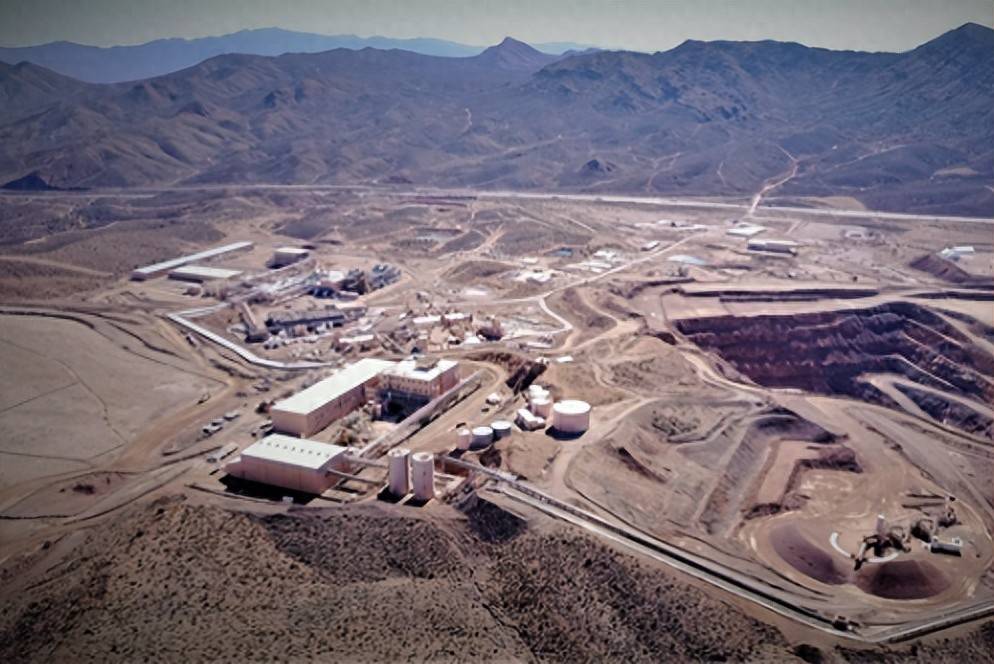
Core Insights - The U.S. is heavily reliant on China for rare earth elements, with 85% of its refined production controlled by China, despite having significant domestic reserves [2][20] - China's dominance in the rare earth market is attributed to technological advancements and strategic industry consolidation over decades [10][14] - The U.S. has struggled to revitalize its rare earth production due to high costs and regulatory challenges, leading to a significant dependency on Chinese processing capabilities [6][18] Group 1: U.S. Rare Earth Production Challenges - The U.S. produced only 43,000 tons of rare earths in the previous year, ranking second globally, but still relies on China for 85% of its processing [2][18] - The Mountain Pass mine, once a leading producer, has faced operational delays and is not expected to be fully operational until late 2024 [6][18] - The U.S. has invested heavily in reviving its rare earth industry, but technological barriers remain high, with 95% of heavy rare earth separation still occurring in China [20] Group 2: China's Strategic Position - China holds nearly 50% of the world's rare earth reserves, with a production forecast of 270,000 tons in 2024, accounting for 69.2% of global output [8][18] - The development of advanced extraction techniques, such as the cascade extraction method, has allowed China to dominate the market with lower costs and higher purity [10][12] - China's rare earth industry has evolved from exporting raw materials to controlling the entire supply chain, including mining, refining, and recycling [16][22] Group 3: Historical Context and Market Dynamics - Historically, China struggled with low profits from rare earth exports, often selling raw materials at low prices while relying on foreign processing [4][14] - The U.S. once dominated the rare earth market in the 1950s but lost its competitive edge due to environmental regulations and rising operational costs [6][20] - The consolidation of China's rare earth industry in the late 1990s and early 2000s, including the establishment of export quotas, has solidified its market leadership [14][16]
【31日资金路线图】医药生物板块净流入155亿元居首 龙虎榜机构抢筹多股
Zheng Quan Shi Bao· 2025-10-31 11:53
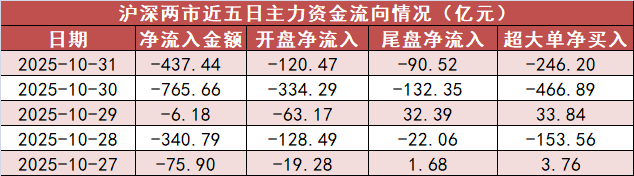
Market Overview - The A-share market experienced an overall decline on October 31, with the Shanghai Composite Index closing at 3954.79 points, down 0.81%, the Shenzhen Component Index at 13378.21 points, down 1.14%, and the ChiNext Index at 3187.53 points, down 2.31%. The North Star 50 Index increased by 1.89% [1] - Total trading volume in the A-share market was 23501.16 billion, a decrease of 1144.6 billion compared to the previous trading day [1] Capital Flow - The main capital outflow from the A-share market was 437.44 billion, with an opening net outflow of 120.47 billion and a closing net outflow of 90.52 billion [2] - The CSI 300 index saw a net outflow of 255.4 billion, while the ChiNext and STAR Market experienced net outflows of 162.56 billion and 57.19 billion, respectively [4] Sector Performance - The pharmaceutical and biotechnology sector led with a net inflow of 155.42 billion, marking a 2.72% increase [6][7] - Other sectors with significant inflows included media (96.02 billion, up 2.98%), computer (92.13 billion, up 1.81%), food and beverage (38.11 billion, up 1.49%), and retail (25.35 billion, up 1.55%) [7] - Conversely, the electronics sector faced the largest outflow at 278.68 billion, down 0.73%, followed by non-ferrous metals at 128.48 billion, down 1.03% [7] Institutional Activity - Oriental Precision Engineering saw the highest net inflow of 12.45 billion [8] - Institutions were active in several stocks, with notable net purchases in Zejing Pharmaceutical (206.78 million) and Shutai Shen (198.10 million) [10][11] Stock Recommendations - Recent institutional focus includes China Life Insurance with a target price of 10.40, indicating a potential upside of 23.22% from the latest closing price [12] - Other stocks with buy ratings include Shanghai Bank (target price 12.02, upside 26.66%) and Yuyue Medical (target price 45.47, upside 26.20%) [12]
布局稀缺性:解码稀有金属与稀土的投资密码
2 1 Shi Ji Jing Ji Bao Dao· 2025-10-31 11:27
Core Insights - The establishment of the "Rare Earth ETF" and "Rare Metal ETF" by Jiashi Fund has transformed the value logic of scarce resources into tradable products, allowing ordinary investors to access investment opportunities in the global industrial chain restructuring [1][3] - As of October 2025, the Rare Earth ETF and Rare Metal ETF have seen significant price increases of 81% and 76% respectively, outperforming many other ETFs in the market [1] - The third-quarter profits for the Rare Earth ETF and Rare Metal ETF were reported at 1.634 billion and 542 million respectively [1] Group 1: Scarcity and Strategic Importance - Rare resources are gaining attention due to their dual labels of "scarcity" and "strategic importance," serving as the "blood" of the new energy industry and the "core" of high-end manufacturing [3] - The demand for rare metals is driven by emerging industries such as new energy, semiconductors, and aerospace, which are experiencing high growth [5][8] Group 2: ETF Composition and Investment Focus - The Rare Earth ETF focuses on rare earth elements, while the Rare Metal ETF encompasses a broader category of metals, including lithium, titanium, and tungsten [4][6] - The investment focus of the Rare Metal ETF is on emerging industries, while the Rare Earth ETF emphasizes the irreplaceability of rare earth elements in high-tech industries [5][6] Group 3: Market Dynamics and Future Outlook - The prices of key rare earth products have been rising significantly, with some experiencing price increases of 60%-90% this year, indicating a "golden era" for the rare earth sector [7] - China's export controls on rare earth technologies are tightening, further emphasizing the strategic importance of these resources in national security [7][8] - The demand for high-performance rare metal materials is expected to continue rising, particularly in sectors like satellite manufacturing and deep-sea exploration [8]
