极氪

Search documents
QuestMobile 2025汽车消费市场洞察报告:年轻化、下沉化成消费新趋势,跨代际、区域迭代成车企营销突破口
QuestMobile· 2025-05-20 01:59
Core Insights - The article highlights the robust growth of the automotive consumption market in China, particularly focusing on electric and smart vehicles, driven by favorable government policies and changing consumer demographics [2][8][9]. Group 1: Market Trends - As of March 2025, the monthly active users of smart automotive apps reached 86.27 million, with an average usage frequency of 47.5 times per user [2]. - The monthly active users of various new energy vehicles exceeded 30 million, with pure electric vehicles accounting for over 20 million [15][18]. - The trend of younger consumers purchasing cars is evident, with 48.2% of new app installations among users born in the 1990s and 2000s, reflecting a 4.7% year-on-year increase [3][40]. Group 2: Policy Impact - The continuation of government subsidies and tax exemptions for new energy vehicles in 2025 is expected to sustain consumer enthusiasm for car purchases [8][9]. - Policies promoting automotive consumption, such as trade-in programs and tax reductions, have been implemented, contributing to a strong market demand [9][12]. Group 3: Consumer Behavior - The automotive consumer base is increasingly younger, with significant growth in the number of users from third-tier cities, which now account for 46.6% of new app installations [3][45]. - There is a notable generational difference in purchasing preferences, with younger consumers favoring technology and trends, while older generations prioritize quality and practicality [43][45]. Group 4: Digital Transformation - The digitalization of automotive services is deepening, with 346 million monthly active users in automotive service apps, including significant numbers for services like traffic violation checks and car information [4][21]. - The importance of digital services in the automotive market is growing, despite a slowdown in user growth rates for service apps [21]. Group 5: Competitive Landscape - BYD dominates the market for vehicles priced below 200,000 yuan, while the segment above 200,000 yuan sees diverse competition from brands like Tesla and emerging players like Xiaomi and Xpeng [18]. - The automotive industry is experiencing structural changes, with a decline in traditional fuel-related app usage and a surge in demand for new energy charging platforms [49]. Group 6: Marketing Strategies - Automotive brands are shifting their advertising strategies towards vertical media and social platforms, focusing on technology rather than price competition [22][23]. - The rise of KOLs (Key Opinion Leaders) in new media platforms is enhancing brand visibility and consumer engagement [29].


极氪不到一年拟退市,吉利要下盘大棋
3 6 Ke· 2025-05-20 00:55
Group 1 - Zeekr has initiated the process of privatization following a proposal from its controlling shareholder, Geely Automobile, marking its return to the Geely system [1] - Geely currently holds 65.7% of Zeekr's shares, and if the acquisition of the remaining shares is completed, Zeekr will become a wholly-owned subsidiary and delist from the stock market [1][4] - The return of Zeekr aligns with Geely's historical strategic logic, as the company previously unified its sub-brands to enhance competitiveness [1][4] Group 2 - Zeekr's sales performance has been declining, with the flagship model Zeekr 001's sales dropping from 4,359 units in January to 2,976 units in March 2024 [3] - In April 2024, Zeekr's total deliveries fell to 13,727 units, a year-on-year decrease of 15% and a month-on-month decrease of 11% [3] - The company aims to achieve a sales target of 320,000 units for the year but has only completed 17.22% of this target by April [3] Group 3 - Following its listing on the New York Stock Exchange, Zeekr's stock price fluctuated between $20 and $30, with a low of $13 per share, resulting in a market capitalization of $3.3 billion [4] - The company has faced significant net losses from 2021 to 2024, totaling over 26 billion yuan, which has led to a cycle of financial constraints [5] - Geely's cash flow was reported at 43.6 billion yuan by the end of 2024, indicating its capacity to finance the acquisition of Zeekr [6] Group 4 - The integration of Zeekr and Lynk & Co has led to a reduction in product offerings by 20% and aims to streamline operations and reduce costs [10] - The first quarter of 2025 saw Zeekr's costs decrease to 17.8 billion yuan, down 2.4% year-on-year and 38.6% quarter-on-quarter [11] - The merger is seen as a critical step for Geely to enhance its competitiveness in the rapidly evolving electric vehicle market [12]

增程+插混占比超50%,新能源车市“销量与减碳”如何兼得?
3 6 Ke· 2025-05-19 09:50
Core Insights - In 2025, China's new energy vehicle (NEV) market is expected to reach a structural turning point, with range-extended and plug-in hybrid vehicles accounting for over 50% of the market share, driven by models like the Wanjie M8 and Avita 06 [1] - The sales of new energy vehicles in 2024 are projected to reach 11.26 million units, with range-extended and plug-in hybrid vehicles contributing 4.52 million units, showing an impressive year-on-year growth of 85.2% compared to 15% for pure electric vehicles [1] - The market is experiencing a deep competition phase regarding technology routes, raising questions about whether range-extended and plug-in hybrid technologies are practical choices for carbon neutrality or merely transitional solutions [1] User Demand and Technological Benefits - The pursuit of a "no-anxiety experience" is a core driver for consumers, with range-extended vehicles meeting both low-cost urban commuting needs and long-distance travel concerns [3] - For instance, the Li Auto L series boasts a comprehensive range exceeding 1000 km, with a cost of less than 0.1 yuan per kilometer in pure electric mode, appealing to family users [3] - Plug-in hybrid vehicles, like BYD's DM-i, maintain fuel consumption below 3L/100km even in depleted states, balancing performance and economy [3] Technological Breakthroughs - The range-extended structure has lower R&D costs (40% less than plug-in hybrids) and production line transformation costs (one-third of plug-in hybrids), facilitating rapid market entry for new players [5] - Li Auto achieved over 500,000 annual sales in 2024 with a single range-extended model, while the Wanjie M7 surpassed 190,000 units in deliveries, validating the commercial viability of this approach [5] - Plug-in hybrid technology has also seen significant sales, with BYD's DM-i models exceeding one million units, showcasing strong market penetration across various vehicle segments [5] Environmental Concerns and Technological Debate - The rise in sales of hybrid vehicles has intensified debates over technology routes, with range-extended technology facing criticism for higher energy consumption and carbon emissions compared to plug-in hybrids [6] - Critics argue that the two-step energy conversion process of range-extended vehicles is less efficient, while proponents highlight their fuel-saving potential of 30%-50% in less developed areas [6] - The market is navigating a balance between ideal environmental goals and real user needs, as highlighted by industry experts [6] Strategic Choices of Automakers - New entrants like Li Auto and Wanjie are leveraging range-extended technology to establish market recognition, while traditional automakers focus on plug-in hybrid technologies [7] - The differentiation in strategies reflects a broader trend of technological convergence, with companies like Li Auto introducing pure electric models and BYD integrating high-voltage platforms with hybrid technologies [9] Future Outlook - The potential widespread adoption of 800V platforms could mitigate the refueling disadvantages of hybrid vehicles, although it may increase costs due to the need for upgraded components [11] - Solid-state batteries are anticipated to revolutionize pure electric vehicle range by 2027, posing challenges to the transitional status of range-extended and plug-in hybrid technologies [11] - The consensus in the industry suggests that hybrid technologies will remain mainstream from 2025 to 2030, as they address user needs while filling gaps left by pure electric vehicles [12]



从极氪科技(ZK.US)财报看行业分化:盈利能力持续增强,验证强者恒强逻辑
Ge Long Hui· 2025-05-19 09:34
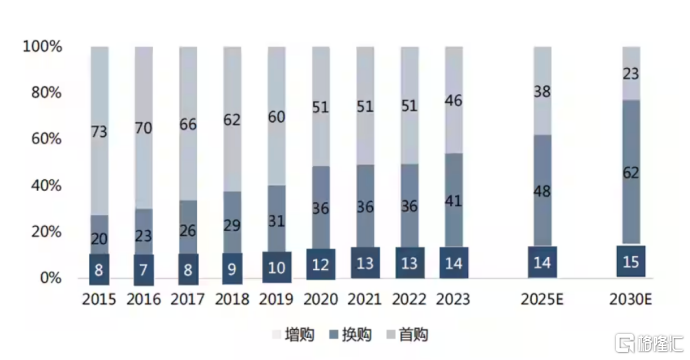
Core Viewpoint - The domestic automotive market in 2024 is characterized by "differentiation," with the new energy vehicle (NEV) sector showing a dual differentiation in sales and profits, highlighting the importance of identifying long-term players amidst rapid market changes [1] Group 1: Company Performance - Zeekr Technology reported Q1 2025 total revenue of 22 billion yuan, with vehicle sales revenue of 19.1 billion yuan, a year-on-year increase of 16.1% [1] - The gross margin for vehicle sales reached 16.5%, up by 3.4 percentage points year-on-year, while the comprehensive gross margin hit a historical high of 19.1% [1] - Zeekr Technology achieved a profit of 510 million yuan in Q1, marking three consecutive quarters of profitability [1] Group 2: Market Positioning - Zeekr and Lynk & Co have clear brand positioning, with Zeekr focusing on the luxury market above 300,000 yuan and Lynk & Co targeting the high-end market above 200,000 yuan [2] - The sales volume for Zeekr Technology reached 114,011 units in Q1, with April sales at 41,316 units, reflecting a year-on-year growth of 18.7% [2] - The product matrix includes models like Zeekr 001, 009, 007GT, and Lynk & Co 900, which have significant market influence [2] Group 3: Consumer Trends - The future of the automotive market is expected to see a shift towards replacement purchases, with an estimated 80% of car buyers opting for upgrades by 2030 [4] - The Z generation, comprising 250 million people with a consumption scale of 5.97 trillion yuan, is emerging as a key demographic for the NEV market [4] - The Zeekr 007GT is positioned as a luxury tech vehicle for young consumers, addressing diverse needs such as personal enjoyment and family travel [4] Group 4: Technological Innovation - Zeekr Technology is enhancing its competitive edge through technological advancements, including the "Qianli Haohan" intelligent driving solution and the integration of the Thor chip in new models [7] - The company is addressing consumer concerns about range anxiety with the "Shen Dun Jin Zhuang" battery technology, which will undergo further upgrades this year [7][8] - Zeekr is also improving charging efficiency and building an ecological charging network to enhance user experience [8] Group 5: Global Expansion - Zeekr has established a positive reputation in emerging markets such as Hong Kong, Macau, and Southeast Asia, while Lynk & Co has been successful in the European market [8] - The integration of resources between Zeekr and Lynk & Co is expected to enhance product offerings in terms of quality, technology, and cost [8] - The current era presents both opportunities and challenges for the NEV industry, with a focus on companies that can achieve sustainable growth through scale, technology, and ecosystem [8]
汽车行业周报:汽车两新补贴申请量突破1000万份,地平线发布L2城区辅助驾驶HSD
Southwest Securities· 2025-05-19 04:53
Investment Rating - The report maintains an "Outperform" rating for the automotive industry as of May 18, 2025 [1] Core Insights - The automotive industry is experiencing a positive retail trend, with passenger car retail sales reaching 574,000 units from May 1 to May 11, 2025, representing a year-on-year increase of 12% and a month-on-month increase of 34% [7][61] - The cumulative retail sales for the year have reached 7.446 million units, showing an 8% year-on-year growth [61] - The report highlights the significant impact of the "old-for-new" vehicle subsidy policy, with applications exceeding 10 million since its implementation in 2024, and 3.225 million applications recorded by May 11, 2025 [7][48] - The report emphasizes advancements in smart vehicles, particularly the launch of Horizon's L2 urban assisted driving system, which is expected to enhance vehicle computing platforms [7][64] Summary by Sections Passenger Vehicles - Retail sales for passenger vehicles from May 1 to May 11, 2025, were 574,000 units, up 12% year-on-year and 34% month-on-month [61][62] - Cumulative wholesale for the year reached 8.932 million units, with a 12% year-on-year increase [62] - Key companies to watch include BYD, Geely, Xpeng, SAIC, Changan, GAC, and Leap Motor [62] New Energy Vehicles - Retail sales of new energy passenger vehicles reached 294,000 units from May 1 to May 11, 2025, marking a 32% year-on-year increase [63] - The retail penetration rate for new energy vehicles is 51.3%, with cumulative sales of 3.618 million units for the year, reflecting a 35% year-on-year growth [63] - Recommended companies include BYD, Geely, Huayu Automotive, and others [63] Smart Vehicles - The report discusses the launch of Horizon's L2 urban assisted driving system, which will be mass-produced in September 2025 [64] - Companies with technological advancements in smart driving algorithms and sensors are highlighted, including BYD, Geely, and various component manufacturers [64] Heavy Trucks - In April, heavy truck sales were approximately 88,000 units, with a year-on-year increase of 6.5% [11][65] - The report notes a significant rise in new energy heavy truck sales, which reached 15,800 units, a 245% year-on-year increase [11][65] - Companies to monitor include Weichai Power, China National Heavy Duty Truck Group, and Tianrun Industrial [65] Robotics - The report mentions the "Digital China Construction 2025 Action Plan," which aims to enhance AI applications and develop intelligent manufacturing equipment [66] - Companies involved in humanoid robotics and AI technology are recommended, including Top Group, Sanhua Intelligent Controls, and others [66]



5月汽车终端景气度草根结论汇报
2025-05-18 15:48
Summary of Conference Call Records Industry Overview - The automotive industry is experiencing a seasonal decline post-May Day, with increased consumer hesitation leading to longer purchase decision cycles. The competition from models like Zeekr 007GT against Tesla Model 3 and Galaxy models against BYD is notable, but overall performance aligns with expectations [1][4] Key Insights on Passenger Vehicle Market - The passenger vehicle market's inventory remains stable with moderate price competition. BYD's smart driving models are seeing increased discounts to reduce inventory, while Li Auto's new models are enhancing cost-performance ratios through upgrades and promotions [1][5] - The annual retail forecast for passenger vehicles has been revised down to 23.69 million units, reflecting a year-on-year increase of 4.1%. The forecast for new energy vehicle retail has been reduced by 400,000 units, with a penetration rate decrease of 1% [1][12] Company-Specific Highlights BYD - BYD's non-self-driving models are seeing significant inventory reductions, with stock levels in central and southern China expected to last 10 to 20 days. The share of self-driving models has increased from 40-50% to 75-80% [6] Li Auto - Li Auto has launched new models with configuration upgrades while maintaining prices, resulting in strong order performance. The L series is particularly well-received, with price and benefits being key attractions [7] Tesla - Tesla's recent delivery data has been lower than expected, primarily due to competition from Zeekr 007GT and Avita 06, which are diverting customer attention and increasing consumer hesitation [9] AITO (问界) - AITO's M8 model has seen strong order volumes since its launch in mid-April, although it is impacting the M9 model due to similarities in size and pricing [10] Zeekr - Zeekr's 007JT model is performing as expected, but its impact on the 001 model has exceeded expectations. Discounts provided in Hangzhou may lead to internal competition [11] Heavy-Duty Truck Market Insights - The heavy-duty truck market is showing signs of growth following the implementation of National IV emission standards in most provinces. Electric heavy-duty trucks are performing well, while natural gas trucks are declining due to narrowing gas prices [3][17] - The forecast for May heavy-duty truck sales is set at 60,000 units, reflecting a year-on-year increase of 12%. The annual domestic sales forecast is 700,000 units, with a projected year-on-year growth of 16% [3][20] Additional Considerations - The overall sentiment in the heavy-duty truck market is optimistic, with expectations of increased sales following policy implementations. However, there is a noted time lag between order placements and actual sales [16] - The pricing trends for heavy-duty trucks indicate a general increase in electric vehicle prices by 10,000 to 20,000 yuan since the beginning of the year, with stable prices observed in most stores [18] This summary encapsulates the key points from the conference call records, highlighting the current state and expectations of the automotive and heavy-duty truck industries.
碳酸锂价格跌破盈亏线!雷军回应近期小米SU7事故!新款蔚来ES6/EC6、智己L6、零跑C10等车型上市!丨一周大事件
电动车公社· 2025-05-18 14:13
New Car Launches - The new Zhiji L6 was launched with a limited-time price range of 204,900 to 264,900 yuan, featuring a stylish design and advanced technology [2][4][6][8][10][11] - The Wei brand Gaoshan family was launched with prices ranging from 309,800 to 353,800 yuan, offering a spacious interior and advanced safety features [12][13][17][19][23] - The new Leap C10 was launched with a price range of 122,800 to 142,800 yuan, featuring significant upgrades in battery technology and smart driving capabilities [5][33][34] - The new NIO ES6 and EC6 were launched starting at 338,000 and 358,000 yuan respectively, with enhanced features and battery leasing options [35][40][42][46] - The BYD e7 was launched with a limited-time price of 98,800 to 110,800 yuan, emphasizing its high cost-performance ratio in the B-class electric sedan market [48][49][51][55] - The FAW Toyota bZ5 officially rolled off the production line, set to launch in June, focusing on high cost-performance and advanced driving assistance [56][58][59] Company Dynamics - Tesla registered the "TESLA OPTIMUS" trademark, indicating its plans to develop humanoid robots for household assistance [60][61] - Zeekr established a special committee to evaluate Geely's privatization proposal, reflecting ongoing strategic assessments [63][64][66] - Geely reported record sales in Q1, with total sales of 704,000 units and a revenue of 72.5 billion yuan, marking a 25% year-on-year increase [68][71] - Zeekr's Q1 report showed a gross margin of 16.5%, indicating improved financial performance post-merger with Lynk & Co [72][73][75] - GAC Group announced a restructuring of its R&D system to enhance product development efficiency and increase market competitiveness [76][79] Domestic News - In April, new energy retail sales reached 905,000 units, with a penetration rate of 51.6%, indicating a strong market presence [84][85] - The price of lithium carbonate dropped to 65,000 yuan per ton, falling below the cost balance line, suggesting potential challenges for raw material suppliers [86][87] International News - China and the US reached an agreement on tariff issues, setting the current tariff rate at 34% with a 90-day pause on 24% of the tariffs [88][89][90]

明阳科技:PEEK材料新产品研发加速,卡位智能座椅赛道享新能源车红利-20250518
KAIYUAN SECURITIES· 2025-05-18 10:45
Investment Rating - The investment rating for the company is "Outperform" (maintained) [3] Core Views - The company has accelerated the R&D of PEEK materials, positioning itself to benefit from the growth in the smart seating sector, particularly in the context of the new energy vehicle boom [3][4] - In Q1 2025, the company reported revenue of 85.46 million yuan, a year-on-year increase of 43.27%, and a net profit attributable to shareholders of 19.84 million yuan, up 18.53% year-on-year [3] - The company is expected to release production capacity from its fundraising projects in mid-2026, maintaining profit forecasts for 2025-2026 and introducing a new profit forecast for 2027 [3][4] Financial Performance Summary - For Q1 2025, the company achieved a revenue of 85.46 million yuan, with a year-on-year growth of 43.27% and a net profit of 19.84 million yuan, reflecting an 18.53% increase [3] - The company’s revenue is projected to grow from 304 million yuan in 2024 to 361 million yuan in 2025, with a compound annual growth rate (CAGR) of 18.5% [5] - The net profit is expected to rise from 79 million yuan in 2024 to 94 million yuan in 2025, maintaining a growth rate of 18.2% [5] Market and Industry Insights - The automotive industry in China is expected to see steady growth in production and sales, with 2024 figures projected at 31.28 million vehicles produced and 31.44 million sold, marking increases of 3.70% and 4.50% year-on-year, respectively [3] - The new energy vehicle segment is anticipated to continue its rapid growth, with production and sales expected to exceed 10 million units in 2024, accounting for over 40% of total vehicle sales [3] - As consumer interest in intelligent seating configurations rises, the market for automotive smart seating components is expected to expand significantly [3]
吉利汽车:拟私有化极氪,看好银河新车周期-20250518
HTSC· 2025-05-18 10:45
Investment Rating - The report maintains a "Buy" rating for the company with a target price of HKD 29.65 [7][12]. Core Views - The company reported Q1 revenue of RMB 72.5 billion, a year-on-year increase of 25%, and a net profit attributable to shareholders of RMB 5.7 billion, up 264% year-on-year, aligning with expectations [1][5]. - The company is expected to benefit from the new car cycle driven by the GEA platform, with strong sales of new models like the Xingyao 8, which is projected to sell over 8,000 units monthly [4][12]. - The proposed privatization of Zeekr by Geely aims to enhance internal integration and reduce inefficiencies, potentially increasing group efficiency by over 5% and improving R&D and management efficiency by 15-20% [3][12]. Financial Performance - In Q1 2025, the company sold 700,000 new vehicles, a 48% increase year-on-year, with a gross margin of 15.8%, reflecting improvements in cost management [2][5]. - The company forecasts revenues of RMB 344.4 billion, RMB 370.8 billion, and RMB 422.5 billion for 2025, 2026, and 2027 respectively, with net profits of RMB 13.8 billion, RMB 15.5 billion, and RMB 19.4 billion for the same years [6][12]. - The report indicates an expected EPS of RMB 1.37, RMB 1.53, and RMB 1.92 for 2025, 2026, and 2027 respectively, with a projected PE ratio of 20x for 2025 [5][12]. Market Outlook - The company is set to launch several new models, including the Lynk & Co Z10 and Zeekr 9X, which are anticipated to enhance revenue and profitability [4][12]. - The report highlights the importance of the GEA platform in driving profitability and operational efficiency, suggesting a positive outlook for the company's future performance [3][12].
暴亏260亿后,吉利紧急“刹车”!
商业洞察· 2025-05-18 06:31
Core Viewpoint - The privatization and delisting of Zeekr, a high-end electric vehicle brand, marks a significant shift in the competitive landscape of the electric vehicle industry, highlighting the challenges faced by new entrants in a rapidly evolving market [2][5][27]. Group 1: Zeekr's Rapid Transition - Zeekr was celebrated as the "fastest listed new force" in the U.S. stock market, achieving this in just 37 months, but is now facing privatization by Geely at a price of $25.66 per ADS, a 22% premium over its IPO price [5][9]. - This move sets a record for the fastest listing and delisting in the new energy vehicle sector, revealing the dual challenges of initial valuation bubbles and disappointing operational performance [8][9]. - Zeekr's financial struggles are evident, with cumulative losses exceeding 26 billion yuan from 2021 to 2024, and a net loss of 5.79 billion yuan in 2024, alongside a consistently high debt-to-asset ratio above 130% [9][10]. Group 2: Geely's Strategic Restructuring - Prior to Zeekr's privatization, Geely initiated a series of brand integrations aimed at reducing costs and improving efficiency, potentially saving 10%-20% in R&D expenses and 5%-8% in supply chain costs [13][14]. - The 2025 electric vehicle market is undergoing a transformation, with competitors like Tesla and Xiaomi gaining market share, prompting Geely to consolidate its brands for better operational precision [13][15]. Group 3: Challenges in Product Strategy - Zeekr's product strategy has faltered, with the flagship model, Zeekr 001, experiencing a significant drop in sales from 14,000 units in June 2024 to 4,000 units in February 2025, indicating a failure to maintain brand positioning [20][23]. - The brand's attempt to launch multiple new models has not resulted in a new blockbuster product, as subsequent models have struggled to differentiate themselves in a crowded market [20][24]. - User trust has eroded due to issues like the "configuration gate" and "model change gate," leading to a decline in brand loyalty and a negative impact on sales [21][22]. Group 4: Industry Reflection and Future Outlook - The delisting of Zeekr is seen not as an end but as a starting point for deeper adjustments within the electric vehicle industry, prompting a reevaluation of core competitive strengths [27][29]. - The industry is shifting focus from capital-driven growth to genuine user value and product differentiation, emphasizing the need for companies to return to the essence of automotive manufacturing [29][30].