
华泰证券

Search documents
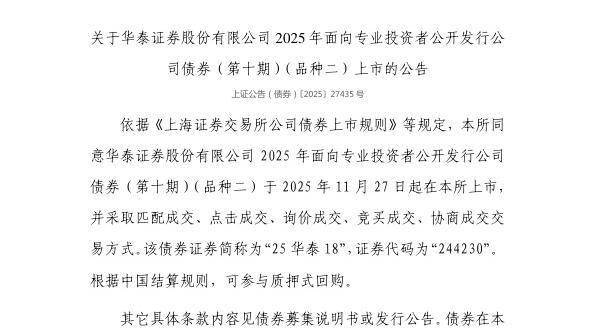
上交所:华泰证券股份有限公司债券11月27日上市,代码244230
Sou Hu Cai Jing· 2025-11-26 02:08
Core Points - The Shanghai Stock Exchange announced the listing of Huatai Securities Co., Ltd.'s 2025 public issuance of corporate bonds (the tenth phase) aimed at professional investors [1][2] - The bonds will be listed on November 27, 2025, under the name "25 Huatai 18" with the security code "244230" [2] - The trading methods for these bonds include matched transactions, click transactions, inquiry transactions, competitive bidding transactions, and negotiated transactions [2] Summary by Category - **Company Announcement** - Huatai Securities Co., Ltd. is set to list its 2025 corporate bonds aimed at professional investors on the Shanghai Stock Exchange [1][2] - **Bond Details** - The bonds are designated as the tenth phase (type two) and will be available for trading starting November 27, 2025 [2] - The bonds can be used for pledged repurchase according to China Clearing rules [2]


券商晨会精华 | 锂电新一轮上行周期启动 储能有望成为核心“推手”
智通财经网· 2025-11-26 02:01
Market Overview - The market experienced a rebound yesterday, with the Shanghai and Shenzhen stock exchanges recording a trading volume of 1.81 trillion, an increase of 84.4 billion compared to the previous trading day [1] - By the end of the trading session, the Shanghai Composite Index rose by 0.87%, the Shenzhen Component Index increased by 1.53%, and the ChiNext Index gained 1.77% [1] Lithium Battery Sector - CICC indicates that a new upward cycle for lithium batteries has begun, with energy storage expected to be a key driver [2] - Since 2025, the lithium battery industry has shown signs of bottom reversal due to stabilizing prices and improved supply-demand structure [2] - Investment strategies include focusing on energy storage demand, new technologies like solid-state batteries, and the revival of charging station construction [2] Aerospace and Defense Sector - Huatai Securities released a 2026 outlook for the aerospace and defense sector, noting that the military's equipment construction will shift from quantity to quality during the 14th Five-Year Plan [3] - The focus will be on new fourth-generation equipment, with an emphasis on unmanned systems, low-cost munitions, and military AI [3] - The report highlights opportunities in commercial aerospace, low-altitude economy, deep-sea technology, and military-civilian technology applications [3] Building Materials Sector - Galaxy Securities published a 2026 strategy report for the building materials industry, indicating a recovery in the building materials index and fundamentals in 2025 [4] - The report emphasizes structural investment opportunities due to traditional industry capacity reduction and the continued high demand in emerging sectors [4] - Key areas of focus include the renovation of existing properties, urban renewal, and the performance of leading companies in high-performance fiberglass and consumer building materials [4]


金融市场上演“卖出日本”交易,或对全球流动性产生威胁
Xin Lang Cai Jing· 2025-11-26 01:50
Core Viewpoint - The Japanese financial market is experiencing a "sell Japan" trend, with significant sell-offs in Japanese bonds and the yen due to an unexpectedly large fiscal stimulus plan and weak GDP data, raising concerns about Japan's fiscal sustainability and global liquidity [1][2][3] Group 1: Fiscal Stimulus and Economic Data - The Japanese government approved a supplementary budget of 21.3 trillion yen for the fiscal year 2025, the highest since the COVID-19 pandemic [1][4] - Japan's GDP contracted by 0.4% quarter-on-quarter and 1.8% year-on-year in Q3, marking the first economic shrinkage in six quarters [1][2] - The supplementary budget represents 2.8% of Japan's GDP, an increase of 0.4 percentage points from the previous fiscal year [4] Group 2: Market Reactions and Concerns - Analysts indicate that the sell-off is primarily driven by panic over the government's fiscal policies and pessimistic macroeconomic data, which heightens fears of a fiscal crisis [1][2] - Concerns are growing that the fiscal plan will exacerbate Japan's debt burden, which already exceeds international warning levels, leading to increased government borrowing [2][3] Group 3: Impact on Bond Yields and Global Liquidity - The yield on 10-year Japanese government bonds surged to over 1.78%, the highest in more than 17 years, while the yen fell to a 10-month low against the dollar [1][5] - The rise in bond yields may trigger unwinding of yen carry trades, potentially impacting global liquidity as investors reduce exposure to dollar-denominated assets [3][5] - The ongoing increase in bond yields could lead to reduced carry trade activities, prompting capital repatriation to Japan and amplifying risks in U.S. equities and bonds [3][5] Group 4: Long-term Fiscal Sustainability - The combination of high debt, inflation, and low growth presents a challenging environment for Japan, with fiscal stimulus conflicting with the central bank's inflation control goals [2][3] - Concerns about fiscal sustainability may lead to increased risk premiums on long-term Japanese bonds, further deteriorating their liquidity [4][5] - The Bank of Japan's significant holdings of government bonds (approximately 52% by the end of 2024) raise questions about the market's confidence in these assets [4]
港股开盘 | 恒指高开0.59% 耀才证券金融涨12%
智通财经网· 2025-11-26 01:37
Group 1 - The Hang Seng Index opened up by 0.59%, while the Hang Seng Tech Index rose by 0.67%. Meituan increased by over 4%, and Alibaba fell by over 2% [1] - Yang Delong believes that the current tech bull market in A-shares and Hong Kong stocks has confirmed its trend, with the potential to continue for two to three years [2] - Liu Gang from CICC states that the strong performance of Hong Kong stocks in 2025 will be driven by liquidity and sentiment, with a focus on "excess liquidity" chasing "scarce return assets" [2] Group 2 - Guotai Junan Securities notes that the recent adjustment in Hong Kong stocks is primarily due to previous significant gains and tightening dollar liquidity, with historical average pullbacks of 7% and 17% under different conditions [2] - Huatai Securities indicates that the Hong Kong market is entering a layout phase, with left-side investors gradually building positions despite rising market volatility [3] - CITIC Securities highlights that the volatility of global risk assets is primarily a liquidity issue, with a reliance on AI narratives leading to necessary valuation corrections [3] Group 3 - Multiple institutions remain optimistic about the Hong Kong market, citing factors such as overseas interest rate cuts, continuous inflow of southbound funds, and the expansion of quality assets as drivers for the market's upward momentum [4] - Zhang Xia from招商证券 points out that the valuation of the Hang Seng Tech Index is still at historically low levels, indicating significant potential for valuation recovery [5] - Zhang Xia also mentions that the Hong Kong market is primarily driven by liquidity, with a favorable long-term outlook as the U.S. enters a rate-cutting cycle and the end of the Fed's balance sheet reduction [6]
岁末年初资金持续配置,红利价值受青睐!中证红利ETF(515080)5日吸金2.74亿元
Sou Hu Cai Jing· 2025-11-26 01:37
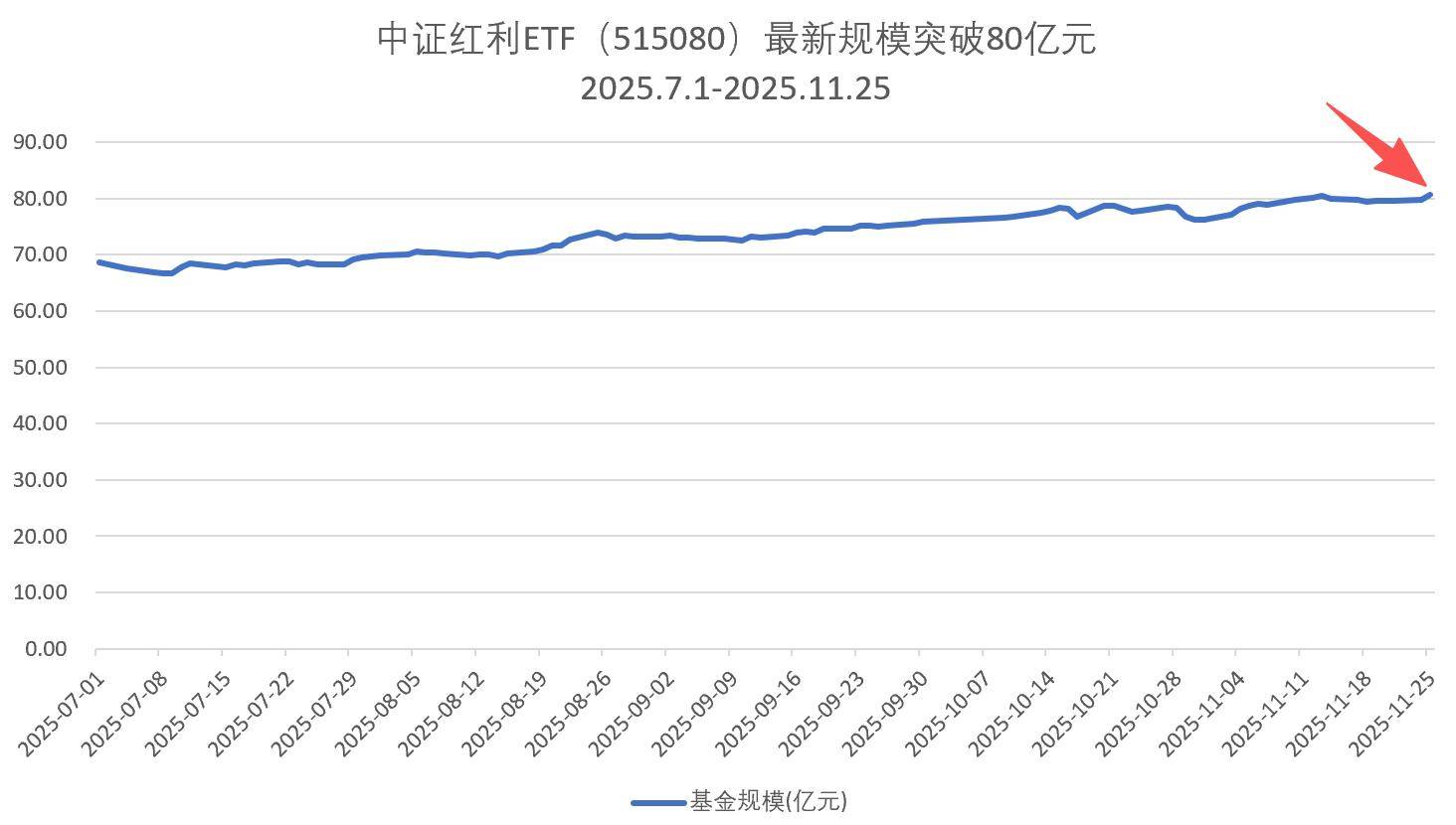
Group 1 - The A-share market rebounded due to multiple factors including rising interest rate expectations, improved external relations, and stabilization of the US stock market, with the CSI Dividend ETF (515080) rising by 0.44% and attracting a net inflow of 274 million yuan over the last five trading days [1] - Market risk appetite has entered a "small platform period," with high dividend asset allocation becoming more attractive as the TMT sector reaches a historical high in fund positions while recent market inflows remain limited, indicating a potential shift towards high dividend sectors [3] - The latest ten-year government bond yield is at 1.83%, while the CSI Dividend Index shows a dividend yield of 4.85%, highlighting the relative attractiveness of high dividend values [4] Group 2 - The high dividend signal system, based on the trends of high dividend sectors, interbank market transaction volumes, and term spreads, continues to issue bullish signals [3] - There is an expectation for a rebound in the fourth quarter regarding the previously overestimated impact of the Federal Reserve's interest rate cuts, suggesting a potential strengthening of value styles over growth styles [3] - Long-term funds are expected to focus on dividend-paying sectors and traditional sectors related to the "anti-involution" theme, as well as the consumer sector [4]
华泰证券:预计明年会尽量靠前形成实物工作量
Sou Hu Cai Jing· 2025-11-26 00:32
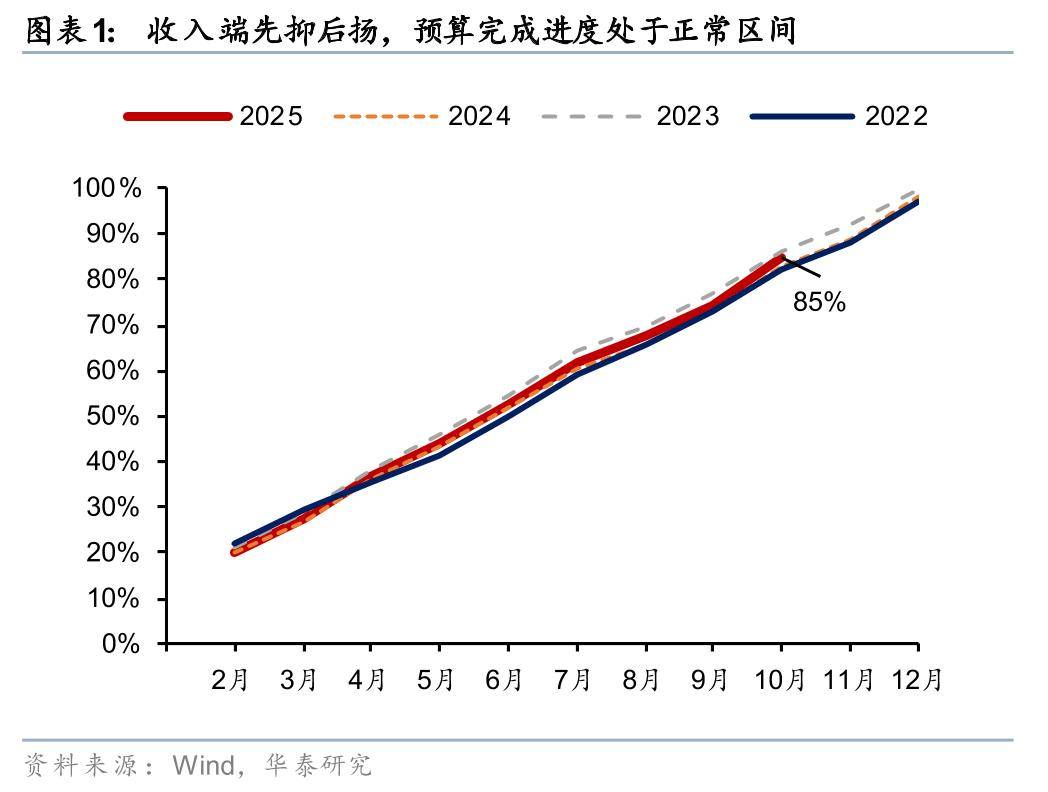
Core Viewpoint - The fiscal policy review for 2025 highlights a balance between stabilizing growth and preventing risks, with significant fiscal expansion not leading to improved fixed asset investment growth [2][3][32]. Group 1: Fiscal Policy Review for 2025 - The budget revenue showed a weak recovery, with a cumulative year-on-year growth turning positive in the first ten months, reaching 85% of the budget execution [5][9]. - Government fund revenue was negatively impacted by declining land transfer income, with a progress rate of 55% in the first ten months [9][12]. - The expenditure side saw a strong increase, with government fund expenditure growth reaching 220% for central government funds, while local expenditure grew by only 7.3% [9][12]. Group 2: Debt Management and Special Bonds - The "6+4+2" debt management plan for 2024 accelerated the debt resolution process, with a total of 3.88 trillion yuan allocated for debt resolution and clearing corporate arrears, exceeding initial expectations [16][20]. - The issuance of special bonds reached 4.4 trillion yuan by mid-November, with a significant portion allocated for debt resolution and land reserve projects, leading to a partial crowding-out effect on infrastructure projects [12][22]. Group 3: Outlook for 2026 - The fiscal policy for 2026 is expected to be more proactive, with a projected deficit rate maintained at around 4%, signaling the necessity of fiscal expansion [3][35]. - New special bond quotas may be increased to approximately 5 trillion yuan to support infrastructure projects, particularly in the context of the "15th Five-Year Plan" [3][35]. - The fiscal revenue is anticipated to remain under pressure due to declining land transfer income, which has historically accounted for 70%-80% of government fund revenue [38][39]. Group 4: Expenditure and Economic Growth - The relationship between GDP growth and fiscal expenditure is expected to persist, with government leveraging fiscal expansion to support economic growth amid weak expectations from residents and enterprises [40][45]. - Central government spending is likely to focus on major projects, with local governments continuing to rely heavily on central transfers due to limited self-financing capabilities [45][46].
香港楼市,杀回来了
吴晓波频道· 2025-11-26 00:30
Core Viewpoint - Morgan Stanley believes that the Hong Kong property market, after seven years of stagnation, is expected to enter a rising cycle lasting 4 to 5 years; UBS sees the Hong Kong residential property market at a turning point, anticipating a similar upward trend over the next 3 to 5 years [2][9]. Market Recovery - The Hong Kong property market is experiencing a resurgence, with significant buyer interest and rapid sales in various projects, such as the Kai Tak project selling 56 units in one day with a subscription rate of 37 times [3][5]. - The private residential price index in Hong Kong rose to 292.5 in September, marking the highest level in 14 months and the fourth consecutive month of increase [6]. - In October, the number of first-hand transactions exceeded 1,700, maintaining over 1,000 transactions for the ninth consecutive month, with luxury properties seeing a notable increase in sales [8]. Factors Behind the Recovery - The Hong Kong government has implemented several policies since early last year, including the elimination of additional stamp duties on residential property transactions, significantly reducing costs for local and mainland buyers [13][17]. - Mortgage rates have decreased, with the one-month HIBOR dropping to around 2.63%, leading to lower mortgage rates compared to earlier in the year [18][21]. - A talent policy has attracted a significant influx of people to Hong Kong, increasing potential homebuyers and driving up rental prices, with the rental index reaching a new high in September [22][24]. - The sustained rise in the Hong Kong stock market and the "asset scarcity" in mainland China have led to increased investment in Hong Kong real estate, with mainland buyers accounting for 24% of total transactions [25][26]. Comparative Analysis - The recovery in the Hong Kong property market differs from the debt crisis seen in mainland cities, as Hong Kong's developers maintain stable balance sheets and low mortgage default rates [29][30]. - The article suggests that while both markets are undergoing adjustments, their paths and underlying issues are distinct, with Hong Kong's market being more resilient due to its unique characteristics [30].

华泰证券航天军工2026年度展望:新装备建设周期下的新结构
Zheng Quan Shi Bao Wang· 2025-11-26 00:00
Core Viewpoint - The report by Huatai Securities indicates that the aerospace and military industry is expected to transition from quantity to quality improvements during the 14th Five-Year Plan period, with a focus on new-generation equipment in the upcoming 15th Five-Year Plan [1] Group 1: Military Equipment Development - The military's weaponry construction will prioritize new-generation fourth-generation equipment as a key direction during the 15th Five-Year Plan [1] - The development of new domain and new quality combat forces is seen as a new trend in military advancement, with expectations for large-scale, practical, and systematic growth during the 15th Five-Year Plan [1] Group 2: Investment Opportunities - Suggested areas for investment include drone offense and defense, ground unmanned equipment, underwater offense and defense, low-cost munitions/missiles, and military AI [1] - The new generation of military aircraft and missile industry chains, along with new domain and new quality directions, are recommended for attention [1] Group 3: Market Potential - The military trade market and the application of military technology in strategic emerging industries present vast market opportunities [1] - Areas of interest include commercial aerospace, low-altitude economy, deep-sea technology, nuclear energy utilization, and domestically produced large aircraft, as well as the military-to-civilian technology application sector [1]
中资券商频频“输血”海外子公司 专家建议三管齐下夯实国际化根基
Zheng Quan Shi Bao· 2025-11-25 18:32
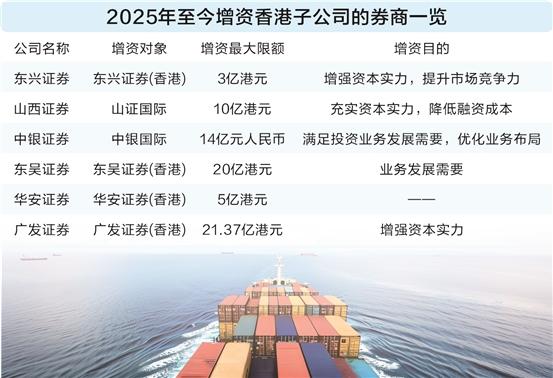
Core Viewpoint - The announcement by Huatai Securities highlights the increasing trend of Chinese securities firms providing capital support to their overseas subsidiaries, driven by the demand for cross-border investment banking and wealth management services [2][4][8] Group 1: Capital Support Trends - Huatai International Finance Co., a wholly-owned subsidiary, issued a total of $230 million in medium-term notes, backed by Huatai International [2] - Chinese securities firms have significantly increased their capital support for overseas subsidiaries this year, utilizing methods such as capital increases and guarantees for bond financing and bank loans [2][4] - Notable firms like Dongxing Securities, Shanxi Securities, and others have announced capital increases for their Hong Kong subsidiaries, with amounts reaching up to 2.137 billion HKD [4][5] Group 2: Business Expansion Drivers - The demand for capital is primarily driven by the expansion of cross-border businesses and high capital-consuming operations, particularly in the OTC derivatives sector [7][8] - OTC derivatives are highlighted as a key profit source for international investment banks, necessitating sufficient capital to cover risk exposures [7] - The increasing demand for cross-border asset management and the trend of Chinese companies listing in Hong Kong are contributing to the growth of investment opportunities for Chinese securities firms [8] Group 3: Challenges in Capital Supplementation - Despite the push for capital supplementation, challenges remain, including restrictions on cross-border capital injection and difficulties in overseas financing [9][10] - The current foreign exchange management system presents obstacles for Chinese securities firms in conducting cross-border transactions, leading to liquidity risks [10] - Experts suggest a multi-faceted approach involving regulatory policy optimization, group coordination, and subsidiary transformation to address these challenges [10][11]
中资券商化身“金融航海家” 助力中企发出全球资本市场“中国声音”
Zheng Quan Shi Bao· 2025-11-25 18:31
Core Viewpoint - Chinese securities firms are evolving into "financial navigators," expanding their international presence and contributing significantly to the global capital market, particularly in regions like Hong Kong, London, and New York [1] Group 1: Internationalization Progress - The international business segment of Chinese securities firms is entering a harvest phase, with significant profit contributions from subsidiaries, such as 46% from CICC, 43% from Huatai Securities, and 18% from CITIC Securities [2] - In 2024, Huatai Securities and CITIC Securities' international subsidiaries reported revenues exceeding 15 billion yuan, while CICC approached 10 billion yuan [2] - The internationalization of Chinese securities firms has progressed through four stages: initial exploration, differentiated competition, business enrichment, and enhanced comprehensive financial service capabilities [2] Group 2: Growth Strategies - Large securities firms prefer external mergers and acquisitions to leverage their resource advantages, while smaller firms focus on deepening their presence in the Hong Kong market [3] - The total asset scale of international subsidiaries of leading firms has shown consistent growth, with CITIC Securities International's assets reaching 50.6 billion USD after a capital increase of 9.16 billion USD in 2024 [3] - The diversification of income sources through international business is seen as a key strategy for future growth, particularly in areas like cross-border derivatives and investment services [4] Group 3: Market Dynamics - The demand for overseas investment and financing from Chinese enterprises is a significant driver for the international business of securities firms, with China's non-financial direct investment abroad reaching approximately 917 billion yuan in 2023, a 16.7% increase [6] - The high-quality development of the capital market presents new opportunities for the securities industry, with a notable acceleration in internationalization driven by policy benefits and market demand [7] - The focus of international expansion is shifting towards Southeast Asia, with firms like Galaxy Securities targeting local acquisitions to establish a foothold [7][8] Group 4: Operational Considerations - To achieve successful localization, firms should prioritize global business areas like investment banking and institutional sales, while gradually expanding into wealth management [10] - A dual-track management system is recommended to balance strategic oversight from headquarters with local execution, minimizing cultural conflicts and enhancing market responsiveness [10] - Effective risk management is crucial, especially in balancing short-term gains with long-term risks, as evidenced by the aggressive strategies of some firms in high-yield dollar bond markets [10][11]
