
潮宏基

Search documents
破解消费投资密码:向“新”而行 主题基金“同路不同命”
Zhong Guo Zheng Quan Bao· 2025-08-12 23:22
Core Viewpoint - The A-share market has shown a structural trend this year, with over 95% of actively managed equity funds achieving positive returns, while consumer-themed funds have experienced significant performance divergence [1][2]. Fund Performance - A significant number of consumer-themed funds have underperformed, with some funds showing negative returns due to heavy investments in traditional consumer stocks like liquor [2][3]. - For instance, the Guorong Rongxin Consumer Select C and A funds reported returns of -15.20% and -15.10% respectively, ranking them among the bottom in their category [2]. - Conversely, the Hai Fudong Consumer Preferred A fund achieved a return of 60.13%, indicating a successful strategy focused on new consumer sectors [4]. Investment Strategy - Fund managers emphasize the importance of adapting to new consumer trends and categories, especially in the context of unclear recovery signals in traditional consumption [1][6]. - The Hai Fudong fund's strategy involved a significant rotation of its holdings, focusing on new consumer stocks and maintaining a high allocation to the new consumption sector [4]. New Consumer Trends - The new consumer sector has shown strong performance, with funds like Xinyuan Consumer Selection investing in popular new consumer stocks such as Pop Mart, which saw a price increase of over 200% this year [3][5]. - The market is witnessing a shift towards new consumption opportunities, particularly in the Hong Kong market, which is attracting investment due to its lower volatility and potential for growth [6]. Market Dynamics - The competition between domestic brands and international giants is intensifying, requiring local brands to enhance their product offerings [6]. - The consumer landscape is evolving, with service-oriented consumption, such as dining and travel, showing signs of recovery, while changes in retail channels are creating new opportunities in various sectors [6][7].
今年以来表现较好的消费主题基金
Zhong Guo Zheng Quan Bao· 2025-08-12 21:06
Core Insights - The article highlights the top five mutual funds with significant net asset value growth rates in 2023, showcasing their respective key holdings and performance metrics [1] Group 1: Fund Performance - Hai Futong Consumer Preferred A achieved a net asset value growth rate of 60.13%, with major holdings including Jiuziyuan, Wancheng Group, Chaohongji, Jinzaifood, and Proya [1] - Caitong Asset Management Consumer Selected A reported a growth rate of 50.55%, featuring key investments in Xinyi Sheng, Zhongji Xuchuang, Shengyi Electronics, Changxin Bochuang, and Zhaoyan New Drug [1] - Yongying Emerging Consumer Smart Selection A recorded a growth rate of 49.87%, with significant positions in Anker Innovation, Pop Mart, Craft Home, Xinda Biotech, and Jiayi Co. [1] - Guolian Hong Kong-Shenzhen Large Consumption A posted a growth rate of 42.38%, with notable holdings in Tencent Holdings, Alibaba-W, Xiaomi Group-W, Juzibio, and SMIC [1] - Huatai Bairui Consumer Growth achieved a growth rate of 34.59%, with key investments in Taotao Automotive, Craft Home, Dongmu Co., Chunfeng Power, and Longxin General [1]
消费主题基金,首尾相差超70个百分点
Zhong Guo Zheng Quan Bao· 2025-08-12 14:33
Group 1 - The A-share market is experiencing a structural market trend, with over 95% of actively managed equity funds achieving positive returns this year, while consumer-themed funds show a significant performance divergence [1][2] - Some consumer-themed funds have underperformed, with notable examples being Guorong Rongxin Consumer Select C and A, which reported returns of -15.20% and -15.10% respectively, largely due to heavy investments in traditional consumer stocks like liquor [2][3] - Conversely, funds like Haitong Consumer Select A have excelled, achieving a return of 60.13% this year by focusing on new consumer stocks in the Hong Kong market [3][4] Group 2 - The performance disparity among consumer funds highlights the growing popularity of new consumer sectors, while traditional consumption remains sluggish without clear signs of recovery [4][5] - Fund managers emphasize the need to adapt to new trends and categories in consumer investment, suggesting that success will depend on capturing these changes effectively [4][5] - The competitive landscape for domestic brands against international ones is intensifying, necessitating improvements in product quality, particularly in sectors like personal care, jewelry, and daily chemicals [4]
金融工程周报:关注医药创新板块及后续政策落地表现-20250812
Shanghai Securities· 2025-08-12 10:13
Quantitative Models and Construction Methods 1. Model Name: A-Share Industry Rotation Model - **Model Construction Idea**: The model uses six factors—funds, valuation, sentiment, momentum, overbought/oversold, and profitability—to build a scoring system for evaluating industry performance[16] - **Model Construction Process**: - **Funds**: Uses the net inflow rate of main funds in the industry as the primary data - **Valuation**: Based on the valuation percentile of the industry over the past year - **Sentiment**: Proportion of rising constituent stocks as the main data source - **Momentum**: Uses the MACD indicator as the primary data source - **Overbought/Oversold**: Relies on the RSI indicator - **Profitability**: Based on the consensus forecast EPS percentile of the industry over the past year[16] - **Model Evaluation**: The model provides a comprehensive scoring mechanism to identify high-performing and low-performing industries, aiding in sector rotation decisions[16] 2. Model Name: Consensus Stock Selection Model - **Model Construction Idea**: Combines momentum, valuation, and price factors with high-frequency fund flow data to identify stocks with high similarity between fund flow trends and price trends[21] - **Model Construction Process**: - Selects high-performing secondary industries over the past 30 days - Calculates momentum, valuation, and frequency of price increases for stocks within these industries - Uses high-frequency minute-level fund flow data to compute fund inflow/outflow changes for each stock - Selects stocks with the highest similarity between fund flow trends and price trends within the top three secondary industries[21] --- Model Backtesting Results 1. A-Share Industry Rotation Model - **Top-Scoring Industries**: - Agriculture, Forestry, Animal Husbandry, and Fishery: Score 10 - Non-Ferrous Metals: Score 9 - Home Appliances: Score 6 - **Low-Scoring Industries**: - Media: Score -9 - Social Services: Score -8 - Computers: Score -8[18][19] 2. Consensus Stock Selection Model - **Selected Industries**: - Steel (e.g., Baosteel, Bengang Steel Plates) - Components (e.g., Huilun Crystal, GaoHua Technology) - Minor Metals (e.g., Jinduicheng Molybdenum, Xiyang Shares)[22] --- Quantitative Factors and Construction Methods 1. Factor Name: Funds - **Construction Idea**: Measures the net inflow of main funds in the industry - **Construction Process**: Aggregates daily transactions of ≥10,000 shares or ≥200,000 RMB to calculate net fund inflow for each industry[11] 2. Factor Name: Valuation - **Construction Idea**: Evaluates the relative valuation percentile of the industry over the past year - **Construction Process**: Uses historical valuation data to determine the percentile ranking of the current valuation[16] 3. Factor Name: Sentiment - **Construction Idea**: Reflects market sentiment through the proportion of rising stocks in the industry - **Construction Process**: Calculates the percentage of stocks with positive price changes within the industry[16] 4. Factor Name: Momentum - **Construction Idea**: Captures the trend strength of the industry - **Construction Process**: Utilizes the MACD indicator to measure momentum[16] 5. Factor Name: Overbought/Oversold - **Construction Idea**: Identifies overbought or oversold conditions in the industry - **Construction Process**: Applies the RSI indicator to assess these conditions[16] 6. Factor Name: Profitability - **Construction Idea**: Measures the earnings potential of the industry - **Construction Process**: Uses the consensus forecast EPS percentile over the past year as the primary metric[16] --- Factor Backtesting Results 1. Funds Factor - **Top Industries (5-day net inflow)**: - Banking: 39.08 billion RMB - Textiles and Apparel: 0.61 billion RMB - Non-Ferrous Metals: -0.97 billion RMB[12] - **Top Industries (30-day net inflow)**: - Comprehensive: -9.49 billion RMB - Banking: -13.75 billion RMB - Beauty and Personal Care: -26.15 billion RMB[13][14] 2. Valuation Factor - **Top-Scoring Industries**: - Non-Ferrous Metals: +++ - Comprehensive: +++ - Beauty and Personal Care: +++[18][19] 3. Sentiment Factor - **Top-Scoring Industries**: - Non-Ferrous Metals: +++ - Agriculture, Forestry, Animal Husbandry, and Fishery: ++ - Textiles and Apparel: ++[18][19] 4. Momentum Factor - **Top-Scoring Industries**: - Non-Ferrous Metals: +++ - Transportation: +++ - Comprehensive: +++[18][19] 5. Overbought/Oversold Factor - **Top-Scoring Industries**: - Agriculture, Forestry, Animal Husbandry, and Fishery: Neutral - Non-Ferrous Metals: Neutral - Home Appliances: Neutral[18][19] 6. Profitability Factor - **Top-Scoring Industries**: - Non-Ferrous Metals: +++ - Comprehensive: +++ - Home Appliances: +[18][19]





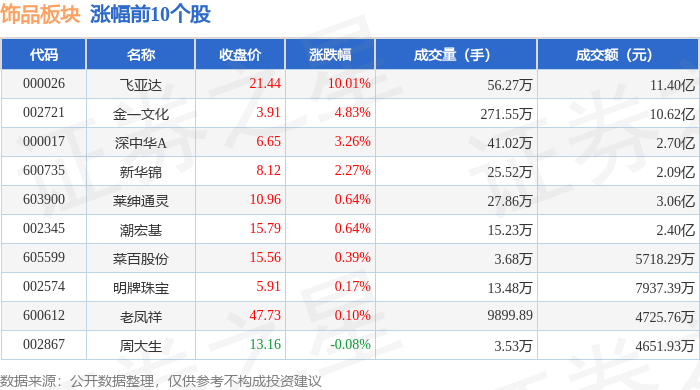
饰品板块8月12日涨1.02%,飞亚达领涨,主力资金净流入9884.03万元
Zheng Xing Xing Ye Ri Bao· 2025-08-12 08:22
证券之星消息,8月12日饰品板块较上一交易日上涨1.02%,飞亚达领涨。当日上证指数报收于 3665.92,上涨0.5%。深证成指报收于11351.63,上涨0.53%。饰品板块个股涨跌见下表: | 代码 | 名称 | 收盘价 | 涨跌幅 | 成交量(手) | 成交额(元) | | | --- | --- | --- | --- | --- | --- | --- | | 300945 | 曼卡龙 | 19.58 | -1.85% | 14.18万 | | 2.79亿 | | 600439 | 瑞贝卡 | 3.12 | -1.27% | 24.10万 | 7539.52万 | | | 002731 | 莘华珠宝 | 14.42 | -0.76% | 14.54万 | | 2.08亿 | | 301177 | 迪阿股份 | 29.37 | -0.61% | 9719.0 | 2866.06万 | | | 600916 | 中国黄金 | 8.18 | -0.24% | 23.63万 | | 1.93 Z | | 002867 | 周大生 | 13.16 | -0.08% | 3.53万 | 4651.93万 | ...


金价继续跌!2025年8月12日各大金店黄金价格多少钱一克?
Jin Tou Wang· 2025-08-12 06:48
Group 1: Domestic Gold Market Dynamics - Domestic gold prices continue to decline, with minor fluctuations observed. The highest price today is from Chow Sang Sang at 1010 CNY/gram, down by 3 CNY, while Shanghai China Gold remains stable at 981 CNY/gram, the lowest price among major brands. The price difference between the highest and lowest gold stores has narrowed to 29 CNY/gram [1][3] - The latest prices from various gold brands are as follows: Lao Miao Gold at 1004 CNY/gram (down 9), Liufeng Gold at 1008 CNY/gram (down 7), Chow Tai Fook Gold at 1008 CNY/gram (down 7), and Zhou Liufu Gold at 998 CNY/gram (up 3) [1][3] Group 2: Platinum Prices and Recovery Rates - Platinum prices have rebounded, with Chow Sang Sang's platinum jewelry price increasing by 9 CNY/gram to 545 CNY/gram. The gold recovery price has also seen a slight decline of 4.6 CNY/gram [4] - The gold recovery prices from various brands are as follows: Cai Bai Gold at 763.90 CNY/gram, Zhou Shengsheng Gold at 769.40 CNY/gram, Zhou Tai Fook Gold at 768.00 CNY/gram, and Lao Fengxiang Gold at 776.70 CNY/gram [4] Group 3: International Gold Market Overview - Last Friday, spot gold experienced a downward trend, dropping from a high of 3400 USD/ounce to close at 3342.20 USD/ounce, a decline of 1.66%. As of the latest update, spot gold is trading at 3353.16 USD/ounce, up by 0.33% [6] - The recent drop in gold prices is attributed to President Trump's statement regarding tariffs on gold and reduced market risk appetite due to expectations of a ceasefire in the Russia-Ukraine conflict. Additionally, the strengthening of the US dollar has led some investors to take profits [6] - The market is awaiting the release of the US July CPI data, which could influence expectations regarding the Federal Reserve's interest rate decisions. Analysts suggest that if inflation data exceeds expectations, it may lead to a reduction in bets on a rate cut in September, potentially weakening gold's support [6]

现货黄金震荡上行,关注美国7月CPI数据
Sou Hu Cai Jing· 2025-08-12 03:39
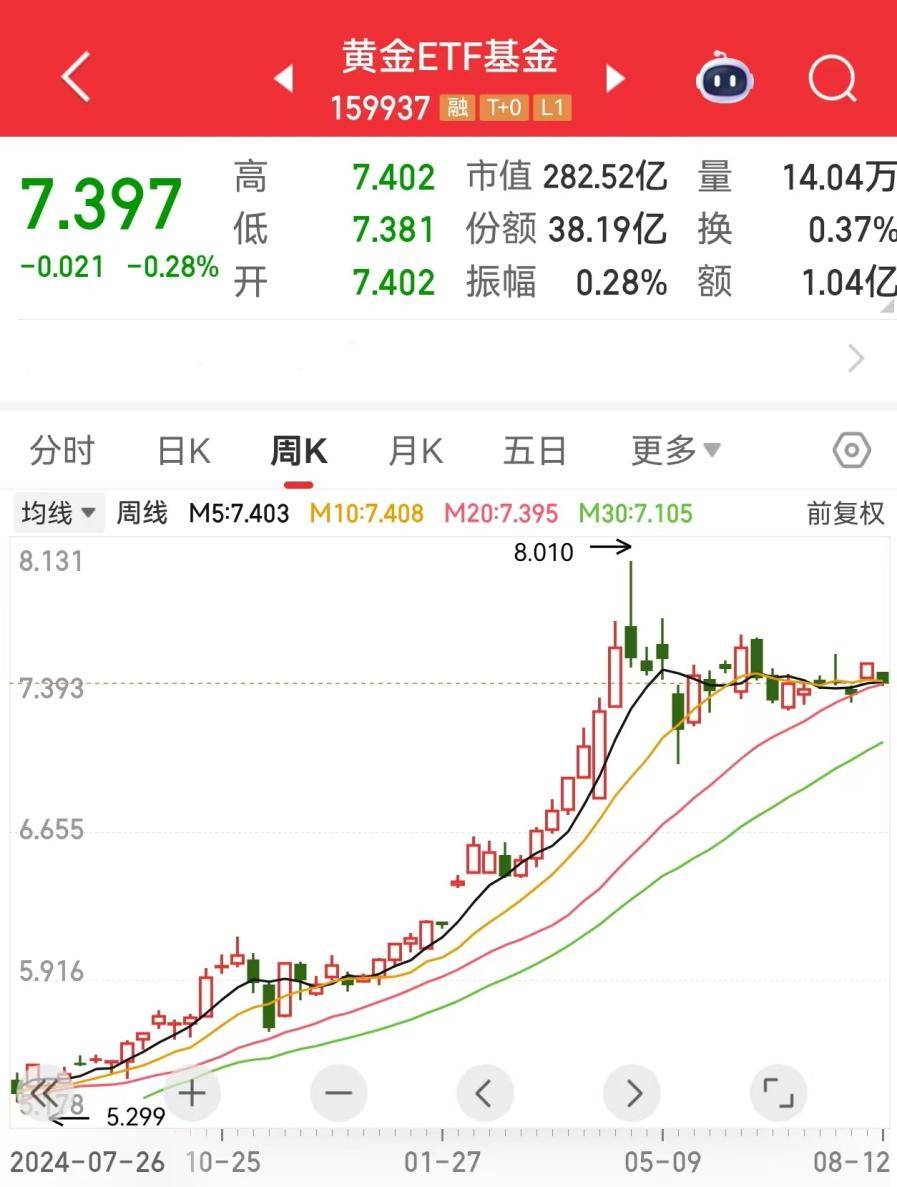
Group 1 - The core message indicates that President Trump stated "gold will not be subject to tariffs," leading to a decline in precious metal prices [2] - As of the latest report, COMEX gold futures are at $3403.9 per ounce, with a 0.00% change, while international spot gold is up 0.37% at $3354.26 per ounce [2][3] - The international gold market experienced fluctuations, with a shift in sentiment following the release of non-farm payroll data [4] Group 2 - Upcoming discussions between President Trump and President Putin regarding the end of the Russia-Ukraine conflict have eased geopolitical tensions, reducing gold's appeal as a safe-haven asset [4] - The market is focused on the upcoming U.S. July CPI data, with expectations of a 0.3% month-over-month increase and a year-over-year increase of 3.0%, significantly above the Federal Reserve's 2% target [4] - Analysts predict that if inflation data exceeds expectations, it may reinforce the Fed's stance on maintaining high interest rates, potentially suppressing gold prices [4] Group 3 - The China-U.S. trade talks resulted in a joint statement indicating a temporary suspension of additional tariffs on each other's goods starting August 12, 2025 [4] - The People's Bank of China reported gold purchases for nine consecutive months, with July purchases totaling 1.86 tons, suggesting potential upward movement in precious metal prices [5] - Analysts from 瑞达期货 suggest that long-term trends indicate a strong performance for precious metals, with a focus on whether gold can maintain above $3500 per ounce [5] Group 4 - Gold ETFs and related funds offer low-cost, diversified investment opportunities in gold, with features such as T+0 trading [5] - The long-term value of gold as a hedge against economic downturns and its stability in relation to credit money supply is emphasized [5]
造纸轻工行业周报:三丽鸥业绩继续超预期关注国内IP潮玩个股;浆纸价格底部反弹北京限购放松政策催化家居估值;轻工制造个股外延业务增加看点-20250812
Shenwan Hongyuan Securities· 2025-08-12 02:35
Investment Rating - The report indicates a positive investment outlook for the IP toy sector, paper industry, and home furnishing sector, highlighting specific companies to watch [2][4][17]. Core Insights - The IP toy market continues to thrive, with Sanrio's FY26Q1 performance exceeding expectations, driven by strong IP character sales, particularly Hello Kitty, across various regions [2][4]. - The paper industry is entering a peak demand season in Q3, with expectations for price stabilization and potential upward movement due to supply-side improvements [14][15]. - The home furnishing sector is poised for recovery as Beijing relaxes housing purchase restrictions, which may enhance valuation and stimulate demand [17][19]. Summary by Sections 1. IP Toy Sector - Sanrio's FY26Q1 revenue reached 431 billion JPY, a 49% year-on-year increase, with operating profit up 88% and net profit up 38%, attributed to strong IP character performance [2][4]. - Companies such as Morning Glory, Chuangyuan, Chaohongji, Guobo, and Blucor are highlighted for their innovative IP collaborations and product launches [2][4][6][9][10]. 2. Paper Industry - The report notes that Q3 demand is gradually increasing, with expectations for paper prices to stabilize and potentially rise, supported by reduced production from overseas suppliers [14][15]. - Key companies to monitor include Sun Paper, Nine Dragons, and Bohui Paper, as they are positioned to benefit from the improving supply-demand dynamics [14][15]. 3. Home Furnishing Sector - The easing of purchase restrictions in Beijing is expected to boost the home furnishing sector, with companies like Sophia, Oppein, Gujia, and others identified as having strong dividend safety margins [17][19][23]. - The report emphasizes the potential for valuation recovery in the home furnishing sector, driven by improved consumer confidence and demand from the secondary housing market [19][23].


二次元“入侵”金饰,“痛金”带火黄金“谷子”
3 6 Ke· 2025-08-12 01:08
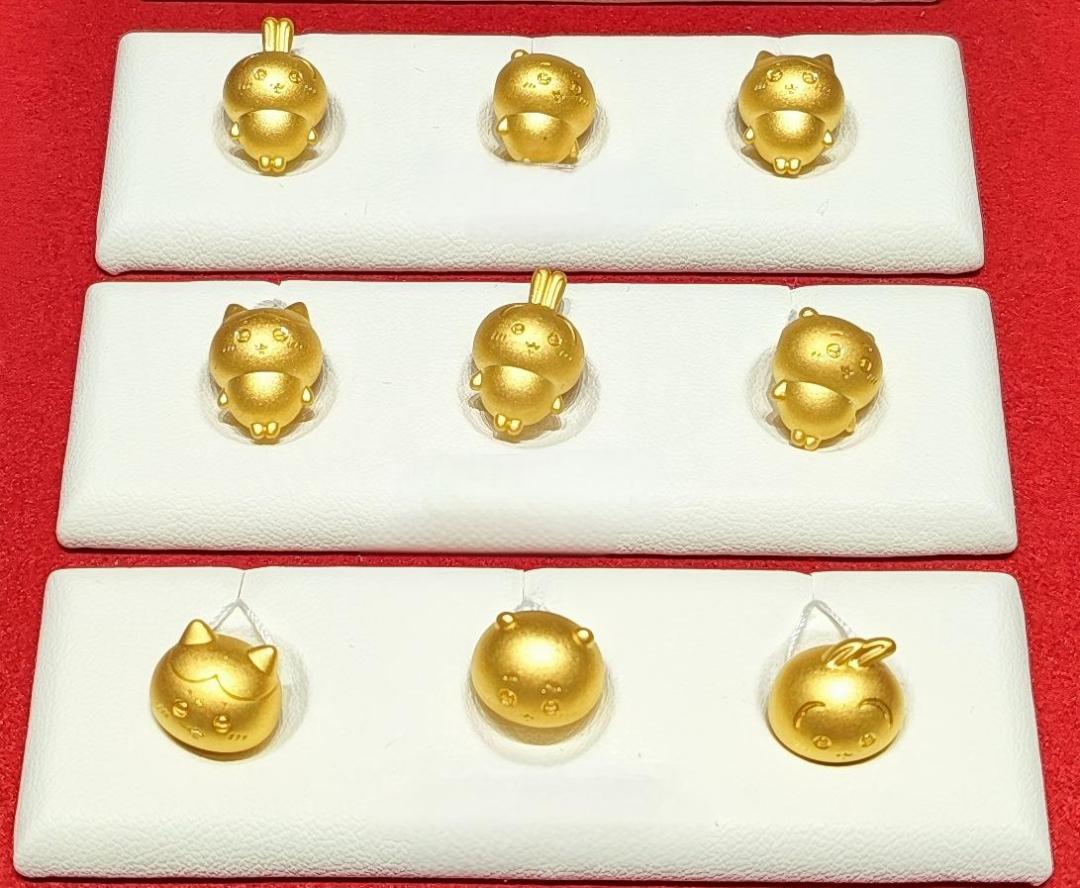
Core Insights - The rising gold prices over the past three years have led to increased interest in gold jewelry, creating a "gold fever" among consumers [1] - The trend has extended into the "二次元" (two-dimensional) culture, with major gold brands targeting young consumers who are fans of anime and gaming [1] - Brands like Chow Tai Fook, Lao Feng Xiang, and others have launched IP collaboration gold jewelry, integrating popular characters and themes from various franchises [1] Retail Market Dynamics - The retail price of gold jewelry has surpassed 1000 yuan per gram, making it unaffordable for many consumers [1] - IP collaboration gold jewelry is sold at a premium, with prices ranging from 1300 yuan to 2800 yuan per gram, significantly higher than the standard gold price of around 1020 yuan per gram [2][4] - For example, the Chow Tai Fook Chiikawa collaboration piece is priced at 2800 yuan per gram, which is 2.76 times the market price [2][4] Consumer Behavior - Social media platforms like Xiaohongshu (Little Red Book) play a crucial role in promoting IP collaboration gold jewelry, with many users expressing interest and sharing their purchases [2][8] - Despite the hype, actual foot traffic in physical stores remains low, indicating that the consumer base for these products is still limited [6] - Some consumers are opting for custom-made gold jewelry from goldsmiths, which can be more affordable and unique compared to branded IP collaboration pieces [6] Market Trends and Challenges - The Chinese Gold Association predicts a decline in gold consumption, particularly in gold jewelry, due to high prices, with a projected drop of 26% year-on-year [10] - The high prices of IP collaboration gold jewelry are attributed to licensing fees and advanced manufacturing techniques, which may not translate to higher resale value [5][9] - The resale market for IP collaboration gold jewelry is uncertain, with many pieces losing value once they become widely available [10]

山西证券研究早观点-20250812
Shanxi Securities· 2025-08-12 00:12
Core Insights - The report highlights the macroeconomic impact of "anti-involution," suggesting a mild improvement in PPI (Producer Price Index) due to ongoing policy efforts to enhance competitive order and stabilize economic growth [6][5][4] - The report discusses the performance of various companies, including Haiguang Information, which reported a significant revenue increase and is on track to establish a full industry chain layout [11][13] - The apparel industry is facing challenges, with Under Armour's Q1 FY2026 revenue declining by 4% year-over-year, while other luxury brands like Ralph Lauren and Hugo Boss show mixed results [7][9][8] Market Trends - The domestic market indices showed varied performance, with the Shanghai Composite Index closing at 3,647.55, up 0.34%, and the Shenzhen Component Index rising by 1.46% to 11,291.43 [4] - The textile and apparel sector saw a 4.23% increase, outperforming the broader market, while the light industry manufacturing sector rose by 2.57% [9] Company Analysis - Haiguang Information (688041.SH) reported a 45.21% year-over-year revenue increase in H1 2025, reaching 5.464 billion yuan, with a net profit of 1.201 billion yuan, up 40.78% [11][13] - The company is expected to maintain high growth due to strong demand for domestic high-end chips and a significant amount of contract liabilities indicating future revenue [11][13] - Under Armour's Q1 FY2026 results showed a revenue decline, with North American sales down 5% to $670 million, while international sales decreased by 1% to $470 million [7] Industry Commentary - The report emphasizes the ongoing challenges in the apparel sector, with Under Armour's revenue expected to continue declining in Q2 FY2026 [7] - The textile manufacturing sector's exports showed mixed results, with a slight increase in textile exports but a decrease in apparel exports [9] - The jewelry market remains stable, with gold consumption down 3.54% in H1 2025, but demand for gold bars and coins increased significantly [9][10]
