
西部矿业

Search documents
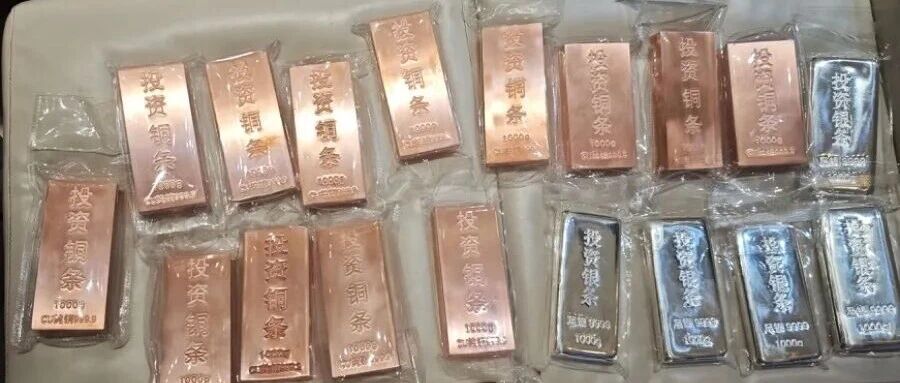
投资铜条首现深圳水贝:1千克卖180元,回收仅80元,商家直呼不建议买
21世纪经济报道· 2026-01-20 11:12
Core Viewpoint - The emergence of "investment copper bars" has sparked controversy and discussion, despite copper being primarily an industrial metal with limited investment value [1][6]. Group 1: Market Observation - Investment copper bars were found in the Shui Bei market, priced at 180 yuan per kilogram, with a recovery price of approximately 80 yuan, indicating a significant discrepancy [4][6]. - The price of these copper bars fluctuated, reaching up to 250 yuan before settling between 180 and 190 yuan [4]. - The market for copper bars appears to be driven by consumer interest, despite merchants advising against their purchase for investment purposes [2][4]. Group 2: Economic Analysis - Copper is classified as a non-precious metal, typically priced by the ton rather than the gram, which complicates its positioning as an investment product [3][6]. - The concept of "Giffen goods" and "Veblen goods" is discussed, suggesting that copper bars may not fit neatly into these categories, as they do not serve as essential goods or luxury items [6][7]. - Behavioral economics suggests that consumers may categorize spending on copper bars as "entertainment" rather than serious investment, indicating a trend towards novelty rather than traditional investment logic [7]. Group 3: Price Trends and Market Dynamics - Since November, copper prices have been on the rise, with significant increases noted in both domestic and international markets [11][13]. - As of January 20, copper prices reached approximately 10.12 million yuan per ton, with year-to-date increases of about 2.85% [11]. - Recent market dynamics, including potential tariffs and supply concerns, have influenced copper pricing and investment behavior, leading to a notable interest in copper-related stocks [13][14]. Group 4: Industry Implications - The rise of investment copper bars may reflect a broader trend of "consumption downgrade" in precious metal investments, as consumers seek alternative options amid rising prices of gold and silver [6][11]. - The performance of copper mining stocks has been strong, with significant price increases observed in companies like Jiangxi Copper and Zijin Mining [11][14].

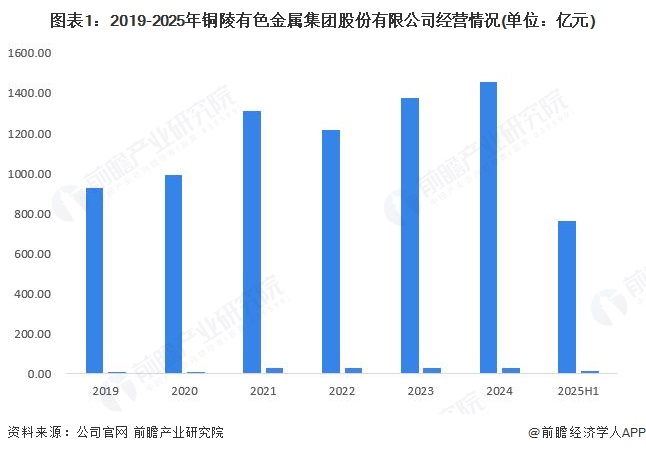
2025年中国铜冶炼行业龙头分析-铜陵有色:精炼铜产量保持上升趋势【组图】
Qian Zhan Wang· 2026-01-20 01:11
Core Viewpoint - The report highlights the growth and operational strategies of Tongling Nonferrous Metals Group Co., Ltd. in the copper smelting industry, emphasizing its revenue achievements and production capabilities. Group 1: Revenue and Profitability - In 2024, the company achieved a revenue of 145.53 billion yuan, representing a year-on-year growth of 5.88%, with a net profit of 2.81 billion yuan, up by 4.05% [1] - For the first half of 2025, the company reported revenues and net profits of 76.08 billion yuan and 1.44 billion yuan, respectively [1] Group 2: Business Layout and Operations - Tongling Nonferrous integrates mining, selection, smelting, and processing in its copper industry, with a complete system and a strong development in modern service industries [2] - The company employs two main operational models: self-mining and external procurement for smelting, producing cathode copper for sale [2] Group 3: Sales Distribution - The sales of refined copper primarily target regions such as Jiangsu, Zhejiang, Anhui, Shanghai, Hubei, Shandong, and Henan, with some exports [6][8] - In the first half of 2025, the company generated 56.73 billion yuan in revenue from the East China region, accounting for 74.56% of total revenue [8] Group 4: Production Trends - From 2018 to 2023, the production and sales of cathode copper showed an upward trend, with a production of 1.7563 million tons in 2023, a 7.83% increase from 2022 [10] - The production is expected to reach 1.7681 million tons in 2024, while sales are projected to slightly decline to 1.7576 million tons [10] Group 5: Future Development Plans - The company aims to enhance operational efficiency and cost control while focusing on both traditional and emerging industries [11] - Strategies include improving production processes, managing risks related to sulfuric acid prices, and advancing automation and smart factory initiatives [11]

东兴证券晨报-20260119
Dongxing Securities· 2026-01-19 14:27
Economic News - The National Bureau of Statistics reported that by December 2025, the value added of the service industry and the service production index both accelerated year-on-year, indicating a favorable start for the economy in 2025 [1] - In 2025, the GDP was estimated at 14,018.79 billion yuan, reflecting a 5.0% increase from the previous year [1] - The industrial sector showed a 9.4% increase in value added for high-tech manufacturing, contributing 26.1% to the overall industrial growth [1] - The retail sales of consumer goods reached 50,120.2 billion yuan in 2025, a 3.7% increase year-on-year, with non-automotive retail sales growing by 4.4% [1] Company Insights - Yushu Technology is expected to ship over 5,500 humanoid robots in 2025, with mass production exceeding 6,000 units [5] - San Zhi Song Shu plans to adjust the factory prices of some products due to rising logistics and labor costs as the Spring Festival approaches [5] - Tongfu Microelectronics is focusing on enhancing domestic packaging and testing capacity for storage chips, which are a key area for semiconductor domestic substitution [5] - TSMC plans to increase its capital expenditure to $56 billion in 2026 to expand AI chip production [5] Industry Analysis - The metal industry is seeing stable growth in production due to technological upgrades and increased recovery rates from mining operations [7] - The company has successfully acquired the Cha Ting copper polymetallic mine, significantly increasing its copper and gold resource reserves [8] - Cost control measures have improved, with a reduction in sales and management expense ratios, while R&D investment has increased significantly [9] - Revenue projections for the company are optimistic, with expected revenues of 59.95 billion yuan, 62.74 billion yuan, and 65.16 billion yuan for 2025 to 2027, respectively [10]

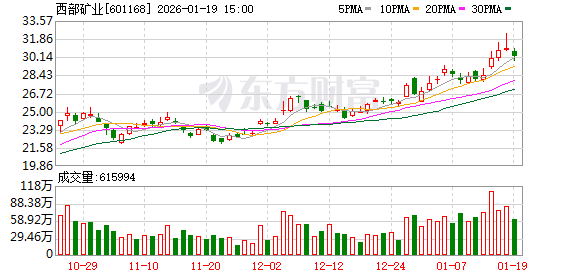
西部矿业:公司将会不断加强与泰丰先行公司的沟通,履行好股东职责
Zheng Quan Ri Bao· 2026-01-19 12:36
Core Viewpoint - Xibu Mining emphasizes its strategic partnership with Taifeng Xianxing Company, a pioneer in lithium-ion battery materials, focusing on technological innovation and product development to enhance its lithium battery material supply chain [2] Group 1: Company Overview - Taifeng Xianxing Company is recognized as one of the earliest companies in China to engage in the research, development, manufacturing, and sales of lithium-ion battery cathode materials [2] - The company leverages over 20 years of industry experience and collaborates with top academic institutions like Peking University to enhance its technological capabilities [2] Group 2: Industry Strategy - The company aims to build a lithium battery material industry chain, with cathode material production as the core, while also focusing on upstream salt lake resource development and innovation in separator materials [2] - Digitalization and intelligent construction are highlighted as key drivers for the company's ongoing development and innovation in the lithium battery materials sector [2] Group 3: Communication and Governance - Xibu Mining acknowledges the operational challenges associated with the proposals made by Taifeng Xianxing and commits to strengthening communication with the company to fulfill its shareholder responsibilities [2] - The company aims to maximize benefits for its listed entity through effective collaboration and governance practices [2]
有色及贵金属行业周报:流动性预期回摆,无碍长多逻辑延续
Orient Securities· 2026-01-19 03:24
Investment Rating - The report maintains a positive outlook on the non-ferrous metals industry [6] Core Viewpoints - The report indicates that negative feedback is intensifying, leading to potential price fluctuations. As industrial product prices rise, domestic downstream negative feedback is increasing, resulting in accelerated inventory accumulation. Recent margin increases by CME and SHFE for certain products may lead to significant short-term price volatility in industrial metals. However, the overall bullish trend for industrial products remains unchanged under the expectation of supportive policies [3][9] Summary by Sections 1. Cycle Assessment - Liquidity expectations are reverting, which does not hinder the long-term bullish logic. Recent statements from Trump favoring Hassett for the National Economic Council position have increased market expectations for the new Fed chair. The probability of a Fed rate cut in April has dropped to 30%. This has led to potential price fluctuations in precious metals due to a weakened narrative around short-term rate cuts [9][13] 2. Industry and Stock Performance - The non-ferrous metals sector rose by 3.03% in the week ending January 16, ranking third among all industries [18] 3. Precious Metals - Short-term narratives around rate cuts are faltering, leading to potential price volatility in precious metals. As of January 16, SHFE gold rose by 2.57% to 1,032.32 CNY per gram, while COMEX gold increased by 2.62% to 4,590.00 USD per ounce. The report notes that the People's Bank of China increased its gold reserves to 7,415 million ounces, marking a continuous increase for 14 months [14][29] 4. Copper - The report highlights that negative feedback is intensifying, leading to increased price volatility for copper. As of January 16, SHFE copper fell by 0.63% to 100,770 CNY per ton, while LME copper decreased by 1.50% to 12,803 USD per ton. The report also notes a significant increase in global visible copper inventory [17][28] 5. Aluminum - The aluminum processing sector shows resilience, with profitability per ton of aluminum expected to remain high. As of January 16, SHFE aluminum fell by 1.66% to 23,925 CNY per ton. The report indicates that the average profit for the aluminum industry is around 7,868 CNY per ton [16][89]





有色及贵金属周报:流动性预期回摆,无碍长多逻辑延续-20260119
Orient Securities· 2026-01-19 02:43
Investment Rating - The report maintains a positive outlook on the non-ferrous metals industry [6] Core Viewpoints - The report indicates that negative feedback is intensifying, leading to potential price fluctuations. As industrial product prices rise, domestic downstream negative feedback is increasing, resulting in accelerated inventory accumulation. Recent margin increases by CME and SHFE for certain products may lead to significant short-term price volatility in industrial metals. However, the overall bullish trend for industrial products remains unchanged under the support of domestic and international policies [3][9] Summary by Sections 1. Cycle Assessment - Liquidity expectations are rebounding, which does not hinder the long-term bullish logic. Recent statements from Trump favoring Hassett for the National Economic Council chair have increased market expectations for the next Federal Reserve chair. The probability of a rate cut in April has dropped to 30%. This may lead to price fluctuations in precious metals due to the weakened short-term rate cut narrative. In the industrial sector, as prices rise, negative feedback from domestic downstream is intensifying, and inventory is accumulating rapidly [9][13] 2. Industry and Stock Performance - The non-ferrous metals sector rose by 3.03% in the week ending January 16, ranking third among all industries [18] 3. Precious Metals - Short-term rate cut narratives are challenged, leading to potential price fluctuations in precious metals. For the week ending January 16, SHFE gold rose by 2.57% to 1,032.32 CNY per gram, while COMEX gold increased by 2.62% to 4,590.00 USD per ounce. SHFE silver surged by 20.03% to 22,483.00 CNY per kilogram, and COMEX silver rose by 12.30% to 89.19 USD per ounce [14][15][29] 4. Copper - Negative feedback is intensifying, leading to increased price volatility for copper. For the week ending January 16, SHFE copper fell by 0.63% to 100,770 CNY per ton, while LME copper decreased by 1.50% to 12,803 USD per ton. The supply side remains tight, and the transmission to the smelting end is approaching [17][28] 5. Aluminum - The processing operation remains resilient, and the profit per ton of aluminum is expected to stay high. For the week ending January 16, SHFE aluminum fell by 1.66% to 23,925 CNY per ton, while LME aluminum decreased by 0.06% to 3,134 USD per ton. The processing operation rate slightly increased to 60.2%, with overall inventory accumulating [16][89]
库存累积叠加关税预期推迟,铜价短期或迎来高位震荡
Zhong Guo Neng Yuan Wang· 2026-01-19 01:55
Group 1: Lithium Market - Lithium battery demand remains strong despite the off-season, with a reversal in supply and demand for lithium carbonate, leading to an upward price trend [4] - This week, lithium carbonate prices increased by 12.86% to 158,000 CNY/ton, while spodumene concentrate rose by 5.32% to 1,980 USD/ton [4] - The main futures contract for lithium carbonate rose by 1.94% to 146,200 CNY/ton, although there was a limit down on Friday due to increased regulatory scrutiny and profit-taking by speculative funds [4] Group 2: Copper Market - Copper prices may experience high volatility in the short term due to inventory accumulation and delayed tariff expectations, with LME copper down by 0.50% [2] - Significant inventory increases were noted, with LME copper inventory rising by 3.31% to 144,000 tons, and domestic electrolytic copper social inventory up by 17.20% to 321,000 tons [2] - The operating rate for electrolytic copper rods increased by 9.65 percentage points to 57.47%, indicating a potential demand recovery [2] Group 3: Aluminum Market - Aluminum prices are expected to face high volatility due to inventory accumulation, with domestic aluminum inventory increasing by 29.24% to 185,900 tons [3] - The price of alumina fell by 1.12% to 2,655 CNY/ton, while electrolytic aluminum prices rose by 0.83% to 24,200 CNY/ton [3] - The demand for aluminum may increase due to the "aluminum replacing copper" trend in the home appliance sector, driven by high copper prices [3] Group 4: Cobalt Market - The cobalt raw material supply remains tight, with cobalt prices expected to continue rising, as MB cobalt increased by 0.59% to 25.68 USD/pound [5] - The Democratic Republic of Congo has lifted its cobalt export ban, implementing a quota system instead, which may affect the timing of raw material availability in the domestic market [5] - The structural tightness in cobalt raw materials is expected to persist, supporting upward price momentum [5]
光大证券:重视各国战略金属收储带来投资机会 全面看好战略金属价值重估
智通财经网· 2026-01-19 01:52
Core Viewpoint - The report from Everbright Securities highlights the increasing importance of strategic metals (copper, aluminum, cobalt, nickel, tin, antimony, tungsten, rare earths) due to supply disruptions and the limitations in production capacity in China and abroad [1][2]. Group 1: Strategic Metal Storage Initiatives - Australia announced a strategic reserve plan for critical minerals worth AUD 1.2 billion, with AUD 185 million allocated for necessary mineral reserves, prioritizing antimony, gallium, and rare earths [2] - The European Commission approved a resource revival action plan to raise EUR 3 billion for supply chain strategies, establishing a platform to support critical material reserves [2] - The U.S. Defense Logistics Agency (DLA) plans to procure USD 500 million in cobalt, USD 245 million in antimony, USD 100 million in tantalum, and USD 45 million in scandium [2] Group 2: Investment Opportunities in Strategic Metals - The focus on strategic metal storage in the U.S. and Australia presents significant investment opportunities, particularly in metals with concentrated supply chains and security risks, such as cobalt from the Democratic Republic of Congo and lithium from South America [3] - The rapid development of AI and energy transition is expected to drive demand for copper, aluminum, and tin, although supply constraints exist for these metals [4] - Military-related metals like tungsten, antimony, and rare earths are facing tightening supply, with production declines attributed to lower resource grades and regulatory controls [5] Group 3: Supply Concentration and Constraints - Copper, lithium, cobalt, and nickel supply is highly concentrated in South America, the Democratic Republic of Congo, and Indonesia, with Chile and Peru accounting for 35% of global copper production and the Democratic Republic of Congo producing 76% of global cobalt [4] - The rapid growth of AI is expected to significantly increase demand for copper, aluminum, and tin, but supply for these metals is constrained [4] - Tungsten, antimony, and rare earths are critical for military applications, but their production has decreased due to resource management practices and regulatory measures [5] Group 4: Investment Recommendations - For copper, recommended companies include Zijin Mining, Luoyang Molybdenum, and Western Mining [5] - For aluminum, Yunnan Aluminum is recommended, with China Aluminum as a focus [5] - For cobalt and nickel, Huayou Cobalt is recommended, with attention to Liqin Resources and Shengtun Mining [5] - For tungsten, focus on China Tungsten High-tech [5] - For tin, Xiyang Tin Industry is recommended, with interest in Xingye Silver Tin [5] - For antimony, Huaxi Nonferrous is highlighted, and for rare earths, Northern Rare Earth is recommended with a focus on China Rare Earth [5]

战略金属系列报告之二:战略收储风再起,金属价值续重估
EBSCN· 2026-01-18 14:46
Investment Rating - The report maintains an "Overweight" rating for the non-ferrous metals sector [5]. Core Insights - The report highlights the renewed focus on strategic metal reserves by countries like Australia, the EU, and the US, indicating a significant increase in the importance of "critical mineral resources" since 2025 [2][3]. - The strategic metal storage initiatives are expected to create investment opportunities, particularly in metals with concentrated supply chains and those essential for AI and energy transition [2][3]. Summary by Sections Strategic Metal Storage Initiatives - Australia announced a AUD 1.2 billion strategic reserve plan for critical minerals, prioritizing antimony, gallium, and rare earths [1]. - The EU plans to raise EUR 3 billion for a supply chain strategy, establishing a platform for critical materials [1]. - The US plans to procure USD 500 million of cobalt, USD 245 million of antimony, USD 100 million of tantalum, and USD 45 million of scandium [1]. Investment Opportunities - The report identifies investment opportunities in metals with high supply concentration and security risks, such as cobalt from the Democratic Republic of Congo, copper and lithium from South America, and nickel from Indonesia [2]. - It emphasizes the demand for copper, aluminum, and tin driven by AI and energy transition, while noting supply constraints for these metals [3]. - Military-related metals like tungsten, antimony, and rare earths are highlighted as having tight supply, with significant applications in defense [3]. Company Recommendations - The report recommends several companies based on their strategic positioning in the metals market: - Copper: Zijin Mining, Western Mining, and Luoyang Molybdenum [4]. - Aluminum: Yunnan Aluminum and China Aluminum [4]. - Cobalt and Nickel: Huayou Cobalt and others [4]. - Tungsten: China Tungsten High-Tech [4]. - Tin: Xiyang Tin and others [4]. - Antimony: Huaxi Nonferrous [4]. - Rare Earths: Northern Rare Earth and others [4].


铜周报:消息利空回调,中长向上趋势难改-20260118
Hua Lian Qi Huo· 2026-01-18 14:28
1. Report Industry Investment Rating No information provided in the report. 2. Core Viewpoints of the Report - Despite short - term news - induced pullbacks, the medium - to long - term upward trend of copper prices remains unchanged. The strategy is to buy on dips in the medium term, with the reference support range for Shanghai copper 2603 being 94,000 - 95,000 yuan/ton [8][9]. - The vulnerability of the copper mine end is prominent, with frequent production disruptions at major overseas mines. From 2025 - 2026, global copper mine production growth is expected to be limited. Although domestic refined copper production increased in December 2025, future production may decline due to reduced processing fees. - Recent domestic downstream copper consumption has weakened, and Nvidia's revision of copper demand data for data centers may lower market expectations for future copper demand. However, the impact on overall copper demand is relatively limited. New energy, power grids, photovoltaic, and wind power are expected to maintain high - speed growth and remain the main drivers of new copper demand. In the context of limited supply growth, the supply - demand balance of copper is likely to tighten in the short term, and the long - term upward price trend is unlikely to change [9]. 3. Summary by Directory 3.1 Week - ly Views and Strategies - **Strategy**: Buy on dips in the medium term, with the reference support range for Shanghai copper 2603 being 94,000 - 95,000 yuan/ton [8]. - **Macro**: The US imposed a 25% tariff on some semiconductors starting from January 15, 2026, with exemptions for data centers and the public sector. Copper import tariffs only apply to semi - finished products, and refined copper is not restricted. The People's Bank of China lowered the re - lending rates for supporting agriculture and small businesses by 0.25 percentage points starting from January 19. China will cancel the VAT export tax rebate for photovoltaic products starting from April 1, and the tax rebate rate for battery products will be phased out [9]. - **Supply**: The vulnerability of the copper mine end is prominent, with frequent production disruptions at major overseas mines. The ICSG predicts that the global copper mine production growth rate may drop to 0.9% in 2025. From 2025 - 2026, copper mine production growth is expected to be restricted. In December 2025, domestic refined copper production increased by 76,000 tons month - on - month. Overseas smelting capacity expansion is slow due to energy prices [9]. - **Demand**: Domestic downstream copper consumption has weakened recently, with an increase in production cuts and suspensions. Nvidia's revision of copper demand data for data centers may lower market expectations for future copper demand, but the impact on overall copper demand is relatively limited. New energy, power grids, photovoltaic, and wind power are expected to maintain high - speed growth and remain the main drivers of new copper demand [9]. - **Inventory**: Last week, LME copper inventory decreased slightly, while domestic social and exchange inventories increased rapidly. The off - season and significant price increases have affected downstream demand [9]. 3.2 Futures and Spot Markets - **Futures, Spot, and Premiums**: Relevant data on domestic futures and spot prices and Shanghai flat - water copper premiums are presented, but no specific analysis is provided [13]. - **LME Copper Price and Shanghai - London Ratio**: Relevant data on LME copper price trends and the Shanghai - London ratio are presented, but no specific analysis is provided [15]. 3.3 Supply and Inventory - **Global Copper Mine Capital Expenditure and New Large - scale Copper Mine Discoveries**: Global copper exploration investment has fluctuated significantly. Since 2015, the discovery of high - grade copper mines has decreased year by year, and new large - scale copper mines are often located in areas with poor geological conditions or political instability, with long development cycles [24]. - **Global Copper Mine and Refined Copper Production Distribution**: In 2024, the top three countries in global copper mine production were Chile (23%), Congo (DRC) (15%), and Peru (11%); the top three countries in global refined copper production were China (45%), Congo (DRC) (9%), and Chile (7%) [27][29]. - **Copper Concentrate Processing Fees TC and Global Copper Mine Production**: As of January 16, 2026, the comprehensive TC price of 26% clean copper concentrate was - 46.40 US dollars/dry ton, and the comprehensive spot price was 3498 US dollars/dry ton. In 2025, the global copper concentrate production was 15.305 million tons from January to October, and the annual production in 2024 was 22.388 million tons, a year - on - year increase of 2.1% [33]. - **Copper Concentrate Import and Inventory**: In November 2025, China's copper concentrate imports were 2.5262 million tons, a month - on - month increase of 3.05% and a year - on - year increase of 13.13%. From January to November 2025, the cumulative imports were 27.614 million tons, a year - on - year increase of 8.0%. In the third week of 2026, the port inventory of imported copper concentrate in China was 547,000 tons [40]. - **Global and Chinese Electrolytic Copper Production**: In October 2025, the global refined copper production was 2.2419 million tons, with a consumption of 2.2433 million tons, a supply shortage of 1400 tons. From January to October 2025, the global refined copper production was 22.6095 million tons, with a consumption of 22.5734 million tons, a supply surplus of 36,100 tons. In October 2025, China's refined copper (electrolytic copper) production was 1.204 million tons, a year - on - year increase of 8.9%; from January to October, the cumulative production was 12.295 million tons, a year - on - year increase of 9.7% [44]. - **Chinese Electrolytic Copper Import and Export Volume**: In November 2025, China's refined copper imports were 304,700 tons, a year - on - year decrease of 23.47%. From January to November 2025, the cumulative imports were 3.1031 million tons, a year - on - year decrease of 278,000 tons, a cumulative year - on - year decrease of 8.2%. From January to November 2025, the cumulative exports were 681,000 tons, a year - on - year increase of 49.33% [46]. - **Chinese Scrap Copper Import and Refined - Scrap Price Difference**: From January to November 2025, China's cumulative imports of recycled copper raw materials (copper scrap and waste) were 2.104 million tons, a year - on - year increase of 3.6%. As of January 16, 2026, the refined - scrap price difference in the Guangdong market was 5505 yuan/ton, higher than the reasonable price difference of 1500 yuan/ton [50][51]. - **International Visible Inventory**: As of January 15, 2026, the LME copper inventory was 141,600 tons, and the copper inventory in the New York market rose to 542,900 tons, reaching a new high in the same period in recent years [58][59]. - **Domestic Inventory**: Since the end of the year, domestic social and SHFE copper inventories have increased rapidly. As of January 15, 2026, the domestic social inventory was 327,500 tons, and the SHFE inventory reached a new high since May last year [63][64]. 3.4 Primary Processing and End - user Markets - **Primary Processing Market**: From January to November 2025, China's cumulative copper product output was 22.593 million tons, a year - on - year increase of 4.9%. In November 2025, China imported 427,000 tons of unwrought copper and copper products; from January to November, the cumulative imports were 4.883 million tons, a year - on - year decrease of 4.7%. From January to November 2025, the total export of unwrought copper was 1.4971 million tons, a year - on - year increase of 24.10% [70][75]. - **End - user Market - Power**: From January to November 2025, the investment in power source projects of major power generation enterprises in China was 850 billion yuan, a year - on - year decrease of 1.8%; the investment in power grid projects was 560.4 billion yuan, a year - on - year increase of 5.9% [79]. - **End - user Market - Real Estate**: From January to November 2025, the national real estate development investment was 7.8591 trillion yuan, a year - on - year decrease of 15.9%; among them, residential investment was 6.0432 trillion yuan, a decrease of 15.0% [85]. - **End - user Market - Automobile**: From January to November 2025, China's automobile production and sales were 31.231 million and 31.127 million vehicles respectively, a year - on - year increase of 11.9% and 11.4% respectively. From January to November 2025, the production and sales of new energy vehicles were 14.907 million and 14.780 million vehicles respectively, a year - on - year increase of 31.4% and 31.2% respectively, and the sales of new energy vehicles accounted for 47.5% of the total sales of new vehicles. It is expected that the sales of new energy vehicles in China will reach 1.85 million in 2026, and although the copper consumption growth rate will drop to about 15%, the absolute increase in copper consumption will still be considerable [90][95]. - **End - user Market - Home Appliances**: In November 2025, the national air - conditioner output was 15.026 million units, a year - on - year decrease of 23.4%; from January to November, the cumulative output was 245.361 million units, a year - on - year increase of 1.6%. From January to November 2025, the export volume of Chinese household appliances was 4.082801 billion units, a year - on - year decrease of 0.4%. Among them, the cumulative export of air - conditioners from January to November was 55.13 million units, a year - on - year decrease of 2.9% [99]. - **End - user Market - Photovoltaic and Wind Power**: From January to November 2025, the national cumulative power generation installed capacity was 3.79 billion kilowatts, a year - on - year increase of 17.1%. Among them, the installed capacity of solar power generation was 1.16 billion kilowatts, a year - on - year increase of 41.9%; the installed capacity of wind power was 600 million kilowatts, a year - on - year increase of 22.4%. It is expected that the new installed capacity of photovoltaic in China in 2026 will be between 235 - 270GW, and the new installed capacity of wind power in 2025 will be 78 - 80GW. The single - consumption of copper in photovoltaic and wind power is gradually decreasing. It is expected that the copper consumption of photovoltaic and wind power installations in China will decrease by 2% in 2025 and by more than 12% in 2026 [103][107]. 3.5 Supply - Demand Balance Sheet and Industrial Chain Structure - **Global Copper Downstream Demand Structure Change and Supply - Demand Balance Forecast**: Since 2020, the global copper demand structure has changed significantly. It is expected that the proportion of green copper demand (photovoltaic, wind power, new energy vehicles) will exceed that of construction demand in 2025. From 2026 - 2028, the global refined copper supply will be 27.97 million tons, 28.94 million tons, and 28.84 million tons respectively, with a year - on - year increase of 1.6%, 1.7%, and 1.4%; the global refined copper demand will be 28.13 million tons, 28.80 million tons, and 29.45 million tons respectively, with a year - on - year increase of 2.9%, 2.4%, and 2.3%. There will be continuous supply shortages of 160,000 tons, 360,000 tons, and 610,000 tons from 2026 - 2028 [110][111]. - **Industrial Chain Structure**: No specific content is provided in the report.