
问界

Search documents
实测十余款新能源车门把手:眼花缭乱的开门方式,能否保障安全?
Di Yi Cai Jing· 2025-10-16 03:37
Core Insights - The recent explosion incident involving the Xiaomi SU7 in Chengdu has heightened market focus on the safety mechanisms of car door handles [2][3] - A variety of designs exist for hidden door handles among major automotive brands, with significant differences in safety logic and operation methods [2][6] Design Variations - The market features both electronic and mechanical door handles, with many models incorporating both types, primarily hidden designs [3][6] - For instance, Tesla's Model Y and Xpeng's MONA 03 require pressing down on the handle before opening the door mechanically [3][4] - Toyota's BZ5 and Aito's M5 have handles that automatically pop up after unlocking, while the Aito M8 EV uses a sensing mechanism for operation [5][6] Safety Mechanisms - Emergency unlocking features vary by model; for example, the Zeekr 7X automatically unlocks in emergencies, while the Volkswagen ID.6 offers a traditional handle alongside an emergency pull mechanism [6][7] - The design of mechanical opening mechanisms is often less accessible, with some hidden in storage compartments or low positions within the door, complicating emergency access [7]


黄金白银蹭蹭涨,新能源车先顶不住了?
吴晓波频道· 2025-10-16 00:21
Core Viewpoint - The rising costs of raw materials and adjustments in vehicle purchase tax policies are likely to trigger a new round of reshuffling in the electric vehicle (EV) industry [2][24]. Group 1: Raw Material Price Increases - Gold prices have surged to $4,200 per ounce, marking a year-to-date increase of over 50% [3]. - Silver has also reached a 45-year high, with industrial demand accounting for 59% of total silver demand, driven by sectors like photovoltaics and electric vehicles [7][9]. - Copper prices have risen nearly 20% this year, with a projected demand of 200,000 tons for EVs by 2025, significantly higher than traditional vehicles [6][10]. Group 2: Impact on Electric Vehicle Manufacturing - The rising prices of silver and copper will have a long-term impact on the manufacturing costs of EVs, with copper usage in electric vehicles being five times that of traditional fuel vehicles [11][10]. - The cost of key battery materials like lithium, cobalt, and nickel is also on the rise, with cobalt prices increasing from 159,000 yuan per ton to 337,000 yuan per ton due to supply restrictions [15][17]. - Aluminum prices have reached over $2,780 per ton, with demand for aluminum in vehicle manufacturing expected to exceed 10 million tons this year [18]. Group 3: Policy Changes and Market Dynamics - The end of the vehicle purchase tax exemption for EVs by December 31, 2025, will increase the final price of vehicles by approximately 5% [24][30]. - The tightening of technical requirements for EVs may lead to the exit of less competitive models from the market, potentially reducing consumer choices in the short term [30][38]. - The combination of rising raw material costs and policy changes may lead to a price increase for EVs, with manufacturers likely to adopt strategies such as reducing features to maintain competitiveness [36][37].


汽车数据安全监管趋严,奇瑞打出“隐私保护牌”
Jing Ji Guan Cha Wang· 2025-10-15 12:08
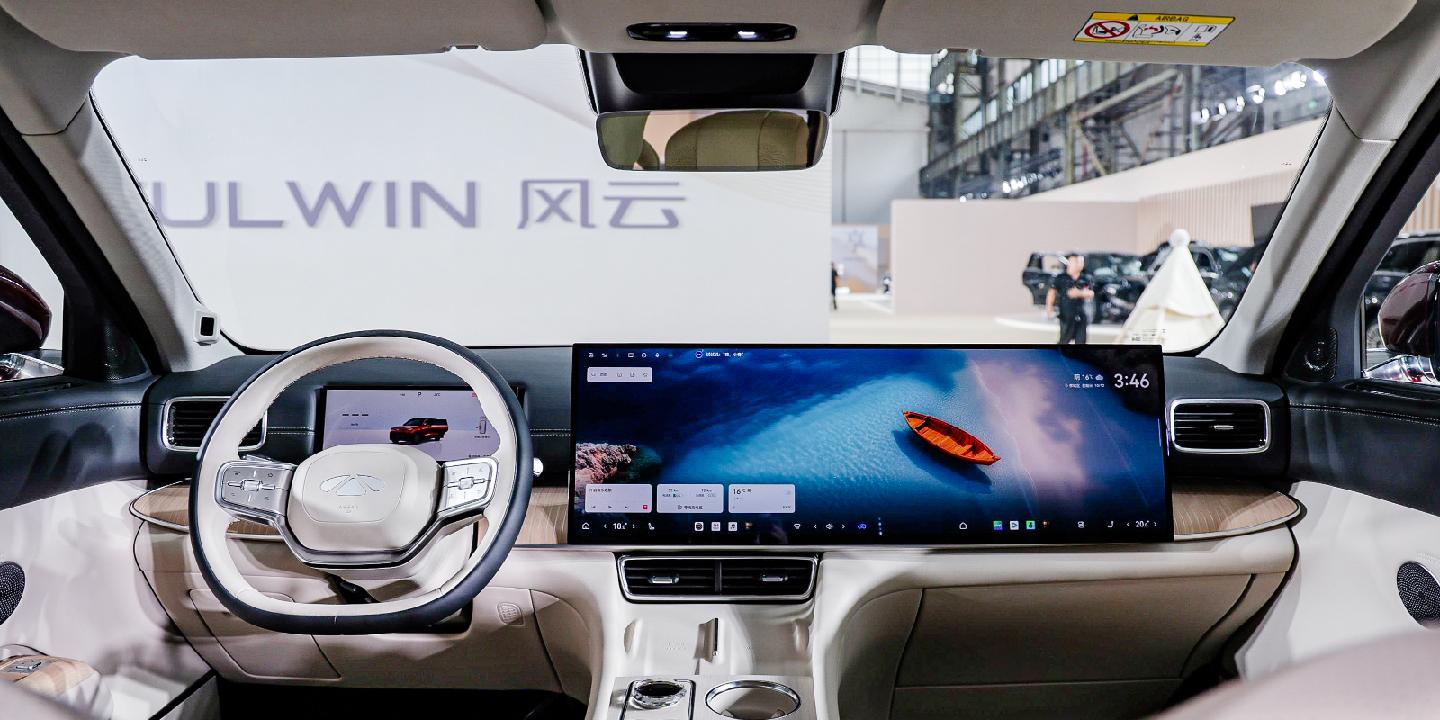
Core Insights - Chery's Fengyun T11 has officially started pre-sales, positioning "privacy protection" as its core selling point, contrasting with the trend of data collection in mainstream smart vehicles [2] - The global smart automotive industry is entering a critical period of reshaping privacy protection rules, with user privacy expected to become a significant competitive arena [2][8] Data Privacy and Technology - The rapid proliferation of smart vehicles has transformed them into massive data collection platforms, raising concerns about user privacy [3] - Fengyun T11 features four core privacy protection functions, supported by a comprehensive technology system that integrates hardware security, encryption, local processing, and zero-trust principles [3] - The account information isolation function exemplifies the application of the zero-trust security concept in vehicle systems, ensuring that user data remains protected from cross-account leakage [3][4] Regulatory Environment - China's data security regulatory framework has evolved, making privacy protection a mandatory requirement for automotive companies [5][6] - A complete legal system for automotive data security has been established, providing clear legal boundaries for data processing activities [5] - Recent inspections revealed data security vulnerabilities in several vehicle models, highlighting the need for compliance with data protection regulations [7] Global Trends - The global landscape for data privacy protection regulations is also intensifying, with the EU's Data Act granting users greater control over vehicle-generated data [8] - China's initiative to establish an international standard for privacy protection in smart mobility services marks a significant step in global privacy regulation [8] - Privacy protection is becoming a key dimension for assessing automotive companies' market competitiveness, shifting from a compliance cost to a means of building brand trust and creating value [8]
沃尔沃XC70上市一线销售快报
车fans· 2025-10-15 02:42
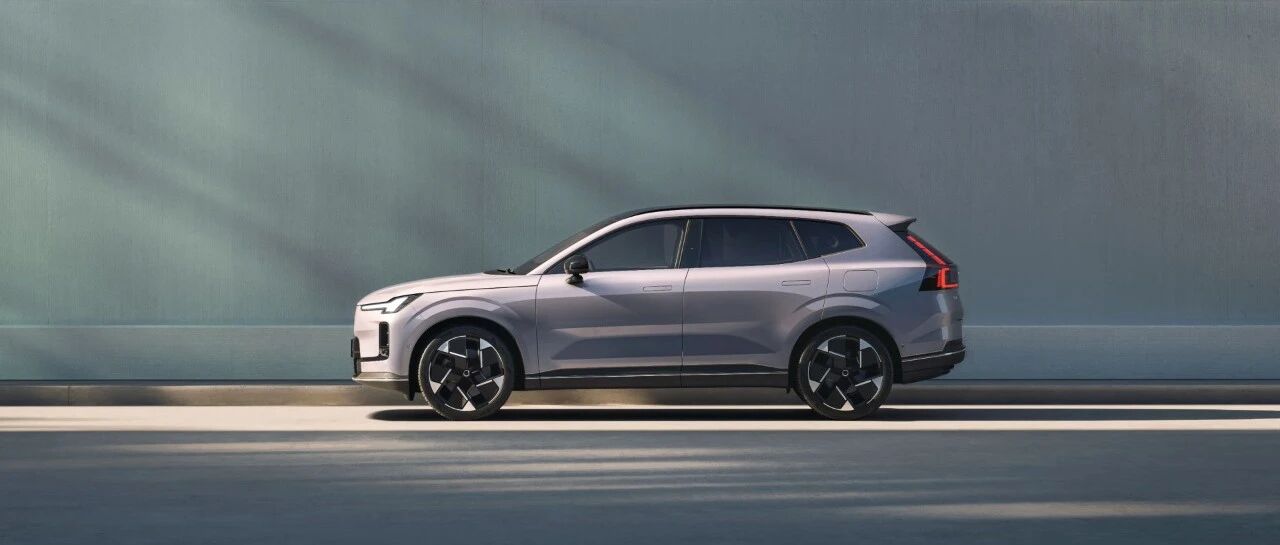
Order Situation - Average store new orders: 10 to 12 units [6] - Store visit ratio: 25% to 30% [6] - Increase in store visits: 50% to 70% [6] - Strong performance in first-tier cities, especially in the Sichuan-Chongqing region, driving overall test drive increases during the National Day holiday [8] Customer Profile - Age range of customers: 35 to 55 years [7] - Male proportion: 75% [7] - Customers are generally high-educated, high-income individuals who prioritize vehicle safety [10] - Customer sources are evenly split between traditional luxury brands (BBA) and new energy vehicle brands, with some long-term Volvo brand loyalists [10] Configuration Preferences - Main selling configuration: All-wheel drive with ultra-long range Plus at 319,900 CNY [9] - All-wheel drive vehicles account for 95% of sales, while two-wheel drive accounts for 5% [9] - Preferred color: Dawn Gray (main selling color) [9] - Higher proportion of full payments than expected, with most customers opting for the second-highest configuration [13] Competitive Comparison - Among 10 customers, 2 compared with Volvo XC60, 2 with AITO M7, 2 with traditional BBA fuel models (Q5L, GLC), and 1 with Li Auto L7 [12] - New energy vehicle customers are increasingly visiting showrooms, focusing on safety and performance when comparing with AITO M7 and market share when comparing with Li Auto L7 [15]
新能源汽车购置税明年退坡 车企及消费者抢搭红利“末班车”
Zheng Quan Shi Bao· 2025-10-14 17:34
Core Viewpoint - The transition from a full exemption of vehicle purchase tax to a 50% reduction starting January 1, 2026, marks a significant shift in China's new energy vehicle (NEV) market, impacting consumer purchasing decisions and costs [1][2][3] Policy Changes - The new policy requires NEVs to meet specific technical standards to qualify for tax exemptions, emphasizing battery capacity and hybrid system upgrades [2][3] - The maximum tax exemption for NEVs will decrease from 30,000 yuan to 15,000 yuan, with a reduction in the exemption rate from 60% to 30% for vehicles priced at 500,000 yuan [3] Market Dynamics - Automakers are accelerating new model launches to capitalize on the remaining tax benefits, with over 70 new models introduced in September [4] - The market is experiencing a surge in demand for NEVs, with retail sales reaching 1.296 million units in September, a year-on-year increase of 15.5% [5] Competitive Landscape - The focus of competition is shifting towards technology, brand, service, and user experience, indicating a longer-term quality competition in the NEV sector [1][2] - Companies are adopting strategies such as tax difference subsidies to mitigate the impact of the tax changes on consumer purchasing decisions [6] Consumer Behavior - Consumers are increasingly aware of the impending tax cost increases, leading to a rush in orders during the last months of the tax exemption period [7] - The market is witnessing a differentiation in promotional strategies, with NEVs focusing on "new car benefits" while traditional fuel vehicles are offering significant cash discounts [7][8] Industry Outlook - The gradual exit of tax incentives is seen as a necessary evolution for the NEV industry, pushing it towards maturity and self-sustainability [3][8] - Future market success will depend on the true product strength, cost control, and adaptability of automakers [9]
BBA在华销量失守 加速布局纯电赛道
2 1 Shi Ji Jing Ji Bao Dao· 2025-10-13 23:17
Group 1: Market Dynamics - The luxury car market is undergoing a significant adjustment, with BBA (BMW, Mercedes-Benz, Audi) showing a differentiated trend: BMW is leading, Mercedes-Benz is under pressure, and Audi is catching up [1] - BMW is the only company among BBA to achieve positive sales growth, with global deliveries reaching 588,300 units in Q3, up 8.8% year-on-year, and a total of 1,795,900 units in the first three quarters, up 2.4% [1] - In contrast, Mercedes-Benz's Q3 global sales fell to 525,300 units, down 12% year-on-year, with a total of 1,601,600 units in the first three quarters, down 9% [1][3] - Audi's Q3 global sales were 397,100 units, a decrease of 2.5%, with a total of 1,191,100 units in the first three quarters, down 4.8% [1] Group 2: Challenges in the Chinese Market - The Chinese market poses a significant challenge for BBA, with BMW's Q3 deliveries in China slightly declining by 0.4% to 147,100 units, and a cumulative drop of 11.2% to 464,000 units in the first three quarters [3] - Mercedes-Benz faced a more severe decline, with Q3 deliveries in China plummeting 27% to 125,000 units, and a total drop of 18% to 418,000 units in the first three quarters [3] - Audi's sales in China showed signs of recovery, with its joint venture reporting a 13.5% increase in sales to 58,000 units in the first three quarters [3] Group 3: Pricing and Competitive Pressure - The pricing structure of BBA is under pressure, particularly in the 200,000 to 400,000 RMB price range, where local brands are challenging entry-level models [4] - In the 200,000 to 300,000 RMB segment, brands like Zeekr and Tesla are eroding BBA's market share with better performance and value [4] - BMW has revised its profit forecast for 2025, expecting a pre-tax profit "slightly below" last year's 10.97 billion euros (approximately 90.98 billion RMB) due to increased tariff costs and support for local dealers [4][5] Group 4: Electrification Strategies - BBA's electrification strategies are diverging, with BMW leading, Mercedes-Benz aggressively pushing forward, and Audi taking a more pragmatic approach [6] - BMW's electric vehicle sales reached 323,000 units in the first three quarters, up 10% year-on-year [7] - Mercedes-Benz is launching a significant product offensive, with plans to introduce at least 40 new models by the end of 2027, including the new electric GLC targeting the Chinese luxury electric SUV market [8] - Audi is adjusting its electric strategy, focusing on a balanced approach between long-term electric goals and flexible product offerings, with new models like the Q6L e-tron [9] Group 5: Current Market Trends - The hybrid market remains a crucial support for BBA, with BMW's hybrid vehicle sales growing 8% to 152,000 units in Q3 [9] - The pure electric market is outpacing hybrids in China, with a year-on-year growth of 32.4% in September, indicating a shift in consumer preference [9] - As BBA collectively intensifies its focus on electric products, a competitive battle for market share in the future landscape is unfolding in China [9]
BBA失守中国市场,奔驰三季度交付量大跌27%
2 1 Shi Ji Jing Ji Bao Dao· 2025-10-13 14:54
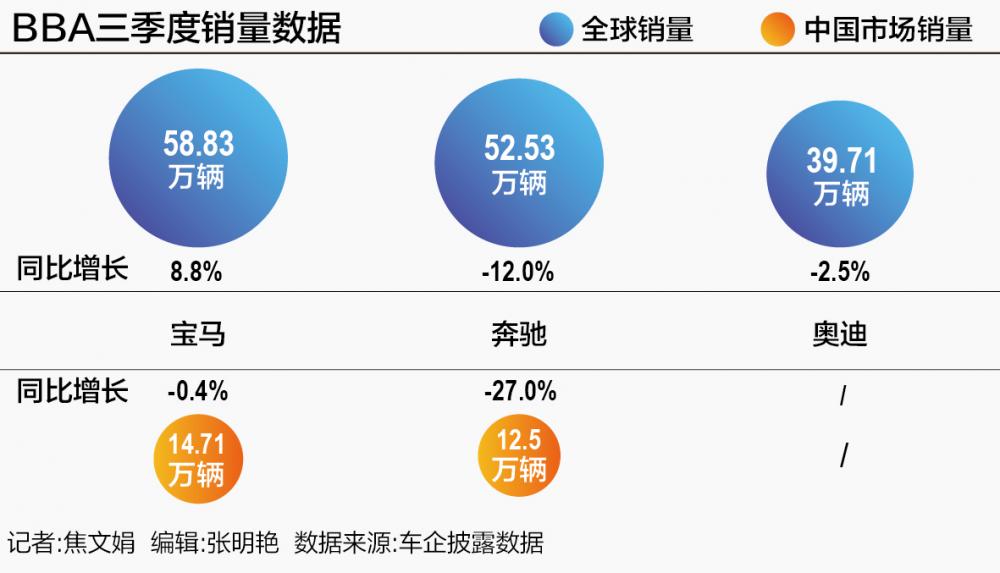
Core Insights - The luxury car market is undergoing significant changes, with BBA (BMW, Mercedes-Benz, Audi) showing a divergence in performance: BMW is leading, Mercedes-Benz is under pressure, and Audi is catching up [1] Group 1: Sales Performance - BMW is the only company among BBA to achieve positive sales growth, with global deliveries reaching 588,300 units in Q3, a year-on-year increase of 8.8%, and a total of 1,795,900 units for the first three quarters, up 2.4% [1] - Mercedes-Benz's Q3 global sales were 525,300 units, down 12% year-on-year and 4% quarter-on-quarter, with a total of 1,601,600 units for the first three quarters, a decrease of 9% [1] - Audi's Q3 global sales were 397,100 units, a year-on-year decline of 2.5%, with total sales for the first three quarters at 1,191,100 units, down 4.8% [1] Group 2: Market Challenges in China - BMW's sales in China fell by 0.4% in Q3 to 147,100 units, with a cumulative decline of 11.2% to 464,900 units for the first three quarters, making China the only market where BMW experienced a downturn [3] - Mercedes-Benz faced a significant drop in China, with Q3 deliveries plummeting 27% to 125,000 units and a total decline of 18% to 418,000 units for the first three quarters, marking China as its largest market decline [5] - Audi's sales in China showed signs of recovery, with its joint venture reporting a 13.5% increase in sales for the first three quarters [5] Group 3: Competitive Landscape - The market share of German brands has decreased from 18.4% in January 2025 to 14.3% in September 2025, indicating increased competition from local brands [5] - In the 200,000 to 300,000 yuan price range, local brands are challenging BBA's entry-level models, while in the higher price segments, brands like NIO and Li Auto are competing for core customers [6] Group 4: Profit Outlook - Due to the impact of the Chinese market, BMW revised its full-year profit forecast, now expecting a pre-tax profit "slightly lower" than last year's 10.97 billion euros (approximately 90.98 billion yuan) [6] Group 5: Electrification Strategies - BMW leads in electrification, with 323,000 electric vehicle deliveries in the first three quarters, a 10% increase [8] - Mercedes-Benz is launching a major product offensive in the electric vehicle sector, with plans to introduce at least 40 new models by the end of 2027 [9] - Audi is adjusting its electrification strategy, focusing on a balanced approach between long-term electric goals and flexible product offerings [11]

BBA失守中国市场,奔驰三季度交付量大跌27%
21世纪经济报道· 2025-10-13 14:21
Core Viewpoint - The luxury car market is undergoing a significant adjustment, with BBA (BMW, Mercedes-Benz, Audi) showing a differentiated performance: BMW is leading, Mercedes-Benz is under pressure, and Audi is catching up [1]. Group 1: Sales Performance - BMW is the only company among BBA to achieve positive sales growth, with global deliveries reaching 588,300 units in Q3, a year-on-year increase of 8.8%, and a total of 1,795,900 units for the first three quarters, up 2.4% [1]. - Mercedes-Benz's Q3 global sales were 525,300 units, down 12% year-on-year and 4% quarter-on-quarter, with a total of 1,601,600 units for the first three quarters, a decrease of 9% [1]. - Audi's Q3 global sales were 397,100 units, a decline of 2.5% year-on-year, with a total of 1,191,100 units for the first three quarters, down 4.8% [1]. Group 2: Market Challenges - The Chinese market has become a common challenge for BBA, with BMW's Q3 deliveries in China slightly decreasing by 0.4% to 147,100 units, and a cumulative decline of 11.2% to 464,900 units for the first three quarters [3][4]. - Mercedes-Benz faced a significant drop in China, with Q3 deliveries plummeting 27% to 125,000 units and a total decline of 18% to 418,000 units for the first three quarters, marking it as the largest market decline for the brand [5]. - Audi's sales in China showed signs of recovery through its joint ventures, with a 13.5% increase in sales for the first three quarters [5]. Group 3: Pricing and Competition - The pricing structure of BBA is under pressure, particularly in the 200,000 to 400,000 RMB price range, where domestic brands are challenging BBA's entry-level models [6]. - In the 200,000 to 300,000 RMB segment, brands like Zeekr and Tesla are offering better performance or value, while in the higher segments, NIO and Li Auto are competing for core customers [6]. - BMW has adjusted its profit forecast for 2025, expecting a pre-tax profit "slightly lower" than last year's 10.97 billion euros (approximately 90.98 billion RMB) due to higher-than-expected tariff costs and financial support for local dealers [6]. Group 4: Electrification Strategies - BBA's electrification paths are diverging, with BMW leading, Mercedes-Benz aggressively pushing, and Audi taking a pragmatic approach [8]. - BMW's electric vehicle deliveries reached 323,000 units in the first three quarters, a year-on-year increase of 10% [8]. - Mercedes-Benz is launching a major product offensive with its new electric GLC targeting the luxury electric SUV market in China, while also building a cooperative ecosystem for intelligent driving [8][9]. - Audi is adjusting its electric strategy, focusing on a balanced approach between long-term electric goals and flexible product offerings, with plans for new electric models [11]. Group 5: Market Trends - The hybrid market remains a crucial support, with BMW's hybrid vehicle sales increasing by 8% to 152,000 units in Q3, while Mercedes-Benz delivered 96,000 hybrid vehicles, up 10% [8]. - The pure electric market is growing rapidly, with a year-on-year increase of 32.4% in September, surpassing hybrid and extended-range vehicles [8].
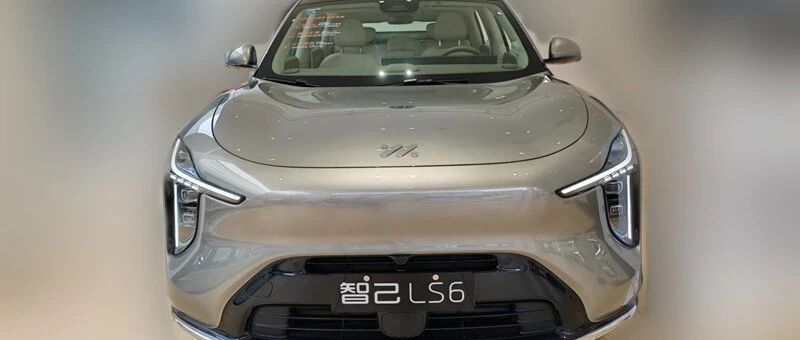
智己LS6:新款吸引中年男性,超级增程是大热门
车fans· 2025-10-13 00:56
Core Insights - The article discusses the launch and sales performance of the new Zhiji LS6, highlighting its features and customer demographics [1][2][3] Sales Performance - The new LS6 has seen a significant increase in sales, rising from 20 units to 50 units after the introduction of the extended-range version [1] - The best-selling configuration is the 2026 model extended-range 52 Max, priced at 229,800 yuan, with the most popular color being Raphael Tea/Tuner Silver [2][14] Product Features - The new LS6 offers an electric range of 370-450 km and a comprehensive range of 1500 km, which has been well-received by customers [2][7] - The vehicle includes high-end features such as 800V fast charging and free advanced driver assistance, making it competitive in its price range [7] Customer Demographics - Compared to the previous model, the average age of customers has increased, attracting more mature male consumers, while the proportion of female buyers has decreased [3][10] - Many customers are replacing their vehicles from brands like BBA (Benz, BMW, Audi), with a significant number being employees from state-owned enterprises and civil servants [4] Competitive Landscape - The LS6 is frequently compared to models such as Aion M7, Li Auto L6, and Lantu FREE+, with Lantu FREE+ being the most common comparison due to its availability and advanced driver assistance system [10][12] - A notable competitor is Lantu FREE+, which has a strong reputation for its smooth driver assistance features, impacting customer decisions [12] Customer Feedback - Initial customer feedback has been largely positive, with few complaints reported. However, some customers have mentioned concerns about trunk space and the positioning of the passenger display screen [17][18] Financial Options - The dealership offers a financing plan with a 0% interest rate for the first two years, making the purchase more attractive [16] - Customers can also benefit from various promotional offers, including cash discounts and free upgrades on certain features [21]
中国汽车产业凭啥换道超车?
Jing Ji Ri Bao· 2025-10-12 04:06
Core Insights - The rapid growth of new energy vehicles (NEVs) in China is evident, with record charging volumes during the recent National Day and Mid-Autumn Festival holidays, indicating an increase in market share and usage [1] - The NEV sector is crucial for China's transition from a major automotive nation to a strong automotive power, with projections showing a fivefold increase in NEV ownership by 2024 compared to the end of the 13th Five-Year Plan [1] - The sales of new energy vehicles are expected to exceed 50% of total new car sales by the end of the year, surpassing the targets set for the 14th Five-Year Plan [1] Group 1: Industry Growth and Performance - During the 14th Five-Year Plan, significant investments have been made to overcome technical challenges, resulting in improved product quality and performance, such as an average driving range of nearly 500 kilometers for pure electric passenger vehicles [2] - The cost of battery cells has decreased by 30%, while their lifespan has increased by 40%, and charging speeds have improved by over three times [2] - The number of electric vehicle charging infrastructure has reached 17.35 million, a year-on-year increase of 53.5%, enhancing user experience [2] Group 2: Market Dynamics and Global Positioning - The NEV sector is reshaping the automotive industry, with domestic brands capturing nearly 70% of passenger vehicle sales in the first eight months of the year, driven by high-end models like NIO ES8 and AITO M9 [4] - Exports of Chinese automobiles reached 4.292 million units, a 13.7% increase year-on-year, with NEV exports alone growing by 87.3% to 1.532 million units [4] - Chinese NEVs are gaining recognition in global markets, with positive feedback on driving experience and interaction levels compared to traditional European brands [4] Group 3: Supply Chain and Technological Advancements - The development of NEVs is transforming the global automotive supply chain, with 15 Chinese companies listed among the top 100 global automotive parts suppliers, including CATL ranked fifth [5][6] - Collaborations with Chinese battery and smart driving technology providers are becoming the preferred choice for many multinational automakers accelerating their electrification efforts [6] - The success of China's NEV industry is attributed to a combination of a large domestic market, efficient supply chains, strong engineering capabilities, rapid technological iteration, and supportive national policies [6]
