淘宝

Search documents
中国公司全球化周报|TikTok东南亚月活用户突破4.6亿/淘宝出海双11全球上新210万新品
3 6 Ke· 2025-11-03 02:09
Group 1: Industry Trends - Investment, trade, and technology are currently the most popular directions for Chinese companies expanding into Dubai [2] - TikTok's monthly active users in Southeast Asia have surpassed 460 million, with Indonesia leading at 160 million [5] - Taobao has launched 2.1 million new products globally for this year's Double 11 shopping festival, aiming to enhance the international competitiveness of domestic brands [5] Group 2: Company Developments - Pop Mart opened its first store in the Middle East at Hamad International Airport in Doha, Qatar, marking its global expansion strategy [6] - OPPO launched its Find X9 series flagship smartphone in Spain, priced at €1,299 (approximately ¥10,700), aligning with the trend of increasing average smartphone prices [6] - Meituan's international delivery brand Keeta has officially started operations in Abu Dhabi, expanding its presence in the UAE market [6] Group 3: Financial Performance - Anker Innovations reported a revenue of ¥21.019 billion for the first three quarters of 2025, with overseas business contributing over 96% of total revenue [7] - Geely has officially entered the UK market with the launch of its first pure electric SUV, the EX5, and aims to sell 100,000 units by 2030 [7] - BYD unveiled its K-EV model at the 2025 Tokyo Mobility Show, introducing a dual strategy of pure electric and hybrid vehicles [7] Group 4: Investment and Financing - Yuan Tian Biological received strategic investment from Toyota Tsusho, aiming to penetrate the automotive supply chain [9] - Seres plans to raise over HK$13 billion through a global offering of H shares, with expansion plans across multiple international markets [9] - JBD completed over ¥1 billion in financing, setting a record for the MicroLED micro-display sector, with applications in nearly 50 smart glasses [10] Group 5: Policy and Market Initiatives - The China Council for the Promotion of International Trade will release a directory of key cross-border e-commerce enterprises to promote healthy development in the sector [11] - KrASIA launched new English media services aimed at Chinese companies going abroad, enhancing global brand visibility [11]





不做自营的淘宝便利店,将如何改变零售行业?
Sou Hu Cai Jing· 2025-11-02 02:45
Core Insights - The year 2025 is expected to be significant for instant retail, with social retail sales projected to exceed 50 trillion yuan, and online sales accounting for about one-third of this total, while instant retail is estimated to be under 1 trillion yuan, indicating substantial market potential [4][5] - Taobao Flash Purchase has seen rapid growth since its launch, with peak daily orders reaching 120 million in August and a 200% increase in monthly active buyers compared to April [5] Group 1: Market Dynamics - The introduction of the "Taobao Convenience Store" model aims to provide a 24-hour shopping experience with 30-minute delivery, offering a wide range of products [6][12] - The convenience store model is not self-operated but utilizes brand authorization for quality merchants, allowing them to maintain ownership of their stores while adhering to platform standards [6][12] - The convenience store initiative is expected to disrupt the market, as the instant retail sector has seen significant growth, with nearly 40% of convenience store brands now engaging in instant retail, reflecting an 11.4% increase in sales compared to the previous year [6][12] Group 2: Consumer Behavior and Trends - Consumers are increasingly prioritizing quality and service, leading to a demand for a new operational model in instant retail that enhances brand recognition and service quality [7][12] - The shift in consumer habits indicates that instant retail is no longer viewed as a supplementary channel but is now considered equally important as traditional e-commerce [12] - The trend of 24-hour convenience stores is growing, with a 50% increase in the number of such stores over the past year, reflecting a shift in consumer purchasing behavior towards more regular and varied shopping needs [15] Group 3: Technological Integration - Taobao Convenience Store leverages technology to enhance operational efficiency, providing merchants with a comprehensive solution that includes digital systems for inventory management and logistics [14] - The automated systems streamline various processes, resulting in faster service and improved customer satisfaction, with average product ratings exceeding 4.9 [16] - The integration of technology is seen as a key driver for the brandization of instant retail, enabling merchants to better meet consumer demands and adapt to changing market conditions [14][16]

小米为何跨界布局短剧
Jing Ji Ri Bao· 2025-11-01 21:58
Core Insights - Xiaomi's entry into the short drama sector reflects a strategic move to capture the content market and extend its industry chain, highlighting the accelerated integration of the physical economy and cultural industries [2][3][4] - The rise of short dramas as a new form of online audiovisual content is characterized by fast pacing, high engagement, and easy dissemination, making it a significant player in the digital landscape [2][3] - The involvement of tech companies and e-commerce platforms in short dramas indicates a shift from traditional media dominance to a more diverse and innovative content creation landscape [2][3] Company Strategy - Xiaomi aims to leverage the "hardware + content" synergy, enhancing user engagement and enriching its content ecosystem, which is crucial for building a comprehensive digital lifestyle experience [2][3] - The transition from hardware provision to a holistic digital experience signifies a broader trend among tech companies to adapt to changing consumer demands [2][3] Industry Trends - Short dramas are becoming a bridge between consumption and content, facilitating scenario-based marketing through the integration of "drama + products" [3] - The influx of cross-industry players brings both opportunities and challenges, with the potential for improved content quality and diversity, but also risks of over-commercialization and content homogenization [3] - The future of content creation will increasingly rely on technologies like artificial intelligence and big data to better match user needs, leading to an upgraded cultural consumption experience [3][4]

陆家嘴财经早餐2025年11月1日星期六
Wind万得· 2025-10-31 22:34
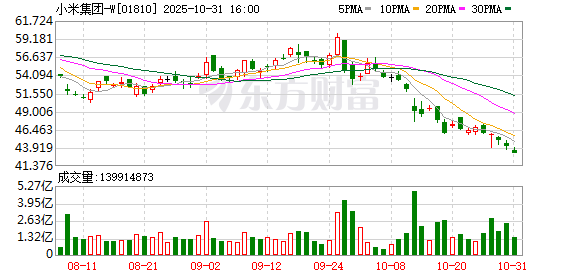
Group 1 - The U.S. Treasury Secretary indicated that a U.S.-China trade agreement could be signed as early as next week, with China expressing willingness to work with the U.S. to implement the consensus reached by the two heads of state [1] - The public fund industry in China, valued at over 36 trillion yuan, is undergoing significant reforms, including guidelines for performance benchmarks that may lead to reduced compensation for fund managers whose long-term performance falls below benchmarks [1] Group 2 - The State Council is focusing on deepening reforms in key areas and expanding institutional openness, aiming to enhance market access and optimize regulatory frameworks for factor markets [2] - The People's Bank of China is working on optimizing the monetary policy framework and addressing market "herding effects," while also preparing policy tools to respond to macroeconomic and financial market fluctuations [2] - The Ministry of Finance plans to utilize special bonds and long-term government bonds effectively to encourage private capital participation in major projects and improve income distribution [2] Group 3 - The National Development and Reform Commission announced that 2 trillion yuan of the 5 trillion yuan local government debt limit will be allocated for new special bonds to support investment in certain provinces [3] - China's manufacturing PMI for October was reported at 49%, a decrease of 0.8 percentage points from the previous month, while the non-manufacturing PMI rose slightly to 50.1 [3] - A new action plan for smart city development aims to establish over 50 fully digital transformation cities by the end of 2027 [3] Group 4 - The China Securities Regulatory Commission (CSRC) is emphasizing the need for a more inclusive and adaptable capital market system during the 14th Five-Year Plan period, including reforms in the Sci-Tech Innovation Board and the Growth Enterprise Market [5] - The CSRC has taken a strict stance against misinformation in the capital market, reinforcing a "zero tolerance" policy towards false information dissemination [5] - A-shares experienced a decline, with the Shanghai Composite Index closing down 0.81% at 3954.79 points, while small-cap stocks saw a rebound [6] Group 5 - The Hong Kong Hang Seng Index closed down 1.43%, with technology stocks continuing to struggle, while healthcare stocks performed well [6] - The Shanghai Stock Exchange reported a year-on-year increase in net profit for listed companies in Q3, with significant growth in mergers and acquisitions since the introduction of new policies [6] - The Hong Kong Stock Exchange announced an expansion of the "Southbound ETF Connect" list, increasing the number of ETFs available for trading [7] Group 6 - The Ministry of Housing and Urban-Rural Development is reforming the real estate development and sales system to prevent delivery risks and protect buyers' rights [10] - The top 100 real estate companies in China reported a sales amount of 253 billion yuan in October, reflecting a year-on-year decrease of 41.9% [10] - The China Automotive Dealers Association reported an increase in the inventory warning index for October, indicating improved conditions in the automotive circulation industry [11]



市场监管总局:是否添加食品添加剂的“自选动作”做不好影响销量,质量安全诚信的“规定动作”做不好就一票否决
Mei Ri Jing Ji Xin Wen· 2025-10-31 16:26
Core Viewpoint - The Chinese government is intensifying its regulation and monitoring of food additives to ensure food safety, following public concern over illegal use and abuse of these substances [1][3]. Group 1: Regulatory Actions - In April, the State Council's Food Safety Office and six other departments issued a comprehensive governance plan to address the misuse of food additives nationwide [1]. - The market regulatory authorities have investigated 13,180 cases of excessive or unauthorized use of food additives, with a total involved amount of 23.31 million yuan and fines totaling 90.38 million yuan [1]. - A total of 2.12 million batches of food additives were tested in the first three quarters, with a non-compliance rate of 0.93%, a decrease of 0.02 percentage points from the previous year [3]. Group 2: Inspection and Compliance - The inspection covered 10 types of food additives across 31 testing projects, focusing on sweeteners, colorants, preservatives, and other substances [4]. - No non-compliant samples were found in seven major food categories, while violations were detected in 14 categories, primarily involving sulfur dioxide, sweeteners, and preservatives [4]. - Regulatory authorities are taking immediate action against non-compliant products, including recalls and legal actions against offending companies [4]. Group 3: Industry Guidelines and Initiatives - The regulatory body is developing risk control lists for meat products and has established guidelines for the supervision of food additives in meat production [5]. - For beverage production, new licensing requirements mandate that companies document the use of food additives and adhere to national safety standards [6]. - The industry is encouraged to reduce the quantity and variety of food additives used, with initiatives launched by the beverage industry association and major companies [6].

此人弃美归国,40万起家捞走20亿,垄断中国电商市场时淘宝刚成立
Sou Hu Cai Jing· 2025-10-31 14:02
Core Insights - The article highlights the significant yet often overlooked contributions of Shao Yibo, a pioneer in China's e-commerce industry, who founded eBay China (易趣网) with a modest startup capital of $400,000 and once dominated the market with a 90% share [1][3] - Despite the initial success, the rise of competitors like Taobao and JD.com led to a decline in 易趣网's market position, ultimately resulting in Shao Yibo selling the platform and retiring with a fortune of 2 billion RMB [3] Company Overview - 易趣网 was established in August 1999, providing 24-hour customer service in its first year, which set a high standard for service quality in the e-commerce sector [3] - The platform quickly became the largest one-stop online trading platform in China, attracting widespread attention and nearly monopolizing the market [3] Industry Context - The e-commerce landscape in China has evolved rapidly, with technological advancements and the emergence of new competitors reshaping market dynamics [3] - Shao Yibo's decision to leave a lucrative career in the U.S. to invest in China's nascent e-commerce market reflects the potential he saw in the industry at that time [1][3] - After selling 易趣网, Shao Yibo established a 100 million RMB fund aimed at investing in products or platforms beneficial to Chinese society and market, indicating his ongoing commitment to the industry [3]

山姆加上阿里味,会员们会买单吗?
3 6 Ke· 2025-10-31 09:53
Core Insights - Walmart China has appointed Liu Peng, a former Alibaba executive, as the new president of Sam's Club, indicating a strategic shift towards e-commerce expertise in management [1][2] - Sam's Club has faced significant challenges in product selection and quality, leading to customer dissatisfaction and a decline in membership renewals [2][4] Group 1: Management Changes - The appointment of Liu Peng is part of a broader strategy to bring in leaders with deep experience in China's e-commerce sector to revitalize Sam's Club [2][10] - Other notable management changes include Yang Xiaomei, who has experience with major tech companies, returning to Walmart China as the vice president of procurement operations for Sam's [1][2] Group 2: Product Selection Issues - Sam's Club's core business model relies on a combination of product sales and membership fees, with a focus on high-quality, cost-effective products [3][4] - Recent controversies have emerged regarding the decline in product quality, with reports of popular items being replaced by lower-quality alternatives, leading to customer complaints [3][4][6] - The decline in product quality has been linked to management changes following the retirement of the previous CEO, with a shift towards efficiency potentially compromising product standards [4][5] Group 3: Membership Challenges - Customer feedback on social media indicates a growing reluctance to renew memberships due to concerns over product quality and availability [6][7] - The rise of a robust purchasing agent network has made it easier for consumers to bypass membership fees, further threatening Sam's Club's revenue model [6][8][9] Group 4: Competitive Landscape - Sam's Club is increasingly focusing on its e-commerce channels, which now account for over 50% of its business, to compete with aggressive rivals in the market [10][11] - Competitors such as Hema and Meituan are expanding rapidly in the same urban markets, posing a significant threat to Sam's Club's market share [10][11] - The challenge for Sam's Club lies in maintaining its competitive edge in product quality and pricing amidst growing competition from other retail platforms [12]

市场监管总局开展专项抽检,14类食品检出违规使用添加剂
Xin Jing Bao· 2025-10-31 09:02
Core Insights - The latest food safety inspection results reveal violations in the use of food additives across 14 categories, with the main non-compliance issues being the bleaching agent sulfur dioxide, sweetener saccharin, and preservative dehydroacetic acid [1][2] Group 1: Inspection Results - In the first three quarters of this year, the national market regulatory authorities completed inspections involving 2.2745 million batches of food additives, with 21,200 batches found non-compliant, resulting in a non-compliance rate of 0.93%, a decrease of 0.02 percentage points compared to the same period last year [1] - The inspection focused on 21 major food categories known for issues related to the excessive use of food additives, particularly those labeled as "zero additive" or "no preservatives" [2] Group 2: Regulatory Actions - The market regulatory authorities are actively conducting investigations and taking action against non-compliant food products, including requiring companies to remove and recall non-compliant items, and imposing administrative penalties on offending food production and operation enterprises [2] - The regulatory framework includes a comprehensive governance action initiated by six departments, including the State Council Food Safety Office, aimed at addressing the misuse of food additives [1][2]
新一轮国补来了!国补政策2025年最新消息:第四批国补690亿10月继续领取,国补领取方法操作步骤全攻略!
Xin Lang Cai Jing· 2025-10-31 01:55
Group 1 - The core point of the article highlights the launch of the fourth batch of the national consumption subsidy policy, amounting to 69 billion yuan, aimed at promoting the "old for new" consumption initiative ahead of the "Double 11" shopping festival [1][3][7] - The total subsidy plan for the year is 300 billion yuan, with this fourth batch being the final opportunity for consumers to benefit from the program, which covers various categories including home appliances, digital products, and automobiles [3][5] - The subsidy program is set to end on December 31, 2025, with no extensions or additional allocations, emphasizing the urgency for consumers to act quickly [3][5] Group 2 - The subsidy program includes a dual-channel model of "old for new" and energy efficiency subsidies, with maximum reductions of 2,000 yuan for home appliances and 500 yuan for digital products [3][5] - Consumers can easily claim subsidies through platforms like JD and Taobao, with specific search commands provided for quick access to the subsidy qualifications [3][5][6] - The program is open to all authenticated users in mainland China, with no restrictions on residency or income, but limits the number of claims to one per category per individual [5][6] Group 3 - The article emphasizes the importance of early participation due to high demand, with reports of rapid depletion of available subsidies in popular provinces [5][6] - The integration of the subsidy with the "Double 11" and "Double 12" shopping peaks presents a significant opportunity for consumers to maximize their savings [1][7] - The article encourages consumers to act swiftly to secure their eligibility for the subsidies before they run out, highlighting the limited time frame available [5][6]

白酒保价攻防战升级:酒企强硬出击 平台补贴力度分化
2 1 Shi Ji Jing Ji Bao Dao· 2025-10-31 00:17
Core Viewpoint - The "Double Eleven" shopping festival has begun, but the white liquor price war appears to be particularly subtle this year, with prices continuing to decline and promotional efforts from e-commerce platforms being notably subdued compared to previous years [2][4]. Group 1: Price Trends and Promotions - Since the second half of the year, white liquor prices have continued to drop, with many well-known brands reaching new lows on e-commerce platforms [2]. - The promotional efforts for white liquor during this year's "Double Eleven" are less aggressive than in previous years, with lower subsidy levels compared to the "618" shopping festival [2][4]. - Major liquor brands like Moutai and Wuliangye have adopted a more aggressive stance, emphasizing authorized sales channels to combat unauthorized sales and protect their pricing strategies [4][10]. Group 2: E-commerce Platform Strategies - E-commerce platforms have shown a mixed approach to promotions, with Tmall maintaining investment in liquor categories, achieving over 50% growth in white liquor sales compared to last year [5]. - Instant retail platforms like Meituan have reduced their promotional efforts for liquor, shifting focus to other categories and raising the threshold for subsidies [6][7]. - The price of major liquor products on platforms like Meituan is higher than the recent wholesale prices, indicating a shift in strategy post-618 [6][11]. Group 3: Market Dynamics and Consumer Behavior - The overall demand for white liquor has weakened, leading to a further decline in prices, with many brands struggling to maintain their market value [9][12]. - Consumer interest in major liquor brands has decreased, as indicated by a drop in search interest on platforms like Baidu compared to last year [9]. - Liquor companies are increasingly emphasizing the importance of authorized channels to ensure product authenticity and maintain price stability, which has led some consumers to return to official sales channels [12].