
元气森林

Search documents
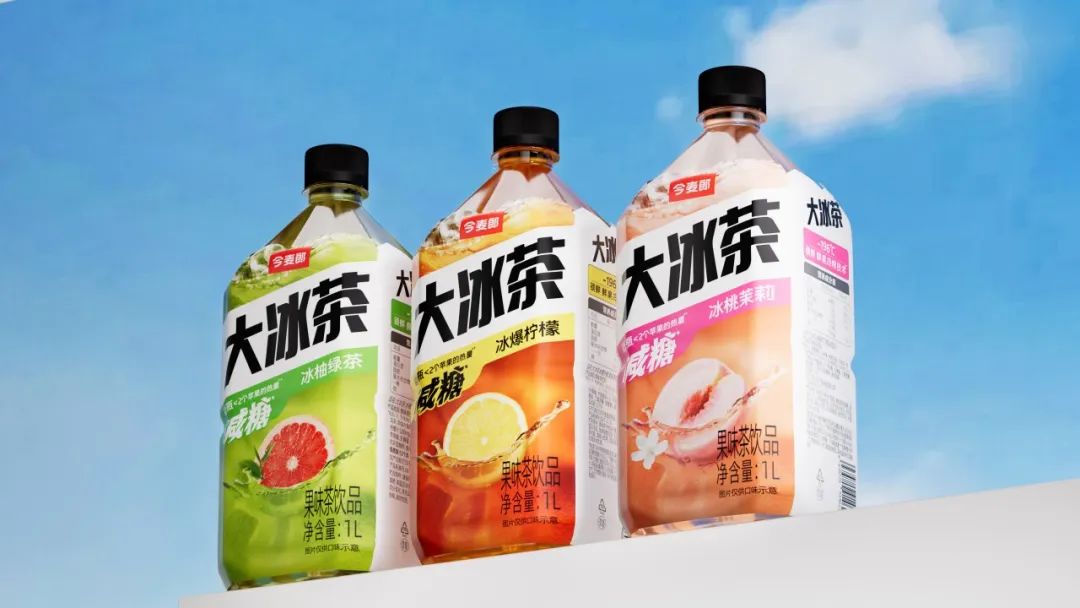
1L装只要3.3元?今麦郎杀进冰红茶“红海战场”
3 6 Ke· 2025-08-26 03:32
Core Insights - The beverage market is experiencing a price war, with companies like Jinmailang and Bai Xiang launching competitively priced products to attract consumers [5][41] - Jinmailang's new product, "Big Ice Tea," is priced at 3.3 yuan per 1L bottle, undercutting competitors like Master Kong and Unification [6][11] - The market for bottled iced tea has reached a significant scale, with Master Kong leading with a 68.6% market share [16][18] Group 1: Product Launches and Pricing Strategies - Jinmailang has introduced a new 1L iced tea product priced at 3.3 yuan, significantly lower than Master Kong's suggested retail price of 5 yuan [5][8] - Bai Xiang has also launched a new product, "Qinxiang Red Tea," priced at 3.18 yuan for a 500mL bottle [2][5] - Master Kong has announced price increases for its tea and juice products, with 1L iced tea now suggested to be priced at no less than 5 yuan [5][6] Group 2: Market Dynamics and Competition - The iced tea market is becoming increasingly competitive, with new entrants like Jinmailang and Yuanqi Forest challenging established brands [18][41] - The market for iced tea has evolved, with a shift towards larger packaging and reduced sugar content becoming key selling points [20][26] - Consumer preferences are changing, with a growing demand for low-sugar and natural ingredient products [26][28] Group 3: Market Share and Growth - The iced tea market in China has reached a size of 53.3 billion USD, indicating significant growth potential [11][16] - Despite rapid growth, Yuanqi Forest's iced tea still holds only a 2.7% market share, highlighting the competitive landscape [14][16] - The top ten brands in the iced tea market account for 99.2% of the total market share, indicating a concentrated competitive environment [16][18]


2026年前,最后的暴富机会
创业家· 2025-08-25 10:11
Core Insights - The success of the food and beverage industry can be summarized in four key phrases: "Five Additions," "Five Reductions," "Five Zeros," and "Five Pursuits" [4][6][7][8] - Successful brands are often trend-driven, with timing being a crucial factor for their success [3][9] Group 1: Five Additions - The "Five Additions" refer to the incorporation of protein, calcium, cheese, dietary fiber, and probiotics into products [5] Group 2: Five Reductions - The "Five Reductions" focus on decreasing sugar, fat, calories, oil, and salt in food and beverage products [6] Group 3: Five Zeros - The "Five Zeros" emphasize the absence of sugar, colorants, flavorings, preservatives, and additives in successful products [7] Group 4: Five Pursuits - The "Five Pursuits" highlight the consumer demand for freshness, natural ingredients, green products, organic options, and lightweight offerings [8] Group 5: Market Trends - The article suggests that successful brands align with consumer trends, indicating a shift towards healthier and more transparent food options [9]

「穷鬼迪士尼」,统治中产周末?
36氪· 2025-08-24 13:35
Core Viewpoint - The article discusses the rise of "industrial tourism" as a new trend in the tourism industry, highlighting its appeal to urban workers seeking unique experiences and the potential for significant market growth in this sector [7][10][80]. Summary by Sections Industrial Tourism Emergence - Industrial tourism is gaining popularity as a new form of indoor tourism, especially among working individuals who seek to escape their routine [8][10]. - The concept has evolved from traditional factory tours to more engaging experiences that include hands-on activities and product sampling [16][18]. Attractions and Experiences - Modern industrial tours offer interactive experiences, such as participating in production processes and enjoying complimentary products, making them more appealing [22][28][32]. - Examples include the螺霸王螺蛳粉 factory, where visitors can enjoy a meal after the tour, and元气森林 factory, which provides free drinks and product samples [22][32]. Market Potential - The industrial tourism market is currently valued at approximately 100 billion yuan, with a projected compound annual growth rate of 18% to 22% over the next few years [84][110]. - Major cities like Beijing and Shanghai are actively developing industrial tourism, indicating a growing interest and investment in this sector [85][86]. Visitor Demographics and Motivations - The target audience for industrial tourism includes not only families and children but also adults seeking unique experiences and a sense of participation in the production process [40][52]. - Visitors are drawn to the hands-on experiences and the opportunity to learn about industrial processes, which contrasts with traditional tourism [62][70]. Future Outlook - The article suggests that as industrial tourism continues to grow, more factories will likely adopt this model, creating a competitive landscape [86][112]. - The potential for industrial tourism in China is significant, with current participation rates being low compared to global standards, indicating room for growth [111][112].

90后博主让非遗“破圈”,破亿播放引爆热搜
Guan Cha Zhe Wang· 2025-08-22 12:14
Core Insights - The article highlights the increasing involvement of young people in the transmission and preservation of intangible cultural heritage (ICH) in China, with over 200 million new ICH-related videos created in 2024 and a 95% increase in creators born after 2000 [1][12] - The support from Chinese brands is crucial in revitalizing ICH skills, exemplified by the "charging" plan initiated by Yuanqi Forest, which aims to raise awareness and appreciation of ICH among younger generations [3][12] Group 1: Youth Engagement in ICH - In 2024, the number of creators born after 2000 engaged in ICH has surged by 95%, while the number of inheritors under 30 has increased by 24% [1] - The annual sales volume of ICH products has surpassed 6.5 billion units, indicating a growing market for these cultural items [1] Group 2: Brand Initiatives and Cultural Events - Yuanqi Forest's initiative included a large-scale performance of the Ansai Waist Drum, which involved 1,600 participants and aimed to showcase the power of ICH [3][6] - The performance was a culmination of four months of preparation, highlighting the community's enthusiasm and commitment to preserving their cultural heritage [6] Group 3: Challenges in ICH Preservation - The article discusses the challenges faced in learning and performing traditional arts, such as the Ansai Waist Drum and the Huohuo performance, which require significant physical and technical skills [5][10] - The Huohuo performance, which has a history of over 120 years, faces risks and difficulties in transmission due to its dangerous nature and the loss of traditional performance tools [10][11] Group 4: Digital Platforms and Cultural Promotion - Social media platforms like Douyin and Bilibili have become vital for young creators to promote ICH, with many achieving millions of views on their content [12][13] - The "charging" plan by Yuanqi Forest has led to significant engagement, with ICH-related content reaching over 100 million views across various platforms [12] Group 5: Economic Impact of ICH - The report indicates a 187% year-on-year increase in the number of offline ICH-related businesses on Douyin, with group purchase orders rising by 173% [12] - The involvement of young creators and brands is transforming ICH from being forgotten to being celebrated, thus enhancing its market value and cultural significance [12]

东鹏特饮,00后捧上神坛
盐财经· 2025-08-22 10:28
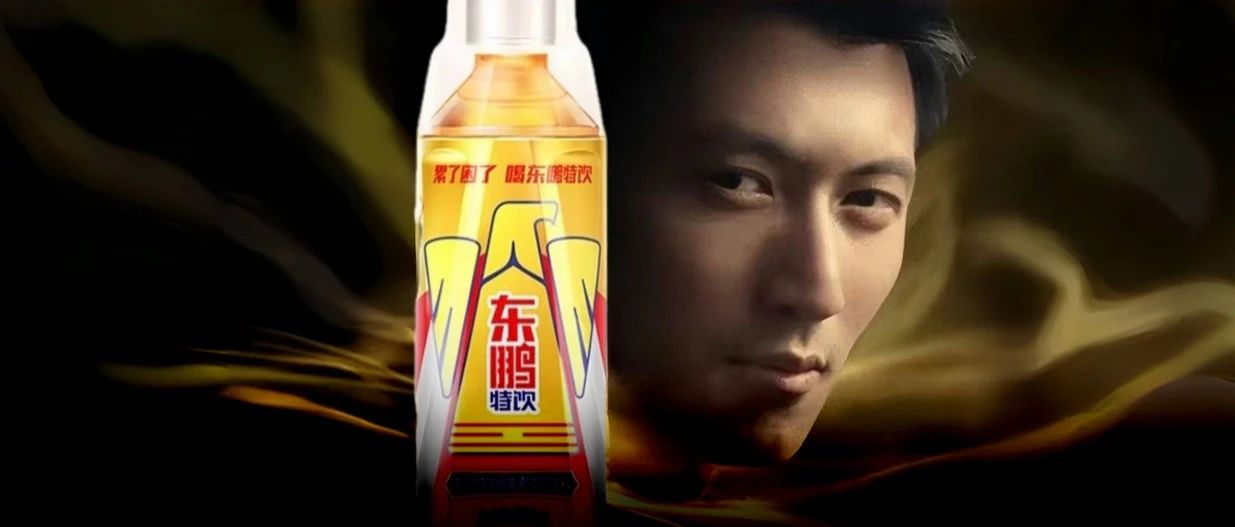
Core Insights - The beverage market is witnessing a shift from sugar-free tea drinks to functional beverages, with functional drinks becoming the fastest-growing category in China, projected to reach a market size of nearly 1.4 trillion yuan by 2024, approximately double that of sugar-free tea drinks [2][5][8]. Industry Overview - The energy drink segment, represented by brands like Dongpeng, has seen a significant increase in per capita consumption, rising from less than 1 liter in 2015 to 2.79 liters in 2024 [2]. - The overall functional beverage market in China is expected to grow from 111.9 billion yuan in 2019 to 166.5 billion yuan in 2024, marking a nearly 50% increase over five years [8]. Consumer Behavior - The rise in functional beverage consumption is closely linked to changing work and lifestyle habits among consumers, particularly young people who often work late hours and require energy-boosting drinks [9][10]. - The top consumption scenarios for energy drinks include sports, late-night work, studying, and gaming, with the latter three closely associated with late-night activities [9]. Company Performance - Dongpeng Beverage has experienced remarkable growth, with a projected revenue of over 20 billion yuan by 2026, positioning it as a potential new super brand alongside Coca-Cola and Red Bull [3]. - In the first half of 2025, Dongpeng reported a revenue of 10.737 billion yuan, a year-on-year increase of 36.37%, with net profit rising by 37.22% [16][20]. Competitive Landscape - Dongpeng has overtaken Red Bull in sales since 2021, benefiting from Red Bull's internal challenges and the overall growth of the functional beverage category [17][19]. - The competitive dynamics have shifted, with Dongpeng capitalizing on Red Bull's slowed growth due to legal disputes and market disruptions [18][19]. Market Strategy - Dongpeng's marketing strategy includes aggressive promotion and distribution efforts, such as the "free freezer plan" to ensure product visibility in retail locations [37]. - The company has invested significantly in channel partnerships, offering higher profit margins to distributors compared to competitors, which has helped establish a strong market presence [38][40].

新老玩家争锋百亿冰茶赛道
Bei Jing Shang Bao· 2025-08-21 16:18
Core Insights - The iced tea market in China is experiencing a resurgence with new entrants like Nongfu Spring, Yuanqi Forest, and Jinmailang launching products that replicate the "Xuri Sheng" iced tea, leading to significant sales growth in a health-conscious environment [1][2][3] Market Dynamics - The iced tea segment has seen a 53.9% year-on-year sales growth for Yuanqi Forest in Q2 2025, with a weighted market penetration rate increasing by approximately 10% [2][5] - Traditional brands like Master Kong and Uni-President are responding by emphasizing reduced sugar and no-sugar options, while also introducing carbonated tea products [1][6][7] Consumer Preferences - A significant 71.4% of consumers prioritize "no sugar/reduced sugar" labels when purchasing iced tea, with 82.9% preferring reduced sugar formulations [3] - The appeal of iced tea is enhanced by its summer suitability and health attributes, leading to strong consumer demand upon launch [3][4] Competitive Landscape - Yuanqi Forest's iced tea has reached sales of 200 million yuan in 2023, with projections to exceed 1 billion yuan in 2024, positioning it as a significant player in the market [5][6] - The introduction of innovative products, such as carbonated iced tea, is becoming a trend, with brands like Uni-President and Yuanqi Forest launching new variations [6][7] Historical Context - The iced tea category in China has over 30 years of history, with the original "Xuri Sheng" iced tea achieving significant market share before being overtaken by competitors [4] - The market has evolved from a duopoly of Master Kong and Uni-President to a more competitive landscape with new entrants focusing on innovation and health [4][8] Future Outlook - The competition will hinge on the ability to balance health and taste, with companies needing to establish technological barriers to succeed [8]

软饮料行业深度:后来居上,中国软饮料巨头的平台化之路
Soochow Securities· 2025-08-21 15:34
Investment Rating - The report maintains an "Add" rating for the soft drink industry [1] Core Insights - The Chinese soft drink industry has evolved through three main stages: the dominance of carbonated drinks, diversified growth, and structural growth driven by the rise of the middle class and differentiated consumer demands [11][23] - Leading companies in the soft drink sector are innovating and creating billion-yuan products, establishing competitive advantages through product iteration and market penetration strategies [30][33] - The future of the industry is expected to focus on health and functionality, with high growth potential in categories such as bottled water, sugar-free tea, energy drinks, and emerging segments like electrolyte water and coconut water [36][41] Summary by Sections Historical Overview - The soft drink industry in China has transitioned from a carbonated drink-dominated phase (before the mid-1990s) to a diversified growth phase (1995-2014), and currently to a structural growth phase (2015-present) [11][23] - The market saw significant growth in various segments, with carbonated drinks holding over 50% market share until the mid-1990s, followed by a surge in demand for juices, tea drinks, bottled water, and plant-based beverages [11][18] Current Landscape - The competition in the soft drink industry is intense, with traditional leaders maintaining advantages while new entrants are breaking through in emerging segments [30] - Key segments such as bottled water, tea drinks, and energy drinks are expected to sustain good growth rates, with the top three companies in each segment holding significant market shares [32][33] Future Outlook - The report identifies health and functionality as the main trends driving the industry forward, with specific growth opportunities in bottled water, sugar-free tea, energy drinks, and new categories like electrolyte water and coconut water [36][41] - The bottled water segment is projected to see an increase in packaging rates from 14.4% in 2023 to 18.9% by 2028, indicating a long-term growth trajectory [41][60] - The sugar-free tea segment is expected to grow significantly, with current penetration rates still low compared to markets like Japan [66][70] Investment Recommendations - The report recommends investing in companies like Dongpeng Beverage and Nongfu Spring, while also keeping an eye on China Resources Beverage and IFBH, as they are well-positioned in high-growth segments [1][36]
百亿冰茶赛道,新老玩家争锋
Bei Jing Shang Bao· 2025-08-21 15:00
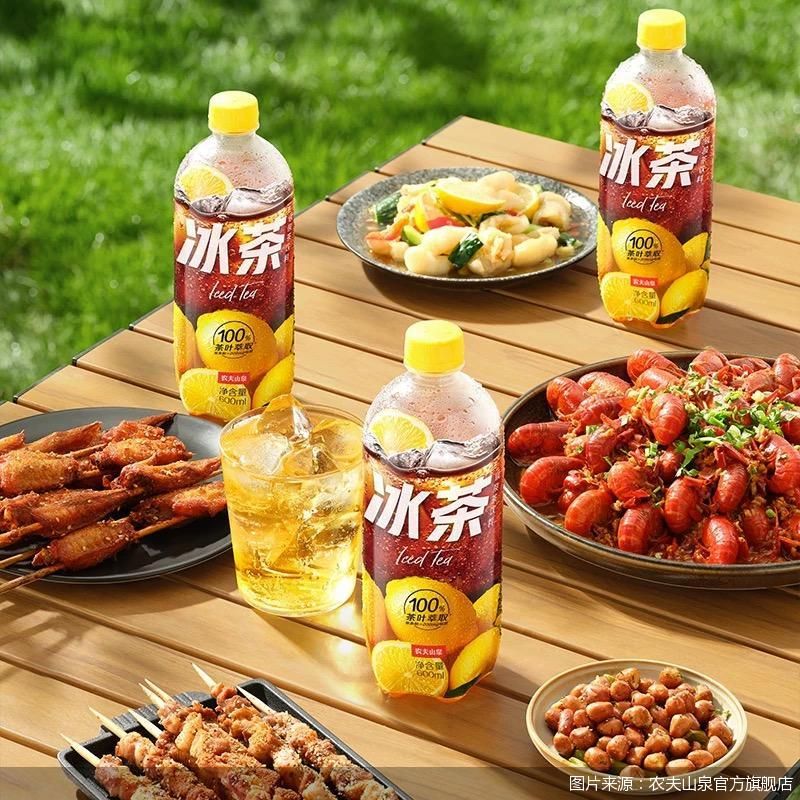
Core Insights - The iced tea market in China is experiencing renewed competition with new entrants like Nongfu Spring, Yuanqi Forest, and Jinmailang launching products that replicate the "Xuri Sheng" iced tea, leading to significant sales growth in the sector [1][2] - Yuanqi Forest has emerged as a market leader, with its iced tea sales growing by 53.9% year-on-year in Q2 2025, indicating strong market penetration and effective channel strategies [2][3] - Traditional brands like Master Kong and Uni-President are responding by emphasizing reduced sugar options and introducing new carbonated tea products to maintain market share [1][6][7] Market Dynamics - The iced tea segment has seen a shift towards healthier options, with 71.4% of consumers prioritizing "sugar-free/reduced sugar" labels when purchasing iced tea [3] - The introduction of carbonated iced tea products is becoming a trend, with brands like Uni-President and Yuanqi Forest launching new offerings that combine carbonation with traditional tea flavors [6][8] - The iced tea category has a long history in China, dating back over 30 years, but has recently faced challenges from new competitors and changing consumer preferences [4][5] Competitive Landscape - Yuanqi Forest's iced tea has achieved significant sales, reaching 2 billion yuan in 2023 and projected to exceed 10 billion yuan in 2024, positioning it as a key player in the market [5] - Traditional brands are feeling the pressure from Yuanqi Forest's innovative approaches, including the use of "-196°C liquid nitrogen frozen lemon technology" to enhance flavor [6] - The competition is intensifying as brands seek to differentiate themselves through unique flavors and health-oriented formulations, with a focus on finding the optimal balance between health and taste [8]
风口上的乳饮|百亿冰茶赛道,新老玩家争锋
Bei Jing Shang Bao· 2025-08-21 13:58
Core Insights - The iced tea market in China is experiencing a resurgence with new entrants like Nongfu Spring, Yuanqi Forest, and Jinmailang launching products that replicate the "Xuri Sheng" iced tea, leading to significant sales growth [1][3] - Yuanqi Forest has emerged as a market leader, with its iced tea sales growing by 53.9% year-on-year in Q2 2025, indicating strong market penetration and consumer acceptance [4][7] - The trend towards carbonated iced tea is gaining traction, with brands like Nongfu Spring and Unification introducing "sparkling tea" products, reflecting changing consumer preferences [1][9] Company Developments - Jinmailang has launched a 1L "Big Iced Tea" with flavors like Ice Lemon and Ice Peach Jasmine, priced at approximately 4.22 yuan per bottle, indicating competitive pricing strategies [3] - Nongfu Spring's new iced tea product emphasizes 100% real tea extraction and has a retail price of 5 yuan per bottle, showcasing its commitment to quality [3][9] - Unification has responded to market competition by introducing a cola-flavored iced tea, highlighting the trend of combining carbonated beverages with traditional tea [9] Market Trends - The iced tea segment is witnessing a shift towards healthier options, with 71.4% of consumers prioritizing "sugar-free/reduced sugar" labels when purchasing iced tea [4] - The introduction of "-196°C liquid nitrogen frozen lemon technology" by Yuanqi Forest aims to enhance flavor freshness, positioning it as a leader in innovation within the iced tea category [8] - The iced tea market is characterized by a competitive landscape where traditional brands are feeling the pressure from newer entrants focusing on health and flavor innovation [8][10] Historical Context - The iced tea category in China has over 30 years of history, with the original "Xuri Sheng" iced tea achieving significant market share before being overshadowed by competitors like Unification and Kangshifu [6] - Despite a stable market presence, the iced tea segment has seen limited growth in recent years, prompting calls for innovation and upgrades to maintain relevance [6][10] Future Outlook - The market is expected to continue evolving, with brands needing to differentiate themselves through unique technologies and marketing strategies to avoid homogenization [10] - Yuanqi Forest's iced tea is projected to reach sales of 10 billion yuan by 2024, indicating a strong growth trajectory compared to traditional players [7]
今年最赚钱的三家消费公司,大基金们押错了两个|深氪
3 6 Ke· 2025-08-21 11:47
Core Insights - The article discusses the surprising rise of Lao Pu Gold, which saw its stock price increase by 12 times since its IPO, despite being overlooked in the primary market [1][4] - The company transitioned from seeking an A-share listing to pursuing a Hong Kong IPO, attracting significant investment from Black Ant and Yu Garden [1][3] - A key turning point was the release of a mid-year report showing a nearly 200% year-on-year profit increase, which led to a surge in investor interest [3][4] Investment Dynamics - Initial interest in Lao Pu Gold was low, with only a few investors participating in the Pre-IPO round, highlighting a lack of understanding of the company's potential [1][2] - The IPO saw overwhelming demand, with retail subscriptions oversubscribed by over 580 times and institutional subscriptions nearly 12 times, indicating a shift in market sentiment [4][15] - The company's market capitalization reached HKD 11.3 billion on its listing day, doubling its valuation from the Pre-IPO round in just six months [4][18] Market Trends - The article notes a broader trend in the Hong Kong market, where consumer stocks have become increasingly popular, with significant inflows from foreign capital [12][16] - The sentiment shift is attributed to a combination of factors, including expectations of U.S. interest rate cuts and a growing confidence in Chinese assets [12][13] - The consumer sector, particularly non-essential goods, has seen a surge in interest, with companies like Bubble Mart and Honey Snow Ice City also experiencing significant market success [17][18] Investment Reflections - Many investors expressed regret over missing opportunities in companies like Lao Pu Gold, indicating a broader issue of understanding emerging consumer brands [5][6][9] - The article highlights a pattern where successful consumer companies were often overlooked in the primary market, leading to missed investment opportunities [9][19] - The narrative emphasizes the importance of recognizing and adapting to changing market dynamics, particularly in the consumer sector [30][32]