
英维克

Search documents
解密主力资金出逃股 连续5日净流出576股
Zheng Quan Shi Bao Wang· 2026-01-05 09:29
Summary of Key Points Core Viewpoint - The report highlights a significant outflow of main capital from various stocks in the Shanghai and Shenzhen markets, with 576 stocks experiencing net outflows for five consecutive days or more, indicating potential investor concerns and market volatility [1]. Group 1: Stocks with Longest Net Outflow - Dahan Technology has the longest streak of net outflows, with 23 consecutive days [1]. - Dameng Data follows with 19 consecutive days of net outflows [1]. Group 2: Stocks with Highest Total Net Outflow - Yingweike has the largest total net outflow amounting to 3.26 billion yuan over 7 days [1]. - Hengtong Optics ranks second with a total net outflow of 1.472 billion yuan over 8 days [1]. Group 3: Stocks with Highest Net Outflow Percentage - ST Aowei has the highest percentage of net outflow relative to trading volume, with a 19.88% decline over the past 5 days [1]. - Other notable stocks with significant net outflow percentages include Haima Automobile at 9.06% and Antong Holdings at 10.61% [1]. Group 4: Performance of Stocks with Net Outflows - The report indicates that many stocks with significant net outflows have also experienced notable declines in their prices, such as Haima Automobile with a drop of 17.41% and Jiumuwang with a decline of 22.67% [1]. - Conversely, some stocks like Dameng Data have shown a slight increase of 4.79% despite the outflow [3].


2026年,AI投资要靠超预期了
Hu Xiu· 2026-01-05 08:24
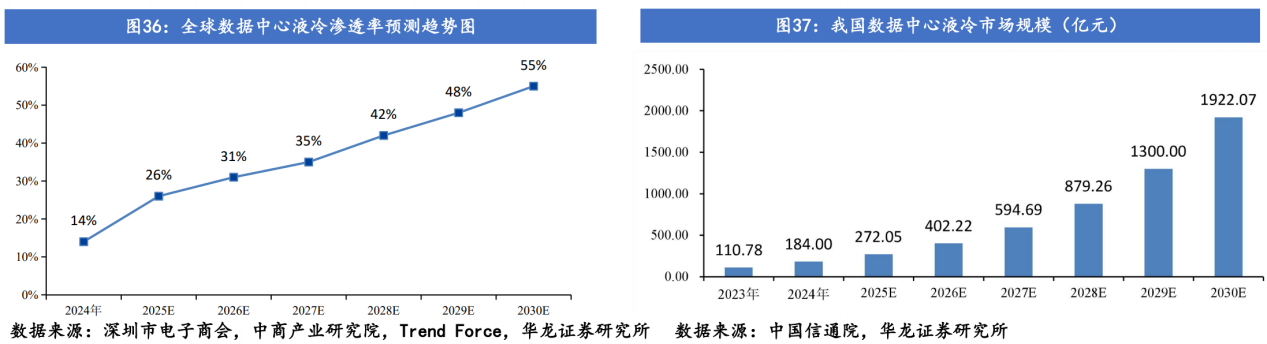
Core Viewpoint - The technology sector, particularly the AI computing power segment, is expected to remain a key investment theme in 2026, driven by strong growth and certainty in AI infrastructure development [2][5][40]. AI Computing Power - The AI computing power index has seen a significant increase of 46.67% since 2025, outperforming other AI-related indices [3]. - The growth in AI computing power is attributed to capital investments from major tech companies and government policies promoting domestic GPU alternatives [2][4]. - Despite the promising outlook for AI computing power, companies in AI applications and end products are not showing the same level of investment certainty [2][5]. Market Size and Growth Rates - The global GPU market is projected to grow from ¥10,515.37 million in 2024 to ¥36,119.74 million by 2029, with a compound annual growth rate (CAGR) of 27.99% [6]. - The Chinese intelligent computing GPU market is expected to grow from ¥1,425.37 million to ¥13,367.92 million, with a CAGR of 56.47% [6]. - Liquid cooling technology is anticipated to see a penetration rate increase from 14% in 2024 to 31% by 2026 [15]. GPU Market Dynamics - Nvidia holds a significant market share in the GPU sector, while domestic manufacturers are rising due to policies favoring local production [7][8]. - Companies like Cambricon are expected to achieve profitability by late 2024, driven by increased capital expenditures from internet companies [10]. - The projected net profit for Cambricon in 2026 and 2027 is expected to be ¥48.72 billion and ¥79.91 billion, respectively, indicating substantial growth [10]. Liquid Cooling - Liquid cooling is identified as a high-growth segment with increasing adoption due to its superior cooling efficiency compared to traditional air cooling [14]. - Major clients like Nvidia and Google are expected to drive demand for liquid cooling solutions, creating opportunities for domestic suppliers [17][20]. - Companies entering the Google supply chain are likely to see valuation increases, with examples like Invec and other domestic suppliers gaining traction [21][22]. Optical Modules and Chips - The optical module market is experiencing significant growth, with companies like NewEase and Zhongji Xuchuang seeing stock price increases of 450% and 422% since 2025 [26]. - The investment logic for optical modules is driven by technological upgrades and increased capital expenditures from cloud service providers [25]. - The optical chip market is dominated by foreign companies, but domestic firms could see valuation increases if they achieve breakthroughs in high-end optical chips [30][31]. PCB Market - The PCB market is expected to grow significantly, driven by the increasing demand for high-layer and high-density boards in AI servers [32]. - The average price of AI server PCBs is projected to be three times higher than traditional servers, indicating a strong growth potential [33]. - Companies in the PCB sector are currently facing high valuations, necessitating substantial earnings growth to justify these levels [36]. Investment Ranking - The investment ranking for AI segments is as follows: Liquid Cooling (highest certainty), Optical Chips (top tier), GPU, PCB, Optical Modules (high certainty but high valuations), and AI applications (lower certainty) [39]. - The macroeconomic environment is expected to provide liquidity support, enhancing the attractiveness of AI computing power investments in 2026 [40].

英维克跌2.04%,成交额40.14亿元,主力资金净流出2.93亿元
Xin Lang Cai Jing· 2026-01-05 05:44
Group 1 - The core viewpoint of the news is that Yingweike's stock has experienced fluctuations, with a recent decline of 2.04% and a total market capitalization of 102.255 billion yuan as of January 5 [1] - As of November 28, Yingweike reported a decrease in the number of shareholders to 134,600, a reduction of 14.49%, while the average circulating shares per person increased by 16.94% to 6,316 shares [2] - For the period from January to September 2025, Yingweike achieved a revenue of 4.026 billion yuan, representing a year-on-year growth of 40.19%, and a net profit attributable to shareholders of 399 million yuan, up 13.13% year-on-year [2] Group 2 - Yingweike has distributed a total of 581 million yuan in dividends since its A-share listing, with 345 million yuan distributed over the past three years [3] - As of September 30, 2025, the second-largest circulating shareholder is Hong Kong Central Clearing Limited, holding 37.06 million shares, a decrease of 45.195 million shares from the previous period [3] - The fourth-largest circulating shareholder is China Aviation Opportunity Leading Mixed Fund A, which is a new shareholder holding 16.1267 million shares [3]
中原证券晨会聚焦-20260105
Zhongyuan Securities· 2026-01-05 00:34
Key Insights - The report highlights the steady growth of the animation film industry, with animated films accounting for nearly 50% of the total box office in 2025, driven by successful titles like "Nezha 2" and "Zootopia 2" [36] - The aerospace software industry is leading the A-share market, indicating a positive trend in this sector [5][8] - The low-altitude economy in Shanghai is projected to reach a scale of approximately 80 billion yuan by 2028, establishing a complete industrial chain for new aviation vehicles [5][8] - The gaming industry continues to show steady growth, with a focus on AI applications enhancing operational efficiency [16][17] - The semiconductor sector is experiencing significant growth, with global sales increasing by 27.2% year-on-year, indicating strong demand [24] Domestic Market Performance - The Shanghai Composite Index closed at 3,968.84, with a slight increase of 0.09%, while the Shenzhen Component Index decreased by 0.58% [4] - The A-share market is characterized by a mixed performance across various sectors, with aerospace, software development, and non-ferrous metals showing positive trends [5][8] Industry Analysis - The animation film sector has seen a substantial increase in box office revenue, with animated films making up a significant portion of the top-grossing films [36] - The gaming industry is expected to maintain its growth trajectory, supported by advancements in AI technology [16][17] - The semiconductor industry is witnessing robust growth, with China’s semiconductor sales reaching $19.53 billion, reflecting a year-on-year increase of 18.5% [24] Investment Recommendations - Investors are advised to focus on sectors with strong fundamentals and stable earnings, such as aerospace, gaming, and semiconductor industries, which are expected to benefit from ongoing technological advancements and favorable policy environments [22][23][24] - The report suggests monitoring the performance of leading companies in the animation and gaming sectors, as they are likely to capitalize on the growing market demand [16][36]
英维克20260104
2026-01-04 15:35
Summary of the Conference Call on Liquid Cooling Industry and Company Insights Industry Overview - The liquid cooling industry is expected to have significant growth in the coming years, with a market size projected to reach over 100 billion by 2026, driven by advancements from companies like NVIDIA and ASIC [3][5] - The penetration rate of liquid cooling technology is currently low but is anticipated to increase steadily, leading to further growth in 2027 and 2028, even if the overall computing power supply chain does not see substantial growth [3][5] Company Insights: 英维克 (Invech) Competitive Advantages - 英维克 has a notable competitive edge in the overseas market, with no significant generational gap in technology compared to international peers, and some products even outperforming them [6] - The company is actively establishing its brand and distribution channels in overseas markets, which is crucial for its growth [6] - 英维克's full-chain capability allows it to provide comprehensive solutions to customers, making it a rare and valuable asset in the current market [6][11] Growth Potential - The company has immense growth potential in the next few years, with the possibility of doubling its growth if it successfully integrates into customer supply chains by 2026 [7] - If 英维克 can secure its position and expand its product offerings within client ecosystems, it could see substantial profit margins, indicating that a market valuation of 100 billion is just the beginning [7] Market Position - Chinese companies, including 英维克, are gaining ground in the global liquid cooling market, with product performance reaching international standards [8] - 英维克's strategy includes addressing brand localization challenges and leveraging its full-chain capabilities to penetrate international markets effectively [8] Financial Performance and Strategy - 英维克 has demonstrated consistent revenue and profit growth since its IPO, a rarity in the cooling industry [15] - The company emphasizes a platform-based R&D model, optimizing structural design for cost efficiency, and prioritizing innovation, such as the introduction of evaporative cooling products [15][13] Market Share and Product Strategy - 英维克 ranks among the top two in the indirect evaporative cooling market, alongside major players like Huawei, due to its innovative products and increasing market penetration [16] - The transition from traditional cooling systems to indirect evaporative cooling has significantly enhanced the company's revenue potential, increasing its value capture from 20-30% to 100% [17] Future Outlook - 英维克's strategic focus on liquid cooling technologies, starting from CDU (Central Processing Unit) and expanding into related electronic cooling technologies, showcases its strong innovation and R&D capabilities [18] - The company is expected to solidify its position in the market by 2026, setting the stage for further growth in 2027 and 2028, with a long-term view suggesting it will become a leading representative of quality cooling solutions in both domestic and international markets [18]
2026年通信投资机会梳理:算力为核,卫星为翼
Zhong Guo Neng Yuan Wang· 2026-01-04 02:47
Group 1 - The core viewpoint is that the overseas computing power chain will maintain an upward trend in prosperity, with North American CSPs expected to continue high capital expenditure and enthusiasm for data center construction, supported by rapid scaling of computing chips like NVIDIA GPUs and Google TPUs, and the next generation of products expected to be commercialized by 2026 [1][2] - Domestic internet companies are also maintaining high investment in computing power construction, with the penetration rate of domestic computing supernodes expected to continue to rise, and some supernodes adopting optical interconnection solutions, further releasing demand for optical interconnection [1][2] - The optical interconnection sector is projected to be a high-certainty investment direction for 2026, with the high-end optical module market expected to grow annually, and demand visibility likely to extend further, driving rapid growth in the performance of supply chain companies [2] Group 2 - Key investment opportunities include leading companies that have entered the overseas/domestic computing supply chain, which are expected to benefit from the high growth of the optical interconnection industry, with specific companies suggested for attention such as Zhongji Xuchuang, Xinyi Sheng, Tianfu Communication, Guangxun Technology, and Huagong Technology [2] - The release of demand for high-speed optical modules will bring significant growth in demand for upstream optical chips and devices, with potential supply-demand mismatches expected to enhance the sector's prosperity, suggesting attention to companies like Yuanjie Technology, Shijia Photon, Changguang Huaxin, Yongding Co., and Dekeli [2] - The commercial aerospace sector is entering a rapid development phase, with multiple catalysts expected by 2026, particularly the launch of reusable and large-capacity commercial rockets, which will significantly enhance rocket capacity and facilitate satellite communication development [3] Group 3 - The end-side AI is entering a major tool era, with competition expected to extend from smaller devices to broader consumer-facing tools like smartphones, leading to investment opportunities in end-side AI hardware manufacturers and cloud-edge computing demand [4] - The liquid cooling sector is expected to experience a significant demand release in both overseas and domestic markets, with domestic supernodes entering a golden development period, suggesting attention to companies like Yingweike, Gaolan Co., Shenling Environment, and Kexin Innovation Source [4] - The long-cycle turning point for optical fiber and cable may have been confirmed, with the industry previously in a state of oversupply, but now expected to benefit from increased demand for high-end optical fibers, which could enhance profit levels for manufacturers [6]
通信行业周报:2026年通信投资展望:聚焦四大核心赛道-20260104
KAIYUAN SECURITIES· 2026-01-04 01:12
Investment Rating - The industry investment rating is "Positive" (maintained) [1] Core Insights - The report emphasizes the significant "siphon effect" of AI and the accelerated development of satellite internet, recommending a focus on the dual core themes of "AI + Satellite" and four key segments: "Optical + Liquid Cooling + Domestic Computing Power + Satellite" [5][15] - It highlights the expected growth in AI applications, particularly in voice and image recognition technologies, which will drive demand for smart computing modules and CDN services [7][17] - The report notes the increasing importance of satellite internet as a core component of 6G, driven by national policies emphasizing self-sufficiency and technological upgrades [8][18] Summary by Sections 1. Investment Outlook for 2026 - The report suggests actively positioning in multiple sub-sectors, focusing on "AI + Satellite" as the main investment themes for 2026 [5][15] 2. Key Segments for 2026 Segment One: Global AI Resonance - 2026 is projected to be the year of significant deployment for 1.6T optical modules, with advancements in silicon photonics technology expected to become mainstream [6][16] - The report anticipates a substantial increase in the penetration rate of liquid cooling technologies, driven by the release of new computing power chips from major companies [6][16] Segment Two: AI Applications - The development of AI toys and applications is expected to accelerate, leading to increased demand for intelligent computing modules and CDN services [7][17] Segment Three: Satellite Internet Development - The report identifies four key areas of focus within the satellite internet sector: satellite manufacturing, launch, ground equipment, and operations, all of which are expected to benefit from increased demand and government support [8][18] 3. Investment Recommendations - The report recommends specific companies across various segments, including optical network equipment, computing devices, and AI applications, highlighting potential beneficiaries in each category [19][20][26][27] 4. Market Review - The communication index experienced a decline of 1.41% during the week of December 29 to December 31, 2025, ranking fourth among TMT sectors [28] 5. Communication Data Tracking - As of November 2025, China had a total of 4.83 million 5G base stations, with 5G mobile phone users reaching 1.193 billion, marking a year-on-year growth of 19.06% [29][34]




2025年A股收官:沪指十一连阳,科技资源双主线领航,2026年行情可期
Jin Rong Jie· 2026-01-01 01:32
Market Performance - The Shanghai Composite Index closed at 3968.84 points on December 31, 2025, marking an 18.41% increase for the year, while the ChiNext Index surged by 49.57% [1] - The total market capitalization reached 108.74 trillion yuan, a 26.65% increase from the beginning of the year, with 176 companies having a market value exceeding 100 billion yuan, up from 137 at the end of 2024 [2] Trading Activity - A-share trading volume reached a record 420.21 trillion yuan in 2025, reflecting a 62.64% year-on-year increase, indicating strong liquidity in the market [1] - The margin trading balance rose to 25.55 trillion yuan by December 30, 2025, accounting for 2.59% of the A-share market capitalization, with a 36.91% increase from the end of 2024 [1] Stock Performance - Among 4210 companies, nearly 80% saw their stock prices rise, with 1425 companies increasing by over 50% and 538 doubling in value [2] - Notable stocks included Upwind New Materials, which saw a staggering 1820.29% increase due to a change in control, and Tianpu Co., which rose by 1645.35% following a similar acquisition [3] Industry Trends - The "Technology + Resources" theme dominated the market, with aerospace equipment stocks rising by 146.03%, and energy metals increasing by 103.31% [4] - AI and related sectors emerged as significant drivers, with companies like Cambrian and Industrial Fulian seeing substantial stock price increases due to rising demand for AI infrastructure [5] Future Outlook - Analysts predict that the structural characteristics of the economy will continue to evolve, with technology sectors expected to drive growth in 2026 [6] - The Chinese stock market is anticipated to rise by approximately 38% by the end of 2027, supported by projected earnings growth of 14% and 12% for 2026 and 2027, respectively [6]
汽车行业2026年度投资策略
2025-12-31 16:02
Summary of Key Points from the Conference Call Industry Overview - The conference call focuses on the **automotive industry** and its investment strategies for **2026**. The discussion includes various segments such as passenger vehicles, commercial vehicles, and motorcycles, along with the impact of macroeconomic factors and technological advancements. Core Insights and Arguments - **Passenger Vehicle Market**: The domestic demand for passenger vehicles is expected to decline by **2.5%** in 2026 due to policy exhaustion and the reduction of purchase tax. However, the penetration rate of new energy vehicles (NEVs) is anticipated to partially offset this decline, leading to a slight increase in registration numbers for NEVs [3][4]. - **Export Growth**: The export growth rate for the automotive sector is projected to remain above **15%** due to domestic manufacturers' overseas expansion and the competitive pricing of NEVs [5][9]. The expected export volume for NEVs in 2026 is close to **2.4 million units**, representing a year-on-year increase of **100%** [9]. - **Heavy-Duty Trucks**: The heavy-duty truck market is expected to benefit from the "old-for-new" policy, with sales projected at **1.06 million units** in 2026. However, the growth momentum may weaken as the policy's effects diminish [6][15]. - **Commercial Vehicles**: The bus market is expected to grow by approximately **5%** in 2026, primarily driven by the increasing penetration of NEVs in overseas markets [6]. - **Motorcycle Market**: The motorcycle export market is projected to maintain a high growth rate of around **15%**, with domestic brands like Longxin and Chunfeng capitalizing on overseas channel expansions [7]. - **Investment Opportunities**: Key investment themes for the automotive sector include expanding overseas markets, high-end passenger vehicle segments, the domestic replacement of components, and embracing AI technologies for transformation [2][20]. Additional Important Insights - **AI and Technology**: The development of AI technologies is expected to significantly impact the automotive sector, particularly in areas such as autonomous driving and robotics. The liquid cooling market is projected to reach over **150 billion** in 2026, indicating exponential growth [4][18]. - **Domestic Component Replacement**: The domestic replacement rate for components in the heavy-duty truck segment has reached **40%** for vehicles priced above **200,000**. This trend is expected to accelerate with new models from brands like Geely and Huawei [13]. - **Global Market Potential**: There remains a substantial potential market of over **30 million** vehicles outside of major markets like the US, Japan, and Europe, indicating significant opportunities for domestic brands [8]. - **Challenges and Risks**: The automotive sector faces challenges such as policy changes affecting domestic demand and potential trade tensions impacting component exports. However, the established advantages of Chinese automotive parts manufacturers in terms of cost and technology position them well for growth in international markets [10]. - **Future Outlook**: The overall outlook for the automotive sector in 2026 is cautiously optimistic, with opportunities arising from high-end domestic replacements, overseas expansions, and the integration of AI technologies across various segments [20].
谷歌光模块和液冷需求或提升
2025-12-31 16:02
Summary of Google TPU and Liquid Cooling Demand Insights Industry and Company Involved - The discussion revolves around Google and its upcoming changes in the TPU (Tensor Processing Unit) architecture and the associated demand for optical modules and liquid cooling technology [1][2]. Core Insights and Arguments - Google is expected to significantly increase the shipment of V7+8 TPUs by 2026, primarily featuring 1.6T optical modules and liquid cooling technology, indicating substantial changes in the related supply chain [1][3]. - The introduction of 3D Taurus or Cloth architecture at the cabinet level is anticipated, which will increase the demand for scale-up optical modules and Active Optical Cables (AOC) [1][4]. - The 3D Taurus architecture aims to reduce latency through direct interconnection, with each Cube containing 64 TPUs, while the Cloth architecture employs a traditional fat-tree multi-layer network to alleviate OCS (Optical Circuit Switching) port pressure [5][6]. - The structural changes are projected to significantly boost the demand for 1.6T optical modules, benefiting suppliers like Zhongji Xuchuang and Yuanjie Technology; increased chip counts will raise power consumption, leading to a higher demand for liquid cooling, favoring suppliers like Invec [7]. Additional Important Content - Liquid cooling technology is critical to the entire data center solution, requiring stringent supplier selection. Once a supplier enters Google's supply chain, their market share tends to grow steadily, provided their product quality remains high [8]. - Companies expected to benefit from these changes include Zhongji Xuchuang, NewEase, Yuanjie Technology, and others in the optical module sector, as well as Invec in the liquid cooling sector. Additionally, companies linked to the AIGC (Artificial Intelligence Generated Content) supply chain, such as Yangtze Optical Fibre and Cable, Tengjing Technology, and Oulu Tong, are also likely to gain from these developments [9].
