地平线

Search documents
百亿独角兽的溃败始末
虎嗅APP· 2025-11-27 13:37
Core Insights - The article discusses the sudden downfall of Haomo Zhixing, once hailed as a pioneer in China's autonomous driving sector, culminating in a work stoppage announcement that signals its likely closure [2][3] - The company's crisis is attributed to high product costs, an imbalanced business model, and intensified competition, highlighting the survival challenges faced by non-leading firms in the autonomous driving industry [2][3] Company Overview - Haomo Zhixing was established in November 2019 and quickly became a unicorn with a valuation exceeding 10 billion yuan after raising nearly 1 billion yuan in A-round financing by the end of 2021 [4] - The company’s diverse shareholder structure includes major investors like Meituan, Hillhouse, and Qualcomm, with total financing exceeding 2 billion yuan [4] - The appointment of former Baidu executive Gu Weishao as CEO in 2021 aimed to integrate automotive resources with tech flexibility, but this led to a "positioning dilemma" [4] Business Performance - Haomo achieved significant milestones, including the mass production of its HPilot system, with over 100,000 units installed, becoming the first in China to implement autonomous driving technology [5] - However, the company struggled with over-reliance on a single client and failed to capitalize on announced partnerships due to insufficient product competitiveness [7] - The company’s diversification into passenger vehicle assistance, logistics vehicles, and smart hardware led to resource dilution, with logistics vehicle sales stagnating and hardware business failing to gain traction [7] Financial Challenges - The financing environment for the autonomous driving sector cooled significantly post-2023, with total financing dropping from 93.2 billion yuan at its peak to 20 billion yuan in 2024, concentrating capital among leading firms [7] - Haomo only secured 300 million yuan in 2024, and by 2025, industry financing was expected to decline by another 40%, exacerbating the cash flow issues for independent suppliers like Haomo [7] Technological Misalignment - Haomo's technological strategy became misaligned as it clung to high-precision mapping solutions while competitors shifted towards "map-free" and end-to-end model approaches, leading to a significant lag in technological advancement [9][10] - The company’s commitment to high-precision mapping resulted in delays in achieving its urban coverage goals, with only 8 cities operational by 2025 compared to over 200 for leading firms [10] - Haomo's data collection efforts were limited to 250 million kilometers, while competitors amassed over 1 billion kilometers, further widening the technological gap [10] Competitive Landscape - The rapid evolution of the automotive intelligence sector left little room for adjustment, with Haomo's cost structure at 8,000 yuan per unit compared to competitors' 4,000-7,000 yuan [12] - The lack of vertical integration in chip, algorithm, and hardware development hindered Haomo's ability to reduce costs and compete effectively in the mainstream market [12] - Competitors like Momenta captured over 60% of the market share through aggressive data accumulation and product delivery capabilities, further marginalizing Haomo [14] Industry Implications - Haomo's decline reflects systemic challenges faced by independent suppliers in the autonomous driving sector, as many companies have ceased operations since 2025, indicating a deep industry reshuffle [16] - The shift in automotive manufacturers towards self-developed solutions and the adoption of third-party technologies by major players like BYD and Geely highlights the changing dynamics in the market [16][17] - Independent suppliers must establish unique value propositions in cost control or advanced technology to avoid becoming interchangeable commodities in a competitive landscape [17][18] Future Outlook - To survive, Tier 1 independent suppliers must build irreplaceable technological barriers or cost advantages, and foster open, win-win ecosystems to mitigate risks associated with manufacturer dependencies [20] - The industry is expected to transition towards a multi-dimensional competition focused on cost control, data efficiency, and scenario penetration, with successful players either achieving full-stack capabilities or excelling in specific verticals [22]


中国智驾打响残酷突围战
Hua Er Jie Jian Wen· 2025-11-27 12:17
Core Insights - The Chinese intelligent driving industry is undergoing a significant reshuffle, highlighted by the suspension of the once-prominent unicorn, Haomo Zhixing, while competitors like Yuanrong Qixing and Zhuoyu are gaining market share and investment support [1][2][5] Company Analysis - Haomo Zhixing, originally a spin-off from Great Wall Motors, received substantial early-stage funding but has struggled to maintain momentum, with its last financing round occurring in early 2024 without support from its former backer [2][3] - The company's choice of Qualcomm Snapdragon Ride chips over the industry-standard NVIDIA Orin has hindered its ability to adapt to new technological trends, leading to operational inefficiencies [3][4] - Great Wall Motors has shifted its focus to other suppliers, notably investing $100 million in Yuanrong Qixing, indicating a loss of confidence in Haomo Zhixing's capabilities [5][6] Industry Trends - The competitive landscape has evolved, with a focus on achieving a scale of one million vehicles to generate valuable data for algorithm development, moving beyond flashy demonstrations to practical data-driven solutions [7][10] - Companies like Yuanrong Qixing and Horizon Robotics are positioning themselves as strategic partners rather than mere component suppliers, emphasizing the importance of data access and integration [8][9] - The industry is witnessing a consolidation of market share among leading players, with predictions that only a few companies will dominate the market by 2025 [14][15] Future Outlook - The intelligent driving sector is transitioning from an optional feature to a core asset for automotive companies, with a clear divide emerging between those who can leverage large-scale data and those who cannot [14][15] - The ultimate goal for many companies is to develop systems that not only enhance vehicle performance but also contribute to broader applications in robotics and artificial intelligence [12][13]
地平线HSD打破智驾“豪门游戏”,中国车企迎来智能化跃升时刻
Mei Ri Jing Ji Xin Wen· 2025-11-26 10:44
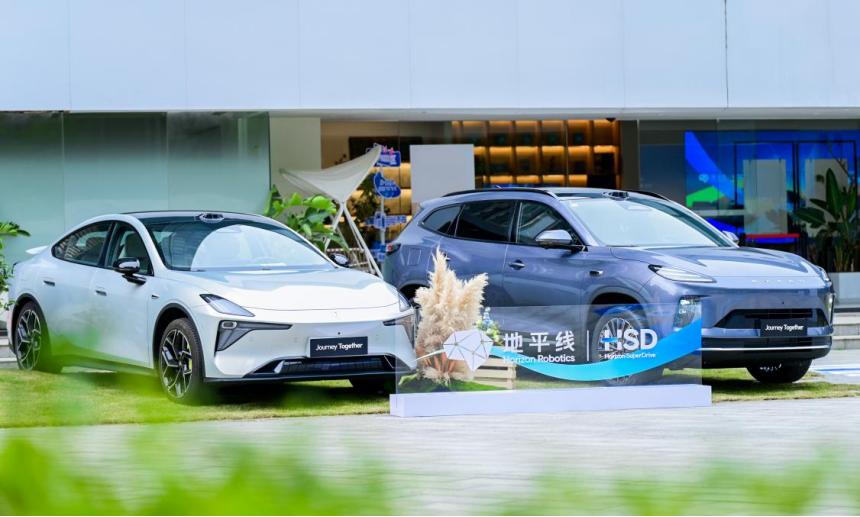
Core Insights - The Chinese automotive industry is transitioning from "leading in electrification" to "winning in intelligence," facing challenges in smart driving technology development due to high investment and long cycles [1][4] - Horizon HSD (Horizon SuperDrive) is changing the competitive landscape by transforming urban auxiliary driving from a high-end option to a standardized feature [1][3] Industry Overview - The global automotive industry is rapidly integrating "electrification + intelligence," with China leading in the first half of electrification due to its complete industrial chain and continuous innovation [4] - From January to July this year, new passenger cars with L2-level combined driving assistance functions in China reached 7.76 million units, with a market penetration rate of 62.58% [4] Consumer Behavior - Consumer perceptions are shifting, with smart driving experience becoming the third most important factor in car purchasing decisions, following quality and performance [4] - Consumers are increasingly focused on the real-world performance of smart driving features, such as smoothness, adaptability to complex traffic, and human-like decision-making [4] Market Performance - The launch of the Deep Blue L06, priced from 132,900 yuan, showcases strong market demand for high-cost performance smart driving solutions, with over 20,000 orders within an hour of its release [5] - Despite the anticipated "smart driving equality" in 2025, high-level smart driving features are predominantly found in vehicles priced above 300,000 yuan, while lower-priced models lack such features [5] Competitive Landscape - Tesla's FSD has set a global benchmark in smart driving, but Horizon HSD's rapid mass production offers a more practical path for Chinese automakers to compete [3][7] - Horizon's business model focuses on providing standardized smart driving capabilities, allowing automakers to concentrate on user experience rather than redundant R&D [8] Technological Advancements - Horizon HSD has achieved rapid mass production, with over 10 vehicle models equipped with the system, and has become a leader in the domestic smart driving technology market with a 32.4% share [8][12] - The HSD system's success is attributed to its efficient integration of hardware and software, optimizing performance and energy efficiency [9] Future Outlook - Horizon aims to produce 10 million units of HSD within the next 3-5 years, leveraging China's unique advantages in complex driving scenarios [8][12] - The transition of high-level smart driving from luxury to standard features is redefining the global automotive competitive landscape, with Horizon's approach serving as a model for industry transformation [12]
奇瑞智驾自研:大卓智能的沉浮往事
雷峰网· 2025-11-26 06:29
Group 1 - The core narrative of the article revolves around the evolution of Chery's autonomous driving strategy, highlighting the rise and fall of Dazhuo Intelligent, which was initially seen as a key player in Chery's self-research ambitions [4][6] - Chery's approach to autonomous driving has shifted from "fully controllable" to "fully self-researched," with Dazhuo Intelligent representing a significant milestone in this transition [5][10] - The partnership with Bosch and WeRide has positioned Chery as a leading player in the domestic autonomous driving sector, despite the absence of Dazhuo Intelligent [5][6] Group 2 - Dazhuo Intelligent was founded with the aim of developing autonomous driving technologies, but faced challenges in establishing a viable business model and securing necessary resources [8][14] - The initial strategy of Dazhuo Intelligent included targeting both low-level integrated machine markets and L4 commercial vehicle markets, but the vast scope led to difficulties in execution [11][12] - Internal conflicts arose regarding the financial responsibilities and operational independence of Dazhuo Intelligent, leading to tensions with Chery's commercial vehicle division [16][28] Group 3 - The leadership of Dazhuo Intelligent underwent changes, with the appointment of CTO Cao Guangzhi, who brought significant technical expertise from Tesla, signaling a renewed focus on self-research [19][21] - Despite initial successes, Dazhuo Intelligent struggled with internal processes and budget constraints imposed by Chery, which hindered its ability to recruit talent and accelerate development [25][27] - The integration of Dazhuo Intelligent into Chery's broader strategy culminated in its eventual dissolution, as Chery sought to streamline its autonomous driving efforts and collaborate more closely with external suppliers [41][43] Group 4 - Chery's decision to merge Dazhuo Intelligent with its other technology divisions reflects a strategic pivot towards leveraging external partnerships while maintaining a focus on core competencies [41][44] - The launch of the "Falcon" autonomous driving system marks a new chapter for Chery, emphasizing collaboration with established suppliers like Horizon and Momenta, thereby enhancing its competitive positioning in the market [35][44] - The article concludes with a recognition of Chery's ability to adapt and evolve its autonomous driving narrative, moving from a self-research focus to a more integrated approach with external partners [44]

地平线HSD规模化量产上车,中国车企一夜赶超特斯拉?
Ge Long Hui· 2025-11-25 16:33
Core Insights - The Guangzhou Auto Show this year showcased 1,085 vehicles, with 629 new energy vehicles, accounting for 58%, indicating that China's automotive industry has fully completed its "three electrification" process [1] - Major automakers emphasized concepts like "AI cars" and "intelligent driving" at the show, with a consensus on advancing intelligent assisted driving technology [1] - The development trend of intelligent assisted driving technology is evident, evolving towards higher levels of safety and adaptability while also being made available in more vehicle models [1] Group 1 - Horizon's HSD (Horizon SuperDrive) has been rapidly integrated into multiple mass-produced models, showcasing its efficiency and effectiveness in the market [2][4] - The HSD system has been adopted by over 10 automotive brands and more than 20 models, with a goal of achieving mass production of 10 million units in the next 3-5 years [4][25] - The HSD's deployment signifies a significant opportunity for Chinese automakers to align with or even surpass Tesla's FSD capabilities [6][9] Group 2 - The HSD system utilizes a true end-to-end architecture, which enhances driving experience by eliminating delays and improving responsiveness [12][13] - The system's "intuitive model" allows for real-time feedback and human-like decision-making in complex driving scenarios, enhancing safety and efficiency [15][19] - The collaboration with automakers allows for customization without affecting their technological strategies, making HSD a flexible solution for various brands [28] Group 3 - The automotive industry is shifting from price wars to technology-driven competition, with Horizon's HSD playing a crucial role in this transition [29] - The HSD aims to democratize high-level assisted driving capabilities, making them accessible to a broader range of vehicles, not just high-end models [29][30] - The partnership with Horizon allows automakers to focus on product differentiation while benefiting from advanced driving technology without the burden of extensive R&D costs [27][28]
毫末智行停摆、地平线HSD量产,第三方智驾格局生变?
3 6 Ke· 2025-11-25 09:42
Core Insights - The Guangzhou Auto Show 2023 showcased 1,085 vehicles, with 629 new energy vehicles, indicating a 58% representation, highlighting the completion of China's automotive industry's electrification [1] - Major automakers emphasized "AI cars" and intelligent driving technologies, with a consensus on advancing smart assisted driving [1] - Horizon's HSD (Horizon SuperDrive) has rapidly integrated into multiple production models, demonstrating a significant leap in China's smart driving capabilities [2][4] Group 1: Industry Trends - The trend of smart assisted driving technology is evolving both upwards towards higher levels of safety and adaptability, and downwards to more vehicle models [1] - Most automakers are opting for third-party solutions from companies like Horizon, DJI, and Huawei, rather than developing in-house technologies [2][8] - Horizon's HSD has been adopted by over 10 automakers and is expected to achieve a production target of 10 million units in the next 3-5 years [6][24] Group 2: Technological Advancements - Horizon's HSD is designed with a true end-to-end architecture, providing seamless control and enhanced user experience [12][20] - The system's low latency and high computational power enable it to handle complex driving scenarios effectively, improving safety and efficiency [17][26] - The collaboration between Horizon and automakers allows for customization without compromising their technological strategies [25] Group 3: Competitive Landscape - Horizon's HSD positions itself as a viable alternative for automakers to compete with Tesla's FSD, offering a unique value proposition in the market [8][22] - The automotive industry is shifting from price wars to technology-driven competition, with Horizon's HSD facilitating this transition [26][27] - The integration of Horizon's technology allows Chinese automakers to enhance their global competitiveness by focusing on differentiation rather than cost-cutting [27][29]
理想在报纸版的人民日报上刊登广告
理想TOP2· 2025-11-25 02:16
Core Viewpoint - The article highlights the significant achievements of the Chinese automotive industry over the past decade, particularly focusing on the growth and innovation of Li Auto, which has become a benchmark in the high-end electric vehicle market in China, achieving substantial sales and revenue milestones [13][14]. Group 1: Company Achievements - Li Auto was founded in 2015 and has established intelligent manufacturing bases in Changzhou and Beijing, becoming the first new force car company in China to achieve an annual sales volume of 500,000 vehicles and over 100 billion yuan in revenue for two consecutive years [13][14]. - In 2024, Li Auto celebrated the production of its one-millionth vehicle, achieving this milestone in just 58 months, and is actively contributing to Changzhou's goal of becoming "China's New Energy Capital" with an expected industry scale of 850 billion yuan [14]. - The company has committed over 6 billion yuan to artificial intelligence (AI) development this year, launching the VLA driver model and "Li Auto Classmate" AI, marking its entry into a new phase of AI-driven development [15]. Group 2: Technological Innovation - Li Auto has focused on core technology research and development, transitioning from external procurement to joint development and self-research, achieving self-control of the industrial chain and product leadership [18]. - The company collaborates with partners and research institutions to create joint innovation platforms, enhancing technological advancements in areas such as laser radar and smart driving chips [18]. - Li Auto's self-developed "Li Star Ring OS" has been fully open-sourced, with partnerships established with 16 industry chain partners to promote collaborative development and innovation [18]. Group 3: Supply Chain and Ecosystem - Li Auto has built a supply chain system characterized by "excellent growth, intelligent innovation, and green health," with annual procurement growing from billions to trillions in just three years [16]. - The company has established a localized industrial ecosystem, with 80% of its suppliers located in the Yangtze River Delta region, fostering a collaborative environment that enhances value creation [17]. - Li Auto's "Li Chain" ecosystem promotes shared resources and collaborative growth among nearly a thousand partners, contributing to high-quality development [16][17]. Group 4: Future Outlook - Looking ahead, Li Auto aims to solidify its innovation foundation and drive high-quality industrial development through technological advancements, while also enhancing user experience with safer and more convenient products [19].

智通港股沽空统计|11月25日
智通财经网· 2025-11-25 00:26
Core Insights - The article highlights the top short-selling stocks in the market, indicating significant investor skepticism towards these companies [1][2]. Short-Selling Ratios - Lenovo Group-R (80992) has the highest short-selling ratio at 87.71%, followed by Ping An Insurance-R (82318) at 69.65% and Shougang Resources (00639) at 62.81% [1][2]. - The short-selling amounts for Alibaba-SW (09988), Tencent Holdings (00700), and Xiaomi Group-W (01810) are the highest, amounting to 5.06 billion, 1.62 billion, and 1.17 billion respectively [1][2]. Deviation Values - Shougang Resources (00639) leads in deviation value at 48.27%, followed closely by Ping An Insurance-R (82318) at 46.76% and FIH Mobile Limited (02038) at 46.20% [1][2]. - The deviation value indicates the difference between the current short-selling ratio and the average short-selling ratio over the past 30 days, suggesting heightened market volatility for these stocks [3].


毫末智行突曝停工,智驾自研走不通,“地大华魔”四巨头要赢麻?
3 6 Ke· 2025-11-24 23:30
Core Insights - The news highlights the operational halt of the autonomous driving company, Haomo Zhixing, effective November 24, with no clear explanation from the leadership, indicating severe internal issues and a lack of communication [1] - Haomo Zhixing's struggles have been attributed to both internal challenges and external pressures, particularly the rapid evolution of technology in the autonomous driving sector [3][5] - The company, which was once seen as a promising player in the industry, has faced significant setbacks, including high-profile executive departures and a failure to keep pace with technological advancements [7][10] Internal Challenges - Haomo Zhixing's technology foundation was based on outdated models, which became a liability as the industry shifted towards new paradigms driven by large models and data-centric approaches [5][8] - The company struggled to adapt to the new technological landscape, facing obstacles in data acquisition, computational power, talent retention, and organizational agility [5][8] - A significant portion of Haomo's orders came from its parent company, Great Wall Motors, and a reduction in these orders led to a critical loss of data necessary for algorithm development [7][10] External Pressures - The competitive landscape has evolved, with rivals like Momenta, Huawei, and Horizon Robotics establishing strong positions through early investments in data ecosystems and technological innovations [5][14] - Great Wall Motors has shifted its strategy, moving away from self-reliance in autonomous driving technology and opting to collaborate with established third-party suppliers [8][11] - The market is rapidly changing, with expectations that by the end of 2025, advanced driver-assistance systems will become standard in vehicles, putting pressure on companies like Haomo to adapt quickly or risk obsolescence [13][19] Industry Trends - The autonomous driving sector is consolidating around a few key players, referred to as "地大华魔" (Horizon, DJI, Huawei, and Momenta), who have demonstrated the ability to deliver scalable and effective solutions [14][19] - Traditional automakers are increasingly recognizing the limitations of in-house development and are turning to partnerships with specialized technology firms to remain competitive [19][20] - The urgency for automakers to establish reliable partnerships and integrate advanced technologies is underscored by the impending market shifts expected by 2026, where failure to adapt could lead to exclusion from the mainstream market [19][20]
【太平洋科技-每日观点&资讯】(2025-11-25)
远峰电子· 2025-11-24 12:55
Market Overview - The main board saw significant gains with companies like Provincial Guang Group (+10.06%), Special Information (+10.05%), and Mingchen Health (+10.03%) leading the charge [1] - The ChiNext board was led by Jiuzhiyang (+20.00%), Zhongfu Circuit (+17.75%), and BlueFocus (+15.72%) [1] - The Sci-Tech Innovation board was topped by Jinchengzi (+20.01%), Guangyun Technology (+20.00%), and Pinggao Co. (+19.99%) [1] - Active sub-industries included SW Marketing Agency (+8.32%) and SW Horizontal General Software (+4.79%) [1] Domestic News - Dingtong Technology announced that its 224G optical module liquid cooling products have entered NVIDIA's supply chain and will soon be supplied in bulk [1] - Horizon Robotics reported that its HSD has secured partnerships with 10 domestic and international automotive brands and over 20 vehicle models, aiming to enhance efficiency and cost-effectiveness in the smart driving sector [1] - Hesai Technology launched the Fermi C500, a high-performance smart control chip for LiDAR based on RISC-V architecture, which integrates MCU, FPGA, and ADC, marking it as the world's first chip with dual certification for functional and network safety [1] - Zhongke Feicai announced the delivery of its first wafer flatness measurement device, GINKGOIFM-P300, to clients in the HBM sector, compatible with advanced processes including ≥96-layer 3D NAND and ≤1Xnm logic chips [1] Company Announcements - Industrial Fulian clarified rumors regarding a reduction in fourth-quarter performance targets and confirmed that operations are proceeding as planned, with no major client requests for business model adjustments [2] - Juguang Technology announced a change in shareholding, with Wang Donghui reducing his stake from 6.64% to 5.00% [2] - Tongyu Communication reported progress on a joint investment with professional institutions, having completed a capital contribution of 100 million yuan, focusing on hypersonic vehicles and aerospace engine technology [2] - Xinghui Entertainment disclosed a plan for major shareholder Chen Yansheng to reduce his holdings by up to 36,003,100 shares, representing 2.90% of the total share capital [2] Overseas News - Shoei launched the world's first AR helmet, GT-Air 3 Smart, featuring EyeLights heads-up display technology, allowing riding data to be projected directly into the rider's view [3] - Intel disclosed that the yield of its "Panther Lake" processor based on 18A process technology is improving at a rate of 7% per month, aligning with industry recovery expectations [3] - International DRAM spot prices saw an overall increase, with DDR4 8Gb (1Gx8) 3200 rising by 3.94% to an average of $14.150, while DDR5 16G (2Gx8) 4800/5600 saw a slight increase of 2.66% to $25.767 [3] - Samsung Electronics plans to invest approximately $1.9 billion in its semiconductor wafer plant in Austin, Texas, to upgrade existing production lines and introduce advanced chip manufacturing equipment [3]